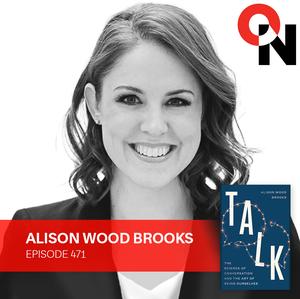
Alison Wood Brooks: The Science Behind Great Conversations
24 Aug 2026 · 103 min
In this episode of the On Purpose podcast, Harvard Business School professor Alison Wood Brooks discusses the science of conversation with host Jay Shetty, drawing on her research and her book Talk: The Science of Conversation and the Art of Being Ourselves. The conversation moves from a live demonstration of a "Talk Time" game—"Battle of the Nice Guys"—to deeper explorations of conversational tools such as giving authentic compliments, admitting uncertainty, and using follow‑up questions. Brooks explains how simple, research‑backed practices (e.g., avoiding backhanded compliments, not making social comparisons, de‑risking first dates with extra follow‑ups) can transform everyday interactions and build trust. They discuss the lack of formal conversation education in schools and the potential of short, structured games (Talk Sparks) to teach these skills. The dialogue then shifts to dating dynamics, the role of micro‑decisions in long‑term relationships, and strategies for navigating heated disagreements—emphasising a learning mindset, validation, and the option to pause when emotions run hot. The episode concludes with a rapid‑fire “final 5” where Brooks shares concise advice, including a whimsical law that everyone must make eye contact within ten feet of another person. Throughout, the hosts blend research findings, personal anecdotes, and practical exercises, illustrating how small conversational tweaks can ripple outward to improve personal, professional, and societal connections.
Chapters
This episode is brought to you by ADT. One second you're enjoying your day off, the next your phone buzzes. A window's been broken at home. You're miles away. In one second, everything can change. That's why ADT security systems can monitor your home 24/7. They're backed by the most company-operated monitoring centers in the industry, so you're always supported during an emergency. When every second counts, count on ADT. Visit ADT.com to learn more.
Sierra has all the best active and outdoor brands for the super athletic stuff, like running gear for cruising up the trail. Woo!
And the super athlet-ish stuff, like fishing gear for chilling by the creek. Nice cast! Fitness apparel to push for higher reps. You got this!
And golf balls priced so you can afford to lose one.
Or a few.
Head to Sierra or sierra.com for the brands you want at the prices that let you do it all.
From athletic to athletish, Sierra's got it. This episode is brought to you by Welch's Fruit Snacks. Back-to-school season can be tough on parents, but choosing a snack you and your kids can both get behind doesn't have to be. Stock up on Welch's Fruit Snacks, made with whole fruit and now made with no artificial dyes. It's a snack kids already love and one you can feel good about giving them. Go back to school with Welch's Fruit Snacks. Now made with no artificial dyes. Hey, it's Jay.
I don't know what your day's been like, but I was just thinking about you for a minute, and I hope you're being a little patient with yourself because you deserve it. And yeah, I'll talk to you soon. Hey everyone, welcome back to On Purpose, the place you come to become happier, healthier, and more healed. Today I'm joined by Alison Wood Brooks, Harvard Business School professor and one of the world's leading experts on the science of conversation. In her new book, Talk: The Science of Conversation and the Art of Being Ourselves, Alison shares the research-backed tools that can help anyone build deeper relationships, navigate difficult conversations, and connect more meaningfully with Alison Wood Brooks, welcome to On Purpose.
Hey, Jay, thank you so much for having me.
It's so great to have you here. It's almost nerve-wracking to have a conversation with a professional conversationalist, researcher, and communication expert.
Don't be, don't be.
But you've made me feel so at ease ever since you walked into the room, so I feel good.
I more than most understand how hard conversation is, and I'm in such awe of everything that you do here, and I know that none of us can be perfect at it. So let's shed that anxiety.
Okay, okay. Well, let's dive in. If someone wants to feel more confident when they communicate, what's the number one habit they should stop doing today?
I think so many of the problems and mistakes and anxiety that comes in conversation is an overfocus on yourself. And even anxiety as an emotion makes us overfocus on ourselves, right? It kind of narrows our aperture and we're like, oh God, well, here's all the things that could go wrong. And so if people wanna feel more confident, If they can truly convince themselves, this isn't about me, this is about us, this is about the other person, push yourself sort of relentlessly to focus on your conversation partner, it's gonna set you up to feel far less anxious and actually perform better in the conversation.
It almost feels when we're having a conversation with someone that we have a camera pointed at us.
Yes.
And in our head, we are watching the livestream of every single Facial expression, physical movement, hand gesture, and we're going, oh, that was cringe.
Yeah.
Oh, why did you say that?
Yeah.
Oh, don't do that again. Like the anxiety that we're feeling is almost because we have a version of ourself playing back at ourselves rather than looking at the other person's eyes and the other person's face and the other person's body gestures and hand gestures. How do we get out of our heads? Because it feels like that tape of ourselves is playing 24/7.
Yeah.
And that's why most of us, when we get introduced to someone, it was so funny. I was at a restaurant last night and I always ask the waiting staff what their names are, and I always talk to them by their name, whichever restaurant I'm in. And at the end of my meal, I went down and I saw one of them and I said, hey, Katerina, can you show me where the restrooms are? And she goes, how did you remember my name?
Oh.
And, and I was like, because it was that moment of when I met her, I wasn't thinking about how I looked or who I was. It was, I was thinking about her. I saw her face. I saw her name. And so talk to me about how do we get out of our heads when all of our anxiety is naturally making us focus on every tiny detail of our hand movement, what word we said, or how cringe we are?
The way life is designed is you're set up to have that hypervigilance about yourself. You have access to every move and experience in your own life from your own perspective, but you only have a very limited access to other people's experiences and their You get little samples. Even people we know really, really well, even my identical twin sister, I don't know what happened to her this morning. I don't know if somebody catcalled her on the street or she had gotten in a fight with her kid or something, right? There's just no way to have the richness of information about other people that we do about ourselves. And I think in accumulation across your whole life, that causes us to turn inward and be hypervigilant and hyper-aware of ourselves. Psychologists call this egocentrism, but conversation requires that we sort of break out of that egocentrism and really push ourselves to focus on others. I love your example of asking the waitress what her name is at the very beginning. That's a very good example of a practice, of a habit, of a move that you can make part of your arsenal that is almost forcing yourself to focus on the other person. It's like, oh, I'm gonna develop this habit. When I go to restaurants, I'm gonna ask the server their name right at the beginning. I'm really gonna listen to it. I'm gonna say it over and over, and by the end, we're gonna feel like we're friends. So there are many of these small practices that you can do that almost purposefully push yourself towards other people and away from yourself.
What other skills have you found that help people lower their anxiety in a conversation in that moment when there's this hypervigilance of themselves?
Yeah.
What other habits or breakthrough moments have you seen where someone goes, Oh, I actually can remove myself from that center point of a conversation.
So 2 things. First off, anxiety comes from uncertainty. You don't know how things are gonna land. You don't know how things are gonna go. Conversation is a perfect storm for anxiety because every turn, you don't know what's gonna happen next. You don't know what your partner's gonna say. You don't know how they're gonna respond to you. You don't even know what you are gonna say 2 turns from now. So it really is a very understandable place to feel anxious. I'll give one example. One thing that seems to help people tremendously reduce their anxiety is to take some of that mental energy you're spending calculating all that uncertainty and offload it to before the conversation. So doing topic prep, and this is something we talk about a lot in the book, thinking ahead about what are my goals in this conversation? What are my partner's goals in this conversation? What do we wanna get out of it? And what are some things that we should or could talk about when we are together? And when you push yourself to think even for like 10 seconds, even if we're on opposite sides of the room and we're walking to greet each other, and I think to myself, oh, what will Jay find really interesting to talk about? Maybe it's one question. That makes the conversation much less anxiety-inducing for me, and it makes the conversation better because you don't have to do that busy cognitive work, that creativity task. During the chaos of conversation.
This episode of On Purpose is presented by Altra Running. We all benefit from having a little more space. So do our feet. That's why Altra running shoes feature UltraFit design, giving toes more room for comfort, balance, and strength. They're perfect for running, walking, or hiking, any pace, any level. They feel right from the first step. Go to ultrarunning.com/onpurpose and use code PURPOSE10 For 10% off. That's altrarunning.com/onpurpose. Stay out there. When I'm about to go to an industry event or a networking event or an award show or something like that, I'm always thinking about what was something interesting I learned on the podcast this week?
Yes.
Who's someone fascinating that I spoke to that has left a mark on me so that if something comes up in conversation and someone asks me, hey, what have you been up to? I don't just say same old, or I've been busy, or I've been traveling. I'm able to say, oh my gosh, I sat down with Alison Wood Brooks the other day and I learned this really neat idea. Here's what it was. Or I sat down with this athlete or this musician or whoever it was. I think a lot of us don't feel we're interesting.
Yeah.
A lot of us don't feel like we have anything interesting going on.
Yeah.
That we may perceive our lives like that.
Yeah.
Now, I think everyone is interesting and has something fascinating about them. You don't have to be on camera or in a movie or doing incredible research. to have something interesting to say, but we almost put that pressure on ourselves. And I think a lot of us judge ourselves for not being intriguing people. What do we do with that feeling? What do we do about that in a conversation or as we are preparing to enter a conversation?
I wanna relieve that pressure for everyone. It makes so much sense that we put this pressure on ourselves to be interesting, to collect stories and tidbits and be ready to share them. But even that, this pressure to be interesting is very self-focused, right? That's not the right instinct when you're in dialogue with another mind. So if we can shed that pressure we put on ourselves to be interesting and instead say, I'm gonna be interested in the other person and I sincerely feel like I'm gonna just dig through their mind and uncover all the things that they're thinking and feeling about these days, that is a really empowering mindset shift because you don't have to prove that you're interesting. I agree with you. I think all people are deeply interesting. It doesn't mean that you have to have these grand experiences. Even just admitting uncertainty or admitting your feelings to other people, deeply interesting, but it does take some forethought. Like you're saying, you are collecting things as you go through life. Who did I talk to this week? What podcast did I listen to? What show did I watch that really made me sit up and think or scared me or made me feel really bad about myself? Collect those little tidbits so that when the right moment presents itself in conversation, you're ready for it.
I'm sure you have people all the time who say, Alison, I just don't have time for that. I'm rushing from thing to thing. I just about got outta bed this morning and had my morning coffee and put on some decent clothes or whatever it was, right? How does someone make time for that in a way that feels that they're not spending all their time preparing for something that they don't have time for?
Oh my God, totally. I totally hear this. None of us have time to be sitting down and making elaborate topic lists for every conversation that we're going to have. That's not quite the right way to think about it. It's more like holding a butterfly net wherever you go. And as you are thinking ahead about who you are going to be seeing, you're catching your feelings, the little interesting things you see in the world, collecting little stories in this butterfly net that you're carrying with you all the time. And you're ready to like pluck out the butterflies from the net at any moment when you see somebody. It's also truly not time-consuming. So we spend so much time in our lives prepping in other ways. Imagine you're going on a date or going to a board meeting. You're gonna think for at least a couple minutes about what you're wearing, how, what transportation you're using to get there, what you think the meeting should be about. What we don't spend time thinking about often is what you're gonna talk about once you're there. So if you spent even a fraction, literally 30 seconds thinking about what you could talk about once you're there, and maybe do it at the same time that you're picking out your outfit, right? Do it at the same time you're brushing your teeth and putting on your makeup. It's gonna make your interactions so much more valuable.
It's so much more a significant part of that exchange.
Yes.
What you're gonna say.
I have to write them down, but it's because I have so many things going on in my life and too many children. So when interesting things happen to me, or honestly, it's less about interesting things happening to me and more like things that I wanna remember that maybe are associated with the person I'm gonna see next week. Like, oh, I just saw this show that I thought you'd really like. Or I talked to this person, um, for you, I talked to this person on my podcast that That really made me think of you, right? So, it's less about what's interesting, what makes me interesting, and more what I'm associating with the people I'm gonna talk to.
That's really interesting. I really like that approach. That feels like a really helpful insight in going prepared with the other person as the focus.
It has to be personalized, right? This is not just you collecting funny stories and then just launching them willy-nilly. No, it's thinking, who are the people in my life? Who am I going to see? Which is very predictable. And what have they been up to lately? What did we talk about the last time we were together? What have I been up to that they will find interesting and exciting? That's— that personalized prep is just incredible. It's what makes relationships great. Can I ask you a question?
Please.
You said that you often think about before you're going into a big meeting or to an awards show or to a big event, Do you think ahead about topics with your wife or friends? Casual conversations?
I would say so. Yeah, I would say so. If I'm in a car, if I'm driving home, yeah. Or if I'm driving to a meeting, absolutely.
That's so good. I think a, a lot of people, when they think about topic prep in general, they often focus on these sort of high stakes, obviously tricky conversations. And I think it, it could actually be even more effective in our everyday conversations with people that we really love.
What I'm hearing you say is that Practicing even for low-stakes conversations, everyday conversations, actually helps us build our confidence so that when we walk into a high-stakes conversation, you are already more prepared. You know what it feels like.
Because really to feel more confident in our conversations, it's about what is the strength of that relationship. We feel nervous in conversation when we feel like things could go badly, and we feel that way when we haven't built trust yet, when we don't feel like we know each other well enough yet to make mistakes in front of each other, to do silly, embarrassing things. So, the more you can do feel-good and do loving things in these everyday conversations, the less anxious you're gonna feel, even for the high-stakes ones.
Well said. I really like that approach. What's one communication rule that everyone follows that your research says is wrong?
I think there are a lot of misconceptions around conflict. There is a movement afoot that I am just so thrilled is starting to sort of gain momentum about How to behave in conflict situations that is very much pushing back on the traditional thought that in conflict you need to be strong and resolute and persuasive. That's not actually how conversation works at all. It's not fun, enjoyable, safe to be in a conversation with someone who is trying to be persuasive. It is so much more effective to let go of this goal to be persuasive almost entirely, like Suspend yourself in that moment, let it go, and focus entirely on learning about the other person. If you can learn everything about their lived experience, about their perspective, why they hold that perspective, the data they know to support their perspective, how they feel about it, you're in a way better position to then say, wow, it really makes sense that you've come to feel that way, validate them. And only then might you be in a position to say like, oh, I had really thought this, right? To move on to a disagreement or persuasion moment, but people aren't going to hear your position and your persuasion until they feel safe and heard and understood. Ironically, people who are really good at validation and listening and learning and question asking ultimately are much more persuasive because they have stronger and better relationships with colleagues, with family members, with friends. But that goes against both our instincts to be like, oh, I need to be like compelling and resolute. And it goes against many decades, I think, of sort of negotiation advice.
How do you feel more safe in a conversation and how do you help someone else feel more safe? Because it seems like that's what we're all looking for.
It's a really virtuous goal. I think it is sort of one of the main goals. It's the K of the TALK framework is kindness. And it really, the goal is that you're making people feel safe. And like you sincerely care about them, and you want to learn about them, not to exploit them later, not to use them and the information they're sharing with you, but because you actually want to know them, because you want to reach this point of mutual understanding and shared reality. How do you make people feel that way? Listen to them. Validate them. Continue to ask questions. And then over time, over the course of many conversations, you show with your actions that— I'm not going to use that against you. I'm not going to exploit you. I love you. And that's the thing, like, not that, you know, the world isn't changed in the context of, within one conversation. In our real relationships, a relationship is a repeated sequence of conversations over time. And you can show someone that they actually are safe when you think about that unfolding over time.
I think sometimes today people don't have the ability to not have expectations of others. I.e., most people have an agenda with the people that they meet. And I was really fortunate. I mean, my monk teacher, who's 75 today, whenever he'd interact with people, because he genuinely wanted nothing from them and needed nothing from them, he demonstrated to us how he never asked for anything, never wanted anything. He simply wanted to serve and help. And that became, for a lot of his students and for us, the way we functioned in conversation. And even a lot of my relationships today are not relationships where I've ever asked for anything.
Yes.
Because I didn't want to become friends with someone so I could get something out of them. I just really enjoyed their company or enjoyed their spirit or whatever it may have been. I found oftentimes though that people often use those things as techniques to get something out of you. So they maybe do one nice conversation, but then the next time they meet you, they ask for something.
Manipulation. Yeah.
Or They work their way up and then they make it, not realizing that actually if they never ask for anything, I'd probably offer it anyway.
That's right.
Because I want to help someone that I care about. And often I find my best friendships are where I just feel I'm hanging out with someone that I really enjoy with. And then I'll be like, wait a minute, do you know so-and-so? I think they'd be great for your business. And it becomes a natural result of having a genuine relationship.
Because you want to help them.
I feel like anyone who's helped me in my career or my work has helped me because of that. Not because I've always been like, can you help me with this? And I'm trying to manipulate a way in. And even people that I choose to help, I don't I don't feel manipulated. If I feel manipulated, I actually pull back quite a bit and I'll be like, oh God, this feels unsafe.
Yeah.
Going back to that point.
Yes.
How do we start living from that place? Because I think we all feel we need to do something to get something and we need to learn to ask for what we want. So what's that balance? Walk me through that.
It's a very interesting empirical question actually of like what percentage of the population is moving through the world with this more instrumental mindset of like, here's what I'm gonna do. I'm gonna sort of pretend to be nice to you so that in the next conversation or the third conversation, I can actually, Actually ask for what I want, versus people who move through the world who sincerely are trying to deliver to other people what they need, whether that's fun and laughter and having a good time together, learning about them, making them feel known and understood almost as a value in my life. I believe that that second scenario is ideal. It's how everyone should be trying to move through the world. Often when I hear people talk about networking, this word of networking, it's almost like they're looking for like tips of like, how do I trick people into liking me? How do I trick people into thinking I'm smart? How do I convince them to hire me? I just think that mindset is completely broken. Imagine you went to any event, a party, or specifically a networking event, and your only goal was to learn as much as you could about the people there. And specifically learn about what other people need so that then you can go back in your life and think, how could I actually do things that will help people get what they need? My friend Mike Norton, who's also a professor, always says, he's like, the best way to network is just to like do great things. And then people want to be with you, and then you're in a position to actually help them. It's not about having these tricky conversations where you're like, Convincing people to like you within the course of one conversation. It's just not how relationships work.
I agree.
Yeah.
It's not a business card.
No.
It's not the exchange of details.
No.
It's none of that. I actually think about this gentleman who works with us in one of our companies, and when I met him, he showed me an ad that he'd made for one of our products. So my wife and I own Juny, which is our sparkling tea company.
Congrats.
And he came up to me at a meet and greet and showed me an ad that he'd made, and it was so good. And I introduced him to my team immediately, and now we work with him. His name's Antoine. And it was because he'd already gone out of his way to make something really cool. He wasn't just like, oh, I'm a fan of what you're doing. I love what you're doing. Please book me to do work. He was like, I went and did something.
Yeah.
And he showed me the work. It was brilliant. He's talented. And so I was like, okay, great. Let me introduce you to my team and we'll get you working on things behind the scenes. And so that to me was the best form of networking I'd ever experienced because it was proof in what he was saying.
It's so many things. He's shown you his skill. He's shown you that he is able to think about what other people need and not just think about it and anticipate it, but actually do it. That was effortful, that he was willing to put in time to do something to help you. And then he was courageous. He was courageous enough to come up and say, hey, I built this thing. That's so vulnerable to go up to someone else and be like, I love what you're doing, and I love it so much that I did this thing for you. Several things like that have happened in my life too, and it is just beautiful. It's mind-blowing. You immediately want to work with them, be friends with them, know them, not because you're like, oh, they're gonna make more commercials for me, though they will, but because you're like, I can't wait to watch you use that superpower with other people. I wanna be near your glow and watch you be awesome over and over again. And I'm gonna admire you so much as you do it. Like, bring your gifts into my orbit.
Yeah.
And it's not because he walked up and gave you some like insincere compliment or something.
What's more important, being interesting or being interested?
Interested with an exclamation point. We talked a bit about topic prep, thinking ahead about what you could talk about or should talk about. That's before a conversation. Once you're in it, really all that matters is Being interested in the other person. And there's this beautiful truth that even if you have no idea what to talk about, all you need to do is ask questions and keep asking questions. A big mistake that a lot of people make is they're really proud of themselves for asking one question. They let the other person answer, and then they either turn the conversation back to themselves or they move on from it, right? Like they let the revelation, they let the disclosure die there. The really wonderful conversationalists know to ask the next question, search for the treasure in what they've said, and then ask about it. What did they seem unsure about? What did they seem excited about in that answer? What was confusing to you in there? And like, keep diving into that. When you keep asking follow-up questions, the conversation gets so deep and so interesting and weird and exciting so quickly.
You just said the word treasure there. And that's almost what it feels like, that you're mining, you're looking for what resonates with the other person.
Yes.
And I think a lot of us are scared of saying something that doesn't resonate or asking a question that doesn't resonate. So if you ask a question that falls flat, you kind of retreat.
Yeah.
How do we recognize that conversation is okay to go back and forth and you don't have to get it right every time? Because I think there's a sense of every time someone stops talking, it's a rejection, or every time someone doesn't get excited about your question, it's failure.
Yeah.
What do we do with that kind of self-judgment that's going on?
The conversation is more like a journey. It's almost like you're trying to find, then if you land on a moment where both people are excited and interested, you should celebrate that so deeply. There are so many conversations that never hit that point. So instead of feeling like, oh, it's a failure, I asked this question, they don't seem excited, oh God, it's over, focus on actually, oh, if we can find a moment that actually works, you've experienced a small miracle. More conversations have these moments, these little flops and lulls and collisions, and it's just messy business. When you start studying transcripts of conversations at very large scale, you start to realize how messy they really are. It's not just that you're failing to raise things that are interesting to the other person, which by the way is impossible. How could you possibly know what the other person's going to get excited about? It's like you're talking over each other. You maybe get excited about another thing, and then you both get distracted and you go somewhere else. You collide, you forget, you might circle back. Transcripts look more like a train wreck than like the tidy scripts that we see on sitcoms or in movies. And so I think just getting more comfortable and more aware that that's how natural dialogue unfolds helps us find acceptance when we have these little moments of panic of like, oh shoot, well that, that fell flat. Just move on. Next play only.
You just said that the way we see in movies or in TV shows, And I wonder whether that's what's impacting us so much because we forget that what we're watching, which is a great conversation, was fully scripted and acted out by 2 people who've learned that script and now are performing that script. But we watch that and we think, God, they've got so much chemistry.
And they're gorgeous and they're delivering perfectly. And you forget that they had 30 takes to do it. I'm gonna push this even further. It's not just scripted television and movies, it's also our culture of media. Even podcasting. There are so many ways that we convey unrealistic expectations of live dialogue that you— it's so easy to forget or not know that real conversations are incredibly messy. You're listening to podcasts that, you know, gaps have been taken out, things have been revised, speech has been sped up. When you watch a movie, this script has been agonized over for years, And then the recording of it and the acting of it was agonized over, and then the editing of it was agonized over. So, it's actually very rare to see live dialogue anywhere except in your own life. We have a first-row seat to all of our own failings and stumbles and collisions. And then we look outward and we see these, like, beautiful, perfect, thought-provoking conversations. That give us unrealistic expectations.
What are your top 3 techniques for small talk?
First of all, acceptance. Okay? Small talk is not to be avoided or dreaded. Small talk is a very important place to start a conversation. It's a social ritual. It's how we meet a stranger. It's how we meet back up with people we haven't seen in a long time. Even people we saw this morning, when we see them in the evening and we say, how was your day? It's this way of saying, okay, we're in conversation now. Let's find some common ground. The mistake that people make isn't doing small talk, it's that they stay there way too long. They fail to move up what we call this topic pyramid towards topics that are more personalized, spicy, interesting, exciting. So you maybe are talking about the weather and then you talk about it for like 2, 3, 4, 5 turns of the conversation. It's too much. You can start there, but your goal should be to move away from it as quickly as possible. It's hot outside. Do your kids like the heat? Do you like the heat? What's wrong? What, what's hard about the heat for you? You live in the city. Do you get sweaty on the way to work? Right? Like ground it.
My curly hair.
Curly hair. Me too. Like the humidity goes crazy.
Yeah.
All of a sudden it's more personal. And then you can go to a weird, take it to a weird place, right? Like I have to wear my hair up when it's this humid because it would be just a disaster on camera, right? Whatever. It takes a little bit of courage to move away from that sort of mundane small talk, but you have to do it. So acceptance. And then push yourself to move on quickly. Bit number 2, advice number 2, we have to go back to this idea of topic prep. Having even just one good topic idea helps you do that task of moving away quickly, right? Like, oh yeah, I meant to ask Jay, like, what has he learned from hosting this podcast about conversation? Or what part of his self does he feel like is least represented on these podcast episodes, right? Like, you can think ahead about questions you think your partner is gonna find fun to answer. And then advice number 3 is ask the next question, follow up. You know, how about the weather? They answer, you gotta dive in like deeper, quicker, faster on whatever their answer is. Curly hair, is it, have you ever tried straightening your hair? Right? Like you gotta go there. So ask the follow-up question.
Does that mean we should always be the ones trying to lead the conversation? Because a lot of people may not have these skills. So, is it healthier to go in and think, I'm gonna try and lead this?
It's such a great question. This is one that my students work on in my class a lot, the balance between leading and following. It's such an interesting game that we play when we're leading and following. Sometimes there are conversations where the norm, the expectation is very clear. You know, I come on here and we expect that you're mostly going to be asking me questions. By the way, I'm much more comfortable asking people questions than answering them. Everybody's all over the map with that. But leading versus following, you should be prepared to lead. It doesn't mean that you're actually going to do that once you're in the conversation. If you're talking to someone who clearly doesn't know what to say, they're anxious, they're not taking the conversation somewhere, they're not taking the lead, then you should be ready to take on that mantle yourself and do it, right? Okay, we're gonna talk about World Cup. Let's go. If though someone comes in and they're in crisis, They clearly have something on their mind, something they're dying to talk to you about, and they're going right for it. We also need to work on our restraint and be excellent listeners and be willing to follow. Many of us are more comfortable being leaders, topic leaders, and some people are more comfortable being followers. And when we're pushed to fulfill the role that we're less comfortable with, it can feel hard. But we all—
Sierra has all the best active and outdoor brands for the super athletic stuff, like running gear for cruising up the trails, Woo!
And the super athlet-ish stuff, like fishing gear for chilling by the creek. Nice cast.
Fitness apparel to push for higher reps. You got this! And golf balls priced so you can afford to lose one.
Or a few.
Head to Sierra or sierra.com for the brands you want at the prices that let you do it all.
From athletic to athlet-ish, Sierra's got it. This episode is brought to you by Welch's Fruit Snacks. Back-to-school season can be tough on parents, but choosing a snack you and your kids can both get behind doesn't have to be. Stock up on Welch's Fruit Snacks, made with whole fruit and now made with no artificial dyes. It's a snack kids already love and one you can feel good about giving them. Go back to school with Welch's Fruit Snacks, now made with no artificial dyes.
For a limited time, you can get a Big Mac meal for just $8. That's a burger, Fries, and a drink. They don't call it an Extra Value Meal for nothing.
Get a Big Mac meal only at McDonald's.
Pricing participation may vary. Promotion pricing may be lower than real pricing.
All need to work on being great at both of those things.
How do you become a better listener? What is a good listener? Like, let's really break that down for people. Like, what are the 1, 2, 3 things someone needs to do to actually be a better listener?
Let's talk about the stages of listening first. They're stage number 1, you're taking in information from your partner, the sound of their voice, the content of their words and what they look like, visual. And it's not just your partner, it's the whole environment all around them, right? I'm hearing an air conditioner in the background. I'm seeing you nodding. I see beautiful decor, right? We're taking in all this sensory information. Step 2, we're processing a subset of it. We actually can't process deeply all of that information. And so our minds are quite good at ignoring a door that just slammed or the ambient noise of an air conditioning unit. And we try and focus on the things that spark our attention, that spark our excitement, that we're searching for, that seem the other person seems excited about. That curation process of what we focus on matters. In live dialogue, there's a third stage that's so amazing, and it's that we can express what we've heard and thought about back to our partner.
So that should be our first attempt after listening to someone.
The first thing to just say and make people, everyone feel more comfortable is like, listening is super effortful. We are bombarded by information and nobody is able to actually pay attention 100% of the time. In our, in our research, we found that people's minds wander at least 25% of the time during live dialogue.
Only 25%?
And I think it's way higher.
So in this study, yeah, I'm shocked by that.
It was self-reported. So people know that, say, admitting that they were not listening is not like socially acceptable. And even then they're saying, oh, I, I wasn't listening just now. 25% of the time, especially for people with attentional issues like me, um, I think the number is way, way, way, way higher. So mind wandering is incredibly common. And at the same time, we have this pressure to pretend like we're listening consistently 100% of the time, which leads to this weird thing where your partner might feel like you're listening to them, but you actually didn't. And that sort of comes to light later. So that's the first piece is that listening is really effortful. Put in the effort to do it. Give grace to yourself and others when your mind wanders and there are breaks in your listening, okay? The second piece is use your words. To show someone that you did the hard work of listening. And in order to do that, you have to repeat back what someone else has said. You can validate what they've said. You can ask a follow-up question based on what they just said or what they said earlier. In a group, you can paraphrase. So, you know, oh, I heard Jay say this, and I heard Paige say this. Together, it seems like there's a tension between this and this. So paraphrasing. And then my favorite is callbacks.
Explain that.
You call back to a small idea or morsel or phrase that they said, your partner, earlier in the conversation or earlier in your relationship. They're just scrumptious. It's like when we think of people who are charismatic, it's often because they're great at callbacks. They put in the effort to listen. They're clever enough to process it and hold it in their mind for a while. You're going on to other topics, And then they're smart enough and caring enough to bring it up again. Like, oh, that reminds me that you told me that you're going to this World Cup game, right? Like, bring it up again. It makes the other person feel so heard because they were, and often it's kind of funny and clever, right? It's like surprising, like, oh yeah. It can be a very nice way to close a conversation. Someone tells you about their guitar lessons at the beginning, you talk for 30 minutes. At the end, you can be like, I loved this. I loved seeing you. I can't wait to hear about your guitar lessons next time, or like, good luck. You can struggle through it. It's going to be great. So callbacks, callbacks are just incredibly powerful.
That's brilliant. What a great masterclass. And what I love about what you said is this idea of repeating back what someone's saying.
Yes.
I want to clarify for people, and I know you mean this, it's not repeating back exactly what they said.
It's not verbatim. Yeah.
It's trying to show, not even trying to show, sometimes it's just checking.
Yes.
Yes. That's what I do. I do a lot of that on the podcast where I'm like, hey, this is what I'm hearing, Because, and this, I'm gonna mirror it now. What I am actually hearing from you is that it's presence.
Yes.
Memory.
Yes.
And attention. But I would argue, and Alison, you know this better than anyone, you research this, those are 3 of the hardest things in the world right now.
So hard.
Because TikTok has made our presence 3 seconds. Our attention spans because of our phones are maybe 30 seconds. And our memory has been weak for so long that people struggle to remember what they did last week, let alone what someone has said 3 months ago. It's almost like we are fighting a battle that feels impossible.
The 25% number of our minds are wandering away from our conversations is when people have no device on them and they are actually sitting face to face and with eye contact with each other. Now add a phone or a computer and the pull of the screen and the, you're diverting your eyes all the time. That number is up to 90, 95%. The magnitude of disruption and replacement of attention from these devices and screens is wild. And I think behavioral scientists have not measured it well yet, and we certainly don't know the consequences of it for our own mental health, for— and social consequences. As I was riding in the cab here, I started counting how many people I saw on the streets of New York not on a phone. There are hundreds, thousands of people that I saw just on this ride. I think I saw 2 that were not looking down at a screen. I deeply don't want to be anti-tech because I get it. There's so many things that are helpful about it. And yet, the thing that I think we're not talking about enough and that I'm most troubled by is this attention piece. Our attention is so often pulled to our screens. Listening is already so hard to do. I just am so deeply concerned that nobody's listening to anyone now.
As someone who you said yourself, you have attentional challenges, what do you do in order to be more attentive and present in the moment? I felt you've been extremely present ever since you walked in. This conversation is flowing. We were flowing even before we started recording. What are you doing differently? Because I think a lot of people listening will be like, Jay, I really struggle with attention. Alison, I'm really confused about this because I try and be present and I'm making eye contact, but it's not. What do we do to help people who are really struggling with that and want to be better?
I find that the only thing that really helps me be very present with my children, with my husband, with my friends, is to not have it with me, not have the temptation, physically have it separated from yourself, even more so than sort of putting rules on it of like, there's silence and focus mode and no, no, it's literally the physical distance. My friend Angela Duckworth, amazing psychologist, has this wonderful paper showing that for students, the amount of physical distance between them and their personal electronic device is linearly related to their test scores. Like, the further away it is, the better you do in school.
No way.
And that's just students. I think this very much applies to all of us. The further the temptation is away, the attention suck is away from you, the easier it is to really do this. And even here, like this, your mind is going to wander like crazy. I'm working really hard because I sincerely want to hang on your every word, and still your fantastical mind is going off and thinking of all this crazy stuff. And that's normal.
What about in terms of, sometimes I've seen this with people that they struggle with this and people say this to me where even if they're at dinner and they put their phone away, but now they're distracted by someone else's conversation or what someone else is wearing. And the person opposite them is just like, hey, I'm right here.
Yes.
And then even like someone's at a park and like there's a cute little dog over there, but you're trying to have a really meaningful discussion. Like what do you do in that moment where you've even put your phone aside, but now everything else feels more interesting than the person sitting in front of you?
The world is much more of an interesting carnival when you're paying attention to One thing that I think can be kind of fun is label it, describe what is pulling your attention to your partner and say, I see this very cute baby behind you and they are doing a very cute thing right now. Like, make them part of it so that you're sharing, you have this shared reality and you're sharing in that distraction. And then show them that you are going to fight the temptation to look at, just be like, that baby's so cute. Let's get back to, you know, whatever.
Yeah.
Let's get back to your guitar lessons, right? So that you're almost narrating It's almost an admitting, hey, I'm distracted, but I love you. This is adorable and notable, noteworthy. You're in that with me. And now let's get back to this. You can say that out loud.
I love that because I think that's the worst thing is when someone notices you drifting off.
And you're pretending like you're not. That's, it's the pretending, it's the, it's the lying about it. Like trying to convince them that you're listening attentively when you're actually watching the game behind them.
Correct. That's that classic tell.
That pisses you off, the other person off.
Yes.
If you think about the 2 modes of failure, there's one where you are listening and they think you're not, and the other quadrant is you're not listening, but they think you are. Both of those are problematic. And so the goal should be, I actually want to be listening to you, and I want you to believe that I'm listening to you. That's the sort of life that we're trying to get to. Both of those things are quite hard.
They are hard. And you wanna feel that the other person's also present and listening to you too.
If you're going to put in so much work to be with them in this moment, to be present, to be hanging on their every word, to be caring about their needs and listening and thinking about what they're saying, if they're not reciprocating, it really is almost hurtful.
Yeah, it is hurtful. I think people feel quite upset and offended by that.
It's disrespectful.
Yeah. Because yeah, someone's really bringing their presence, their time, and their energy, which is the most valuable currency today, I feel.
It is because it's scarce.
What's the difference between a good question and a great question?
I think a lot of people obsess about what question should I ask? It's like we're spending so much of our time and attention obsessing about the first turn of a conversation or the first turn of a topic, Pastor, and we don't think enough about everything that comes after. So what I care about more is not where you start, but do you ask a follow-up question? Do you listen and then ask the next thing? Ask the next question. I'd like to almost like push back on this idea of that there are good versus great questions. A great question is one that shows someone you heard them and that you wanna know more. A great question is one that shows you are sincerely listening and care to learn the contents of another person's mind. A great question is one that makes the other person think differently. In a way that they haven't thought before. That's a great question.
Sometimes the question that you think is the perfect question doesn't land with someone.
Yeah.
Because their psyche doesn't see that as interesting or fascinating. And now you think, wait a minute, I just failed. And you backtrack not realizing that it's not about that. Like I sometimes ask quite basic questions when I meet people because I feel comfortable in them.
Of course.
And I'll always ask someone, I'm like, oh, where are you from? How do you know the host? Have you been to this party before? And these are really basic questions that are not that interesting, but to me, they build up a sense of safety with each other and a sense of comfort, which then can lead to a deeper question. Whereas I'm not gonna lead with, tell me the most exciting thing you've done this week. And someone can get quite intimidated by that.
That's so intense. Just yesterday, I watched this on-the-street interview segment about the questions that people open conversations with. And an adorable, lovely older woman said, I, I've been trying to open my conversations by saying, what's the most traumatic thing that's ever happened to you?
Oh my gosh.
Can you imagine? Maybe you get to a point in a conversation or a relationship where that—
Maybe.
Maybe. And the time needs to be right. But I think it's just, let's all stop obsessing about what's your opener and obsess a lot more about what's the follow-up? What's the trajectory? Where does it take you?
Yeah.
I think, you know, how are you? How was your walk over here? Is a great place to start. Listen to their answer and then like, you know, get details, get details, get details, or start with a compliment. Hey, I love your earrings. Where did you get them? Great, great place to start.
I also think that that's where real listening comes in.
That's right.
Because if I said to you, hey, I love your earrings, where are they from? And then you told me, then I'd be like, oh, tell me more about that store. I don't know it. And now we're actually talking. We're Whereas if I follow up, oh, your earrings look great, where are they from? And then I have another package 3 questions.
What's the most traumatic thing that ever happened to you?
Yeah. Or even if it's like, well, tell me about what you do for work. It's almost like I didn't listen to you because if I actually listened to you, then we'd just talk about your earrings for 20 minutes potentially, or where that takes us rather than having to have 7 different topics, which I don't really want.
And what's really fascinating about good follow-up questions is that they're like stealth topic switchers. So, as we go on and we're talking about the earrings, you never know when I'm gonna be like, actually, I've only worn these earrings in really special moments in my life.
Mm-hmm.
Or you might say like, oh, I feel really nervous when I walk into J.Crew. Like, those stores and the cashiers make me feel like they're judging me, right? Like, you don't know when someone's gonna offer a really vulnerable morsel of information that— like, a conversation is like a decision tree, right? Like, the branches of where things can go are infinite. And just because you start at this decision point doesn't mean you're not gonna wind your way way down to, gosh, I've really been struggling with my boss at work. And it didn't matter where you started.
Yeah, absolutely. I agree. This episode is brought to you by Wayfair. Home should be a place that feels like a sanctuary, a space that truly reflects who you are, but it can be challenging to balance style, budget, and endless options. I'm always looking for ways to improve the harmony of space at a home, but it isn't easy. I want pieces that can ground me and still hold up to the test of time. I went on Wayfair and found a stunning solid wood nightstand and credenza I love. Now my bedroom is the perfect place to wind down. Both pieces are incredibly sturdy, grounding, and completely transformed the energy of my space. Plus, you can shop with Wayfair Verified, where product specialists carefully vet items for quality and functionality, so you can shop with more confidence. And if putting it all together sounds like a Wayfair can handle delivery, installation, and assembly. Join Wayfair Rewards today to get 5% back on every purchase and start saving on your next home upgrade. Head to wayfair.com to shop all things home. That's W-A-Y-F-A-I-R.com. Wayfair, every style, every home. What should you do when someone responds with a one-word answer?
Conversation is profoundly co-constructed. It is not a performance. You can't control the other person. But it does make it really hard when someone isn't giving you much in return. I coach my students to ask this question that you can ask anytime, which is, can you tell me more about that? Or, can you say more about that? If someone's not giving you enough, try and nudge them to give you more rather than getting angry, annoyed, or feeling awkward.
Yeah.
Sometimes people need permission. In fact, almost all the time, people need permission to share, To try something weird, right? Like, conversation takes a lot of courage. It's these little moments of courage, and if people aren't feeling courageous, they might give you a one-word answer. So give 'em a little courage.
I'd agree with you. I think sometimes we think people are not responding because they don't find us interesting.
That's right.
Or they're rejecting us or they're reserved. And the truth is they need permission to feel interesting. So when you say, tell me more, or go on, You seem like there's more behind that answer. Exactly.
Right? Like, ask for it.
And that person now gets to feel safe, going back to your point earlier, where they feel, oh, this person actually cares.
Yeah.
And that's completely different to thinking the first question should have been the question that made them feel that.
That's right.
I wanna try something with you because I know that you are really into conversation games.
Yeah, I am.
And you've created your own. I wanted to do one where I'm going to ask you very simple questions. But I want you to turn them into a conversation.
I love this.
So I meet you there. So Alison, how are you?
I'm doing so well, Jay. I'm so, it's the honor of a lifetime to be in this beautiful space with you today. How are you doing?
Oh, that's so sweet. I'm so touched by that. I'm really grateful. I'm happy you are here. I was really excited to have you here and I've been wanting to learn from you for a long time. I thought your book was fantastic. Congratulations.
Thank you.
I can't wait for everyone to read Talk.
Can I tell you that writing a book is very hard?
I believe it. I've done 2, so, and I just finished my 3rd, so I totally get you.
Right?
Tell me about what was hard about writing the book.
Well, I think for me, one of the hardest things is I've been working on this research for almost 20 years, and as a scientist, you're trained to focus on large-scale data. So I think about, okay, what are 20,000 people saying to each other? But that's not what connects with people. I think most people kind of like don't give a shit about the science, okay? Hot What they do connect with are stories, and I do too, right? That's why we love movies. It's like why we love reading people's biographies. So what I found hard in writing this book was taking the amazing lessons that we've learned from the scientific research and then finding stories that help show those principles in practice, in action. And what's so hard about conversation in particular, you need the whole transcript. in order to really tell the story of a conversation. And you're trying to show like one thing at a time. If I wanna talk about the power of compliments, I need a conversation that shows compliments and doesn't distract in other ways. That was really, really, really hard. What was hard about yours?
So then I would start talking about mine. So like, what did you do good there? What did we do badly? What did we do well?
I love that you asked what was hard. Um, and I felt like you really wanted to know. I like breaking out of this sort of expert role. I almost felt like I was able to enact being actually me. And so being asked about my perspective as a person, as an author, as a writer feels very different than, hey, Alison, give us our— give us your best advice for having better conversations. That felt really good. And it's like you gave me permission to share. Right.
Right, right.
What did you think? Do you think it was good?
When I asked you, how are you? Your answer was so genuine and truthful and real that I felt more present in the moment.
Good.
As opposed to if you're just saying, yeah, I'm good, how are you?
Was it a little shocking? Was it surprising to you?
Yeah, for sure. Because I think we're so used to asking someone, how are you? And they go, yeah, good.
Yeah, fine.
Yeah, fine. Yeah, sure.
I love surprising people with, I guess it's not enthusiasm, but almost like, almost like an extremity of sincerity, truly. I like to be very real with people, especially when they give you the gift of asking you about yourself.
Yes. And I think you're spot on that. I think if we can answer that one question that we all get asked every day with a bit more depth, it will open up a whole new world of conversations. And I appreciate you don't wanna do that with everyone. I appreciate you don't need to do that with every colleague, But at least one person a day. A little bit, but maybe you could. Maybe you could?
Yeah, a little bit. I mean, on the margin, right? I think if I were being critical of the conversation we just had, something that I'm always working on, I have such a bias to answer things enthusiastically and sincerely that sometimes it keeps me from being honest about what's not going well in my life, right? Like sharing the hard stuff. And I think that is also very, very important for relationship development.
You gave me a lot of self-awareness though. Like, I felt like I got to understand you a bit.
Thanks.
In terms of what you were saying about what you found hard about it and what your thoughts are on science versus story.
Yes, yes, yes.
And so when I was listening to that, I was like, oh, I understand the kind of thinker Alison is. Like, she believes in the science, but she recognizes that she wants things to help people and impact people, which means she understands story, you know? And so—
You learned so much about me today.
Totally. Yeah. I feel so seen. It's a simple answer. Yeah, exactly. In such a simple moment. So Alison, for the second question, I want to try something different. You are going to ask me the question, where are you from?
Yeah.
Which is a question that I think people ask each other, but I'm now going to play the role of someone who isn't interested or interesting, or is feeling self-conscious, or is being reserved, or is just trying to figure out the day, or is feeling a bit shy today. And so I'm going to play that role. So I'm not going to be Jay. I'll just be this other character.
Hey, Jay, where are you from?
London.
London. Oh my gosh. I've been to London a few times and I find the cabs so adorable. Did you love growing up in London?
Yeah, it was okay.
Were your parents from London originally?
My mom's from Yemen. My dad's from India.
Wow.
She moved to London when she was 16 and my dad when he was about 28 or something.
Do they still live in London?
Yeah, they do.
What neighborhood?
North London.
North London. I said that as if I know the neighborhoods of London, which I don't. I'm so— oh my gosh. How often do you get back to see them?
Maybe twice a year, summer and Christmas.
Do you wish it was more?
No, that's good. That's good.
Yeah, yeah, yeah.
I like— I travel a lot already, so yeah. No, I miss them, of course. I love them. But summer and Christmas is good.
What do you miss most about London when you're not there?
Definitely family, of course. Friends. All my best friends are there. I think London's one of the most beautiful cities in the world.
I interviewed at the London Business School when I was on the academic job market, and that building is right— the Hampstead Heath, is that what it's called? It was so beautiful.
It's beautiful there, yeah.
I went for a walk around that duck pond, and do you know who I saw from a distance? The actress Elisabeth Moss.
Oh, wow. Okay.
Who's in Handmaid's Tale. It was so vivid. It almost felt like a dream. I was in this beautiful, park and there's Elizabeth Moss. And that's how I imagine much of living in London is like that, where it's just sort of lovely, like all the time.
Not where I grew up. Yeah, yeah, not, yeah, yeah, in those places. Yeah, not where I grew up.
How was it? What was it like where you grew up?
It was a lot more rough. So I wanna pause there 'cause that was so good. So I had to try really hard to hold back.
I could tell.
Because in the beginning, like, I'm so used to like just being expressive and everything, so I had to really hold back. But But what I really loved about what you did was your enthusiasm and your laughter and your self-deprecating humor or whatever it was kind of broke me down. And it was very natural that it broke me down. It was like I was genuinely laughing and I was genuinely responding. And so I thought that was really good because your enthusiasm and energy became contagious to me. And I find that a lot when I'm out is I'm okay being that person.
Yeah.
Because I realize I wanna have a good time.
It's my favorite thing. I'm like, give me somebody who's not feeling the vibe, and now it's on. Now I've got this challenge. How can I make this fun for them, for us, and for me, right? Like, when I encounter people who give one-word answers or are clearly struggling and sometimes feeling anxious or angry or whatever, I'm like, okay, roll up the sleeves. Here we go. This is like, this is what I love. Because everyone needs permission. Everybody needs empowerment. Everybody needs a laugh. Nobody wants an interaction to be stilted or unfun. To me, I just love the challenge of how do we make this fun and rewarding, especially with people who are not seeming like they're ready to do that.
Yes, absolutely. I love being able to showcase to people what this looks like in reality when I was shy or blocked We kicked off when we were both inquisitive about each other, but I know you've created a lot of games as well for conversations that are research-backed. Could you introduce us to a couple that we can role-play now?
Yeah. So they're called Talk Time Games. There's 7 of them. Each one is so simple. You are practicing a very clear skill, and then you start with any random topic. Like we were saying, it doesn't matter where you start. So let's try the one, this is called Battle of the Nice Guys. We're gonna start at a topic. I'll let you know what the topic is in a moment. And as we do it, it's a normal conversation, but we're gonna try and give each other as many compliments as we can that feel sort of natural. And then we'll say, okay, now we're done. And we'll debrief it when it's over.
Are we assuming we don't know each other that well, or are we assuming that—
Let's do it like our real selves. So we know each other to the extent that we actually know each other just from this.
Perfect.
So I'll start by saying, Jay, what do you love about podcasting?
I love that I have an excuse to reach out to people I find fascinating and get to spend 2 hours to 3 hours with them. And I get to do this every single week. It's unbelievable.
I love how you lit up, like you were like beaming as you said that. I can tell that you sincerely love that. And I love the word excuse. I wish everyone had an excuse or reason to reach out to the people they admire and have a meaningful, long, nuanced conversation with them. That's why there's probably so many zillion podcasts in the world that don't have any viewers because it's such an alluring and wonderful practice.
Yeah, I think it's just fulfilling as a practice in and of itself.
Yeah.
Even if you weren't having anyone watch because it was just a beautiful experience. But what about you, Alison? Like, what made you focus on conversation as your research? And of course, your book Talk that you wrote on Why was conversation so gripping for you, or why was it so—
I think many reasons. I'm an identical twin, and so I had this really weird, lucky life growing up with an exact copy of myself that I had to watch walk through the world and through the social world. When she would do things that were embarrassing, I'd be like, oh, I'm not going to do that. And then I would watch her be hilarious or blazingly competent. And think like, oh, I can do that too. It was aspirational. And then also you're just shoulder to shoulder with a best friend who's giving you feedback all the time. So it really is this very unique and lucky life. And I think I've almost devoted the rest of my life to helping other people try and experience that tight-knit shared reality. It almost feels like I know what's possible in human-to-human relationships. And you can get there in your marriage, in your friendships, and with your work colleagues if you learn to relate to each other quite well.
I really appreciate that you've taken something that was so meaningful to you in your relationship with your identical twin and wanted to give that to others. I think that's so admirable when someone has a special experience and then says, this isn't just something selfishly I want to have for myself. This is something I wish everyone else had. And I think that's such a beautiful gift to the world. So I love hearing that.
Thank you. It's true of what you're doing here too, right? Like you're saying, I love having the excuse to reach out to people. And that is, it's funny, and this is true of most things in the world, that's like a thing that's rewarding to you personally, but you're sharing it with just so many people that everyone else gets to delight in that connection and learn from that person and learn from that connection as well. It really is such an admirable plight thing that you're doing here. So thank you.
Okay, so let's pause there. So that was really interesting to me.
Yeah?
Yeah, because when we started it, remind— it's called Battle of the Nice Guys.
Battle of the Nice Guys.
I initially thought you'd started something more surface level.
Yes, yes.
But you went for something quite deep for me.
And you could start from superficial.
No, and I really liked it.
We could have started at like ice Right. We could have started anywhere.
No, but I like that it wasn't deep in the sense that it was heavy.
Yeah.
It was just really thoughtful, which then inspired a more thoughtful compliment from me. So for example, if you had said, Jay, I like your shoes, I would've said, I love the color of your pants.
Yeah.
And now we're in a battle of the nice guys based on something surface level.
That's right.
Which is cool. And it works. And, and, and I would say it actually makes you feel good.
100%. Surprisingly good.
Oh, I love it when someone tells, when someone tells me they like my fit. Paige does it every day when I come. It's like, I love that. feeling like, that's cool. I'm into that. And that's a great compliment. Yeah. Because when you first said, let's play Battle of the Nice Guys, my thing, my, I was actually gonna compliment the color of your pants cuz I think they're awesome.
Thank you so much.
I love the color.
Thank you so much.
But because you went more thoughtful, I was then challenged to match. To match.
That's right.
And I think that for me is what I took away, which was if I had come back from you telling me how amazing it is that I have this excuse to reach out to people and I went, nice colored pants.
Yes.
It would now feel lopsided. I feel.
Yes.
Right or not? Am I wrong or right? It's interesting.
You can kind of, yes. And I think you can kind of play with it.
Okay.
So if we were—
I was about to end going, and your earrings are really nice. Thank you.
Well, I was gonna say, and you're gorgeous. Right? Like there's a playfulness that comes from matching and mismatching each other. It opens up possibilities.
What's the wrong way of giving a compliment? Like what's the, what's the way we give compliments that is wrong?
Honestly, there's almost no wrong way to give a compliment. Everyone is so hungry for them. We need affirmation and love. We all just wanna feel loved and admired. There's research on this. Even when a compliment is obviously insincere, it still makes the other person feel better, and it makes you feel better for giving it. Compliments are incredibly powerful. None of us are giving enough of them, end stop. Backhanded compliments are an exception. When you give a compliment like, the comment you made was really insightful just now, that makes you feel so good. If I said, that idea was really insightful for a podcast, Oh God, that hurt one.
Okay.
Yeah.
Yeah.
Um, when we give due flattery, it's almost like you always have some social comparison set in your mind. Probably you're like, wow, she's really interesting to talk to for a Harvard professor. Or like, wow, she's really insightful for a woman. Right? We should not verbalize those comparison sets because it undercuts the power of the compliment. And it could be a comparison to a social group. Or it could be like, oh, you look really great compared to the last time I saw you last year. Or like, oh, your haircut looks so much better, right? You're comparing them to a previous version of themselves. You can also do social comparison like, oh, your presentation was really good compared to Paige's, right? So there's all of these, we don't do comparisons. It undercuts the power of the compliment.
That's so true. I know people who do that to me all the time.
Oh yeah.
And it makes me Yeah. Like, I'm like, oh, I don't like that energy. It doesn't feel good.
Social comparison is a very profound thing that our brains do automatically. It's not that makes you a bad person that you're thinking it, but it's not effective to say it.
Yeah.
Like, the whole point of giving a compliment is to make the other person feel good. And by saying, that was an insightful comment for a podcaster, it's like, oh no, it's, you just completely, it's worse than an insult actually.
Let's do a more, Like an aesthetic compliment.
Right.
Like, let's show that part because I think that's something you would do immediately as you saw someone. Like, for example, the lady who so kindly hosts us here where we are shooting today, she came to me this morning and said, I love your outfit. I was like, I love your outfit. And it was just, it was more of an, and I don't know her that well to like thank her for her work or, you know, because we don't know each other in that way.
But can I say, I tell you, I know that sounds, you're saying more surface level, but I think— I don't mean that as a, yeah, I'm trying not to make that No, I think it's a good, it's a good, this is a really good topic because a lot of, um, sort of physical compliments have, feel very taboo to people these days, particularly in the workplace. You'll hear people say things like, don't comment on other people's appearance. Never.
Yeah.
And then I'm like, yes, I understand. And at the same time, that is the core of almost every meaningful friendship and relationship is just us sort of like building each other up.
Yes.
Making each other feel great about this moment and what's going on in your world. You look great, you sound great, I believe in you.
Yes.
We have to grapple with that. I almost feel like the pendulum has swung too far in the direction of not giving enough compliments.
I agree.
If we're in a vacuum where no one's saying nice things to each other 'cause you're afraid of being canceled, it's doing real damage to potential connection.
And I appreciate you correcting me too, because I I don't think surface level is even the right language. It's almost like more easeful, more accessible.
Maybe levity. It looks like it's just lighter.
More lighter compliments. Yeah. That feel more day-to-day. Because if you saw me every day, you wouldn't tell me every day that what I do on the podcast is special or important.
Never.
Because it would be so obvious.
If I saw you outside of this, I don't think I would ever ask you or say that to you. I would just be like, dude, 'cause I love that jacket.
Yes, yes. Right.
That's how flattery plays out in our real lives.
Absolutely. I genuinely love the color of those pants. Thank you so much. Like, you walked in, I was like, what kind of green is that? Like, I'm like, I can't even tell. I'm like, it's— Thank you. I don't know.
What are we? It's like a pine needley, who knows?
I, I thank you.
I don't know.
It's good.
Yeah. Am I blending in with the chair?
But you're not. That's the thing. It's like that green like just stands out and, and then with the brown, it's so complementary. Like it's, it's—
Thank you.
It's really great.
I'm really into monochrome fashion. And so I was a little mad that I didn't have like a top that was the same green, but then I really would disappear into the chair.
So— Then, yeah. Then, then, yeah. So I think it all worked out. What, what made you into monochrome fashion? Like, how did that come?
I think it goes back to my sort of like ADHD attentional issues. I really love simplicity and not having to think a lot. And so monochrome dressing looks so chic to me.
I agree.
And it's like you don't have to think about it. If you buy a coord as the— coord? As you, um, a set, a coordinated set or a suit or an outfit that all goes together, you don't have to think about it and it just like looks so fabulous.
Yes, yes, yes, yes.
Love it. Let's do the conversation. Let's do Battle the Nice Guys and try and do lighter compliments?
Yeah, let's do it.
Were we already doing it?
I couldn't even tell. Yeah, we were doing it. You were already doing it?
Yeah, I did it.
Yeah, yeah.
You did it?
That was me doing it. Yeah, yeah. It was real.
It was real.
It is real. No, no, no, it's fully genuine. I don't think— and that's partly what I'm saying is like, I would not compliment them if I didn't like them because that would be stupid. Like, as in, I don't think that lands. It was genuine. I think the color is unique. I think it is. I was interested as to why you like— I like fashion a lot. So I was interested into why you like monochromatic fashion.
What we're saying or we're doing now is playing conversation games, but it's really thought-provoking to me that the blend between what makes something a game, what makes something pretend versus not pretend, I think what these games actually do are just give you permission to practice. Once you're in it, you're not playing, you are being you, sort of workshopping a skill, but also just really connecting with somebody. Yes.
Yes.
And so this often happens to me where I can't tell where the game begins and ends. And I think now I'm gonna sort of, wow, I'm getting emotional. I want kids to get that permission. I want this to be happening in schools. It's mind-boggling to me that we don't teach conversation alongside reading, writing, and math. And all we need to do is 3 minutes a day of playing games that turns out are real connections with their classmates, with their coaches, with their teachers, and really learning skills that they're going to leave that classroom and use immediately.
Mm-hmm.
And the tips, the skills, the giving compliments, the admitting uncertainty, asking follow-up questions, prepping topics, they're not mind-blowing. They're not crazy. They're just things that all of us need to do and need to practice doing to develop those conversation skills over time. And what's really wild is like, it will make your conversations better. Yes, Yes. But even more broadly, it will make your life better. It's the downstream consequences that actually matter. It starts with me saying, I love your jacket, which I really do. Do we call it a shacket? Shirt jacket? Yeah, I guess so.
I guess so.
So it starts with a tiny little ripple, and the causal chain is long. That changes the nature of our relationship. It changes the likelihood that we're going to talk to each other in the future. It changes whether you're going to feel great later today talking to It changes whether you're going to raise one of the ideas that we've talked about here when you're with your friends at the World Cup final.
Mm-hmm. Mm-hmm.
It changes whether someone overhears you talking nicely to that friend at the World Cup final and talking about talk with them. Maybe that creates a ripple of the people around you. And like, we work our way up this causal chain all the way to sort of community, democracy. Starting with these tiny little moves of, I like your jacket, or tell me more about that. That's what I find so beautiful about humanity is that we're so connected and these tiny micro decisions that we make that seem so small do have the power to accumulate and expand. And I think, I really think that's why we need to be teaching this in schools.
It's so fascinating that the things we do all day, every day for the rest of our lives are the things we don't learn in school. And it's just shocking to me. I can't wrap my head around it.
I know.
That we're going to talk to people for the rest of our lives and listen to people for the rest of our lives. And there's no class in it. You're spot on. Talk to me about the best way to receive a compliment, because I think we may be okay at giving compliments, but receiving compliments, we're pretty bad. So for example, I've learned over the years on how to receive compliments in conversation. But initially, if you would've said, oh, that jacket's really nice, I would've been like, oh yeah, yeah. Okay. Oh, I love your pants.
Yeah.
And then your compliment is also so less powerful because now you said, oh, nice jacket. I go, oh, nice top. And it's like I didn't even let it land. I didn't actually create a conversation. And I think that's what most of us do. I'll be like, oh, I love those shoes though. What are they? You'll be like, oh, they're nothing. Your shoes are great though. And it's like that kind of quick—
Dodge.
That quick dodge, that quick shift from you to me, me to you, it doesn't create connection. It kind of actually throws it right back. Whereas when we've been complimenting each other, we've been kind of sitting in it for a moment and that sitting in it, or you even talking about monochromatic fashion. I really like this. That's what allows for connection and more. Now I know every time I see a monochromatic look that I think you'd like, I could send it to you. You're like, oh, I have to look. Yeah, exactly. And so I'm like, I learn so much when I sit in it. So talk to me about how to receive a compliment.
You're totally right. I think it took a very long time in my life to learn this, is to let the compliment land and accept it. accept it and maybe even build on it. You can share more about where it's from or how you came. You say, I love your book. You know, how did you do this? And really give more information. It's also kind of fun to play around with the people's instinct to dodge. And so you say, I love your pants. I say, enjoy the view, right? Like, accept it and go a step further.
Yes.
That's what shows confidence and security. And almost like maturity of saying like, thank you so much for noticing. Right? Rather than immediately feeling uncomfortable and sort of pushing the attention away. I think learning how to accept other people's love, even in these tiny moments, is a skill.
Sometimes we say things like, oh, it was just $10. Like, I just got it from like, what store? How does that— Oh yeah, yeah, yeah.
Oh, it's just Target.
Right?
Like it, but even that you can say, but like everything matters, right? Like, thank you so much. I never would've expected to get that compliment for something that I got from Target.
Yeah.
God, I love that place. Right? Like, whatever the thing may be.
Yeah.
It's just the spirit. It's sort of the mindset of acceptance and togetherness. I need to trust that you're giving me that compliment because you really mean it.
Yeah.
I think paranoia about other people's sincerity can really wreak havoc on conversations, right? Like anything that you say, if I'm questioning your motives, is going to get in the way of me being able to receive what you're giving.
What's the other game that you had for us?
Another one that I think might be pretty fun for us to do is about admitting uncertainty. Okay, so we were talking about kids a little bit. I think schools very much teach us to almost pretend like we know more than we do. And it's not just schools. Even this, even this life, work, all of of it pushes you, almost seems to exert pressure on you to pretend like you know everything.
Yeah. So good.
It's a real problem because the people we actually like interacting with, the people we actually admire, the experts we actually want to listen to are confident about what they do know and maybe even clearer and more confident about what they don't know. It's such a baller move to be like, I don't know the answer to that. I know the answer to a lot of things, and I really am not sure about this thing.
Mm-hmm.
So admitting uncertainty, this game we can practice. And just like all these other games, you can start from a serious topic, from a lighthearted topic. And every time we go back and forth, we're just going to push ourselves in our minds to say things we know, but also include things that we're not sure about, things we're wondering about, things we have uncertainty about in our lives. Let's start from a topic about technology. And we're going to push ourselves to admit uncertainty. And I'm going to say to you, Jay, how do you use technology in your life?
I'm so basic and so analog. I'm pretty bad. I don't even have everything synced up. I don't understand how to use the cloud. I'm so bad with technology. I'm good at it for work in the sense that I think I'm really fascinated by how AI can make systems easier at work and improve what we're doing. And so I've had experts come in and help our company, and I'm constantly looking for other people who can come and teach us because I don't believe I know how I can do that fully, but I'm fascinated by it and I'm curious about it. And so in my personal life, I'm extremely analog. I can just about charge my phone and just do the basic things.
Yeah.
But I kind of like a lot of analog things. Like I have an analog record player.
Yeah.
I don't use a lot of tech throughout the day.
When I hear people say this, like, I live a very analog life, I feel admiration and I almost wanna know like, how, how are you achieving that? I think because I'm not sure how to put limits on myself and on the structure of my life and my home and my work. work in a way that is optimally keeping me healthy and safe in terms of technology. And so when I hear you say that you live an analog life, I'd love to hear more about how, how do you stay that way and not bend to the pressure of a high-tech world?
I want to point out what you did, something there that I thought was really interesting is that you asked me a question, which was a pretty open question. But then you didn't just talk about yourself and end it at that. And I think sometimes that's what we end up doing in conversations.
Yes. Yes. It's almost like parallel play.
Yeah. So it's like you asked me, hey Jay, how do you use technology in your life? And then you just tell me how you use technology in your life.
Yeah.
And then I'm like, cool. But you asked me that question, so I have no idea now why you asked me that because you just talked about yourself. Whereas what you did was you asked me a follow-up question that after giving me some insight into your life, and the insight was vulnerable disclosure. And it was, you know, you let me in and go, God, I feel like my work pressure and the pull and, you know, all of this stuff. So now I have so much texture to respond to you with.
Yeah.
And so my answer would be, I think half of it is because I don't know how to use stuff. Like, that would be the honest answer. Like, I'm like, I don't even know how to like download an app and get the World Cup tickets on the app. And yeah, I'm so bad with that kind of stuff. So there's that version of me. So I think a version of me's just lazy. Like I just don't even know how to connect.
I don't think lazy. It's almost, I bet it's a combination of disinterest and incompetence.
Yeah.
Yeah.
I think, oh, thank you for pointing out the incompetence.
Yeah.
So there's that version of me and then, and then there's the version of me that likes having evenings and weekends tech-free as much as I can.
Yes.
Yes.
Which is more intentional.
And I'm not perfect, by the way, at all. Like I, I still look at my phone before I go to bed and all rest of it. So just to be really clear, but I think it's also surrounding yourself with analog things. So I also got a Hatch that I love that I wake up to, which is meant for babies, but I use it. And I love that compared to my phone waking me up. And so the Hatch is obviously not analog. I mean, I guess it's not analog, it's digital, but it's digital without screens, without—
Is that the thing that very subtly, it's louder and it glows?
Yeah, it does morning light. It does morning lights, the glow thing. It feels more natural. So it's a digital product, obviously, but it doesn't have a screen, it doesn't have apps on it, it doesn't allow me to be entertained. And so I think I've tried to find products in my home, and that's why having a record player instead of thinking, oh, can I connect my phone to the speakers? Because I have speakers in my home and I have that system and we use it sometimes, but if I do that, then I'm on my phone again. And so I'm trying to find excuses in my home, in my vanity area in my studio. I keep books open in my office so I can just pick up a book when I'm in that space rather than pulling out my phone for entertainment. And so, I have books that are interesting to me about different topics in different areas. So, I might have a leadership book open in my office or I might have a behavioral science book in my vanity area or whatever it may be.
You're such a reader through and through.
Yeah, I love books.
Yeah, I love books.
Yeah.
It's so obvious. I think something that I'm hearing in our conversation here is that for I think with any thing that you're trying to improve, there are structural things that you can do in your environment, right? You can be the architect of your own world. And then there are things you can do for your inner world in your mind to try and work on things. So I feel quite clear-eyed and certain about that dichotomy. Like, what do I need to be doing in my environment to design a life that's good for me, that's good for my family, And I feel quite clear-eyed about, oh, I constantly need to be pushing myself to be more other-oriented, to be less judgmental, to be these sort of inner goals. What I'm less certain about is within each of those buckets, when it comes to technology specifically, for example, is exactly like, what is the system I should be designing for my family that is going to be the best for all of us when it comes to mobile devices? an idea that I've been playing around with. It's like, oh, maybe we get a series of dumb phones and it's more like a library system. So they don't belong to anyone in the family. And when you leave the house, you just check one out. And then you just, all it does is call and text and has GPS and Uber or music. And then you get home and you'd like check it back in. So I just, I'm like constantly coming, trying to think of these architectural choices in the world. And the same with the inner world, right? Constantly as a behavioral scientist, trying to think, what are the mindsets? What are What are the practices? What are the rituals that I can be doing that will help me be more regulated and healthy when it comes to tech?
So I'm coming out of our exercise because we get lost in it. I love how this uncertainty game is allowing us to talk about the things we're grappling with as opposed to talking about the things we fully understand.
And so we're not performing Doesn't it feel wonderful and safe?
Much better. It's so much better. You're like, I'm trying to figure this out for the kids. I'm trying to figure out this at home, but you're also not complaining. And I think so there's this brilliant balance between performing and complaining because I think complaining also can just feel draining and tiring.
And a weight for your partner. You're putting this on them.
Correct. And perfection can also feel like a weight because then it's like, oh, well, what are you perfecting? And so the middle balance of working things through and problem solving out loud and sharing uncertainty out loud is, and also not trying to solve the other person's problems or fix your own, is a really beautiful way. I love that. I really love that.
I think that's what these games do. They give you the structure and permission to say these things out loud and practice saying them out loud. So when you are with your friends, friends, you will be more likely to ask questions that gives them permission to do this, to admit their uncertainty, and more confidence to yourself of like, oh, I know that admitting what I'm grappling with has this remarkable effect on my connection with other people, so I'm gonna feel much more confident doing it.
Yes.
In the beginning of our conversation, you asked what makes people feel more confident during conversation. And I think a lot of answers to that question tend to feel like tips or tricks. And the sort of more accurate or profound perspective is that like, all of these things— learning how to give yourself and other people permission to express uncertainty, to ask questions, to really put in the effort to listen, to move beyond small talk— like, it's really the sort of co-creation of that sort of small shared reality between you that makes both people feel more confident and better about everything.
Alison, in this portion of our conversation, with a few more moments left, I wanna go into 2 really big areas. The first one is dating, and then we'll get into difficult conversations in relationships. And I know in the book you actually talk about both of these, which I was really happy to see because I think they're the places we struggle the most. Why do people struggle so much on a first date? What are they grappling with?
Conversations with strangers, with people you don't know well, are different than the conversations we have with people that we're comfy and cozy with, that we know really well. They feel high stakes, they feel risky. I'll give you an example. There's a really nice research paper showing that long pauses on a first date actually are a sign that things are not going well.
Hmm.
Long pauses with your spouse of 25 years are like the opposite. It's like a sign of cozy companionship and that you're comfortable around each other. So it's like all of these little things when you're on a first date are just, everybody's like on pins and needles trying to figure out, am I interested in this person? Are they interested in me? Is this going well? Is it not going well? And in order to achieve that magic connection, that spark that people are sort of looking for, It's a lot of pressure. You gotta keep the conversation bubbling and alive and back and forth, and you wanna feel like you're really connecting and getting to know each other, but also laughing. And it's like you're serious, but also not serious. I think nowadays with like dating on apps, there's also this thing of like, are you gonna stay long enough to even find out who I really am?
Mm-hmm.
You must feel this way with all these podcast, um, conversations that are long. You could start at the beginning of it with someone that you truly are like, I don't like this person. By the end of 2 hours, it must be quite rare that you aren't like in love with that person, or not in love, but like really admire them and find them deeply interesting.
Well, you can, yeah, absolutely.
Or feel like you're friends or feel like I know this person and I want, I just, that would, you know, like—
I fully agree. I agree.
That devotion of time to another human being, it's just very likely that you're going to learn a lot about them and like a lot about them, even if they're difficult.
Yes. Yes.
Right? Even if they're weird and eccentric or harsh.
Or different from you.
Very different from you. Yeah.
Yeah.
And I think your capacity to kind of fall in like with people who are very different than you is an incredible skill.
Yeah.
One of our datasets is actually very specific. The people who do best on, on first dates are those who ask more follow-up questions, far and away, men and women, um, on heterosexual dates. So much so that if you imagine going on 20 dates, if you ask just one more follow-up question on each date, one question, you will convert one more of the dates into a second date. So one more, one question per date, convert an extra date.
Just one question.
One question. Imagine if you asked 2.
Yeah.
Or 5.
Wow.
Women are more likely to ask questions naturally, um, on average, but it is equally effective for everybody.
Well, a lot of women I know feel that they're asking a lot of questions and not getting a lot back.
Yes.
Because men haven't also been given the space to open up and feel like they can talk about these things in their Yes. Was there a type of question a woman could ask to help a man feel more comfortable opening up on a first date or second date?
Maybe they could play the admitting uncertainty game.
Oh God, a lot of men would be scared by that, I imagine.
There's one of the tools that we've built for Talk Studios is this tool called Talk Sparks. That's literally just, you keep hitting, give me my next topic. And it's like an infinite scroll of topics.
That's cool.
What I love about it is like, the topics are great, you're gonna have a great conversation, but it also is just kind of like a, it gives you permission. So if it doesn't go well, blame the app, blame the website, blame me.
Test it out. Yeah.
I think if the more you can sort of de-risk conversations like first dates, the better it's going to go.
You say in the book, if the conversation dies, the date dies.
Yes.
How do you revive a conversation after an awkward silence?
It feels like your soul dies in a 2-second lull. I very purposely just tried to pause more than I usually do, just so we could kind of start to feel it. Sometimes I do that when I'm teaching. I'll just stop and let everybody sit in it and be like, okay guys, it's okay. We're gonna be all right. There are so many ways you can come back with humor. Like, oh yeah, so this is going great. I'll be here all night. You know, um, the best solution is to just not let the lull happen at all. And the way to do that is to ask a follow-up question, right?
Yeah.
Like to keep going. If you find yourself like in that panicky moment where you're like, I don't know what to say next, you can literally always say, can you tell more about that. Let them go on a little bit more, and while they're talking, think about the next pasture that you can move to. You have so much to learn about someone when you don't know them. Where they're from, what their parents are like, do they have siblings, do they prefer living in a city or in the countryside, why, what are they excited about lately, what are their favorite hobbies, what books have they read, what movies have they watched? There's just so much. You don't know anything about each other. And I want people to find comfort that if you go in with this learning mindset, you really should never run out of things to talk about.
How long should you wait to know whether you can find that with someone? Because it almost feels like when you put it that way, you're like, it's pretty obvious whether you get along with someone or not.
What's really fascinating, and I think a little bit sad, is we can all think of examples with our friendships that where it took many conversations before you even really noticed someone or gave them the time of day or really started to enjoy their company. company, and vice versa, where somebody who was so fun and exciting and sort of spicy at a party, you might run into in a different context, and you're like, oh, they were not nearly as like—
Yes.
Intriguing as I thought. Maybe it was something specific about that situation. I think that's just, you know, being human. For falling in love and romantic love, I don't think that we should expect to have sparks immediately. You might, and it might feel magical, and it might be sustained, and that's wonderful, but you may not actually be able to fall in love. You might have to, it might be slower. You might need to give them a chance and give them a few, many conversations.
Yeah.
There is not research on that. In fact, there's quite a dearth of research overall about how relationships unfold across multiple conversations over time.
Hmm.
This science of conversation is quite new. It's really only been possible— we've studied language for hundreds of years, oration, right? Public speaking since Aristotle. But the study of live dialogue was really only technologically possible with real transcripts over the last 10 or 15 years, which is why this book was so exciting to write and being part of that scientific evolution has been really exciting, but it means that it's still sort of a baby science, a nascent science. And one of the huge areas of opportunity is figuring out what does the trajectory of a relationship look like across many conversations over time? What does friendship look like? What are the different scenarios? What does a coworker situation look like? What does falling in love look like across conversations? I think that's where the science will go in the coming years.
Do you believe in the 36 questions that find you love?
I've used the 36 questions in much of, in many of my studies and research. It falls into the same category of like, I don't think the opening question matters nearly as much as what you do with it. What I do like about the 36 questions to fall in love is the structure of it, because you ask the question, the other person answers, and then they ask back. It's almost like telling you how to reciprocate and listen to each other. That to me, I think probably matters more than what you're talking about.
Yeah.
They are an interesting sequence of getting more and more in depth, but just asking follow-up questions does the same thing, right? If we start from a place of, when was the last time you cried? And then we go from there, things are going to get deeper, they're going to get fun, they're going to get deep again. It's less about the 36 questions themselves and more about, again, that's an exercise that gives people permission permission and a structure to connect with each other.
If you're in the middle of a heated discussion with someone, what can you say to lower the tension?
It's funny, so much focus in public discourse for decades and still is about difficult conversations because they are upsetting, they are scary, they are, we dread them, we don't like them. They are often the demise of relationships. But everything about those difficult moments is easier and more tolerable depending on how the easy conversations have gone. The little ones that seem like they don't matter, the mundane ones, the quick, like, oh, have a great day, I love you conversations. When you do get to a hard moment, if those are going well and you trust each other and you delight each other, the hard moment is much easier to face, right? That's trust. And so there's sort of this long-termedness to it that I think gets lost in public discourse. In the moment, what can you do? We, our human instinct leads us to have a persuasion mindset. I'm right, you're wrong. That is like the worst mindset that you can have during a disagreement because it's only, it's very hard to receive and it's only going to make emotions more hot and things more conflictual. We have to cast aside that persuasion instinct and focus on learning in these hot moments too. What's going on in your mind? What's upsetting about this here? Tell me more about why this is upsetting. Most of our disagreements, especially with our close relationships, are we get pissed off about a small thing. They left their clothes on the floor. They beeped at someone in the crosswalk. They didn't pick up dinner on the way home and you thought they were going And then you have a conversation that feels really heated about it because it's not actually about the thing. It's not about the food. It's not about the laundry. It's not about the beep. It's about what those things say about them as a person. It's what they— those things say about their respect for you. It's what those things say about your relationship. Are we the kind of people who snip at each other about clothes on the floor? Are you the kind of person who doesn't listen to me when I say it's important to to have a clean bedroom. It's these little mundane things that shoot these barbs down to our identities as people and as a pair. So in those moments, learn as much as you can about their perspective. Keep in mind that it's really not about the thing that you're talking about. Don't throw more things into it. Don't snowball and be like, and you, and you never pick up the kitchen, and you spent too much money on this, and you did that. Snowballing is so bad. Validate their feelings. It makes sense that you feel upset about that. You're right. You've asked me to pick up. I'm so sorry. I was really rushed getting out the door. And ideally they reciprocate and say, I totally get it. I know that it's really stressful when you're rushing out the door, right? That becomes a thing that you can reciprocate to each other as well. Validation. If things are really heated, it's very easy to forget that you don't have to talk about it right then. Walk away. Let's talk about this in 5 minutes. Let's talk about this in an hour. The power of taking a breath and getting space is really remarkable, especially for people who are like, no, we need to solve it now. We need to fix it. I'm pissed now. Take a breath.
I think sometimes the reason we even get to those moments is because we avoid difficult conversations in the buildup.
Yes. Yes.
And I feel this is where we struggle most with communication and conversation.
Yes.
Is we don't have the conversation with our partner, we don't have the conversation with our boss, we don't have the conversation with our colleague, and then it erupts into something much bigger, much later on. How should people prepare for, and how do we get better at having difficult conversations?
I think this question of when do you voice things and when do you keep them private is one of the great conundra or mysteries of human life. When is it worth it to speak up? When is it worth it to share your views and not, especially when it is a dissenting viewpoint, when it is clearly going to be a disagreement? I think a sort of public discourse about speaking up often loses the nuance of it is annoying, right? Like, you should not always speak up and disagree if it's not— if you don't think it's going to be worthwhile. But chewing on your resentments over time is extremely damaging too. I find it helpful to reframe this question as like, how do you set up the conversation in a way that feels like it will be productive? And often the answer is private Privacy, one-on-one, not in front of other people, is almost always the case. 2, when there's enough time to actually listen to each other. It can't be a passive-aggressive thing in passing. Like, schedule a thing, schedule a sit-down. It needs to be at least 30 minutes to talk about it. So private, enough time, and go in with a learning mindset.
Mm-hmm.
And if you have those 3 things, it's far less scary and far less likely to sort of chew on the resentment quietly over At what point is distance and no contact better than conversation? If people's emotions are so hot that they can't listen to each other. There's a really great paper, great research about how people conflate disagreement and listening. It's like when I hear somebody who disagrees with me, in my brain, I'm like, you're just not hearing me. You're not listening to me. I think the reason we conflate them is Because disagreement is so often accompanied by hot emotions, and hot emotions actually prevent us from listening to each other. But when we disagree with people, that's when we need to be able to listen the most, when we need to validate each other with our words the most, when we need to ask the most questions. And so if you are in an angry, pissed, anxious, fearful, upset date and you don't think you can do the hard work of listening and validating the other person, then you should not have the conversation. You should wait.
Yeah, because I'm someone who believes conversation's always better, but there's a time when it's not.
There's so many times when it's not. And there are times when voicing your opinion to a group may not be optimal, but to imagine drawing out all the conditions for one or the other is maybe the next book. Yeah.
Alison, it's been incredible talking to you. I could talk to you for a couple more hours, but we end every episode of On Purpose with a final 5. These questions have to be answered in one sentence maximum.
Okay.
So Alison Wood Brooks, these are your final 5. The first question is, what is the best communication advice you've ever heard or received?
Ask the next question.
Second question, what's the worst communication advice you ever heard or received?
Here are 10 ways to be more persuasive.
What's one phrase that can help repair trust? I'm so sorry.
Here is how I'll do better next time.
Question number 4, what's a conversation friends should have more often that almost no one does?
What do you admire most about each other?
That's beautiful. I love that. 5th and final question, we ask this to every guest who's ever been on the show. If you could create one law that everyone in the world had to follow, what would it be?
If you are within 10 feet of another human being, you have to make eye contact with them at least.
The book is called Talk: The Science of Conversation and the Art of Being Ourselves. Alison Wood Brooks, congratulations. So grateful for this conversation. So excited for this book to guide people through dates, difficult moments, work events, conversations with colleagues, friends, loved ones, family members, And I'm just so grateful for your time, energy, and presence. Thank you so much.
Thank you, Jay. Thank you for the amazing things that you bring to the world through these beautiful conversations. It's been an honor to be here. Thank you.
Thank you. For a limited time, you can get a Big Mac meal for just $8. That's a burger, fries, and a drink. They don't call it an Extra Value Meal for nothing. Get a Big Mac meal only at McDonald's. And we're back. Streaming on Peacock. May I present to you the award-winning staff of the Toledo Truth Teller. Slap me, let's jostle him loose. Ah, yes! I like that. The certified fresh series returns.
Your boss, he always like this, or is this just an act? Oh no, this isn't it.
Oysters, everybody!
There is a certain satisfaction when you work with someone. Maybe we could be a family. You I'm not sure I'm ready for this.
sadistic pig! The Paper, new season streaming September 9th only on Peacock.
This show gives me a reason to live.
Ryan Reynolds here for Mint Mobile with your summer price forecast. Now unfortunately, we're seeing rising costs across the country with possibility that big wireless hates you 100%.
Now over here at Mint Mobile, we're seeing sunny skies and dropping prices.
Every plan to just $15 a month. Give it a try. Try at mintmobile.com/switch.
Upfront payment of $45 for 3 months, $90 for 6 months, or $180 for 12-month plan required. $15 per month equivalent. Taxes and fees extra. New customer offer for initial plan term only. Greater than 50 gigabytes may slow when network is busy. See terms.