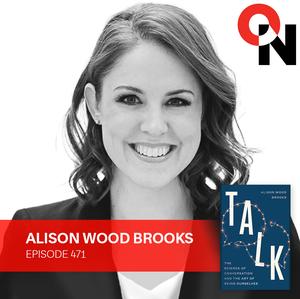
Alison Wood Brooks: Cracking the Conversation Code
5 Feb 2025 · 70 min
In this launch‑day episode of the Remarkable People Podcast, host Guy Kawasaki interviews Harvard Business School professor and author Alison Wood Brooks. The conversation weaves personal anecdotes, book promotion, and deep dives into Brooks’s research‑backed approach to conversation. Brooks explains her course “How to Talk Gooder” and the TALK acronym (Topic, Asking, Levity, Kindness), busts four common myths about small talk, topic preparation, asking too many questions, and avoiding sensitive questions. She discusses how large‑scale speed‑dating data and other empirical studies inform her recommendations, highlights gender‑related findings, and reflects on the challenges of digital multitasking and Zoom‑era communication. The duo explores the role of large language models (LLMs) as conversational practice tools, shares practical tactics for dating, job interviews, and handling uncomfortable advances, and offers vivid personal stories (family licking motif, cooking mishaps, Rodecaster confusion) that illustrate conversational principles. The episode ends with a “Conversation Hall of Fame” and a playful exchange about future collaborations and possible book revisions.
Chapters
Where has time gone? This is the sixth year of the Remarkable People Podcast, and I thought maybe it's time to find a revenue model. So if you'd like to sponsor this podcast, please reach out to me. You will be able to reach an audience of highly educated, high-income, open-minded—I would even say growth mindset-minded.
People.
And I will even read the ads or the promotions inside the podcast. We're not just gonna slap it on at the beginning, in the middle, in the end. I will do the reading. One caveat, I will not promote products and services that I do not like. So if you have a remarkable product or service, you are in the right place. guy@guykawasaki.com. This is Remarkable People. What model RODECaster do you have?
You know what's funny? It's very above my pay grade. I'm in a band, and so I asked for advice from my bandmates about what kind of microphone to get. I'm wearing my husband's headphones. He's the drummer in our band. And then I have this RODECaster, and I don't know how to use it at all. All I know how to do is make like one funny sound effect. But it's a Rodecaster. I can look at it. It's a Rodecaster.
Oh, I have a Rodecaster too. See, here, I'll play this.
Yeah, I can't. So yeah, I love it, I love it. I'll see if I can do anything that's on his mind. Let's see. I can see it.
So, Alison, it's to Podcasters just want to have fun.
That's my only trick, guy.
So is today launch day?
Today is launch day. You're catching me on such a crazy day. It's so miraculous.
I figured that out last night that today is launch day, and I said maybe her PR firm made a mistake and they didn't intend to take up her morning. On launch day, I feel so bad. Are you sure you have time to do this?
You're so kind. It's such a welcome distraction. Otherwise, what am I gonna be doing? Just hitting refresh on like the sales page? I don't know.
Well, you're not on the Today Show or Joe Rogan or anything.
Well, I went on Mel Robbins yesterday when my kids were home on a snowy MLK Day. I went and visited Mel Robbins and today I get to talk to you.
Yeah. You need to talk to your PR firm to get better people for your launch day than me. Oh my God.
You're too humble. Too humble.
Oh shit. I forgot to introduce you. So listen, everybody, I'm Guy Kawasaki. This is the Remarkable People Podcast, and we're on the mission to make you remarkable. And today we have the remarkable Alison Wood Brooks, and she's a professor at Harvard Business School. I like to call her the queen of conversation because she teaches the course on how to be a great conversationalist. And we're honored to have her on her launch day. And as an author, I can tell you, launch day is not an ideal day to do a long interview. You got so much other things to do. So her PR firm screwed up and scheduled her on the wrong day. So we're gonna make the best of it.
You gotta forgive them. They've done a wonderful job. And I get to talk to you guys. Come on.
So I know we're supposed to start with small talk. So how's the weather in Boston?
You know what? It is beautiful here. We had a snowstorm and I love snow. It's so gorgeous. And my kids went sledding yesterday. It was very picturesque. Where are you in the world? Are you in Silicon Valley?
Yes, I'm in Santa Cruz. And we have a gorgeous day today. Madison and I are going to go surfing later today too.
Oh, imagine that. My kids were surfing on the snow yesterday and you get to actually go surfing. That sounds nice.
I fully understand your hierarchy of small talk, directed talk, and deep talk. So we got to engage in some small talk to observe your book, right? So—
That's right. No pressure.
I got to pitch you some softballs in this small talk phase. So what's something that you're really lousy at that you love to do?
I love that question. It's one of my favorites. One of my— what am I really lousy at, but I love to do? Probably cooking. I don't cook often, but when I do, it's so soothing and it's so cozy and warm. And I'm so bad at it, Guy. I'm not a good cook. I have no business being in the kitchen, but I do love creating a meal for my family every once in a while.
Well, you know, they have this thing called Home Fresh and it comes in a box and everything's in it. They have very good meals in that box.
Here's the challenge. I got 3 kids and they're We're such picky eaters. It's like, I feel like I can't get— there's no rest there. The Venn diagram of foods that everybody in my family will eat is impossibly tiny overlapping zone. And I don't think Home Fresh finds the zone, but we'll see. I'll look into it.
Just go to Costco and get the dollar half hot dog. That's good enough.
Exactly. That's the over— you found it. That is the overlapping part of the Venn diagram. Hot dogs.
I've had 4 children. I know how that Venn diagram works.
How old are your kids now, Guy?
They are no longer kids. They're 19, 23, 30, and 32 or something like that. I'm a grandfather. I'm a new grandfather too.
Congratulations. How many grandkids do you have?
One that I know of.
One that you know of. A baby or toddler?
Uh, 3 months old.
Congratulations, you're a new grandfather.
That's— I am a new grandfather. Huge deal. So I saw some interviews of you and you were complimenting this podcaster about how many questions he had and how he was jumping around. And I'm going to set the new standard for you today. Okay.
I love, I love it. I love it. I sense some competitiveness in you, Guy.
I like that. You can ask Madison. I'm a very competitive person and To answer the question that I asked you, I'm lousy at surfing, but I love to do it. So that's kind of where I'm at. First question for you is, you know that person in your book where you had a conversation and you told her that her boyfriend wasn't good enough for you?
Yes, I do.
Are they still married?
They're still married. They have children. They're, as far as I can tell, happily married. And I did get a text from her when she received the book, and I hadn't warned her about this story. So we are still friends and everything's copacetic. And she actually did not remember that conversation happening. She didn't. And I think I was very relieved that she didn't remember.
So you're telling me that to this day, you don't know if she was offended by that question?
Correct. And at this point, I don't think she knows if she was offended. And this is something that's true. I do think this is a very vivid thing about conversation. It's easy to get hung up on things when you feel like they don't go well, but you have no idea how other people are experiencing a conversation or how they're experiencing you. And truly, we had an amazing friendship. It was a very close friend of mine. Honestly, I did that to a lot of my friends. At that point in my life, I felt like it was very much my place to be protective of all of my girlfriends who I thought were amazing, and no, no partner was worthy of them. And so I just went around sprinkling feedback left and right of like, this guy's not good enough for you. And now in retrospect, I'm like, well, that was an interesting phase of life. Maybe not my place to be tossing that around so casually. But learning how other people experience a conversation like that is very enlightening. I mean, in the moment, you really have no idea how people hear you or what they're learning from you.
Maybe Madison should introduce you to her boyfriend so you can check him out for her because—
Now she's gonna be scared that I'll write about their relationship in a book and have it be in print for all of time.
Well, the test will be if you don't like Madison's boyfriend, then she'll probably be living happily ever after with him based on her track record.
That's right. If there is one clear takeaway from this, it's that my instincts are not good about other people's love lives.
I can hardly wait till your daughters have boyfriends. Oh, that's—
I know, I know. I have 2 boys and a little girl, and I—
Oh, you only have one girl.
And they're only 9, 7, and 5, but it does take a lot of self-control for me as like a psychologist and just, you know, I'm obsessed with relationships. So to not ask them every day, like, what's going on? Who's got a crush on who? What's got— how you feeling? What's cool? What's new? Too soon. I need to pump the brakes.
Is she still licking your nose?
Oh, you know what, Guy? She does. She's in kindergarten now, and she is very funny. She's very silly. And she's so proud that she is the first story in the book. Her name's Charlotte. And she knows that story. She doesn't remember it because when it happened, she was a baby. She was 1. But I've retold it to her, and now she hears from other people, hey, this is the— story's so cute at the beginning of the book. And so she's very proud that she is, you know, this book star. And now it's this inside joke between the two of us. Just last night, I was like, Charlotte, my book's coming out tomorrow. And she came right over and she goes, I lick you, and licked me right on the nose. So cute. You know what? Even the boys now say, I lick you. It's a family— ongoing family joke.
I guess that's what social distancing is in the Brooks family.
Yeah, there's no distance in a family like ours. Oh my God.
So I happened to notice that there's a lot of licking stories in your book because you talk about Carrie Fisher's dog licking her hand during Terry Gross's interview. So there's some licking thing.
There is a licking theme. I thought about it as I was writing it. And I was like, why is there so much licking in this book? What do I— What kind of advice am I giving to people? You're so right. What a great reader you are, Guy. It's true.
Well, I mean, something like that sticks out. So, okay. So now shifting gears a little bit, your course at Harvard is How to Talk Gooder, right?
That's right.
So I want to know if you are inspired by the Think Different campaign of Apple where you purposely do something grammatically incorrect.
I wasn't directly thinking of Apple, but I do think the principle is the same. My intention was just be different. I mean, to be different, and at Harvard to be different, it doesn't require much levity. There's not a lot of silliness. I think it's a weakness of ours. And I really wanted to make that point in the course title when it's sitting in the course catalog alongside, you know, Democracy in America and Global Capitalism, and then And then you get to this course that says How to Talk Gooder, it jumps out at you. It's very different. There's a double meaning too, because there's a theme of kindness in the book. Gooder is in the sense of like, what does it mean to be a good person? But also, you know, better in all the ways we're hoping to be better communicators.
Maybe Susan Ocker and Naomi Bagadonuts are gonna rename their course because of that, right? 'Cause they have a really plain name. That's right.
Their course is called Humor: Serious Business. Their book is Humor, Seriously. I visited their course. They have visited my course. Actually, Naomi visits my course every time I teach it. She's such a talented teacher. She comes during our levity module and talks. So, we're very much on the same page. Maybe I can get them to rename their course something even sillier.
Okay. I notice— you're going to figure out that I notice the damnedest things, but I noticed that when you introduced Naomi, You introduced her as a comedian, not as a professor. Was that an inside joke, or did you have a lousy copy editor who didn't check?
You know what? Probably both. No, I'm kidding. It's actually the way that I introduce people in the book is the way that I think of them in my mind, how I categorize them. So Naomi's a professor, but she's not a behavioral scientist in the way that so many of my professor friends are scientists. In my mind, the value add of my relationship with Naomi is that she is really a practitioner. She's out there in the world. She's teaching humor to people who have been incarcerated in Palo Alto. She's teaching humor workshops. She's out there. She's consulting with so many companies. And that's a different role. That's a different job than what so many of my behavioral science research friends are doing.
I can just see Katie Milkman and Angela Duckworth in a prison in Philadelphia teaching them grit. Let me teach you grit.
Hey, they would do it. I mean, if you could get a large-scale, large enough scale prison, they would, they would, I'm sure, love to get in there, especially Angela and Katie. They're amazing.
They're gonna give a whole new meaning to the milkman delivers.
One of the studies that I talk about in the book is about parole hearings. So we've had the lick theme. Now we're picking up on a On a prison theme.
We moved on from licking to prison. It's showing we're going up the pyramid.
That's right. Yeah, exactly. Deeper and deeper.
Shifting gears again, do you think people can have a conversation with an LLM?
It's a good question. I think it goes back to this question of what are your goals in conversation? I think an LLM, an AI, a chatbot are quite good at fulfilling some of our conversational needs. It's why there's so, such great promise in companionship through AI or through LLMs, because they can help us not feel alone. They can help us have fun. They can— they're an incredible sounding board. They help feed good ideas to us. There's so many needs we have that a non-human entity can fulfill. Here's where I get a little bit worried. I mean, there's a lot that's worrisome, but one of the things that I've been thinking about is something that humans struggle with in conversation is getting past our own self-centeredness. Our own egocentrism, that we focus so singularly and naturally on our own point of view. And in the book, we take this position of like a kind conversationalist, a good conversationalist relentlessly pushes themselves to think about the other person's perspective. Not just think about it, but ask about it. Ask questions, learn as much as you can about what's really in the other person's mind because we're bad at guessing, right? We're bad at knowing what other people are thinking about. So we have these egocentric tendencies. We like talking about ourselves. We like thinking about our own perspective. And we have to really work hard to get over that. When you're interacting with a non-human entity, you don't need to do that at all. The whole point is to get the entity to fulfill your needs as much as possible. It's completely self-centered in a way. You don't need to relentlessly push yourself to understand its perspective. It doesn't really have a perspective. It doesn't have needs. A chatbot, an AI, an LLM, it doesn't have needs and it doesn't have desires. And so what I worry about is if we are interacting with non-human entities too much, is it training us to be even more selfish than we already are?
That's a scary thought.
Yeah.
I hope that Sam Altman and the people at OpenAI read this book because it might improve their agent aspect of LLMs, right?
Of course. For sure. Some companies have come over the years, many people and companies have come to me looking for advice and guidance and consulting about how to make their bots more human-like. How can we make them better at conversation? At first, I was flattered and excited to engage with them, and then I sort of stopped Because I'm just not sure that that's what that means and if that's actually helpful to us at this point.
Well, there's a lot of upside there when every voicemail system says, press 1 for tech support, press 2 for sales, press 3 for executive directory, press 4 if you want to get this menu over again. I'm sure you can improve that.
I definitely can. I definitely can. I would be interested to hear, so for people who are working on LLMs and And bots, I would love to hear what they think of the insights in Tock and how much of it is translatable to bot development and how much is not, right? Like, how much is unique— human— the human mind is uniquely positioned to, to do.
Do you think that you could use an LLM to train you to be a better conversationalist? You could prompt it with, what are some great topics? Because you say it's so great to create a topic list, right?
So this is where LLMs can be so helpful. I think as a trainer, Training mechanism to be— for a human to become a better conversationalist, for sure. In fact, before LLMs became a thing, I developed a case at HBS with a company called Simersion, which is essentially this. They created simulated conversation partners so that my students could practice interacting with people that are different from who they would normally encounter in their normal lives and get lots of reps. You just talk, talk, talk, talk, talk, and get lots of different responses from this simulated conversation partner. So an LLM could do a lot of things. My sister recently asked ChatGPT, like, hey, I wanna have better conversations with my parents. So, and then she fed information about our parents. She was like, what would people who live in upstate New York in the Finger Lakes, who have 9 grandchildren, who are 72 years old, what would they want their adult children to ask them about?
Mm-hmm.
And it gave great ideas. It was a great way to brainstorm topics because the LLM has a lot more data about people that meet those demographics. Demographic characteristics than we might guess. Then like we as young, you know, 40-somethings could guess that they would wanna talk about. So seeding topics, brainstorming topics is a great idea. Simulating conversation and practicing, great. Pushing us to become more kind, I'm not so sure.
I think you should ask your parents vis-à-vis your grandchildren, have you created a generation-skipping trust for my kids? That's the most important question. You could ask your parents for your grandchildren.
I'm adding that to my topic list right now, Guy.
Generation-skipping trusts so that they don't give you something, you pay tax, you give it to your kids, they pay tax. It skips your generation, goes straight to their generation. That's amazing.
It's amazing.
I went to law school for two weeks and dropped out. So you know, I picked that right up.
That you learned during your two weeks of law school about generation.
It was so valuable. Imagine if I had stayed two years. My God!
Imagine, imagine, imagine the hats.
Oh, that's so. I'd be teaching at Harvard Law School. We would be colleagues.
But you can't surf here, Guy. You can't surf in Boston. I mean, I guess you can in the summer, but not in the winter.
I love a good acronym, and your acronym is talk T A L K. So. Please explain what TALK stands for.
Can I tell you, through this book, I've already learned that acronyms are very polarizing. Some people really, really love them and find them to be so helpful to help them remember stuff. Other people are very like, come from a very anti-acronym place.
I'm pro-acronym.
I'm also pro-acronym. I think really good mnemonic device to help remember. But I hope this acronym people find very helpful. T stands for topic. A stands for asking questions. L is for levity. And K is for kindness.
And so those 4 things are the foundation of great conversation.
Yeah, the ambition, and I think, I hope it delivers on this promise, is that it provides a comprehensive landscape of conversation where lots of prior work, I mean, if you focus only on persuasion or you focus only on influence, only on negotiation, only on relationship development. The problem is that you're missing out on how those things, those goals trade off with other important goals like having fun or maintaining privacy or like just liking to be with people. And so it's overly narrow view. The promise of this acronym in this book is a broader perspective. Like, let's consider all of the things that we want as humans at one time and then come up with these 4 Reminders, these 4 guardrails that are going to help us do all of the things better.
May I make a suggestion with your acronym?
How dare you? How dare you, Guy? Yes, I can't wait to—
What do you mean? I read in your book it's okay to bring up sensitive questions.
I can't change it at this point, Guy, but yes, I'm all ears. I can't wait to hear.
Okay, so I think you should change ASKING -ing to -asks, because then all elements of your acronyms will be nouns.
You're right. It is a jarring gerund. It is a jarring change of grammar. But here's the thing. When I hear the word asks, the noun, I think when people use the word ask as a noun, they're usually talking about, I have a big ask.
Yeah.
And it— they mean I'm asking for something. I'm gonna ask you to give me something that serves me, which is totally against the spirit of asking in this book, which is like, no, you're asking for the sake of information exchange and learning.
But I would make the case that as a Harvard Business School professor and someone who's already broken the bounds of good grammar with gooder, you can change the meaning of ask. To just be a synonym for questions.
I love it.
For generating conversation.
You know what? I was talking to Patrick McGinnis the other day. He was interviewing me about the book. He has this great podcast. He's the guy who invented the word FOMO, fear of missing out. And we had like a jolly good bonding moment because of our shared experience of inventing acronyms. I like this, Guy. I like the idea of the lofty goal of me changing the whole meaning of the word ask. I like this. I like the ambition of it. I'm going to keep it in mind. I will tell people that this is your vote. When I say A is for asking, and I'll say, and Guy Kawasaki told me it should be ask.
It's my OCD Chicago Manual of Style upbringing. What can I say?
I appreciate it. I applaud you. I applaud your OCD grammatical ways. I do.
Well, we should ask Angela Duckworth what she thinks.
So let's call her in. I can call her right now. You want to dial in and merge her in?
Angela, what do you think? So, you know, I want people to read the book, so I'm not going to force you to explain each of the 4 things, but I noticed that you busted some myths in this book. So I'm gonna mention what I think 4 myths you bust and how and why you busted them. All right. So first of all, myth number 1 is small talk is a waste of time. Tell me why that's wrong.
It is wrong. Everybody feels like it's a waste of time because it's so unpleasant. Everybody knows that once you're there, it's shallow, meaningless, empty. You start to have these alarm bells go off like, oh, we're not doing— we're not doing conversation right. We gotta get to the real stuff. We gotta get to the productive stuff, the meaningful stuff. We all know that feeling. The problem isn't with small talk itself, it's that we get stuck in it for too long. Small talk is a very important social ritual. It's where conversation has to start, especially between strangers or people who don't know each other that well or who haven't seen each other in a while. It's a very well-worn social ritual. That's how we start conversations. The point though is to use it as a place to search for better stuff and ideally to search for better stuff quickly. I want to hear people talking about surfing within the first 4 turns of a conversation and how much they love it and how their kids are surfing down the snow rather than— Oh yeah, it's cold. Oh yeah, I don't like the cold. It's warmer here in California. And a lot of conversations do stay in that very mundane world for much too long. So the trick is just making sure you look for the doorknobs to better, more interesting rooms and get the courage to go through those doorways, go to better places.
Is there a rule of thumb about when to make the switch?
It would be weird if right away I had been like, Tell me about your mother. That's jarring. It's almost as jarring as the asking Jarand in the middle of the talk acrostic.
Well, we got from weather in Boston to licking dogs and licking noses pretty quick, right?
Yeah. I think both of us are people who are very hungry to move past small talk. But I don't— but we don't dread it, right? Like, you have to do it. You just have— it's the starting place. It's the launchpad to go somewhere else. And some people have developed the skill of moving away from it more quickly and more smoothly, and everybody can develop that skill.
Okay. Myth number 2. I think a lot of people would say it's kind of tacky to prepare a topic list in advance of meeting people that, you know, you shouldn't pre-plan the topics you're going to talk about. So bust this myth.
I'm so happy to bust this myth. I love the word tacky. When we, when we survey people, when we say imagine, uh, prepping topics before a conversation, especially with someone you know well, like your spouse or your lover. Yeah. Look at your topic list. Let's go. I love it. So a lot of people are very averse to this idea. They're like, I shouldn't have to brainstorm topics. I'm gonna know what to talk about once I'm in a conversation, especially with people that I know well. In the experience of it, in reality, once you get to a conversation, having thought ahead about it is incredibly helpful, not just for a podcast interview or for a work meeting where you've brainstormed an agenda, but even for conversations with people that you love and know well and see every day, because it forces you to just think about them. It's a perspective-taking nudge where you're like, oh yeah, what's going on in my partner's life? What do I need to remember to ask them? It's a way to show them that you care. And that it helps you remember to raise the topics that you should be raising with them. Makes things more enjoyable, less anxiety-inducing, smoother, more productive, all the good things.
You know, there is no one who's more positive about AI than Guy. And I often do this, and I think AI is smarter than me. There's no doubt in my mind. ChatGPT is smarter than me.
Oh yeah, smarter than all of us for sure. I mean, by definition, it's smart. It's like as smart as the, the masses. Right.
But one thing AI absolutely cannot do that I can do is come up with questions and topics for a podcast. Because before every podcast, I usually ask, what should I ask Katie Milkman or Angela Duckworth or Steve Wolfram? And they always come up with really boring questions like, what was the most exciting part of your career? What do you look forward to? Et cetera, et cetera. If there is ever a day where I ask, what should I ask Alison in a question in a podcast? And the LLM says, Guy, ask her why she talks so much about licking. That's the day that AI has arrived.
Why do you think that is? Do you think it's a unique skillset that you have as an individual, or do you think it's a broader human ability? We're just better at knowing or anticipating what will be fun and interesting to talk Talk about with other people.
I think it's because using your vernacular of System 1 and System 2, I'm about System 10.
That's why.
Say more. Okay, wait, more myths. I got 2 more myths.
Oh yeah, that's right. Keep going. Sorry, don't let me derail you.
So myth number 3, it's bad to ask too many questions.
Oh, I love busting this myth. Everybody can think of a person. They can think of a person or think of a conversation where they were annoyed that somebody asked too many questions. It felt like an interrogation. That memory is so salient that it leads us to believe that you can ask too many questions, when in most contexts, for most people, it's either impossible to ask too many questions or the number of questions that you would need to ask to get to that annoying point is so extremely high. that you almost can't possibly get there. This is true, particularly in cooperative conversations where you're collaborating or you're on a date or you're just there to have fun, connect with people. That's a big chunk of the conversations we have in our life are cooperative conversations. And even in competitive, conflictual conversations where you need to negotiate something.
My 4th myth is that it is bad to ask sensitive questions.
It's bad to not ask sensitive questions. It's terribly bad. It means you're gonna get stuck in small talk world, mundane, meaningless, unproductive world forever. We have all kinds of fears about asking sensitive questions. We don't wanna hurt people's feelings. We don't wanna seem rude. We don't wanna seem intrusive. We don't wanna seem incompetent, right? Sometimes we worry that asking a question We'll make it look like we should already know the answer to it. In truth, asking sensitive questions is the most direct pathway to connection, to learning, to teaching, to ironically even to privacy, right? Because only by asking a sensitive question can you learn where somebody's personal boundary is, where they can say, actually, I'm not comfortable talking about that. Otherwise, you'll never find it and you can never learn how to You know, where are their boundaries? What are they comfortable talking about and not talking about? So yes, we need to ask more sensitive questions.
So how much do you make as a Harvard Business School professor?
That's such a good question. I love it. I'll tell you what, book deals help. Book deals help you earn a lot more. And I think that's why a lot of professors are writing these trade books.
I need a number here.
I'm still not tenured. I'm a junior faculty member, so I actually don't know I don't know what my tenured faculty colleagues make.
I'm asking you, not your tenured faculty colleagues. You, you, you think you can just avoid my sensitive questions.
Guy, can I be real with you? My husband, for real, my husband is a financial advisor and I don't even know how much money I make. Okay. Okay. The money flows. Okay. The money flows to my husband. My financial advisor.
I learned from your book that, I learned from your book that you have to learn when to switch topics. I actually want to answer that.
I think the sincere answer to your question is more than enough. Too much. I make too much.
Speaking of tactics, so do you think it's better to switch to too many topics or it, what's worse, too fast or too slow switching?
We know this answer. I know this answer, not just based on my personal hunches or preferences. Of course I love rapid topic switching. Be— I think because I have an ADHD sort of an inattentive brain. I think you do too, but We also actually have data on this. This is a huge data set that was collected from BetterUp, which it's just amazing conversations. After their conversations, there's like hundreds of thousands of conversations, they ask people, did you cover the right amount of topics? And most people say, yeah, I think we covered about the right amount of topics. But of all the people who said no, we did not cover the right amount of topics, people are much more likely to say that they covered too few than too many. So the most common mistake is moving too slowly through topics. And we see that when we manipulate the speed with which people move from one thing to the next. So we've run experiments where we tell people, move faster. As soon as things start to lag, we want you to move to something else. And those conversations are much more enjoyable.
Okay. So now let me ask you. What about when people who are hesitant to ask sensitive questions start with the question like I did, may I ask you a sensitive question? Do you think that is a cop-out? Do you think that is a waste of time? Or do you think that is a good social grace?
I think it's a nice signposting. It's a little bit of a warning, like, hey, something's coming, pay attention. It at least gives the veneer or the veil of politeness. And caring, right? You're also saying, I'm gonna ask you something sensitive. If you don't wanna answer it, I understand, right? That's a nice disclaimer. The same is true when you switch topics. You can note it like, is it okay if I take a hard left turn here? Is it okay if we smoke bomb and move to something else? It's almost like you're asking permission of your partner, even though they're sort of required to say yes because they don't know what's coming next. But yes, I think it's lovely. Or you can just do it. Just ask, how much money do you make, guy? You know, like, just go for it and see how people react.
My wife is my financial planner. I really don't know. And everything is a direct deposit. I don't check my balance. But can I tell you a really funny story? Yes, you can use this story.
I think I get to decide if it's funny, but okay, go ahead.
Oh, I guarantee you when I tell you something is funny, it's funny. All right, so when I was at Apple, Well, I used to work with some of the executives in outside companies who were Macintosh users. And one very famous person was a woman named Sandra Kurtzig. She started a computer company called ASK Computing. It was manufacturing software. She was the first woman in Silicon Valley to take a company public. So she was very, very rich. And she had this Ferrari Testarossa, which I love Ferraris. Not that I ever owned one. So anyway, she reaches out to us. She says, I'm having problems with my Macintosh. So Guy goes over to her house to help her with her Macintosh, right? And she shakes the mouse and the screen wakes up and the window in the front is Quicken. And I know how to use Quicken. I know exactly where the current balance of your checkbook is. And I, as soon as she wakes up Quicken, I look down and it's like, I was like, holy shit, she has a quarter million dollars in her checking account. And ever since that day, it's been one of my goals to have a quarter million dollars in your checking account. And I, I have achieved that goal, Alison.
Yes, Guy. Yes. I love that you were— your eyes darted so quickly to the balance. It's like, it's such a lovely measure of your like inner curiosity. I love it so much. And you've done it. Is that it? That you, you can drop the mic. You've achieved all the things you wanted in life. Quicken, you're, you're $250 in your checking account.
Tell that to your husband.
I will.
So if you ever need help with your Macintosh, be sure you have QuickBooks closed when you call me to your house, or I will know.
I love it. I love it. I hope you're not tracking my screen right now. We're talking right now. I'm like, oh God, does he want to see I have Access to on my computer. What do you want? What is this? What is this? What is this? It's too late.
I already posted it on Threads. How much money you have? Clayton Christensen is up there laughing at us like, God, you're really taking it to her. Go, Guy, go.
He's cheering you on. I can't decide if he's what would be cheering you on more or cheering me on more. I think he's cheering us on together.
He's saying, I'm gonna write a new book called The Conversationless Dilemma.
Exactly. When you love both people so much, what do you do?
So, okay, another question. What happens, or what's the impact or the value if somebody gives you an inappropriate, mean, or destructive answer and the person then says, I was just being honest? Does that excuse you from being an asshole?
There's a really great Taylor Swift lyric that says, casually cruel for the sake of being honest. Ooh, that line will cut you like a knife. And I think it cuts you like a knife because it really captures something that we all feel torn about, this tension between benevolence or kindness or politeness and honesty, because often the true contents of our minds are not kind. Our brains are cruel. We're built for judgment and social evaluation and negative evaluation of other people and their work. And as you could tell from the book, I think a lot about what kindness means. Sometimes being honest in the short term, maybe giving feedback that someone needs to hear, is kindest in the long term. But still, you can deliver that honesty in a way that hopefully— and I think there's some nice ingredients And I think there are ingredients in the book to do this in a way that isn't even hurtful in the moment, so that we can navigate this conundrum between benevolence and honesty, even there, with more kindness.
Up next on Remarkable People.
They are on a Zoom call but emailing at the same time. And so you get to see how overlapping and twisted and braided our conversations are these days. And what you realize is it's not just about choosing topics and asking questions. It's doing that while you're also engaged in like 6 other conversations at the same time that have their own unique topics and their own questions and sometimes a human mind on the other end synchronously and sometimes not. And this new conversational world that requires us to toggle like this can feel quite overwhelming.
Thank you to all our regular podcast listeners. It's our pleasure and honor to make the show for you. If you find our show valuable, please do us a favor and subscribe, rate, and review it. Even better, forward it to a friend. A big mahalo to you for doing this. Welcome back to Remarkable People with Guy Kawasaki. What's your advice when you have to converse with someone that you've just completely disagree with? If I went to some dinner and I had to sit next to Elon Musk, like, how do I approach a conversation with someone I completely disagree with?
You want to think about what your goals are, right? So we have goals in the short term, like to survive the dinner and not have it be miserable, not get in such a heated argument that you cause a scene or Probably like ruin a potential relationship with Elon Musk forever. Those are kind of inhumane. Maybe that's your goal. That's okay if it is. But then you have longer-term goals. If you are thinking about how could I leverage a meaningful relationship with Elon Musk, if you're playing the long game, your goal in the short term should be to have a great conversation with him. And the way that persuasion actually works between people is that You have to be in a good relationship. And if you have very differing views, they may slowly over time come to bend to the gentle pressure of your differing viewpoint. But you're not going to persuade him over a Correspondents' Dinner at the White House in one conversation to change all of his views that you agree with. So I think—
The odds of me being invited to the White House are zero. But you know what I mean?
I think a lot of us have this instinct where we're seething. We hate the guy. We, we don't agree with almost anything that someone else stands for, and therefore we have this need to like be right and say something that really puts them in their place. But that's not how to pursue— if you really have goals to persuade someone, you gotta play the long game.
Okay. I'll tell him that I think Starlink is very well done. How's that?
That's a good start. Compliments are a great start, Guy. That sounds nice.
Yes. I hope it's a short dinner.
Right? So if you—
Yeah, that's one I'm gonna have to ask ChatGPT. What topic should Guy discuss with Elon at dinner in the White House?
To avoid getting into immediately into a shouting match. Yeah. Yes.
Next question, also tactical. How do you end or divert a conversation where someone is hitting on you or sexually approaching you?
I don't wanna brag, but this was much of my life, so I have some experience with this one.
Oh, it's a 1% problem.
Yeah. You don't have to end it, right? A bit of flattery is nice no matter what, as long as it doesn't feel threatening and as long as it's not disrespectful to someone else. So to your partner, if you're in a relationship, or, or if it's inappropriate in the context, if it's someone in the workplace who's coming and, and, and Sort of coming on to you sexually in a way. So much of conversation is about reading your own needs, reading the other person's needs, and then reading the context. So if you're at a bar and somebody comes up to you and is hitting on you, that's appropriate, but you should probably say, oh, actually I'm married, or I'm in a relationship, I'm unavailable. If you're in the workplace, things get trickier because then you have power dynamics and other goals and outcomes at stake. That one gets harder. Most organizations have an anonymous line where you can contact a sort of Title IX or mandatory reporter type of line to seek advice, especially if it's someone who comes to you who has actual power over you in terms of your work. And hopefully you feel comfortable confiding in some sort of mentor to ask for advice about what to do. But in general, if somebody is— makes an advance towards you, and certainly outside of the workplace, I think you can take it as a compliment and just be honest with them. Thank you so much, but not available in that way.
I know I hate when women treat me as an object, but okay.
It's all that surfing guy. You're like a surfing stud.
You got into a whole discussion about NPR and how great their questions are, but I have a question for you. It seems that when I'm listening to NPR. They ask a lot of closed-end questions. And just let me parody that. Like, some of these interviews on NPR, they say, well, you saw your mother kill your father when you were 8, and there was blood all over the kitchen floor, and then you had to testify against your father. Can you tell us more about how that affected you? Well, the answer is yes or no, right? But what happens when you ask a closed-end question like that?
Yeah, I think especially for an outlet like NPR, or for many people when they're asking closed-ended questions, it's a sort of way— it's a leading question, and it's a way of almost fact-checking. It's literally saying, I know this about you already, and I need you to confirm or deny that it's true. Or some people use closed-ended questions to help set context for a new topic, to judge how much you know. So if I were to change and say, Guy, have you seen the TV show Silo?
Nope.
Right. So I just need that information quickly in order to guide how much— what I'm going to say next. Am I going to continue down that path? Or like, this isn't going to be interesting to you because you haven't seen the show, so I'm going to pivot. So closed-ended questions do have an important purpose, but they're a completely different animal than the lovely open-ended launchpads that we were talking about before. Open-ended launchpads, by the way, good questions that inspire real information exchange and authenticity and connection, often start with the word what. As opposed to, I say, what is your favorite TV show right now? You'll give me an answer and then we can go from there. So I will learn more than twice as much information by asking that question than saying, have you seen the show Silo? Where I get a yes or a no. As opposed to open-ended questions that start with the word why. Why haven't you watched Silo yet? Or why don't you watch more TV? Those questions are open-ended in theory, but they feel accusatory. So the relational part of that kind of question asking a little bit goes by the wayside.
Okay. Just for the record, my favorite TV show was Yellowstone, and I'm the only person in Silicon Valley who liked Yellowstone.
Yeah, that is surprising. Oh my gosh. Wow.
And my favorite character was Rip.
Oh, he's a great character. I get it. You know what? There's another topic for you to talk to Elon Musk about. Okay. At the White House dinner, you can talk about your shared love of Yellowstone and Rip Hamilton. Is it Rip Hamilton? I don't know. Rip.
Now I have a lot less hesitation to accept the White House dinner in the next 4 years.
See, you've already got 2 topics. We'll find some more. We'll keep brainstorming.
I want to know about the differences you've noticed between men and women in conversations And when I read this section about your friend calling you up and asking you about a vaginal mesh, I said, I cannot imagine a man calling up another man. So is there a difference between men and women?
Okay, agree to disagree, because the number of conversations that I have overheard men talking about getting snipped after they've had their children, like more than 15 conversations have I eavesdropped on men talking. Really? When are you getting snipped? Are you Are you gonna do it? Are you gonna do it on Masters weekend so you can lay around and watch golf? Truly, it's like so many, so many times. So I think that's the male version of, of the vaginal mesh conversation. As scientists, we have a lot to learn about gender similarities and gender differences in terms of communication. You see a lot of hypotheses and hunches thrown around in the public about gender differences in conversation that are not yet substantiated by scientific evidence. And in fact, the stuff that we do know is like, actually, men and women talk in a lot of the same ways. So there's this great study by Matthias Mel. They had people wear badges that just recorded ambient noise on people every 2 minutes or so in their lives. And so you get this So they took this full sample of somebody's auditory life, and through that method, they found that men and women speak exactly the same amount of words on average per day, about 16,000 words per day on average. Now, when you start to look at, well, when are they talking and what are they saying, that's where you can get into, well, are there content differences? Are women more likely to talk about vaginal mesh than men? Yeah, probably. But men are more likely to talk about their vasectomy. But science really hasn't gotten to a point of how fine-grained figuring out, are there gender differences? Are there racial differences? Are there age differences? And what are they? What are the topics that different demographic groups are discussing? And what does that mean for how they relate to each other, for how we see each other as similar and different? That's, I think, a very exciting area for scientists to pursue, is looking at the content of what people are saying.
I want you to know today that between sets, as we surf, I'm gonna go asking all the men if they've been sniffing I can come across as a sensitive man, but but again, you're probably beyond that phase of life where it's relevant anymore. Actually, this is another topic I can have with Elon. Elon, yes. Don't you think you should be snipped by now?
Yes, vasectomy. I'm adding it. I'm literally compiling your your list for Elon. This is so fun. I didn't anticipate this, but I'm really enjoying it.
All right. So you brought up the topic of. academic research. So as I was reading your book, I thought to myself, there's a lot of dependency in this book about speed dating experiments. Are you at all worried that speed dating may not extrapolate to everybody in the real world?
Yes, of course. This science of conversation is very new. It is very important for people to realize this. People have been studying language, human language, the development of language they've been studying public speaking, so one way where one person just says something and nobody responds, for a very, very long time. We know a lot about language. We know very little about dialogue because only in the last 10 years have we come across a technology that allows us to record real conversations at very large scale, the tools to analyze those conversations at large scale. And so we're at this phase right now where we're learning things very, very Very quickly, but we are still quite limited by the datasets that we have access to that are of the gold standard of academic rigor that you would rely on. And so you kind of have to make these sort of logical leaps of like, well, if things are going well in speed dating, probably some of those things are generalizable to real dating. And then, well, what about dating is specific to dating or versus it's actually translatable to all conversations? And so that's where we are right now, is starting to figure out, well, what is context-specific and what is generalizable across lots of areas where people talk to each other?
I'm not saying that most people who listen to my podcast are in the dating game, but while I have you, do you have some tips for dating?
I do. I do. Number one, it depends on if the person is a stranger to you. So if it's a first, first date, it's really important that you don't have long pauses. So long pauses are the death knell for conversations between strangers. It's very awkward. So just keep asking questions, keep asking follow-up questions. Bring— have your list of topics ready to go so you don't have to panic when you know you need to change the topic. You can use any of the topics that we've used here today, actually, on your date would be great. Really, I think on a date, whether it's with a stranger or with someone that you've been dating for a while, And with all people in all contexts, asking follow-up questions is a superpower because you don't need to have prepared ahead of time. You don't need to know anything about them or about or have any knowledge of anything. You just need to listen to what your partner is saying and ask continue to ask questions about it. We see people fail to do this a lot in our data, both in speed dating but in other contexts as well: negotiating, sales calls. Just normal conversations between family members. When someone shares something important with you, if they are courageous enough to share something about their life with you, you should follow up on it and ask more about it as a signal that you care, that you heard them, and that you want to know more.
So now another kind of dating is the job interview. So now you're trying to get a job. How do you have a good conversation as The applicant, not as the recruiter.
Yeah, as an applicant. I think in our minds, when we think of conversational job interviews, there's this very clear script of like, well, this employer is going to be asking me questions, and I need to prove how great I am. I need to prove how interesting, smart, competent, and well-suited to this role I am. Anything you can do to flip that script is going to go great, because a real conversation that's rewarding and actually makes you look competent is a give and take. So you can't just sit there and wait for an interviewer to hit you with question after question. They're going to get bored with that. They're not actually going to be impressed with almost anything you say, probably. So again, ask questions back, ask follow-up questions, try and learn about their perspective. Instead of trying to prove how great you are as an applicant, try and be interested in the work that they're doing and learn as much as you can about it so that you can actually judge whether you are a good fit for the role.
You could ask, what do you think of your CEO going to the inauguration? That'll definitely get you an offer.
If you were giving him advice about the topics to raise with the people at his table, what would you advise him to say? And then you could brainstorm about it together. That would be so fun, and it would be such undeniable evidence that you're interesting and creative.
I'm glad I'm not applying for a job anytime soon. So now bring me up to speed, like, with your research. What are the implications of doing all this on Zoom instead of in real life?
Yeah, I think about this a lot. I had written a whole chapter in the book about digital communication, and I took it out at the very end of the editing process.
Why?
Yes, I know. Because I want the book to be timeless. By the time I had written it a year earlier, it was already outdated. I mean, while I was writing the book, LLMs, ChatGPT, AI, it all happened. And there's gonna be more of that in the future. Whatever you say now is going to change dramatically. Most of what you could say now is gonna change just rapidly and in exciting ways. And— but now I get to actually talk about it. So let me tell you what was in that chapter that I finally got to keep.
Okay. Right.
So important. I think there's a lot of rhetoric in our culture about getting kids off their phones and letting them have a good childhood. I think what we need to talk about a little bit more is like, well, we're all part of this world. It's not just children. We are all toggling constantly between our phone and the computer and then turning and talking to someone in real life, and then someone calls and then you're texting at the same time. So we're all doing this conversational toggling, and I think we don't have any idea what that's doing to our brains. What it's doing to our relationships, and certainly how it's affecting our conversational skills. So I'm interested to see what happens. In my class, I ask my students to do an audit of their conversational lives where I ask them to take 20 minutes in your life and I want you to write down every incoming and outgoing message, whether it's an email, a text, a phone call, a real-life conversation, And some reels and memes on TikTok. Well, I should say Instagram now. And so they write it all out and you get this really wild sample. It's a transcript, but it's all over the map, right? They're sending texts while they're talking to their mom on speakerphone. They are on a Zoom call but emailing at the same time. And so you get to see how overlapping and twisted and braided our conversations are these days. And what you realize is It's not just about choosing topics and, and asking questions. It's doing that while you're also engaged in like 6 other conversations at the same time that have their own unique topics and their own questions, and sometimes a human mind on the other end synchronously and sometimes not. And this new conversational world that requires us to toggle like this can feel quite overwhelming. When they look back on their audit, the students often say that only the ones where they were synchronous, whether it's in person or on Zoom, felt real, that felt rewarding, felt like they had some sense of human connection. And I think that's not trivial.
My phone is off.
You're so kind. I just got 6 text messages. So sorry, Guy.
Okay. So 2 last questions, because I don't wanna take up too much of your time on launch So, I want to know who is in the Alison Wood Brooks Conversation Hall of Fame?
Oh, what a great question. My mom. My mom is— Your mom? Yeah. She's amazing. I talk to her every day. I'm gonna cry just thinking about it. She's such a good listener. She's so funny. And she cares so much about me and about about all the people that she knows that I think she was an incredible role model for me my whole life. And I've never said that out loud before, Guy. Thank you for asking.
Wow.
I could give answers that are like celebrities that I think are amazing. Most of them are very good listeners and are good at levity. So people like Stephen Colbert, Conan O'Brien, Nikki Glaser. In the book, you— Terry Gross is a really amazing question asker. Really, anyone who is in the public sphere and becomes successful for having conversations, this is what their core skill set is, right? Like, that's why they've been successful, is that they are good at preparing topics. They are good at asking questions. Joe Rogan, right? Like, whether you agree or disagree with him, he's a terrific conversationalist. He's great at asking questions. He's good at getting people to open up. Guy Kawasaki, great at bringing levity and moving topics quickly and asking follow-ups.
You mentioned Joe Rogan and Guy Kawasaki. I'm sorry. I know. I know. I've arrived.
I know.
We can end the recording right here.
You see, this is what's so beautiful about the world. You see examples of conversational greatness all the time. You also see examples of fumbles and stumbles all the time. And it's because we're all human beings. We're all just trying to do our best. Sometimes we stray. And sometimes we strike gold and we find amazing moments of connection and information exchange and closeness. And sometimes we mess it up, and that's okay.
Speaking of messing this up, as I was reading your book and as we're having this discussion, when we adopted our 4th child— so we have 2 adopted children. So we adopted him about 17, 18 years ago. I was at a dinner with my wife and a friend and his wife, and he said, you know, we told him we're adopting another child, right? And he said something like, aren't you concerned about adoption? Because adoption, typically these kids, they didn't have good prenatal nutrition, or they come from broken homes, or drug— drugs in the house. Adopted kids have a lot of problems. And I have never forgiven him for that because he— this is after we told him we have one kid, we're adopting another kid. Not that we're thinking about adoption, we have adopted kids and we're going to adopt this. And I thought that was such an insensitive thing to do. I have never forgiven him, and he probably has no idea Why? I've been pissed off for about 20 years with him, all this.
Would you ever think about telling him?
After reading your book and this discussion, maybe I will, because he probably, from his side, maybe he was just thinking, I want my friend to make a really wise decision about adoption. I don't want him to go in with, with blinders on.
Or maybe it was out of his own fear. Maybe he had been thinking about adoption and that's what Afraid of for himself or for you or— yeah, we make mistakes like that a lot. That's an insensitive thing to say. It sounds very self-centered, right? It sort of reeks of being focused on what you know and what you're afraid of rather than asking a question of, do you have any fears about this? Right? Like, that would've been a much more adaptive thing to do in that moment for them.
I would tell you what country he's from, but it would immediately hit I could make guesses, but I don't want to make—
I don't want to— I don't want to stereotype.
All right. So my last question for you, Alison Wood, the Queen of Conversation, is ironically, how do you be a better listener as opposed to conversationalist?
Yeah, it's so funny. The title of the book is Talk, but I think the secret to being The a secret better listener is to talk less. sauce, the secret message of the whole thing is about listening. You can't talk well without listening. And it turns out that listening is really hard, especially for people who have attentional issues, but really for everybody. There's great research. The resting state of the human mind is mind wandering. It is not built to pay attention to another person continuously while you're engaging with them. So it takes effort to get out of our natural mind wandering state and actually listen to each other. That is effortful. It is worth putting in that effort. You need to do it in order to have good conversation. And when you do it, when you look at somebody else, you listen to what they're saying, you process what they're saying, you think hard about it, you try and really engage with it, you should get credit for it by showing them that you've heard them. And so many, many years of research on active listening have shown us— have told us to use nonverbals like nodding and smiling to show someone that we've heard them. That's good. That's a great start. That matters. But really, the advanced course on listening is using your words to show someone that you've heard them. I can only call back to this story about adoption for your kids because I was listening to you and I care about it and I've been thinking about it. I can only call back to your surfing earlier in the conversation because I cared about that and I latched onto it and I heard it. I can only ask a follow-up question if I heard what you said and I care to know more. So these verbal signals like follow-up questions, callbacks, paraphrasing, just repeating what someone has said. Hey, I hear you saying that you were upset by this and maybe you're thinking about contacting this guy again to reach out. Do you think you'll actually do that? So like, you know, repeating what someone has said can be really, really valuable. It makes people feel heard and seen and loved. And it's really where so much of the conversational magic lies.
This has been, speaking of magic, a magical conversation. And I agree. I can look forward to having dinner with Elon Musk. I never would have predicted that. I mean, now you can get excited about it.
We've got 4 topics brainstormed. We're going to get at least 10 more together and then we're going to make it happen because I want to record this conversation and see how it goes.
You've changed my life. You've changed my life. I want you to, I want you to get the I want you to take a transcript of this and do an analysis, and I want you to figure out— this is like speed podcasting.
If I wasn't doing so many podcasts for the book, I would honestly— so many of my students have done that. Actually, this year, 2 of my students did this creative thing. They took a real podcast recording of me and somebody, and then they created an LLM podcast of fake Alison and fake other person. And then they did a side-by-side conversation analysis To see like what are the pros of human-to-human conversation compared to LLM conversation. And your hypothesis, Guy, was definitely confirmed, which is humans are better at asking questions. They're better at laughing with each other. They're better at finding sparkly moments of levity and connection. So thank you. It's such a gift to do this together.
You know what? Speaking of questions from left field, I noticed you, you had a podcast and I watched it, and on your side, on your shelf, you had his logo. Do you remember that?
I don't. Oh, maybe, maybe Matt Abraham says Think Fast, Talk Smart.
No, it wasn't Matt Abraham. It was somebody else. And I thought, I wonder if he superimposed that on the video or that Alison is so clever that when she is interviewed by a podcaster, she puts the podcaster's book on her shelf. And I said, that is why she's at Harvard Business School.
I'm that ahead of the curve. I'm sure he superimposed it, but I will aspire to be the kind of person that would do that for sure.
And, and I swear to God, I thought about it, but I didn't do it. I was gonna put Talk Yeah, where's your shelf, buddy? But I forgot.
Yeah, get it on your shelf, guy. Tell everybody about it. I really— our world needs it so badly right now and always. We need better communicators.
Speaking of LLMs, so there's such a thing as Kawasaki GPT, and we put the transcripts of every one of my interviews in there. So pretty soon people can go to Kawasaki GPT and And ask Alison questions based on this interview.
Awesome. Well, you let me know if you do an analysis of this conversation. I would love the output. I would love to see what you uncover about our connection.
No, but I, I don't have the academic wherewithal to do this. You should make this a project to like—
I should.
Are you tired of listening to people talk on speed dates? You should listen to Guy and I do a podcast. To see what great conversation is like. How many questions did they ask? How many times did they switch topics? How many times did they come back? How many sensitive questions about salaries did Guy ask?
Well, it is— I mean, doing a book tour like this with lots of podcasts, it is a very interesting, natural sort of case study of conversation because I'm always there. I'm always constant. It's just that the host is changing. And in theory, it's the related topics. We're always talking about the book. book, but the variability is staggering. What you end up talking about— my favorite is when they're more conversational like this, like where you, you know, you're talking about the book, but you're talking about other stuff too. I think everybody wants that.
So in version 2 of your book, you can mention this conversation. But what's even more important to me in version 2 of this book is that you change asking to ask.
I'll do it. I'll do it. I'm gonna— you know what, I'm gonna add— I'm gonna make a foot Footnote in the next edition, edition 2, Guy Kawasaki says this should be asks. And I'm going to change the entire meaning of the word asks for him.
Alison, I'm sure you have other important things to do. So, thank you so much. This has been just a remarkable conversation.
It's amazing to connect, Guy.
I'm Guy Kawasaki. This has been Remarkable People. And man, what a remarkable What an incredible conversation we had today. This is going to go down in the annals of podcast history. My thanks to Matt for bringing us together and also for being in the same group of people with Katie Milkman and Angela Duckworth and Bob Cialdini. These are all the people who lead behavioral research. And thanks to Madison Neismer, who is our producer, Tessa Neismer, our researcher, Jeff See, and Shannon Hernandez. We got a lot of people who Make remarkable people remarkable. So until next time, thank you very much, and mahalo and aloha. This is Remarkable People.