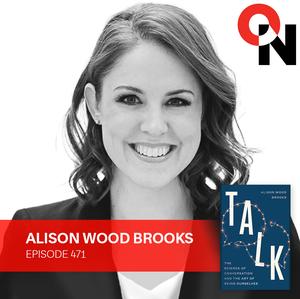
Alison Wood Brooks: Talking About Talk
25 Mar 2025 · 43 min
Harvard professor Alison Wood Brooks shares her framework for better conversations: Topic, Asking questions, Levity, Kindness. Follow-up questions matter more than most people think, and humor and curiosity can turn difficult talks constructive by focusing on the other person's needs and identity.
Chapters
There is so much NFL on ESPN right now. Monday Night Football, plus pregame and postgame. NFL Live, NFL Primetime. Everything you need to stay on top of every game, every week.
Unbelievable!
And now NFL Network is on the ESPN app. More football, more coverage, more ways to watch. Football's on all season long on ESPN and streaming on the ESPN app.
When you invest with Fidelity Go, it does all the work for you. So while Fidelity Go monitors the markets, rebalances your portfolio, and tracks your progress to keep your investments aligned with your goal, you can invest your time however you want, all while paying no advisory fees under $25K. Invest your money, not your time, with Fidelity Go. Get started at fidelity.com/go. Advisory services offered by Strategic Advisors LLC, a registered investment advisor. Brokerage services provided by Fidelity Brokerage Services LLC, member NYSE and SIPC.
I'm Alan Alda, and this is Clear and Vivid, conversations about connecting and communicating.
People stress about what that first question should be. I mean, you go on LinkedIn and you see all these debates about, well, what question should you ask in an interview, or what question should you ask on a first date? It almost doesn't matter what that first question is, but what matters a lot is everything that unfolds after that. Are you listening to the person's answer? Are you searching for points of interest and excitement? And are you ready to chase that energy and keep your focus on the other person by asking a follow-up question? So I do think follow-up questions matter more, and they can't be predicted in the way that that original question could be planned or you could think ahead about it. Follow-up questions are totally spontaneous.
That's Alison Wood Brooks. She's a professor of business administration at Harvard Business School. She teaches an award-winning course there called Talk, and she recently developed that course into a book called Talk: The Science of Conversation and the Art of Being Ourselves. This is going to be so great. Even before we got on the show, we were already talking about talking.
Well, Alan, I got to eavesdrop on your conversation with Graham, and you were giving me a compliment. That's— what a dream scenario to enter in and hear people saying nice things about you. Thank you.
I was saying what an excellent talker you are. We're not all excellent talkers, even though we all talk all the time.
And even excellent talkers aren't excellent all the time.
What I love about what you've done is you've thought about talking and you've studied it so thoroughly, and now you've written this wonderful book about it. And I think I have for the first time the feeling that this is not something that's going to sound fake when you practice it. And I think you've shown that with your students too, from what I've read in your book. I know you prefer small talk at the beginning of a conversation, but let me jump right in because the small talk will come out on its own. The title of the book and the title of your course is Talk, T-A-L-K. Which is not only a snappy title, but it's, it's also an acronym for what the whole thing is. T for topic, A for asking questions, L for levity, and K for kindness. I'm not a great fan of acronyms, but I can't think of any more things than those 4 that you should be worried about if you really want a good conversation.
Can I be honest? I don't really like acronyms either. I think this acronym was very ambitious. It was sort of born from a place of, Inspiration. I started at Harvard teaching a course on negotiation, which is a course that they teach at most business schools and law schools, and it's a fabulous course. But I felt I I got to a point where I felt like it was a bit narrow. It was focusing on mostly information exchange and persuasion. Persuasion is just one goal out of a vast constellation of things that we truly and sincerely care about. And so I had this. Sort of deep desire to come up with a course that had a wide— sort of widened the aperture of what we're trying to do when we're talking to other people. And what I realized is those goals are so complex and conversation is so complex, we need some sort of simplifying mechanism to help us wrap around— wrap our arms around this vast ocean of complexity. And so I was sort of pushed into having this acronym, and I think it does it. It's an ambitious goal to try and capture the whole social landscape of conversation, in 4 letters, but I think it does a pretty good job. What do you think?
I think it does an amazing job. It made me awake to the fact that the first letter in talk, topic, is in the right place in the 4 letters. Because I resisted a little when I first heard you talking about it, to say, I'm going to think about what the topic of this offhanded, informal conversation is going to be, even maybe with a stranger. How can I have the chutzpah to say that the topic is going to be this? But if you have a topic or two in your back pocket when you go into the conversation, you're not naked.
That's right. And you're not alone in your aversion to the idea. I think when we hear the idea of topic forethought or topic prep, in theory, it sounds too architected. It sounds too rigid, too planned, too scripted. But in practice, it's, it's not rigid at all. It just means you have ideas of where the conversation could go when you very predictably will land on those moments, those quiet pauses, those lulls, and have that sort of panicky moment where you're thinking, oh, well, oh gosh, I know we should change to something else, but I don't know where to go next.
What would be an example of topic in that context?
So topics in general, the sort of definition of what a topic is, is you can take the transcript of every conversation and, uh, break it into themes, right? So imagine that we put all the, everything that you say and everything I say in, in sort of rows in a transcript of our conversation. The topics are just a way of chunking all of the rows of our words into things that are related to each other. So we started our conversation by talking about flattery, about conversation, and then we started talking about the acronym, and now we're talking about topics. And so if I asked you to look back on the conversation that we've had, your brain would be really good at clumping those topics as well. It's a sort of organizing mechanism that the human brain is remarkably good at doing in retrospect, but it turns out it's, it's quite useful even as the conversation is unfolding because we're good at picking up on clues of, oh, we should stay on this topic because there's a lot more to uncover here, or— Ooh, I think my partner's getting tired of this. Let's switch to something else. And so that organizing mechanism of chunking by topics becomes a very useful tool.
How do you prepare? Let's say, you know, you're going to a meeting, a lunch meeting. It's gonna take an hour, an hour and a half to have a meal. You're gonna talk about something maybe related to business, but you wanna, You want to be prepared to have a friendly small talk section to make everybody comfortable. So what would be an example of that?
One way to think about this is, what are our goals? If I'm going to a friendly lunch with a work colleague, I need to think about, well, what do I hope to get out of this conversation? And what does my partner hope to get out of this conversation?
What are—
what would I guess their goals are? Why did they agree to have this meeting with me to begin with? Um, and so in the book, we talk about a framework to think about all the goals that you might have in a conversation. As soon as you start to think of conversations as goal-driven, you realize how complicated our motives really are. When I talk about goals for conversation in my course, my students often push back and they say, well, I didn't have a goal. I was required to go to this lunch meeting with a work colleague, so I didn't really have a goal. But you always have a goal. Even things like fulfilling the expectation to be polite to each other, the expectation to respond to other people, having fun together, feeling connected, filling time, just sort of being together, keeping secrets, exchanging information, of course, persuading, brainstorming together, making decisions, all of these are very common goals that people have for their conversations with each other. And even reflecting a tiny bit about what do you want out of the interaction and what does your partner want out of the interaction should guide what topics you discuss once you're together. So if your goals are just to have fun, you better talk about some fun stuff, right? Like you better be aiming to make each other laugh. And if you're not, then you're, then it's not a success. Um, if their goal is to make some like 5 important decisions during your work meeting, then an act of kindness and being a good colleague means let's focus on that and help you make those decisions during this 1.5-hour lunch meeting.
If you realize you wanna move on to a new topic, or that the conversation is asking for a new topic in a way, what's the best way to do that?
Yeah, so the, first of all, noticing is a big deal. So a lot of people actually struggle with noticing the clues that we often get when it is time to switch to a new topic, which leads us to sort of circle the drain and stagnate on topics for too long. The reliable cues that it's time to switch are longer pauses, uh, uncomfortable mutual laughter to kind of fill that space. And the best way, the most common way that people switch topics is by asking a topic-switching question. So like I could say like, oh, where are you right now, Ellen? Where, I, I see you're in a beautiful room. Where are you geographically? Of course, I could say other things like, oh, I see your painting behind you. I have one like that too. Let me show you.
Yeah.
There's also, there's sort of 2 ways that you can switch topics. You can say, you can get permission and say, is it okay if I switch to something new? I've been dying to talk to you about that portrait behind you. Or you just do it and you say, oh yeah, I see that he's wearing a red hat. That's really cool. I love that painting. And just kind of go there without your partner's permission.
It's funny, you remind me of a lunch I had with Woody Allen once, who doesn't like to talk much.
That's right. He doesn't.
And I was eating my soup, and he was eating his soup. And there'd been silence for quite a while. And finally, he changed the topic, which— there wasn't one.
Do you remember how he broke the silence?
Yeah.
He said, where'd you get your jacket? That had a short life as a conversation.
Did you feel like when you were working with him, did you feel like you were a mismatch conversationally? Because everything that I can tell about you, Alan, you love to talk. And it's sometimes hard to be paired with someone who is less excited about conversation.
Yeah, but I found out that's what he prefers. That's what he feels comfortable doing or not doing. And I just respected that. And found ways to enjoy it. At other times, he would talk quite freely about things.
When people are prepping topics, I would not recommend, where did you get your jacket? That's not gonna last very long.
No. I think the answer was, I can't remember.
That's the answer to that.
And then we went back to the soup. Asking questions, which is the A in TALK, is really, it seems to me, fundamental. And it implies something even more fundamental. It implies curiosity and interest in the other person. The conversation can really be stunted by pretending to be curious, but not really, because you can't ask a follow-up question if you're not really curious.
I think you can pretend to be curious for a fleeting moment. You know, questions can be lifesavers in those awkward moments where you do not know what to say, and maybe you are not really feeling curious.
Or maybe you will get more curious when they start talking.
I think that is right. So what is really beautiful about questions is they almost always trigger answers. So people, when you ask a question, someone will likely give you something in return, even if it is a funny dodge or something, it will keep the conversation alive. And if you are a curious person and you do care about that other person, it gives you an opportunity then to follow up.
I am basically curious, but there are times when the curiosity— the faucet is turned off for some reason. But once I was talking to somebody who I didn't know, and there was no talk between us. And so I thought I'd dive in with something that would get something interesting out of the person. I said, what are you passionate about? And there was this long pause. And then the person said, well, I like golf.
Great.
Yeah, I wasn't curious about golf.
So what did you do? Did you, did you say, what, give me something else?
No, I sat there like an idiot. I didn't like to— it's happened to me a couple of times. Sometimes a person has spent their life doing something, and it's something I never developed an interest in. I got to remember that As you say, even if you act as though you're interested for a bit, for a second, they're liable to say something that you really are interested in.
Absolutely. Even if you're really skeptical about their answer, seemingly disinterested, you could say something like, I've always been deeply curious about people who love golf or play golf. It seems so boring and time-consuming to me. What's it— how does that— what's your psychology there?
Right?
Like, you could try and get into understanding how people are interested. in golf, and it could be kind of funny, and you might learn something really fascinating.
I could have actually told this person my experience with golf, and it might have led to a conversation, because the first time I tried to play golf, I had a— I think they call it a driver. And I took a swing at the ball and missed the ball, spun totally around, and fell onto the ground.
How old were you when you did this, Alan?
Oh, I was in my 30s or 40s. I don't know.
Old enough to know better. Old enough to, uh, to be able to laugh at yourself. Oh, that's so sweet. I do think there is great power in, um, self-disclosure and making yourself vulnerable by sharing embarrassing moments and sort of shame. Um, and hopefully, unless this guy was a total dud, Uh, he would have sort of hopped on that and shared a story about a time that he did something embarrassing when he was golfing too.
One of us mentioned follow-up questions, and I know you've put a great store in follow-up questions. It almost seems more important than the first question.
Yeah, I think so too. Yeah, I think the first question— people stress about what that first question should be. I mean, you go on LinkedIn and you see all these debates about, well, what question should you ask in an interview, or what question should you ask on a first date? It almost doesn't matter what that first question is, but what matters a lot is everything that unfolds after that. Are you listening to the person's answer? Are you searching for points of interest and excitement? And, and are you ready to chase that energy and, and keep your focus on the other person by asking a follow-up question? Um, so I do think follow-up questions matter more, and they can't be, um, predicted in the way that that original question could be planned.
Mm-hmm.
Or you could think ahead about it. Follow-up questions are totally spontaneous. because they come— they're based on what the other person has just said. I learned about the power of follow-up questions because we were studying people going on first dates. First dates are a fabulous place to study question asking because there's almost no limit to the amount of things you need to learn about each other, especially if you're strangers. And we noticed that, of course, people who ask more questions get more second dates. That's true for men and women on heterosexual dates. But people who were asking follow-up questions were really the ones that were just absolutely crushing on their, on their first dates, because it's a very simple way of showing someone that you're listening to them and that you care about their answer and you're engaged with them and you wanna keep learning more about them. So it's really this sort of high-fidelity signal that you're interested in someone.
The 3rd letter in TALK is L. L for levity. Now, I assume this doesn't mean you should start telling jokes on the spur of the moment.
No, no. I'm laughing to myself because it's so amazing that you've already made me laugh like 3 times, or even more during this conversation already with your soup story and the jacket story and the golf story. I think this is something that you are so terrific at, and I have to imagine you feel like has been such a big part of your life and your career.
It has. But I just want to point out that you just did one of your recommendations, which you're so good at, which is the callback. That you remember things I said, call back to them as you're making some other point. But I realized in that moment, wow, she was really listening to what I said.
Yeah. It kind of feels like a little miracle, doesn't it? I think even learning about what a callback is has changed the way that I listen to other people now. It's almost like I'm on the lookout for important little golden nuggets that you can reference back to later. Uh, levity is, I mean, like, for me, it's like oxygen. I, I just, I have a very hard time engaging in conversations that don't have enough levity. I think most people feel that way. Um, but I'm, I'm, I'm relatively intolerant of the sort of boring, serious, uh, uh, talks. So in the book, we talk about levity. It's often humor or people laughing, but sometimes it doesn't have to be funny per se. It's also just mo— moves that are warm and sort of engaging and fizzy and pull you back into the conversation. Most people who make other people laugh or find moments of humor aren't looking to be funny, but they're looking to sort of make the interaction fun.
Yeah, that's important about levity. Levity could include just having a good time together, being willing to play together. And you talk about conversation as a coordination game. The willingness to play a game together, to hit the ball back and forth over the net, is already the start of a conversation. You know, you don't need to even say words if you have that willingness.
That's right. You come with a willingness to play. And people who are good at levity, lean into the game of it and are willing to even sort of gamify even more, right? They're going to tease, they're going to tell stories, they're going to laugh easily and sort of be on the precipice of a smile. Conversation is sort of a place where we're just always looking to discover things about each other and find the— it's like a journey where you're trying to find these moments where you really connect, which requires a lot of creativity and attention to each other and, and serendipity and playfulness.
When we come back from our break, Alison Wood Brooks tells me why the last letter in her 4-letter TALK acronym, the letter K, may be the most important. Just a reminder that Clear and Vivid is nonprofit, with everything after expenses going to the Center for Communicating Science at Stony Brook University. Both the show and the center are dedicated to improving the way we connect with each other in all the ways that influence our lives. You can help by becoming a patron of Clear and Vivid at patreon.com. At the highest tier, you can join a monthly chat with me and other patrons And I'll even record a voicemail message for you, either a polite, dignified message from me explaining your inability to come to the phone, or a slightly snarky one where I explain you have no interest in talking with anyone at the moment. I'm, I'm happy to report that the snarky one is by far more popular. If you'd like to help keep the conversation going about connecting and communicating, join us at patreon.com/clearandvivid. patreon.com/clearandvivid. And thank you.
There is so much NFL on ESPN right now. Monday Night Football, plus pregame and postgame. NFL Live, NFL Primetime, everything you need to stay on top of every game, every week.
Unbelievable!
And now, NFL Network is on the ESPN app. More football, more coverage, more ways to watch. Football's on all season long on ESPN and streaming on the ESPN app.
When you invest with Fidelity Go, it does all the work for you. So while Fidelity Go monitors the markets, rebalances your portfolio, and tracks your progress to keep your investments aligned with your goal, you can invest your time however you want, all while paying no advisory fees under $25K. Invest your money, not your time, with Fidelity Go. Get started at fidelity.com/go. Advisory services offered by Strategic Advisors LLC, a registered investment advisor. Brokerage services provided by Fidelity Brokerage Services LLC, member NYSE and SIPC.
This is Clear and Vivid. And now back to my conversation with Alison Wood Brooks. We've been talking about her book called Talk, with each letter of the title referring to key prompts that make for a good conversation. So far, we've covered T for topic A for asking questions, and L for levity. Which brings us to K for kindness.
I think in a way, topics, asking, and levity are all working their way up to this ultimate goal, this ultimate vision and sort of overarching mindset of kindness. I think we're all taught about how important kindness is all our lives, but I was always like, but what does it look like? What are kind people thinking about when they're interacting with other people? So it sort of boils down to, are you relentlessly trying to understand what your partner cares about, what they need, and not just focusing on your own needs? I'm gonna do another callback out, like, forgive me, I'm gonna do another one. But when you were telling this story about Woody Allen and sitting quietly over soup, I asked you the question, is it hard because he's a quieter person and you enjoy conversation? And whether that was sort of hard. And you said, no, because I know this about him. I know that he often prefers not talking. And so I wanted to respect that. And that is exactly what respect is. It is learning other people's preferences and what they need and what they want, and then finding the sort of strength and cleverness and awareness in yourself to actually give them that gift, even if it is not— what you need, even if you don't actually want to be sitting there silently over your soup.
You know what I'm thinking as we talk is that there are so many kinds of conversations that we have with so many different kinds of people. And I'm— you have more than one child, I think, right?
I do. I have 3 little ones, 10, 8, and almost 6.
Yeah, so you've got 3 different stages of development there. What do you think about in terms of what you have to come up with in talking to your children?
I've gotten a lot of questions from parents of like, how can I best talk to my kid? And I think sometimes that, yes, that's an important question. But we have to remember that our job as parents and teachers is to teach the skill of conversation to children. It's so even if your conversations with your kids are tricky or boring, or they're not sharing anything with you, or they're not asking any questions, or they seem even conflictual, you have to remember that you're sort of training them to go have conversations with so many other people, with all of their friends, with their teachers, with their coaches. And so having bad conversations with you might actually be helping them have much better conversations with people that they're more interested in. And that's okay, right? Like, we have to give them that space to learn and be trained by the full constellation of people in their lives.
Do you still have situations where you want to get conversational with your kid, And it, it's not working. I mean, the great, the great conversation stopper, the best one of all time is, how was school today?
Oh my gosh. Of course. I think this is, hopefully this is empowering for other parents to hear. Every kid is so different. Every relationship you have with each kid is so different. And even a professor of conversation at Harvard who wrote a book on conversation, it's still really hard for— to have Uh, deep, exciting, meaningful conversations with a 7-year-old who doesn't wanna talk about their day. Like, that's just not in their wheelhouse. We have to respect that. So of my 3 kids, my middle child is, um, very quiet, very quiet and very, um, creative, mind-wandery. He's so cute and funny, but he shares nothing with me and he doesn't want to share anything about his day. So no amount of question asking, follow-up question asking, excitement, reciprocal sharing, any of these sort of conversational tricks is really gonna change that. He's just happy bumping along and ha— living a quieter life. And it's really taught me a lot about, um, acceptance of others' differences and what do we have control over and what do we not have control over? I can't force him to share things.
What do you do with the current difficult problem of difficult conversations across the political divide? And there are people that I love who don't see the world the same way I do, with serious consequences, it seems to me, to the world. So how do we negotiate those conversations?
I love that we transitioned from talking about my child and sort of how our kids often show us how to accept differences about other people. I think that's That's true. But when you scale up how much fortitude it takes to accept differences in our children, the same things play out among adults and it isn't as cute, right? Like when— Anytime you encounter any sort of difference with another person, it has the potential to make a conversation more tense, more difficult, and really the potential to become derailed or get overheated. Uh, in the book, we talk about, um, a model of differences that's sort of a taxonomy of differences that we think of as layers of the earth, where in the conversation, everything above the surface of the earth, these are like our words, our gestures, our nonverbal behaviors, everything you can see and hear. Even there, you can encounter lots of differences. If we're using the same word to mean different things, or we're using different words to mean the same thing. We're just talking past each other, not listening, not noticing clues and cues that we're trying to give to each other. Even just that can cause a lot of problems. Right beneath that, at the surface of the earth, are our feelings, our emotions. If I'm feeling really excited, I wanna talk about a thing, but you're feeling really down, that even that sort of emotional incongruence can cause problems. Beneath that are differences in our goals. We were talking about goals earlier. Imagine I wanna give you advice, but you don't want my advice. That's gonna make our interaction potentially tense and fraught.
Difficult.
Yeah, difficult. Beneath that, and I think this is where you're talking about political divides, these are differences in people's beliefs about what is right and what is good. And you hear, you, you, when we think about disagreement, that's often where our disagreements live is like, I believe something that's different than what you believe. But beneath that, at the core of the earth, are differences in our identities. So our race, our gender, our age, our lived, our expertise, sexuality, religion, all of these things. And our identities, of course, are tied to everything else, our motives, our goals, our beliefs, our emotions, and even the words that we use. Um, so what's really crazy is even conversations that on their surface seem like they should be easy and fun, like going on a date or hanging out with friends or going to a family holiday gathering.
Yeah.
Can at any moment sort of stumble upon these differences at any layer of the earth. And in those moments, you sort of realize, ooh, this could, this could go off the rails, or this could get heated, or this could become hurtful. And so in those moments, it really is an incredible skill to be able to, um, not let the conversation get derailed, stay open to other people's beliefs and goals and perspectives, even when you vehemently disagree.
This makes me think of the difficult moment where your emotions start to overwhelm you, where you might begin to get angry. And you talk about reframing emotions. Let me give you an example and see if this is what you mean. When I was a young actor, just beginning, I used to be very nervous on opening nights. And when I'd hear the Just before the curtain went up, I'd hear the audience outside on the other side of the curtain chatting, laughing, talking. I thought, these people are making me nervous. And as I got older, I'd actually rehearse that moment. And I'd say during rehearsal, a week before we would open, I'd say, I'm going to be standing here. There's a curtain here. There's going to be an audience making noise on the other side of it. They came to have a good time. I'm going to offer them a good time. And I would find that I was not getting nervous. I had reframed it into becoming more alert. Is that an example of what you're talking about when you're talking about reframing?
Yes. Oh, there's— yes, that's such a beautiful example. That's very much in line. So my dissertation work was about how the sort of fine line between feeling anxious versus feeling excited, and that this, this very small mindset shift, just like you just described, where you're saying, I'm gonna give them a good time, that I, instead of focusing on how all these things could go wrong, I'm gonna focus on what could go right. How can I find the fun? How can I make this fun? And, and doing that research so long ago has really changed the way that I enter a lot of social situations, Where I'm literally asking myself, how can we make this the most fun for everyone? And the same is true for you with performance. You're standing behind the curtain thinking, how can I make sure that this is rewarding for everyone? Rather than, oh God, I'm feeling so threatened and what could go wrong here? That's one reframe. Another reframe is remembering that nobody likes to feel anxious or angry. And so when you sort of confront these difficult, high-arousal, emotive moments in conversation, um, it's important to remember to validate the other person's feelings, even if you're gonna go on to disagree with them. So if somebody holds a strong viewpoint, they probably have reasons for it, right? So validating someone's feelings before you go on to disagree with them in the conversation. Most people, for whatever reason, forget to do the first part. I think because it is hard, because you have this knee-jerk reaction of like, oh, I disagree with you. But it is so important to validate people's feelings before we go on to disagree with their beliefs or motives or whatever.
It sounds like this whole topic of talking about talking really boils down to empathy and trying to figure out what the— what is in the other person's mind and the other person's Feelings and respecting that and showing that you respect it. We were talking before about changing the topic, and the ultimate change of a topic is ending the conversation. It's getting to be time for us to end our conversation. What— I can say that and, and you're not offended by it, but what, what's— what are some ways Other ways of ending a conversation.
Oh, it's so good. That was a, that was a very smooth ending. I just had, I, there was a gathering of local moms in my community last night, and this was one of the questions that came up last night at our, our little book club party last night. How do we end? People really struggle with endings. There is some beautiful research on conversational endings. The bottom line is just what you said, Alan, it's impossible to know When your partner wants to be done with a conversation, it's even hard to know when you're ready to leave or not leave. And it usually leads people to linger too long in their conversations.
Yeah.
So instead of sort of hemming and hawing and feeling guilty about it and giving some excuse and then slinking away, you just own it. Just say, this has been amazing. I've had such a great time. I can't wait for the next one. I'll see you later.
Yeah.
Right? And just go.
Well, I had an experience, something like that. I was at an event in somebody's living room where we were going to hear someone give a talk. And a person came down and sat next to me and started chatting me up with small talk. And I could handle it. It's a great living room, isn't it? Yeah, it's wonderful. Great for events like this. Yeah, it's great. We'd covered that about 3 times. And I was starting to think, I wonder if this guy wants to change the conversation at all. And I leaned over to put my glass down on the table. When I turned back, he was flitting away. Without a goodbye or anything. He just, he just took the chance that I had my back turned for a second to scram.
That's amazing. Were you hurt by that or were you relieved?
I was so relieved.
Woo-hoo!
And I thought, this maybe is a good technique.
You know what? It really is. And that's the, that's the bottom line, is that you feel so rude about leaving, but often people are very relieved that the— the conversation's hard, it's effortful, and you've given them the gift of the relief that it's, that it's over.
Well, we do have to end ours. And at the end of every show, we ask 7 quick questions.
Ooh.
First question, of all the things there are to understand in the whole world, What do you wish you really understood?
I feel so hungry to learn as much as I can about love. What makes people fall in love with each other and respect each other? What makes it sustainable over long periods of time?
How do you tell someone they have their facts wrong?
Ask lots of questions. to understand their perspective, and they will lead themselves to realize that they're, that they're wrong. Rather, it's not about telling them they're wrong. It's about leading them to realize that they're wrong.
Okay, next. What's the strangest question anyone has ever asked you?
Oh, during one of the, a podcast interview for the book, a podcast, a guy Kawasaki, who I love, love. It was a podcast called Remarkable People. And he asked me, how much money do you make? During the podcast interview, he knew that I love and relish sensitive questions. So he's like, I have a series of very sensitive questions to ask you. That was a, that was a gutsy one.
How do you deal with a compulsive talker?
Redirect the conversation to another person. If you can't, if you're in a group, you can literally not respond to that person and then look at someone else and say, Alan, what do you think? Right? So don't give them the gift of response. So, because responding to them encourages them to sort of keep going. If you're one-on-one, you really can interrupt them, cut them off, and it's fine.
Let's say you're sitting next to someone you've never met at a dinner party. How do you begin a genuine conversation?
Oh, when you've never met someone, you shouldn't feel bad about starting at a small talk topic like, how was your weekend? What are you excited about? What are you having for dinner? The key is don't get stuck in small talk for very long. As soon as they give you an answer, I would look for some spicy, clever, racy way to move to the next tier of closeness. So if they say, what are you having for dinner? And they say, you know, I'm having steak, say like, I thought you were a vegetarian. Like, what's going on?
Right?
Like trying to make it a little bit more personal, a little more spicy, so you don't get stuck in the doom loop of small talk.
I guess you have to be careful not to say you're going to eat some poor innocent cow.
I don't know.
I think that'd be pretty great, actually.
Okay.
What gives you confidence?
I, I'm an identical twin, and so I've gotten more feedback about myself. It's like watching a mirror or like looking at a mirror or watching a version of yourself in the world. So I've gotten more feedback about my strengths and weaknesses my whole life, and that's made me a very confident person. I also draw great strength from my social, from my family and friends and social network. I have wonderful parents. And I feel very empowered by their love to sort of forge on. Life is incredibly hard and challenging, and the hits just keep coming. But the people around you who keep loving you anyway should give you great strength and confidence. And I feel so grateful for that.
Okay, last question. What book changed your life?
This is going to be such a nerdy answer, Alan, but I think reading— well, 2. They were both in college, actually. My freshman year at Princeton, I read a book called Gravity's Rainbow. There are like 600 characters in this book, and it blew my mind about what was possible to have contained within the pages of a book. That was amazing.
Mm-hmm.
And then reading the The textbook on the psychology of judgment and decision-making written by Danny Kahneman, who was my professor at Princeton, and then later, very soon after that, went on to win the Nobel Prize. That really opened my eyes to the importance of behavioral science and what we can learn about, about human beings.
Well, I bet you've opened a lot of people's eyes in just our talk alone, because I know you're opening their eyes in your coursework at Harvard and in this wonderful book. It's so readable. Congratulations on it. And thank you so much for being here today.
Alan, thank you so much for having me. I'm such a huge fan. You're just, you're just amazing. Amazing, amazing. Thank you.
At least I hope so. My thanks to the sponsor of this podcast and to all of you who support our show on Patreon. You keep Clear and Vivid up and running, and after we pay expenses, whatever is left over goes to the Alda Center for Communicating Science at Stony Brook University. So your support is contributing to the better communication of science. We're very grateful. Alison Wood Brooks is a She's a professor of business administration at Harvard Business School. She teaches an award-winning course there called Talk, and the book she developed from that course is called Talk: The Science of Conversation and the Art of Being Ourselves. This episode was edited and produced by our executive producer, Graham Chedd, with help from our associate producer, Jean Chamais. Our publicist is Sarah Hill. Our researcher is Elizabeth Ohini, and the sound engineer is Erica Huang. The music is courtesy of the Stephan Koenig Trio. Next in our series of conversations, I talk with the actor Bill Pullman.
I was in college, and it was in the '70s when there was a lot of Um, physical theater. We were doing a scene where I was climbing on top of actors that were forming this church, but we were improving. And I realized improvs work best when your feet are on the ground. But I didn't know that at that time. I was climbing up, and one of the people that I had stepped on their shoulder just decided it was uncomfortable, and he just kind of shoved me off. Oh, my God. And I don't think he realized that I was way up there. And so I fell backwards, I hit my head, and I was in a coma for 2 and a half days. And, um, theater can be treacherous sometimes.
Bill Pullman. Next time on Clear and Vivid. For more details about Clear and Vivid and to sign up for my newsletter, please visit alanalda.com. And you can also find us on Facebook and Instagram @clearandvivid. Thanks for listening. Bye-bye.
Real talent is defined by what people can do, not where they learned to do it. So by stopping at the education section of a resume, that you might throw away the perfect hire. Skills-first hiring helps you see talent others miss, like more than 70 million STARs, skilled through alternative routes. Let their story unfold and gain a competitive advantage, because hiring managers who start with skills are 60% more likely to find a successful hire. Hire skills first. Learn why at tearthepaperceiling.org. Brought to you by Opportunity at Work and the Ad Council.
When you invest with Fidelity Go, it does all the work for you. So while Fidelity Go monitors the markets, rebalances your portfolio, and tracks your progress to keep your investments aligned with your goal. You can invest your time however you want, all while paying no advisory fees under $25K. Invest your money, not your time, with Fidelity Go. Get started at fidelity.com/go. Advisory services offered by Strategic Advisors LLC, a registered investment advisor. Brokerage services provided by Fidelity Brokerage Services LLC, member NYSE and SIPC.