Plan Your 2019 // Marketing, Revenue, Profit and More
This is a YouTube video titled "Plan Your 2019 // Marketing, Revenue, Profit and More" created on December 20, 2018. The content likely focuses on planning strategies for marketing, revenue, and profit for the year 2019. No conversational dialogue or multiple speakers are indicated in the excerpt.
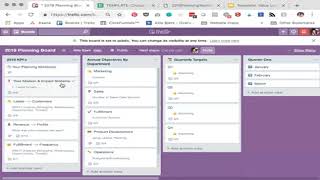
Okay, I think we're live on Facebook now. We are live on Zoom. So I am going to jump into the training and not necessarily wait for people to jump on because it's recorded. So if anybody needs access to anything, they can see it. So part of the goal of this training is to help you see 2019 a little bit differently and be able to get the full picture of what your goals are and why. Because one of the biggest things that I try to help entrepreneurs with is knowing that the business that they build is directly correlated to the quality of their life that they're living. So if you're working all the time, you it's just like creating another job, right? Like, you don't have the freedom that you probably went into business to create in the first place. So it's one thing to have, like, a financial goal of what you want to make per month. It's one thing to have an impact goal of how many people you want to help per month, but then also knowing how those two correlate and also how it relates to your own life and knowing how much value you can bring to the world, how much value you can bring to your own life, and making sure that everything is in alignment. Because it's when the services that you offer are in alignment with who you are authentically as a human, which also works for your audience, that's when you're going to see the really high success numbers in your business and your personal happiness levels. And, I mean, that's what it's all about eventually. So there's a bunch of different resources listed on this Trello board. The first one is the planning workbook. So I'm just going to point out first. So basically, there's six pages here that help you look back at 2018. So you can go one through 10 and look through each one of these pieces of business building, because these are some of the main segments. So how did I feel about my content strategy? How did I feel about my sales funnels? How did I feel about my product delivery? Like, did I do my very best, or is that something that I can improve? So when you start looking at each one of these major segments on a scale of 1 to 10, you can see where the lowest numbers are. And maybe that's where you focus the most in 2019 to improve and try to get all of those pieces working together. And, you know, 10 out of 10 on all of them would be ideal. Right? So looking through those and seeing, okay, if I could do 2018 again, this is something I would do differently, this is what I would improve and then Translate that into 2019. I want to be. What do you want to be? Like, do you want to be successful? Do you want to be a coach? Think about how you want to define yourself and how that relates to your business. Let's shrink this down a little bit so I can pop over to Facebook and make sure I'm not missing anybody. Okay. So the idea of creating your own business, and I go a little bit woo sometimes, but not full woo. I'm more like scientific, numbers minded. So the idea is that you can be, do, and have absolutely everything that you want in life based on what you believe you're capable of. So all you need to do is think about who you want to be, how you want to feel, what you want to have those. When you picture that in your mind and you actually know what it is you want, that's when you can create it. So a lot of the clients that I've worked with that struggle with scaling their business at some point, every single one of them has said to me, like, well, I don't actually know what I want to do, or I don't know what I want to be. I don't know what I want my business to be. And that's when they struggle because they don't have that clear picture of where they want to be. So once you can get really clear on who you want to help, what impact you want to make, that's when you can start making a bigger impact for your own life and also for your clients. So start thinking through what you want your 2019 to look like not only in business, but life in general. So start thinking about where do you want your revenue to come from? How do you want to make money in your business? There are so many different business models that there's literally no limit to how you can make money online. You can be a service provider, you can be a coach consultant, you can sell products, you can do E commerce, you can do affiliate income, you can do whatever you want with your business. But you just have to be able to picture it and trust yourself that no matter what you choose, if that's pivoting, like I remember when I was going from just service provider to just coaching and consulting, like, it felt really scary. And I just had to trust myself that, you know, even though this, this worked really well to offer services and have a business in that way, you know, there, there are other ways. And if I just trust myself and jump in and go all in with that, I'M going to be successful no matter what because I believe in myself. And that's what a lot of us struggle with, is just that confidence to know you can go all in with something and you're going to be successful because you trust yourself to do what it'll take. So start thinking about what kind of content you want to publish, if you want to have a team, and what does your work week look like? Do you Want to work 20 hours a week? Do you want to work 80 hours a week? What's your personal comfort level and how do you want to design it? That's, you know, if hanging out with your family is a priority, then you can tell yourself, okay, I need to hang up the technology at 5pm and get off of Facebook until, you know, 8am the next morning. You can literally design it however you like. This next page goes through your year at a glance. So it talks through what your launch plans, your impact statement. We're going to go through this in the Trello board in a couple minutes, but it helps you be able to see your entire year just at one glance. So you can start planning out. You know, do you need to do more of a push for your products in April so that you make money in April and May and then June, July and August, you can take off a little bit. Do you want to make more money in September and October so that when the holidays start rolling around and you've got family events and kids are off school, like, you're set up to not have to feel the stress and hustle in those months. And then this is super important. The no more, basically no more lists the things you don't want to do anymore. Start writing down everything you do on a daily basis. That could be personal life, business, all the things. Because as an entrepreneur like you, it's really hard to disconnect your personal life from your business life. So the more that you are doing things in your personal life that you don't want to be doing, that can affect your business too. So if you're volunteering for the PTA and you don't want to be in the pta, then just don't do it anymore. You know, like, stop, stop trying to be a people pleaser or stop, you know, think about the things that you're doing on a daily basis that aren't feeling great, or a weekly basis, monthly basis. And then we can start going through on the next page to figure out, you know, what do you, what do you want to stop doing? What do you want to hire Someone else to help you with, like, do you want to hire a house cleaner? Do you want to hire a virtual assistant? Do you want to hire a project manager? You start thinking about the things that are essentially like non joy items that you can start building habit towards so you can slowly, like not include them in your life anymore. And then this last piece of the work workbook is celebrating your wins. Because a lot of us, it's always more, more, more. It's hustle, it's like, what's my next goal? Let's keep going, let's keep the momentum that we forget to look back and we forget to celebrate what went really well in 2018. Instead of just focusing on the very first question in the workbook that was like, what would you change? Odds are some good things happen. You're still here, you're still alive, you're still breathing. That's something to be grateful for. But there are obviously other things in your life that the more you focus on gratitude, the more it's like, I was just writing about this this morning, that book, the Alexander and the Horrible no Good, Very Bad Day. I think that's the title. How sometimes they talk about really smart books, sometimes they talk about kid books. So in that book, like, everything's going wrong, his sweater's too small, he's got spills water, his dad's mad at him. So the more you look for the negative, the more you're gonna see the negative. And that's when your business is just gonna stop feeling as good as it should. The more you focus on the positive, the more good things will come to you. So this is the planning workbook. I encourage you to print it out, scribble all over it, do whatever you wanna do. This is more of like, if you're a paper person, you can use that to plan on. Otherwise, I've got a whole lot of other documents here that will help you plan digitally too. So one of the most important things for your business is understanding your why. And without knowing your why, it's really hard to, you know, just like muscle through the hard times or try to keep your self discipline at such a level that you're still showing up, you're still doing the work when it doesn't necessarily feel good. So these four questions right here help you figure out what your impact statement is. And basically your impact statement is what's going to drive every other number in your business. So instead of focusing on revenue, instead of saying, I want to make $30,000 per month, I want to make you know, $200,000 per year. However much your income goal is, if it ties back to an impact statement, it's so much easier to start planning the rest of the pieces. Like, how many people do I actually reach each month? What does that look like? How do I know that I'm successful? So for me, for example, I want to help coaches, consultants, service providers, and course creators to launch their own signature programs in 2019, because that lets them have a high ticket product. It helps them simplify the scale so they can have a better quality of life. And I will help them by creating systems, creating their framework so that they can step away from their businesses and step out of the hamster wheel hustle thing. And the change I want to make is letting them know that this is possible for them. Like, you can design your business however you want. My framework is having your own framework. Funny how that works, isn't it? Because it's worked for me. So I'm going to teach what I know and say you can create your own framework, you can create funnels and ads, and you can scale and you can step away and make $20,000 a month working 20 hours a week. It's completely possible. And I'll know I am successful when I am helping X amount of people do this. So when you're creating your own impact statement, you want to think about who you want to help, what you want to help them do the change that you want to make for them in their own lives. Like, what kind of result are you going to be getting for these people? And how will you know that you are successful? Because when you're doing this, when you have that impact statement, when you know what that critical number is, then you know what needs to drive all the other numbers. So you'll know if I want to help, say 100 people in 2019, maybe I don't think that was my number. It was six times 12. So 72. Is that what it was? I don't know. So we'll just round up to, say, 75. So if I know I want to help 75 coaches launch their own signature frameworks and marketing systems and visibility systems in 2019, that equals six per month. So for me to hit six people per month, knowing all other things consistent with conversion rates and how many people will sign up off of my webinar and how many people I need to reach to get on my webinar in the first place, then I can start reverse engineering and backing into what I actually need to be doing on a daily basis to get Six people to sign up to work with me directly or join my program. So I know that looks like, okay, that means I need to do three Facebook lives per week. It means I need to put on one webinar or have an evergreen webinar going. It means I need to do xyz. So when you figure that out for your own business, when you know, okay, I need to sell just one $15,000 program per month, then it starts taking out the busy work of people like, oh, I need to. I need to be on all the time. I need to need to reach all the people. Then it helps you focus on, really intentionally on what you're doing instead of just trying to do everything all the time. When you go into 2019 or any, you know, whether it's the fall and you feel like you're refreshing what you're doing or you're going into a new year and you're refreshing what you're doing, anytime you go in with just an arbitrary number, it's so much harder to hit and feel like you're successful. So I remember two years ago, I pulled a number out of thin air and I said, I want to make $250,000 this year. And I got nowhere close because I had no idea who I wanted to help. I had no focus. I was doing all the things, and I just felt bogged down by the hustle. So I wasn't enjoying my business. The energy behind it was wrong. So if I would have gone in with this approach of knowing exactly who I want to help, what I want to help them do, how I know all success. I am successful in making sure that everything I'm doing leads back to my impact statement of that goal of helping six people per month, then it all is so much more simple. So then because I know what my, how much my costs are, I can start figuring out, okay, that actually looks like 30k per month. So if I help six people at $5,000 per person, that's a 30k month. So you can start figuring that on your own stuff out for your business and how that impact statement directly correlates to how much money you want to make in, in that year. The other thing that you'll other way you'll know if that impact statement is good is knowing that you can celebrate it. So if you have a team, you're able to say like, oh, we got, we got six new clients this month. Instead of being like, oh, good, we made. We made 30k, like, it's harder for your team to get behind more of a revenue number. Like if you have your impact statement of exactly what that needs to look like for your business, you can tell your VA to celebrate it. I mean, you can get behind that number and it's also way easier to understand and you can just picture all the different moving pieces. So first, going through your mission and impact statement is the first step for planning 2019 and then understanding how many leads turn into customers. So I don't know if you've heard of the SWOT analysis. I remember learning this in marketing classes in college and I didn't even understand it until, you know, recently. But understanding as a, as a person, as a business, what are your strengths, what are your weaknesses, what opportunities do you have in 2019 and what threats do you have? So strengths, you might be able to build relationships with people really quickly. You might be the best website designer, the best coach. You know what your strengths are, you know how you can reach people. And same for weaknesses. Like you might have an idea of. Like, my systems are really weak. I need to improve my follow up sequences. I need to get more automation in place so that I can focus on serving my clients instead of getting the next client. Then opportunities, like where do you think you have opportunities? Are there PR things that you're going to be doing this year? You know, appearances that you're making, maybe events that you're attending, you know, just that, that kind of thing. What opportunities? And then threats. So what threats are there? This could be competition, like do you have someone who you're, you feel like is a threat to your business because you offer something so similar. Is it like an ad campaign being shut down? That was the example my coach gave. So start thinking about where your business might struggle and what can improve it through your strengths, weaknesses, opportunities and threats. So if you've been in business for a while, these next questions will be a lot easier for you. If you are newer in business or you're just getting started, this is going to be something that you're not going to be able to plan on as efficiently as other people might be able to. So think about how many leads did you average per month last year? So if you use like a Dubsado or something like that, or if you get your transactions in stripe, if you, you know, how many, how many new leads came in, how many people filled out forms on your website? How many people did you add to your email marketing system? How many leads like new people came in and at what percentage were you able to turn those leads into customers? So the next question is how many customers did you have last year? That's where you're going to look at, you know, the stripe and how many people paid you for something and knowing what your average cost per acquisition was and how much your average client value was. So when you start looking through some of those numbers, you can start planning a lot more strategically. If you haven't been there yet, that's just something to keep in mind moving forward. That scaling is going to be a lot easier if you know what these numbers are and to maybe set up like a spreadsheet or something so that you can keep track of. So then how many leads do you want each month going forward? This is where, knowing how many leads you had last year per month, how many new clients you had per month, that's where those two numbers come in handy. So you can start figuring out what your percentage rate was from lead to new clients. So you know, if it was a 5%, that means every 100 leads, you got five new customers out. So when you understand that, you can start again reverse engineering your way to knowing how many new leads you need to hit your impact number. So then looking at where the leads came from or where you want them to come from in the future. So is it from, you know, going out in groups and connecting with people? Is it from direct Facebook messaging to people? Is it a high touch or is it more of like an automated funnel? Or like a lot of people I talk to when they're just starting to work with me, is it all from referrals and you're looking to expand, stand on that. So knowing what that looks like right now and what it's going to look like in the future, that's going to help you plan in 2019 as well. So revenue and profits, this is a fun one. If, if you are in, if you guys wouldn't mind chatting to me on Zoom and telling me like what phase of business you're in, then I can cater the training a little bit more for if you're new or if you're looking to scale. So this document is linked right here. This is the one I have opened up in the second tab. This is a super fun spreadsheet. If you're in the spreadsheets, this is to help you plan out what you can offer in 2019 so that you can hit your impact number. So these enrollment goals, these are like how many humans you actually want to work with and how it translates into what your income amount is. And I know some people, when they start looking at numbers like My best friend Jessica Ely is a mindset coach. She is all about like feeling into things and not being like, okay, I need to have 2,000 leads to get this much money to equal this much money annually. If that is demotivational for you or it doesn't feel good, then just don't do that part. But if you focus on impact and how many people you need to reach, sometimes that can be the reframe that you need so that it feels good and not just about money. Okay. Kate says, currently a service provider. Moving to consulting coaching model for 2019. Nice. Sherry. Returning to self employment after working at job for nine months. Awesome. So, so this would be really nice for you guys to be able to start envisioning what that will look like for you and what kind of programs you can offer and you know, is it group coaching? Do you want to do one on one? Do you want to sell like a intensive type product where it's a, you know, VIP day or something like that or a course? So you can, if you go to file and then make a copy, do that first please. Then, then you can enter all your own numbers in. This is more a lead projection. So if you are looking to run ads or you want to start planning on where to invest your marketing budget. If you have a marketing budget, you know, you can start small and just know my program name costs $499. I want to enroll 60 people which would equal $29,940 per month or per quarter. I think this is quarterly for an annual income of this much. My goal is this. So then you can start playing with these numbers in these columns for how many you need to enroll and what you need to charge so that you can hit your goal amount. Then you can come down here and plan. If you know 3% is the number I keep using because that's a pretty standard conversion rate like 1 to 3%. Three is good. You can enter in like okay, so if I need, if I only get 100 people then that turns into three sales. Okay, so if I enroll three people. So you can just start entering in the different, different levels to figure out how much money you're going to make, all goes according to plan. And then as far as running ads, then you can look at, okay, I need, if I need 100 leads to sell 3, then cost per lead, assuming that's $3, my ad spend would be $300 and my profit would be $1,197. So you can start making sure that your program Costs make sense for running ads to make sure you're still going to get a profit and going on from there. This next tab is called the Launch Waterfall Template. It's also called a Gantt chart, but I like the waterfall concept because it makes more sense to my brain. So when you're thinking through these are all the things that I need to do. You can enter in each task and know, okay, I need to start with this first and then go to the next one. And then you can just start mapping out your week and different phases of your projects and the due dates. Because so many people come to me and they say like, I just, I don't even know where to start. I don't know what to do. I don't know what to do first, what to do next. This helps you visualize when you use the different, like the planning workbook together with what your goals are with, you know, like looking at income, planning what products you want to launch in the first place and knowing this needs to come first and then this and then this. So you can start planning out your whole year and knowing what that looks like. Thank you, Chris. Sherry. That sounds awesome too. Okay, so then revenue map. If you guys hate numbers, I apologize in advance because there's a lot, there's a lot of numbers. So if you don't like looking at this stuff, there are, you know, you can print the planning workbook and do more of that, you know, writing it out type thing. I'm a spreadsheet girl, so I like looking at this stuff. So if you know what your offers are, if you go back to your income planning and you know, this is my one offer, that's $500, next offer is $1,000. You know, if you have that whole step by step ladder that you can put people on, then you can start actually tracking what it looked like and make sure that you, you're hitting your impact goals and that is all adding up for projected revenue. And if you want to get crazy, you can add your expenses and all that stuff into these charts too. There's, they're yours once you make a copy. Don't do anything before that. And then there's one more, I think that's the last tab on here for your resources, just to keep track of your content and knowing making sure content all applies to the right people. So you can put your price, your sales pages, who the ideal client is. Because a lot of people you're gonna have a very different person by your high end package than is gonna buy your entry level. Package. So just keeping track of all the different links and funnel tracking entry points and then any related content you have. So if you have like a blog post that would tie really well into what the offer is, you can put all of it into this template. Okay. I think that's all. That's the whole walkthrough for that tab or for the tabs. So when you're looking at your revenue to profits, something really important to remember is like after, like being realistic about setting your goals and setting your impact number and all those things. Revenue and profit are two very, very, very different things. When you start growing your business and you start treating yourself like a CEO and running your business, more of it from a numbers perspective, because I used to, when I was a sole proprietor a few years ago, like, I kept, or I assumed I kept everything that I made. So I would, you know, write myself a check for or whatever. Actually, whatever the client wrote for me. I was doing website design at that time. If the client wrote me a $1500 check, I cashed it in my personal bank account. If there's any accountants ever watching this, don't yell at me. I'm smarter, smarter now. And then I would just be like, sweet, my business just made 1500 bucks. That's awesome. That's all profit. And then I would go and put my business tools on my credit card, personal credit card, and then paid off and then think I still made $1500 even though I was paying $600 for tools and blah, blah, blah, blah. So I had no idea what my business was actually making until recently when I started treating myself more like a business. Recently, I say within like the last 18 months, probably got my business bank account, got my business credit card. Everything goes where it's supposed to. My taxes are just taken off the top. I'm paying myself as an employee, so that's considered, you know, an expense of the business. And then I can take any profit as an owner's draw of those things are taken care of. So treating yourself like a business was a complete mindset shift for me because it was like, I am not my business anymore. I am part of a business. I'm an employee of a business that functions a little bit differently than just thinking that I take home all of the money that I make. By doing it this way, I was able to disconnect a little bit and just focus on how I can improve my business without taking it personally. It allowed me to disconnect from results and not be as attached to, you know, what people were Thinking about me, talking about my business, it's kind of hard to explain, but basically just that difference between business and human, it just lets you act a little bit differently and detach from your business a little more and have more of that life balance. In my personal opinion, they don't seem related, but for me they were extremely related. So keeping track of what your expenses are, how much profit you have, how much do you actually need to take home? So one thing I did this year and I was going to add it to the template and I ran out of time. I put like my dream life together. Like if I drive the car of my dreams, how much will that cost? If I have the cleaning lady, if I have the nanny, if I have the vacations, how much does it actually cost for me to live my dream life? And, and figuring out how much do I want my take home to be? If I have everything that I've ever wanted, what would that look like? And then knowing like, okay, what do I actually need to take home to like not lose my house? So what do you need it to be versus what do you want it to be? Chris says, did I hire an accountant or find a course to learn the financial components? I don't know. I think I just started googling. So I was a little bit self taught and then I hired a bookkeeper. So I learned a little bit through my own research and then also through hiring a bookkeeper. And then I also have a really smart coach who's helped me work through some of it. So kind of a combination of a lot of things and also learning from personal experience of doing things not so correctly and it being really difficult to figure out at the end of the year, like how much I actually made and then at the same time looking, being shocked by the number to be like, holy crap, I made like 15,000, profited $15,000 this year because I wasn't paying attention. I had no idea. It's not like I made that much as a website designer when I was first starting, but the amount of profit was so minimal that I was just, I had no idea. So I think my, my own embarrassment of not having any clue what that number was going to be at the end of the year made me want to start taking it more seriously. Yeah, okay. So another thing to start thinking about as you're planning 2019 is how much business savings do you need? So the average for businesses and I guess the recommended for your personal finances too are three, having three months in the bank. So in case something happens where you can't work, or, you know, there's no clients coming in, or business gets really slow, you know, for three months, you can cover your expenses. So my business has grown to the point where my expenses are about $10,000 per month. So I know if I want to have all my expenses covered that I need to have at least like 30k in business savings to feel that, like, release of stress. And I get stressed about, like, knowing I have bills coming up or anything like that. So having that amount saved up that you can add, you know, even if you just start a little bit at a time, like, I'm going to put $200 in my business savings this month and then you start adding to it, that's going to keep you from that feast and famine of like, I need to pay myself. But like, there's no clients right now. So working towards that, no matter where you're at, can, can just be like a stress relief that a lot of people don't necessarily talk about. So knowing what your current expenses are, are you paying a team? Are you running ads? Are you paying expenses? Include your own salary if you're set up the way that I am. So knowing each month what that needs to look like and how much that is, having a really clear idea of what your expenses are and even going through as far as looking through subscriptions that you're not using, like, I had a ton of tools that I hadn't even looked at, but I thought I might need them at some point. So looking through, like, where can you trim? Where can you make things more efficient? That's a really big piece of just running, running more smoothly. So then looking at healthy profit margin for you based on where you're at, if you're looking to scale or you're running an agency, like, that's often more of a 30% profit margin is what I've heard is really common. When I was running an agency, it was about, I think it was about 30%. So knowing where your profit margin is at and where you would like to be, so that's where you can trim some of the expenses, maybe streamline your team. If you have people that are, you know, on it and maybe not a good fit, you can start looking at some things like that and then going through again your SWOT analysis of strengths, weaknesses, opportunities and threats. So what else? Fulfillment and frequency. Another one to keep in mind. And this all relates back to where your strengths are, weaknesses, opportunities, like, that's kind of the overarching view of this. But knowing what the average Amount your customer spends with you, knowing what that is, how frequently are they buying, are there ways that you can increase the amount that they spend? So if you're in a position where you're feeling like I feel like I need to make more money, there are three ways to do this and I hope that I say them all correctly because I, my coach said this the other day and I was like, like mind blown. So you can either raise your prices, if all things considered equal, you can bring in the same amount of people, offer the same price, or I mean, I already screwed it up. Bring in the same amount of people, sell them more often, or raise your price or increase the amount of people that come in. Those are the three ways I think that made sense. So you can either have more leads, raise your prices, or sell them more things at the same price. So that's like you could sell them an intensive and then a one on one package and then a course and then so that's like increasing how frequently they buy versus just raising your prices. So if you want to make more money in your business, those are the three different ways that you can do it. So you can start thinking through, am I able to serve more people? Do I have the bandwidth to bring on more customers? Okay, if you don't, but you still want to make more money, I either need to increase how much my packages are or I need to add more options so that they can start spending more money with me. And then knowing how you can tell if a client's happy and what your refund rate is. So if you're selling digital products, the refund rate, I think the average is like 10%. So if you're selling a course or you're selling, you know, something that's more digital based on, there's usually a 10% refund. If you're a service provider, I would assume it's much lower than that. But it's still going to happen just because humans but, but knowing that as you move forward and making sure you include that in your goals too. So when you're setting objectives, these are the different areas that you can set your goals and different objectives. So within the marketing you can think about, okay, this is, and all this relates back to your impact number. Like this is how much content I need to put out to get my six people per month. This is what my visibility strategy needs to be. If I need to run paid advertising, this is how many people need to go through my funnels. This is how I need to launch. Do I want to do an evergreen style launch where people are coming in all the time and it's like rolling enrollment or do I do open and close cart launches? So start thinking through some of those things. As far as sales, do you know of the people who book sales calls, how many of them turn into clients? So how many sales calls do you need to try to get people on in 2019? If you attend events, how often do events have ROI? So if you're going to funnel hacking live in the next couple months or you're going to, you know, social media world or traffic and conversions, any like big marketing events or any other, you know, maybe you're going to more like retreat style. Do those events turn into sales or is it more like personal development? Same for webinars. If you have a referral program included in your business, affiliate programs or if you are partnering with people like the JV style or Dream 100 if you're doing those type of things. So Dream 100 might be something that a lot of you aren't familiar with. That's, that's looking strategically for people that you can build relationships with that it benefits both of you to promote each other's products basically, or at least benefits them to promote your product and then you can do something in return just because reciprocity people like that, like who can you partner with to promote your thing because it makes sense to give their clients value and it makes sense to promote your product. So like if there is a coach who coaches coaches and you help coaches to. There are those people. You help coaches launch sales funnels, but they don't know anything about sales funnels. You would be a really strategic fit for them to add more value to their own clients. Where you're getting, you know, you're getting something out of the relationship too, but they're able to give more value. So that's what Dream 100 is. And it's called Dream 100 because the idea is that you create a list of 100 people that you would love to partner with. So I mean it could be realistic. Like I could love to partner with Marie Forleo or you know, Amy Porterfield or something like that. And then you can start thinking of ways to like, you know, the. What is it like the six degrees of separation, like how can you get connected with that people or those people. There's anything as possible. Who do you know that could help you meet them? How can you get on their radar? Like if it's a, you know, another coach or something, how get in their group and start Building relationships with them and start connecting and start being seen by them. That's the whole concept of Dream 100. Because referral programs and relationships like this where they already have an audience and they're showing that they trust you, their audience is going to trust you by default because they trust the leader. So it's like that social proof built in. It just works really well. If you are looking for more of like an organic model than running ads or you know like being visible and turn tuned in all the time. Okay, so fulfillment is more customer service related. Like what do your deliverables look like? How much time is involved in serving your clients? Are you doing live calls and workshops? How much time does it take for you to onboard a new client? Is that something that you can systemize? Can you hire an assistant to help you do it? You know, what are the deliverables look like? So making sure that's included in your plan that you've walked through, you know, all of those different pieces. Product development, if you went through and you decided I need to make more money, but I don't want to raise my prices and I don't want to serve more people or if you're new in business, that's when you're going to start looking at what different products can you relate. And then I have another document I was going to share with you guys. This is another one of those things where if you want to use it, I would love that. But go to file and make a copy before you change anything because I don't think you have edit access. But if you aren't able to edit it, this is why. So the value ladder thing, this my zoom window over so I can see there's a lot of text on this. So I'm not not going to read through all of it for you. But the concept is when people come into your sphere as a business owner, they are going to be at different levels and different mindsets. Some people are going to not feel ready to invest a large amount, but they're going to feel willing to invest a large amount of their own time to learn. So their results are going to be based on their willingness to go through your course, spend their time going through your content, going through all the things. The idea of this ladder is that at the very bottom there's no time investment for you. This is something that you've created as more of a passive income product so the user purchases it for a lower price and more time. Whereas this highest one right here, this is the most amount of your Time because it's, you know, it's a high touch thing, it's coaching, it's, you know, if you're a done for you service provider, this is where you're implementing, this is where you're spending your most time. But this is where the client is getting the fastest results. So these people are willing to invest more up front to get the result faster. They're not sitting there taking a course and learning how to do it for themselves. They're paying you to handle it. So when you are setting your pricing, your pricing needs to be the highest on this column right here because it's the most amount of time. But as you move backwards down the ladder, as you go through each step, you're removing a little bit of your time and lowering the price a little bit, at the same time increasing the amount of time that the user is putting in. So hopefully that makes sense so you can start thinking through your offers. And this is why I'm such a fan of frameworks, because a signature framework assumes that you have one result that you get for people and you can get that same result at any different one of these levels or at any of these levels. It doesn't matter how much they invest, it doesn't matter whether it's your time or their time, they're getting the same result. So when you know how you get results for people, that's when you can turn it into a framework and say, like, for me, I help people with mindset marketing systems getting leads, I help people, you know, I've figured out that those pieces are my framework and then, then I can get the result which is, you know, growing a business at any one of these levels. So if you're newer in business or you don't have a signature framework, it's just a matter of like sitting down and figuring out all the things that you do for clients and all of the results that you get for them and then breaking it down into cohesive pieces and then that becomes like your framework. I just did a training in the group last week, I think on this topic that's more detailed. So you can go through that if you are interested in learning a little bit more. And then this document also has like some of what the most, I guess I'd say standard sales funnels are. When I first started learning about sales funnels, I thought it was super intimidating because I was like, oh my gosh, it could be anything, I could do anything. And you can. But there are a few formulas that work traditionally for like what a launch looks like or for what a service provider can do. If you want to run ads that pay for themselves, this is what the funnel needs to look like. So the different templates on here are big launch for a course service or coaching webinar. You know, if you're, if you're doing, trying to sell certain that doesn't make sense services or coaching. So it could be like a case study that they download on how you get results for people. Then you upsell a strategy session or something like that so you can enter in your own deliverables or things that you have available and start working through. Like what those funnels could look like for you. There's some of them have some notes so you understand them a little bit better. Like this is called a self liquidating offer funnel, which basically means you can run ads. This should say Facebook ads, because that's the whole point. And the idea is that what you're paying for ads is canceled out by what people are purchasing off of the funnel. So you're able to get, get leads for free essentially. Instead of like sinking all this money into ads in a funnel and not not knowing how it's gonna pay off, this lets you do it more gradually and, and not like put a bunch of money into something that doesn't turn into paying clients. So something cool that I recently heard is running, where did that go? Running traffic to this and then launching every 100 people as you're starting to test out what you're offering. Because then it's not the typical launch model of like I'm get as many people as I can, I'm going to get 10,000 leads and then I'm going to launch. But if the messaging is off or the offer is off or something doesn't quite convert, then people are, they're not going to buy. And then you've just sunk all this money in to gathering your 10,000 people. And if you don't buy, then you're just out of luck and you have to go through that whole process again to relaunch and hope that they buy this time. Whereas if you do this style of funnel and then you launch every 100 new people to your list, then you can get a clear idea on, you know, is it working? Where can I fix it, where can I improve it? And it's less pressure, which is always good. So if you're someone who could offer a $97 masterclass, this is the type of content that you could sell them at that point, okay, back to Trello. So when you're thinking about your products for 2019, like, what are your goals for what you want to start selling? Are there, are there things that you want to do? Do you want to write a book? Do you want to create a different course? Is there a new coaching program? Is there a new, you know, like, in person summit that you want to create? This helps you look through product development and what you, what you want to launch. Okay, then operations. So this is another area that you can optimize as far as how your business is running. Budgeting and bookkeeping. Are you on track to hit your goals? Are you hitting your savings amounts? Are you making sure that your taxes are paid every month? You know, how is that, how can you improve the smoothness of how that's running? And then legal and compliance, are you set up correctly as a business? Are, do you have all the right forms on your, on your website, like the, you know, privacy statement, privacy policies, are you GDPR compliant? All those different things to think about. Are your contracts legit? Those type of things? Also, are you looking to hire anybody in 2018 and 2019 and then what systems and organization need improvement? Grab some water. So once you have these annual objectives by each department, then you can start breaking it down into quarterly. So what does that look like in Q1? What does that look like in Q2? And then you can start breaking it down into this document of, okay, this means I need to get this done in January. So if you want to write a book and, you know, you want to launch the book by quarter two, this is me speaking from personal experience. I know I need to write X amount of words throughout January to be able to get it published and get, you know, things up and running by quarter two. So then you can start looking at what you want your whole year to look like and how you can backtrack. And you can also use this planning document, the PDF, if you're more of a visual person and start looking at your year and how that relates to, you know, what days you want to take off, where you want to make more money and make sure that things are happening in the right order. So that's, that's the gist of it. Does anybody have any questions about how to use the tools or anything like that? Does anybody want feedback? If you're on Zoom, you can unmute yourself and I can answer your questions. Otherwise it's kind of just an issue of, you know, going through what you want it to look like and, you know, how you want to plan. I don't think anybody's asking anything on Facebook either. Awesome. Well, I did clear out some room on my schedule for people who want to book any, like, clarity calls, because I know there's a lot included in this and sometimes it's hard to picture it for your own business. So my goal as a coach and marketer is to give you all my best stuff and then as you need help implementing it for yourself. Because learning it and making it happen in your own business are two completely different things. So I feel like my value as a coach and consultant comes in to actually help people implement and create the stuff in their own business. So if you're curious, like how you can make this work for your specific business, like Sherry, for example, who is running review management services on subscription basis, like, there might be really specific questions she has about how to set up funnels for her business or how to, you know, schedule her whole year so that she can hit her goals each quarter and then each month and then what to do each week. So if you're interested in booking a call just even for like 15 minutes to go through what that could look like, I will drop the link in the Facebook presentation and then you guys can book a free call and let me know, like, where you need help, what questions you have, and what kind of clarity I can give you for that. So, yeah, I hope this was helpful. I know it's a lot of information, so if you have things that you need to go through again, I'm going to send out the replay right after this as soon as it's done processing and then the tools are yours to use and implement. So I hope you all had a great day. I hope that was helpful. I'd love to hear any feedback if you have it. And yeah, otherwise I will talk to you guys later and see you inside of the group. Hopefully I'll talk to you later.
More from Allie
Your Price Point Is a Business Model: How to Price the Offer You Actually Want to Run

Evergreen Webinars & Rolling Enrollment BTS Training from my Tiny Offer® HQ Community
The Great Trust Recession of 2025 (How to Overcome & Dominate In Your Niche This Year As a Creator)