The Great Trust Recession of 2025 (How to Overcome & Dominate In Your Niche This Year As a Creator)
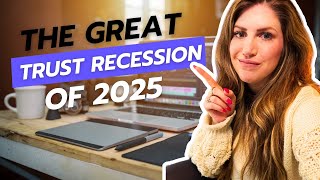
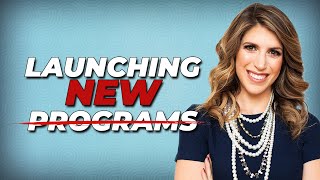
This is a YouTube video titled "The Great Trust Recession of 2025 (How to Overcome & Dominate In Your Niche This Year As a Creator)" created in March 2025. The content features Allie Bjork, a digital product creator and coach, discussing the challenges faced by online coaches and course sellers due to a decline in consumer trust and engagement. She explains the causes of this "trust recession," including buyer skepticism, quality concerns, and the impact of AI on content creation. Allie shares strategies for rebuilding trust with customers, emphasizing authenticity, high-quality content, personalized engagement, and ethical marketing practices. The video aims to provide hope and actionable advice for creators to succeed in the evolving online business landscape.
What is up, everybody? Welcome to this video. Today we are going to be talking about something that is likely affecting you if you were a coach or a creator, a course seller online in 2025. And that is the Great Trust Recession that we see happening all around us. We see people who are having lower launch numbers than usual, less interest, less opt ins. Everything seems like it's a little bit harder this year in 2025. So today I'm going to talk about what the Great Trust Recession is and how you can start rebuilding trust with your buyers, how you can start improving your business, and how you can gain a little bit more hope in your life that this is possible for you in those big revenue months are in your future. So who am I if we haven't had a chance to meet yet? My name is Ali Bjork. I am a digital product creator and coach. I trademarked the term tiny offer, which is all about selling low ticket products, building a business based on courses, passive income and all of that really exciting stuff that you can create online when you have your own personal brand. Now, something that I've been seeing a lot with my clients and that's why I want to talk about this today is everything seems a little bit harder or they feel like I don't know if this is really happening, but it just kind of seems like I'm not getting the same results that I used to for the same amount of effort. And, and then other people are hearing this happening. Maybe you're just getting started online and you're wondering like, is this even possible for me? Can I still make a living? Can I still build a life around having a business that's online? So I want to talk about this, why it's happening, what led up to this point and what you can do to continue making a great living online, selling your courses, selling your low ticket products. So we're going to go ahead and jump into it. So I think one of the biggest elephants in the room that a lot of people have in their minds, in their brains, is quality control. That's one of the biggest things that people have struggled with over the past five years. In 2020, the early days of COVID and all of the stuff that happened with people working at home and having a little bit more freedom and flexibility, everybody wanted to start working online, right? Everybody was buying courses like crazy. My friends and I had some of the best revenue months and years of our entire business history because everybody was interested in this online world, in buying courses and selling courses. But what ended up happening is people saw themselves buy stuff and not use it. So it's not even about you. But people saw themselves believe in something, tried a little bit, and they saw themselves fail. It's like signing up for a gym membership and never using it. People started doing that with online courses too. They'd have these big high hopes and then they got busy. Life happens as it does and they wouldn't use the things that they bought. So some of this trust recession isn't even about you. It's not even your fault. It's your buyers not believing in themselves. That's like the number one thing where people are trying. They're getting you in at a low ticket price and then they're trying to make you spend more and more and more. There are ways to do this. Obviously, I am the tiny offer queen, if I can say that myself. You don't have to do it in a sleazy way. You don't have to make people feel like they got duped. You can bring people in for a low ticket price and give them a ton of value whether or not they buy anything else. If people join my higher ticket programs, I want it to be because I gave them so much value and such a great result for a low price that they are. They're opting in themselves to the higher ticket things, not because I duped them. And now in order to get the result, they need to spend more money. Right. So there's, it's the same end result. You're getting people to move up your value ladder, but there's two completely different approaches to doing that. So there are ways to not break trust and to share that with people and put that in your messaging, put that in your end. At the same time, using AI or using different tools that just produce a different level of quality than we saw in 2020 and before when it came to online courses and course creation. So that's some of what's happening during this trust recession. And a lot of people are feeling the squeeze. They're feeling the difference. I just talked to someone yesterday who, who used to enroll 40,000 people in her life challenges and now she's enrolling 20,000 people in her life challenges. The interest level doesn't necessarily feel like it is what it used to be. The awareness of your brand might not be where it used to be, but one reframe that I'd like to offer you. If you're an online coach or if you're someone who's selling courses, it never is what it used to be. Right? Like back in 2019, ads were different than they were in 2022. If you ask people who have been in the game for decades, they'll tell you Google used to be where it was at. Google SEO was where we would make our money online. And that changed. So part of it is just thinking as an entrepreneur, as a business owner, you are a problem solver and if things aren't what they used to be, that's okay. We can find a new way, we can find a new path. We're always problem solving, we're always figuring out what to do next. And, and the problem is that people start to lose hope. They start to think, it's too late for me, this isn't going to work. And they stop even trying because they think, oh, the economy's bad, like this doesn't work the way it, it does for her, it's not going to work for me. And they start almost eroding their own trust in themselves. So what can we do about the trust recession? As creators, how do we rebuild? How do we keep the hope? How do we make incredible money online? That's what we're going to get into today. So, so the trust recession is all based on people starting to doubt authenticity. They're starting to not believe what we say or what you're saying. They're unsure if they're engaging with a human or even AI generated content. There are quality doubts. So people are becoming skeptical about the value of what they're buying. The depth of the online products feel a lot of it's rushed in generic content. And I can show you how to use AI and still make it feel like it's very high quality content still in your voice, still your authentic way of doing that. I have a course called Course Creation Hyperdrive that I'll link down in the comments because you still want to use the tools that are available to you. But knowing that this trust recession is happening, we don't want to put out crappy content, we don't want to negatively impact our brands, right? So it's always this balance of how do you use the tools that are available without hurting the quality of what you're creating? So, so there's that happening. Then there's also the self trust crisis where customers have lost trust in themselves, in their own ability to make decisions, to make smart decisions. They're worried about their status, right? Like if I buy another course that I don't use, I'm going to be disappointed in myself, maybe my partner is going to be disappointed in me because I spent money to do this and I didn't actually do it. So right now your customers are asking themselves all these critical questions. They're asking, is this a real person, is this quality worth it or is this going to be a high quality product and can I trust myself to succeed? The second part is that a lot of info products are fueling skepticism. So a lot of typical marketing and typical sales pages and a lot of the tried and true, what I'll call bro marketing. Sorry bros, but a lot of it is focusing on these super hyped, very sensational headlines and there's just so much doubt. There was a big name marketer this year who launches or has an event, a live event, every year, and his big hook for this event was, this is the last one ever. And I read all of the comments every time I saw the ad and everybody's like, yeah, right, this is the last one ever. Like, you're gonna do it again. You're gonna name it something different. Like no one believed him that it was the last event ever. Because there have been so many of these big bold behavior, these interrupt hooks and headlines that people, they saw themselves get pulled in and then misled. They saw like, oh, I got duped, you know, like I, I clicked on this clickbait thing and then I signed up for it and it wasn't what I thought it was going to be. So there's a lot of over promising and under delivering patterns happening. Courses lack personalization, leaving people unsure if those results apply to them. Things are really general. There's very surface level guidance which then people go on to say, okay, you spent money on this coaching program, but if you really want the results, if you really want to get to that next level, you have to ascend my value ladder. You have to go up to the, the next level. So there's a lot of this like bait and switch happening where people are trying, they're getting you in at a low ticket price and then they're trying to make you spend more and more and more. There are ways to do this. Obviously I am the tiny offer queen, if I can say that myself. You don't have to do it in a sleazy way. You don't have to make people feel like they got duped. You can bring people in for a low ticket price and give them a ton of value whether or not they buy anything else. If people join my higher ticket programs, I want it to be because I gave them so much value and such a great result for a low price that they Are they're opting in themselves to the higher ticket things, not because I duped them. And now in order to get the result, they need to spend more money. Right? So there's, it's the same end result. You're getting people to move up your value ladder, but there's two completely different approaches to doing that. So there are ways to not break trust and to share that with people and put that in your messaging. Put, put that in your sales pages because people need to see that. They need to see that you're a real person. They need to see that you're not just some sensational marketer. On the topic of sensational marketing, if you are a marketer and you have been writing some of these amazing sales pages and having income claims and having all of this stuff that does lead to sales, just know that there's being. There's been a huge focus for the FTC on coaching programs, on courses on sales pages. And a lot of people, once they hit a certain level, a lot of research is going into these brands by the ftc making sure that they're compliant, making sure that they're not sensationalizing their marketing, that they're not misleading people. There's not bait and switches happening. So this is something to start thinking about as a business owner for your safety, for your own long term success. You want to make sure that you are marketing with authenticity, that you're not sensationalizing anything in your business. Right. We want to make sure that you are keeping yourself safe. Safe. You can even make little switches like saying this is. And this is such a direct response copy line. Right? Saying this is the exact strategy I use to do $10,000 a month. What we need to start shifting into. The safer way to say that is to say this helped me be able to shift into $10,000. Months from saying the word this is the exact strategy to this helped me. That's already a better positioning for the copy that's less sensationalized. It's maybe not as direct response. Maybe when people read it their brains aren't going to necessarily light up the exact same way. But we've got to figure out how to be authentic, how to still write high conversion copy. That's not going to get you in trouble with the FTC layer. That's a totally different topic. But I think that it all ties together with the trust recession that we are seeing. So I also recommend more personalized live touch points like this. You're going to see me creating a lot more videos. This is me Human Alley. This is not AI. Like I don't think AI could do all these crazy hand motions, but I am going to show my face and I'm going going to share my heart and my voice and my ideas on YouTube and way more video. Because I think that's what people need now. People need connection, they need community, they need to see that you're human. So if you are a brand, focus more on face to camera style content. Because AI can write blogs, AI can write all sorts of different things. AI can even do voice stuff for podcasts. Like I've heard it, I've seen it. The more you can still be human and still use human aspects and then use AI to repurpose the human process. Like I'm not saying don't use AI, I love AI. But make sure that you are still connecting authentically. You're showing up, you're representing your brand because that's going to become more and more important as more and more people are AI automating everything, right? Like even videos, ads. Like I see other people putting their faces into AI videos all the time too, you know, and see that. And I take a step back and I know a lot of other people probably feel the same way. Some people are like totally cool with it and that's fine and those people will all work together. But I have to believe that there's a segment of people that still want to work with humans and the actual humans that put in the effort and show up on video. So I think making sure that you are building trust, you are looking into the camera, you are building relationships with people because you're showing your face. This goes back to what I've been talking about since I created my own first tiny offer in 2019. It was called Livestream365 and it was talking about real human engagement, doing live streams and eliminating doubts with authenticity. So I'll link that product down below if you want to check that out too. It's all about showing up on camera, doing live streams. You know, you can translate it to any face to camera type video and it'll give you ideas of what to say and how to show up. People are going to buy from people, not robots. So if you show them exactly who you are in real time, that's going to continue to especially help your conversion rates as things keep going deeper and deeper into the AI rabbit hole. The other thing is guaranteeing exceptional quality. So I've taught a lot about minimum viable products, like just get something done, launch the minimum viable product, just to get buyers in there and then come back and fix it later. The problem with that, that I've learned over time is that sometimes you forget and you don't come back and you fix it later. Sometimes you put out just enough to make it sellable to make a first impression. But I think even more moving forward, I'm going to make sure that I am using the tools that I have so that I can create faster. I'll use AI to help me create the scripts for my courses. I'll use canva different tools with canva to be able to automate the process of creating the slides and then putting my face and my voice over those slides. I can still automate a lot of that. I can still do it really efficiently. But I think making sure that we're using proven frameworks that we are completing things and selling what it is that we say it's going to be before actually taking people's money is going to be really important too. Because people have bought a lot of really subpar quality courses. Believe me, I've seen some that I'm like, this is a blog post like, how did you, how did you ethically feel like you should sell this? And I think people are feeling a lot of that. So another thing you can do to help your product sell, when people have that perspective, they've been through that in the back of their mind of like, am I gonna buy this and this is gonna suck. And like, then it's a digital product so I can't get my money back and then I'm just beholden to own this crappy 27 thing that I paid for. We don't want people to have that experience, experience with your brand because they'll never come back. When they're whispering to their friends about the courses that they've recently bought, your name is going to come up and they're going to say, oh, I would never buy anything from her again because the last one I bought was total garbage and I couldn't get a refund. So we don't want that. I put money back guarantees on all my low ticket stuff. I don't put it on my coaching. I don't put it on masterminds or anything higher ticket because that's my time involved. But if it's a digital product, always put a money back guarantee because that helps overcome that belief right away of like, what if I buy this and it's crap? What if this person is a really good marketer in a terrible product creator or a really bad teacher that removes that like guard that people have up. It has the, that reversal process, the trust reversal, where all of a sudden are the risk reversal is what I'm trying to say. It lets people feel safe buying your product. So that's really important in this age of trust recessions is to make sure that you give people an option to, to get into something, even if they feel like they don't trust you, even if they have all of these things we've been talking about in this video with the trust recession, if you have a money back guarantee, it's going to be worth your time. It's going to be worth giving people a little bit more safety in buying. I have it on all of my low ticket digital products because I think it really does improve the conversion rates. The last thing is making sure that you are rebuilding your customers self trust in themselves. So even in this video.
More from Allie
Your Price Point Is a Business Model: How to Price the Offer You Actually Want to Run

Evergreen Webinars & Rolling Enrollment BTS Training from my Tiny Offer® HQ Community