Secrets to Creating Scalable Offers for Your Online Business
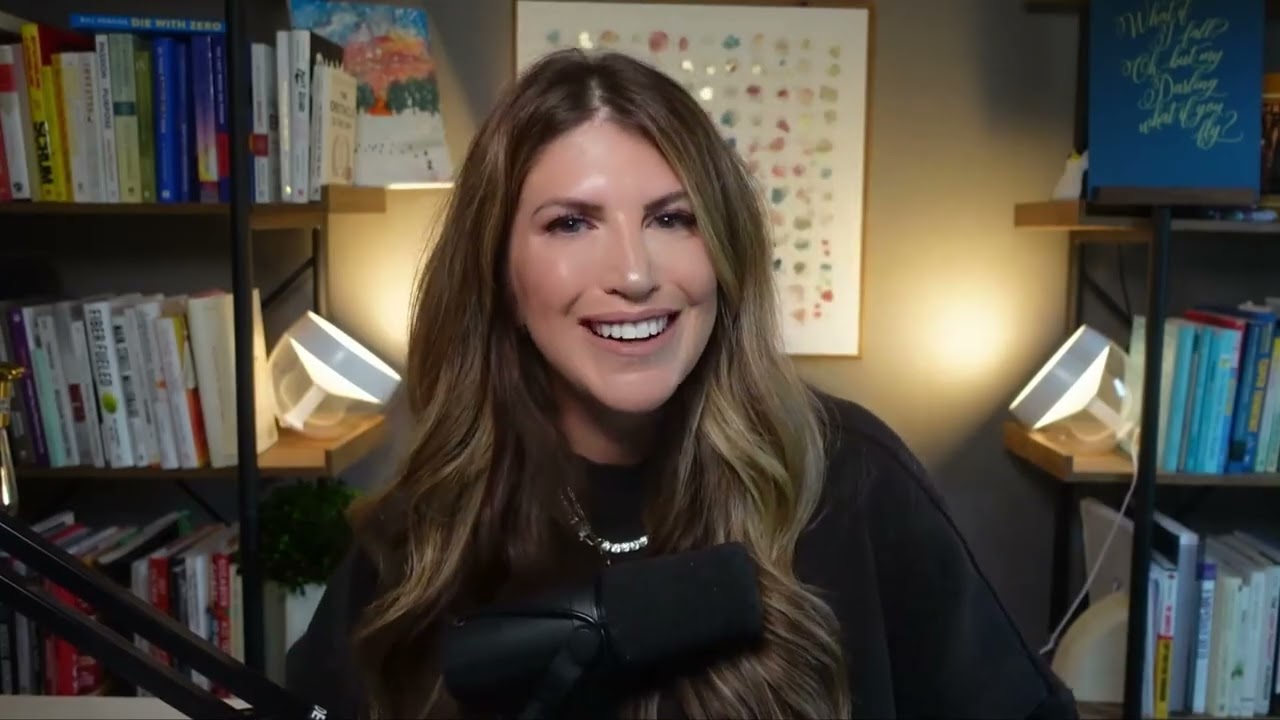
This is a YouTube video titled "Secrets to Creating Scalable Offers for Your Online Business" recorded in November 2021. It features Allie Bjerk delivering a detailed solo presentation on how to create compelling offers for online businesses, including strategies for pricing, overcoming objections, and scaling offers from tiny to high-ticket levels. The content is educational and aimed at entrepreneurs looking to improve their sales and marketing approaches.
Hello. Hello everyone. I hope you're having a great day. Looks like things are getting started on my end so I'll just give it a second. Looks like we are officially live according to Facebook. So hi everybody. I hope you're having a great week so far. I'm excited that it's Thursday because it means I get to come hang out with all of you on this live stream and today we are going to be talking all about making offers and what is an offer? How do you create an offer? We did a poll earlier in the group this week, so let me pull that up and tell you what the results were we talked about. I need to find it. Taking a poll of who has multiple offers. Who says, nope, I don't have any offers, I have none, I'm still working on that. Or people who said, I have a tiny offer and that is my main offer. So I have a little bit of a checklist that I'm going to share with you today on what it means to create an offer, what an offer even is. And if you have any questions, you can always pop them into the commentary and I'll make sure to cover those. A previous comment was what is even considered a high ticket offer? What's the most expensive upsell or over a certain amount? So there are some other questions coming in so I'll make sure I get to those as well. So the offer, the offer is what you're selling. So if you picture yourself as we'll say someone who's selling a product on Home Shopping Network, for example, say you're selling a cast iron pan on the Home Shopping Network and I did not prepare this example ahead of time so hopefully I can come up with something on the fly that makes sense. So you're on the Home Shopping Network. You have an amazing cast iron pan that you want to sell to people who are watching this Home Shopping Network, two o' clock in the morning, whatever it is. So you present the pan and why they need it, why it's so easy to clean, why it's the best pan. But how do you make that offer even more compelling when you're selling it in that type of environment? So think about some of the things that you've maybe seen happen on infomercials or you know, someone is sweetening the pot for you to make it even better and encouraging you to buy it. Some of the things they might do to get your brain going, to get the dopamine rush coming of like oh my gosh, I need that. I don't want to miss out. Look at all this cool stuff I'm getting with it. They'll do things like adding urgency and scarcity. So when you're watching the Home Shopping Network, they have a countdown timer running, right? Like they have this offer only available for the next five minutes or 10 minutes. And they'll also have a countdown of how many items they have left. So, so you know, we have a hundred pans left, we have 95 pans left. So you are actively seeing your clock running out to make the decision to buy. You're seeing your even supply and demand, your ability to make that purchasing decision running out. So they're doing that on one side. And then there's a joke, you know, a running joke that I tend to use on my sales pages because it cracks me up a little bit is like, but wait, there's more. Because when you're listening to someone who's selling and they're up in front of you and they're pitching, you also get a special cleaning rag that you can use to clean your cast iron. You get maybe some cleaning solution to make sure that it lasts forever. You get a recipe book, you get, I don't know what else you'd get maybe like a special spatula that comes with if you order in a certain amount of time. And these are the things that make it that no brainer offer or the idea of like, oh I, it's so good, how could I say no? I get all of this stuff. I have to make a decision now. That is their offer. So it's not just the pan. The pan includes only a limited amount. So you're excited about that. It includes all the bonuses and includes the recipe book, the cleaning, the spatula, all of the things that come with this. If I were presenting to Home Shopping Network of like, hey, I want to come on your channel, I have something to sell. It wouldn't. It's never the group program. It's know the coaching calls, it's the maybe boxer access, it's the bonuses, bonus trainings that you can throw in. It's all these different things that are what actually gets people to say yes. And I can't tell you how many emails I've gotten that are like, are you still on the fence? Like it's all things to get you off of the fence. So if you're sitting there and you're on the line and you're like, I want it, but I, I'm not sure if this is the right fit. All of the bonuses are designed to overcome your Ideas of you sitting there being like, yeah, but this won't work for me because of xyz. So typically when we have objections, when we're watching something, there's three different kinds of objections. There's an internal objection, an external objection, and a vehicle objection. So the external. Let's start with internal. So internal is often a belief that they have about themselves. So I don't know enough, I don't have enough time. I've tried this before and it didn't work. Because of this. It's all pre existing beliefs that they have about themselves. External is something about either their support system or their community. So you know, I don't, I can't do this because I don't have family support or my community's too small, or I don't believe that I have enough people in my network to make this work, or whatever. And then external, that external vehicle is a belief that they have about either what you're selling or about you. So like, is this person full of crap? Can they actually help me? Are they able to do what it even is that they say they can do? So when you start thinking about, I mean, this is like, this goes for webinars, it goes for any content you'd ever create. It goes for sales pages. When you know those objections and you know what their internal, external and vehicle objections are, you can reverse engineer your way into writing a sales page. You can reverse engineer your way into creating a really compelling offer, into creating content that overcomes their objections before you even pitch to them, which has become like my secret sauce. So when you, when you think about who this person is and what they actually want in their lives and what they're afraid of, and as they're reading about your offer, what are the. Yeah, but, so you can come up with what, what is the main thing that you want to sell? What's your, you know, what's your style? Special sauce, your main expertise. And then start journaling. What are all of the objections that people would have about buying? Just that? If it was just that? Do they believe that they could get results in a, in a specific amount of time? How much time? What could help them get results even faster? Do they believe that they're well supported? Do they know enough, do they have enough, like, previous knowledge to get results? Is there something else that would complement what you're selling that they would need to be able to get the result? The vehicle? You know, did they believe, what do they need to believe to be true about you? That's where testimonials come in and even a guarantee can come in. So there's all these different markers inside of an offer that help people see it as a whole, you know, see it as the whole buying experience on Home Shopping Network where they get the whole box of all the goodies. That's what we want to create for people when we're talking about mapping out offers. So whether it's a high ticket offer, whether it's a, you know, tiny offer, whether it's something in between, they're all based on the same concept. And once you know what your secret sauce is, you know your framework, you know your results that you can bring people towards, you can launch the same offer at any level that gets people to the same result. The only difference is how much access they get to you. So if you're someone who only has a tiny offer, and I don't say that in a negative way of like, oh, you only have a tiny offer, you could scale your business with multiple tiny offers like we've talked about before, or this tiny offer could be what you use to bring in dream clients that you bring and you ascend into a higher ticket offer. So that being said, you could look at what your tiny offer is and think about how would I guide them even faster if I were to go sit next to this person. So for example, my very first tiny offer was the livestream calendar. So if I were to sell, you know, 100k version of this tiny offer, it could be me going in and moving in with this, this person or going to their house and moving in with them. And every day at noon being like, all right, it's time for your live stream. Today's topic is how I got started in business. And then I could help sit with them and repurpose the video and turn it into other social media content. I could write the blog post for them. Like I could do all of those things over 365 days. But I'm, I'm, I have a family and I like where I live. So I'm not gonna, not gonna move in with someone for a whole year to make sure they do their visibility calendar. That's why it's 30, no $27. They can just do it on their own. If I were to do something mid tier, that's maybe like a group program, that's 6k ish, it could be an accountability group. We could have weekly calls, we could check in with each other. You know, the part of the curated community container of support is what they're paying for. So when you start looking at different levels of what you can charge, you can take the exact same thing and sell it at all sorts of different levels. The main difference is how much access they get to you into your direct feedback on what they're doing. So when you can virtually eliminate your need to interact with them at all, that's when it can become a tiny offer. But when it is guided, when they do get Voxer, when they get group coaching access, Zoom, I mean, there's even a pricing differentiation that you can make between a live stream like this one, where you broadcast it into a Facebook group that's supporting a program versus giving them Zoom access where they can see you face to face. So you can start adding these different elements and the more touch or more contact they get with you, that's what makes it a higher price point. Another thing that I think people don't realize is it doesn't have to even be different content. I mean, you can add on content, you can dive deeper into subjects, but you can teach something at the what, not the how level, and still sell it for the tiny offer price, where you go a little deeper and they get your feedback on in your coaching and your advice at the higher level, that's really only the only difference. Like someone would pay. People have bought the Tiny Offer toolkit and then gone on to buy Tiny Offer Lab and then even gone on to buy the Tiny Offer VIP accelerator. And they're still getting value out of each level because they know what they're getting at each level. And what they're paying for at the highest level is sitting on Zoom with me and writing their copy together and creating their offer together and mapping it all out, it's still worth it to them to invest at that level. Even if they originally started with just wanting to get, you know, the digital product templates. So hopefully that makes sense. I do have a checklist that I wanted to walk through with you on what goes into a really great offer. And one of the first pieces, just to summarize what we've already talked about in a more of a rambly way, is understanding that Dream outcome. So with the Live Stream calendar, what is the Dream outcome? While they're getting visible, and because of being visible, they're getting more clients, Dream Outcome is getting more clients because then they can make more money, then they can spend less time searching for their clients, they can work more efficiently, spend more time with their family and have a, you know, more intentional and excited life or, you know, that's the end result. Oh, Ultimately they want clients so that they can have money and they can and go do other things that are not just job related. Right? I mean, and that's ultimately what we all want. So you have to understand what problems or obstacles are in their way from creating that dream outcome. And that's where you come in. So how do you solve that problem for them? How do you overcome their obstacles as they see them for the dream outcome, the dream life, whatever that looks like that you're helping them create? So understanding the problems and then figuring out how do you create solutions for each of those problems. So if the, if the problem is visibility, you could tell them what to say, you could help them understand what kind of equipment they need to get visible. You could help them, you know, block it into their calendar so that they're committed to a certain time every single day. When you go through and you have that big pie in the sky dream outcome in your brain, you know all of the problems and obstacles they're facing in order to get fix those problems. Then you turn all of those problems into solutions and then you can create the solution for them. You can teach them, you can give them templates, you can, you know, create guided meditations, you can create role playing examples so they get better at selling, you know, all of these different solutions that you can create all should line up with their strategy specific obstacles that they see as the reason they're not getting that dream outcome. So then when you start building that into an offer, you do it in different ways like we talked about it. Do I email this checklist out? No, but I'll create it and share it, which is just something that I scribbled together. But a visual is nice, right? So once you can correlate each one of your solutions, then you can start mapping out, okay, am I going to solve this in a high ticket way or a low ticket way? If the desired offer that you're looking to create initially is high ticket, then what's the highest touch? I have to turn my heater down in my office. It's not cool to brag about weather in Minnesota. I've learned that you guys are not impressed that it's 30 degrees outside. But it is 30 degrees outside. So when you, when you pick, pick one first. Are you gonna go high or are you gonna go low? You, you map each one of those solutions to a high ticket feeling solution. So that was like very repetitive, but I think you know what I'm saying, your version of solving that in a high ticket way, what would you do if they're paying you $20,000, like what would it be worth? Worth it to you? You know, would you do something in person? Could you build a whole funnel for them? Could you create a whole meal plan for them? Create an instacart grocery list for them that they can use every single week? You know what, what are you willing to do at that price point? And some of you might be listening, be like, I would do anything for 20k, just tell me what they need. So just start brain dumping all of the things that you could do to guide them up that mountain. You know, as their, as their Sherpa, their guide, their trusted advisor. You're the boss of telling them all these different steps and helping them find the solution. So you can just start brain dumping all of the different things and then look at how you could deliver that result in a high value way without incurring a lot of cost for you. So you can start playing that game a little bit of like, cool, yeah, I could go, I could sell this for 20k, but it would cost me, you know, a thousand dollar plane ticket, thousand dollars a month in rent or more by the end of the year. 20k really isn't even worth it for me to move away from my family for a year, to take them grocery shopping every day. So, so you can think about how do you deliver that same result by curating content that you already have or making it a zoom call instead of an in person, side by side going through their computer together to create their grocery list. I went on the fitness example. But whether it's business development, relationship improvement, fitness, all of those categories, you can come up with these types of offers. So really brain dumping, if it's a tiny offer, you can't commit to having any time involved at all. I think that's a question I get a lot is like, well, should I sell my time in a tiny offer? Should I, you know, can my last piece of the offer be a phone call? And it could, but it's gonna be less scalable. And the goal of tiny offers is to have like that mass market appeal that feels like it's super scalable. So anytime you start giving your time away at that level, you're gonna run out of time really, really fast. So making them offers that if it's home shopping network and they, they see the clock ticking down and they see you get this and you get this and you get this, and then they're like, oh my gosh, I have to pick up the phone and I have to order this thing at 2 o' clock in the morning. Because this is such a good offer, I cannot. I absolutely cannot say no. I would regret it if I just went to bed right now and I woke up in the morning, it was gone. So creating offers like that, of getting them so excited about what it is that you can sell and so emotionally attached to that result because they finally see what it could look like. They finally have the yellow brick road in front of them with all the different steps that you've mapped out because you know them so well, you've worked with people through this. You have your framework designed, you can curate all of that content. There's like a ridiculous picture of me in one of my webinars standing in front of an end cap at Target. Of course, I love Target. That has all of the supplies for sundae, like making an ice cream sundae. It's got the chocolate sauce, it's got the ice cream scooper, it's got the sprinkles and the cones and all the things you'd ever need. Someone's job is to design end caps that let me, like, take my arms and, like, dump everything into my cart. Because it's all in one place. It's the same thing in the bathroom aisle. You know, like, you see the. Not really the bathroom. I like the home goods aisle. Probably a classier way to say that. Where it's got the towels and the soap dispenser and the toothbrush holder and it all matches and it's all great and it's all in one theme. So I could just again take my arms and like, put it all in my cart. Lauren said this is probably obvious, but after someone buys a $27 offer, if they buy the $37 offer, does it add 37 on top of the 27? Yeah, absolutely. Nope. They're each. They're each their own product, so they have their own pricing. That's all. That's like tiny offer strategy. For anyone who wants context on that question. Tiny offer system is three or more steps where it's the main offer, the order bump, and then an upsell, upsell, and one time offer words that I use interchangeably just for clarity. So that system is a little bit different than. That's like three different offers that play together in a very specific. So with your offer components, you want to think about how can you make things easier for them, how can you get them to the results faster. One thing that I made the mistake of doing that I thought was going to add on value for people is I extended the program at one point, my Tiny offer accelerator program, I extended it to 12 months. And that was the offer that I was selling. I was like, sweet, It's a thousand bucks a month. 12 months. You get access to grow and scale. 12 months of access isn't that great? And people were like, not as excited to buy it for when it was 12 months. Even though price wise, by the month it was probably less or equivalent to what we were selling it. But they took that to that it was going to take them 12 months to get the result. And they're like, I don't want to wait 12 months to have my Tiny offer done. Like, I want my tiny offer done at the end of the month. Like, do I really need to buy 12 months worth of support? I don't want to pay. I would pay if it was a $12,000 package. They're like, dude, I would pay $18,000 to get it done in four weeks. Why do I have to pay for 12 months now? So think you can kind of screw things up in a way if you give them too much access because they want to pay for speed. They want. They want to pay more to get it done faster. Trey's wondering if, can you go from Tiny offer products to booking a call for high ticket offer? Yeah, 100%. If you design the tiny offer in a specific way, it can be the same audience. And that's like my secret, secret psychology behind what I've sold. Like, there's the live stream calendar. If I'm someone who's willing to pay for speed. If I'm a high, you know, say I'm gonna pay something high ticket. If I'm gonna pay for $25,000. Mastermind, I would still use a livestream calendar because it's going to save me time. The Tiny offer toolkit, which is templates for digital products, I'm still going to buy that as someone who does buy high ticket stuff because it's again, it's going to save me time. So when it's when tiny offers become courses that, you know, it's like a mini course that takes a month to go through it. I probably wouldn't buy that because I don't have time to go through a course. Like, that's not a priority. And how I would want to consume content because it's gonna take too long. So when the it. It can be the exact same audience or it can speak to people who would aspirationally think they want to book a call at some point but aren't ready it's, they're still gonna want it too. So you can appeal to. What I teach is like the efficiency minded people and the lingering mindset people, efficiency mindset, people being like, give it to me fast. Like, I'll pay for speed. I want, I want your brain. I want your top offer so I can get it done quickly. Where lingering are people who, not necessarily bad, but they just, they're still learning. They want, they want to take in as much content as possible so they can find their own path and they're just, you know, you know, dabbling more so than people who are like, just give it to me fast. But the same offer can work for both of those different audiences as long as it comes back to saving them time instead of educating them. You know, I totally believe in having different offers for different avatars and knowing that that's okay. You don't have to say like, I'm a person who creates cross stitching patterns for, you know, Australian shepherd owners. Like, I think it's possible to be too niche. Like you can get yourself in a niche where there's not, there's not enough demand for you to be able to hit your goals at any level. So if you can niche by framework, niche by specialty, that gives you a lot more leeway to be able to work with lots of different types of people and have that mass market ability. So to, in order to connect those two things, there's a lot that you can do. High ticket, low ticket, there's a lot you can do by embedding your high ticket. You know, book a call, book a call, book a call. Like everything goes towards the book a call button inside of your product. I mean, you can talk, you can tease about the program that you have available. You can share testimonials from people, a case study from people that have gone through your high ticket program. You just integrate it inside of everything inside of the tiny offer. And even I wish I could like start sharing my screen during this. But inside of if you're in the learn.alibierk.com portal. I just redesigned the dashboard. The dashboard used to like, I'm so embarrassed that he didn't even did this. But it used to say like have people's comments in there. We use the, it's custom built so we have a, the theme that we use has more community aspect if we wanted to use it that way, but we're not using it. So it was like customer service requests of like, hey, my courses aren't showing up or you know, so and so Logged in five days ago. Like, that's. That's great real estate that I wasn't using for anything that we were even paying attention to. So I took that away. I redesigned it so that it. It has a book a call button. It has, you know, try. Try clickfunnels for free for 14 days and join this Facebook group. So those are like my three call to actions. Because. Calls to action. Because that's such a space that people are seeing often. Why not use it to encourage that next step? So every email now has a footer link in it. That's like walking people through what their next steps could be. People will do what you recommend because they trust you. They're on your email list for a reason. They're in your products for a reason. You know, in your Facebook group for a reason. When you tell them, like, hey, this is the next best step for you. If you're feeling this way, they're going to do it. Total tangent, Trey. But, yes, you can do it. You just have to, you know, really think through the customer journey. And, like, how can you create all the different paths that lead from, you know, whether it's every. Every YouTube video you have has a call to action to book, a call podcast, you think about reverse engineering webinar. If people aren't attending a webinar, you can still take each of the objections that we talked about, turn it into a YouTube video, turn it into a podcast, and at the end, hey, you want help with this objection? Book a call with my team. We can help you solve it. So all. All paths lead to lead from tiny offer to get people in and get that visibility and build the email list. But then. And everything else inside of the tiny offer then goes out to content, and then from content, it goes to the high ticket. So it's kind of like this. I can't even see my hands. Like, it spreads out and then it goes back in. That's how I see it. Okay, so making it easier, making it faster, making it. Making lives, their lives or making the creation something that they believe is tangible. That's why tiny offers have worked so well for me, is because it feels like people can finish what they start. When it's like, you know, create a webinar and get people to the webinar and run ads and then get a sales team to close on the calls. And it can feel for someone who hasn't experienced finishing something. And I know that sounds weird to say, but I was that person for a very long time where I didn't believe that I was gonna finish projects, like, ever. I was like, oh, cool. Ali's excited about something. This is be gonna. Going to be great and really fun to work on. And then I know in two months I'm going to be like, that never happened, and on to the next thing. Like, I didn't see myself as a finisher. And when you can rewrite that story for yourself of believing that you are the person that finishes things, you're a finisher. You don't. You don't start things that you don't finish. There's like a whole level that unlocks in your brain of what you're capable of because you believe that no matter what you do, you're going to finish what you start. So when you can design an offer that unlocks that level in your person of like, I can do this, I can lose the weight, I can save my marriage, I can start a business. Whatever it is, when you show them what it looks like to finish and you inspire them, that is going to help your offer become even more tangible and desirable for them. So thinking about all the different ways that they can consume content in your offer is another thing. I have this thing that's called the offer wheel, and I'll try. I don't know if you guys have seen it. I just had it pulled up the other day. So let me see if I can pull the link up super fast. Aha. I found it. I'm gonna put this in the chat. So this is something that, oh, I almost left. Let me open a new window because that didn't work, and I don't want to leave you guys hanging and, like, go disappear and do something else. So the offer wheel is this thing that I created that the idea is to help you visualize. This is like a sneak peek from what's inside of the program. So you guys are privy to some proprietary information today because it's relevant. So this link is something that shows you how to design an offer that has different elements in it. So knowing that people have different ways that they like to consume content, and it's all about creating that wow factor when someone logs into your product of like, like, oh, my gosh, there's video recordings, there's audio, there's, you know, there's like a trello board, there's a Excel spreadsheet, there's a workbook I can do. There's all these different pieces of content that you've only created once within, repurposed into different ways. So it feels like it's a Whole valuable experience for them. So you guys can look at this and start cherry picking from all those different options and adding them to your offer wheel to create either a tiny offer based on how much time it's going to take to, to your time interaction with them. If it's none, you know, if it's something that you've created once and you can add into a tiny offer and you don't, they don't interact with you at all, then it's like the tiny offer price tag, that's where people get confused, is like how do I assess the value? And I would say the value is how much time of yours is involved in getting them the result from that thing, if that makes sense. So looking at how would you deliver this offer, is it going to be one on one, a small group? Is it one to many? Is it a digital product so you don't ever interact with a group? How much effort is involved for them? Is it something they're doing completely on their own? Is it something you're doing with them? Or is it something that you're literally holding their hand and doing as much for them as possible? Then looking at what kind of support level is going to be included. So Facebook group follow boxer phone calls or do they have access to you, people you've trained, maybe people that are certified in what you do those types of things and how can they on that offer wheel, how will they get access to the information? Is it audio, something written, something you know, that they can journal on video? And then also how long, how long will it take them to get the result? Thinking about that and then just start again, brain dumping everything that you would, would include and then picturing what is the highest ticket version look like for this and what does the tiny offer version of this look like? And then how do you make it deliverable even faster? Because if it's faster, you can charge more faster. Like from point of realizing they have the problem to the desired result. If you can shorten that you even, even more. So that's worth a much higher price tag. Okay, so one of the questions was what's considered a high ticket offer? So I would say, I mean it is relevant based on what your, your avatar is, I guess because if you're selling something to let's say moms or you know, an older audience that's not as used to spending money for online education. Like if you're selling to an entrepreneur and they're used to being like, okay, I see return on investment opportunity here, I will throw down Whatever money it requires to get more money back. We rationalize things differently where, you know, if it's a mom and we're maybe we're a stay at home mom, we're asking for, you know, I guess I, I hate that example. I'm not gonna use that example because we want to, we just want to make sure that it makes sense to them. High ticket could be something that's $497. If your audience has never spent $497 on an info product before, that's going to feel very high ticket for your audience. If it's someone who's in info products for, you know, business development, it could be $15,000 or more. I would say as a benchmark. Anything that's $2,000 or more would be like high ticket and would require speaking to a human before making that purchasing decision. So talking to a sales team, I get so warm when I do these things. If it requires speaking to a sales team, then that's going to be a price to take. That's like $2,000 or more as far as funnels go and decision making. Usually the, the foundational point that people make or like the, you know, typical rules I guess would be if you're selling on a webinar or you're selling on some kind of video. One to many sales experience. If it's 500 to 1997, you can sell it just with the sales page. So you could bring people directly to the sales page. I think it does differ by audience and their experience level in buying things online a little bit if they need to feel guided through the experience. But anything 1997 or more is generally application to sales call and then close it. So whether it's $2,000 to $100,000 for the offer, that conversation can happen after an application. And the way we have our application created, which is interesting and different than I've seen other people do, it is our application is interactive in that it will send it in two different directions depending on the answers that come in on the application side. So if someone fills out the application and they answer the question of like, are you interested in investing to solve this problem right now? And they're like, no. Are you the decision maker? And they're like, no. Pain point. How badly do you want to solve this problem? And they're like one. Then we would send them to our salesperson who is more of like what you'd consider an appointment setter. So they'll get on the call with her and she'll share Some free resources or you know, ask them, gauge their interest level, maybe set up a PH follow up call for later but help them get to the point where they, they have money to invest or they, you know, they're excited about solving this problem in their business. Otherwise if people are like, yes, 10 out of 10, I'm ready to solve this problem now, ready to invest, I am the decision maker, then they would, they are directed directly to, you know, more of like a high. Someone who has more information about the higher ticket programs. So it helps make the content and their experience really curated for them. So they don't get on a call and the person's like, okay, the program, you know, for our tiny offer accelerator VIP program is $15,000 right now. If someone was like, I don't have any money to spend, that call isn't going to be valuable for them and it's not going to be valuable for people on my team because there's just not a, you know, it's not a priority for them at that point in time. But I still want to be there to help people. We used to have it set up as like if someone said no to those questions, it would just send them an email that was like, sorry, looks like it's not a great fit right now. Here, go join. You know, buy the, buy the DIY version of Tiny Offer Lab if that was me. And I like wasn't quite ready to say that I was ready to invest in something and they sent me an email that's like, oh, you're not good enough to talk to you right now or you don't have enough money to talk to you right now. I'd be like, peace, I'm never coming back. Like I don't feel supported at all. You just like turn me away. So I think having that, knowing what the journey looks like for High ticket, even if someone's not fully prepared or not, you know, maybe not like a quote unquote ideal client at that point you can still send them to something that's going to be really valuable and help build them up and help them get to the point without just turning them away. So I think, I think having multiple offers at different levels and knowing what that solution looks like for different versions of the same avatar or different, you know, again, lingering, lingering mindset versus efficiency mindset. Having different tiers for people can, is only going to benefit you to be their solution for the long run. You know, like if you can help someone learn how to fish or like teach them how to fish, whatever that Quote is versus just saying like, no, I can't feed you right now. That's gonna create a fan for life of your business. Someone who, who is like, you know what? She helped me when I, when I wasn't ready yet, when I was still learning. And now I am ready. I'm gonna remember that for the long term. So that's again like a totally different tangent. But that's why I recommend having to tie it all together. Having different offers that are based on the same thing, that you can scale at different into different levels and, and still be able to help people. Even though I want you to super value your time and like not give away your time for $97, if that makes sense, I'd like a $97 one on one. And I know it does take a comfort level too. There's pricing, I'm sure some of these numbers. I'm saying I'm like, Ali, you're nuts. Like, I could never imagine that for myself. But let's remember that baby Ali entrepreneur used to charge 297 for an unlimited retainer for social media management blog creation. If you, When I first started, if someone paid me $297 a month, I was like pretty much available via phone at any point during the entire day. Like I would do anything they asked because I needed that proof of concept of like, I have an ability to make money on my own, I can do this. And then you just raise your prices like little by little as your experience grows and your trust in yourself grows and, and even your trust and your ability to get people to that result grows because I know that's a big piece of it too is like proving to yourself that you are the expert and that you can get people to that end result through your, your guiding and your advice and your, your templates and everything. It takes time to build that up. So if you're not there yet and you're like listening to me talk about application funnels and you're like, I don't understand what you're saying, saying it's totally okay. You have to start where you are with what you have. It's just the biggest thing is starting and finishing what you've started. Even if you think it's horrible, even if you're embarrassed to be putting it out there, at least you'll start getting feedback and you'll start shifting that core belief about your ability to finish things. Because again, that's like the foundation to be able to just keep creating and keep snowballing on everything else. That you have. I think that's all I got. If you think of anything else, if you have questions, if you're watching this and you have things that you want to add or ask about offers, I'll work on getting that checklist created, too, because I do think that's super valuable. I should probably create a tiny offer about offers. I think that would be helpful based on what I've heard and what questions I've seen asked. So feel free to add in, and then I can make my little checklist that I'm going to share with you guys even better. Sweet. Well, thanks for being here. I hope you guys have a great rest of your day. Happy Thursday and I will see you inside of the group. All right. Bye.
More from Allie
Your Price Point Is a Business Model: How to Price the Offer You Actually Want to Run

Evergreen Webinars & Rolling Enrollment BTS Training from my Tiny Offer® HQ Community
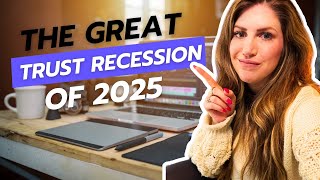
The Great Trust Recession of 2025 (How to Overcome & Dominate In Your Niche This Year As a Creator)