ABM Isn’t Dead—You’re Just Doing It Wrong w/ Andrei Zinkevich on Real Pipeline Strategy (#17)
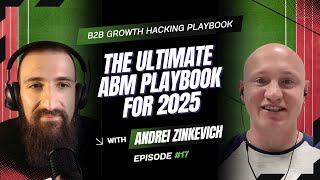
Transcript of a YouTube interview with Andrei Zinkevich (Full Funnel) and Mario Pesce discussing account-based marketing (ABM), demand generation, and revenue operations (RevOps). Zinkevich outlines Full Funnel’s focus on solving sales/marketing misalignment, capturing signals and intent, fixing “account blindness,” running small ABM pilot programs, pragmatic use of intent/first‑party data, and measuring outcomes tied to pipeline and revenue. He also recaps the Full Funnel B2B Marketing Summit and distribution channels (LinkedIn, Substack, blog).
Chapters
When it comes to football, right, you have four core goalkeepers, defenders, midfielders and forwards. Now question to you Mario, which role is more important?
Goalkeepers? I don't know. Which one would it be?
I think the right answer is all of them. Because if you have good goalkeeper but you have bad forwards, you are not likely to win the game. The same is in business Foreign.
This is Mario pesce from the B2B growth hacking playbook. It's a great pleasure for me to have Andrei Zinkevich from Full Funnel as a guest here today. Thank you for finding the time to hop on the show. How are you doing today?
Always a pleasure. Happy to chat with you.
I really love the Full Funnel guys. There are very few people online who have produced that level of quality and detail when it comes to B2B marketing to full Funnel, demand generation, revenue operations and so many other topics that concern everyone in the space in today's day and age. To kind of try to sum it up, there's been a seismic shift in B2B strategic and purchasing behavior and everything else that we've been seeing ever since I'd say end of 2022, start of 2023 from redefining goals, targets, core beliefs to you know, revising the entire funnel top to bottom to reinventing marketing ops and rev ops to question performance marketing, talking about brand marketing and brand affinity, exporting, account based marketing and so many other topics in conversation. So evergreen for LinkedIn but so much more important over the past year, year and a half kind of as a starting point. Andrej, tell us a little bit about Full Funnel and what do you also see as revops as a definition in 2025?
Yeah, absolutely. So to keep it short about our company, we are account based marketing consultant company. What we do aside from deploying account based marketing because this is kind of the major desire for companies that want to go up market. We solve a lot of go to market challenges and in nutshell this is all about solving misalignment between marketing and sales, deploying focused approach to generate enterprise pipeline for both functions, setting up the cross functional collaboration between multiple units, sales, market and subject matter experts, product and client success, basically everybody who has touchpoint with customers, unifying the reports to make sure that the teams are reporting and there is a clear visibility on pipeline generation and revenue and lastly making sure that we are not focusing only squeezing out the existing market but also creating awareness among strategic accounts differentiating us as the brand, engaging with the buying committee of target accounts that are not in the market currently but could become pipeline in the future. Right? And deploy one on one fully personalized engagements with the enterprise accounts that's likely to be converted in the nearest future. So nutshell, this is what we do. And if we'll come back to the second part of your question, revenue operations, I guess everything in marketing is and in sales doesn't have a firm definition, right? If you ask 10 different people, you'll hear 10 different opinions. So I don't want to pretend here to be an expert who says this is kind of the ultimate definition of revenue operations. I would simply define it as we see that function. Right? So this is a subjective opinion. I believe this is a function that holistically captures all the engagement and intent from the target accounts. But both on account and contact level, this is the function that captures the signals. This is the function that handles the attribution and the reporting and the accuracy of data in your CRM. Basically to enable both marketing and sales to do fast, timely and meaningful touch points with the target accounts and with the existing clients.
I love all the definitions out there. As you said, if you ask 10 people you're going to get 10 different types of definitions for that. Same goes for even if you talk about marketing. Over the weekend I saw another handful of conversations discussing the four piece of marketing or whether it's just one piece, it's five piece or six piece and it gets pretty, pretty detailed. You're also talking about the funnel a lot and the fact that it's not a linear funnel, but in fact that buyers are coming in and out of buying mode. Which is another conversation that I'd love to have on that same topic about the 5% people in market in the first place, whether it's 5% or how does that vary by category about different touch points. So there are so many different topics that I want to touch on with that reg.
As I mentioned quite often RevOps function exists just purely to do the reporting. So you can replace it with maybe SalesOps or MarOps, right? So it's just capturing some data structure in it, in CRM, maybe making some reporting, et cetera. What I feel is missed in the majority of companies is that aside from data accuracy and reporting, what is missed is holistically capturing the signals and engagement and intent. This is the kind of the lower hanging fruit but at the same time the most ignored part of operations. Why? Because lots of B2B companies, I mean if we'll just zoom out from startup world, that's completely different beast. But let's say any mature Any established company, they have already software in their stack that tracks this, right? The account engagement, contact engagement, etc. Now the biggest problem is that companies purchase this software often purchasing the dream that's kind of now we'll see the signals and our pipeline will explode. In reality that never happens. And in most cases they pay attention only to what is called sales intelligence, right? Basically in simple words, accounts that are visiting your website and what links they have visited, right? What did they submit the form or whatever, how much time they spent on this website. Next, what happens is that companies believe that sales reps would be asynchronously tracking this intent and then do some level of outreach. In reality, the bigger is the sales team, the more sales reps won't use that software at all. So maybe just a few will be login and looking at this data and then in the best case case scenario, just one, two sales reps would be really leveraging these insights. And then because these are anonymous visits, you only know the account name, but you have no idea who engaged with that piece of content, who has visited your website, right? So in the best case scenario, just a few sales reps would be doing the buying committee map and mind depth account research, engagement, et cetera, trying to personalize the engagement and figuring out who was that buyer Persona. While in reality all the rest sales reps would just enroll a bunch of contacts from that account that kind of fits their buying committee Persona definition into the standard outbound cadences. And that's it, right? And here is the this is the first part of the problem and the second part with RevOps problem is account blindness. So account blindness means that most marketing and sales teams, they don't have a visibility of all interactions and conversations and insights collected about target accounts. Simple example, especially for the teams that are working in silos, right? Marketing often is not aware of what sales are doing and sales as a consequence are not aware of marketing is doing currently. Right? Next, as we spoke, so the signals and intent are spread among multiple software. Then simple example, imagine that there is kind of a change. You have a power user who actively uses your product and then this person moves to the target account that sales are targeting. Quite often this information is missed. So normally product marketer should in ideal world revops person should track off all of the signals and alert a sales rep saying hey, this power user moved to our target account, try to engage with them that way. But in reality that never happens. Neither rev ops capture this insight, right? Nor product marketer or product marketing team sends this Insights. So sales, they simply miss that fact. And then for example, another simple fact, marketing hosts an in person event and they send kind of the insights just to sales. Hey, go and follow up with everybody. But they don't connect the dots that we had previous engagement with these people. Right? So you can leverage that relationship. And in reality this is the biggest problem. Account blindness means that you don't have a holistic overview of all of these interactions and the worst thing happens when teams like when people are moving away from your company. So basically they take away all this knowledge, all the insights that they capture through one on one interactions with these people and that's it. So and then in future companies miss that point. So I believe if you'll ask me, obviously we spoke about holistically capturing all of the signals, right? Report and attribution etc but lastly also making sure that you fix the account blindness issue. Basically revops should enable both marketing and sales with the holistic information of all the engagements and insights that you have collected from target accounts and enable marketing and sales to the meaningful touch points.
Great recap. And there are lots of conversations on signal tracking and last touch attribution, the bow tie model and so forth, which is definitely playing an important role of how are you actually getting involved with ABM on your end? I'm actually let me try to screen share one of the and once again I really love all the reports and kind of the infographics that you've been sharing for the past couple of years. Sharing one from the substack, something that I will kindly nudge and I'm going to drop a link afterwards for everyone to join because it's full of gold, whatever you're sharing more or less every single week. And kind of as a result I want to kind of touch on that full funnel marketing concept of yours, particularly to discussing demand generation. All of the shared activities between all the leaders in the C suite, including the CEO, CFO, Rev Rev Ops leaders, CMOs, sales leaders and everyone else just trying to work the same kind of the same full funnel strategy, including the ABM portion to the left here, the sales portion to the right with all the other cadences and all the other third parties that are kind of involved here in the process. So I feel this is it's kind of very important to kind of touch on that and kind of in in addition to all that, what I'm really curious is how are you, how are you combining and connecting that to all of the added and additional signals coming from all sorts of other third parties from CRMs, from ERPs, from tools for buyer level identity data, company level identity data. So can you walk us through that sort of the process? How do you normally operate in that segment?
Yeah, absolutely. So what you have just presented is the ideal picture. This is how the organization should work. I always love to explain this with football or soccer example for our North American listeners. When it comes to football, right, you have four core roles. Goalkeepers, defenders, midfielders and forwards. Now question to you, Mario, which role is more important?
Goalkeepers? I don't know, which one would it be?
I think the right answer is all of them. Because if you have good goalkeeper but you have bad forwards, right, you are not likely to win the game. And contrary, you can have Cristiano Ronaldo or mess in your team, but you can have bad goalkeepers or bad, bad defenders. And then I mean unfortunately you will be losing the games, right? So in reality, if we'll look holistically at the team, right? We have this split in responsibilities, but the team has one ultimate goal, to win the game. The same as in business, right? We have this go to market teams and they exist solely for one reason, to grow the business, to expand the revenue while obviously while delivering value to the customers. This is non negotiable, right? Obviously. So we don't need to touch upon the things by default, good product, good client service, et cetera, right? This, this is by default by. But the rest, if, if I look holistically at these functions, they exist to grow the business, right? The difference is how the responsibilities are split and what has happened historically, B2B functions were growing in silos. Historically this is kind of the definition that we have. Sales, Sales should sell. Marketing is about brand, is about awareness. But then we have client success that when the deal is closed, they take over the process, right? So again if you look Silas, Silas, Silas and then product market and they create the. And especially if we talk about SaaS or technology companies, right? They work on the product strategy in Silas, not aware and they literally tell the rest of the team, hey, new features are coming out. Why these features are coming out? Why not other features? So you see how it's working, right? And obviously that leadership, they do top to the down goal setting, hey, our goal this year to grow by whatever 50% based on what, how we define this, right? So there is like silos on all the levels. What happens next? Obviously at some point company hits the revenue plateau, right? It means that the company is not growing or the revenue starts declining until that part, until the company is growing. And there could be multiple factors to that growth. Founder, network, whatever. The typing into Blue Ocean could could be multiple factors that led to the company growth. But plateau is inevitable. It's just the fact. And what happens next? The finger pointing and blaming game in the boardrooms between marketing, sales, client success, right? So they start blaming each other for the lack of success. Sales would say hey, our accounts are not aware of us. Marketing would say sales don't want to work with us, don't want to do follow ups, etc, etc. Etc. Right? And then obviously to justify the existence, marketing would start playing the MQL game, doing the kind of lead handover saying hey, you see it's obviously a sales problem. We have generated 16,000 MQLs. They don't know how to convert them, kind of fix it with the sales team. And sales would say hey, this is like pure trash, there is no buying intent at all and et cetera. This is kind of pretty typical situation that we observe in majority of bitcoin the big companies. So from that perspective, how can we fix it and how we can move towards this cross functional collaboration. The first step that there should be a change management driver, a person who understands that the way how we crew doesn't work anymore. And the Playbooks that we are running, they are not enabling us to grow. There should be somebody if you know Matrix movie, right? Somebody who would take the right pill and avoid just looking at the world through pink colored glasses. So then you start looking at the problems, right? Why our playbooks are not working anymore, what aren't we doing the right way? Obviously it would make perfect sense to pick up some strategic clients and interview them about their buying process, about their business triggers, right? What motivated them looking for different solutions. Talk with them about how they prioritize vendors and how they prioritize vendors before they become in market accounts, what type of content they love to consume, in what formats, what industry events they attend and etc. You need to understand the buying journey. This is the first thing, the second one mapping out sitting down together with sales without just finger pointing, writing down all the go to market challenges that we are currently facing. For example low reply rates to our outbound outreach. You can say hey, we purchased the latest technology, the best tech in the world. We have all AI that writes all this semi personalized scripts, but it doesn't work. Why? Next you need to be absolutely honest about why you are not getting the replies right. Because that could be a wrong answer. No, there is a better technology. So we need to buy a new version of ChatGPT or whatever, a new AI tool. I don't know. If you kind of continue following the fallacy about the root reasons of your problems, you'll never be able to change the status quo, right? So you need to be absolutely honest. And then out of this, you'll come out with kind of root reasons, like, we don't create awareness among our target accounts, we don't engage with our buying committee. Our content is all about our product. There is nothing that helps us to attract the attention. There is no nurturing content in place. I mean, I'm just sharing out loud, right? What factors could come out of this? So you'll start mapping out these activities and from that perspective, the next step is obviously you need to find. I always share this example. You don't need to make a revolution in your team. You don't need to say, hey, you know, to your leadership, this is a bunch of our problems. Let's make a revolution. It never works. So you need to find one friendly sales rep who is willing to challenge the existing status quo and try the different processes. So from that perspective, you start thinking about what do you think would be good activities that we can maintain together to fix these problems and also help us to generate pipeline this and that. Who else might help? For example, like if you are selling to marketers and sales and you are in marketing and sales, then you are kind of in a winning position. You come to LinkedIn, you start posting, you have engagement, et cetera. But what if you are selling to engineers that are working at factories? Right? This is our case. Not everybody sells to marketers. For example, you are selling to procurement, let's say CFOs at healthcare associations and hospitals in North America. These people are also not handling hanging out on LinkedIn, right? Or what if you are selling to cybersecurity officers who just collaborate with each other in niche communities? This is the reality because a lot of people think, oh, I need to go to LinkedIn and this is kind of enough. That's not the silver bullet. So from that perspective, you need to. That's why I mentioned the customer research in the beginning. Then you start thinking, okay, let's say we in marketing and sales, we don't have any domain knowledge in that space. We can't create content together to kind of nurture these accounts. What can we do in this case? But we have, let's say, subject matter expert, a person who kind of used to work as our target buyer Persona for 10 years, right? Let's Set up interviews with that person and talk about the jobs to be done, whatever. Lots of things that could help us then for example, next step, if we know that we can't nurture people on, let's say social, right. Should we try to co create content with our existing customers? And from that perspective, going down to the niche community. Sometimes your best activity could be just sponsoring the niche community to be able to present. For example, they arrange a webinar for you and promote it. So there could be multiple ways how you can engage and collaborate, right? But you just, again, you don't take the conventional path. You're just thinking about what might make sense. And the next thing, you don't need to figure out lots of channels, lots of activities. Just start with three, four activities that you can do well. Activities that can help you to create awareness, activities that can help you to engage with the buying committee and activities that will help you to, let's say create preach activities from your marketing and sales towards pipeline generation. So this is the key next. So we mentioned already marketing, sales, content, subject matter expert, right? One of the key steps here is which account should we target? Right. Again, even if you'll take the community pass, should you treat all community members the same way? Obviously, no. Right. From that perspective, we always ask this question as a litmus test. If you are going to bet your compensation this quarter on specific set of accounts, what characteristics these accounts should match. And if you'll ask that question, that way everybody would start saying, hey, this account should fit. Like let's say these are the pharma graphics criteria, this is the behavior they should demonstrate. And we need to have relationship with these people and we need to know this information, right? So from that perspective, nobody says anymore, hey, we want to sell to Fortune 500 companies. Because it's great to have this logo on our website, right? No, everybody starts thinking about specific qualification criteria for this account, right? And then the next step, you see, I didn't mention technology at any of the steps. Only from the next step you can think what technology will enable us to capture this information. Some of this information or some of this qualification you'll be able to do only through one on one engagement. Some of them, for example, they say for us it's important that these accounts are aware of us. Fine, but like we spoke in the beginning about revenue operations, what is brand awareness again? If you last 10 different people, 100 different marketers, you'll hear 100 different definitions. And what annoys me in our space when people claim that my definition is right. I always say there is no right definition. The only one right definition of brand awareness is when you sit down with your sales team and agree what behavior behavior an account should demonstrate. So you can call this account a vendor aware. And for every company this would be completely different criteria. That's the key. And this is how you measure it, right? Are they aware of you or no. This should be tangible criteria, no ambiguity, no kind of high level definitions, et cetera. So that's the key. And when you know this right. Then you can define what is the technology Stack shouldn't absolutely invest or over invest into something expensive. Start look at your existing technology. Maybe you already have everything that you need in place. If you don't have for example, if you don't have software that gives you intent data, start with budget friendly solutions. Don't invest into something expensive. And there are plenty of vendors that can provide you intent data for relatively small budget. Start with this. So you have all the. You have clear account coalification criteria, Akka pilot program icp. Right? Ideal customer profile. You have clear definition of vendor awareness, you have clear list of information. What we absolutely must know about accounts to be able to create personalized offer. Then how can we identify vendor aware accounts? Accounts that know us, right? This is the criteria, this is the technology and these are the channels where we should look for this information. We have defined our go to market challenges and the root reasons. We have defined a few activities that might help us to do this. Right? So from that perspective you start setting up this initial cross functional collaboration because then you can involve your revops manager. We'll move to another part, right? Hey, would you be able to track the signals or for example help us to qualify qualify this set of accounts? Yes. So you don't invest, you don't ask them to become a full time member, right? This is just like a small set of activities. But these are cross functional activities. You can talk to your product marketer. Hey, would you be able with this kind of discussion with subject matter expert, would you be able to help us to prepare a few pieces of content that are more product related but at the same time they are aligned with the jobs to be done. Not just saying hey, our product is the best in the category or we got a new award from G2 or whatever, right? This is not what helps you to sell. So again and then you can, for example you can ask product marketer, would it be fine for you to be a part of that engagement? Maybe time to time, maybe you can host a webinar maybe you can help with the content, etc. So in nutshell, we created a small group and we just ask them for a small favor to help with some parts of the pilot program. While obviously the execution of that pilot is between marketing and sales, then you define a timeline. It depends obviously on your organization and your historical sales cycle length. My typical recommendation is 1/4. You do it, if you will, as a side project. So you obviously, as we spoke, you are not going to make revolution in your team. You do it as a small project. You report every week on your small wins. And this could be qualitative wins. For example, this week we were able to get engagement from this, let's say 10 target accounts and we were able to book two discovery calls. This is the quantitative, let's say measurement. But at the same time you can also present qualitative measurement. For example, your sales rep would say, I tried to reach out to this decision maker from this account during the past year 10 times. Never got a reply. But now the guy is replying to me and for example agreed to have a meeting. This is a fantastic win. Which again proves you need to create the visibility on these results every single week in any format. Could be just a simple overview message in your teams or slack or email, or it could be maybe more fancy deck with a few slides with the screenshots of your activities and these small wins. The format that works for you better just take what is the easiest format for you. Make sure that you create this visibility because then apparently you'll start seeing an interest from the rest of the organization. What of kind what these guys are doing, like why they're getting these results, why they're always cross sharing. So it always happens like this. And then people would be saying hey could you share with me what you guys are doing? And this is how you create internal demand for this cross functional collaboration, right? And step by step you get mobile in. You don't need to come anymore and persuade or have this endless debates about will this work or won't this work. Now you have the proof, this is the key. And only when you have the proof, step by step, you start building this function internally and setting up a bigger cross functional collaboration that you just presented on your screenshot. So hopefully I explained it.
It's definitely packed with insights and I'd love to also narrow down and just dive deeper into some more tactical results. I'm actually going to probably steal a page out of your ABM playbook, which again I'm going to share it just for Context because everyone can kind of access that on your website. You're not, you know, it's pretty helpful. Let me just try it again, but I'm going to scroll through that more or less real quick first on and again that's literally coming from your full funnel ABM curriculum which is available on your website. But you know, you and your team are Talking about the 17 types of ABM data. So many different ways to gather first party business to be media, co op data, you know, bit streaming, training, intent and other 17 types of data that you're sourcing. Then kind of what's happening and we are more or less seeing the same thing is we are moving to different types of playbooks, you know, one on ones, one to fews and so forth. Then we're moving to account research for buying committee to distribution, moving to that pilot playbook which is kind of what you've documented and kind of listed down in such a great way, going through that key circle using some of these enrichment and kind of data aggregation tools as well to operationalize and scale and after getting and I'm kind of scrolling real quick but essentially ending up in that entire full funnel demand generation journey and iterating forward. So it's kind of pretty important to kind of look into and kind of what I found out is most of that ABM and demand gen journey and that's why I'm also kind of revolving around the Revops market, is that executives and kind of what they found out is executives are kind of trying to work out the model, getting the same roas as before with lower resources and lower spend on marketing, which is something that we've been seeing left and right times and times again over the past year. Moreover, what we also see across the board, across hundreds of companies that we work with on our end is that of course performance marketing is no longer working the same way. The buyer cycles are twice or sometimes three times longer. Closing a contract in the first place is taking a lot more blood, sweat and tears to get there. So the previous results that most organizations were achieving with just running a million a month or so on LinkedIn or any other kind of legion magnet has not been working for almost two years now. So the question here is if you kind of joining an organization in order to get a kind of a quick win over the first two or three months at full funnel, starting a new contract with a business, what would be some lower hanging fruits that you see oftentimes such as hey yes, you need to start with some of the cheaper lead Gen or buyer level identity tools or you know, immediately stop Google Ads or LinkedIn ads or something else, or remove the lead magnets because you can identify data. What are some of the two or three kind of quick nuggets that oftentimes come up within your portfolio that are going to be helpful to more executives out there?
I will give you kind of a universal answer. The first thing that you need to figure out is what metrics your executives are caring about. And obviously this is pipeline and revenue. Next, if you have have long sales cycles, no new playbook that you are going to build from scratch will drastically shorten that sales cycle and magically generate a full pipeline, right? This is the reality. So when you set up expectations and remember the previous block where we have discussed how you need to have this discussion about your go to market challenges, root reasons, etc. When you do this, let's say decomposition of all of your challenges, obviously you need to present it to your leadership with this kind of small scoped pilot program. These are the few activities that we want to try out to fix these challenges. Then you need to have an open conversation with your leadership aside from pipeline and revenue, because ultimately this is why we want to do it. What other metrics will make sense to you, will prove that this program makes sense and we are willing to invest. And then you listen to their feedback, right? Because when you present it that way you'll get meaningful conversation with them. And again, for many companies it could be different things. But in nutshell I would say that in most cases you'll see, I would love to see more engagement from target accounts, understanding that some of them would be converting into sales opportunities. And then the next step is, okay, let's define what account engagement means or what brand awareness means, right? So you always need to make it tangible. But this is in most cases they would love to see, okay, we want to see this and we want to make sure that this wasn't throwing spaghetti at the wall. So we just want to see that there is a clear structured playbook that literally we can replicate and scale in our organization. Which means step one, we do this, step two, we do that, step three, we do that, right? So that's the key. In most cases, this is the reality. And so from the lowest hanging fruits, I would obviously say that, that this would be hitting these expectations, right? In any format, having conversations with the target accounts in any meaningful format, right? I'm not saying that you sent again a new round of like 1000 emails and then you'll, you'll hear back, please don't email me or how can I unsubscribe? This is not the reply that you need to present to your leadership right now. Obviously. I mean when they ask your case, when they started asking about what guys are you doing? What's your product all about? Or I have seen your product, could you explain me this and that right? Something that we can call product related conversation or sales conversation. It's not the discovery yet. While discovery would be ideal, let's say output of these activities, but this would be the lowest hanging fruit demonstrating that together you have a playbook to start these conversations. Because again, if you'll speak to the majority of of P2B teams, their biggest problem, they are not hearing back from their target accounts. They are struggling with outbound while their ads, the cost of acquisition grows. Right with the paid performance. And when you ask me, for example, stop, stop ads, we never do this. Why? And I will tell you a specific reason again, there is no point when you start changing things. There is no point to do the revolution in your company. This never works. And I know that unfortunately a lot of people, especially for example when company changes VP of marketing or CMO or VP of sales or CRO, for example, they immediately make the revolution saying everything is broken. But this is the worst, this is the worst approach that you can take. That's another story. So in our case, you don't need to cut what works. Why? Because, because inevitably you'll have conversation with leadership and they would ask, hold on, are you saying that we need to stop or quit the pipeline generation activity? Obviously it might not work, but still it was giving you some results. And you say, hey, we need to stop it. I know maybe you are referring there are people who are talking on LinkedIn and stop this, stop trade shows, whatever. No, you don't stop anything until you have something to show. And when you have something to show, then you can compare the motions, playbooks, etc. And then you can have meaningful conversations. So you need to make this transition as seamless as possible and as painless as possible. And the leadership, they would give you more support, more buy in, more budget, only when they see that there is a good replacement in place. So that would be my best answer to a question.
Absolutely. And that's super helpful. And once again, I'm just trying to bust some myths. As you said, people on LinkedIn are saying this and stop this and start this and you should only do that and you should only do the other thing and that's just wild. On the agency side, particularly the web Dev and creative department, over the past 16 years, we've seen so many cases of a new CMO joining new VP of marketing and they immediately start. And we need new website, new landing pages, new campaigns, new ads. We've seen that hundreds and hundreds and hundreds of times. It's essentially the first page of the playbook. You start fresh, you remove everything else and you just start a new. Which is normally the wrong way to do that, as you just said. And I love hearing more of these stories because essentially unless you get a decent analysis of what's happening and get the decent KPIs and do proper measurement of what works and what doesn't, and build your own assumptions and understand the market better, there are so many reasons why a company has been doing something or has not been doing something. And even though new people can invent or discover something new, oftentimes there's some backstory that needs to be taught. And that's why I also want to again touch on bar level identity data and rev ops decisions and signal tracking and people in market and funnel duration. Because sourcing more opinions and kind of getting more insights from people in the industry is helping really provide a more holistic overview, which is not an individual opinion of. Someone thinks that this is a good idea or one client, one industry, one specific kind of target account believes or something worked for them and this immediately holds true. No, this is not true. We need to talk about statistics. We need to talk about a specific sample set of data of a playbook or a strategy or a framework or a methodology, workflow, whatever. It is a tool that work consistently with more or less, you know, replicable results for at least let's say 100 clients so that we can say, okay, this playbook is legit. Such as you mentioned webinars earlier. Right? You know, the webinar playbook has been around for ages. It still works. It's still conveying trust, it's still retaining attention. Far more than an 8 seconds short or a 30 second reel on Instagram because you're holding attention on a specific topic, you're gathering specific people and this is kind of creating value. So any of these examples are always helpful. And that's why I want to kind of amplify voices like yours and just retell more of these stories to kind of build up and kind of rebuild the future of marketing and rev ops and demand gen and everything else that we are working on. And speaking of gathering lots of great people together, you just had the full funnel B2B Marketing Summit and I'd love to hear a recap of how it went. You had people from. I saw Megan from Refine Labs also demand gen and 6 sense, demand base, 6 base and some other great companies, Dream Data as well and some others joining. Tell us like a quick recap of how did the event go and some of the highlights of the conversation that are going to be valuable for everyone who missed that.
So we hosted it six years in a row. We started it during the first wave of COVID and our intent was initially to when everybody was sitting at homes we wanted to fix the silos between how the knowledge has been shared historically what I'm referring to, you know that's we have European conferences and they at these conferences we have always the same speakers from the same companies and they're all from Europe. Then the same is in the US and in Canada, the same in Australia and New Zealand and we never cross share the insights. Our intel was because everybody was sitting at home. Now the format has changed but that time we started with 5 days, 88 to 9 presentations per day and we had speakers from the entire globe. Australia, United States, Canada, Europe, Asia, South America. We only didn't have people from Africa and Antarctica unfortunately nowadays. Yeah nowadays we don't do it in that format obviously. So now every year for the last three years or four years, I don't remember we have three days and we split them into account based market and demand generation and go to market and we have five top notch keynotes every year where kind of it's a free to attend event and we're all together with the speakers promoted. Why if you'll ask me why free why we're not charging for this? Because what we want to achieve is to challenge the existing status quo. Challenging the broken playbooks that are happening everywhere. Not coming to LinkedIn and writing a new post. Hey whatever. Like setting up fake promises and asking everybody to comment to get the magic playbook that solves automatically all go to market challenges and generates revenue on itupilot. No, just talking about what's working how marketing and sales should work together that way nurturing the executives, the leadership as well. So they start prioritizing this instead of again blaming each both functions marketing and sales and trying to find a new holy grail. You know that's helps to grow revenue on autopilot. Unfortunately after the COVID I would say that attendance rate dropped a bit but I mean it's absolutely normal and obviously now we don't have 40 sessions we have 15 only, but generally we have. And this year the data was the same, so we had around 3,000 signups and the average attendance was like closer to 300 people per session. So I would say it was similar to a good in person conference. So from the attendance perspective and the feedback and the distribution, what is important for us is to see if these keynotes stimulate the distribution. Are people spreading the word. Right, because that's the key. And a lot of we always see people are tagging us on LinkedIn, Twitter, etc. Saying how fantastic it was, their key takeaways, insights, et cetera. And this is the key, right? So that enables different people, not necessarily SAT leaders, etc. But people who are working for B2B companies who are in the weeds spread and that's that knowledge spread in that world. And this is the kind of the mission, if you will, behind that event.
And since you mentioned LinkedIn and so many of the clickbait and viral activities, we touched on that before we started to record. But I really feel pain and I'm just missing the old LinkedIn from two to three years ago. And you know, having spent 16 years on the platform, all of that cheesy Instagram vibe of comment here to get this, and I generated $100 million, meaning that someone ran campaigns for a company that makes 100 million in revenue or something like that. There's so much snake soil sold on LinkedIn that many other great leaders are not spending so much time out there. You know, many executives of 8, 9, 10 figure businesses are no longer social and so forth. And they know that you also been relocating resources and attention to the substack as well. How has that transition been going? And what would you say about first party data and just counting on other sources for better both community and also audience attention outside of LinkedIn.
Good question. I would say again, this should bring us back to what we have discussed in the beginning, right? You need to understand where your buyers are. For example, you mentioned behind the scenes, we spoke about substack and, and the transition of our newsletter to substack. But again, if you'll have to link it in, you'll see that all this content about newsletters are that webinars are that podcasts are that everything, is that marketing? Is that sales? Is that like, yeah, I don't know what, what is that? The only thing that is not that is AI, so let's replace it. And the smartest person obviously now says, obviously AI won't replace humans, but humans with AI will replace you pretend that you are smart nowadays. So unfortunately nothing is that. What is that? Even cold calls are not that. What is that is the playbook that you are running. If you think that you still can call anybody or email anybody, right, and just sell, then this is broken. This is that, right? But if you understand that the majority of your companies are not in the market or not thinking about your product, or even if they are in the market, even if they understand some challenges that they face internally, there could be different initiatives. So this simply, this challenge isn't prioritized, right? That's why for them to buy your product is not the right time. On contrary, some challenges are prioritized and they know your product, but they simply can't connect the dots. They don't see how your product or service can help them. You know, like every single buyer always says, but my situation is unique. In every business I hear the same doesn't matter what you sell, right? Which means they want to see exactly how their problem would be solved. Which is basically the premise of one to one ABM fully personalized marketing. So that being said, you need to understand where your buyers are and most of them dependent on your ideal customer profile. You need to run this customer research and understand these channels, right? There are no silver bullets I mentioned. We have cases where for example, we sell a manufacturing software to production engineers. These people, they don't even have social profile. In the best case scenario, you'll find their Facebook profile where they share pictures, how they attended a football game of their kids. That's literally it. There is no professional educational content. Would you be posting something on LinkedIn and ask, hey, this is the cheat sheet that will cut your Production error by 50%. Please write a comment begging me to send it to you. No, right? This is ridiculous. This is hilarious. Let's say if you are selling to IT teams to cybersecurity teams, these people are away from socials, they have their micro communities. This would be your best channel. So in our case we know that obviously our ideal customer profile is on LinkedIn. So in this case that's why we double down on this channel. But also we know very well after interviewing our customers, they love of our micro events, we have bigger events like the full funnel summit you have referred to. But every quarter we host holistic webinars. I mean by holistic that, for example, we pick up a complex topic like how to build your ABM function, right? And then we do the entire decomposition sharing with them step by step guides not hiding anything. And every week we host full funnel live podcast where we just ask our community asks us questions. We pick up one specific topic, for example how to set up blended attribution or how to report on ABM and record an episode live. We invite our community people come and love it. We know that they read newsletters. Why? Because I will give you one simple example. People might not be on LinkedIn, on Twitter, on Reddit, on Facebook, but guess what?
Everyone's reading their email every single day.
And the key point here is that you need to deserve the right to be read. That's the key. People should expect your email. That's the core difference. And obviously if your newsletter is buy, buy, buy, buy, buy my product book, book, book, book a demo with me. Right? So obviously then you'll be reported as spam, unsubscribe and that's it. Right. So you need to be disoriented to be red as simple as that.
Amazing recap and once again thanks for your time. I'm a big believer of first party data. Definitely recommend that. And other than your substack that I'm going to link below, where are you going to lead the podcast fans who watched until the end? So where should they follow you and read more about you now?
So LinkedIn again substack and our blog fullfunnel IO blog luck.
Amazing. Thanks again for your time and thanks everyone for watching. If you like the episode, like subscribe, ask any questions for Andre. I believe he'd be ready to help and support and answer any follow up questions. And thanks again for watching the show and see you in the next episode.
Absolutely. Thank you so much for having me. It was a big pleasure chatting with you.
Thank you.
More from Andrei
Andrei Zinkevich: Without marketing and sales alignment you're wasting your marketing budget
S02E04 | Andrei Zinkevich: ABM Isn’t Ads, It’s Relationships. Here’s How To Do It Right.
How FullFunnel.io helps B2B companies to boost their sales? | with Founder Andrei Zinkevich