Andrei Zinkevich: Without marketing and sales alignment you're wasting your marketing budget
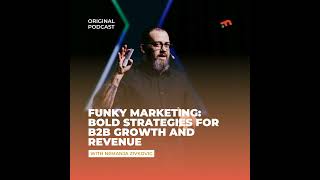
Conversation on the Funky Marketing Show (host Nemanja Zivkovic; guest Andrei Zinkevich) about aligning marketing and sales for B2B growth. Core points: sales wants accounts to be aware of the company before outreach; alignment requires a shared go-to-market (GTM) strategy (segmentation/ICP, positioning, buyer-led sales process); webinars should be used strategically (one-to-one, vertical/job-role, and top-of-funnel educational) and followed by a content hub that contains recordings, case studies, social proof, buying-committee docs and calendar links; measure engagement thresholds in the content hub before CRM follow-up. Practical advice: perform ~10 in-depth customer interviews to learn buying processes and preferred channels; prioritize initiatives that match company skills and audience behavior (don’t copy competitors blindly); engage three additional audiences beyond ICPs — engagers (active community members), copilots (complementary partners), and asset owners (podcast/community hosts) — to accelerate reach.
Chapters
Sa.
Hello. Hello. Welcome to another episode of the Funky Marketing Show. This is the show where we host people that know what they're talking about and people that know what they're doing. That's how I think of funky Marketing. So this is marketing that actually gives results and that actually differentiates. So today I have a pleasure to welcome my good friend and one of the people that I consider talks in the simplest way about account based marketing, about demand generation, about lead generation, about all those things. So Andrey, welcome to the show.
Thanks a lot for having me. Super excited to chat with you today.
It's kind of interesting before we dive right into it, how we we get to know each other, you know, we get to know each other through the Internet but then realize that we actually live in the neighbor countries right here in Croatia, I'm in Serbia and we didn't met in, you know, in offline yet. But it will happen soon.
It's a matter of time, I believe. But that's the funny fact about Internet. So like minded people can connect, you know, leveraging the platforms like LinkedIn or Twitter. And I believe at one point we're both Iranian communities and basically I believe just because of communities, we met first of all and voila.
Yeah, exactly, exactly. So guys, if you don't know who Andre is, basically he's right now growing two startups if I'm not wrong. So return of investment plan. So Roiplan IO and full funnel IO. He has a Full Funnel conference, a huge conference happening this September. So a lot of big names from the community that share really good stuff. And he also runs a great community on Facebook. Those are all the places where you can find him. He's LinkedIn also, I think only a couple of months on Twitter, but already making progress over there. But I wanted to talk a little bit about different things, about things related to the marketing, to the sales, their relationships and how they can all get better, how they can be aligned and actually contribute to the results. What I see that you wrote is that if you ask a sales team what they would love help with before reaching out to the new accounts, the most cases what you will hear is I want them to be aware of our company and what we are doing. So in a way it means that basically you need to have already a little awareness about the brand, about what you're doing, about what company is doing so they don't go full cold on them. So from your perspective, what does it mean for other departments in the company like marketing, maybe customer success? What do all of Them need to do.
First of all, thanks a lot for mentioning this tweet. I will give a little bit of context how this tweet appeared. So aside from my experience in sales before, you know, before I started my career in marketing, I was five years in B2B sales and that was one of the lessons I learned the hard way. So when you are reaching out to strategic accounts, it's way better if they are already aware about your company, of your products, you know, of your positioning, of your unique value proposition so you don't waste time on, let's say, getting this initial buy in, you know, and generating credibility. So last year, as you mentioned, we have hosted the first full Funnel Summit and one of the days was dedicated to sales. So we have had around 10 sales leaders and on every given session I asked the question, so you are all these guys, they are working at some technology companies, you know, they are running sales teams. And I was like, lots of marketers are listening to us right now. So can you share guys, what is the number one thing you know, you want marketing to help you with? And they were all mentioning this. So the key point here is. But I believe everybody will agree with this. It's way easier to talk with companies that already have an idea who you are, what you do, what your stands for, what's, let's say, what are unique features of your product or what is an added value of, let's say collaborating with your company or purchasing your product. They know the value, at least they understand the value and they differentiate you from other vendors because if they don't, you'll be always perceived as yet another product in that category, you know, yet another vendor in this category. And you need to prove, which is always difficult, which is always difficult to explain. You need, you always, you know how I used to explain it that way. You always need to beg for the meeting. You know, you always need to ask, can I meet? So I will explain. You need to onboard more and more and more people. And that's the key point. So as you said, the truth is that not only marketing can help with this. I believe one of my early, let's say mentors, a person from whom I learned a lot about marketing, you know, in the beginning of my career he said that everybody in the company is a marketer because let's say you have, let's pretend people in logistics department doesn't matter. We don't need to talk only about, let's say revenue related departments, logistics, fulfillment, finance, you know, and these people, let's Say at one day they start to expand their network with people who work in the same position at your strategic accounts and start sharing the content that is related to these people. This is how you grab the attention. Because of course at one point we can say they are establishing their personal brands, but they are generating attention, they're bringing attention to your company. And these people inside these accounts can be aware of your company. At least they know the logo, they can see the value. And what's the added benefit? Because lots of people might be wondering, I will explain. The more upmarket you are going with your marketing, if you are prospecting mid sized companies, enterprise companies, the more people will be influencing the decision making process inside your strategic accounts, which we used to call the buying committee. So at one point your contract might be reviewed by chief financial officer, you know, or procurement department. And of course it depends on who you prospect, but you got the idea. And the chances that your deal will be successfully closed will be much higher if these people are aware of your company, of your product. That's the key point. And that's why sales, this is what sales mean. They want to make sure that their strategic accounts on their area, you know, they at least know the logo, they know the positioning, they know what your company stands for and how your product or how your company is different from the crowd.
Exactly. And changes in changes the way marketing is doing their work. Right. If that's the case, then marketing is not focusing only on MQLs or like not qualified leads, but they're instead focusing on getting qualified leads, getting the brand out there, spreading the awareness. So in that way they are helping company get inbound leads. But at the same time they are making it easy for the sales to actually sell. Not only those that are coming inbound, but also when they go and do the outbound, it's much more easier. As you, as you already explained. And one thing that stood to me based on all that like I often got a question like who's creating demand inside the company? Right. You said the answer, it's everybody. But for that to happen, I think the role of internal marketing is becoming more and more important because if we cannot sell it to our people inside the company, then how can we sell it to someone else? Or how can they explain it to somebody else?
Exactly. So the answer to that challenge that was like probably a few days ago there was a conversation on LinkedIn and people asked me how to onboard, let's say your in house team, how to get a buy in. Because sales will always say we don't have time for this. This. Other departments will say we don't have time for this. Which means always it's just the lowest priority for us. It's not about the time, it's, it's all about the priority. And the only one way to solve this is leading by example. So yeah, either your executives should be doing this or marketing should be doing this and then sharing the results. And this is how they can onboard people. So that's the key point in starting demand generation programs.
Yeah, let's continue with that alignment between sales and marketing because in many companies that we start to work with and that we talk with, when we first start to talk with them, they say marketing is doing webinars events, getting leads and then sales is maybe using that leads or few of them to qualify them and see which, which of them are sales accepted leads then qualify and then they go through it and then you know, like when somebody clicks on a, on a schedule, a demo or something like that, then they go directly to sales. But you know, in most cases they don't cooperate with each other. They just exchange information. When it comes to contacts, you know, like exchange, these are the leads that we have. You do whatever you want with them. You know, no feedback, no exchanging things. So I know that you are doing something, something else that everybody else are doing related to the webinars. So maybe, maybe that can be a good thing to, you know, to kind of get more deeper into that. Because you are not reaching out to everybody that's watching the webinar. Right. You're doing something else. So maybe you can explain better how the process goes when you run the webinar.
Yes, absolutely. So let's say before we'll touch the webinars, I suggest to quickly talk about the issue you mentioned. When marketing are working on MQLs while sales are working on SQLs, that's a red flag for me. And this means company, you know, this company might say whatever they want, but the key point here is that they don't have a go to market strategy because when it comes to go to market strategy, it's not about MQL. So SQLs and nothing wrong with MQLs. What's wrong is how this, let's say first of all these are not leads, these are contacts and by default all accounts, you know, first of all these accounts that you are prospecting should be market and qualified. Otherwise they shouldn't be on your list. If they're not, if they're not fitting your ideal customer profile, that's the first point. So secondly, what are the key elements of go to market strategy? So segmentation, you need to focus on specific segments. Ideal customer profile and both teams should have an alignment, should have an, let's say mutual agreement on the ICP criteria. Then positioning and unique value proposition that is tailored to your specific vertical and to your specific icp. Next, your sales process should be based on how your customers are buying, not how you tend to think they are buying. Because companies what I used to explain lots of companies have naive funnels saying okay, so I will run an ad, I will send an outreach cadence and I will have lots of demos, which is not true. Then marketing gets a metric which you used to call mql. So they say okay, what is mql? Probably will just you know, make our ICP criteria product saying that all startups from North America is a good fit and now you have a huge challenge. So lots of things that companies are doing have nothing with how their customers are buying. And that's huge, huge problem. So this sales process should be based on how customers are buying. And now coming back to the webinars, it could be a part of a sales process. Sales and marketing process. And when it comes to webinars, one of the biggest mistakes, you know is not realizing that webinars the same like articles, case studies can be dedicated to different, let's say stages of the buying process. Because there are webinars for that could be one to one webinar with your strategic account which is like dedicated. Let's say I'm running a, I don't know, just a quick example, I will create a webinar for Funkey market and how to expand their businesses, let's say in South America. Just something that came to my mind and that would be highly relevant to you. Yes. So I will your team but it will be one to one presentation and it won't be relevant, let's say to another company because we'll be talking about your current situation. So next we have webinars for the vertical and these webinars could be, you know, again you could do a webinar for in house champions, you know, the job role. So in our case in house champions are chief marketing officers, head of crows, etc. And we can talk about specific things, you know, let's say one of the webinars we were doing for this. So on this topic, so we just selected, we made a list of accounts, you know, of people from strategic accounts that fit our ideal customer profile. We asked, I mean we, me and My co founder, Vlad. So we reached out these people and asked the question, so what's your number one challenge and top priority, you know, right now? And they were saying, you know, let's say I won't name all the replies, but the number one reply was like, we have a good growth process on our local market, but we have a real challenge to expand our business outside of our market. So we created. So every time we said, thanks a lot for sharing your insights. Would you like if we'll create a webinar on this topic dedicated for marketing teams? Would you like to attend? So some of, let's say majority said, yes, that sounds interesting. Some have said, some of them said, no, I don't want. But voila. So next we created a presentation. We created, it was a close event, I didn't promote it on LinkedIn or on any other platform. So we invited these people and voila. We were talking about this specific challenge. And as our call to action was like, if you'd like, we suggest certain minutes, one to one consultation, so we can exchange ideas, we can dive deeply into your situation, brainstorm how this, let's say, how it can be solved, you know, give, provide more, let's say, more ideas on the concept we was explaining. So that's another thing. And finally you have, let's say top of the final webinars where lots of companies are making mistakes. So traditionally all of them are not doing the two types of webinars I just mentioned, one to one and one to specific job role, let's say from your target vertical. Traditionally all of them are doing top of the final webinars. And the key point for top of the final webinar is that it should be 100% educational. This is where you need to share your knowledge, share your expertise, share some solutions to the challenges your target accounts might have. Because most of the people that will attend this webinar, they don't have, maybe they don't have an existing need, they don't know your company. And you need to get that trust. You need to create this credibility. What most companies are doing, they tend to think, okay, but it's all about attribution. That's an opportunity to generate leads. So everybody is thinking about leads which are strong, not in terms of opportunities, but in terms of leads. So what, instead of sharing the concept, instead of educating their market, they start pitching their product. And lots of people are leaving these webinars because nobody wants to listen to the pitch. I don't know, maybe we can make a poll. The other day and ask people on LinkedIn, do you like to listen to pitch? But I believe majority will reply no. So that's the key point. And then what they are doing, you know, everybody who sign up for the webinar, they tend to think as a lead they give this list, I mean the marketing team gives that list to sales and sales is reaching out to everybody and start and tries to close the deals, which is a definitely wrong and obsolete way for lead generation. The key point here that was, let's say that might be a question, but how can we, you know, leverage webinars in this case and generate opportunities? So first of all, as I said, educational part. Some people that have an existing need or let's say they have a buy in of your concept or your idea, they will reach out. Of course you won't be able to predict the number. You won't be able to, you know, set a correct forecast. I don't know anybody who can do this, but you can activate the other part of your list and the way how we are doing this. So we are creating specific dedicated content hubs where we create different apps. So the first step is all about webinar recording, slides, etc. Next step we put some of our case studies and during our webinar we always mention that we have case study on this topic. Would you like guys to learn more? Lots of people are typing. Yeah, that sounds interesting. Please send it to me. And then we always mention the content hub so it won't be a surprise for them to say yes, I will send you a content hub is the recording. And with these case studies, so we put some additional materials. As for the social proof, so let's say in our case of Full Funnel IO so we add some interviews. I was on podcasts on well known podcasts like B2B, Growth show, you know, Growth Colony, the ABM Conversations. I have some guest posts on sales hacker on CXL which are, let's say trustful and well known resources in our space. So when people are seeing, you know, they might not be even reading these articles, but when they're seeing the logos and that I was featured and it's not just a quote about me but a full article, it immediately creates this additional, let's say credibility. And finally we add links. So we create a section working with Full Funnel IO where we explain the benefits for different teams. As I said, it's crucial to immediately address all potential concerns or questions of the buying committee members. So in this case we have documents for sales team for Marketing team for executives. Then we explain what's the difference between working with us versus marketing agencies that will do an execution for you because our model is slightly different, it's more about done with you services. So these sort of things. And finally we have a link to our calendar where they can book a call some of the people. So then we share this content hub. Some of the people are booking the calls right from the content Hub. Some of. But the key point is that we see the engagement. That's it's let's say a technical question. I can describe of course how it works. But anyhow, so we track the engagement. We see who has visited the content hub, what articles or what pieces of content did they consume, how much time did they spend. We have a specific threshold for us which means let's say if person checked we have let's say a checklist of documents they should check and the time they should spend in the content hub. And then we add this company to our CRM and then we do a very simple follow up saying say if you were visiting this and let's say you checked a document benefits for executives and you checked let's say my article on sales hacker on how to create a go to market strategy then I can reach out and say hey Nemania, how did you enjoy the webinar? Can you please share with me the feedback and of course I know if you have attended or no. So that's the first thing and do have. So I work in right now on go to market strategy. If you want we can have a quick chat. I can share my experience on how we are let's say create and go to market strategists for marketing agencies like yours just to give you an idea. And that's the point. That's the lowest let's say and not how to say not pushy, you know, sales touch, not spam. A sales touch on bringing these people to the call where you can explain more concept. You know, you can qualify them by asking some additional questions and see if there is an opportunity. And this is the. So I tried to describe it as deeply as possible. This is a framework that we use with all of our clients.
Yeah, sounds good. I remembered while I was listening to you like when I was working in B2C and we were organizing huge events. I think those were first online events about marketing automation in these ex Yugoslavia countries. But as a warm up we used webinars and one of the things that we wanted to have as an insight as an agency that is organized the Conference and events to see how much influence can those people that we invite on the webinars have. And a lot of them were huge influencers on Instagram, some of others, but you know, data shows everything. Like one of them shares just one story and we get 500 people on the webinar. Others you know, don't even bother to share. Others share on the email list. So we get people from the email. So in that way, you know, we could have segment who out of those people we need to call again for the conference or you know, those kind of things just to give people another maybe you know, perspective of how webinars can be used. You give them two or three now and one more. But thanks for sharing this. This is very valuable and I think a lot of people are doing it, doing it wrong. Because you know, like not all the people who attend the webinar are leads. They are just people interesting to learn more, to be educated.
This is what I always say. If they were interested in your service, they either call you or reach you out and just booked a call with you just from your website. That's the.
Exactly, exactly. So one more thing I wanted to address and this is the thing that I've been seeing persistently in the last six months as we are working with huge service based companies from 350 people to 850 now. And it is that a lot of fast growing companies that are still in startup phase, they are still small compared to their competition, like 10 or 100 times smaller. But they behave, I like to say it like they are David, and they behave like a Goliath. Right. And I saw that you were talking about it also on Twitter how like, you know, small companies act like the big ones. So I wanted to ask you to kind of extend on that and maybe go into that topic.
That's crazy. You know, that's again, it all comes from the mindset that the grass is greener on your neighborhood site. That's the first thing. And lots of companies tend to think that what is, let's say a market leader, the biggest company on their market is doing this is correct, this might be correct for this company. But you don't know the context, you don't know the in house goals, you don't know the strategy, you don't know the skill set inside this company. You don't know what they were doing, where they were in your shoes, you know, at that time. You don't know what mistakes did they do. And this is how companies are ending up because let's say if HubScot is publishing thousands of articles, this is what we need to do. We need to have the biggest blog on the web for our topic. If other company in your market is doing webinars, voila, this is what we need to do. If another company is running Instagram or Twitter account or LinkedIn, you know, or LinkedIn demand generation, let's do it. But there are, we both know there are lots of markets where people even don't hang out on social media. They don't have social media accounts. For example, you know, if you are prospecting engineers from manufacturing companies, you know, in specific markets, these people even though hang out on social media so they might end. That was funny. Just to give you an idea, aviation industry, lots of these people are hanging out on old fashioned forums. So you can, you know, you can hire the best Instagram marketer or the best Twitter marketer or whatever, but you'll be wasting money and time because you are, you know, you're prospecting on the platforms where you simply don't have your target audience. So.
Yeah, exactly. And I'm seeing a lot, sorry for jumping in, I see a lot of people saying, okay, our customers are on LinkedIn when they aren't maybe marketing and sales teams of those target Companies are on LinkedIn so they need to go through them. And it's also one of the situation that's happening very often.
Yes, absolutely true. But that's another story. So now we are moving from the decision making to the buying committee. Again, something that we discussed in the beginning. I was just trying to explain how people are using wrong strategies when they try to, you know, to prospect the decision makers just because a market leader is doing this. And that's why I said until you, until you know the context, until you know the strategy, the goals, the skill set inside the team, then you could, you know, follow this. But again, again what this company is doing, like who can, if both are not working for HubSpot, how can we make, how can we say for sure that the stuff they are doing right now, you know, generates additional revenue. We don't know the margin, we don't know P and L report, we don't know their profit and losses. So how can we say we see only the surface. We can say ok, okay, this is because, you know, there are lots of articles, especially content marketers, they, those who are starting out, they love to publish, you know, case studies about well known companies, about their traffic data, et cetera, et cetera. But this is only, you know, the surface we don't know what's going inside. And that's the huge problem. So before copying anybody, you need to have, first of all you need to think, you know, your head. And the only one advice I can give is talking to your customers, running in depth interviews and trying to understand their buying process, what motivates them to buy, how do they do their research, with who them advice, you know, inside the company, what influences the decision making process, what platforms do they use, you know, when they're researching or evaluating or comparing different products or vendors. And you'll have lots of insights as well about the Dark Funnel. Lots of people are not talking about this, but the truth is that lots of decisions are made in the Dark Funnel. So social media communities, you know, where people are saying guys, what are your thoughts on let's say active campaign versus I don't know, mailchimp for example. And this is how lots of decisions are made. Not just because of fancy, you know, website or latest cross strategies you have implemented. So that's this assumption before implementing anything validated with your customers.
Yeah, I was smiling because at the moment I'm writing the article about the Dark Funnel for the Revgenius community and it seems a lot of people are talking about it and that's good because it seems like people start to understand no matter if you call it Dark Funnel or something else, but things that we usually cannot measure or we don't measure, you know, so it's not only focusing on performance metrics but also the metrics that can get us to some place in the long run that will, you know, will mean that we actually understand what we are doing. In a way.
That'S absolutely true. And you know, it doesn't matter. We can call it, as you said, Dark Funnel or whatever. For me it's just this decision making process and the buying process of our target accounts and the more customers will be able to interview and talk about this, the better insights we'll have and the better marketing and sales process we can create and we can influence. You know, if you know that as you said, for example, if you are prospecting marketing and sales teams and you know that revenue genius is number one community where they asking these questions. This is where your marketing or marketing team or somebody from marketing team should spend some decent time answering these questions, connecting with these people and this is how you can influence the decision making process. There are lots of tons of conversations about influence of the decision making process but I rarely have seen good examples of companies that are doing this.
Yeah, exactly. And okay, going into that direction, I think we have a nice little flow. So one thing I wanted to ask you. When you start working with a SaaS company, let's say looking at SaaS companies, I see that a lot of them are making mistakes on what they should invest in first. So some of them think about it as we should start a podcast. Some of them think, okay, we should create content, we should start a blog, but they don't look it for a perspective. The first thing that we should do is we should start generating revenue. What is the core engine that will get us somewhere in the short run and what is one that should get us somewhere in the long run? So when you start talking about those things and the way you look at them, what do you suggest? What do you do, you know, when you start with them? So I can see a lot of misunderstanding over there and a lot of people in a lot of companies sharing different things. And you know, when we start working with SaaS companies, a lot of them say, you know, like fuck optimizing, fuck analysis. Can you just do the content? Can you just do the advertising? You know, and those are the companies that have been doing advertising before. So it makes no sense for us not to analyze what they have been doing good, what they have been doing bad. How can we improve, you know, those kind of things. So what's your experience?
You nailed it, you nailed the issue. So that's indeed a problem in many companies. Again, one of, let's say one of the root reasons we have already described. So the grass is greener on the neighborhood side. So copying others without knowing the context and goals, that's the first issue. Secondly, you know, to be honest, all marketing strategies are working. There are no, I don't know any strategy that doesn't work because if they. But what's the key point here? You know, everything we learned is an information that came from somebody, you know, authors of different books, people who are sharing the stories in the blog. But again, we like what works for one company doesn't mean that it will work for your company because of different marketing, you know, market situation, different verticals, different skill set, etc. So that's, that's the, that's the first point. So secondly, as I said, the first step would be always developing or refining your go to market strategy. And the only way how to refine it is interviewing your customers, running this kind of in depth customer interviews. So the key point is to learn how they buy. And I usually have a question when we have this interviews, I usually Have a question like what kind of information is requested by your colleagues, by your peers or by your executives? You know as well when you are searching as I'm asking, like what are the industry events you are usually attending? This is how I can identify, you know, the top of the final challenge channel. Sorry, so what were the recent events you attended that you really like? Who do you follow on social media? If you follow anybody, are you a member of any associations, communities, etc. So I'm trying to understand, you know, this, let's say this context. So next step I'm asking about what are your top priorities? What would you like to learn? Do you read any, you know, blogs, newspapers, journals, whatever in this space? So I'm trying to understand how they prefer to consume the information. I'm asking as well, do you know, do you follow any YouTube channel? So do you watch any videos, do let's say attend webinars? This is how I try to get, you know, I try to minimize my focus. Where should I start first? So that's, that's, let's say that's the. These interviews. I prefer to have at least 10 interviews with top 10 customers from a specific segment to understand the patterns inside this segment. And, and next is like we have these insights and next we have our own resources and skill set. The truth is that lots of companies overestimate their skill set. You know, if you don't know how to do demand generation, don't start with demand generation. Start with some or hire somebody who can help with this. You know, start with something that you are capable of doing. There is no need to launch a brand new podcast because everybody on LinkedIn says that you need to run a podcast. If your customers are not going to listen and join your podcast, it will be waste of time. So lots of things we are starting evaluating what we can really do and then sometimes I will say I will share unpopular opinion. But in some cases you can get attraction by leveraging others this audience. If you know that there is a forum, you know, or there is a community where your target audience hangs out so you can start answering the questions there, sharing some, asking the questions, sharing some insights, trying to get the feedback, you know, on the research processes. You can connect with community admins, you know, and suggest some kind of collaboration. So let's do I have an idea. Before starting your webinars, for example, you can say, let's say you are running funky marketing community and let's say I am just launching our plan. I have no idea what to do. I Have no resources, no audience, nothing. Correct. So I'm reaching out to you and I say, first of all, I engage with you with community, I try to connect. And then I say, you know, Neumannia, I just analyzed all the most popular questions in your community. So these are top three questions and I have a solid experience in this space. Would you like if, let's say we co host together a webinar, I will, you know, share my best practices. I can share some case studies, you know, some processes, I believe. What do you think? Would it be valuable for your community? And voila, this is how you get. Of course, I don't say that this is a silver bullet and every admin will accept this, but in most cases they will because they're also looking for delivering more value to their communities. And that's the key point. This is how you can get the first traction, connect with the first audience, then you have an opportunity. Then you can connect with all these people who attended the webinar. You can connect on the platform where they are hanging out, you can ask for the feedback and you can even generate the first customers. Because we already spoke about the process. Correct, but the key point is that now you have this visibility and you have, let's say, the core audience. So next webinar, you can even create this, let's say, webinar for specific job roles. As I was describing what we are doing time to time at Final IO, so you can reach out to these people, ask about their challenges and priorities, and then say, if we'll create a webinar on this topic, would you like to attend? And from this, you know, you can end up with suggestions, free consultations or whatever, or free access to your software, depending on type of the product or service you are selling. And that's the key point here. So, so analyze how your customers are buying, you know, and then analyze your skill set because it makes no sense, you know, if nobody. I know, I know, I know as well. I say this, everybody can learn how to write. But the truth is that most companies don't have enough, let's say, enough desire and willingness to wait for the first result. And when they see that nobody engages with their content, they usually, you know, after a few weeks or even one month of doing these activities, they stop doing this. So I'd rather say, okay, these are our core skills. So you know, matching our skill set with the ways, how customers are buying and trying to identify the strategies. So that's the key point, how we are matching what should make sense. So, and Definitely not looking at what HubSpot doing or any other, let's say top company in your space.
I'm listening to you and I'm thinking the way you said that you talk to the customers and the questions that you are asking them, those are the same questions that we were asking people in the B2C industry is like two, three years ago. It moved now to B2B. And I'm glad it's you go get in details because I see so many companies still thinking of, you know, of those people just as a position, as somebody, you know, that is, you know, only things related to work, you know. And we need to go a little bit deeper to see as you said, events, what you are reading, what you are watching, where you're spending your time, you know, those kind of things to actually get to know them and to see who they are really so we can, so we can create something that will give them value, you know. And I think we still need to go a big way before we, before we get that. But okay, we are moving, moving in the right direction as the song say.
And there is one more thing I would like to emphasize. So right now we were talking mostly about because you know, when it comes to go to market strategy, it all ends up with lead generation and sales process. So we were talking about just one part of your go to market strategy. How you can find the right, let's say marketing activities or right marketing campaigns you should start with. But at the same time what is quite often missed, what is missed is that right now we were talking about ICPs. Yeah. So you want to, to, you want to generate sales opportunities. But there are three more audiences that you need to build a relationship with. And you know, the first audience is what I used to call engagers. These are people on any given platform you'll find these active people who are, let's say even if it's an old fashioned forum, not a modern community, you know, it's a person who asks the most question, answers lots of questions like and commenting, engaging, etc. And there might be a question, what's the benefit? Because how can I attribute this to my revenue? You know, again all comes from the attribution and lead generation mindset. But the key point is that these people, they are connected with your target audience and if you build relationship with them, they can recommend your company. This is what happens quite often, often with us with Full Funnel. They can mention you, you know, whenever something so in our case, well, let's say associated with account based marketing. So Whenever somebody asks about account based marketing, lots of people refer to me or to Vlad. So that's the first idea. Secondly, we have an audience which we used to call copilots. So these are the companies like me and you. So we are serving different audiences, we are providing different services, we have different business models, we are not direct competitors. And that's the key point. But let's say in general we serve this specific audience and among our networks, definitely, let's say if we'll combine our networks, we'll have our ICPs and your ICPs and this collaboration. So I was, I'm right now on your podcast. You was on my podcast, you was on my summit. So we do lots of collaboration. We engage with each other on LinkedIn, recommend each other and that's the kind of collaboration. So this is how we generate additional opportunities for our businesses. And again considering, you know, considering the, let's say opportunities that might come, a company from your network who has no idea about full funnel IO might be referred by you to us. They can check several of our case studies and voila, the sales cycle length significantly decreases. And that's the key point. And we can do this collaborational webinars, introducing our audiences to each other and expanding our networks as well. And finally you have asset, asset owners we used to call. So these are people that are hosting niche podcasts, running niche communities, running blogs, et cetera. I have already described the way. So by using example of funky marketing community, how you can engage with this audiences, you don't even need to have an established one so you can leverage others audiences. And that's the key point. And these are the parts of your marketing activity. But this is what we used to call brand marketing. It's also a part of demand generation process. Correct. But lots of people, lots of companies are not doing this just because they can't attribute these activities to revenue. And it seems that it's not a revenue operation, it has nothing with revenue. But the truth is that it has.
Yeah, it's well said and thanks for bringing this up. I mean I think basically if you want to leverage LinkedIn at the moment or Twitter, that is the way to go. Like you just described, three audiences that they need to go out. Maybe the fourth one is the fast raising newcomers that are just now on the platform and they are growing fast. So you want to get, get, get on that train. But you know, engaged people, the first group that you said, in many cases that's where you start and it's not the same as you are Going, you know, finding your ICP somewhere. You know, this is how we defined it. Then we're going to go to LinkedIn or Twitter or somewhere else, type in into the search and start adding those people. That's actually not the best way to go. That was somewhere else. But then you start, no, you define who are people, as you said, like you and me, who are your peers, let's call them maybe influencers in the specific areas. Then you find who are active people, engaged people on their posts, you start adding those people and then you extend even with other people people. But you know, just to kind of get more practical for somebody if they want to do it. And basically that can change the whole game for somebody only by doing that. If you have the quality content, you know, that's, that's the, one of the most important ingredients so your peers can recognize you and somebody who knows what they're talking about.
That's absolutely true. And remember when you asked me about what makes sense to launch first, I said aside from, let's say aside from customer interviews. You need to audit your skill set because if you don't have, that's, that's the problem. I believe you have seen this as well. Lots of B2B companies, let's put marketing and sales, let's say Martech and sales tech vendors, let's put them aside from this. Let's take a look on Fintech, on logistics, on some traditional verticals. People have, if I can say it, they have shitter block blogs. It's all about, you know, five paragraphs. Hey, we are super happy to announce this new feature or this press release or whatever or they, you know, they post something. Let's say it was, I will give you a precise example. That was crazy. That, that was really crazy. Quite a big software development company that are prospecting, let's say before we started to work, they were prospecting a huge audience startups from North America, which means, you know, they operate in one size fits all mode. But I was doing the audit and when I started to audit and their content strategies, I opened the first blog post. And this blog post was all about why should you create a mobile app? So I'm like guys, do you really believe moving that ctos from your target companies have no idea why they should create a mobile app and they would like to read this article. This is crazy, you know, and this like five, like they mentioned five benefits like reaching out to new audience, improving let's say customer experience and blah blah blah. And then we can create any kind of mobile app for you. Just reach us out and we are going to help you. This is crazy. This is a waste of time and money. That's the problem. So if you don't have a skill set, find a good content marketer or a good content marketing agency that can write for you articles that not only will resonate with your target audience, not only educate, not only share expertise, but also attract the attention and let's say, position you as an expert in this specific space. Quite often companies tend to think that I know one of the biggest mistakes. I learned this the hard way and it took me years to, let's say, be comfortable with this idea. Lots of companies, because I did this mistake as well. Lots of companies, companies tend to hire young people, you know, because they are cheaper. But the truth is, and that's, this is what I recommend everybody to do nowadays. Try to hire the best and the most, let's say when it comes the most affordable person with the best skill set you can afford and then you can get the best results. So that's the key point. Try to find the best with your budget. It always, you know, if you think that you'll pay more, it's. You always need to think about, let's say, the roi, the outcomes, because you can pay less, but you get much worse results and you can just waste of time. While money can be recompensated, you can earn it with different activities. You won't be able to compensate the lost time.
Totally agree. I was just advising a company that is writing, you know, content for developers because they are, you know, they have a specific, specific product that developers are using. And you know, I told them why don't you hire a developer to write the content? You know, that would be pay them as developers, pay that person as you would pay the developer. Just find the one that is willing to write. A lot of them are willing to change things a little bit in their career and that can be a great fit and it can go to every industry or niche. Sometimes it's better to find a person that maybe is not a writer but somebody that is familiar with the topic and you can get them to some technical things and get them to write it. But, but yeah, generally what you said, I totally agree. Especially now I see the whole market is moving, changing. A lot of people are changing positions and there are a lot of highly skilled people available for maybe less money that they would be available like a year ago because of the remote work and all the changes. And I think it's a great opportunity for all of us to, you know, to find better people for our team.
Absolutely true. And as well, what, you know, if we can find at least one positive outcome from COVID it could be that lots of companies learn the hard way, the remote work, and now they understand that they are not limited by their local region. So they can, can attract, they can hire talents across the globe. And we both know we have lots of talents in Eastern Europe, in, let's say in our parts, on Balkans, we have lots of talents that will cost way less than people in the United States and Western Europe. And they can, quite often they can outperform the skill set that is available in your local market. So. So you just need to expand the horizontal of your searching.
Yeah, you got me to the last topic that I just wanted to jump in for a few moments. So how it is now, living in the southeast Europe, when you are coming from the whole different part of Europe, how it is all those changes, like getting used to all the, you know, different habits that people have here, you know, different way of behavior, maybe, or the different way of doing business.
You know, the keyword here is Polaco. So this is something that we can say in English, do it slowly. So step by step. And that's the key point. You know, lots of people are talking about productivity. We have, have thousands of books, you know, that attaching different productivity methodologies like getting things done, you know, agile approach, etc. But the truth is that the place where you are living impacts you the most because just to give you, you know, just to give you, let's say, comparison between Krakow and Split. So in Krakow, because the. The city grew drastically, you know, in five years, it grew by 400,000 habitants. So it was like a total traffic jam. And I used, just because, you know, my eldest son is playing football and he was learning English. So I used to work from 6am to 2pm Then I picked him up from the school, you know, and was driving to city center. I didn't have any free parking space, so I was just circling around. Then I picked him up from English, I was driving him to the football and we were coming back around 8pm so then we have our supper, you know, then we just have here, does his homework and voila, the day ends. And that was crazy. It was like that. That was really crazy. While on Split, you have everything. First of all, you have 300 days of sunny, warm weather. That's a huge benefit. Sea, mountains, you know, and you are living in a quiet space, in a quiet place. You have lots of time for your family, for your hobbies, for your friends. You have time, you notice, to swim in the sea, you know, to drink some coffee, read the books, etc. And this is, these are the things that you could either do on weekend but, but just because of the lack of time, you want to squeeze maximum with your family and friends from the weekends. And now you have everything here. So that's the huge difference. And lots of people tend to think that Polaco means that you are slowing down yourself and you might be missing something out. But the truth is that you are just recovering and you are way more productive than you are in hassle, than you are always running. So that's the huge difference.
And when you give yourself time to do all those things, I would like to say like things for your soul, like even your business advances.
Yeah, look, I came to split two years ago and in two years we launched the first international summit how I planned so this SaaS platform. So we grew full funnel almost four times. So we have like I was just one man show when I was running get leader and now we have eight people, you know, in the team. So lots of things are happening. We are running community podcasts, all this workshop. So lots of things. And this, these are the things, you know, aside from doing the stuff for the local community split tech city, you know, lots, lots of things, lots of. And that's, that's, that's the, the best probably explanation of what has happened and what has changed in the business sense in my life.
Love it. I love that the good things are happening. Andrej, thanks for being here. Thanks for sharing guys. You know where to find Andrej. I will leave links below to his website, to the resources, also to his social media and podcast community and everything. So make sure you connect with him and if you want to learn about, about ABM, about demand generation, about all in all B2B marketing. I think like Andre is the, you know, the go to person especially because he is, you know, explaining it in a, in a way that you can really understand things. And I think not many people are still able to do that, including myself.
Thank you so much.
Guys. See you on the next episode. Andre, thanks for being here and keep it funky.
Thank you. Cheers.
More from Andrei
ABM Isn’t Dead—You’re Just Doing It Wrong w/ Andrei Zinkevich on Real Pipeline Strategy (#17)
S02E04 | Andrei Zinkevich: ABM Isn’t Ads, It’s Relationships. Here’s How To Do It Right.
How FullFunnel.io helps B2B companies to boost their sales? | with Founder Andrei Zinkevich