Building a Unified B2B Revenue Team with Andrei Zinkevich
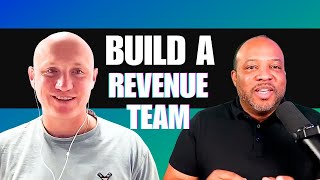
This is a transcript of a YouTube podcast episode where A. Lee Judge interviews Andrei Zinkevich (co‑founder of Full Funnel IO) about aligning marketing and sales into a unified revenue team. Zinkevich traces how MQL-driven processes and Martech-created silos produced internal misalignment, argues for "all‑bound" or revenue‑team accountability, and recommends reporting on total revenue and sales pipeline velocity while connecting program-level leading and lagging indicators. He also covers practical ABM/account-selection criteria, blended attribution (self-reported + end‑to‑end analytics + customer interviews) and a CFO-focused "quiz" exercise, and summarizes current AI use cases and limits in enterprise B2B marketing.
Questions this video answers
(Number of qualified open sales opportunities) × (average contract value) × (win rate) ÷ (sales cycle length).
About 30–35 interviews.
Chapters
The problem is that marketing is in.
A bad position because marketing used to be predictable. But the truth is that while companies.
Expect marketing to generate revenue, right? If marketing alone was able to generate enterprise pipeline, why then marketing teams are.
10, 20 times smaller than the sales teams, right? Maybe that's the answer to a question.
Welcome again to the business of marketing. I'm a Lee Judge.
You know, I released a book earlier.
This year about the relationship between sales and marketing.
The book is titled Cash, which is.
An acronym for the four areas that I see sales and marketing struggle the most. That's communication, alignment, systems, and honesty.
And throughout the book I mentioned the touchy subject of the funnel.
And while some debate that it doesn't exist, I clearly lay out that the funnel is just simply a visualization of how we interact with customers throughout their journey. Today's guest is very vocal about the funnel. In fact, he's a co founder of a company called Full Funnel or full funnel IO. His content on LinkedIn resonated with me.
Because of his clear ideas and views.
On optimizing complex and long sales cycles for B2B companies. An area that I too am very passionate about.
So he is here today to share his expertise with you.
Welcome to the podcast. Andrej Zinkevich. Hi Andre.
Hey, thanks a lot for inviting me and happy to chat about all the areas that you have defined. I think the four quadrants that you have mentioned, they make perfect sense and.
They are kind of the keys either.
To successful alignment and shared GTM execution or to misalignment as well.
Yeah, I've been watching your content and you know, it's, it's great when you see someone who posts. My favorite place is LinkedIn and I see a lot of content from you there and you go, wow, they get it. Or we really align on what we're talking about. And so since our subjects are so close, I wanted to have this conversation. So we'll dig right into it. And one of my first questions is that, you know, one of my key areas of consulting is alignment. And you recently commented on misalignment inside marketing as in marketing marketing versus marketing misalignment. When we're using content to chase traffic and demand gen to chase MQLs and looking for lead handoff instead of looking for revenue.
So in your view, how can marketing.
And sales leaders address this work so that marketing better aligns to the buyer journey and the pipeline?
I think we need to kind of take a step back and look at.
How we got into this problem, to.
Be honest and if we'll just reverse.
Engineer to kind of 20 years ago.
We'Ll see that what was happening is.
That obviously 20 years ago we didn't.
Have this big tech scene, right? And marketing was usually all about corporates, big enterprise organizations.
And if you'll open any book, right.
You'Ll always see the examples from Coca Cola, Pepsi, etc. Right?
Or some well known B2B enterprise organizations like IBM, etc.
Now the problem was that marketing lost a seat among the board members. And the reason why, because marketing became treated as a cost center, as arts and crafts department if you will, sales order takers, whatever you'll call it. But you'll never hear pipeline or revenue in that definition. So to make or to gain back the strategic seat and to make marketing predictable, we needed to invent the new formula to present, let's say marketing impact on revenue. Hence we entered the demand waterfall era. And then all Martech software was optimizing their messaging towards it.
Think about Marketo, HubSpot, etc.
It was all about life cycle lead stages, MQL, SQL, etc. And then our marketing became predictable. Hey, move the leads between the lead stages, right?
Move the leads between this life cycle.
Definitions, get my budget, generate more MQLs. And here we have done our job. So from that perspective, we started basically as marketers. We started fulfilling the expectations of CFOs and executives, making sure that marketing is predictable and you can clearly calculate ROI.
Of every marketing activity and it's easily to attribute. Then technology obviously motivated us to buy.
To report on it. And at the same time we started to facilitate the silos, we started to facilitate the handoff problem, saying okay, we.
Generated this MQL or whatever, we generated.
16,000 MQLs per year and we don't care what happens next, our job is done. So maybe we didn't want it, but we facilitated that playbook and then became a default playbook for many organizations. From that perspective, bigger B2B enterprise organizations and later, unfortunately even startups inherited this broken playbook and to make everything predictable, they started to facilitate internal marketing misalignment.
Which you mentioned right in the beginning, initially it was okay, marketing just generates MQLs and passes to sales and then it sells job to close this mkls.
But now what was happening, we had big marketing department and then we had field marketing team, we had content team or more precisely in bigger organizations, communication team, right? And then we had whatever PR team, we had paid media team that could be dependent on the company.
There are campaign managers, et Cetera, right? There are multiple definitions.
And the problem is that to make every function predictably efficient, we started to invent the KPIs for these departments, right? Hence like you said, okay, Content, team traffic or maybe positions in search engines, then field Market and MQL. So paid media, MQLs, right? And basically, if you look holistically at it, every team started to pursue own goals and KPIs without thinking how does that impact the revenue creation? So literally. And even SDRs in that setup, they were not chasing the pipeline and revenue, they were chasing the meetings. I have heard maybe the most hilarious anecdote that I witnessed a couple of years ago when there was one of.
The sales reps and I was a.
Speaker and so he catched me and he said, hey, can you go to our booth, you know, and see our software? I'm saying, okay, sorry, I'm not really interested, but please, please, please. I'm like, look, I'm not interested. And ultimately he was desperately said, look, I just need to report that I attracted the person. It's my KPI, please help me. I was like, okay, but it's, it's hilarious, right? So the only person in that scenario, in that entire system who was in charge of actual revenue were account executives and all other teams. They were chasing completely different goals, right? Hence here is the problem that we all deal today we join the organization with completely broken setup and maybe in some smaller teams, at least inside marketing teams. If the team is small, there is not that obvious market and misalignment, right? Still, let's say if the team is.
Limited to 5 market or CMO can.
Easily ahead of marketing can easily manage this. But in bigger organizations that's still a huge problem. And without fixing it, you can't even mention marketing and sales misalignment marketers and sales leaders.
If you want to close more deals and and drive real revenue growth, you need cash. And I don't mean money. I'm talking about my new book, the four keys to better Sales, Smarter Marketing and a Supercharged Revenue Machine. It gives you a proven framework to improve the four areas that impact revenue the most. Communication, alignment systems and honesty. You need a stronger sales and marketing engine and this book will show you how to build it. Get your copy now@aleadjudge.com cash now back to the content.
Well, you know, it's funny you mentioned that the trade show anecdote because part of what I speak about a lot is, and it's also often misinterpreted when I say Honesty. But the honesty part is, are the.
KPIs you're working towards just for you.
Or are they for the company? And like the guy, the trade show, he wanted to solve his own KPI. And I think that comes from the culture of the company that allows individual people or teams to work so hard at their own KPIs without the culture of we're on the same team. We all have overarching KPI to drive business. Not just to check a box and say, you got so many MQLs, you had so many phone calls, you had so many meetings, you know, you had so many visitors to a booth. Those KPIs individually don't drive business. So when we talk about joint KPIs and I always talk about having a revenue team to, to give an idea that there's just one team, you know, I like, I like using revenue team because it helps us shift towards away from marketing versus sales.
So when you report on a revenue.
Team, what are some of the KPIs we can look at that are holistic, as you mentioned earlier, that report on the whole team moving forward.
So we typically break it down into two categories. There is a revenue report that also tracks the sales pipeline velocity and why I believe it's important for every team to look at this metrics. Because in nutshell, the sales pipeline velocity is a formula that calculates the number of open sales opportunities, right? I mean qualified sales opportunities multiplied by your average contract value and also your win rate, right? And divided by your sales cycle length.
And this simple formula, if you measure.
It on a monthly basis, a quarter basis, depending on your preferences. I prefer the monthly basis because then.
It gives you an accurate trajectory and forecast where you are likely to be with these metrics at the end of the year. What I hate is just making forecasts out of thin air, right? While this metric, basically it's what we have today and starting from this point, it motivates us to look at what should we improve. All companies, they again, because of what.
I shared before, right? This obsession with leads and predictable market.
And everybody thinks that the only way.
To grow the business is to increase number of leads.
But if you again, if you generate.
Let'S say only tier 3 accounts, accounts with the lowest revenue potential, or your win rate is constantly declining, or your sales cycle length is constantly expanding, right?
Then you are doing the wrong things.
And then you are optimizing for the wrong things.
So the point is that when you.
Look at this holistically, you understand, okay.
What other activities should we take to.
Improve each of these metrics because all.
Of them impact the total revenue that.
You will generate on an annual basis. Right.
That's the key. So this is, this is the report.
With actual revenue generated which you can break down into kind of existing customers, new logos, expansion, revenue, etc. Based on, based on your preferences. Right. If it makes sense. Or you can just track the total revenue. So up. Up to every company. We prefer to break it down because.
Then you can also compare our actually investing into expansion. Our.
We'll do it as an, let's say a random act of expansion. Right. Because sometimes expansion programs could be described that way, to be honest.
So that's the key.
I like something you mentioned about Funnel Velocity. One of my favorite metrics is funnel velocity because with that you can assign the entire revenue team, marketing and sales to say look, we want these deals to move forward faster. Now given you can't force a customer to change their timeline, but you can influence them by letting marketing help nurture and sales follow up. The team effort can as a result bring deals through the pipeline faster if they're working in, in a cohesive way.
So Funnel velocity, how.
What can these individual teams do to contribute to the funnel velocity?
I think aside from what you have.
Mentioned, nurturing, etc, the key question that comes out of let's say the goal.
We want to accelerate, let's say our.
Sales cycle length is how can we select the accounts that are likely to.
Be converted into sales opportunities in the next quarter?
And this changes completely the way how you do territory planning or you select.
Accounts for your account based, or let's say account based slash revenue programs. Right. Whatever I'll call it.
And then instead of kind of targeting the Prodor icp, which you can still do, but you put that let's say Prodor ICP into your awareness slash demand generation layers. You start defining together the characteristics of accounts that are likely to be converted. Right. And then we usually look at four.
Quadrants of let's say metrics or four categories, the revenue potential. Because sometimes it's not. Like we mentioned, right?
It might take you one enterprise deal.
That equals let's say 15 smaller deals. Right.
Then it doesn't. Sometimes companies say hey, but we just generated like.
I remember when we shared.
One case study about the ABM program.
That'S generated in two quarters, almost 3 millions in revenue.
But the initial statement was that we generated five enterprise deals. And people were like but these are just five enterprise deals. Yes, but look, only on this metric.
You don't look at revenue, right?
That's the key. So here is what I'm saying.
Revenue potential is the first one.
Then do we have any relationship with.
The buying committee group of these accounts?
Because if we don't then we need.
To establish it and it will extend our sales cycle.
Does this specific account aware of our product end? This shouldn't be like God based definition. You need together as marketing sales one group defining the engagement threshold. What specific behavior account should demonstrate to.
Be called as account that is aware of us.
Right. And likely is there any product need evidence? I don't like to call it the buying intent because for me the buying intent is when I ask you to.
Send me an invoice saying that I'm ready to purchase.
Right?
That's the buying intent.
The rest is product need evidence. Are there any signals or information that that tells us that this account has the challenge that we might help them to solve? Right. And they are likely to be in.
Market at least in the upcoming future.
So that's the key. And when you apply this obviously favorite.
Company, this criteria would be custom, but.
There are no right or wrong answers. The right way here is sitting down together and defining answers to these questions. And when you define these answers to the questions, you start selecting accounts that.
Are more likely to convert starting this opportunities. And from this perspective I often hear.
Question from sales peers, okay, which accounts.
Deserve one on one, one to one personalization? Right.
And that's the answer to a question. Then you'll have a set of accounts where you actually need to spend time.
Right. While the rest could be in your, let's say more typical outbound campaigns or demand gen layer.
So that's probably one, I won't say.
The easiest tactics, but one of the essential principles to accelerate pipeline value.
Again, it's not a silver bullet per se, but it's an approach that helps you to accelerate the sales cycle length.
Because you focus on accounts that are likely to be converted into sales opportunities.
Interesting.
If you're a marketer struggling to create content that's truly unique to your brand, here's the key. Your experts and executives are your most valuable content assets. Conversational content like videos and podcasts featuring your team stand out above all other content. So instead of creating content that sounds just like your competition, start leveraging the unique voices inside your company. Thought leaders and authentic conversations build credibility and engagement. At Content Monster, we specialize in remote content production, meaning we coach your people to be comfortable on camera. Then we capture and produce high quality videos and podcasts featuring your Team and customers. No need for expensive production crews, long production plans or complex setups.
Want to see how it works?
Visit content monster.com today to learn more.
I want to pivot a bit and talk about something that is always a thorn in the side of marketers, especially when we're trying to prove our value. And that's attribution. And as you mentioned earlier, we've kind of put ourselves in this, this corner because we spent so many years claiming that we could show attribution. I myself used to give a talk called click to close, which, you know, that's impossible now to track someone from click to close, but that's what we built and now we're trying to unravel what we've put ourselves into. So when we have attribution, it's not only a pain to analytics, but it also, I think that now we need to lean more into blended attribution and more customer reported attribution. So what are your thoughts on how companies should address attribution today in today's structure? And then how do we explain that to the financial parts of our company?
Yeah, so the truth is that no system will give you an accurate overview.
Of the buyer journey and what influenced this.
And that's the only reason why we.
Need to have this blended attribution. Like you said with the custom reports, right.
By blended attribution I mean self attribution.
The easiest one, right? Which is like how did you hear about us?
Everybody knows about this, but everybody takes.
It for granted thinking this is the silver bullet.
Again, we often hear anecdotes from, even.
From our customers when they say, for example, when people submit this form and they just put Google right, And then it doesn't give you a lot of.
Information, but it's also good in our.
Case, for example, we know that let's say am I wrong?
But when we did it at the beginning of the year around like close.
To 90%, people were mentioning LinkedIn as a primary channel. How did they hear about our company Fullfinal IO, which gives you at least an understanding what is the primary channel that when they think about us, they refer to.
Right? But what's interesting, again, if you're saying.
Okay, only LinkedIn and companies, they used to make wrong decisions here, right? Okay, only LinkedIn works, let's code all the rest.
But the truth is that you need to add to the blended attribution to.
Other layers of reports.
One is ideally you need to have.
End to end analytics, something like hockey stack or trim data that that's where you can connect all the channels and all digital activities and then you have a holistic overview of all this digital traces. But that costs money.
If you can't do this again then the second way would be just manually analyzing the data.
That's unfortunately that's the problem of majority of companies.
The data that the system is in.
Multiple systems, marketing system, sales system, CRM etc. And trying to connect the dots and seeing what was happening. Also looking at Google Analytics, etc. Right.
And lastly the customer interview. So that could be a part of the discovery process. It's an ideal scenario, but not often.
Sales reps would be willing to do this.
So that could be a part of the onboarding call, right, where client success.
Manager could talk and ask a little.
Bit about the buyer journey.
And then you can ask like what maybe the main touch points that you can recall of interacting with us.
In our case we often hear people.
Sharing, like I said, LinkedIn in the beginning, but they can set, okay, we have a attended some of your live podcast episodes.
So we are reading your newsletter and obviously they didn't mention it in the beginning, right?
But now you can start seeing what also influences their decision.
So if you look at all this, if, if you combine all of this into blended system then you will have close to real buyer journey and see the all touch points, etc. Now the interesting part, right, you'll see that, that it's long, there are many.
Touch points, many interactions across multiple channels.
And now the question is which channel or what activity should get the credit? Is it marketing source or sales source? And like to make it more complex, let's say one SDR was engaging with the buying committee member on let's say buying committee members on LinkedIn. And then these people were engaging with.
Marketing content and let's say six months.
Later they met account executive at the trade show, they chatted, but then they started ghosting let's say the sales team. And in three months, let's say they did a brand search on Google, went.
To the website and submitted the form.
So what activity, what channel? And finally, who should get the credit.
For this deal, right, for this opportunity.
So I know a lot of marketers, they, you know, try to shake hands.
And fists and saying hey, so my.
CFO, my CEO doesn't get it, etc. But again we discussed a couple of minutes ago, why don't they, why they don't get it. So the only point to change it is when we'll start collect the data.
And present this to especially to CFOs, right? And then what's kind of invented a funny exercise called CFO quiz.
You print the real buyer journey.
I just described the simplified one, right? But the more complex is the product and the more complex is the buyer journey, the more touch points you'll have.
And then you literally come up with these questions, right? Who should get the credits, what channels.
What activities, et cetera, and have this.
Open discussion with cfo. Because until they will see the actual example and the actual data, you won't.
Be able to change their opinion.
And then from this perspective, you need.
To come up to two solutions, right? That first of all, there should be all bound revenue.
And by all bound revenue it means that still you, I mean it's not.
Possible to magically change the incentives and the compensation systems at companies, but at.
Least the bare minimum, what you can do by all bound revenue, it means that all this revenue, this pipeline was influenced by default by marketing.
So marketing contributes to it because they are working the sales on it.
And then the compensation, or let's say credit is going to the sales rep to whom the account was initially assigned to.
As simple as that, right?
So that's the key. And then everybody is interested in closing their own accounts. So that's the point. But the entire, ultimately the entire metric that proves the efficiency of this is.
The, is the revenue and the sales pipeline velocity. Are we hitting this targets or no?
Right. That's, that's, that's, that's the key. But also from this perspective, it motivates everybody. Instead of chasing the numbers, right.
Start looking at the quality approaches. Okay. How we're going to select the accounts like we have discussed, right. How we are going to approach them, etc.
And then ultimately in terms of setting, setting it up, I think most CFO.
At least from my experience, most CFOs, they prefer simplicity.
So for everybody, probably the easiest attribution channel would be all bound or ABM or revenue team, whatever you'll call it.
Doesn'T really matter, right?
That's the key. So then you report on total revenue and sales pipeline velocity and ultimately that should be the second layer of reports which are more, let's say marketing based. For every program that you are running, you need to define leading and lagging indicators.
Lagging indicators are really easy to track and most companies are tracking them. Right. Again, number of discovery calls booked, sales opportunities, revenue generated.
These are the results of our activities.
And then leading indicators, they would be always individual for every company, sorry, for every program that you are running for A leadership program, there would be one set of leading indicators for webinars or fields events would be another set.
But the key is that you connect the dots.
Well. I want to, you know, go back a bit to all Bound because even when we talk about these indicators, when we have this vision, I think as.
We mentioned earlier, where we were, we've.
Put ourselves in a bad situation. I think one of the fixes to that is to take this all bound approach. I love the term all bound because it makes you think more about having that one team, that one revenue team. You know, we've often used the analogy comparing it to sports teams. Like when a sports team wins, it's the team that wins. It isn't, oh well, defense won and offense lost. It's no, the team won. And so when we think about revenue in this way, it's the revenue team that wins. And so we have to have the measurements that, that work for a revenue team. And then when the CFO asks, you know, how was this deal brought in? It was by the revenue team because they were both required to bring the deal in. In my book, I give a story that I call the Bluebird, where a salesperson said, hey, this deal just fell out the sky and we just found it today, and I closed it today. And then the marketer says, well, no.
We saw them in Marketo two years.
Ago and they've been to three webinars, they've opened our emails, they've responded to white papers. They weren't new today. You just heard about them today. And not to discredit the salesperson's skill in closing the deal, but the honest part of it was it took the entire team, like very few, if any deals close without both marketing and sales touching that opportunity. So it's, it's, it's the all bound. It took all the parts to bring that deal in.
So one thing that we can't ignore.
Here, Andre, is in any conversation is AI. It's like something we wish almost at this point. It's ubiquitous, we could almost avoid, but it touches every part of our industry, every part of our job. And so we can't really have a conversation about this without talking about AI and how it's impacting it. And so I know in this case you've had some interesting conversations in your B2B marketing community. And outside of content creation, what are some use cases you can share where AI has become valuable in the areas of enterprise sales and marketing?
So we indeed are working currently on the new state, the state of full funnel B2B marketing report and we are.
Talking to enterprise B2B CMOs and partially.
Like you said, AI is here and we wanted to discover where they are.
In the AI journey, what are some best practices and what are the challenges.
So as you, as you mentioned, most.
Of them are using it for content creation.
But the good thing is that I.
Think the difference is also that we are talking to seasoned professionals and people, they never say okay, we just ask ChatGPT, you know, hey, create me this article.
So a lot of them are mentioning.
Extracting for example custom interviews and creating more structured, more meaningful case studies. So that accelerates time to value. But the associated challenge is that A couple of CMOs mentioned that it takes a lot to review the content because again as you know AI can hallucinate, can provide fake examples so you interpret the data incorrectly.
So there is answer actually that led to one interesting takeaway.
So far we hosted maybe close to.
30, 35 interviews and quite often I.
Have heard that lack of trust to.
AI is the major problem.
So people simply don't trust the outputs because of this incorrect data.
Right. So, so this is the issue with the content creation.
Some interesting kind of use cases that.
Companies were mentioning is that they put.
For example the existing content and ask to optimize it. So finding some specific keywords to do.
The geo optimization or basically optimizing it.
For new LLM recommendations, etc. Just a few mentioned workflow, process optimization and let's say at least half of.
People mentioned that they use AI in.
Let'S say sales related processes. So it's either account enrichment or account research or crafting personalized emails based on the account research, etc.
So nobody ever mentioned complex automation systems.
Why?
Because again data privacy, procurement processes, lack of trust, etc. Then a few teams mentioned that the.
Complex, let's say automation systems, they usually crack really fast.
They are not working as cool as.
Some people present these examples on LinkedIn, on YouTube, etc.
And lastly, nobody ever mentioned that they.
Have substituted the marketing and sales team as AI agents. This nonsense that sometimes I'm seeing on.
LinkedIn and yeah, what's, it's, it's really ridiculous. I, there are some people who I actually admire the way how they built.
Their startups but now when I see they say okay, replace 90% of my.
Team with the AI agents and like.
We don't believe it.
Yeah, I don't, I don't even want to comment it.
Yeah, well you know it's, it's funny because I'm presenting a content marketing world in a few weeks and I'm talking about AI workflows and I write out will tell them that agents aren't there yet because we don't have that kind of trust in most cases. And at the same time I recently spoke with Christopher Penn, who's one of my go to guys on AI and he was talking about, you know, where we're headed in terms of bringing AI inside our companies or onto our hardware devices versus in the cloud.
And I think as we get closer.
To that, when it becomes more common to have controlled and secure AI, then we might see more use of AI in sales and marketing practices where we can trust the data is contained and secure. But until then, I agree with you that the agent isn't quite there yet. And I don't quite buy the hype at least today in September 2025 that it's going to replace a lot of sales and marketing jobs effectively because it's just not there yet. We don't, we don't trust it quite that much yet. Plus there's skill sets and experience that the human has. So we're a little bit out from that. So while we wrap up today, Andre.
This episode will happen to be released.
About the same time as a webinar that you have coming up called how to survive as a B2B CMO. So please tell us about that and how we can connect with you to keep learning from you.
Yeah, absolutely. So the goal behind this webinar is again like I mentioned this interviews with CMOS and you will we touched one specific issue with attribution and more specifically proven marketing impact on pipeline creation and revenue. But that's only one, like let's say only one problem that modern B2B CMOs are facing. So there are a few others and I think all of them are intertwined. So the pressure to deliver leads and pipeline and basically demonstrate short term roi.
Ignoring the long term programs that are.
Actually required to be able to deliver the short term results than the misalignment internal marketing, misalignments external with sales and other teams, right? Incentives and KPIs and a pressure to deploy AI to accelerate the processes without actually having the processes. Right? The problem with data scattered across multiple systems.
So lots of things are indeed in place. But the problem is that marketing is.
In a bad position because of the issue that we have discussed, right?
Marketing used to be predictable, but the.
Truth is that while companies expect marketing to generate revenue, right?
If marketing, I always give that example, if marketing alone was Able to generate enterprise pipeline. Why then marketing teams are 10, 20.
Times smaller than the sales team. Maybe that's the answer to a question.
The goal of marketing is to create the requisites to create the opportunity and.
Revenue right together with sales to enable sales to actually be able to engage these buyers and generate revenue.
But to be able to do this we need to fix these things. And there are kind of two camps.
Two completely different camps that that claim how to solve it.
One says that it's just enough to.
Say hey my CEO, my leadership doesn't.
Get marketing and then you know, shake.
Fist and try to make the revolution in in the company. But that never works, right?
And there is another camp is just okay, so I will try to hit this short term targets this quarter and.
Next quarter it will be better that what there will be less pressure and I will be able to work on the long term. But that's true and everybody knows that.
It'S not true and that in this scenario the rules of the game are against us and we are sitting on Teutonic.
So it's just a matter of time.
When the targets will be missed and.
Marketing will be blamed for this inevitably.
Which often causes the career to see a more so in this scenario I believe the only way to survive is to initiate change management.
Without this it's absolutely not possible. And this webinar is all about this. We invited also one of our customers who successfully did it at enterprise organization.
So I believe if that's possible to.
Do in enterprise world then for smaller companies it's way easier considering that you are dealing with fewer people.
So that's the goal. We want to present the entire framework.
What we have seen, how to successfully.
Move from complete silos and all these.
Endless debates about attribution, et cetera to this cross functional revenue teams that work together on pipeline and revenue generation.
Awesome. And then about the company Full funnel.
So like you mentioned it's our website is in our title Full Funnel IO is where you can find us and you mentioned a couple of times LinkedIn. So this is our primary channel where you can find myself or my co founder of Vladimir Blagoir Rich.
Great. That's where I found you. And both you guys put out great content for the company. So Andre, thanks again for joining me today. It's been a great conversation and thanks for the listeners. If you're listening to the podcast and also want to see Andre and I video the podcast and others are available in the podcast section of content monster.com catch you next time.
Thank you for listening to the Business of Marketing Podcast, a show brought to you by contentmonster.com the producer of B2B digital marketing content show notes can be found on contentmonsta.com as well as aleadjudge. Com.
More from Andrei
ABM Isn’t Dead—You’re Just Doing It Wrong w/ Andrei Zinkevich on Real Pipeline Strategy (#17)
Andrei Zinkevich: Without marketing and sales alignment you're wasting your marketing budget
S02E04 | Andrei Zinkevich: ABM Isn’t Ads, It’s Relationships. Here’s How To Do It Right.
How FullFunnel.io helps B2B companies to boost their sales? | with Founder Andrei Zinkevich