In this Founder's Corner video, Andrey V. Karpov shares hard‑earned lessons from his experience as the CEO of an early‑stage AI startup. He frames the founder’s journey as a constant balancing act between a compelling vision and the gritty realities of building a business in a fast‑moving, regulation‑heavy AI landscape. Karpov distinguishes true leadership—leading by example, fostering autonomy, and energizing the team—from management that devolves into micromanagement and blame. He stresses the importance of honest, empathetic team building: clearly communicating the high‑risk, high‑grind nature of a startup, understanding candidates’ personal financial pressures, and cultivating trust. Drawing on Conway’s Law, he explains how the structure of the team (matrix vs. pyramid) shapes the company’s culture and product outcomes. He critiques both rigid waterfall processes and superficial “certified‑agile” practices, advocating for genuine, flexible agile practices that empower teams rather than enforce ceremonies. Throughout, he urges founders to be both visionary and realistic, to put people first, and to act as a supportive “cheerleader” for the organization. The video concludes with a call to action for aspiring founders to pursue their AI‑driven dreams now, emphasizing that AI is already here and that a people‑first, agile‑mindset is essential for success.
Chapters
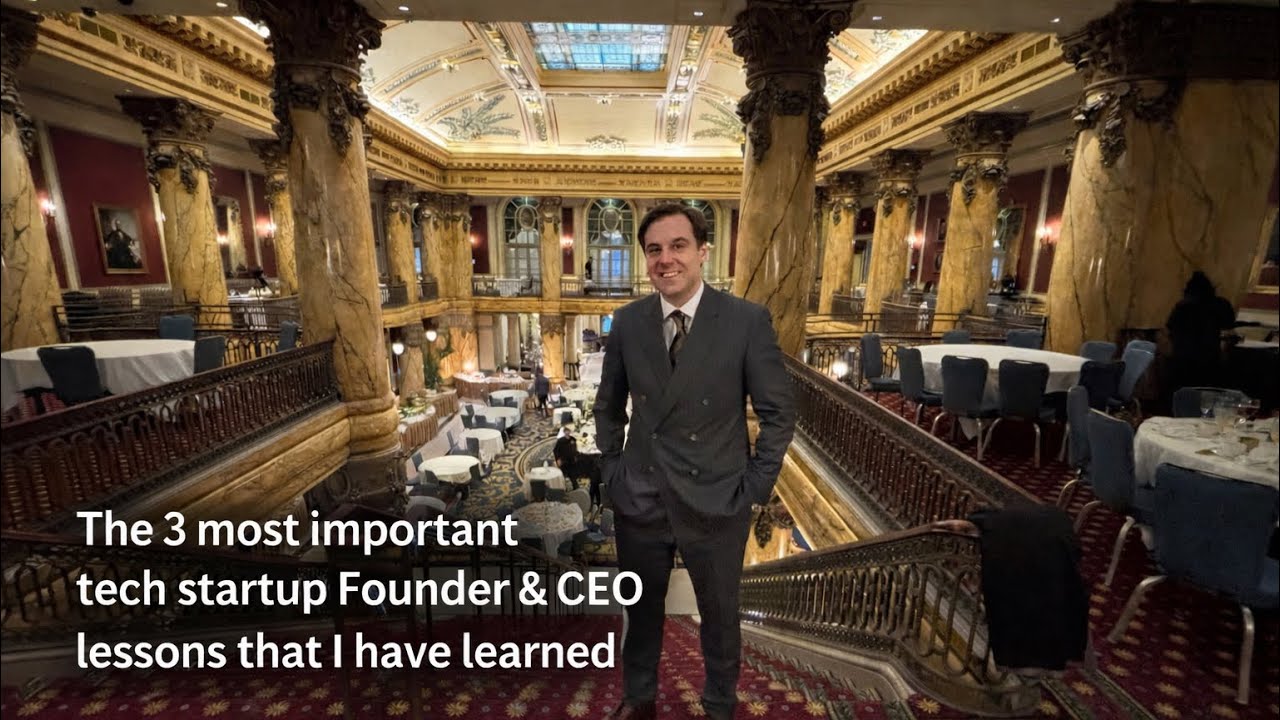
How's it going, guys? This is your coach Andrey V. Karpov. Uh, it's been a while and I wanted to record this video for you to talk about the founder's journey. So coming from Founder's Corner to you, uh, some of my learnings so far as the CEO and founder of a company. So first things first, founder's journey is not an easy task. It's really, really, really challenging because every day you have to deal with complexities and challenges. You have to deal with other humans, and you have to deal with constantly changing technology environment. In my case, I'm in the AI startup space, so there are news that come out every day, some of which are inspiring for the development of my product, and others that are a little bit saddening when it comes to regulation of certain area of AI and technology, and sometimes when it comes to incorrect trends, as I would call them, in the space of artificial intelligence, machine learning, and also just the way users interact with AI in general. Now don't get me wrong, I'm not saying that you have to, um, care only about pleasing your users or care only about pleasing yourself as the founder, but a vision is a vision nevertheless. So the hardest part is to stick to the vision but at the same time realize that you're building a business. At the end of the day, it's not that much about the idea, it's not that much about um, you know, uh, changing the world or influencing the world by creating something wonderful, as you feel, and something impactful. It's about really building a strong group of people around you for which you take a lot of responsibility. So speaking a little bit about leadership, that's really, I think, where leadership and management really substantially differ, because In leadership, you're leading by example. You're grinding, you're doing a lot of work. In management, you are really telling people what to do, how to do it, and you're blaming them for your own screw-ups. Because, you know, if you tell people how to do things and you don't leave them room for creativity, and you don't leave them room for error and ability to self-correct and be inspired by their own ability to learn fast, fail fast, and at the same time achieve certain positive positive results, you are really being a despotic ruler, and that's inhumane. And most of the time, people are let go from companies like that, whether small or large, is because of neurotic patterns that managers have— not caring for people that they so enthusiastically hire, not understanding who they need to hire, not understanding how to lead them properly, and then disposing of them the minute those humans show their human So be a good leader, don't be a bad manager. Other things I wanted to talk to you about is also the team building, right? So that component is extremely important, and I think here you have to be very, very honest about what you're expecting from people. And in order to choose the right resources or the right team to be able to complete certain projects or to make your dream a reality, you have to be very upfront with them about what startup really entails and what kind of venture they're getting into. We're not necessarily talking about any specifics of a technology venture, even though those are important to note. High-tech companies have a promising potential, but they have a high risk possibility as well. But you need to tell people foremost that they are coming into an early-stage entrepreneurial venture, which has risk and at the same time has a lot of grind necessity. So as a leader that is looking to hire or to attract technology people, they have to be aware that there's gonna be a lot of pressure on them, not from the standpoint of founder asking them to do things, 'Cause early on in the startup, typically you're either operating on safe equity or you're operating on, uh, promised future, uh, growth and potential for that team to convert into employees or contractors first, then employees. You're either way testing the waters with that team in terms of their enthusiasm, in terms of their desire to support your vision, help out where they can. And really be entrepreneurial alongside with you. What's more critical in that time is to be able to gauge correctly whether these people are looking for full-time work where they're— they are nearing, you know, um, financial hardships, some of which may be actually, you know, even nearing, uh, potentially a bankruptcy or a situation where you know, they're facing eviction and other things. And when I say this, I don't mean to say that you should automatically disqualify such people. You should be empathetic, you should be understanding, and you should try to really feel deep the situation with these humans, as long as they're willing to share that situation with you. The more humane you are as their future leader, if you're going to be one for them, the more open, transparent, respectful, and trustful they will be with you. It's Conway's Law again that I've spoken about previously in some of my videos. You know, the type of team you build around you will define the type of company you will have, whether it will be a matrix-type organization or whether it will be a classical-type pyramid environment. That applies also to things like projects. Are you going to run waterfall projects in a software-driven company where you really need to have agile iterative development, or are you really going to run agile at scale scale from the standpoint of allowing teams to practice different types of frameworks, get stuff done, instead of certifying everybody with Scaled Agile, SAFe methodology, and, you know, convincing yourself that you have an agile-centric company. I've unfortunately had the pleasure, so to say, of working in such companies, and it's not fun. Both sides of the spectrum are horrible. Companies that you know, only have one way and they have protocol and standard operating procedure for everything that they do. And companies at the same time that boast that they're agile, just shouting on every corner of social media that everybody in their company is certified and they know how to hold ceremonies correctly. But when you get down to business, a few meetings in the company and you understand very quickly that they are not agile-minded at all and they don't have a very healthy working environment and the right culture. Um, I also think ability to early on to set certain, um, very important frameworks, rules, or, um, steps in the company that would allow your team or employees to raise their concerns or be transparent about their work and really be enthusiastic about the technology that should serve them and not the employees or the team members working around the technology and not liking it is extremely important. So make sure that everything you as a leader, as a founder, do for your team that is supposed to support you and move you forward that you're actually doing it for the people, not the other way around. You don't hire or attract people to tell them what to do, how to do, when to do, what not to do. You don't inflict fear in them. You're supposed to energize them. Uh, you're supposed to be that cheerleader, you know, the strong, um, glue, so to say, of the organization that despite all of the challenges, all of the hardships, can really energize your team for success. You need to be a visionary. You also need to be a realist. And sometimes when things are not going well, you have to really position that in front of your team, not for the sake of being reprimanded or being told that, oh my God, how could you this? How could you that? We thought of you this. A good team will never do that with you. If you support and care about your team, your team will do the same back. They will save you in that situation, and together collectively you will prevail and you will succeed. Same concept like in a ship, you got a captain and you got the folks that are putting the coal in the boiler in the engine. I hope this video was helpful, guys. I will be making more Founder's Corner videos for you, and as always, if you have a dream, if you have a desire to start a business, don't put it on the back burner. AI is already here, and you should do whatever you can to make your dream a reality. May the true agile force be with you. Thank you for watching this video. Thank you for subscribing to my channel. Thank you for liking my video. Thank you for commenting and providing constructive feedback, and I hope to see you next time very soon. Take care for now.