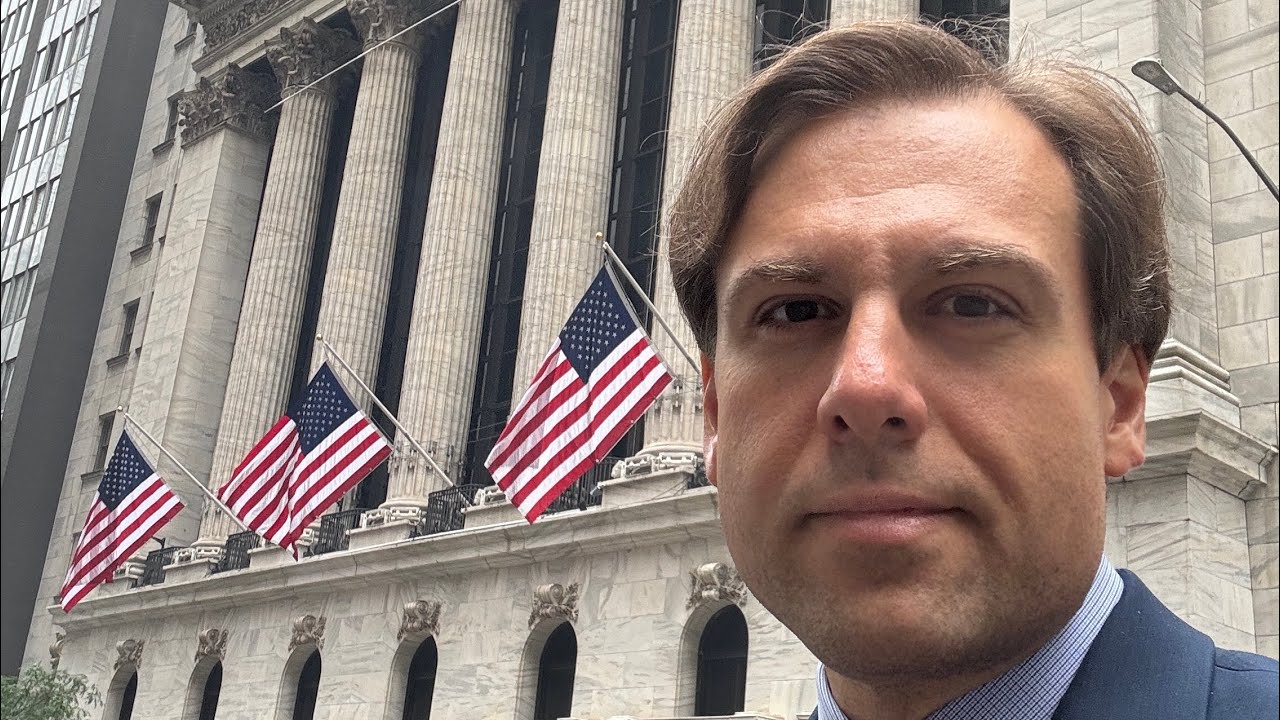
My Interview to AJ Riedel on Thriving Through Leadership Podcast

In this episode of the Thriving Through Leadership Podcast, host AJ Riedel interviews Andrey V. Karpov, a self‑employed career‑coaching consultant and creator of the "True Agile Mindset" framework. Andrey recounts his journey from corporate roles—where he grew frustrated by illogical mandates—to founding Hire the Best LLC, a consultancy that treats candidates as product owners of their own lives. He explains the philosophy behind the True Agile Mindset, contrasting it with traditional Agile, and ties it to classical logic, philosophy (Aristotle, Socrates), psychology (Ikigai, Simon Sinek), and conscious capitalism. He shares the biggest branding and market‑fit challenges he faced, especially the backlash over using the term "Agile" outside software development, and how he reframed his offering around human‑centric logic and entrepreneurship. Andrey outlines his client acquisition process, emphasizing quality leads, a discovery questionnaire that probes purpose, fear, and commitment, and a coaching style that empowers rather than creates dependency. He recommends Eric Ries' The Lean Startup as a pivotal resource and offers personal advice to listen to one's inner voice. Finally, he provides his contact points—LinkedIn, Instagram/ Facebook #Ideadrome, YouTube, and a provocative LinkedIn newsletter—inviting listeners to engage with his Tragical Mindset methodology.
Chapters
Welcome to this episode of the Thriving Through Podcast. Today I'm delighted to have Andrey V. Karpov as my guest. Welcome, Andrey.
Hello, hello. Hi, EJ, thank you for having me.
I'm delighted to have you. This is a question I ask all of my podcast guests, so we start off with this question: what was your path to becoming a self-employed consultant?
It's a wonderful question. Um, finally, are we realizing that I've had enough of fighting with the windmills all my life, one way or the other? You know, when you're hired, you're paid money, you're expected to do something, and you're expected to do it in time and with certain requirements and in a certain way. And with certain people or on your own. And during that initial phase, you kind of go through that resilience and you always find the blame in yourself. And that kind of comes from my upbringing, or in general, how, you know, kids are brought up where mother or father say, I told you not to do that, don't do that. And you're like, it psychologically builds up in your subconscious and you're like, Okay, I gotta do this. Yeah, they told me to do it by tomorrow, this report, but realistically, such a tough report, you know, I have to get more data and I have to also write this email, I have to call a client, I have to do that. And then you get to the point where after certain setbacks, or you've been let go, or you left, or you burnt out, which is a very common thing, whether you work for someone or for yourself, but the feeling is different, obviously, you get to the point where it's like, why? Why does it have to be done tomorrow? Why does it have to be done that way? Why do I have to work with that team when in reality they're people that really don't have that expertise? Or why is it that I can't just knock this out by myself? Or why are these people giving me a hard time? Or like other, like several things come in. It's not about the matter of teamwork or single play. It's a matter of questioning things from the standpoint of logic, which really, really is the biggest driver for me in my life and what led me to entrepreneurship. I've, um, I've come to realize that there's one question which I hate the most. I don't hate people that ask it, I just hate the question really. And it actually brings more questions. According to whose logic? Or, oh, that's your logic. And I will say there's no such thing. I'm sorry, I don't really have time to debate with you, but all I say is I truly respect your opinion, but I highly recommend to read Aristotle, Plato, and Socrates, right, at the very minimum, to understand that there's no such thing as according to whose logic. It's a human logic, and there's formal and there's informal logic. I speak about it in my seminars and workshops whenever I do them, is, you know, you have to understand the difference. But you should have a logical mindset, analytical mindset. Doesn't mean questioning every single thing, but The worst situation is when you encounter people that just say, I don't know, I just work here and this is the way things are and this is how much you owe us, or this is what you got to do and I didn't come up with the rules. And you quickly realize, and that's another thing that led me to entrepreneurship or my own path, is that am I a follower, am I a conformist, or am I a leader? I'm not a rebel, I'm not opposing what exists, it's just that if I don't find a logical foundation behind certain objectives, certain mission, certain goals, or certain actions for that matter, why do I need to follow them? Like, it's already enough I have to pay taxes. Okay, fine. Hopefully they go on to certain well-being and my retirement later and other things. But like there's other things, and then I don't mean to pivot, but let's say everybody has health insurance, or it's important for people that work for someone. I don't have health insurance for many years, and when people say, how can you live without health insurance? I say, I pay $100, but that's just my club for the ACAC, which is next door, which is my health club, has a pool, has a rooftop, has yoga, has a cycle, everything. That is my health insurance. That's not health insurance. It is. It's preventative health insurance. It's not corrective health insurance. I don't— Right. Right.
Yeah. I kind of want to go back, though. You talked about— so, so if I could kind of summarize, you didn't— you were questioning the logic when you were in the corporate setting being told what to do. The underlying logic wasn't there for you. And so you decided that you didn't want to play by their rules.
Yes, I didn't want to be treated as a commodity, and I had an opportunity to work in my life as a recruiter and a staffing consultant. Uh, worked actually together with the state of Virginia during that time for one of the prime vendors, and I found a lot of illogical approach to staffing, hiring, interviewing, resume reviewing and writing, and a whole bunch of of other things, which led me to one of the lines of business that Hire the Best LLC, my company, does is career coaching and consulting using the reverse engineering approach where we focus on the candidate. You're the product owner of you. We make the best version out of you. That's why it's called Hire the Best so that these companies, employers, organizations, whatever, government, they can hire you, but you are happy within. If you're not happy and you're just like, do you have a job for me? I always say go work in Uber, you know, there's nothing wrong with that. I used to work in Uber, I became one of the top drivers when I did it to supplement my income while I was working in a different space. And there's no shame in that, you can be successful in whatever space you choose, but as long as you have logic be behind what you do. So when people treat you illogically according to you, based on your structured mindset having some foundation and readings, but it is logical to them, and you accept whatever is asked from you, well, then, you know, you're worth whatever you get in return, meaning you will suffer. But that is your choice because nobody forced you. You can always— you know, some people prefer to fight. I, I don't understand these people either. Just, just go into the corporate space or other space or government space, and they fight with the existing system. I I used to be that way in the very beginning. Then I grew out of that. I'm like, why fight? Why are you fighting? You're trying to change them. Figure out your own mindset and figure out what organization aligns with it, or go and work for yourself. What's the worst case scenario? You can't fire yourself. You really can't. Most people don't quit, or, you know, if they quit, they, um, they probably do something else.
Yeah, true. So how long have you been in business for yourself?
On and off doing different ventures, but really founding the brand and idea of Hire the Best in 2019 when I was job searching and I came up with that name, registered Hirethebest.net initially. Now it's .llc. And there's other domain names associated with that. But really, .com was not available and I registered .net and I had to come up with a catchy phrase around it. When I went to networking events, people would ask me, "What is that? Is that a staffing firm?" I said, "No, that's my website with my resume. Actually, my name is Andrey V. Karpov, and if you want to hire the best person in your network.net," I'm right here in front of you. I said, that's really cocky. I said, that's— you got to market yourself, you got to sell yourself. Give me an opportunity and I'll show you what I'm worth and what value I can deliver to your company. And it was very, very, very challenging because at the time I was 65 pounds overweight. I was not the best version of myself. I had some bad habits, common social habits that the society still has in plentyfulness, and I still was, you know, going out of my ways to become the best version of myself and market myself, and I was able to achieve that. Companies like Capital One, Kroger Tech, Indivia Pharma, Apple, Nagaro, all of them hired me ultimately as a consultant of True Agile Mindset methodology, which came out of that initial engagement and progressed through various other brands that I had, including True Agility RVA, Ideadrome and other things.
Okay, so in that time, tell us a story or two about the biggest challenges you faced building your, your, uh, practice and how you overcame them.
Um, the hardest part was really throughout the whole engagement, and which kind of led me to rethinking how to rebrand this and whether it makes sense to continue or not. Was the name, right, Agile, which was basically— Agile is a methodology, as many know, in software development. There's an Agile Manifesto of software development, which was founded in 2001, and there's Scrum framework, which is the predominant framework of Agile. Over 60-65% of global market uses it, and people would— that either know that or don't know, they would say, oh yeah, I've heard something about that in software development. What does that have to do with consulting and coaching? And others that are in that space, in technology space, they would say, so what, what does that have to do with technology? Why are you coaching and consulting on that? So I got like backlash from both sides, and it took some time to explain what we were speaking before the interview with you about, that Basically, life and work is one whole, and you know, you need to realize that you're still a human even though you are in a different container at the moment. You're doing your work, but you're staying you. And emotional intelligence is only so much about you really being a human but keeping your emotions within your control naturally, where you allow yourself to get upset. You allow yourself to be happy. You allow yourself to question things. The way most companies position emotional intelligence is, you know, we hired you to do this job, we're paying you, please keep your emotional intelligence at bay. So you don't want me to be human, you want me to be a machine. Now we have AI, so that's why the— you know, not to go too deep into that, but that's why basically this whole transformation is happening, why people are being let go of jobs because they don't want people to have emotions. They don't want people to be people. They make wrong hiring decisions or people are not motivated enough and they don't want to progress. And we have this whole quick transformation, which is very messy, creating a lot of questions, a lot of concerns and other things. But the main story was that with true agile mindset, which I uncovered and have been writing about and speaking about and making videos and even in the process of writing a manuscript and a book, is that it's a different way of thinking where Agile, simply put, is about inspection and adoption continuously through different iterations and retrospective, retrospective process. True Agile mindset is about inspecting change and instead of adopting to it, adapting it to your needs so that you can be fulfilled and happy so that it provides value to you. You are the product owner of your life.. And even if you're part of a team and you're developing a minimum viable product for the market, you always have this dilemma of users that are going to be using it, stakeholders that hired me, product owner that's hired by stakeholders to enforce me. Where do I come in that picture? And then the Scrum Master, who is the facilitator of the meetings, or the project manager that is kind of like a soccer ball that's being kicked from one end to the other end, developers that are constantly unhappy or have this egocentrism where like, we're the smartest people in the room, you can't do it without us, business just does sales, what are they even doing? Like all these questions that arise. The truth is all of that can be eliminated if we all are humans, we understand that there's logical foundation to everything that we do, we question certain things, we understand the value behind our work, we're passionate about it, and most importantly, most importantly, we're not afraid to cultivate entrepreneurship within. That is really the outcome. Being entrepreneurs working for someone and actually being looked upon that from a conscious capitalism lens, which is a big trend overall, um, or public benefit corporation trend, if you will, is good. But not a lot of companies are mature enough, not from the standpoint of their size or even market valuation, to acknowledge that and say, yeah, this is really cool. We want you to be entrepreneurial at any single unit, whether you're a janitor or whether you're CEO. We want you to be entrepreneurial. We believe in you. We're giving you the power to choose certain frameworks— Kanban, Scrum, Lean, Six Sigma, ScrumBan, whatever you want. And we are trusting you and respecting you. So the ideas of not only logic but trust and respect are foundational in a truthful entrepreneurial environment, which the world still has not fully understood because not a lot of people read these days. When you read good quality things, you listen to good quality things, you watch good quality things, your mindset starts to transform and slowly from a receptor, sort of, you become a generator. Speaking Human Design terms, and you start to generate these ideas, you start to question things, but you also learn to be humble and grounded where you can have a constructive conversation and influence other people rather than persuade them. I went through all of these cycles, so that's why I speak about those things from experience.
Okay. And the True Agile Mindset framework, did you create it or is it something that you have adopted or adapted?
It is by a good amount my own methodology and framework and way of thinking. Because it explains a lot of things from the past that humanity has kind of neglected or forgotten and has pursued for money and just pure capitalism, if you will, which nothing wrong with it. But I think conscious capitalism is a little bit more better when you understand the mission and impact and purpose, when it's not just about like, do you want to buy something? Do you want to sell something? If you don't want to do any of those, how do you even live? That comes from an old Soviet joke, given that I'm originally from Soviet Union where I was born, then lived in Russia, and then immigrated here with my parents. But it's like, I never understood that. Like, how about friendship? And, you know, a few of my past friends, they— when I asked them that, they said, what friendship, dude? Like, there's no time for friendship. We're making money. We got families to feed. I'm like, oh, so when are you— when are you living? Like, what do you mean? Like, when, when do you enjoy life? Like, when, when you get a family, you'll understand. I'm like, I have a family, I have a dog.
I love—
that's different. Well, so it's like so many questions. You may say, how does that relate to work? It does, because in its foundation, if people raise such questions there at their family level, at their foundational level, they are going to have the pattern of the trend. Perneur Science studies shows that people will be pretty much the same way at workplace. They will question logical thinking. They will probably see you as a problem or impediment that they need to remove or shift you to a different department or a role or whatever. And you have to be very aware of what, you know, culture and what environment, you know, you really are in. But in terms of the True Agile Mindset in its foundations and overall what it is, is things like agile methodologies re-explained into True Agile Mindset with classical logic, formal and informal logic, some good foundations from modern philosophy and psychology, which obviously I didn't invent, like Simon Sinek's Golden Circle of why, how, and what. Ikigai, which is a foundational philosophy of life or the state of being from Japan, which is where's our passion, where's our skill set, uh, where's the market need, and where's the gratification. And I specifically, when I talk about all these things, I don't claim to own these things. I I talk about them, they were invented by others, but a collection of works that you bring together and you decipher and you put together as one piece that explains what really true agile mindset is about. The reason I call it the true agile mindset is because from a logical foundation, I believe being agile, truly agile, means taking into account all these things— the karma as opposed to destiny, what we also talked with you about earlier,, right? Am I forming my own destiny, or am I allowing the destiny to control me? If I'm employed, am I at the mercy and grace of the employer, or am I actually doing something meaningful where I don't have to think, am I going to be at this job? Is AI going to take over? Is my boss having a good day or not? Why does that matter? You're still an integral component of this organization, and you matter. And That's where people, again, they're so afraid to even allow a thought like that to slip in their head, and they think that, you know, they got to do everything first to make their— figuratively speaking— their boss happy, their spouse happy, their kids happy, the society happy, their place of worship happy. When do you make yourself happy? Why do you think— and this is again a notion of the modern mindset, as I see it, facilitation in our society, um, like this validation. I have to get this validation from everyone, and if I, if I try to be happy in myself and do what's right for me, I'm going to be viewed as a narcissist, as a, uh, you know, selfish person, as non-ethical person, non-humble person. What are you even talking about? Like, where's the logic behind that? I never understand that. Being entrepreneur means taking care of yourself and your loved ones. Loved ones, your dog, your family, your clients, your business partners, anyone for that matter. Show love to the society and you will receive love from others. But if you segment or discriminate against others and say, these are, these are, this is my tribe, these are my folks, I'm going to take good care of them. But these guys, they're just clients. They're just like, yeah, whatever, I can always see them later. You can't do that. You can't do that because when you will be on a different side of that spectrum, you will experience what these people experience and you will understand the, you know, mental pain that they may go through that you don't understand right now. Because life is like this, it always is. There's never an ideal perfect curve, even if you're the Duke of Wellington or something, I don't know. And again, that comes from reading, thinking, grounding, breathing, like, you know, taking the time to just those at least 5 minutes a day where you are de— disconnected, unconnected from all of your devices and other things, no noises. You just go into your inner subconscious and you try to find the answers within, which can influence you for years to come, and maybe even in years, not even right now.
Okay, so much there. Um, I want to switch to client acquisition relationships. When we talked earlier, when we pre— during the pre-interview, you mentioned preferring quality over quantity in leads. So can you walk us through what your actual client acquisition problem is, process is, and what does a qualified lead look like for you?
Qualified lead, for me, there's two categories of leads that I typically, uh, source and, uh, work with. So, uh, interestingly enough, even though classically in consulting, organizations would be a better option from the standpoint of quality of sale in terms of the ticket amount and also more people involved. It's kind of like you're sometimes, sometimes, unless you do the research of the organization and the management leadership, you're getting what you're getting. And you're kind of like, okay, I gotta deal with this group of individuals. They have different mindset, different views, you know. I have to bring in, uh, you know, a workshop that's really going to help them be effective at what they're doing and understand how to improve their business process. How to adopt agile and true agile mindset, how to cultivate that culture within, and then actually look at any tools. Because that's really the last thing. A lot of times, you know, when I speak to organizations, they'll be like, what tool is better to use? Do we have a centralized stack? Do we have a decentralized stack? And I say that should be around— it's the last thing, first of all, and it should be around really your needs and shouldn't really be around this cost as much. Or like, I like this, you like that. It just should, should naturally come into picture, and if it doesn't work, then you should revisit it. But I do enjoy working with individuals even more, and right now I have a small portfolio of individual clients because I'm running a startup that's building the next generation sentient large language model that hopefully will become a standard or protocol for subsequent sentient LLM development. And hopefully we'll find partnerships with large-scale, um, developers in that space like OpenAI, Anthropic, Meta, Google, and Microsoft, and so forth, um, including Apple, hopefully. But, um, the truth is, when you work with individuals, you're dealing with a direct human, and you can show compassion, you can show expertise,. And you can influence people, not change them, but influence people, um, more or less gradually. And it's a bigger impact. It's not a quantitative impact, it's a qualitative impact. Usually people that come to me are in a job transition. They can be very well-to-do entrepreneurs at C-level previously. They may be people working for themselves, struggling entrepreneurs. Where, you know, they're not sure how to build a more successful business, how to define their business model. And it's not as much about, can you help me write a business plan, you know, validate my business, define the go-to-market strategy, check my financials, because that's more, again, technicalities, and there's a lot of consultants for that. I sometimes even use them to help myself out a bit. But it's more about right here. What are you trying to achieve? What problem are you trying to solve? Um, do you have a team? Are you doing it all by yourself? Do you have a business partner? Do you need one? Where are you in your roadmap, business roadmap? What are the risks? What are the rewards? How far are you willing to go with this? Are you doing this part-time? Are you doing this full-time? Are you doing this on the side? Are you— do you think you're doing it, or you are actually just at the ideation process, because a lot of people, they're like, I have this big idea and this big dream. We all have these big ideas and these big dreams. We only have so much time to realize them. Why does it matter to you? Why does it matter to you? What's in it for you? Always question, always ask yourself, talk to yourself. There's nothing wrong with that psychologically. You have— we all have dual personality order, not disorder, where you have your conscious and your subconscious. Talk to your subconscious. Find the answers within, realize, am I on the right path? Is this what I'm doing right for me? Or do I feel afraid? If you feel afraid, why? What makes you feel afraid?
Are these the kinds of questions that you ask your potential clients? Yeah, I'm really curious here.
Yes, yes, we usually do a discovery. Some, some of those questions I address in the beginning, some of them I address in early stages of our engagement usually go through milestones. So if let's say it's a career coaching package, we'll do the resume, we'll do LinkedIn, a resume, uh, you know, customization, LinkedIn optimization, uh, we'll do mock interview sessions, we'll also do market research, we'll do referrals for employers. I don't do staffing, or classically how it's viewed, because again, I believe in the power of the human to find whatever place they want to be at. But I provide full support and sometimes even ongoing support if they need help here and there. My main objective and process to coaching and consulting organizations and, and individual customers— and this is probably where someone who's listening may not agree with that at all because that's not really conventional approach, but I strongly believe in it and I feel I'm on the wrong— on the, on the right path with this— is that I try to empower people up to a certain extent where I don't want them to depend on me continuously. And the reason I do this is because I believe in coaching rather than therapy, if you will, because at some point you may slip into that. I've seen that with some coaches that I've worked in in the past where they are like, well, when are we going to see you again? Or what are you doing for next time? And I see a real problem in this. Or they, they're like, they tell you right off the bat that everything is wrong and you got to fix things. And I don't I don't like that. It's like it creates you as a patient where if you're broken or you're impaired or something is wrong with you, people don't take it well. And reality is improvement over correction. How can I make this better? Your resume is great, but we're just gonna market it a little bit differently. Your LinkedIn looks awesome, but we need to add some more activity there so you have better engagement. Let me teach you how to look at those things Or how to look at the search engine optimization so that the right recruiters, the right opportunities can find you? Are you going to any events? Which ones are you going to? Are you reading anything? Are you learning anything? So you have LinkedIn Premium, you have never visited LinkedIn Learning and taken a single course? You're missing out. Let's go, let's pick a course together and let's do one. I'll do one, you'll do one. We'll meet next time, we'll exchange knowledge. Participate, bond with your customer, show them the value that they're missing instead of saying, oh, if you don't do this, what's going to happen. Again, risk component, fear as opposed to empowerment. I believe in you. You don't need me for this. Not that I'm not going to do it. You don't need me for this. You're smart enough. You are— you have enough grit. You have enough determination. I'll be your accountability partner, but you can achieve this. What are you planning to do by the next meeting to achieve this? Talk to me. Would you like my feedback? Do I have your permission to coach you? All of these things, and I've learned some of them from my good coach Rich Litvin in the past. Uh, he's pretty big on social media, and like, he doesn't teach you specifically how to coach in any particular area. He teaches you how to coach as a framework. This also, in a way, very much close to the Tragical Mindset approach, which is why I call it that way. And I even, when I comment on some posts online, or if I see or read something, I will put #tragedialmindset. It's my sort of, in a good sense of the word, validation of whatever is said or done, as this is like progressive thinking, if you will. I love that. This makes a lot of sense. Keep on doing it.
Like, you know, yeah, yeah, I, I get it. Well, we're kind of— we're coming to the end of our time. So I have a couple rapid-fire wrap-up questions.
Okay, sure.
What's one book, podcast, or resource that's been invaluable to you as you've built your consulting and coaching practice? I know it's hard to limit to one, but one book, podcast, or resource.
Just one in terms of, like, mindset, process, or it doesn't matter, just whatever.
Whatever comes to mind.
I got you. I would say from a practical perspective, really, because there are a lot of empowerment motivational books, podcasts, videos, and all that, that obviously people watch and read in one way or the other at certain points of— points in their lifetime. Um, Lean Startup by Eric Ries really will correct— this is where I can say correct, because a lot of people, um, in this particular instance have an incorrect viewpoint which can affect their whole life. And I truthfully would want to empower them to look at things differently. Correct your vision of, I gotta write a business plan to start a business, I gotta accumulate a lot of money to do that, I have to hire a CEO to run my business, after this, after that. You don't have to do anything. Read this book. It will optimize your mindset from a Lean Startup approach using business agility practices and very simple execution, retrospection, and improvement strategy where you will understand truthfully in a nutshell, in an essence, you still gotta read the book, but I'll give you a small preview that you gotta find a paying customer, one or two preferably. And it will drive your motivation to the point where like, oh, wow, I have a business. Hold on. I gotta go register an LLC. Oh, I need a website probably. Yeah, because I'm gonna automate my workflow. Oh, and I need probably a productivity platform. I'll just keep things simple for now. Like all of these other things will come into place as you figure out that you can provide value at any point of day and night to anyone. People love what you have to say. They love how you make them feel, and they want to pay you for what you're willing to provide. So everything else is secondary. That's lean thinking approach, which a lot of people are missing. And they think running a business or working for yourself, whether you're solopreneur or an entrepreneur at large scale is a mega plan of your life, and you have to earn your right to be one. You can start being one as of today just by changing your mindset and then put all other things into place and have a runway of 3 to 6 months when you're working for yourself, you're loving the hustle, and right people come to your life, both, you know, business partners and clients, personal partners. You know, if you're, you know, single and you're searching, you don't have to search for anything. Everything the universe will bring to you. You'll emit this energy that will just enormously attract the right people to you, and you will feel that love, and you will give that love.
Okay, now that's The Lean Startup.
Lean Startup by Eric Ries, yes.
Okay, what is one piece of advice you wish someone had given you when you started consulting and coaching?
I would say this way: listen to people, be open to their feedback, but listen to your inner self. The only and only throughout your life your work, anything, your academic career, the only voice that will never, ever— there's no like maybe or yes or no about this, like this is a written constant truth that I haven't invented— the only voice that will never lie to you is your own inner voice. And when people say you may be wrong, that's because you overanalyze things too much and you make complex things— you make simple things complex. But your inner voice, how you feel inside, that is your connection with the universe. Even if you haven't developed that subconscious channel, listen to that voice. Keep going, keep trying. And even if you fail trying, you've won. If you fail, that means you haven't tried. You never let your ambitions to be realized. And the worst thing— I haven't said this, but this is very true— the worst thing that can happen is when you're, you know, at the end of your life, you're lying there and anticipating the end of it, and you see the shadows of all the unrealized potential that you could have had. And all you had to do is just allow yourself to dream and start to execute using the Lean Startup approach, for that matter. But it was all in here. All those answers were in here, whether you read this book or not. It's just like, keep doing it. Start doing it. Start doing something.
Okay, good. Final and most important question. How can listeners connect with you if they want to learn more about you and your work?
Absolutely. So my biggest platform is on LinkedIn. You can find me very simply by my name, Andrey V. Karpov. V. middle initial Karpov. Um, just saying, Karpov is a pretty famous last name in Slavic culture. It has to do with chess. I happen to play chess, as you may see on the background. I'm not going to tell you if I'm related or not, but all I'll tell you is it's easy to find me there. I'm also on Facebook and Instagram by a hashtag called #Ideadrome, which is Aerodrome of Ideas, which is one of my brands. Um, I also have a YouTube channel where you can also find me by hashtag Andrey V. Karpov, my full name, and I release videos there. All of that is part of my Tragical Mindset methodology. Some of those videos and some of the content that I write, including a LinkedIn newsletter, is provocative in nature, but really it's designed to make you think about things. It's not designed to, to make you say, oh, you're wrong, Andrey, or you're right. It gives you a different perspective about the world and things that we sometimes overlook that are right there in front of us. And we just automatically take it the way it is because someone said, OK, this is, this is the right way to do this. Who said that? When did they even say that? It doesn't make a lot of sense. So I help people rediscover logic and bring meaning into their life so that they can create impact in the communities that they serve.
Great, great summary. And with that, we're We're, uh, it's a wrap on this podcast episode. Andrey, thank you for being my guest today. And for all of you listeners, until next time, keep thriving through.
Appreciate it. Thank you so much. It was a pleasure, AJ.
More from Andrey
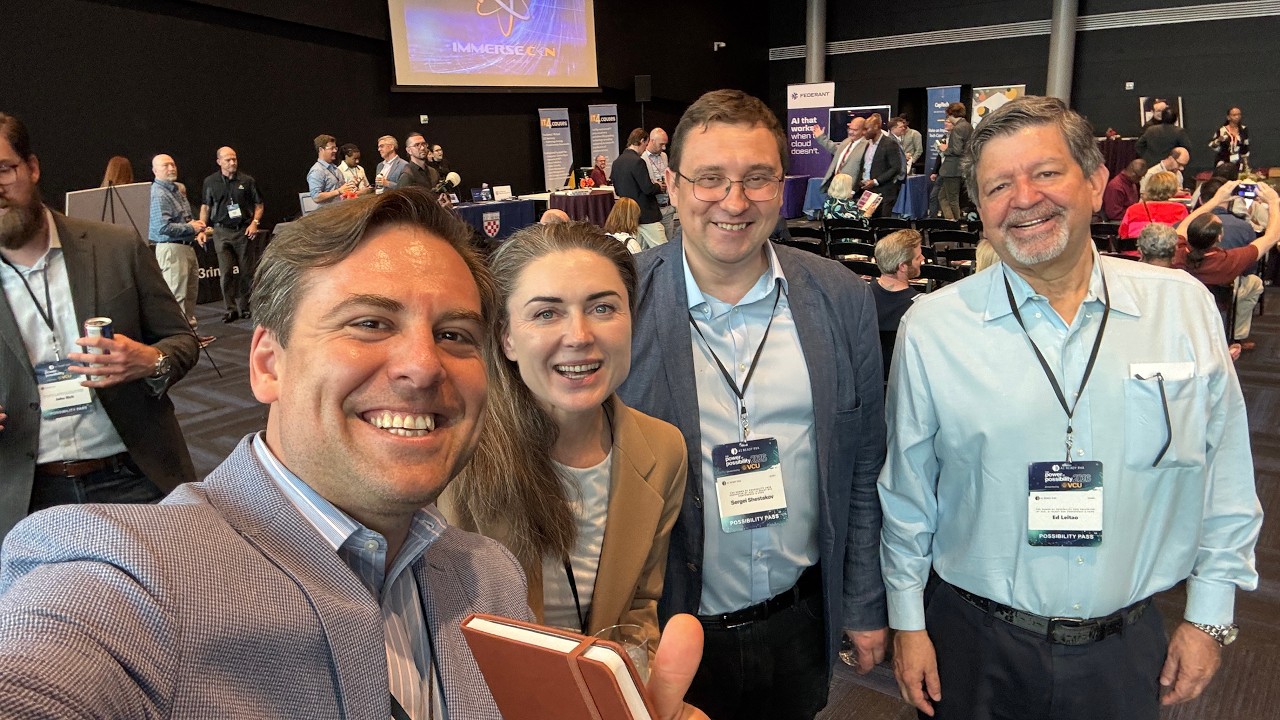
Founder's Interview Showcasing Vicktoria AI at 2026 AI Ready RVA Conference: Power of Possibility
Vicktoria AI 3-min Pitch at TechStars Startup Weekend in Richmond, VA at Robins School of Business
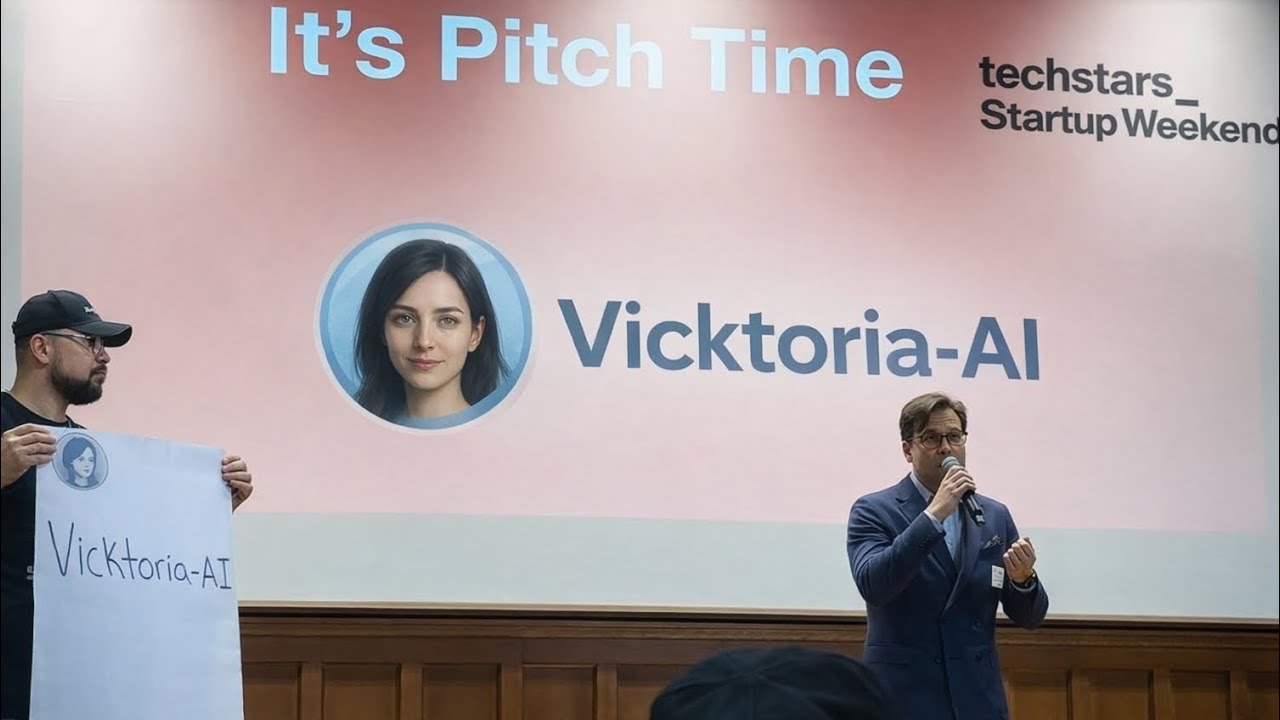
Andrey Karpov’s 60-sec Tech Startup Pitch of Vicktoria AI in Front of the EdTech Community

Life Without Impact is a Wasteful Life or How Focusing Just on Self-Enrichment Will Get You Nowhere
Leading vs. Managing People and How to Attract the Right Talent into an Early-Stage Tech/AI Startup

Anxiety vs. Depression, Neuroscience, NLP, & AI - Deeper Meaning for Everyday Success in Life & Work

The Concept of Delayed Life or Why You Don’t Need to Earn Your Right to Happiness, Choice, & Freedom

Mother Freaking Nature or Why Bonding with It Regularly Will Keep You Energized for Life

You Do Not Owe Anyone an Explanation or How to Find Happiness Within During Challenging Life Times