From Scandal to Serenity: the Untold Story of Yoga Guru John Friend Episode 88
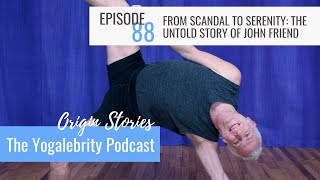
In this long‑form interview on the Yoga Liberty Podcast, host Angelica talks with John Friend, the founder of Anusara Yoga and co‑creator of the Bowspring method. Friend recounts his childhood fascination with mysticism, his early exposure to Theosophy and meditation, and his path from a physics student to a yoga teacher in Houston in the 1980s. He describes his intensive study with Iyengar, Pattabhi Jois, and various Indian ashrams, his eventual certification in Iyengar, and the philosophical conflict that led him to resign from the Iyengar board in 1995. Friend then explains how he founded Anusara in 1997, its rapid global growth, the 2012 scandal that caused his ouster, and the personal and financial fallout. He reflects on the commercialization of yoga, the shift toward individualism, and the cultural polarization that intensified after the 2015‑2020 political climate and the pandemic. Friend details his collaboration with Desi Springer, the development of the Bowspring system—a functional, heart‑oriented alignment practice that departs from traditional “stretch‑and‑straighten” cues. He also shares his views on ahimsa/vegetarianism, alternative health, and the role of fate versus destiny in his career. The conversation ends with practical information about how listeners can access Bowspring workshops, online courses, and upcoming tours, and a call to action from Angelica for aspiring teachers.
Chapters
Welcome to the Yogalebrity Podcast. Each week I bring you the story of a different yoga teacher, their origins, what it was like before they taught yoga, how they got certified, and what it's like now. My hope is that through listening to this podcast or watching it, if you're on YouTube or Spotify, you will gain what you need to feel very confident to practice yoga or maybe even become certified. Everyone has a story to share. Some people's story might be like yours, others might not. Take the time to enjoy the diversity that is teaching yoga. If you would like to become a certified yoga teacher, I invite you to check out my private one-on-one instruction online 200-hour and 300-hour yoga teacher trainings. If you're listening to this before January of 2024, I'm also offering a trip to Costa Rica as part of your online certification. Either way, I would love to connect with you. Let's get to the podcast. Welcome to the Yoga Liberty Podcast. My name is Angelica, and I am Yoga Liberty on YouTube, Instagram, TikTok, Pinterest, and every social media outlet you can possibly think of. I am in an endeavor to tell the stories of different yoga teachers and their origins. Today I am joined with one of the greatest yoga teachers of all time, definitely very influential in the Western yoga world, and someone that I have studied with myself in person many years ago when I first became a yoga teacher. I welcome Jon Friend to the podcast. Thank you so much for joining us.
Hi, Angelica. Thanks for having me.
So let's just get right into it. Tell us exactly, you know, what was your life like before you became a yoga teacher?
Well, let's see. I'll start from the beginning because as early as 19— when I was only 4 years old, actually. So this was 1963. And I've been doing yoga now 50 years, but in, in the '63, it was the day that JFK, our president, got assassinated. I had a really bad cold flu and my mother of Scottish origin was feeding me whiskey even for a 4-year-old. So I was kind of blitzed outta my mind and in this high fever state and with this whole thing going on where my grandmother was in the house and freaking out, really just— it was really a horrible atmosphere. I didn't understand that, that what was so terrible about this, and then later this assassination. But in that, in that day and that even, um, the following weekend when I was still sick I was having experiences in this kind of altered state where I really wanted to know about why we're here. I really did. I wanted to know what— so I started to understand, like, so this man was killed. So I mean, we're all going to die. How could— why would we be put on the earth? And then it would be all taken away. It doesn't seem right. So this is out of the mind of a a, a buzzed 4-year-old, right? So, but that led me to when I was 8 years old to, um, I found a little book on yoga that I asked my mother to read to me. And it was more on these stories of yogis that some of them like were in the Himalayas and they had supernatural powers. They could dematerialize and they had telepathic powers. And I just thought, this is like the greatest superheroes. These are the guys that I want to be. And so right from the beginning, from like 4 years old and then 8 years old, I really wanted to know about the mysteries of the universe. And I just thought yoga, this is— I'm not sure what it is, but this is the path. So when I, when I could read—
where did you even— how did you even know about yoga? You're like 4 years old.
My mother, my— yeah, my mother was a great intellectual. And in our library, she had, uh, books on— I don't know if you've ever heard of theosophy. So Theosophy was, as more of a formal organization, was started in the late 19th century by a woman named, named Helena Petrovna Blavatsky. And Blavatsky is kind of— it's a really incredible, um, story in and of itself. But it was in these teachings of Theosophy that I got some of these basic ideas that there were other dimensions, there were other realms of consciousness, and that you could literally do certain practices, and there were techniques that you could access these other dimensions, that you could have incredible knowledge, you could understand the mysteries of life. So that was where I started to just— that's how I was introduced to it. And so by the time I was 13, I joined the local Theosophical Society. I was just this young beginning teenager. Everybody else was adult, so I was kind of like the mascot. But it's really where I was introduced to concepts of ancient Greek philosophy like Plato and Pythagoras, that there was a sacred geometry to our body. There's a sacred geometry in nature, in flowers, in life. And it really impressed me that if we align with this other field, this universal field of deep order and beauty and goodness, that there would be these doors that would open in our perception. We would be able to have a more clear vision of what reality really is. What is this deeper reality? And this is how I started. And I, and I was taught meditation. We, we did a, it was very kind of eclectic, but like Buddhist. Uh, I learned Sufi meditation and classical yoga meditation. So, you know, when I was in high school, then I was bringing my Bhagavad Gita to school. You know, I was practicing my postures. Uh, my mother bought me, uh, Swami Satyananda's Integral Yoga book for Christmas. One year, I think I was, it was like I was 13 or 14 years old. And so I was, you know, by myself doing this. By the time I was 16, this would be like now the mid-'70s. I said, you know what, after this was after a Sufi meditation workshop on one weekend that I attended that I wasn't gonna eat meat anymore because if I ate meat that I, my vibration would get too dense. And my mother, you know, even though she was very open-minded, she thought, you know, John, you're, you know, we're gonna have to see the psychiatrist or the psychologist next week, you know. Um, but I, I've stayed with it now all these years, you know. Um, but it, but then, you know, I, I continued through high school and then I went to school in, um, both the University of Cincinnati in Ohio for physics. I wanted to meld physics with psychology and parapsychology. I wanted to understand more about how we could become more psychic, how that we could connect to these other dimensions, and more on a science point of view. And then I, I moved to Texas and went to school there. And it was in Houston in 1980 that I started to take a yoga class in the city. It was at this place called Moonrise Meditation Center. And the guy there, if I can even still remember his name, but Thomas John Greaves, I think is his name. And I was just a student. So I had been, you know, practicing, never teaching yoga. But then one day, Thomas John, he called me and said, hey, I'm, I'm not well. Can you substitute for me? Can you substitute teach for me? And I said, yeah, just this one time. You know, I was scared. I didn't know what I was doing really. But I went in there and taught and it was, you know, 4 students or something that I had. And It was— I enjoyed it. I enjoyed teaching. And then the next week, he still wasn't back. And it turned out that he, Thomas John, was one of the first to have— be HIV positive and have AIDS, full-blown AIDS. And he didn't survive. He was one— they got him on AZT or some other drug back then. And, you know, I didn't really understand really what was going on at the time. I mean, I've now done a lot more research on the subject, but at at the time, it was just tragic, you know. He was really new, you know, really was— no, it was brand new. And, you know, even being, uh, gay at the time was, was kind of underground. But I was again in kind of more of that realm of all very alternative, open-minded people. And for me, it wasn't a problem. And, um, you know, he was a really beautiful man. He was, uh, my practices were also in Wicca and paganism, and he was more of a white witch. So I, I even studied with him a little bit on that outside the classroom, the yoga classroom. But in any case, it led me into teaching because he never returned, and I took over his class. And then in '85, I took a trip. I just got in my car and went out to California and started to take more classes. I, I was taking also other classes in Houston, um, that were power yoga, or by a guy named Robert Bustani. I think Robert's still teaching these days, um, and it was based on Pattabhi Jois' Ashtanga yoga. But when I went out to California, I also was exposed to more varieties of yoga I went, I stayed at a Sivananda ashram for a while. I went to Ananda, which was a more of a conscious community that was based on Paramahansa Yogananda's work. So I got into that. So this was the beginning.
That's the Autobiography of a Yogi author, correct?
It is. Yeah. I really recommend it too. That was, that was an early first step.
A lot of people might not know that.
Yeah, it's really— yeah, it's worth stating. And there are— there were branches off of his own lineage, and Ananda was one of those branches. In any case, um, so I got— I got a taste of a variety of these yoga styles. And then in '87, I decided to go full-time yoga. So until after, um, the early '80s, I started doing full-time financial analysis and business. So I was doing that during the day and then doing yoga and my Wiccan practices at night. Right. But in '87, I decided, no, this is— I really feel like my calling is in teaching yoga. And it was like a crazy idea back in the '80s. Most people would not choose yoga as a career. Right. So, and I tried it for a couple of years. Was, it was very fulfilling, but I wasn't really making money. I moved back with my parents and they were very cool to let me come back in the house. I was, you know, a 30-year-old coming back into the house. But then I got involved with, well, 2 years earlier, I took some classes in San Francisco with Judith Lasseter and in the Iyengar Yoga Institute. And then that led me to take it with many other Iyengar senior teachers. And it was really fantastic because they were saying, hey, there is a way that you align the body that is going to give you this more optimal health. It's therapeutic. And that really interested me because of more of my science background and looking always for these universal, uh, alignments, looking for the sacred geometry. So they were very, very precise with the alignment. And that's what I got into. And it— but at the same time, I also connected with Pattabhi Joyce, who was touring the United States in '87, and went to some of his classes and workshops, even a month in Santa Barbara with him and some of his senior teachers at the time. So I was really immersed in that world as well. So both Iyengar and Ashtanga yoga is what Pattabhi Jois called it, you know, power yoga or vinyasa yoga. And that was the, that was the '80s. And then in '89, I went to India and studied with Iyengar, but then afterward went traveling and went to an ashram in Ganeshpuri, which is outside of Bombay, Mumbai now it's called, Bombay. And this ashram was the old ashram of Swami Muktenanda, who was a devotee of Bhagwan Nityananda, who was an amazing saint, just incredible saint who passed away in '61. But Muktenanda, he had passed the lineage to Guru Mai Chidvilasananda. And Guru Mai was there in residence in the ashram, which I didn't know. I heard that the food was very good at this ashram. And I had been sick in India, so I was thinking, no, I got to go to the place. I heard they have European chefs. That's where I'm going. So that's why I went there.
I feel that when I was in India, I was like, my stomach, I cannot.
It was hard.
I saw this blonde lady eating a salad in Goa, and I was like, I'm going to eat a salad if she— because she certainly isn't doing what I'm doing in the bathroom. So I'm going to eat a salad here. And it did turn out all right. Yeah, Indian food, it can— I can see why you would want to go there just for the food.
I was in— actually, I was in Goa, and I was— I got really, really sick. And I said, that's when I said, I got to get out of here. And it was— that's a whole big story in and of itself. But I was able to get out of Goa, get to Mumbai, take a— take a taxi to Ganeshpuri, got there. And when I got there, they said, you know, do you— did you make a reservation? Do you know— did you write Guru Ramana? I said, like, you know, I don't even know who Guru Mai is, but can you tell me where the cafeteria is? You know, they were not so happy with me right off the bat. But in any case, the first meeting I had with Guru Mai, a darshan, where you go up and you formally— basically, it's pranaming or bowing. A lot of times people don't speak at all, but I just— I started talking to her and, and told her that I had been with Iyengar just, you know, the week or a couple weeks earlier. And she, of course, knew of B.K.S. Iyengar and said, well, while you're here, will you teach some of our hatha yoga teachers? So that started.
Wow.
Me teaching. Yeah. In the ashram. So, and then that led to a whole thing so that when I got back to the States, Some Siddhi Yoga devotees had heard that I had given a demonstration in the ashram and had taught some of their teachers. So they invited me to do workshops. So that then, that was, that was '90, '91 that I started to teach in the United States and started to go around to give fundamentally Iyengar workshops. I was certified in Iyengar yoga. And so I started doing more of a national teaching workshops of, of that. And it was a lar— largely through these connections of City Yoga. That's how it started. And then, and then the Iyengar people, some of them gave me some credence, but I was able to expand my teaching in that regard. And then in '95, when another time that I was in India, it was for me at the Iyengar Institute, I just had a real clear kind of awakening that I was not really aligned with the philosophy, certain philosophical things of Iyengar. And this was especially after then I had been studying more tantra with Guru Mai and Siddhi Yoga. So it was, there was an inner conflict for me. So I resigned my Iyengar teaching certificate in '95. I, I, yeah, I had been on the board of directors for 4 years. Um, I, you know, so I was very deeply involved in Iyengar yoga, but the inner conflict was such that I just went on my own. And it was really interesting because as soon as I announced that I was resigning, a lot of my friends, my colleagues really just cut me off. So, there was immediate, you know, it was the first taste of cancel culture for me, right? And so, they just stopped, you know, the phone stopped ringing, so to speak, right? And then 2 years later, I had been working on a system of what I thought of as universal principles of alignment. Which I based in large part on what I studied with Iyengar and all these other teachers. You know, I've studied with— at one time, I, because I had wrote, I was writing down when I would study with the teacher in some place, I would take notes and then I would put it in my file. And there was a time that I had studied with over 100 different teachers, both nationally and internationally. So, and it was a wide range, you know, and I thought, you know, it was good to be eclectic in some regards where you always can find something good to learn from everybody. And, and that could include that something that you wouldn't want to do, you know. And, but it was, there was always a blessing, and I was always grateful for everybody that I was able to study with. So that then, um, was the basis of a new system that I wanted to put out that was based on these universal principles of alignment and based on community. And it was more heart-oriented. I felt like more bhakti-oriented. And bhakti yoga is more about— it's devotional practice. It's seeing that when you move your body or you express yourself through dance or your voice or whatever actions you do, you're doing it as an offering with love to that which connects all of us, universal spirit. So that, that's what I wanted to found a new type of hatha yoga.
Before we get into that, because this is a long story, before we get into that, I just want to clarify for the listeners a couple of different points that you have talked about. One of the first ones was the mention of ahimsa, vegetarianism, not taking in the fear, pain, and suffering of animals, that that messes with our vibration. And it is very popular in the yoga world today to say that that is not important. I hear time and time again from students and from other teachers that vegetarianism, or, you know, when I was when I first became a vegetarian, I was 11. And, you know, that was almost 40 years ago now. And for— we didn't have like veganism wasn't really a thing then. But now a lot of people are vegan. But many people will say that you don't have to be vegetarian or vegan to do yoga. And what— how do you feel about that? What would you say to those people?
Yeah, it's a, it's a good question. First of all, we have, you know, we take the premise that energy around us and within us is, is, there's a reality to it that your, whatever, even your environment is going to influence you. So what you take in your body, the vibration of the food that you eat, let's say that it's not even animals. Let's just say that it's processed GMO sugary food, you're going to, you're gonna resonate and vibrate at that kind of level. And it feeds things like in your gut, right? That the, you know, the sugars can feed Candida and you can, you can build other type of, you know, toxins in the body. But for the meat thing, for me was that animals have feelings, that animals have consciousness, that there's vibration of every animal and that it's in for all of us are the vibration of our heart and mind is vibrating in the, literally the fabric of our body and bones in our blood, in our lymph, everything, right? So if you're drinking in somebody else's, um, fluids in their blood, or you eat the flesh of an animal that who has been terrorized on the moment, the minutes of their, before their slaughter, that those, the cortisol and all of that is in their blood, it's in their body. And also just the toxins that they're, that poor animals are fed these days, right? Now at the same time, having all said that, I really never, I would suggest people that they should eat organic, not, you know, uh, vegetarian and so on. But I never really was— I've never been one to be hardcore about it, you know. It's like I, I felt like that if they did— if they did certain practices, they would find they would clean to a point where they would have a— the inner compassions would arise naturally, and the behavior, certain behaviors that were not healthy for themself or others would just fall away more naturally. So I, I've never said to somebody, hey, don't smoke. You know, don't, don't eat meat. And then, and there were also cases that I saw where people would eat meat and feel a lot better. And they said, oh, it, it saved me. And I don't discount that, that, you know, I, but at the same time, maybe it was more of a, a short-term medicine that you took on the animal, whatever it was, protein or something for them. But I don't, I, you know, I don't advocate eating meat all the time. And it's funny too because we have, or not even funny, but it's interesting that I have students today that are really pro only animal meat eating. So they're only carnivore, only for a carnivorous diet. So it's gone the other, like, a whole pendulum swing, and they only want, like, almost like raw meat or rare cooked meat. It's wild. So it is wild. The world we're in.
I love Cameron Shane. I love what he's doing. I think he's a very powerful human being. He's the founder of BuddhaCon Yoga, for people who do not know. But he's really into the eating meat. He thinks, you know, it's just like, for me, it's so foreign. I can't understand. I don't know. I'm just more like the Dharma Mitra always says in class, like, don't make a graveyard of your body, you know?
Yeah. Yeah. Yeah. So it's a big subject. And I like to think that again, if we, when we move toward more of a balance, that the things that are again out of balance will fall away.
Mm-hmm.
And so you leave, you know, I leave it up a little bit more to the student, but I try to guide and we, you know, just even this last 2, 3 years, especially people, so many people have been asking me about their, what to do with their immune system. And, you know, and interestingly too, that if they eat heavier foods, that it can maybe temporarily give them an insulation, like block from some of the traumas or their fears that they might be having. But in general, I advocate for like alkaline water, clean diet, a really clean diet, and, and their immune system can be strengthened. Instead of having to take pharmaceuticals and so on like that. So I'm kind of old school when it comes to like alternative health in that, in that way. Um, yeah, so that's a— it's a very interesting— and, and what's happened, um, with the yoga community in regards to alternative health, especially in the last 3 years since the pandemic hit. So there's been a real, um, even bifurcation, uh, of the community, the general yoga community. And I would say that interestingly, a large number— I don't know what percentage, but I was— I've been kind of like blown away that many of my associates had kind of defaulted to follow what they thought were the experts in health and to go like, don't go outside, wear a mask even when you're doing yoga and take a gene therapy injection that's never been experimented on before with anybody. So it's been mind-blowing that it's literally the majority of the yoga community. Yeah, I think went that way. And it's so different because when I started, like, in the '70s and then even in the '80s, um, there was still such— the yoga world, we were like the ones that were all the health guys. We are the green movement for, um, the environment. We were the anti-war group that— we were the peaceniks, you know. We were— it was all about ahimsa, you know.
We ate the original avocado toast.
Right, exactly. And it was, you know, we were, we were the ones that started the juice bars and all of it. So, um, it's so different. So it's really, it's been an inversion, and it's been fascinating to me because I got to— why I've been able to watch the whole thing, witness the whole thing. And I've also contributed, you know, um, inadvertently, um, and then retrospectively to see my own contribution to some of the corruption, if you will, or to the shadow side of the yoga community. And I like to think in the last 10 years, I've really turned that around a lot for myself and, and others. But, but it's a cultural thing that the yoga world got pulled into. So it's not just the yoga world, it's a bigger cultural zeitgeist that it got pulled into. And so I started this Anusara Yoga in '97 and then started to teach it worldwide. So I went to over 30 countries, you know, in 15 years of teaching Anusara Yoga. I went all over the place to teach. And, but during that time as well, the community, the the bigger, even in culture, there, there was just much more emphasis on everybody's individuality. There was much more about, um, you know, the kind of a competition, and from a capitalistic point of view. So there was commodification of the yoga world, and it became just a big industry. I made a lot of money also in doing it, you know, because my, the community, the Anusara thing was big. I was workshops, selling in my stores, you know, my on-the-road stores. We would— so we were putting out, and it was clothing and everything, all your props and accoutrements of even statues and so on, right?
I remember. Yeah.
So, yeah. And I thought, you know, and I took the money and I took— and I tried to feel like I was building something with it, you know. So In my mind, I thought, oh no, this is the positive of capitalism that you, you know, we all, you get something that's valuable in return and then you take the money and then we're gonna, we're gonna help others, you know? And, and it's interesting now, even since, I, I, well, 10 years ago I had a big scandal. This is 2012 and was then was really put out of my own community, Anusara. So, but since then, you know, it's been a whole different thing for me, but in a large part, it's been so much better. And so even in the financial aspects, it's really interesting to me because I don't have that kind of financial impact, but I've been able to, you know, survive fine and realize that I was taking all the money. And when I was building up the other, the community or donating the money. Uh, it's really questionable what the legacy was, but in any case, it was— I, I did contribute and was really part of this big wave of yoga coming out of the, the mid-'90s that became huge worldwide, internationally.
Yeah, the Yoga Journal conferences and the Wanderlust conferences and all of the big and the big, you know, actually getting certified to teach yoga in that time range was wonderful for me because I was— the access that I had to world-class teachers was unparalleled. It's not like that anymore for new teachers coming out. They, you know, they have online access, which is different and has its benefits. But to be able to work with someone in person and to feel the energy, you know, I I went to a class with Patabi Joy, and I remember, like, he had an energetic presence in the room. And to be able to have that is— you can't do that on the internet.
No, no. And that really changes, you know, 3 years ago. And that's what I've been doing mainly too, is just online, and it's completely different world. It's really unfortunate.
Yeah.
And so in any case, when I got out, when the whole thing fell apart for me with Anusara, I had a student named Desi Springer, and she had brought me a, a folder that had a routine in it, asana, a postural routine. And so I tried it and I was blown away. And so from the practice, I started to ask her, hey, what about this? You know, where'd you get this? How'd you come up with this? And it led me to actually moving in 2012 to Denver to study with Desi. And it was from then on that we started to collaborate. And now I've been working with Desi Springer for 10 years. And so Bose Spring was something that really came out of that collaboration where there are these deeper principles of alignment. There's still the sacred geometry that I've always been looking for, but it was really from the point of view of more functional movement, dynamic posture, where a lot of times the yoga that I have— I did for so many years was much more static, slow stretch, um, even including some yin aspects, but a much more— when I would elongate the spine to try to— and because everybody, all of us would say, yeah, one of the key things is you want your spine to be as long as possible. And to do that, we always thought, well, you take one end like your tailbone and you anchor the tailbone down and you take your neck and your head and you stretch it up and, and you're gonna make that line as long as possible. And that's what I taught. Through all of my years until I started working with Desi. And Desi opened my mind that the space between the bones are, are such that if you line up the body in more of a wave, the, the connective tissue, the fascia, not just the muscle, but even the fascia can tone and you can literally open the spine more than if you just even try to straighten it. That even through the curve, you have this— you get an alignment that the body is designed to have more functional opening. And that kind of blew my mind. So that's how I started with Desi. And this was 10 years ago. And so she and I then started going on the road until the pandemic hit 3 years ago. And, and Bow Spring has spread now into like 17 countries. So that's, you know, to give you a kind of a summary, a synopsis that gives you kind of 40 years of my yoga teaching career.
Well, another thing I wanted to ask you is, I know that your fusion was Iyengar and Tantra. And I think, and myself included, many people don't really understand what Tantra is. Can you explain Tantra yoga and give a definition of it?
Yeah. And it's, um, it's one of these things that is very complex, but to give it the most broad meaning, to one way to even to define it too is a little bit in contrast from where it comes from historically or how it is its evolution. So in classical yoga, which is in large part was represented by like Iyengar, and most 20th century yogis, I would say, um, were connected more to classical yoga. And classical yoga is this idea that you have spirit and yet you have a material form, your body and even your mind. Is, and your emotional makeup is really separate from the spirit. And so what you do to gain access to this higher spirit is that you have to have a separation. You literally— the word in Sanskrit is called kaivalya, and you literally separate the material form, which is the mind-body, from the spirit. And in Tantra is more about integrating the, the physical, the emotional, the mental with the spiritual. And so the, the— in the classical yoga, the— and even in Vedanta, which is, is more of a later, um, level of yoga philosophy or Hinduism, Indian philosophy, it still sees the body or the material world as illusion. you know, it's considered called Maya, right? So you try to transcend the physical world. You're trying to transcend your body. You're trying to— you're not your mind. You know, classically in the, what are called the Yoga Sutras of Patanjali, one of the, probably the arguably the most famous of the 195 sutras is yoga chitta vritti nirodha, which says yoga is when your mind basically stops. You know, you stop the sensation, you stop the the fluctuations of the mind, and then you can access this yoga, right? So the idea is about stillness, and then you can transcend, you go outside or above, right? But Tantra is about, instead of transcending, you embody. You don't try to get out of this world. You don't try to see your body as like just a bag of pus or, you know, some meat tube, you know, some of the way that they would refer to it. The, the Tantrics would, would say, in the highest form, the body is a divine manifestation of the spirit. And though it's temporary and ephemeral, and it's, it's corruptible, and it dies and everything. It is, it's a blessing to have this vehicle, a blessing to have this embodiment. So that's why you take care of it. That's why you eat the right thing, and you do these practices. That bring this high resonance to your divine vehicle, this mind-body. And so Tantra is very positive, whereas the other yoga systems in the Latin would be considered via negativa, which means that you say— the Sanskrit would be neti neti, like it's not this, it's not that. You don't, you know, you discount it, you diss it. The physical. And therefore, when you diss the physical, you could also be very harsh. You know, like when I was with Iyengar in those 10 years, I mean, and Pattabhi Jois as well, I mean, these guys, this was, this is hardcore. You know, many times I would get, um, you know, get a slap or you get a hit or you get a kick. You get, you know, and it wasn't that they were trying to be, uh, malicious. They were They were thinking, "Hey, you don't need to be attached to your physical form like that." And that's the old classical yogi. But the Tantrika would see that the body is beautiful. And Guru Mai's teaching and Muktananda's teaching were more of this lineage. Specifically, it was more Kashmir Shaivism, which is again a more positive Tantra, not a negative Tantra. Tantra breaks off into left and right. It gets very complex, but the left and the right, um, the left branch of Tantra can be what are considered antinomial, which means that you would do things that, uh, the culture would think are really, um, You know, they're not approved. It would be almost immoral. You know, you could do things like, you know, left-handed tantrika would go to the cremation ground and do a practice on the body of a corpse. Okay, I mean, it would be that radical, right? So that's left tantra. So tantra in that way, a lot of the tantra and even the hatha yoga from medieval times has more of its actual origin to the left-handed tantra. So, most people don't even know that. Most people practice yoga today as a very positive, body positive and all that. But no, the origins of hatha yoga were from more the left-handed tantrikas and they would do incredible harsh practices on the body. All right.
Wow.
And they would work with spirits, and it was really intense. And then you have another split where you have more of this philosophical tantra that has some lineage to this collective they call Kashmir Shaivism. But it was more philosophical. But that really comes in the 19th, 20th century. So anyway, all of this, this tantra is, is still all neo-tantra, which means that we're taking these things that we are not really connected to, especially here in the West, and we, we take these ideas and we, we reformulate them for what we have in our world today. So when we're bi— we're positive about our body, we could say that that's Neo-Tantra, 21st century Neo-Tantra. I generally align with that view, so it's more positive. I have since I started studying more Kashmir Shaivism coming from Muktananda's lineage and all of the teachings, all the times, 10 years being with Guru Mahesh and Guru Mahesh Ashram for at least 3 months of each year studying more with the scholars there, they were classical tantric scholars and teachers, and that's really where I learned a lot of the philosophy. But I learned all of, you know, classical yoga and all of it. So comparative religion of Hinduism, Buddhism, all of it, you know, that was my— that's been my background. But I merged more of these ideas of classical yoga, that was Iyengar, with Tantra And then that became more of the sannusara. And now with Bose Spring, it's really more— we mix even more Western philosophy and we bring in tantra. We still bring in tantra. We still can teach more the historical overview of yoga or Indian philosophy because we just still believe that it's important to understand history. And this is very even counterculture today. So what we're doing in Bose Spring is completely counterculture because postmodernism in the last especially 10, 15 years has become very mainstream. And postmodernism in yoga and in the modern postural yoga is— they focus or they, they even deconstruct the whole vertical hierarchy of lineage, tradition, um, teacher-student relationship. Like, and certainly there has been many, uh, gurus that, um, have abused power. And so the response in the postmodern is to just tear down all of it, you know. And so You know, they don't— they're discounting, um, all of the past and not just being able to pick the, the pearls out and throw, you know, the shell away. Um, they throw the whole thing out. So this is, this is more postmodern.
And, and people that I've interviewed who are of the younger generation, they're, they're very, you know, very much, Patavi Joy sexually harassed people, and so I can't have anything to do with that, or you know, we now know that Iyengar didn't understand biomechanics. What? And so I'm not going to do any Iyengar, you know, and I just find it really fascinating because to me, I feel like everyone has something to share. Everyone has something of value and having the diversity of understanding actually grows you as a yoga teacher. But I want to get back to when you started on Yasara and something that I've heard a number of teachers like yourself, Krishna Das has said this as well, that you never like really forcefully made it happen. The doors just kept opening up for you. And that opportunities just kept coming for you to teach in different places and to create this new style of yoga that then became a whole movement. So can you talk about that a little bit about like how it has just naturally transformed over the years and The idea that, you know, I know that in 2012, I think it was when, um, that big Anyasara fallout happened, that for many people would be something that just broke them, but you were actually able to transmute that into this whole new energy and create something still for the world that's also beautiful and amazing, but very different. So can you talk a little bit about, um, how it has evolved for you just naturally?
Yeah, that's a great question. Well put too, Angelica. Yeah. So I'm very clear about that. There's fate and there's destiny. So there's both things. Now, fate is like our karma, right? So sometimes you were fated in a way to cross paths with somebody, and then the destiny could be, well, then you have some freedom within that circumstance. What do you say to them? How do you, you know, Do you, um, you make an overture to, hey, let's, you know, let's work together, right? Um, or sometimes you, you know, we cross paths and you don't say anything, and then never nothing ever comes to, uh, with that. But for me, like, that I chose to go to the ashram, uh, let's say for, for instance, in '89, um, there was a little bit of fate, right? That I just— it was kind of a seemingly random situation, but then I chose to speak up. I chose to say something to Guru Mai, and there was a destiny in that. And then there was this— there is like an energy. There is literally a power of grace. There has come kind of a magic that happens, and the more that you're around that magical energy, then amazing things can happen. So if you're kind of in that field, the more and more it's like grace and good luck, good fortune starts to happen. So I like to think that there might be sometimes there's fate to the luck, but a lot of times you make your own fate, you make your own destiny or good luck, you know. You, you create a certain mindset that's positive, but then you still have to go out there and look around. You open your eyes and shift your eyes. So that was for me, you know, when I— the whole thing happened for me, which was kind of like a microcosm to what's been happening in the culture, I think, for the last 10 years, where, um, there wasn't like a, a person that came forward and said, you know, oh, you, you abused me, or you, uh, violated me. It wasn't like that. But there was, there was a whole attack on really the position of me as a teacher in what they would say is whatever exploitation or, you know, just a power differential that was not healthy. So I went away from there and literally like literally looked at myself instead of just, you know, turning and, you know, say that's, that's nonsense or you're just, you know, taking on a victimhood mentality. Some of you, um, I really just looked at myself, and that's the blessing, you know. So, you know, you look, you look back at yourself and you see some shadow, then you have to literally transmute the shadow. It's not like I, I was, um, you know, I, like I had, I presented to you, you know, I grew up in a sex, drugs, and rock and roll. That's That's my background. And that, you know, that also became out of favor. You know, if I'm having too much fun outside the classroom or whatever, um, that was considered by some of abuse of power, maybe.
And it's, um, I always felt like, having been around at that time, I felt like, well, everyone was consenting adults, so I really don't know what the problem is. Like, I just really felt like it really—
exactly right. And it was like, you know, I mean, it's funny too because it was like marijuana, you know, like criticizing or blaming me about marijuana.
And then it becomes legal everywhere now.
Yeah, then it becomes legalized, you know. And I always thought, well, like, if you actually liked my teachings, then maybe you thought that if I was in maybe an altered state in some of my, uh, you know, understandings of things, then maybe it was beneficial.
But, but, um, one thing I noticed when I owned the studio was that people held me to a much higher standard than they held themselves. And if I couldn't meet that higher standard, which of course I couldn't, I'm a human being, then suddenly I was vilified. And it was very hard. That was a I feel like that's a part of the yoga community that I've never been very comfortable with, was the ideology that if you are teaching yoga, you must be some supreme being who never makes any mistakes or does anything out of the ordinary or anything human whatsoever.
That's right. Well, it's exactly right. I mean, my, my big, um, sin was I had an affair, and it was, um, it was again a private matter. I felt like it was a private matter, but it became into the more arena. And it was from that, it was like, no, you have to step down. You cannot, you know, that's immoral. And, um, so that, that was really the crux of it. But then even still, it was like, okay, I can, I'll take accountability for that. And, you know, I will change, or I, I can improve, and I have. But it, but if you don't have openness for forgiveness, if you don't have openness to shift, then then none of us can transform. But if we say, okay, yeah, you screwed up, we all admit you screwed up, and then let's, let's work together to go to the next level, you know, out of love. You have a family member, you don't kick them out of the house if, um, in general, if there's, you know, um, they make the, you know, these ethical mistakes. So, but this was the whole thing, and it never really— it was unfortunately because it never got resolved. And even when I've tried to work with the Anasara community on the subject, you know, and just trying to get clear of the past, they just weren't— they're just not willing to clear it. So in any case, it's— I just go on. Again, that's my destiny, is my fate is like, they're not gonna— they're not gonna— it's not gonna be public what really happened. And I don't have to I'm not bringing it up, you know, in general. So we just— you make your destiny by going to the next level. You have to. Yeah.
We don't know what's going on in individual people's lives. And I think it's very unfair for us to judge that. And in this quick culture that we're in now, where with these, like, quick doses of dopamine that we get from these social media spurts, we're quick to make judgments and slow to realize that everyone truly is equal and everyone truly is the same. And that when I judge you, I'm actually just judging within me what I find is lack.
Exactly. Yeah. And there's also today, you know, people get the information, they look at something, they read a headline or something, and then they make an immediate judgment. And this is—
and headlines are meant to be salacious and to get you to look at them quickly. I know I use ChatGPT every day, and you type in things like, write me a good headline for sales that will be persuasive and get people to open this email. You know, and, and, you know, like, that's what we're going for. That's what we're trying to get is, you know, oftentimes the headline has nothing to do with the real story or, you know, in the case of what happened with Anya Sara, when you read the articles, there's a lot that's left there that you're like, well, what does that even really mean? Well, you know, we don't— no one knows except for you and the people who were involved in that.
I know it's really unfortunate too because the, the guy, there was a guy that wasn't even part of the yoga community. He's the guy, he put out a website and one of the, there were 4 allegations. One of the allegations was that I had, um, misused or misappropriated funds like of a pension fund. It sounded so bad. So people heard that I was like corrupted in business and the website was up for literally like 24 hours. It was— that was all. And even to this day, even— yeah, even to this day in different countries, people say, I heard that you, you stole money or you corrupt. And the whole thing was that it was that I didn't inform through like a self-addressed stamped envelope that my employees that were changing the, the pension fund, it was like some nonsensical thing. And that I, you know, within a week had the pension fund make a public statement. But it didn't matter because it was already in people's minds. People read one headline and that's it. And it doesn't matter.
And when you're running a business, I didn't know. I owned the yoga studio for 10 years. I did not know in that time that I was required— this is going to sound awful— I did not know I was required to carry workers' comp insurance. So for 10 years, I did not have workers' comp insurance for any of my employees at the Oak. I didn't know. It was just a mistake. I didn't know.
Right. Totally. And exactly like— and it was such a— my thing was so, you know, innocent. I felt like it was— there was nothing to it, but it but it gave the headline that was really bad. And then you put that together with Wiccan practices that are, you know, conjuring like a coven of, you know, a harem, a harem of women. I heard a harem. Exactly. You get women that, you know, are in sexy attire or smoking marijuana. And, you know, you, you make, you give the you exploded, you know, you give this explosion and it's sex and drugs and rock and roll. That's really what it was. That's my thing. But what the blessing is, see, for me, even though, and what it was, it was a wake-up call for me because I could have gone that same, I could have gone deeper in there. And I do believe that, um, we get into, we, I think we all, once we start hitting certain levels of power, money and everything, there it is very subtle and then maybe not so subtle in the way that it corrupts us. Us, right? And, so it was a blessing for me that I got out of that bankruptcy, everything where I could really turn, turn myself to where the, back to the essentials. And then it was a destiny. So with, with Desi, it was amazing because then it was like, wow, this is a whole different way of looking at the body and the mind. And focusing on these philosophical things where putting accountability even first, which I really didn't do, frankly, in my previous teachings, and focusing on like critical thinking, not just following the group or following the traditions, even the doctrines blindly, critically thinking, and, and literally then going back to, like you say, what connects all of us in our heart. Our humanity, having a sense of empathy and compassion. These are virtues and core values that I really focus on in these last 10 years, and it's been fantastic. So in fact, Desi and I, 10 years ago, we used the name, we used the word, we kind of made it up in a way, but the Sanskrit word Shreedaiva literally is a compound word in Sanskrit that means divine destiny. That you literally, you have a freedom. We have a freedom that once you, you're going the wrong direction, you're doing something that's not helpful, you change. If you figure out that, hey, what I, what I was saying, what I was telling people in alignment, you know, the thing with, you know, about the biomechanics is that we, we have discovered that certain alignments, let's say more too much external rotation in the legs, you know, can wear out the labrum or the hip socket so that yogis, many yogis and dancers now have had to get their hips replaced. This is an example. But once you learn that the rotation, that rotation is not helpful, or these extremes and, and trying to just take the body to the deepest level of flexibility, maybe it isn't the smartest thing. Maybe that's not the way to do it. Right? So, For me, Bowspring is about finding this place in the middle, not in the extremes, and that anybody can do it. You know, that you can do it sitting, you can do it standing, you do it walking, you do it— it's just finding a natural balance with your own unique body. But it's within a universal template still. It's— there's still a universal field. It's not like it's random. It's not just happenstance, or you just do whatever feels good. Which is often even the, the general instruction today in a lot of the yoga classes is just, this is your time, it's your mat, do what you feel comfortable, modify accordingly. And there's no parameter on this. This is not so helpful. You know, this— there's a boundary to that.
What is the Bowspring experience like? Is it, is it like going to a structured class, or what happens when someone walks into your studio and you're not even really labeling it yoga so much anymore, right? Or—
yeah, no, like, back in 2014, in fact, Desi and I, we realized that we were going so, um, divergent from the yoga world in a couple ways. One was, again, back to the culture and the philosophy, um, there was, you know, I had to look at myself, like, what happened in my own community that that whole thing would fall apart like that after I taught them for 15 years? Obviously, something I was teaching wasn't working. It wasn't just them. I was not, you know, something was not being grounded. So we looked at the philosophy. We also then looked at the alignment, and we realized that there were certain alignments in the yoga world that we were going in a different, completely 180, antithetically different direction. So we literally took the sign down, the yoga sign from Desi's yoga studio. We took it down, but we still was public classes, yoga classes. So people would come into a class and there was very much so much, uh, very similar to a yoga class where you could sit on a mat, you sit, you know, sit cross-legged, you, you, you center yourself like a traditional yoga class. There would be a setting of intention, setting of even a heart theme, like what are we trying to cultivate here? What are, what's our purpose? Isn't it, it's not just about like stretching our hamstrings. Um, It's not just stretching our hamstrings, but that it's, it's something about how are we shifting as people? What is it? What is it in the cultivation of our heart, our mind, so that we integrated our practice? We integrate our Bow Spring practice, which is very similar, I thought, to the way that I did it with Anusara, but that the alignments are really different. So like, if you go to a normal yoga class today, anywhere in the world, not just Anusara, but any yoga, there's some general biomechanical or general postural instructions that you'll get. Let's say maybe just stretching your legs straight to stretch your hamstrings or lifting and spreading your toes to whatever the reason is, maybe to engage your quadriceps or something to lengthen the, lengthen the neck where you're making your, the back of your neck more straight, to take your shoulders back and down. These are, these are classic standard model yoga instructions. Well, with the Bow Spring, we actually do things that are really different. For instance, we focus on filling up the ribs and that you literally in your thoracic spine, instead of what I used to call melt the heart in, in Anusara, which would be to get the shoulder blades flat in the back and get the upper back pretty, you know, pretty flat, we literally create a kyphotic curve that you literally have a fullness from inside and that the fullness is generated really from the heart. So it's generated from a sense of purpose and courage even, and a dedication to something higher so that you're not feeling weak or lacking or small. You literally come into your own presence and fullness. And then with that fullness in your ribs, in your heart, you can tip your pelvis and more anterior tip. So we teach the students on how to literally engage every part of the body. So from the foot and even the toes, how to engage the, up the legs into the hips. So that all sides of the legs are engaged, all sides of the fascia and the muscle are engaged. But to create where the glutes in the hips are literally lifted upward, where almost every standard model is to pull the glutes down, to draw the tailbone, anchor the hips downward. We're literally pulling the glutes up and that gives more power to then root down through the legs. That then gives a corresponding extension up or rising up through the spine, through the, the central channel of the body. So we teach people posture, but with a much different alignment. And we're still incorporating these heart qualities and in a more, again, spiritual philosophy into the practice. and part of it is we're doing these practices in the posture where we're opening, like pelvic floor, opening the belly, opening the heart, opening the throat. And these positions are considered very somatically or psychically vulnerable. So it's a lot easier if you pull your chin down or you squeeze your belly flat or you you tighten your pelvic floor, you literally reduce the sensations and the sensitivity, psychic sensitivity to your body. But to open them, wow, if people get like, it can be really kind of scary. So the typical Bow Spring class, we have to give people even orientation. Like in the first class, we're like, before you do this, let me tell you what's gonna happen because people would flip out in the first year or two that we were teaching Bowspring. The yogis were like, oh my God, this is too intense. And it wasn't even that we were doing anything like a deep backbend or anything like that. It was that they were opening energetically in a way that they hadn't. And again, it wasn't like that they didn't want to open because they thought that their yoga practice was opening. But this was at a different level. It was an energetic or somatic opening, and you have to be kind of oriented to it. And then we literally, we ask people to practice it for like 1 or 2 months regularly. They can do it at home and very simply, like 20, 30 minutes a day. Very simple. Like, it's honestly, it's like positions that you would think of as remedial, just, literally just standing or walking. But it shifts the nervous system. And so then you can go really advanced. Like, if you see Desi Springer do bowspring, it's like, it's, it's the most advanced, you know, among the most advanced yoga. It's not contortionism, but it's super powerful, but it's still in the middle. It's balanced action. And she's doing the same thing that of even somebody who's stiffer, we're still teaching the stiff person how to find balanced action within themselves and in, in, in a way that's wavy and open and dynamic. So it's not, it's not for relaxation, but it's for, um, it's, it's for dynamic posture. It's for living. It's for functional movement.
It sounds like there's a, there a couple of things happening. One, very subtle movements that people need to pay greater attention and awareness to than maybe just moving through a flow. And second of all, that it has this element of a Kundalini awakening, really, the work with the spine.
It's true. It's a big energetic opening. And it can be really, really powerful. It's like, it's, it's for me, it's been the most powerful practice that I've had in my in my whole career, in my, in my whole practice. And it's been mind-blowing that it's to think that I didn't, I never knew of it or I knew, I didn't even know it was possible. And, and what it takes is a lot of, and the reason that I didn't, I feel like I, I never found it before. And I was, you know, it's a question I've asked myself so many times is like, how did I miss this? Is that a lot of times I, I would do, I would go to the position where I felt most comfortable. It wasn't like I'm gonna do something that, is gonna be, is, or weird, like to bend my knee slightly in a hamstring stretch and then make, literally activate my glutes going up where my lower back had a deeper curve and my belly was more open. I just would never think to even— it was, it was never in anything that somebody had taught me before. But the fact of the matter is, is that this type of dynamic alignment, I believe, is going to be more the wave of the future. So that's the— and then, and, and if I hadn't had the whole catastrophe that I definitely created and was the catalyst for, um, I would never be in this position to have found this. So that's a blessing, right? So, and then you gotta, you have to learn from your mistakes.
We don't think about, you know, when we're in the midst of something, when we're in the midst of being canceled or uncomfortable or loss, we don't think about it truly as how it can transform our lives. We, I think we oftentimes get wrapped up into this, the experience is always monetary and that that's such a small part of the, the human experience. And that when we're humans, we actually go through a breadth of experience. We go through so many different things to have this journey of the soul while we're on this planet. And that it can be really beautiful. It doesn't have anything to do with monetary. I, I think it's really beautiful that you're sharing this new practice. I, we spent the summer in Red Feather Lakes and I I did not realize that you were in Denver. So I would have definitely come down.
Well, yeah, I mean, we've, we've since, in the right before the pandemic hit, we moved to Georgia. We moved to the woods.
Oh, okay.
We're in the woods in Georgia because, yeah, we got out of the city. It was also, you know, just the culture shift in so many of the American cities.
Denver was bad.
You know, and it's like on one level it's been, um, really challenging because in the yoga community there's been more polarization, more division, in large part political, that started back in 2015, 2016, you know, with the Trump, uh, Clinton thing. And then it just got worse, um, and now with the pandemic in 2020 I was advocating for more like natural health and for questioning pharmaceutical government, same, you know, partnerships and questioning, you know, even just so questioning everything really.
And I never wore a mask, right?
Yeah, we just didn't. Down here in Georgia, we didn't, we didn't wear. Yeah, we didn't have to wear masks kicked out of places.
I had the police called, I had security call. I never, I did like very strongly did not, it doesn't even make sense to wear a mask. It doesn't make sense.
No, it doesn't. They, and again, we didn't question and it was, again, even though there was no science and the science only shows that it actually diminishes oxygen and creates more environment for bacteria and so on, people did it because it was more of a conformity and they were literally, it became part of another signal or symbol that they were in a certain camp and that the other camp that they considered to be really a problem camp, the enemy, they just, they just wanted to be sure that they weren't lumped in with these, this group that they had such negative feelings toward. And the positive for me was that I made a lot of new friends. You know, I mean, there was Some of my other associates, there was been a further kind of cutoff and marginalizing and ostracizing because I questioned the narrative. But it opened me to a whole nother group of new friends. So there's a blessing, right? So there's always the blessing. And, you know, I'm healthy. I haven't been sick and through the whole thing. And I've had to guide people who have really been really sick. And really, it's been really sad even having family and friends pass away in these last couple of years, too. So anyway, it's, it's, you know, these are where the times are really challenging. And the practice, that's what it's for. This is like it now. It's like game time and everything I've been doing my whole life is set me up for right now, right here. So I feel like I'm, you know, it's fourth quarter, it's late in the game, and I, I want to be put in.
So if people want to work with you and they want to experience, um, the Bose Spring Method, would they contact you on your website? Do you have anything, um, online? Can you— can people invite you to come to studios? How can people work with you?
Yeah, thanks so much. Well, this year is exciting because now that the pandemic— or we'll see, but right now, uh, Desi and I are going back out. And, uh, we've been online for the last 3 years, but now we're going back. Uh, we've done some studio work, uh, like last year, but this year we're going and touring here in the United States Uh, we're going to Europe, uh, maybe Asia, and even, um, South America. Um, and people can— they can go to bowspring.com, they can look at and get oriented to some of just the general concepts. There's videos or video courses they could buy too that are both introductory, um, and even more intermediate if they want to go there. Um, and and then they can come to a workshop, you know, or they can take something online. But the best really is to come see, you know, I'd love to meet, um, new friends to, you know, find, find where we're going to be this year on tour. This is a Pastoral Revolution tour. So we're really, we're setting this idea that there can be an evolution of what we thought. And it's not like dissing the past, right? It's like We learn from the past, and from the past there's so many good things that we can bring forward, and things that didn't work that now we know are not so good and really are obsolete, we let them go. So there is a postural revolution that for our health— and it's not only on the physical but strengthening in the heart— that we can be strong, to be steady, and have fortitude for our convictions, what our core values are, even if they're a little bit counterculture, if they're, you know, not mainstream, they're, you know, anti-establishment. It's where I started back in the '70s, and I'm still there. I still counterculture. We're not, you know, and yet there's such a power to conform right now and to move into the group thing. So, we're helping people empower themselves from inside that they can have the courage to make their own decisions, to choose, and, and not just to go with the crowd if it's not what they really believe. So there is this inner strengthening and inner empowering that the Bowspring really affords. And so it's super exciting, and we'd love to really share with everybody. So, yeah, we want to see you too, Angelica. We'll come out to Vegas.
Well, I would love to, I would love to see you again in person after all these years. And who better to change the yoga industry and rise like a phoenix than someone who has experienced that in their own life. Truly, I appreciate you. I have been offline, Yoga Liberty listeners, trying to get John to teach us on TikTok because I know that there is a lack of this kind of breadth of experience and um, just absolute understanding of the body on TikTok, and I think you would make a revolution there. So please do that. If you would like to connect with John, you can go to his website, www.bowspring.com. I will leave it in the description below. Uh, and thank you so much for being on the podcast. I truly appreciate you coming on here today and talking about what you're doing, what you have done. And just telling us your story, and hopefully it inspires someone. If you are listening to this podcast and you think that there's anyone out there who could be inspired or needs to hear this story, please do share the podcast, hit the subscribe button, and I look forward to seeing you all in the next podcast. Thank you so much for joining us at the Yoga Liberty Podcast. I can't wait to join you next week for another exciting podcast. If you haven't yet, check out my online 200-hour or 300-hour yoga teacher training. I'll see you next week. Thank you so much for listening. Mwah! I appreciate you.







