The Evolution of Yoga: A Conversation with Modern Yoga Teacher Adriana Lee
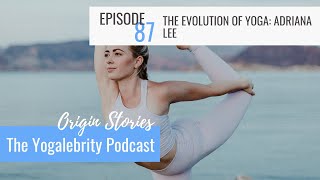
Adriana Lee, a Las Vegas yoga teacher trained in Spain and across multiple styles, built a studio from a garage to 6,000 square feet. She shares her TikTok formula during the pandemic, the shift in yoga culture toward inclusivity over sacrifice, and her new 300-hour teacher-training program launching in January.
Chapters
Welcome to the Yoga Celebrity Podcast. I am absolutely thrilled and excited about today's guest, Adriana Lee, who I didn't know but was actually running in the same circles as me. I just found her on TikTok, so I'm really excited to have her here today and share her story of what it was like before she became a yoga teacher, how yoga transformed her life, what she's done as a yoga teacher, and what it's like now so that you can see how you could be a yoga teacher too, or you could take yoga. There are all kinds of people that come to yoga practice, and this origin story I'm super excited to hear about. If you want to connect with Adriana, you can go to Instagram or TikTok where she is @adrianainflow. Welcome to the podcast.
Thank you so much.
I'm super excited to have you here.
Me too.
So You are a Las Vegas native. Are you an East Sider or a West Sider?
I'm currently like Southwest, but I'm from Henderson originally.
Oh wow. So you're a South Sider.
Yes.
I never think of Henderson as part of Vegas, but it is. I mean, it is kind of, right?
Kind of. Yeah.
Yeah. Right. Well, I'm an old school East Sider out here. I lived in the Country Club for a long time, and now I'm actually on the East Side, like near downtown. Um, in a little house in John S. Parks. Totally love it. We've spent the last couple of years traveling on our sailboat, and so we're really glad to be back in Vegas. And so when I saw that you were on TikTok, um, and then you tagged that you were in Vegas, I was like, oh, I need to meet her. And then I started, like, I asked you to be on the podcast, and I read your bio and everything. I was like, oh wow, we actually, like, know all the same people. Um, but, you know, Vegas is like that, right? It's a small town.
Yeah, especially the yoga community. Everyone knows everyone.
Yeah, everybody knows everybody. So, um, one of the things that you, um, sent to me ahead of time was that you've actually been practicing yoga since you were really young. I started when I was 11, and it's pretty rare for me to meet somebody who also started when they were young. So tell us, when did you start teaching, or when did you start practicing yoga, what kind of yoga did you practice and who did you practice with?
So I started practicing in my children's theater group. So it wasn't like— Oh. It was just our warm-ups, but I really liked them. So I learned, like, Sun Salutation A and Goddess Pose and maybe one other pose. And I would just go home and I would do that every day. So I didn't really have, like, a solid practice. I had no idea what I was doing, but it was something that I enjoyed. And then Once I got to college, I got like a gym membership and I just did yoga in the gym and then I got obsessed. So quickly found a yoga studio and then, yeah, the rest is history.
Did you do a lot of dance when you were little or were you— you just did yoga? Did you find that you were naturally flexible or that you've had to work really hard for your flexibility?
My mom and my great aunt were both dancers, so I think it kind of runs in the family, the flexibility aspect of it. I don't have their moves.
Were they Vegas dancers? Like, did they dance in shows?
Well, my mom's actually from Cuba.
Um, oh, okay.
My, my great aunt was a dancer at like the Tropicana Club, which is like a famous club in Havana.
Um, oh yeah, I know, I'm familiar. That's amazing. Yeah, yeah.
And then my mom taught dance for a long time but didn't teach me.
Oh, well, I always— I want— when I was little, I really wanted to be a ballerina. And my family did not—
they—
my mom really wanted me to twirl baton, so she got me baton lessons, but I really wanted to do ballet and she wouldn't give me ballet. So I've always felt like yoga was like second fiddle to my real dream of being a ballerina, but it turns out I'm way too tall for that anyway. I'm like 5'8". I could have never been a ballerina, but it doesn't matter. It was still something I really wanted to do. So I understand your love of dance, but also I feel like Teaching yoga is like a dance, right? Like we're choreographing people to go from move to move and to move with the breath. And when we start a class, I always strive to start a class and have them go on a journey with me so that the entire time that we're doing yoga, they never have to think. They can completely check out. I tell them when to breathe, what to move next. I never say stand up, sit down. I know a lot of teachers, and there's some— there's a pretty famous yoga teacher here in Las Vegas that gets a lot of really big gigs that does a lot of that, like, forward fold, handstand. And you're like, what? How do I get there? But the hallmark of a really good teacher is someone who considers it like a dance and has people move. And choreographs the sequence. So who did you study with? Who are some of the teachers that you've studied yoga with? Because you've actually studied with some of the same people as me.
Oh, really?
I didn't know that. Yeah. Well, at least one. At least one. Okay. I really love. So I'm not going to spoil it. I'll let you— I'll let you share.
So I did my first training in Spain with Vidya Jacqueline Heisel. She is the creator of Frog Lotus Yoga. And I learned a lot there. But then I immediately came back to Vegas and I did another training with Hib Asaf at Hip— well, at the time it wasn't Hip Yoga, but now it is. So I did a 50-hour training with her and I did my 300-hour with her. And I've also done—
and she works with— is Anna—
Anna Forrest.
Yeah. Yeah.
So a lot of the poses that I do that are unique, they come from Forrest Yoga and A lot of the, like, yeah, I get a lot of like what I do from forest yoga, but I'm also trained in Buddhacon yoga. So it's kind of an interesting blend because forest yoga, you're holding things for a long period of time and you're like building intensity in that way. And then Buddhacon yoga, you never stop. It's just continuous slow movement, which is equally difficult, just different.
So yeah. So the founder of Buddhacon is Cameron Shane, and I met Cameron over 20 years ago when I was the law manager at the Standard in Miami.
Wow.
And before I became a yoga teacher, and, uh, he actually— after I became a yoga teacher, he came and taught. I was a teacher at Gulliver Preparatory School, and I taught yoga instead of PE for people, for the students there. And I had him come and teach a class to all my students. It was like a really big event. It was so incredible. He is hands down one of the most gifted and incredible yoga teachers that I have ever had the pleasure of working with in my entire life. And I have worked with some really big names. I even took a class from Pattabhi Joy. Like, I have worked with Shiva Ray. I followed Sean Corn around for years and years. I got my 300 from Doug Swenson. I studied Ashtanga for a really long time. And I just think that the way Cameron breaks things down is magic.
Absolutely.
Yeah, he's incredible. If people don't know what Buddha Khan Yoga is, they need to go and find out because he is really one of the most gifted teachers that I have ever met. I love him, and his wife is really nice too.
She's amazing.
Oh my gosh.
Yeah. So what's funny is my 200-hour that I did in Spain, um, one of the teachers that was like, she was assisting but also teaching hands-on assistant things. Well, she taught one day of BudaCon and it was amazing. But, you know, she was from Germany, so I assumed I would never see her again. Well, she's actually the one who introduced Malene and Cameron. So when I moved to Florida, I met, you know, my first friend that I met actually was doing this 6-week BudaCon course and I was like, oh, I remember that. So I took that and then immediately afterwards I went and did the BudaCon training in Miami, which is now in Montana. But, um, yeah, good for them.
They moved there. I love him. I love, I love them. They're amazing people. I did not know you lived in Florida. My 200 hours from 305 Yoga back when it was Miami Shores. So we truly are intertwined. I owned a condo on 68th Street, um, and Biscayne at, uh, called Nirvana. And I lived in the Flamingo on Bay Road on the, on South Beach when I first moved down there.
Yeah.
So that's funny. We've been like round and round.
Literally exact same circles, opposite sides of the country, but still same circles.
I know. And then we find each other on TikTok.
It's so funny. Small world.
How did you get started on TikTok?
Um, so I kind of was a late start. Um, I had Instagram and my sister kept telling me like, get on TikTok, get on TikTok. And I was like, no, I'll just watch the TikTok videos on your phone with you. But then the pandemic hit and TikTok had this like educational program that you could join. So I joined that and, you know, it was 2020, so I couldn't go anywhere anyway. So I had a great time starting it and now I love it. It's so much more fun to create on. And there's— it's funny, you find like pockets of community there. I've made friends on TikTok, like one of my clients I've gotten who I see all the time. Found him on, or he found me on TikTok, I guess. But yeah, it's a, it's a different, different world.
And we have another Lost Vegan that's like really going, really going viral right now, Keith Lee. He's like big on TikTok and he goes and reviews restaurants, but he does like small businesses. Yeah. And he reviews them all in Vegas. And so, you know, we're a hub for TikTokers.
Absolutely. Well, and then, um, Alexandra Lourdes, I think is her name, but the, um, the owner of Café Lola in Saint Honoré. She's Latin too, and she's local.
I heard about her, but I haven't checked her out yet. So do you speak Spanish?
I do, yes.
Oh, so living in Miami was way easier for you than me. I'm like un poquito. Jo estudio español, but no hablo español bien. That was pretty good. Duolingo. Yeah. But, um, yeah, I, um, yeah, it's been, it's a crazy ride, like all the different things. I, when I first started, uh, opened my yoga studio in Vegas, like, uh, 2012, there really wasn't a lot of studios then. It was like Vegas hot. And then, um, the guy I was dating at the time opened TruFusion. Oh, wow. And we did not date very long. He wasn't a very nice person. I'm just going to go ahead and say that. He's not with them anymore, but he was one of the people that opened it. And I remember he called me up and was like, why don't you just bring all your clients here and come and teach at my studio? And I was like, what? Are you crazy? I have my own place. I don't need you. But you know something I found that's really fascinating, and I've worked with a lot of men, and like my— I work with, uh, Coach Stone. Do you know him from TikTok? Okay, well, he works on my TikTok with me, and, um, he's younger though. He's only like 18 years old. Um, but one of the things that men have always said to me is like when I told him how much I made last year, he was like, well, that's not very much. Why are you even doing this? And I was like, because there's a higher purpose. Like, one of the things I've noticed about men is that, like, they don't get that, you know, my studio might have been smaller than, than his studio. Like, the TruFusion is— it was a big mega studio that opened. It was huge. I started in a garage, you know, and built that up to what it is today on Main Street. And now it's like 6,000 square feet and a really large studio, but um, at the time I was in a garage, and he was just like, well, if you can't manifest your studio, you shouldn't even tell people. I would be embarrassed if I was you. And I— and like, I just find that men don't sometimes get that the purpose is higher than— like, so many people came to that garage and healed. So many people will like contact me now, 10 years later, people still message me I'm so glad I found you on Instagram because I went to your studio at the garage and it changed my life. You know, I didn't like— not to dog on hot yoga, but I feel like there's not a lot of personal transformation happening there. You know, there could be.
I think it, you know, it depends on the studio, it depends on the teacher. I taught it in Florida, which was actually— it was Evolution Yoga, which started here, and then they— it's so funny.
I— oh, so then you know who I'm talking about.
I, I know. I want a sidebar with you afterwards. I think I know exactly who. We'll have to have a little gossip session.
We will not, we will not put that on the podcast.
Not on the podcast, but, but later.
Well, it's interesting that, you know, the yoga community, it is so— I thought when I became a yoga teacher, everybody's gonna just be really nice. And that everybody was gonna have your best interest in mind, and that everybody would include everybody and everything, because that's how I am. I want everybody to be included, you know?
Not at all.
And it's not like that.
No. Yeah. I do practice hot yoga, but just because honestly, there's hardly any non-heated studios, uh, near me. And I mean, my schedule's It's not that difficult, but I really like early morning classes, and for me to find like a 5:30 in the morning or a 6 AM class that's also not heated, it's nearly impossible. So I practice it, but only because it's, you know, other than practicing in my own house. But, um, so I do it, but it's not my favorite.
And I just always feel exhausted after it. I just feel tired. Where do you go to here in Vegas?
I go to True Fusion. It's like 5 minutes from—
okay, but it's different owners now than when I— when it first opened. It's very— it's a totally different— a totally different gig. It's a very different thing now.
Exactly. And there's a lot of really good teachers there too. So I, I mean, I know what I like. Obviously I'm not going to find BuddhaCon at 5:30 in the morning, 5 minutes from my house. That's a little niche.
Is anybody teaching BuddhaCon in Vegas? Because I had sent one of my teachers to get certified And I just couldn't get it to take off at my studio. Like, nobody would come to it. But people did come to 6:30 in the morning. Not me, but I did have people there.
Yeah, I have to do it early. Like, I, you know, I can do nighttime yoga too. For certain teachers, I will do nighttime, but I definitely prefer the morning. But yeah, there's a few teachers here. Actually, one of the teachers that I trained, I taught, you know, taught her Budacon in our training, and then she went to Montana, and I think she did like 3 months with. Yeah, that's great. So she is awesome. Um, and we always— well, not every year, but most years we do a BuddhaCon class at EDC. So she always like does the demonstration. She's amazing. Um, and there's a, there's a few other teachers that, that teach it.
Okay, well, a lot has happened in the 5 years that I've been gone from Vegas. Yeah, yeah, yeah. It used to— it was very different. Like I was saying, when I first started my studio there was only a couple of studios. It wasn't, you know, Sherry Goldstein.
Yep.
Yoga Sanctuary. Old time. Old time. If you've, if you're from Vegas, you know, you know. And then there was that little Iyengar studio. I don't think it's there anymore, but she didn't even have, you had to email her to get into class. She, you couldn't buy a class online. It was all cash. She was so funny. She was back in the 1900s. But, um, But I mean, it's good yoga, right? Like, nobody's really teaching Iyengar in town anymore, and that's a shame because it's a really great kind of yoga.
Yeah.
If you can separate the, you know, if you can separate what?
Separate the, some of the bad things that we know now about Iyengar from the practice itself, because the practice is great. He was maybe a little harsh, but I think most teachers back then were.
Yeah.
A little harsh. That's the yelling and the hitting and stuff, you know?
Yeah. So I'm just like, that's the way it was.
It just was. Yeah. If someone did something wrong, we just smacked them, which is horrifying now.
But have you been to India?
Not yet. No.
Okay. Well, it's very still like that.
Oh, really?
Yeah. It's not— it's a harsh place. And the idea, like, when I first started doing yoga, the idea was that it was like tapas. It was heat. It was difficult. And that there was pain and suffering involved in it. Um, and that the suffering actually transmuted you into finding a higher realization. And I noticed that we don't do that anymore. Now, like the, the younger crowd isn't, there's no suffering. They think of yoga as more as like, right?
That's suffering. I don't know. I, I feel like there's, oh, just last week I almost passed out in class. So, you know, Uh, he's not my friend.
There's a lot like the concepts before was, was a lot like you give up a lot to have yoga versus now, like you would, no one would dream 40 years ago of really saying that they were a yogi and eat meat. That would be not step number one is ahimsa. Like no one would even dream of doing that. Now we were all vegetarian. We weren't vegans because that really wasn't a thing until later. But I find it really interesting now that like no one does that. And it's, it's part of the, the yamas and the niyamas because it's like this concept of self-sacrifice in order to reach a higher goal. And this concept of control and restraint, the chitta vrittis, the mental modifications of the brain, and that we can't— I know Cameron does not, he does not agree on this at all because we talked about it extensively. But that we, um, that we can't have clarity of the mind if we have the fear, pain, and suffering of death from animal flesh in our body. It's— whenever I study with the Dharma Mitra, it's always interesting because he'll like walk around the room and he'll be like, don't make a graveyard out of your body, you know? Like, it just— it's a very different thing now. And, um, That's, for me, has been a real struggle to watch it be so watered down from the version that I grew up with. You know, I guess like, I think society as a whole is really changing too and not being so rigid. We were very, we were, we grew up very rigid.
Yeah. I was vegetarian for 13 years and just started eating meat again a couple years ago, but I mean, for me, I mean, yoga is my, my love and my passion. But when it comes down to it, like, science is where I like tend to. So even like poses that were taught a certain way for a long time, I've, you know, looking at biomechanics, does this still make sense?
No.
Okay. So then I, you know, adjusted and started teaching things differently. So that's kind of what happened with vegetarianism. It was just like, okay, Am I getting enough protein? No. Am I getting enough this, that, and the other?
No.
And it was just, it was also, I found out I had all these food allergies. So it was really, really hard to be vegan and also deal with all the food allergies I had. So that's kind of what made me shift. And it's still like a, you know, conversation that happens in my head every day. Like, is this the right thing?
Yeah. Yeah. Because the largest study, the largest scientific study done on human diet and its its effect on diseases of affluence like heart disease, diabetes, cancer was the China Study. And it was done over like 30 years with a large number of millions of people and in China, because the Emperor of China got sick and he wanted to do this study. And they found that any more than 10% of protein in your diet increases the chances of diseases of affluence, like, dramatically, by, like, over 10 times. And that that's how people die. So it's really interesting because I think there's so much conflicting science. That's really, like, that's been the theme of the last 2 years, hasn't it? Like, there's the conflicting science on everything. And so ultimately, I think what we have to do is, like, what I found is that we have to do what, like, resonates with us in this lifetime. We each have our karma saya, right? The Yoga Sutras talks about the karma saya, the vessel that all our karmas go into in our lifetime, and then we play them out, right? But like every lifetime that's gonna be different. So whatever our lifetime karmas are for this lifetime, that's what we're gonna do. And so I think I've just found that like you can't do everything, right? You can't like be— I try to be— have you ever tried to be sweatshop free? Good luck with that.
It's right.
Or plastic free.
Sorry?
Or plastic free.
Oh my gosh. Yeah. I mean, we, we've reduced plastic by a lot. Like in my house, we don't do plastic water bottles or, you know, Saran Wrap, things like that. But still anything that you purchase comes in plastic. So even if what you're buying—
and it's in our clothes. It's in the clothes that we're wearing right now. It's in our phones. Mm-hmm.
Everything.
It's everything. It's this tripod.
Yep.
It's these AirPods. Yep. This pen. It's everything.
Really and everything.
You can't even see the pen, but that, yeah, it can be over overwhelming. So I think we have to just pick our thing that we're, that we're good at. So you have a yoga teacher training coming up here in Las Vegas and you're starting at the end of January. Can people, uh, still join it?
Yeah, absolutely. Um, our— it's our 300-hour program that's starting at the end of January, and the way the program works, it's 4 modules. So there's this like winter portion, that's the, um, core curriculum, and then there's a fall portion, that's foundations. There's a mentorship aspect of it, um, and then a workshop part of it as well. So it can take you between like 10 months to a couple of years, um, depending on like your pace and everything. But yeah, so that one's coming up, and then in the fall we have our 200-hour happening again.
That used— so there was a place called All About Yoga that used to be here in Las Vegas, and they did a similar style with their 300.
I remember that.
Yeah, yeah, they were in Henderson. Yeah, yeah, yes. I had somebody that worked for me go there. And get her 300 before I started offering a 300. But yeah, that is really cool. Yeah, it's a small world. It's a small world. Now, did you write a book? I did. Yeah. Okay. Tell us about your book because you can get it on Amazon, right?
Yeah, absolutely. Amazon. And I think Target or online at Target though.
No way! That's fantastic!
Yeah, thanks. So it's called Yoga for Flexibility and it is like very much a beginner-friendly yoga book, but it's also good for teachers too. There's a ton of sequences in it, flexibility plans, just about everything that you could ever need to know about like each of the 40 poses is in there. So yeah, it's on Amazon and yeah, it's been, it's been wild. I wrote it in like a year, but just, you know, spending entire days on it and Wow. Wow.
That's incredible. I'm really excited for you. Writing a book is a major triumph. Mm-hmm. Um, and anybody who's tried to write a book realizes that it's a lot of work.
Yes. It was on my bucket list for years. I mean, I've been, you know, I, I write, I've been writing since I was like, I don't know, 15 or something. Um, but I've been blogging for some yoga publications and then for my own blog for a few years.
What's your blog?
Well, I don't really put anything on it anymore, but it is Adriana in Flow and it's, you know, so all the old entries are there.
But yeah, I blog. Blogs are also a lot of work. A lot of blogs are a lot of work.
So much work. Yeah.
Yeah.
Solstice Yoga is my yoga school. Mine and Samantha Okamura and Claire Thomas, the three of us. So we have a blog on that site as well, on the three of us. Share articles on there quite a bit. But yeah.
That's really cool.
Thank you.
Yeah, I love that. I love that you're doing so many things. So a lot of yoga teachers listen to the podcast and they're always mystified by social media. And so what would you, what would be some of your best tips and pointers for TikTok for people who want to actually create content on there and be seen?
Yeah, I would say for TikTok, I mean, I have a— I could write a book on advice, but I would say just really the most important thing is just putting content out there, you know, don't overthink it too much. And also, once you're in the habit of putting content out there pretty consistently, if you can follow like a little bit of a formula, have a hook, something like a question or, you know, something catchy, 5 tips for blah, blah, blah, right? Um, an introduction about yourself, giving a little bit of credibility. The content itself, and then some sort of a call to action. If you can follow that formula, your views will go up for the most part, and hopefully your engagement will too. So it might be, hit that follow button, for your call to action, or whatever, you know, but something along those lines. And then edit out any pauses or any, you know, dead space. So if you say, um, edit it out, just, you know, because really our attention spans, especially on TikTok, are so short. You've got 2 to 3 seconds to catch people's attention, and you lose it in 2 to 3 seconds if there's too much of a pause.
Have you noticed that? I've noticed a lot of creators saying that their views are really down on TikTok. Have you noticed that? Or—
Yeah, that's— I mean, that happens. I won't say that they're down across the board, but it's just the influx of people that started creating. So I mean, in 2020, it was really easy to get the views and to get the follows. Because there was only so many people creating on TikTok. And then because it was so easy, I think a lot of people, you know, started creating more content on there. So the thing is, you still have a better shot at, you know, having higher views or whatever it is your goal is on TikTok than on other sites because of the way that the algorithm works. As long as it's high-quality content, it really doesn't matter. You could go viral overnight. Not that virality is like the goal, but you could see an influx of 6,000 people overnight off of one video or, or more even. And that doesn't really exist on other platforms.
Yeah, totally agree, totally agree. And virality is a mixed bag, right? Because it depends on what goes viral. It's— this is why it's so important to always make videos that are in your niche and not something random about your dog You know, and I have a lot of random dog videos.
Those are just for me, but they're on there.
They're in my drafts. Um, but, um, um, but to, because whatever you go viral for is what people are gonna wanna see more of. Mm-hmm. And then the other thing is that I've found having done social media now for like 2 years is that the comment section can be really brutal and it has been a slow buildup. To being able to grow my skin thick enough to handle that. Because they can, they can just be anything from other yoga teachers that feel like they know more than you and want to be snarky about it, to people who want to call out things about your appearance, to people who are envious and jealous of what you're doing. And you always go to their page and it's like, user 5732770 with a private account and a weird profile picture or none, you know? And it always is. Yeah.
And you also get like kids who, I don't know, you parted your hair to the side. So now, you know, or you wore the wrong jeans or whatever and it's like, really, who cares? I'm not trying to impress children. That's not my target audience. However, yes, the kids are mean, you know? Yeah. And so you just have to roll with it and delete the comments and block or whatever you need to do. But or leave it because it's engagement. Engagement is engagement. I don't know.
Yeah. It's interesting. I started my social media journey, like, a long time ago. And do you remember Periscope?
I do. Yeah.
Yeah. Okay. So the first time I ever did anything on social media was Periscope for my business. And I was teaching a yoga teacher training in Costa Rica. And I set up the camera. I put it up and I got it all set up to go and I just pressed the start. And I had told like everybody in my family, my clients, some of my competitors knew about it. I was like, "Wow, I'm gonna be on Periscope. I'm in Costa Rica. It's gonna be amazing. Check me out." And I didn't pay attention to it while it was rolling live. And so then afterwards, I, um, went and looked at it, and I was shocked that people, hundreds of people from all over the world, were saying things like, that teacher spat in the students, she shouldn't even be teaching yoga, she's so fat. And I was just emotionally crushed. I was just absolutely crushed. And I went into like a really dark place, and I gained like 70 pounds after that. And I was just like determined to never be on social media again, which is hilarious now that that is my main way of making an income now is through TikTok videos. But, um, but, um, it was so hard to like, to have that happen. And I, like, for me, it's been a really long journey. And when you're young, I don't know how old you are, but You know, I'm almost 50, I'm 48 years old. And social media has been like a totally like foreign thing to me. And a lot of my peers who are phenomenal yoga teachers, really great teachers, just do not know how to navigate the social media world. Or they're so afraid of having an experience like that, that they're not out there and they're not teaching in a way that they should. And they have so much to share. But I think, you know, I wish that I had had the attitude that I have now where it's like, it's just a boost in the algorithm, you know? But I think what also disappointed me is that no one said like, hey, don't say that. Or no one defended me. And I find that, that we went through a period of time, like social media has had these like evolutions, right? Remember when it was like good hashtag, good vibes only? Yep. You know? And then everybody was like, no, there's no good vibes. We have to be real. And then people would like defend people in the comments. And then now it's like people don't defend anybody in the comments because they don't want them to come after them too, you know. So it's like this— but like the thing I didn't get that I wish I had known was that that's not real life. The message is real life. The people that I'm trying to reach through my content and the people I'm trying to help through what I'm putting out there is the real message, not what's going on in the comments, you know. Absolutely. Yeah.
So I will say TikTok, I feel there's more people who will defend in the comments and you'll get, you know, then, then the response videos, sometimes the response videos can be really harsh and terrible. You'll get someone like stitching that response video with like their, you know, so I, I do think it's a little bit more accepting and a little bit more loving. And I guess, and maybe it is because it's, you know, it's not even really primarily Gen Z anymore. Now I think it's a pretty good mix, but I think Gen Z is kind of growing up without the same like crazy beauty standards that, you know, that we grew up on. And yeah, yeah, loving, a little bit more kind. And I do appreciate that. And sometimes it's not.
I'm even conflicted about that because, you know, I've worked at The Limited, was like one of my first jobs. And like I wanted to be a Victoria's Secret model, and I still do my hair like the '90s Adriana, you know. Um, and, and it's like, you know, now there's like this big push against that, that way of, you know, and now I'm like, what do I strive for, you know? Um, but it's just, it's interesting to watch like everything change and One thing that I think is really fascinating is like, I used to think about my grandma and she would always say like, wow, you know, these kids these days. And now I like see myself doing that and I'm like, gosh, Angelica, chill out. Like people change. It's okay for it to be different. You know, it's not worse or better or bad. Or it's just, you know, the Yoga Sutras teach us that there is no good or bad. There's only the present. Mm-hmm. You know?
Yeah. I mean, with trends and all that, it's— they're going to change. And so it's, you know, up to us, I guess, to decide whether or not we care. And if we don't, then we just keep doing what we want, you know? It's hard. I mean, now I'm like, I just bought a home last year, and so we've been like redecorating and—
Oh, congratulations!
Thank you. But, you know, it's been a lot of like, okay, so this was trending and now it's not. And then do I care? Because it's my house. Like, I'm not going to paint the walls every year because there's some new color or whatever. And I think it's kind of got to be the same with, with how we dress, you know, just wear what you like and what feels good in your body and, and, you know, let the, let the children worry about the trends. At least, I don't know.
Yeah, well, it's really, it's It's really been an absolute pleasure talking to you and getting to know you more. And it's really nice to see someone your age with the level of education that you have in yoga. I find it very rare and absolutely refreshing and exciting that you're an ambassador for yoga out there in the world. So I really appreciate you coming on the podcast. If you could only share one thing with the listeners, if there's just one thing you want to leave them with, what would it be? Hmm.
It would be to find your flow, to find what moves you and what allows you to get completely lost. So whether it's a yoga practice or some sort of art or cooking or whatever it is that brings you that state of absolute oneness with what you're doing and getting out of the head, I think that is the most important thing that you can find for yourself.
Awesome. Well, thank you so much. If you want to connect with Adriana, you can find her @adrianainflow on TikTok or on Instagram. And if you would hit the subscribe button and follow the podcast, that would be awesome. You can reach me @yogalebrity anywhere that there's social media. I am there, but I'm primarily on TikTok, Instagram, and YouTube in this podcast. So I look forward to meeting with you viewers again in the next podcast. And I again thank you so much, Adriana, for coming. It— I greatly appreciate you being here today.
Thank you so much for having me. This is great.







