When Your Husband Doesn't Support Your Online Yoga Teacher Dreams
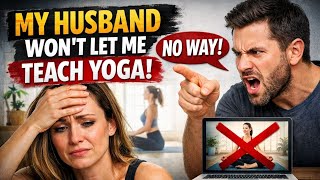
Angelica Govert and co-hosts Francesca and Tiana discuss why husbands often resist their partners' online yoga teaching businesses. They cover financial control, the difference between permission and support, and practical moves like finding discretionary funds and building proof of concept before asking for buy-in.
Chapters
Welcome to the Yoga Liberty podcast. My name is Angelica Govert. I'm known as Yoga Liberty on Instagram, YouTube, TikTok, Facebook, in the world. Um, it started as a joke with me and my teacher many years ago. She was the Manifesting Mofo and I was the Yoga Liberty, and then it just stuck. Um, but my name is actually Angelica Govert and I host a weekly podcast. Sometimes we put more episodes out, sometimes less, but we really try do every week. Um, and we help yoga teachers build their online yoga businesses. And, um, we offer something called the Empowered Yoga Teachers Collective where we bring people in and, um, build their sales funnels with them, build their email automations, build their course with them, help them learn how to market and sell themselves. Uh, it's 90% promotion, 10% your course. Doesn't matter if you have the best course ever, you have the best online offer ever. If nobody wants to buy it, it it really doesn't matter because you will not make any money and no one will be served. So we help people do that. Now we help people do that, you know, through a formal process, but also through these podcasts and through the YouTube and through our Facebook group. So we'll leave the link below to all of our different socials. If you want to join the Facebook group, Francesca does go live in there every week. That's totally free. You don't have to pay for that. So we have lots of options for lots of people. Um, if you want to work with us, it does obviously have a cost. We don't work for free. We don't, we don't encourage you to work for free. I don't think that's a good idea. Um, so you do enough by making free content. Um, so anyhow, uh, if you want to do that, you can go to the link below and apply to work with us and, um, we'll be happy to talk to you. Okay. So today's podcast, we're going to talk about what to do when your spouse does not support you in your dream to go online. And, um, To be totally honest, this is actually something that I went through myself. My partner did not support me and he literally did everything he could to self-sabotage me. Well, not self-sabotage, to sabotage me. It wasn't a self, it was, I'm gonna guess it's his self, whatever. He was like very sabotagey and would be like, hey, do you wanna go out to eat? You wanna do this? Like whenever I would sit down and try to build my online business. So this is something that's near and dear to my heart. And so I wanna talk to you all and we all wanna talk to you about like what, um, why is it, you know, that your spouse might not support you in wanting to build an online business. And, you know, frankly, that really just applies for everybody in your life because I don't know about you, I didn't have anybody around me that was working online. I was the only one. And, you know, it's really common. It's common for your spouse not to feel like, um, to feel trepidatious, to feel a little bit worried, to think that this isn't a legitimate thing, to— that making money isn't online legit. But you know, like, I always think back to like Yoga with Adriene. Like, if I had just gone online back in 2012 when I first opened my studio and I really wanted to but was like, I don't know how to use the phone and how do I make the video and I don't have a microphone. Like, girl, just post, you know. Like, just Adriene did it, uh, and now she's rich. Um, and that could have been me and it could have been you, right? So how do we overcome these things that the spouses have? The fear, the lack of understanding, that financial uncertainty. And the identity shifts that you need to make in order to move forward and build your online business. Because, you know, most partners, they're not, they're not against you, right? Some of them are, like, legitimately, and we'll talk about that. But most of the time, they're, they're just reacting to having uncertainty about what's going on. So I know Francesca does a lot of calls with people. And Francesca, why don't you start us out with, like, why you I think that a lot of spouses are like, eh, I'm not on board with this.
Okay. Just making sure my mute was off. Um, got a new microphone, so I'm playing with it. So yeah, actually I had this, um, I think it was last week and I think it can be a number of things, but I think with this particular call, it might have been a traditional role. Around money and decision-making because she was or is a stay-at-home mom and really hasn't worked for a very long time. Her job was being a mom. Her boys are teenagers now, and she was really looking for something to, you know, something that she can dive into that is more of her heart, but she can also, you know, support with financially in her relationship and, and in her life. And I feel like because the role was traditional to start, there's nothing wrong with that. But I think that that was part of what was resistant around making this decision because number one, she probably, I'm, I'm assuming wanted the partner to be there, but unfortunately her partner worked more of a blue collar job. So was like overnight and not around. He's just not around as often. So having him around to like make that decision with her wasn't an option when we were on the call. And then number two, it I think that because of the traditional role, it was almost like asking for permission. And ultimately it was something that she had to go to him for, which rightfully so, she doesn't have an income of her own. But that I feel like I've run into a couple of times. And I mean, it's unfortunate.
I just want to interject though about the rightfully so thing. She doesn't have an income of her own. She does have an income of her own. Raising your children is a job in and of itself.
Absolutely. 100%.
I agree with you. I think that women should have more autonomy over the decisions of the finances that have— like, they should have an equal say in that. That's not right that someone would be making all the money. And, you know, like, I actually just said that to somebody one time. She was like, well, my husband said no. And I was like, well, that's not how— she goes, you know how it is. My husband said no. I go, no, I don't know how it is. That would never fly for me, you know, like that. I would never— no, absolutely not. I don't know how it is. I make my own decisions. There's no man that's gonna stop me. I don't, I don't think that it's really healthy for your man to make decisions like that for you. Like, I think that's called enmeshment from a psychological standpoint. I'm sorry if I'm offending anybody. I don't mean to offend you. This is just my opinion about it. But, um, my mom used to always— my mom was someone who a man controlled all the money. She would stay at home, um, and she never got to live any of her dreams. And she would always say to me, no matter what you do, always have your own funds, always have your own money, always have your own way, always make your own decisions. Don't let the man make the decision for you. So I actually think that's not really fair. Like, she's dedicated her entire life her entire life to raising the children that they created together. And he can't even give her the opportunity to build a business online and do something that she loves, helping more people and reaching more people that gives her purpose. Because, you know, he has a career, he goes every day. I don't, I don't think personally, I'm just not a rightfully so I don't think rightfully so. Sorry, not sorry.
Well, I didn't necessarily mean rightfully so that she didn't have— or that like being a mom was not— was her job, but she's not making income from being a mom. That's what I meant, that she didn't have her own income from being a mom. He is bringing in all of the money. So I understand her perspective, but to your point, that just limits her. She spent her whole life dedicated to raising these boys. The boys are now teenagers, and I think it was right for her to want to step into something of her own. And unfortunately, that wasn't the result because she didn't have a say over the money, at least in this decision.
I feel like unfortunately, um, or at least what I've seen in, um, a lot of those types of relationship dynamics, um, that people, I don't know, fall into, I guess there's not a lot of conversation about what the future is going to look like if that happens. You know, you fall into being a stay-at-home mom, one, you know, spouse ends up, or maybe whoever it is, one spouse ends up taking on more of a role and then nobody ever has that conversation. So I feel like in a way you kind of let the other person develop this feeling of having that control because you never have sat down to have the conversation about like what this dynamic looks like and how you both are involved.
Yeah, I think that's, that's really true. You know, when I, um, got together with Paul, we sat down and we talked about like Do you wanna have children? Um, it, what kind of career do you wanna have? What kind of life do you wanna live?
So important.
Yeah, it's really important. I don't think a lot of people do that. If people, a lot of people just step into relationships.
My sister's a full-time stay-at-home mom and that was a conversation that was had. They had a conversation about it. He was, I know her husband was, um, raised that way, you know, um, one of 8, like his mom homeschooled and everything. And they had that conversation about like, this is how we wanna raise our children. And my sister was gonna be the one who stayed home. She works full-time. But like, that conversation happened before children happened, really, even before marriage happened. Like, all of that was like lined up. And I think that plays a massive, massive role into why their relationship dynamic works so well now, because they have that communication and understanding, and it was from such an early start.
Yeah. Let's talk about something else too, like, because sometimes it's not just that like they have these traditional roles, but also like Sometimes some partners have more of like, I'm very like, I'll do whatever with money. I'm always like, I'll rise again like a phoenix, whatever. It takes money to make money, you know? Like today, Tiana and I were on a call with a guy that does like all of our, our statistics for like the ads and stuff that I run. And he was like, oh, this ad's doing well. And I was like, great, it's converting. And I doubled the ad spend and he was like, oh my God. Don't do that, you know? And I was like, look on his face. He was like, I was like, what do you mean? It's making money. I wanted to make more money, right? And, um, so I just like, don't, like, I don't even think about that stuff. Um, but Paul would be like, he would, he's very like, he's very risk-averse. Like, he doesn't want to take any risk. And I, you know, honestly, I think it comes from having been a professional poker player for a while and like just just, you know, lighting money on fire just to see. So coming from Vegas, it taught me so much. Like, I'm so grateful that I did that, actually, because it taught me a lot about taking calculated risks and when to spot a risk and when to spot— the biggest thing that poker taught me was mathematical risk and like when to know that you're actually taking more of a risk by not going all in. Than taking a risk by folding. Like, let's say, you know, you have, they call it outs. I don't, we're talking about poker now. This is hilarious. So there's like in Texas Hold'em, there's the flop, the turn, and the river, right? And each chance there's a round of betting and new cards come out. And on each one of those, your percentage chance of winning changes dependent on the cards that are out. And so you calculate that. It's like the rule of fours and the rule of twos, and you like calculate like how much you're— you multiply like how many of a certain type of card is left in the deck and how much that your percentage chance of winning is. And a lot of times, like, then you calculate it to how much money is in the pot, how much money the people have behind them that they could pull into the pot, how much you have, and how much you could pull in to put into the pot. So like I actually won my yoga studio playing pot odds. So when I first opened the yoga studio, I did not have any money. I'd just gone through a bankruptcy and I was like, okay, I, I want to open this yoga studio. I found this space, but it was $400 a month. It was a converted garage. And I really wanted this space and I wanted to open my yoga studio, but I didn't have any money. So I'm like, all right, how am I going to do this? Um, but I'm just going to go for it because I, it's, I really want to do this, but I don't have any money on, but I'll figure it out, right? What's the worst that's going to happen? So I, I happened to go down to the Wynn and play poker because I had been playing poker because some people that I taught yoga to had played poker. They taught me how to play poker and that's how I learned. And so I'm down there and playing poker and playing like low stakes and I get involved in this hand and the flop comes out and I have a straight. I have, I have a, a gutshot straight. Like, I have the straight like in the middle, right? So there's like cards, it's a pretty— it's a well-masked straight. Like, no, it's not like I have the two cards on the end of either side. I have them in the middle, so people probably don't know that I have it. So I had been the initial preflop raiser before the flop came out. I had put the money in first. And so when that happened again, I was like, all right, cool. Um, so he comes to me and I'm— I I put more money in, I bet, right? Because I have the winning hand. Like, there's no other combination of hands possible mathematically that could win. I knew I had the winning hand, so I put money in. And then the person next to me, he, he called. And then the next person raised. And then the next person re-raised. I was like, re-raise? This is crazy! What's going on? And then every single person at a 9-person table called the all-in that the next guy did. And I was like, and it came back to me now. I had been playing like really frugally. I had $600 in front of me. I was like, oh my God, if I, if I go all in, I'm going to lose all of this $600 that I've worked all night to make. That's my rent for the month. That's my bills. That's my food. That's everything. But I'm looking at this flop and I literally have the best possible combination of cards. Now there's still 2 cards to come out, so I could still lose. But if I fold, it's a higher risk of loss than if I go all in mathematically. And that's the thing that I think people like really don't get is that there's a, there's a point where like, Maybe it costs money to go online. You know, it does cost money to go online, but it, you know, like maybe it costs you money. It costs more than you maybe feel comfortable with. But the reality is, is what is the cost of not doing it? You know, what is the cost of not, not doing it? And so I ended up, I was like, well, shit, I can't call myself a poker player if I don't call this hand because mathematically, like I'm, nobody else can beat me. Yes, there are two more cards that come out, but But their chance is like 24%. They have a 24% chance of winning. My percent of chance is 76%. I have a 76% chance of ending up taking everybody's fucking money at this table tonight. Right? And so I'm like, but it's gonna cost me what I have. It's gonna cost me that $600. But as we all know, 'cause we're sitting here today, I made that call.
Yes, you did. Yes, you did.
You did. It's given me multiple jobs now. Thank you for making that call.
Thank you. Thank you very much.
Amen. I want a $5,000 pot. I opened my first yoga studio, which then led to me opening a second yoga studio and a third yoga studio, which led to me making about $250,000 a year running studios, which led to me then going online. Making $24,000 my first year, $79,000 my third year, $151,000 my— or $179,000 my second year, $151,000 my third year, and then now making over $1 million online. Like, all that came from a risk of $600 that then turned into $5,000, that then turned into $250,000, that then turned into $1 million. I made over $1 million at my studio. I've made over $1 million online. All that came from a $600 risk. Right. So like there's some people who have this fear of financial risk. I ain't one of them, but if you have that, and I know it can be scary, the problem is, is that you're actually scaring yourself out of long-term abundance. Like, can you see how that is? You know?
Yeah. There really is a tipping point, like at both ends, both ends of the scales there.
Yeah.
And comfort can be a risk. Like being— comfort can definitely be a risk.
And I think that could be part of it because, you know, if somebody goes to their spouse there, that could be, you know, an objection, so to speak, is like the fear of the financial risk around it. But I think the moral of the story is, is that if it's something that you feel called to do or aligned, or you see the odds in front of you, you might as well go all in. Because it could very well change your life, right?
Yeah. And what's the difference between $10,000 or $20,000 or $30,000? You know, I just signed up for a mastermind that was $50,000, right? And, and really, because I wanted to be around Russell Brunson, right? Like I wanted to be in his presence, which was like awesome. But, but like at the end of the day, I was like, you know, that's a lot of money, right? And I might not make that back. You know, and I might, whatever, you know, but it doesn't really matter because it's just money. Like, we put way too much emphasis on money and like how we gotta hoard it or whatever. That's not how money works. Like, money flows, you know? And also, you can't take it with you. My neighbor across the street just died from the flu. He died from the flu. Oh my God, he got the flu, and then it wasn't the flu that killed him, it was he had a— he had a heart— unknown heart condition that— so he couldn't overcome the pneumonia and everything from the But like, he was just the other day, just like the nicest guy on my street. Just every time he would walk down there, he'd just talk to you, whatever. He wasn't even that old. He was like 61, you know?
Oh my gosh.
Like, you can't take it with you. The experiences are what matter, right? So, um, you know, like what's the difference at the end of the day, even if you did fail, you know, what would have been the difference? Like thinking back now, let's say I put that $600 in and I lost that pot. You know, what would really $600 be now? That seemed like a lot of money then, but today—
yeah, yeah. I think the difference, taking your situation as an example, would be if you were to put all in, in that pot, and you would have lost it. Just knowing you now, but just the type of person that you are and the, and the dreams that were on your heart, which I'm sure a lot of you have similar dreams in your heart with wanting to go online or just create some type of ripple effect in your, in your world, right? With what you know and your level of expertise, you would've found the next time you had another $600 or another $5,000 that you came into abundance with, I guarantee that that probably would've been your next decision, right? So it's not, it doesn't, it, it, I guess my point in that is that the opportunities are always gonna come around, but unless you take like the that you feel called to the most in that moment, it's— you don't know when that next opportunity is going to come around again. And is that going to be again another question for you? Do I need to check this with my spouse? Is this the right time? Then you kind of go through the cycle all over again. So why not just make that decision when you feel called to do it?
Right, right. You have to take the opportunity.
Exactly.
Yeah. So let's talk a little bit about some differences between support and permission, right? Because that's really powerful, right? Like, do you need to get your spouse's permission or is it just getting their support? You know, and I know, like, you know, if you're— I don't know if you're comfortable talking about it or not, Tiana. I know that your spouse, not really spouse yet, partner, whatever you want to call them, your person, um, this that he makes a lot more money than you do. Um, you know, how do you two negotiate that? And like, what would, what would you, what if you really wanted to do something, you know, how would you talk to him about it? Is that, can I put you on the spot like that? Is that weird?
No, it's not. You can, but, uh, I don't know if you're expecting or not expecting the answer I'm about to give to that. I feel like Fran knows. I mean, obviously every person's different, but for me particularly, I'm very similar to you, Angelica. I don't play, I don't play that game. I don't play the no, I don't permission. I hate that word. I hate that word. I'm not ask, I'm never asking permission for anything in my relationship personally. And if I, I've never been in a relationship where I need to have permission because at that point it's not a partnership, it's a dependency. And I don't want to be necessarily in a full dependency.
That's so old.
Right. And even if somebody makes more money in the relationship or anything, you don't have to be dependent. You don't have to be in dependency. It comes down to communication, right? And establishing what those roles are and making sure that both parties are comfortable with that. So for me personally, um, I have a lot of support. I am very blessed and grateful to have a very supportive partner, but I've also made sure, um, to not allow anyone to stay in my life that isn't gonna be supportive. Um, I don't like the no, no, you can't. That's not an option. Um, I'm sorry, what'd you say? You meant anything for you, my love? That sounds better. Um, but I know, you know, not a lot of people can be in, in that same situation, but I think it comes down to communication. Like, it again, like I said, do you want to be in a partnership or a dependency? Like, you need to have that realization and communication within your partnership.
And I think with you guys, just because I know your relationship, I think with you guys it's like you guys respect your partnership in that way, but you also respect your individual investments, like what it is that you're choosing to invest in. And like, you might have a conversation about it, but it's never going to result in, you're not allowed to do that, or I don't agree with where you're going. It's always like, okay, so how is this going to benefit you? Is this something that you really want? How can we make this work with the other goals that we have in our mind? Because I know you have really big goals with YouTube as you're moving forward, especially in this year. So, um, you know, I would agree with you. I'm not in a partnership right now, but that's definitely part of what I know I'm, I'm looking for in my partner.
I think it's really important too, to like kind of emphasize that your partner doesn't necessarily have to have like the fullest, deepest understanding of what you want to do and be successful in for, for one, for what you wanna do to be valid and for two, for them to support you in that. That's just point blank.
Yeah. So, yeah. So let's talk a little bit about, uh, like how having zero financial visibility, how that can be disempowering and the difference between, you know, somebody who's supportive and, and unintentionally blocking your growth, you know? Um, and where can you find those discretionary funds? Like how can you do something? you know, and really live your dream, you know. Um, and so for, for me, like, I don't know, I just, it's so out of the realm of my understanding. It's really hard for me when someone says something like, my, my husband doesn't support this and, you know, we make all our decisions together. I'm sure you understand. And I'm like, no, no, I don't understand. And somebody like got really offended that I was like, well, that wouldn't be me. That wouldn't be me, you know. Or like, the people will be on calls like, well, you know, I'm sure you understand how my husband's— I'm like, no, I bought a house and I was like, we're moving. I bought a boat and was like, we're gonna live on a sailboat now. I sold my studio and was like, I'm selling this studio. And Paul was like, no. And I'm like, well, whatever, you benefit from it. But you know, the thing is like I want to do something different. You know, I just have always been a woman in charge of my own thing. So it is really hard for me to empathize and understand. Um, but the hardest thing for me to watch is women who are truly gifted and have something to share with the world and they're givers, you know, because they are women who don't have the, the role of breadwinner, like they are givers by nature and they'd be really great at helping people online. but they can't because their partner doesn't support it. It's really hard to watch. Mm-hmm.
Um, honestly, just riffing really quick off of what you had just said. Um, like, yeah, you bought the house and you said we're moving, but at the end of the day, he still had a choice. You know, he still chose to continue on with you. Like at the, you always have a choice.
Well, also it's like, like part of that is conversation, right? Like, I'm sure, I'm sure to a degree it was, we're getting a boat and we're gonna live on a boat and that's what we're doing, right? To a degree. But like, there was conversation, right? Okay, so we're gonna— this is when we're gonna do it, this is where we're gonna acquire the boat, this is how long we're gonna do it, this is what we're gonna do financially while we live on the boat. And it's a mutual conversation that is had where both parties are understanding of what's going on, but it's It's not like, uh, what's the word? Um, it's not like taking control or taking like that, that piece away from the other person. It's being like, okay, if this is what you wanna do, I support you. Let's do this together. How can we make this happen? I think that's the difference in the kind of conversation.
Yeah. When we, um, when we, I'm texting Francesca. Um, when we, That just totally came up on screen. I don't know how I'm like so smooth. Whatever. Every time you press that button on your microphone, it goes click, click, click, click. Just press the spacebar. Just hit the spacebar. Like mic yourself and hit the spacebar. Oh my God. Anyhow.
Done is more profitable than perfect.
Done is more profitable than perfect. Hit the spacebar now. Put it on mute and then hit the spacebar. And then talk. Keep holding the spacebar down while you're talking.
Okay, I see. I didn't even know that was an option.
Yeah, and then we don't have to hear click, click, click, click. Anyhow, um, you can edit that later, or we can just leave it in there. It's fine, whatever. Everybody, that's how it works. That's how you do it. Um, this is real. Live, love, life. It's fine. Um, just, this should inspire you to just do whatever you want. Um, when And when we moved into this house, I, he was like, uh, I don't know. Cause Paul don't like change. Paul does not like change. I love change. I'm like, let it change. Let's change it. You know what? Let's try something different. Cause to me, I'm always like, what, what could be on the other side? That's better than what we're doing right now. How could we make this better? We did this so good. We helped 200 people this year. How could we, how could we help 500 next year? You know, what if we did 1,000 though? You know, like that's That's the dreamer in you, right? Right. I'm always like, what else could I do, right? Because you never know. Like, I feel like it's like leveling up, like your God quotient, you know? Like God gave you this gift, like how do you use it to the maximum level, you know? So anyhow, when I bought this house, I had owned a house in Miami that ended up— I lose it— I ended up losing it during my bankruptcy. Thank God. Um, so glad that's gone. Bye. Um, but, um, Um, we bought this house. I told Paul, I was like, I need this to be a good experience for me. I need this to be a positive experience and I need the whole thing to happen smoothly. And I need to enjoy it because this is in my financial range. I can afford it. Um, I need to have a house to support myself when I'm old. I need to have a place to live, you know, and I don't— we— I don't have those things right now, so I need to build that for myself. So if you don't want to be part of it, that's okay, but don't complain along the way either, because he doesn't own the house and he wasn't willing to own a house and he wasn't willing to create that kind of stability for me, and I wanted that kind of stability. So there was that conversation ahead of time, you know, and And you know, like sometimes I think it just comes time to like, you gotta put it on the line and be like, do you wanna do this? There's a book by Steve Harvey. It's called Act Like a Woman, Think Like a Man. Fantastic.
Oh, I've heard of that.
It's a fantastic book. That's who wrote it? Yes. Fantastic book. Um, I read that book, Francesca, you should read this book. This is how you get a man. Okay. Cuz I wanted to get a man so bad. This is how I got one. Steve Harvey knows what he's talking about. He said in there, you have to sometimes— people are like dying right now out there in the internet world— you have to sometimes, like, you have to make them a little bit scared that you're gonna leave or they'll walk all over you and they won't want you. They have to always be a little bit afraid that you're gonna leave. And in the dynamic of a relationship, just from a psychological level, there's always one person who's more invested than the other person. There's always one person who would be better off or could be, could be okay, not better off, could be okay without the other person, whatever. Right. In, in my relationship, I'm the one that would be like, all right, well, that sucks that you're gone, but I got this house and this boat and this car and I, and I got this job and I got a career and I'm gonna figure it out. You know, um, I think that it would be, you know, Paul would have a harder time without me than I would have with him. Not that we don't get along, that we don't enjoy each other, we do. But there's always like a— there's somebody who is more into the person than the other person, you know. And so, um, Steve Harvey says to be the one that they're more into. This is power dynamic. I know that is completely off topic, but, um, kind of not though. Kind of not though. Like, you gotta always keep them— get like, sometimes you gotta just put your foot down and be like, this is what I'm doing, you know, this is what I'm doing. It's— this is gonna cost me, you know, $15,000 or $10,000 or whatever. I want to do this. It is what it is, you know.
Well, I think that's part— more part of the conversation that I hope that whoever's listening can find empowerment in is that it's not so much of like, I don't want you to tell me what I can and can't do, right? It's just more of like, listen, this is something that's been on my heart. I've been a stay-at-home mom raising these kids for so long. I'm bored. I wanna do something that like I love. And even if it, you know, is slow to start, like anything is like any business that you ever will create in your life or anything you will create in your life, especially if it's new, it's gonna be slow to start. 'Um, but it's mine.' And considering that, you know, they have the job that they do and they bring the finances that they do, if that's the dynamic, then, um, you know, I think every woman should at least have that opportunity of a conversation with their partner.
Mm-hmm.
Especially if it's something that they're wanting to do, you know.
And let's say like you never make any money off of it. You start a business it doesn't do well, you never make any money. What's the mental load of not trying? What happens if you never try the thing that you really wanted to do? That's actually the question I asked myself when I moved from the small yoga studio to the bigger studio. I was like, if I don't do this and I go to my deathbed, will I wish that I had? And the answer was like, overwhelmingly like, yes, I would wish that I had at least tried this. And that's why I put it all on the line and opened the big studio. And that's where I met you, right, Tiana? That's where you came into my life and where a number of people did. And, you know, that's where I became my first million was in that studio. So, you know, thank God, thank God that I took that risk, you know, that that was put in front of me. And that's another thing I think, like, spirit, God, divine universe of your own understanding puts things in front of you. You gotta be smart enough to take 'em. You have to be smart enough to take 'em. You have to be strong enough. And there, there may be sometimes are gonna be blocks that are resistance. That you have to push through because the universe is like, how much do you want it? Not that this is wrong or you shouldn't have it, but how much do you want it? The universe doesn't respond to good and bad. It responds to energy. It responds to energy. So what energy are you putting out there? Are you stepping into the energy of power? Are you stepping into an energy of not feeling like You, you know, you worried about, well, what's going to be my ROI? What did other people do? How did other people— can you have examples of this? Do you guarantee? There are no guarantees. There are no guarantees. That's just how life works. There aren't any guarantees, right? You're going to have to try. You probably will fail along the way. I was watching, uh, we started watching Landman.
I love that show.
Oh my gosh. And, uh, Billy Bob Thornton was like, well, you know, what kind of person do you want to be? You want to be? And his daughter said, I want to be a dreamer. And he said, then you have to know you're going to fail. You're going to be a failure first. What are you going to do when you fail? And I was like, dang, I must start saying that to everybody. That's powerful. Because that's, that's the reality. You're going to be a failure first. The people who are successful are just people who failed more and just kept going.
Absolutely.
I agree.
Fail forward. Be a student of life.
Um, okay, let's see if we have anything else on our list. Okay, let's say, um, you know, we also have had people in our course that were signed up and were going through domestic violence situation, you know, where the man was trying to be controlling and this was their way out. This was her way to make income for themselves and to get out there, you know, so that that's not not happening. That's definitely happening as well. And I think, you know, I, my first job out of college was at a, at a battered women's shelter. So, you know, I think it depends on who you choose to help you through the journey of building your business, but we're definitely people who you can share that kind of information with and we would be helpful. And then I think, you know, just some like closing things to talk about, um, which are like, your dreams deserve to be taken seriously. Um, you can honor your relationship and your calling. Um, growth as a person, as a yoga teacher, as a business entrepreneur, it requires courage and it requires having crucial conversations with people. Um, and Making the right decisions, that doesn't come from fear. It comes from being clear. And when, when we're making decisions in fear, it actually is going to do the opposite. We're not going to do as well. We're not going to be as happy. We're not going to get the results that we want. So we have to like, think, are you making a decision based in fear or are you making a decision based on what's actually really right for you and your spouse? Yeah.
And then lead with action. Nothing earns support faster than embodied proof, right? Nothing's going to earn that support faster to your partner than proving to them and showing them that you're committed, that you're serious, and how important that is to you.
100% agree. 100% agree. So listen, if you're ready to ditch your dirty man and build— no, I didn't. Take him to the cleaners. No. Um, anyhow, sometimes men are super supportive. We'll have men that actually come to the call with their wife, and they come to others, their, their support calls. They come and they help build out their business. And, um, some of them are like that. I've had guys that did the website portion. That's pretty cool. Um, I don't know if I would—
all of them should be like that if you're listening.
I don't know if I don't really want that. Honestly, I don't want to— I want to do my own thing, you know. I don't really want a man. I like— we can have separate things. This is my thing. Everybody's different, you know, whatever. Um, so, um, yeah, if you're looking to build an online business, you think that we're the kind of people that could, um, resonate with what you want to create, please do go to the link below and, um, uh, sign up to get a call with one of us and talk to us about you know, what it is you want to create. If we'll let you know if we think that's viable, if it's a good idea, and how we do what we do. And if that resonates with you, we'll sign you up right there and get you started. If you just want to dick around and see what happens, don't, don't call me. Don't sign up with me. I don't want that. I want people who are interested in making a change in this world and know what it is they want out of life, and they want to make their life a better place. They want to make this a better place for other people. I like to work with people who are serious about what they want to do, who are excited, you know. Tiana and I were just talking about this. We had our one-on-one meeting today. We were just talking about how, like, there's two different kinds of people. People who, like, bitch and moan and complain about how hard it is to be online and how they don't want to show their face and they don't want to do this. They want to create content. Like, somebody actually asked me today, like, do I have to post on the internet? If I want to sell my course, I was like, yeah girl, that's what going online means. Um, but then the other people to the bitch and moan, like, this is hard. Uh, they— I couldn't figure out where to put this in the landing page. Uh, I had to rewrite this email 3 times because it didn't save, right? Though all day long bitch to me about that stuff, you know. Oh, I filmed this 11 times and there was no sound, and then we had to film 11 more videos. That actually happened to us.
Um, yes it did.
It was so brutal. Complain about that. Complain about like getting there, you know, and how the difficulty of getting where it is that you want to go, because it is going to be— there are going to be some roadblocks like that. You're going to have to get through those. You're going to have to push through them. It's not like puppies and rainbows. It's not ohms and hugs and ohms. Like it's, you know, like it's— it is some work, you know, like you're going to have to do some work to get what you want. Nothing worth having comes easy. That's just not how life works. It works. We all know that, you know, but on the other side of your growth is like the magic. It's the thing that you want. And like, you only get one life. Like, why wouldn't you want to live it to the biggest ability that you could, you know?
Mm-hmm.
Absolutely.
Anyhow, all the things, subscribe, like, give us 5 stars, make a comment below, share this with your friend, join our Facebook group, um, listen to our podcasts. Uh, and, um, if you want us to help you, you know, the links are below. If you don't want us to you and you just want to listen to the podcast and make comment every once in a while, that's cool too. That's cool too. You know, you, you're energetically helping as well, and we're grateful for you. So thank you for making it this far into the podcast, listening it to all the way. That's really amazing. It's like 3% of you that do that. You are my fans, and I love you, and I am your favorite fans. Yes, we love you. Just know we appreciate you. And both Tiana and I have a headache today, but we're doing this for you, the 3% at the end of the video. Anyhow, thank you so much. Thank you so much. We're so grateful for you. Have a great evening and we'll see you in the next podcast.







