Woman Teaches Yoga in Prisons: The Massive Impact of Prison Yoga Project
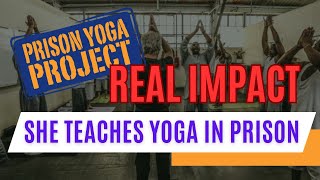
In this Yoga Liberty Podcast episode, host Angelica Govert interviews Nicole, the executive director and longtime facilitator of the Prison Yoga Project (PYP). Nicole shares her personal journey—from a middle‑class upbringing in Connecticut, through Teach For America, to discovering yoga as a survival tool and eventually leading PYP. She explains how the organization began when founder James started teaching yoga at San Quentin in 2002, its evolution into a 501(c)(3) focused on cultural shift, and its mission to replace punitive punishment with healing‑centered practices. The conversation delves into trauma‑informed yoga methods tailored for jails and prisons, including safety protocols, boundary setting, clothing considerations, and offering choice (e.g., modified poses, alternative to Shavasana). Nicole outlines PYP’s training ecosystem: a foundational, trauma‑focused training for both yoga‑trained and non‑trained participants, an online 200‑hour Yoga Alliance‑approved teacher training with scholarships, and specialized programs for correctional staff and incarcerated facilitators. Impact stories are highlighted, such as youth graphic‑novel outreach, incarcerated alumni who become facilitators, and the cyclical benefits of training people who then teach others. Practical topics like appropriate attire in secure settings and cultural sensitivity are discussed. The episode concludes with calls to action—how listeners can support PYP via the website, social media, donations, or becoming a facilitator—emphasizing the importance of bringing humanity and empathy into the correctional system.
Chapters
Welcome to the Yoga Liberty Podcast. My name is Angelica Govert. I am so excited today to bring to you a guest that I have been wanting to have on the podcast for a while. She is the executive director of Prison Yoga Project, which helps people who are in our jails and our prison systems around the country get the practice of yoga so that they can find a little bit of peace and a little bit of joy in their life. And I'm so excited about what it it is that she does. So Nicole, thank you so much for coming to the podcast today.
Thank you for having me. We're— I'm very excited to be here.
Um, so if you could just tell us a little bit about like, um, what drew you to work for the Prison Yoga Project. I mean, that's kind of like an unusual thing, you know. Most, most of the yoga people like, I'm gonna go work at a yoga studio. Um, so which is great too, you know, everybody needs a little bit of yoga. But what is it that, um, you know, really drew you to this work and made you passionate about helping people this way.
Sure. And it's funny because when I say what I do, um, it's a really good litmus test for people that I want to be friends with because it's either like, you do what? And it's a little judgy, or it's, that's so amazing, tell me more. Um, and those tend to be my people. But I am happy to share. Um, so I grew up in Connecticut. I, I grew up, um, very middle class, went to University of Connecticut, but I got to study abroad in Cape Town, South Africa, which really was like the aha moment for me that service needed to be a career and not just something that I did on the side. And so rather than pursuing what I was studying, which was speech therapy, I graduated college and did Teach for America. So I ended up in Little Rock, Arkansas, which is very different than— or I'm sorry, not even Little Rock, Arkansas. I am now there, but I was first in El Dorado, Arkansas, which is like the south, south, south of Arkansas, 15 minutes from the border of Louisiana. And I was a high school teacher for 3 years. And a lot of what I learned while I was teaching was just that punitive punishment does not work. So, so many of the students that I was working with come from poverty and they were hungry, they were tired, their, their resources or their, their needs were very obviously not being met. And so it seemed wrong to yell, to remove them from the classroom, to suspend them. Like that wasn't fixing the, the true like core, um, challenges that were happening. And so I had already practiced yoga. For a long time, but it was really during that time in Teach For America and as a teacher that I used it as a tool, like truly for survival, and was introduced to some really cool concepts like Conscious Discipline, where you could bring mindfulness into the classroom, where I could model for students how I'm managing my own emotions and help them manage their emotions. And when I started doing that, there were zero write-ups happening in my classroom, there was better relationships, and all in all, the job was more peaceful for me and the kids. Classroom for them. And so I was really motivated by this, but it was also hard to continue as a teacher believing these things and still feeling like I couldn't really show up authentically in such a punitive space. And so I went to graduate school, I got my master's in public service, and we got to really be expansive about who and what we did while we were in school. And that's when I found Prison Yoga Project. And so I was not a certified yoga instructor. When I found them, I was a master's student, but I was a seasoned yoga practitioner and very, very interested in what they did. And so it actually worked out that I worked with them as a student, they hired me, and then I got my yoga certification. Um, I was ready to go into juvenile facilities like that second and truly just needed the, the certification to better understand the history, the safety of how to provide yoga. And once I did, I was teaching in a juvenile facility. I was the national program manager for Prison Yoga Project and have since now worked with Prison Yoga Project for 6 years.
That's really incredible. You know, I, um, what a, what a journey, like, spirit just took you on and was like, this is what you're doing.
It's a little silly, but when I was trying to decide what my capstone project would be, I was just sitting in front of my laptop and I thought, huh, does, like, does prison yoga exist, right? Because it's so— it's actually pretty easy to compare the school system to of incarceration. Sad but true. And, um, was kind of like, does this thing exist? And aha, yes it does, and it's an organization and people are doing it. And we actually get a lot of people that come to our work that say, I had a dream about teaching yoga on the inside, and so I reached out to you all. Or it's— people do have really interesting experiences that draw them to this work.
Wow. Yeah, that's really That's really intense. I've been going back and forth with that whole ideology of like following your intuition and when you hear the voice calling to you or you see something in your— and I think sometimes it's really easy to be ruled all by intuition and just be like, oh, well, it's a sign, and it's really not. And so I'm like, lately I've been like in that space, like, is it a sign or is it really not a sign? You know? But, um, uh, one thing I wanted to say was, you know, when I first started teaching yoga, I lost my job and, um, that's what pushed me into being a full-time yoga teacher. And one of the jobs I got was at a prep school in South Florida teaching yoga as their PE requirement. And it was a full-time job and it was amazing. But having come from poverty myself and growing up, I went to 14 different schools when I was growing up. I went to a different school every year, sometimes twice in a year. And I was typically in lower income schools because we were pretty poor. My mom was abused by my dad. We were back and forth in shelters and, um, we were in the welfare lines. Like, I literally remember like waiting in school gymnasiums to get the peanut butter with the black and white label, which now like people pay a ton of money for that natural peanut butter. But back then we were like, ooh, it has oil in it. Ew. You know, we didn't know, I didn't know that like 25 years down the road, 30 years down the road, I'd be paying a whole bunch of money for that at Whole Foods. But, um, at the time I was like, that's gross. Um, and, um, so teaching, I went to schools where like there were kids were pregnant.
Yeah.
In school, you know?
And like the, that was very common among, yeah, the, the youth that I, I worked with as well.
Yeah, and when I went and taught at this prep school, the kids were so nice. They were so wonderful and chill and relaxed and happy and a joy to be around. And I remember one day I said, you know, when you're trying to manifest something that you really want, like let's say you just, you really want to drive a Mercedes, and you're like, okay, what can I do to manifest having a Mercedes? And this one girl said to me, Miss Covert, Miss Covert, but what do I do? What do I manifest if I already have a Mercedes? And it was so foreign to me, and I was just like— but it, it lit this light bulb in my head that like children that are out of their first chakra, like just survival, like Maslow's hierarchy of needs, bottom level survival, right? And they can self-actualize earlier on, and they can, they can work on the other things like how to interact with other people, you know, but when you're in a flight or fight thing all of the time, it's almost impossible to self-regulate. Like, how are you going to do that? How are you going to do that when you have to be just constantly on the lookout for what might happen next in your life? So what you— working in that school, that was very powerful that you did that.
I think that you described so well what we do in prisons and jails with yoga, and that's really the understanding of how our nervous system works and how we need to feel safe to be able to be the best versions of ourselves. And there are so many people that grew up in environments where they did not feel safe, and there are many people who don't feel safe while incarcerated. Um, I, I know many wonderful staff that work at my local jail here, so it's not everyone, but there's a lot of really challenging circumstances for people that are incarcerated. And I think, um, at first yoga almost seems a bit it seems like too much of a contrast, right? Well, how does this thing exist here? But really there's a way to deliver it and provide it that is accessible and appropriate for a correctional environment. And that's why I'm so excited that we get to do that. Yeah.
Yeah. Tell us a little bit about like what— how did Prison Yoga Project come about? Like what is— what made it happen? What created this? Because it's very unusual and, you know, like I would be interested to know.
Totally. It's funny when you say unusual. I'll still sometimes, I'll go to my car and I'll notice I have texts. You can't bring your phone into the jail or prison when you're going in as a volunteer or employee, or maybe employees can, but I can't. And I'll text my friends, "Sorry, just got out of jail." And they'll be like, "This is so weird still. Do you hear yourself?" But it's become so normalized to our community of folks. So anyways, James, our founder, he started teaching yoga at San Quentin State Prison in Northern California in 2002. So most people know San Quentin State Prison, even if they're not super familiar with the prison landscape in general. And he had been working with another organization prior on different, like, emotional aspects of growth and regulation. But he noticed that there was a body component, like a body-based component missing from a lot of the work that they were doing. To find years later there is so much understanding more of somatics and trauma and the way we have to work with the body to be able to overcome trauma. But at the time, he just knew that there was something that he wanted to provide to this group of folks. So there's this like tall 50-something-year-old white man like walking into San Quentin. And over time, he built this like really beautiful program that people were very dedicated to. And I think the reason he was able to do it so well was he didn't go in and teach in a traditional way that you might see in, in a studio. He was really able to relate to the folks that were in his class. He was a friend. He listened to them. He built relationship with them. So at the heart of what we do is build relationship. We see so many of the folks we serve as, as our friends, as people who really want to work really hard to change their lives or who have experienced really hard things. And so by 2010, he wrote a book book for folks that were incarcerated to be able to request it free of charge so that if you were in prison or jail and you wanted to practice yoga, this is a resource for folks who don't need a yoga mat, who we know are often in a really confined space, and we adjust the practice for that context. As we kept going, James started traveling to train other folks in, in his methodology of how he was providing yoga on the inside. And then during that time, The Body Keeps the Score was also written and released in, in 2014. And I think that started to normalize and standardize a lot of what James was theorizing and seeing happening, but it added a lot of scientific evidence. And I don't want to take away from the history of yoga and communities that have practiced yoga for thousands of years, because many of us know already that it works. But it was from like a Western perspective, also being, um, evidence-based, right? That, oh, this is something that could, could actually work for people with PTSD and other experiences of trauma. So that all just continued to form and form. And we had been fiscally sponsored by the Give Back Yoga Foundation for several years, and in 2020 we were registered as our own 501(c)(3). Um, our mission is to create a more healing-centered approach to the challenges we face in society today, right? Crime, addiction or substance use, mental illness. Uh, we believe that punitive punishment is not going to lead to the world that, that we want to see. And so we want to change the culture. So our mission used to be we provide yoga, and it's like, yes, that's true, but it's much more about a cultural shift for us. And not just for incarcerated folks, but we've increased our offerings for staff, mental health staff, and really don't like other anyone in the criminal justice space, cuz we really believe it's gonna take a team and collaborative effort to see a change in the system.
Yeah, I, I wanna, I, so much of what you said, I really resonated with some of the things that you've said in like experiences that I've had. And I just feel like there, like there's so much I wanna talk about right now. I'm like just absolutely excited that you're here. I think one of the most important things I wanna talk about though relates to teaching yoga in prisons and being in prisons. And I had a woman take my teacher training like many years ago, and I always get emotional talking about her because we're really good friends now. Um, like very, very good friends. And at that time I didn't know what was going on in her life. This was like maybe the third teacher training I've ever done. And I had just opened my studio. It was in a garage, you know, like I was just getting started. And this girl came in and she was like, I, um, I just I just want to sign up for your training because I want to get out of what I'm doing right now. I don't feel really happy with what I'm doing, and I just want to do something different. I want a new career. And I was like, okay, great. And I just assumed that she was like an exotic dancer because that's like what she was doing, and I thought that was what she was trying to get out of. And we're in Vegas, that's very common. I mean, I've had people in porn and in, in strippers and like, there's just like all kinds of sex work. That's a very common thing in Vegas. So, um, that's what I just assumed she was trying to get out of. So she took my training and she had all these openings and, you know, it was a great training. That was one of the best trainings I've ever had. There were 13 people in it and I still remember it to this day. It was like one of the most memorable trainings. So after the training, I get a phone call and they're like, boo boo boo, will you accept a call from so-and-so at the prison in Las Vegas? Vegas. And I was like, oh yeah, okay. And so, um, I get on the phone and I'm like, what's going on? What's going on, girl? And I'm like, do you get a DUI? And she was like, no, it's worse than that. And come to find out, she was dealing drugs. And not just like dealing drugs, like she was like Lil Jon's drug dealer, you know, like the guy that does Turn Down for What, right? So, and she had all these drugs ready to give them out at EDC. Um, and which is Electric Daisy Carnival. It's like a big festival here in Las Vegas. Um, and they caught her with that and with weapons. So she was looking at multiple life sentences. So she pays this attorney every last penny that she has, and he was an attorney for the mob to get her out. Uh, but it was like a whole year and a half. And every week I would go and visit her there and she could only have 2 books at a time unless they were religious books. So I would send her all these advanced yoga books, like this, like, thick, huge book about the sutras. She read the whole thing cover to cover, you know, because she could have them because the, the guards didn't understand what yoga was, so they thought it was a religion, and they were like, cool, you can have as many of these as you want. But she said that The reason why I'm sharing this story is because she said that she was able to teach yoga while she was in prison, and she's not taught yoga since, and she didn't teach yoga before her. And it was almost like Spirit, God, Universe, whatever you believe is divine higher power, brought her to teach her training so that she could survive prison because she wasn't messed with. Nobody would like bother her because she was the yoga teacher, so everybody loved her. She ate a vegan meal while she was there, you know, and they And everybody treated her like extra special and she taught everyone yoga and it was like one of the most beautiful things that has ever been in my circle of people that have come to my training. So I just wanted to share that cuz yeah, right.
No, special to hear. And I, I think there's like an, um, like an argument that by teaching yoga inside we're, we're just making it easier for people to survive really challenging conditions. And I, I think it's so much more than that, right? It's this, it's like quality of life. It's the ability to be empowered to heal and to help others heal. Yoga creates community in a place that can feel very frightening, um, to others. And so we also, we, we've done a couple yoga teacher trainings inside for incarcerated women. We've led two in New Hampshire. Jen Lindgren, my colleague, has led both of those. And then we have a couple programs in California right now where, um, They were trained by another one of my colleagues, a facilitator, Anna Proctor, who trained, did a YTT on the inside, and then they are still incarcerated and leading others in yoga on the inside. And they're considered Prison Yoga Project facilitators, like they are a Prison Yoga Project program that they are leading. And that's really exciting for us, not to mention the folks that are released from our programs and come back and take teacher training. So we have another, um, individual, Mo. He's been with James for decades at San Quentin. He served 26 years and he was released recently. He's founded his own nonprofit in Southwest LA. We actually have a story about him on our Instagram if anybody's interested. He's such an incredible person. I've had the pleasure of sharing space and time with him. And, um, he's in our yoga teacher training right now because he wants to be able to bring yoga back to his community. Seeing the way it impacted him while incarcerated. So it's so cyclical and beautiful. And, you know, when you're writing a grant application, it's often like, what is the direct impact, but also what is the indirect impact of what you're doing? And so you trained this one person in how to be a yoga teacher, but that she then went on and built relationships and was able to impact so many others. And I would guess not just that, but the way probably she was able to interact with correctional staff or others who it might otherwise been a pretty challenging relationship. Yoga gives us a lot of tools for that as well. So it likely made so many lives better, um, from her.
Yeah. That's really, that's really, I, I think what you're talking about is just so important because we don't spend enough time focused. I've always thought, even when I was really young, I would think like, it doesn't make sense that we send people to jail and we don't use that time to rehabilitate them, you know, to help them like figure out where they went wrong and how they can go better. Because I don't know, you know, for anybody else, but I know having grown up in the kind of household that I grew up in, when I was 17, 18 years old, I could— I had no coping skills. I had no skills. Like, I spent 7 years in Alcoholics Anonymous, and I really feel like it gave me the tools to be a good human being. You know, and I think like, I just, I wanted to do those things, but I just didn't know how. And so I naturally just assumed, like, I'm sure that there are people that are not good people. That's part of life, right? But I think most people are good people. They just don't have the tools to interact with the world in the way that is optimal for others, but for themselves.
And many of the folks that don't have those tools, like they take full accountability for their actions. So nobody is asking for a pass. Nobody is asking for forgiveness without a lot of empathy towards the people that they may have harmed, which I think is also what people might assume. It's like, I heard once, honestly, from a dear friend said, you want my tax dollars to go to providing yoga to incarcerated people? And I was like, yes, because I believe it's going to make all of our communities safer and more fulfilled. And I really appreciate us really leaning into the aspects of yoga that are often less common in mainstream, right? I was actually listening to your episode about asana and like where asana comes from. I like the juicy stuff, you know?
Yeah. Yeah. The, one of the peers of the, the man that wrote that book, one of his peers is gonna be on the podcast.
Oh, that's awesome.
Yeah. Yeah.
That's very cool. It just, um, I think obviously there's like a really complex history to yoga and we always wanna honor what is sacred. To cultures and community. And I think what it comes down to, what we provide is really what the roots of yoga started as, is we want to create space for people to practice mindful awareness, deep relaxation. We know the postures are how we get there, and we know that postures, movement gives people the ability to discharge built-up tension. We— you spoke about being in fight or flight before a lot of your life, and I wanted to pause too, and just thank you for your vulnerability, because I, I think it's so important that when people share their stories— and just really admire you, um, and what you've come from and what you've built. And so that experience of fight or flight is really traumatic and hard to regulate when you are in a state of fear. And so those postures like chair pose, like plank pose, moving with your breath, actually helps you discharge a lot of that energy and move into a more parasympathetic state. And that's what we're aiming for with our yoga practice, to then allow folks to be more mindful, to relax. It can be scary if you are struggling with your mental health. It can be scary to simply just focus on your breath, right? To sit still and breathe. That can lead to panic attacks. That's not always like the right approach. And so that's why movement is so critical in what we do. I find it a lot more accessible to inhale when I'm lifting my arms Right. And, and exhaling down rather than asking somebody to drop into a meditative state when you're in a room that's clanking and loud and you, you really just can't control your environment.
Yeah. Um, also like one of the, so, um, I, I did not tell you this before, but I, when I was in Miami, I got my certification in Miami, my 200-hour, and I worked with a woman who created something called the Yoga Gangsters. And we would teach yoga to juvenile, um, children in the juvenile, uh, system and, um, foster kids, kids that were in, um, schools that were at risk, just basically at-risk youth all over. And she was very passionate about it. I'm not really sure what happened because I moved to Las Vegas and they kind of fizzled away. They're doing something different now. I'm not, I'm not really a part of that, but Um, because I wanted to do something like that in Las Vegas, a friend of mine and I, Joyce Bozen, founded something called Trauma Recovery Yoga. So, um, in Vegas at my studio, we would do certifications for first responders and for, um, social workers and yoga teachers to get certified to learn how to teach in a trauma-informed way. And, um, Joyce ended up like really taking over on that. And I owned like multiple studios. I was just too, it was too much for me to do everything. So she would have her trainings there. And, um, and I supported the organization. I did a lot of teacher trainings with people who went through that, that weekend intensive with them. But, um, one of the things that I learned going through those trainings was about shavasana. And I, it always really stuck with me. Because there are a couple of different things that were really important to me, but Shavasana was really, really important because, you know, we're told in yoga teacher training, like, Shavasana, you're lying on your back, your eyes are closed, it's your final resting pose, it's the most important, right? But if you think about, if you're in a space where you're not safe, like you're legitimately not safe, and horrible things have maybe happened to you in that space, closing your eyes is terrifying. Lying on your back is like passive and submissive and can be frightening, you know? So I think those little techniques of just being able to sit up with your eyes open, maybe focus on a point in front of you, you know, is like, like, that's so much more accessible. I think it's really hard for people to understand just how stressful traumatic environments can be for people and to support a practice for them.
Definitely. And you're, you're speaking to one of the things we teach, right, is, um, not everybody is gonna feel okay lying down with their eyes shut in Shavasana. Personally, I'm in a yoga— I, I love the yoga studio I go to here in Little Rock. It is the most amazing community. I don't feel good if I'm lying down with my eyes shut and I hear the teacher walking around, like, messing with the lights, turning things off. Like, that's not what I need in that moment. And so I think a lot of and why people are drawn to Prison Yoga Project is you never actually have to go inside and teach in prison to be able to understand the benefits of being more trauma-informed in your offering as a yoga teacher. And so what we do teach folks really is about agency and choice. So there may be people who do feel really good lying down and closing their eyes. There may be people who don't. So our entire methodology is offering choice throughout the practice, right? And modeling that things can look very different. So I have folks that are sometimes just too tired to do the practice standing, and so when I offer chair pose, I'll offer a modified boat pose that people can do so they still get a challenging pose. We're all being challenged together, but we're doing it in many different ways. We have folks in wheelchairs, we have folks with metal in their body from different injuries or gunshot wounds, we have elderly, we have the young. And so we really have to find a way to reach everybody in the room and to help them understand that you do not have to put your leg behind your head. Yoga is not just for people that look like me. Uh, for the listener, you know, I am a white woman. I'm, I'm just like a mainstream— I look like a mainstream yoga person, which— and there's nothing wrong with that. Um, but we, we want people to feel empowered for that. Yoga can be theirs, and yoga can be something, um, that is for them just as much for, for anybody else. So we teach a lot of choice and agency. We teach about poses that really may be overly triggering and should be avoided in that space. I mean, if you think about the population we serve, most women that are incarcerated have experienced abuse. And so there's poses like happy baby. That's not something I'm going to teach in that environment. Also because there's correctional officers in the room. And so we are constantly providing choice. So hopefully people can feel safe. Even I can't guarantee to them safety. You know, we'll be in shavasana and there may be an announcement over the, the whole jail. It's like, I can't control that, can't control the toilet flushing. You know, there's all these things, and it actually creates more of an opportunity to practice self-regulation, coming back to the breath in an environment that can sometimes be so full of distractions. So thanks for highlighting that, because I think that's a big difference between maybe a standard class and a, um, class taught by Prison Yoga Project or anything that is trauma-informed. And I think it's also worth noting that there's no requirement yoga teachers have an understanding of trauma, right? That's not yet built in into our requirements to come to become registered yoga teachers. And so that's something that we are working on, um, helping to educate about why it's so important that we understand the nervous system and the way yoga impacts the vagus nerve, all things that are so critical in, um, in healing from trauma. So yeah, it's important.
So in your trainings— I'm sorry, in your trainings, um, you provide the— so if someone comes in and they haven't experienced trauma, because there's a lot of really like people who want to help, but maybe they had it, you know, their life wasn't, wasn't, didn't have those experiences and they want to help. One of the things I always hear from people is I can't take yoga teacher training because I don't, I'm not good at yoga. And I'm like, that's like saying that you're not good at being an electrical engineer, so you're not going to go to engineering school. Like, that does— like, that doesn't make sense. So I'm just assuming that your training is very similar. Like, so if you don't know anything, um, this is where you learn it. Is that the case?
Yeah. And we do several different types of training. So our, our standard training is our foundational training. That is for yoga teachers and non-yoga teachers alike to understand the system of incarceration, why, um, a deeper understanding of the science and trauma and why Yoga specifically can help in this environment. And so accessible for anybody. It does get into, okay, now that we know all of this that maybe you have not been exposed to before, how do we create a safe container for people to, um, to feel, to feel safe, to heal, and to have a really transformational impact on their lives? And so that's the, the standard training. And then we also offer our own yoga teacher training. This is online and, um, open to the public. A large majority, I think 75%, that take our training are system impacted in some way. So either they're formerly incarcerated or they have a family member that's incarcerated. So it creates a really beautiful cohort of folks learning from each other. And the reason we do it online is we recognize people that are challenged by, um, financial circumstances. Maybe there's just so many ways in which a traditional yoga teacher training would not be accessible to them in that time in their life. Um, it's very self-paced with, with accountability of showing up for in-person and live sessions and things like that. So we offer that. I mentioned we offer the training inside for incarcerated folks, and we've recently expanded to training mental health staff in correctional spaces and how to deliver micropractices. And so we're not training anybody who's, works in the prison system to become a fully certified 200-hour yoga instructor, but we are educating them on trauma, the nervous system, and how yoga and mindfulness can be really helpful tools. And so we are a global organization, and we've done this in the UK as well, where we worked with recreational staff. Yeah. Um, on how to deliver some of these practices. And so I, I think that goes back to changing the culture of we really want to work with people from many different angles. And, you know, the first time I walked into my jail in Little Rock to, to teach yoga, I know there were assumptions made, right, about me and what I were to offer. And, um, after they witnessed a few classes they're my besties. Like, everybody's like really supportive, um, of yoga. And when I say make assumptions, not really even the folks that are incarcerated, but the staff, um, of just like, what is this thing? And, and now, you know, I've been there since 2021, now at an adult facility, um, and it's just really beautiful, the, the relationships that form when people understand, oh, yoga is not just this one thing that I thought that it was.
Oh yeah, that's really great. That's really, really beautiful. Can I ask you a question that I'm sure a lot of people are maybe wondering, which is, have you ever felt afraid in— when you were in a prison, have you ever felt fearful for yourself?
Thank you for asking the question, and I think it is on everybody's mind, so it should be talked about. And the answer honestly is no. We— and for a little more context, we work with people of different levels of security. So me personally, I'm going into a very low-security unit. Almost everybody in my program is there for drug charges, and they're almost like 99% in recovery from substance use. I'm not really working with people that have been incarcerated for violent offenses. However, many of our facilitators do. Um, they— we do have programs in max security. We have worked on death row or in administrative segregation before. And pretty much the standard is we feel very protected by the people we serve. So I genuinely feel that if someone were to ever try to even harm me, that everybody else in that room would, would be protective of me. I work with men. I actually have a class. Our standard class size is anywhere between 10 to 25 people, but I'm in a special situation where we have a very big barracks, so I teach 80 men. Every Tuesday. I'm a 5'4" woman, um, and, and not scary in any way. And so, um, I do, I do feel really safe. Now there's— we do teach our instructors, or what we call them facilitators, because it's, you know, more about we're facilitating an experience. We're not just this high and mighty powerful person, right, with everything to offer. It's a two-way street. And, um, we, we train them about boundary setting, right? Like, if someone does approach you wanting to flirt or ask for your number or just, you know, get something from you that you're not allowed to do, it is important that you're able to, to set boundaries. And as long as you have that strong foundation, that's okay. But again, I've never felt unsafe. I think the only time that I've felt uncomfortable is actually more in the presence of the system itself. Like, it's not fun to have to go in, go through a metal detector. It's very loud. It's scary when a code is called and you don't know what's going on. Um, I'm more personally, um, hesitant of staff that maybe aren't supportive of yoga or might almost like— there was a staff person one time that I could tell was almost like looking at my body and making kind of like gestures with his eyes to the folks in the room, and they were pissed at him. They were like, this is our yoga teacher, like, this is our friend Nicole, like, you know, we don't do this. And so there— yeah, you always have to set boundaries. But long story short, no, feel very safe. Um, yeah, feel very safe.
Yeah, that's really, uh, that mirrors the experience that my friend, um, I don't share her name because she didn't give me permission. I don't think she would care knowing her, but, but I don't, I don't, I'm really protective of her.
But consent-based trauma-informed, that, that is our style. So thank you.
Yeah, yeah. Um, but that's the same that she said to me, was that, you know, she felt like she was protected by the other people because of what she was doing.
I'm, um, I just wanted to add too, I'm in a really unique situation where I'm seeing folks after they're released, like, because I'm friends with other nonprofits. Yeah, that support them. And so I was at a fundraiser for my friend's nonprofit, Wall Street Foundation. They work with people in substance recovery. And, um, like, I see them. I was able to take one who did our yoga teacher training out for lunch lunch. It's, it's really special. So there's that added level that is not always the case. And at some point I'd love to talk a little more too about our youth-specific initiatives because we have something exciting coming up that I think is, um, really cool that I want people to know about.
Oh, cool. Okay. I definitely want to hear about that, but I want to talk, I want to touch a little bit base back to the whole like objectification of, you know, women in their yoga and their yoga outfits. And it may sound silly, I think it's actually important. I don't know if you agree with me or not, but what do you wear? What do you wear when you go there? Because we are all wearing our little, you know, our Lulus and whatever. I mean, you know, like, I'm actually wearing a pair of pants I got for free, um, but, um, you know, but like, I'm just saying, I'm just using a, you know, like, something that everyone can identify, right? So we're wearing our tight little yoga pants, but that's probably not what you're wearing to go and do this.
Yeah, great assumption. Definitely something we talk about, and it is hard, like, as as a feminist, as a woman who feels like we should never be objectified for what we're wearing and we should really have freedom to express who we are, um, there's rules in facilities that we have to follow, right? And so, um, I wouldn't be allowed back through security if my midriff was showing or if my clothes are too tight. I mean, it says right on visitation like no skin-tight clothing. So from the perspective of the facilities, there are certain rules that we have to follow. There's also rules about, you know, tank tops. There might be certain colors you're not allowed to wear. So if the uniform for folks that are incarcerated is blue, you can't wear blue so that they can distinguish you from, from those that are there. And so there's all that to consider. But also from the perspective of of like really being in tune with those we're serving. If it's a group of men, for example, they're not used to seeing a woman in skin-tight clothing, and they may have been isolated from just interacting with a woman in that way for a very long time. So we're also not trying to create a situation that is like triggering for them, if that makes sense. Right.
Right.
We never excuse inappropriate behavior of someone, but we also recognize that it would be striking in that environment to show up in that way. And I just personally don't want to bring unwanted attention onto myself. But it's important that we, I think, also disrupt what, again, what yoga teachers look like, or, or this idea that I'm going to come in in tight pants and bend over. And it, you know, I hate that aspect of it. And so what I'm typically wearing is like joggers or loose pants. We have Prison Yoga Project t-shirt that I like to wear. It was drawn by one of our former participants. It's just beautiful. And the folks in our jail love it so much that I made a poster for them. So they—
how do I get one so I can wear it on my videos?
They're on our website. They're really cool. And that is truly like not even me trying to market them. It's like, it's the amount of joy people feel when they're like, oh my God, tell me about your t-shirt. So, so I wear that t-shirt. And then often I wear something underneath. So in case that t-shirt came up, there is no skin showing. And that's like our typical uniform that we suggest to people. Again, I want to emphasize no person should ever feel targeted for like what they're wearing, but we have to understand the environment that we're in. And I just personally feel better in wearing more baggy clothing. And that's what we advise for folks that go into—
Yeah, I think there's, you know, I was the president of the feminist coalition in college, so I'm not like, that's not, I understand those concepts, but I think that, you know, there's, we can't just expect everybody to be at a space where they understand the things that we understand, or they, they believe in the concepts that we believe in. And there's a, a level of, you know, when I traveled in Egypt extensively, I was there for like almost a month, I wear a head covering a lot.
Yeah.
And even just now, I was in Portugal for 3 weeks and I, when I would go into a church, I covered my shoulders because that respects the situation that I'm in. So I think that, you know, there's people in prison that because of what they've been through have poor impulse control. It, it just is what it is, you know, like it defeats the primary purpose. Like I'm always telling people, Like in a very silly analogy, like I'm always like, if you're on your social media and it's your work social media, it's your yoga social media, you're trying to build an online business, don't be looking at golden retrievers. You know, don't be looking, don't be posting about what you and your partner are doing this weekend or your children or what— no one cares about that. Only post about yoga. And it's the same kind of thing. Like, what is your primary purpose when you're walking into this situation? Is it to have your right? Rights fulfilled to wear whatever you want, or is it to be there to actually spread that yoga can help these people to find a modicum of healing, you know, and, and not to distract.
And I just— and from a personal perspective, that's just not what I want to be known for. That's not the thing that I want to stick in their minds after I've, I've left. And I do do some— I do, I'll, I'll wear fun earrings because it's the one way I feel like I and show my personality in a space that is, is like, right, so baggy and so everybody conforms, right? And that's fun. It creates conversation of, oh, you wore the chakra earrings today, or you wore these earrings today. I always theme with the holidays and, or, you know, I'll wear my Birkenstock clogs in and that creates a really fun bonding conversation. So there's room still, right, to, especially with the women that I work with too. You can still have those like special moments where I have— I didn't know, I never expect to be hyped up the way I can be hyped up. But overall, yeah, that's definitely not the focus.
Yeah. Which for those of you who are on Apple Podcasts, you can't see what Nicole looks like, but if you're on YouTube or on Spotify, you can see these incredible earrings that she's wearing. And I have been vibing on them the whole time because I am also a lover of earrings. I just— when I did like a test before you came on, I checked my hair and I was like, okay, you got to brush your hair again. And I was like, you got to put your earrings on, and I forgot to put my earrings on and they're like sitting right over there. And so I do feel a little bit naked because I too love really like over-the-top earrings. Yeah.
And I also like, um, I'm fortunate in the sense that again I'm working in a very low security situation where wear. I've never been told that I could not wear these earrings, but in different environments we're advising no jewelry, maybe a wedding ring if that's allowed. I very rarely wear makeup because again, it's just not the thing, and I go really early and I don't feel like putting mascara on my eyes at 7 AM, you know, things like that. So for the most— I, I'm, I'm sort of sometimes an exception because of being in a lower security place, but there's nothing flashy we want to wear, you know. Overall, these I'm wearing these because they're not expensive. Not that I own expensive jewelry, but you know what I mean. And, um, yeah, I think all that. Most of the time if they're asking me about like something on my body, it's like, where'd you get that? And I'm like, Target. And, or I got this deal somewhere. And so we, we try to relate in that way.
Well, those earrings look like somebody put love into them because they did.
They're Love Me a Local. Love me supporting local female-owned businesses. Yeah.
Yeah. Yeah. So let's talk about what you're doing with kids and share with everybody what's going on, what's next.
Sure. So I mentioned I was a high school teacher. I have such a love for working with youth and specifically incarcerated youth. I think they're some of the most special teenagers out there who deserve really kind, caring, loving people around them. To help them. And so what I understand, what I've come to learn about the teenage brain in adolescent development, right, is that we, we know they're going to be impulsive whether you've experienced trauma or not. Like, teenagers are impulsive, right? And then it becomes that much more challenging and potentially life-threatening the more experiences of trauma that they are having. And so we, we do provide yoga in a lot of youth detention facilities We'd like to continue to do that and expand out potentially to alternative schools, recovery high schools, spaces where we're reaching kids that have a lot of adverse childhood experiences. And one of the ways we're going to do that is with a graphic novel. And so we are now 3/4 of the way through this graphic novel. And so we have characters that go through a story of being arrested and having to their assigned time at a community center where they have to learn yoga. And so our characters go through the process of that. And what I really love about it is we're not trying to be— we're being realistic. Like, we know, we understand that maybe this is not the coolest thing, but we also understand that you are going through some really serious experiences if you are ending up in a juvenile detention center. Like, there's no child in juvenile detention that has a really positive life. At home. And so our characters really go through really challenging experiences and they find, oh, like by experiencing the breath or, oh, like thinking about the way this thing I'm about to do is going to impact this person, it actually allows them to make better decisions and end up okay. So nothing's perfect, but things are better because of their experience with yoga. And it's 3 chapters. And after each chapter, we go into the education a little bit. So This is what dopamine is. This is why you are taking risks because teenagers don't have a lot of it. And then they do something new and cool and then they get a ton of dopamine. And so we're teaching them how their bodies work and how yoga can help them in the state of life that they're in. So that will be ready soon and that will be added to our yoga programming. And we're just so excited about it cuz I just really think, um, it's, it's gonna reach kids on a newer level of what yoga is. And we know that graphic novels and Oh my God, the other word is escaping me, but we know graphic novels are the most widely read book in incarceration. And so we think it's meeting literacy levels and we're just really excited.
Yeah, that is really exciting because it's interesting when I was growing up, you know, and I refused to watch cartoons because I was an adult and I was taking care of the family and I didn't need that, you know, but I read a lot. I read a lot, like I read an insane amount because I wanted to get out of my situation. And I don't know what other, you know, what other kids, their experiences like, but I know for me, like I was like, I'm not, not whatever, like, as God is my witness, I am never gonna be like living like my parents. And so giving these kids like this information in a way that that they are receptive to and allowing them to see, like, if I would've known, like, this actual chemical reaction is causing you to do this right now. And I think it's so empowering, and I'm so glad that you're doing that. That's really, really gonna make an impact.
Thank you. And it comes from my own experience in, in a juvenile detention center where I was talking to them about dopamine and saying, you know, you are not wrong or weird. For wanting to drive your car really fast or do this scary thing. Like, like, from an evolutionary perspective, teenagers seek novel experiences to form their own identity and be able to separate from their family and be their own person. It's just when we're choosing the things that are really risky to our lives, right, or have an impact on other people. And so you do deserve to experience novelty, and you do deserve to know that some of that gets taken away from you when you experience trauma. Your, your brain, it's, it's harder to, to feel feel good. And so how can we feel good in a way that's really safe and, um, just lets you live a really fulfilled and, and happy life? And it's, it's, it was really amazing to see on their faces the aha moment of like, oh yeah, and just to be seen and known. You're not weird, you're not wrong. Like, bad things may have happened to you, you may have done bad things, but there's a path forward. We, we can work with this.
Yeah, we That is so, that is so key. I think because you do get in this loop of I'm bad, I'm bad, everything I do is bad. And you have like these almost like flashbacks to things that you've done in the past as you get older and you're like, oh, I can't believe I did that. And then you like retraumatize yourself, you know? So, um, I think that that's really helpful. And I, I just wanna say that everybody listening like, I know from experience that just one, if, if you, if you feel called to do this, you should do it because just one interaction from somebody can change the whole future for, for an individual. Like when I was in high school, I moved out when I was 17 years old, when I was in junior, a junior in high school, I moved out on my own and I had a teacher. I missed 11 days of school and you could, it was 10 was the cap. And I had a teacher. That was going to fail me in that class. And I said, listen, I'm getting an A in this class. I just missed the time because I'm literally working two jobs. I'm living on my own. And she said, I don't believe you. That's not really happening. And I'm failing you. And I would have graduated my junior year if it hadn't been for that one class. So my whole senior year, I'm taking it just for that one stupid English class to graduate. And Um, there was a school counselor who my, my dad had like refused. Oh shoot, my internet's down.
Not sure if you could hear me, but I did lose your audio.
Oh, it looks like the internet kind of went out for a second.
Yeah, I lost audio.
Um, oh, that's okay, that's okay. I don't know, it's— it picked us back up, so I'll say— I'll like kind of like tell that story a little bit. So, um, what happened is, um, when I was, I, I'm in, you know, in my junior year and my English teacher, she says to me like, oh, you know, I don't believe you, right? That you missed the, the, the, you missed these days cuz you're working two jobs. And I think that's a lie. I'm gonna fail you. And so I have to retake my whole, my senior year I have to take just because of this one credit. I could have graduated at the end of my junior year. And so I, I am living on my own and I walk up to this inner city high school in Cincinnati, Ohio called Hughes Center. And if you know, it's like really known for being a really tough school. And, um, you know, we have like metal detectors and stuff, and this is in the '90s. We got metal detectors, you know?
Yeah.
Yeah. And so, um, uh, I had a school counselor there. Who said to me that she would help me because my dad was refusing to sign my financial aid paperwork so that I could go to college. And even though he wouldn't be obliged on any of the stuff— I like, we got a Pell Grant that paid for my tuition, you know, it just like I needed him to sign the paperwork, but he wouldn't. So the school counselor helped me become emancipated. And that's how I got to go to college, which then allowed me to go on and like build the confidence I needed to go on and do a number of other things in my life that helped other people. And I think if you're out there listening, like you could be that person, like you could be, you can like not be the lady that was my English teacher, you know, but you could be the lady that was my, the per, you know, you could be the person that, that was my, like my guidance counselor that just just like without her and a number of other amazing people along the way who just cared just enough, like the woman that was my teacher that called social services and let them know that my parents were abusing me, you know, like, like those people made such an impact on who I am today. And so you can be that for somebody, you know, so if you're in a position where you can help someone and you feel called to do this work, please do reach out to the Prison Yoga Project and get trained to, to go out and help people. How do, how do people do that? Like if, if someone wants to come into your ecosystem, what's the best way to do that? What's the best way for them to get trained and, and start helping someone?
Prisonyoga.org is our website. On there you can find applications to become a Prison Yoga Project facilitator. There's also direct links to our training, our foundational training and our yoga teacher training. If you're more of a social media person, Check out our Instagram where you can find links again to all of these. I think we may be developing a TikTok in the near future. I'm not sure. But those would be the best ways. And I just want to say, again, I really appreciate your vulnerability. You've been through so much. And I think we all bring different life experiences to this work. And we see those as strengths, as things that people have overcome. So we don't shy away from folks who have really had tough experiences that they've overcome, because I think y'all are incredible messengers for the work. And we just ask that each person show up authentically. And so I don't have a history of incarceration. I don't have a very high ACE score. I have a high level of empathy, almost to a problem, since I was little. Child, right, of just like not understanding the, the suffering of the world. But I do, I do know grief. I know grief very well. Like, I, I lost my father at a very young age, and, um, I've had other experiences. And so just because maybe you have not had this one experience doesn't mean that you cannot connect with others on a really deep empathetic level. And I think if I went in and I tried to act like someone different that I'm not, it wouldn't have worked. But because I am authentic and I, I ask questions and I don't pretend to know than I do, it creates so much more, um, like meaningful relationships. I loved being in the classroom and students saying phrases and I'd be like, I have no idea, um, what that means. Or I naturally have like really curly hair and I had a student one day at the end of their finals straighten my hair after finals, right? In teacher.
Oh, nice.
Very silly, right? So I'm just, I guess it's just, I, if anything, um, Prison Yoga Project has just taught me how much just showing up as, as your full self and allowing others to be their full self can create such a beautiful foundation for healing. And that's really what, uh, we are seeking. And, and really what I believe yoga is about when you get to the roots of it is, is recognizing our wholeness and seeing that in other people and really wanting to help restore people back to who they are at their very core.
Yeah, for sure. I think that there's on both sides, like if you've never really experienced the kind of trauma that the people you're working with have, or you have experienced high levels of trauma in your life, either way, there's going to be challenges and you have different, uh, different things that you can help with. Like I know when I first got out of school, I have a degree in women's studies and I have a degree in English literature. And when I got out of school, I worked at a battered women's shelter. And, um, I was shocked at how triggering it was for me and how hard it was for me to, to do that. Um, and I, I really didn't, I don't, I don't think that I did well in that environment and I ended up going into retail. Um, and no, no shame. Like, I don't, I don't need to give back just because, you know, like I, I can give back in different ways that, that are more healthy for me, but, um, I think recognize that, that there may be situations that if you have experienced trauma and you come into this and you start to help people, you may be, you may have to really confront your trauma on a whole new level. And if you haven't had that, you'll have different things. It's just like a friend of mine is 5'10", blonde, 125 pounds and teaches yoga. And she's super like hyper-flexible. Gorgeous. And she would always say to me, like, people think that they can hate on me because I'm the typical yoga teacher. And so it's like, no matter where you're at on the spectrum, there's— everyone is dealing with some kind of something inside of them, right? Like, that's why there's that saying, like, be kind to everyone, you have no idea what they're, they're suffering with, right? So there's a space for you to help in Pridgen— I'm sorry, Prison Yoga Project. Um, there's a space for you to help no matter what, no matter where you're coming from, no matter your background. If you've been called, like, that's, that's a, in my mind, that's a divine calling. Yeah. So it doesn't matter, you know, like what it is that, that your background is. I think if, if you feel called to this, explore the option. You can always say no, you can always change your mind. Fine. Definitely.
And because we, you know, it's— we are a trauma-informed organization, not just a program provider that's trauma-informed, right? So, um, we would— we always ask people to, to make the choices that are, are best for them. And that's also what's so critical about the foundational training, is it does really invite a deep dive into our own identities and how we show up in these rooms as the person we are with the life experiences we have. So we do go a lot into the different challenges in incarceration of racism, ableism, poverty, right? There's so many things that we ask people to investigate and consider. What power dynamics are you holding on to? What, you know, all— there's so much. And that's why I really believe it's a training for everyone, even if they don't then teach inside. And, you know, if you are someone of means, it's still really challenging of financial means. It's still really challenging to secure contracts in a lot of these facilities.
They—
facilities are believing in the power of yoga, but like the funding or the, the people that they need to support them in making it happen may not be there. And so we have like some wonderful donors that sponsor a year of a program so that we can then pay our yoga teachers to do this work. So many of our yoga teachers come from similar backgrounds as those that are incarcerated. And so that's other ways. And if, you know, you aren't of financial means, that's also okay. Like, you can like our posts on Instagram. Like, really, again, we're here for a cultural shift. And so we invite people to be involved in a movement in whatever capacity they, they have. I think now more than ever in the times that we, that we live in.
Yeah, I think that's really important that people don't understand, like, how a little thing can do so much. Like, just following Prison Yoga Project is on Instagram is actually going to push it out further in the algorithm. The algorithm. When you comment, use at least 5 words because it says to the algorithm that you're not a bot. So comment when you see it, even if you don't have money to donate. But if you do have money to donate, this is an incredible thing. You don't, you don't have to necessarily get certified in, in teaching this way, but it's great if you do. And I'm assuming you can get Yoga Alliance continuing education.
Yes, you can. And our 200-hour both inside the prisons and outside is sort of— is a Yoga Alliance approved training school. So we are— you can get certified in that way. And the other thing too, just I wanted to say about that is we also work to make our training really accessible to folks. And so we give numerous scholarships for our 200-hour training, especially for formerly incarcerated folks. We have different tiers that we can offer people. All of our foundational training and really any training we offer has payment plans. And so like if you could only afford $20 a month, we, you know, we take that. We really understand the barriers that exist. And at the same time, it's that training that helps us sustain our team and keep doing the work. And so it's however you, whatever you have to give, that is, we'll meet you where you are and why we also work on the fundraising side. Of filling that gap of these are the people who deserve to be here and take our training, and we want to make sure that they can, they can be a part of it.
That's really amazing. Well, before we go, is there anything else you want to share with us or anything that I didn't cover?
I feel that this has been a really beautiful conversation. Appreciate like your questions and who you are, and I'm trying to There's nothing that comes to the surface of the moment other than just, I guess, if you are someone who hasn't really spent a lot of time thinking about incarcerated people or ever been in a prison, I just invite you to bring the humanity to it. Don't just get lost in the documentaries about the really wild things that happen at a prison or jail, but really seek to understand the humanity of not just those who are incarcerated, but those who work in the system. And, um, on Netflix there was a documentary actually about the jail that I work at, um, called Unlocked. It was like in the top 10 for a while. I was a little scared, um, because I wanted to make sure that it portrayed this— the people that I love in a way that was fair and just and not just for views. Um, and it, it, it shows my sheriff who's done a really amazing job to build programming that has allowed me to do yoga. Now, what they show in the documentary isn't everything that we do at the jail, but again, just an invitation to bring the philosophy of yoga to the world of incarceration and, and just recognize how we can be empathetic and compassionate and really the essence of yoga.
Well, uh, again, I thank you so much for coming onto the podcast. I really wanted to have you as a guest. I really wanted to, um, get the word out about Prison Yoga Project. I think It's so important. Again, we will put everything in the description below on every platform with direct links to Prison Yoga Project, so you can go in and follow them on Instagram, and you can go in and find out more if you want to become involved in this incredible project on any level. Thank you again, Nicole, for coming today. I appreciate you. Everybody listening, make sure that you share the show and give us a review on 5-star— 5 stars, 5 stars. It's like you're getting out of an Uber, 5-star. Give us a review so that it helps the podcast to reach more people so that we can bring guests like this onto the show and help their movements as well. Thank you again, and we'll see you all in the next episode.







