Yin Yoga for Relaxation
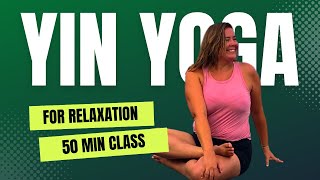
Angelica, a yoga teacher with 17 years of experience, leads a 45-minute Yin Yoga session from home. She guides you through poses like Shoelace, Swan, and Happy Baby while teaching the three core Yin tenets: finding stress, holding poses for time, and practicing detached awareness.
Chapters
other during our practice today. We're going to practice a really chill class, and if you haven't been to a class with me before, my name is Angelica and I have been teaching yoga for about 17 years. I used to own the largest yoga studio in the state of Nevada. I had 3 different studios in the time that I was there, and I sold that studio in 2018, and now I teach fully online. I certify people to teach 200, 300, and 500-hour yoga teacher training. The 200-hour teacher training is a vinyasa training, and then the 300-hour training includes yin yoga like this class, and ashtanga, and it includes vinyasa, and it includes restorative and acro yoga, and a lot of different styles of yoga so that you can get exposed to a whole different kind. The 300-hour training is like a master's in yoga. But I don't want to take a bunch of time thinking about and talking about that. If you want to get certified to teach yoga, you can go to the link in the description. Let's get started. If you have a bolster, that is really nice to use during your practice. If you don't have a bolster, you can use some really big pillows. You can use, you can use some cushions off your couch, anything like that. You could go without it. So welcome, Northern Dash Hurts, good to see you. I don't actually know your real name, I just know your username, but I'm glad that you're here today. And maybe you could DM me your real name so that I know it. And if you have any blocks, I have what's called eggs. They're rounded, they're called 3 Minute Egg. You can check them out on Instagram or on Facebook, and it just I just think they're really awesome because they're rounded and you can stick them into more spots in your body. So we're going to go ahead and do our practice today. So coming into a nice easy seated posture, just like I'm sitting here, and closing your eyes as you begin to breathe in and out through the nose. So just something really relaxed and chill. Now, if you have— if you have music that you want to turn on, I just turned on some music. If you want to turn on the music in the one ear, if you want to turn on some music of your own, go ahead and turn on music. I don't play music during the practice because some people prefer it that way, and also because, like, choose your own music. I mean, your own music is always the best [MUSIC] All right, go ahead and lengthen through the spine, relax down through the shoulders, and take some deep inhales and exhales through the nose. Begin to notice what it really feels like just to breathe in and out through your nose. And begin to connect with all the parts of your body. So what does it feel like in your legs? What does your back feel like? What does your stomach feel like? What does your upper back feel like? What do your arms feel like? How are you feeling in your face? Just taking an inventory of the whole body and then coming to a point where you start to feel. What does it feel like in your mind? We're not making any judgments here, we're just noticing with detached awareness what those areas feel like. And if your mind wanders, allow yourself to come back to your breath, remembering that our yoga practice is not about controlling the mind, but it's about noticing and not reacting. So we're not reacting to the mind. This allows us to not react in other parts of our life where we typically have a reaction. That's the whole point of the yoga practice. We'll just take a few more breaths here. Before we come out of this sitting meditative pose, just take a moment to set an intention for your class today. Remind yourself why you've come to your practice, and then go ahead and just open your eyes. Nice. Extend your legs out straight, maybe just shake your legs out a little bit. Have a lot of Golden Retriever hair on my pants. I don't know if you have a doggo, but it's like an extra massage here, right? All that extra Dino hair. All right, we're gonna start with a pose that's really challenging for me. It's called Shoelace. You can do this with both legs or just with one if you want. So you could take one leg over and leave one leg straight, and this would be called the half shoelace. If you want to do the full shoelace, you would bring both legs over. I know that you do have a dog. I've seen it. You have a beautiful dog. Just lengthening through your spine here. I'm kind of holding my legs together, but see how the knees are kind of coming towards in line with each other? And that might be— your knees might be more like this. That's totally okay. I find this pose extremely challenging. So wherever you come to in this pose is totally fine. You don't have to go really deep into it. If you find that you want to have a little bit more sensation in this pose, you can begin to fold forward, and that'll give you a little bit more sensation. And if your tea is ready like mine is, you can just put that on top of your mug, let the tea pour down into the mug. So when I quit drinking alcohol, I joined a tea club, and so now I drink a bunch of tea that is kind of fancy, and I have my old Teavana container here. Teavana is not open anymore. They were an incredible, awesome place in the mall. But my— I'm in Plum Deluxe Tea Club. I am not sponsored, I just love their stuff. And so the sensation of drinking a tea, like having the whole ritual around it, is very similar to that ritual of drinking alcohol. But it's not alcohol and it's healthier for me. And I found that now that I've been off alcohol for significant number of months, um, I found that it's like it was affecting my life so negatively in ways that I never even realized. Like, I had no idea that it made me more angry, that it made me irritable, that I wasn't living my dreams to the extent that I could because of alcohol. And I would have never known if I hadn't just one day been like, I don't feel like drinking anymore. And I honestly think it was living on a boat because everybody just drinks all the time on the boat. Mmm, that's a good one. That's, that's my new one for the month. Mango Black Tea. So if you want to, you can grab onto your toes here and just pull them back a little bit more to get a little bit more sensation if you're interested in that. Really just taking a moment to connect with where you're feeling that. I'm feeling it in my hips. We're gonna stay in the shoelace for about another 3 breaths. You're doing great. Just hold out and breathe. Now, if you've been folding forward, just use your next inhale to come up, and we're gonna very slowly Take the top leg and move it behind us to just take a moment to release the back leg. Now we're going to come into one of my favorite poses. We typically call this pigeon pose in regular yoga, but it's called swan pose in yin yoga. Go ahead and just walk your hands a little bit forward so that you can bring your hips more even. And if you want less of a stretch, you'll bring your— the heel of your foot in towards your groin. And if you want more of a stretch, you'll bring it further up. But the main thing we want to do is keep our hips nice and even. And remember that we're going to hold this for time. So I'm going to go ahead and just walk my hands down. If you feel like it, you could take a couple of blocks or books or even a bolster and bring your hands onto there and just really focus on the hips. This will give you a little bit of more control over the sensation that you're having, especially since we're holding this pose for so long. We really want to feel this pose in our hips. We don't want to feel the pose in our knee, so we're just feeling it nice in our hips. If it even feels like that's too much, you can come up onto your hands. The yin yoga is way more open to interpretation than your regular vinyasa yoga is, so whatever feels good to you. And really, like, I mean this more now than I ever meant before when I taught in person, because you're in your house and I'm not there with you. So first of all, I can't check your alignment, I can't check if you're safe. You need to check that for yourself. And second of all, no one else is there, so it doesn't matter what you look like in the pose. See, the thing that we've lost in yoga is that posture is about feeling. It's not about alignment. It's not about looking perfect. It's not about achieving a certain aesthetic. It's about feeling and connecting with your body. And so that's what we're doing here. We're feeling and connecting and really noticing how different poses feel in our body. One of the things I noticed when I first became really entrenched in a yoga practice was that I had very little connection to my body. I didn't know that foods that I ate affected it. I didn't know that shampoos that I used and smells that I smelled affected my body. I didn't know how going a long time without water made me irritable. I didn't know that I felt sensations in certain parts of my body. And yoga really taught me how to connect with my own body and feel those sensations. So I invite you to really feel the sensations in your body. We're gonna stay here for just a few more breaths. So we'll go ahead and just walk your hands up, and we're gonna visit what's called the Screaming Swan in yin yoga. Just bend the back knee and grab onto that back foot if it feels available to you. Go ahead and release. Sit over onto your hip, and we're going to bring the back leg forward to do the other side of the shoelace. But before we do that, let's go ahead and do some windshield wipers to counterpose our swan. So we want to make sure that we're doing the opposite side that we did before. So for me, I should have paid more attention. Oh yeah, this feels definitely weirder. That's going to be right leg under, left leg over, and you can see that It is significantly different for me on this side than what it was like on the other side, and that's how it's probably going to be for you. Your— our bodies aren't the same on both sides as far as their flexibility. And just find a point of comfort, and then we'll just hold here for time. Again, if you folded forward in the posture before, you'll want to fold forward into the posture again. You can also just grab onto your feet to help keep that in place. Remember, if you ever want to rewatch this video or you want to do the practice again, You can check it out on my YouTube channel called Yoga Liberty. I do upload these videos onto YouTube after I teach them here live on Instagram, so you can watch it over and over. You can do this pose again and again and be tortured as many times as you want. Breathing in and out through the nose, just bringing it back to the breath. We'll try to find a point of stillness here and just try to be quiet and find the peace in the pose. Our whole body is interconnected through a network called fascia, and so when we create sensation in one part of our body, it actually affects other parts of our body. So just noticing the fascia, noticing how the left hip affects the right hip, affects the right shoulder, affects the left shoulder. We really want to just notice our body, not making any judgments, just closing the eyes and really just notice how it feels, becoming aware of our own unique, beautiful body that gets us where we want to go. And if you're here with me in this class, you're blessed to have a body that allows you to do this practice. And I'm grateful that you're here, and I'm grateful that— grateful that you are exploring that, because when we all explore our own inner worlds, we make our outer world a better place. When your mind wanders, just bring it back to the sensation in the body. This is your checkout time, your time to be fully immersed in your own self and your own practice. This is the time where you reset for everyone else in your life. We've got to take care of ourselves first before we can take care of others. So many times in my life I have not done that, with disastrous consequences, as I'm sure you understand. You've been through the same things. We're both humans. We have both experienced that. We have both experienced the tragedy of sacrificing self for others. Now, if you're leaning forward, use your next inhale to just slowly come up. Good. And very slowly and gently bring the top leg back. We'll just pause here before we go into our Swan Pose. Nice. Now coming into our Swan Pose, otherwise known as Pigeon in the regular yoga world. Remember, if you want to bring your heel close to you, that gives you less of a stretch. If you bring it further away, that gives you more of a stretch. So we'll go ahead and walk our hands forward. Bring the one leg back, and then just remembering whichever side you did before, doing the other side. Folding forward if that feels comfortable to you. Again, you can use blocks or a bolster or blankets or pillows or a couch cushion, or you can just have your hands on the ground if you're ready to go that deep. It's completely up to you. Again, that's a really cool thing about doing yoga online by yourself in your own house, is that it really doesn't matter what your yoga pose looks like. It matters what it feels like. So really taking that moment to see Does it feel good to have my left leg right here? Does it feel better to move it? Does it feel good to flip the toes under and maybe lift up a little bit and move the hip? Just thinking about what feels good in your own individual body and really getting used to yourself and connecting deeply with yourself. We so go so far away of connection with the self, and I see this all the time in live classes that people are really focused off their own mat and what's happening all around them. And in our online practice, we can really go deep into the self. We can really go deep into our own bodies. So we're going to hold this for time. The second tenet of Yin Yoga. And— or the second tenet is to find this, the spot of stress, and the third tenet is to hold for time. So we're going to go ahead and hold it for time now. So just breathing in and out through the nose, noticing with detached awareness where you're feeling this in the body. Just like, just noticing, just checking it out. Like, where am I feeling this? Oh, I'm feeling this in my right hip. I'm feeling it in my right inner thigh. I'm feeling a little something in my right shoulder and my middle of my shoulder blades. Maybe I want to release there. A little bit in the quadricep on my left leg. Instead of moving out of the pose, maybe we just find a spot in the posture that feels more comfortable if we need to make movement. So for me, I'm going to put my hands— or cup my head, my face into my hands. We're gonna go ahead and come into the Screaming Swan now. So just bringing our hand— our blocks over to the side, or any props that you might have. And you might be thinking in your mind right now, like, yeah, I'm already screaming, I don't need to be in a Screaming Swan. But if you want to, go ahead and just bring your back leg up, and if you can, reach back and grab onto your foot or onto your ankle or onto your heel, and then go ahead and release. We're gonna go ahead and step back into a downward facing dog, bringing our hands onto the ground. Now, if you don't want to come into a downward facing dog, you can just come into a tabletop pose like this. Or curl under the toes and lift back into your— oh dang, feeling that downward facing dog. So the other cool thing about teaching online versus teaching in person, and I have taught in person for 17 years, I've taken classes in person for 37 years, And the thing about teaching as a teacher online is that for the most part I'm doing the poses with you and I'm demoing, which is a totally different experience than being in person. In person, I literally never ever ever ever demo. I'm going around from student to student and adjusting them and doing physical assist, so it's like a whole different world. Brave new world. Go ahead and bring the knees back down, and we'll just sit back into our hero's pose. From here, we're going to go ahead and just sit over onto one side. Let your legs extend out in front of you and just find your way to lying on your back. I'm gonna move down just a little bit here. Okay, and we're gonna come into a happy baby pose. So you can bend your knee and bring your hands behind your knees and if that feels comfortable to you. Or you can grab onto your big toes in a yogi toe lock and just open out. Or if you want to, you can grab onto the outsides of your feet and open out. Whatever feels good to you. And we're just gonna do a little bit of rolling here. Or if you want to find some stillness here, you can definitely do that as well. Maybe letting your eyes close as you notice what you're feeling. Notice how the body is feeling, maybe coming to stillness. We're gonna come into what's called the reclining butterfly. So bringing the feet down onto the ground, let the feet come pretty far from the butt and just let the knees fall out to the side. If it feels good, you can put some blocks or books underneath of your knees. But that's not necessary. So if you don't have them, you don't have to do that. It's just an option, just a choice. For a really long time in my yoga practice, I practiced Ashtanga yoga, which is a really hardcore style of practice. It is the toughest, hardest yoga practice that there is, and Basically, you're like a sissy if you use props in Ashtanga. So it can be done without them, but if you have them, use them, you know? If you got them, light them. That's what they used to say in my day. But nobody does that anymore in the yoga world. I mean, I guess some people do, but So just finding your point here and letting the knees open out and just coming into your stillness now, into your third tenet of Yin Yoga. Maybe you want to rest your hands on your stomach, or maybe one hand on your heart, one hand on your stomach. Taking a moment to notice with detached awareness where you're feeling this in your body. Where are you feeling the pose? And if it feels good, maybe you want to bring your arms over your head. Maybe you don't. Whatever feels good to you. Mm-hmm. We're going to go ahead and just bring our hands onto our knees and bring the knees together. Bring your feet as wide as your mat and let your knees just fall together for a moment and just Pause here. Maybe now we begin to drop the knees from side to side and windshield wipers. Next time you find your right knee over to the side, just hold it there and pause. Just a hip rotation of the right hip, just holding this for a few moments. You can bring your arms in any way that feels comfortable to you. I'm using it as a pillow for my head. You can just bring your arms out to your side if you want. And then we'll bring both knees back up again and just switch over to the other side. If you want, you can turn and look away from the knees. You have internal rotation of the hips. And then a twist in the spine. Just letting yourself soak into this pose. Maybe close your eyes and let yourself just marinate into the posture just for a moment. Noticing where your body feels the pose, not trying to mirror my pose, but just being in your own body, in your own pose, in your own space. The divine beauty of your own wonderful body in that nice easy recline twist. —go ahead and just find your way back to center now. Doing some windshield wipers with the legs. Whatever moves feel organic to you. Maybe it feels good to hug the knees into the chest. Roll the knees around a little bit, maybe one knee at a time. Just anything that feels right for your body. Maybe wrapping your arms around yourself, giving yourself a nice big hug. Thanking yourself for coming to yoga practice today. You had a lot of choices of places that you could have gone, and you chose to come to this really relaxed class that requires your mind to be in a state of peace, requires you to really get in touch with yourself. We're gonna go ahead and just straighten our legs for a moment. Now if you have a blanket or if you have a sweatshirt or something that you want to cover yourself with for our final resting pose. You can do that. Yes, I know it's sad, it's the end, but we still have this final pose together, and this is the most important posture of our practice. The final resting pose is where we really test whether or not our minds are calm and we can be at peace with ourselves. So if you want, you can place your palms up, or you can place your palms down, whatever feels good to to you, just breathing deep in and out through the nose. Take a deep inhale through the nose, sigh it out the mouth. Ahh. Deep inhale through the nose. Sigh it out through the mouth. Just close your eyes here. Let your feet fall out to the side. Let your toes relax. Let the bottom of your feet relax. Let the top of your feet relax and your ankles relax. Let the back of your legs relax from your calves up to your hamstrings up to your bum. Let the front of your legs relax from your shins to your knees to your quads up to your hips. Let your hips relax. Let your stomach relax and your low back. The lumbar spine release. Let the middle of your back and your upper back just let go. Let your chest relax. It's starting to rain here. I can hear it on the top of my tent. Arms out to the sides, palms facing up to receive, down to Keep that energy inward, letting the relaxation move all the way down to your fingertips. Relaxing in your throat. Relaxing your tongue. Relax your face. Let your nose relax and your mouth. Let your eyes relax. In its sockets. Let the crown of your head relax and feel the energy connect with the earth beneath you. Slowly begin to wiggle your toes and your fingers, bringing your arms overhead, stretching from your fingertips down to your toe tips. And just bending your knees, rolling over onto your right side into a fetal position. Take our left hand to press our way up, coming into a nice easy seated pose, facing each other here. I wish that you were here with me seeing this magical view of the mountains all in front of me. It's really quite beautiful, and I'm so grateful to be here. We're going to go ahead and just bring our hands to the heart center in Anjali Mudra. Lengthen through your spine. Let the energy come through the crown of the head. I want to thank you so much for coming to this practice today, for honoring yourself and taking the time to get to know yourself more, to spend time on loving yourself, to knowing that you get one chance that we remember on this planet, and we need to make the most of it, making the most joyous and wonderful experience for ourselves so that we can go out and serve others. The light within me honors the divine and beautiful light within you. We'll close with one Om, taking a deep inhale. Om. And the thunder just broke as I Om'd. Namaste, friends. Thank you for practicing with me today. The rain is about to really come down. I appreciate you. If you would like to become a certified yoga teacher, make sure to check out the link in the description. I work with students one-on-one. This class is posted on my YouTube channel and also on my Instagram, and I do try to go live and teach every day. So I will see you for the next class. Thank you, thank you, Northern Dasher, for sticking with me the entire time. And I am also— oh, it's your birthday today! Oh my goodness. Okay, so I love birthdays. I'm a big birthday fan. I wish that I was with you because I would sing. I would sing and I would make you cake because I'm an excellent vegan Pastry Maker, but I'm just gonna sing. Happy birthday to you, happy birthday to you, happy birthday to you, happy birthday to you. Woo! Have a wonderful day! Thank you for spending it with me! Mwah! I'll see you in the next class. Bye!







