Yoga for Equestrians: Horses and Riders Benefit Episode 108
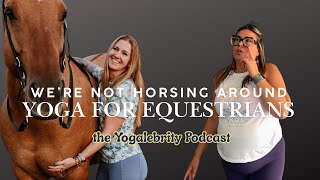
In this episode of the Yoga Liberty podcast, host Angelica Govert interviews Tiffany Pridgen, founder of Yoga for Equestrians. Tiffany shares her unconventional path into yoga—starting with meditation and visualization taught by her mother to manage competition anxiety in equestrian sport—leading to multiple 200‑hour teacher trainings, a 300‑hour Yoga Medicine program, and a 500‑hour Yoga Alliance credential. She explains why she pursued a second 200‑hour training (to deepen spiritual and philosophical study) and how the module‑based, science‑focused Yoga Medicine training complemented her athletic background. The conversation shifts to the differences between in‑person and online yoga education, highlighting the flexibility, repeatability, and reach of online modules, especially for rural practitioners. Tiffany describes the Empowered Yoga Teachers Course she took with Angelica, emphasizing its implementation focus, community support, and accountability structures that helped her launch her high‑ticket "Resilient Rider" program—a month‑long, four‑module course (mobility, core, balance, stability) integrating yoga, pranayama, meditation, and neuroscience for equestrians. They discuss the challenges of perfectionism, the importance of “done > perfect,” and how a supportive peer community accelerates business creation. Finally, Tiffany provides her primary online presence (Instagram @TheEquestrianYogi, website tiffanypridgen.com) and invites listeners to join her courses and the broader Empowered Yoga Teachers community.
Chapters
Welcome to the Yoga Liberty podcast. My name is Angelica Govert, and today I am joined by Tiffany Pridgen. She is the founder of Yoga for Equestrians. She's an incredible woman that I'm super excited to talk to today. She's also owned a yoga studio that she had inside of a yurt, which is super cool. Um, she is on the East Coast, I'm out on the West So welcome, Tiffany, to the podcast.
Thank you so much for having me, Angelica. I'm so excited to be here today and to chat with you. I always love connecting.
Um, so let's just dive right in and talk a little bit about you. So what made you decide to become a yoga teacher way back when? When did you become a yoga teacher and what made you decide to become one?
So I got certified, um, in my 200-hour teacher training back in 2012, so about 12 years ago at this point, which is crazy. Um, and I was drawn to teacher training through my local yoga studio, and I had started practicing yoga many, many years before. To help me cope with competition anxiety when I was competing with my horses internationally. And my mom had actually studied meditation, so I entered yoga through a meditation practice, which is, I know, a little bit of a different path than a lot of people. But she would lead me through guided visualizations to help me prepare for showing, prepare for lessons. And my mom had actually studied meditation down in Savannah, Georgia for many years before that. So I gradually transitioned into the more asana-based practices at my local yoga studio after several years of doing just meditations alone.
Wow, that's into— that's almost like going backwards in the 8 limbs.
It's a little bit backwards. My path in yoga has been a bit unconventional.
I love the fact that your mom was teaching you visualization. Like, that's so important, and it's something that, um, my mom definitely did not teach me, but I was also doing when I was young. And I think that, um, we really underestimate the power of visualization. Like just visualizing yourself achieving your goal and having like the tactile, um, ideas in your mind, like what did the air smell like, what did the wind feel like on you, what does it feel like to be sitting on your horse and riding, what does the moment feel like when you take first place, you know. And, and having that visualization, actually the mind doesn't know the difference. The mind believes that that has already occurred. So, um, I think visualization's really a key thing for me and my success. And I think that's so beautiful that your mom was teaching you that. So, um, you started going to your local studio and you decide to get certified there?
I did. I got certified. I actually completed two 200-hour teacher trainings. So a little weird like that. Um, So the first, um, training was the studio that I practiced at, and then I began teaching locally as well. And they were offering a yoga teacher training, and, um, I signed up for that 200-hour teacher training, which was a really amazing experience. My first training had focused a lot on athletic-based yoga, like the studio was also a wrestling studio, which is interesting. And a lot of the classes were the power vinyasas, like very cardiovascular strength-based. So a lot of what I learned in that training was very practical skills in teaching yoga. Like, we learned how to create sequences, how to balance our sequences with the, you know, balance movements through the spine, proper warm-ups, cool-downs, peak postures, but there was very little focus on yoga philosophy. And I had already experienced so many of those benefits through those guided meditations that I did with my mom that I was really missing that. So when I started looking for teaching opportunities, I really sought out studios that focused more on the philosophy, the yoga lifestyle, the, you know, other limbs of the 8-limb practice of yoga, aside from just the physical benefits of the practice. So my second 200-hour teacher training was very heavily focused in, you know, the ethical lifestyle of yoga. How do you practice the 8-limb path in your everyday life? And how do you really position yourself as a teacher to share those other aspects of the yoga practice? So that was a really kind of full circle training experience for me. And then I continued on to pursue trainings through a variety of different advanced trainings One, of course, was with you very recently. I studied with Yoga Medicine quite a bit in their different modules. I completed my 300-hour teacher training there. So I have my 500-hour credentials through Yoga Alliance. And then I've also just tried to go on as many retreats and experiences with different teachers across the globe. Since then, I've traveled to Peru to study yoga there. I've traveled to Bali. I've traveled to Spain. And I just try my best to get as diverse of an experience with yoga as possible. Like, yoga is so vast and expansive just through the nature of the practice itself. And I feel like I'm just always a student and always learning and growing. And the more that I learn, the more that I'm inspired to continue to learn. So I've just, you know, allowed yoga to guide my life. And that is honestly how I got connected to you and your mentorship. and it's just been such a gift.
I would love to— thank you for sharing that. And it sounds like you're— you have such a broad-based education in yoga, and you've really dedicated your life to it. Um, I heard a saying that, uh, once that Krishna says, if you're drawn to yoga in this lifetime, it's because you did yoga in your past lifetime. And I definitely feel like listening to you that this is not your first lifetime around yoga. You know, um, and I wanted to ask you a couple of different things and touch on what you spoke about, but you're— you said you took a second 200-hour training. And, um, you know, a lot of people will ask me like, should I take your 200-hour? I took a 200-hour here. And I always say no, take the 300, um, because a 200 is like getting your bachelor's and a 300 is like getting your master's. And if you take another 200, it's like really relearning a lot of the same things. I'm curious to know what made you want to take another 200-hour? Like, why did you feel drawn to take a second 200-hour? I know that you did eventually get a 300, but rather than get a 300, what made you want to take a second 200?
I think for me it was honestly just the opportunity was in front of me. It was at a— it was being hosted by a studio that I was currently teaching at. So I saw it as a really great opportunity to just immerse myself more into that community and then just broaden my perspective in alignment with the yoga studio owner and her branding. Being more aligned with the spiritual aspects of the practice, incorporating more meditation and pranayama. And that was really missing from my first one. I mean, I, I really, you know, think both of my 200-hour trainings were amazing. I feel with my 300-hour teacher training that it was a module-based training that I did with my 300, which, you know, I, I haven't done your 300, so I would love to hear how you structure yours. I've done your Empowered Yoga training as an advanced training, but with the module-based approach to the curriculum, I feel that it allows you to really specialize in various styles. Like, for example, with Yoga Medicine, I did a specific training on shoulder biomechanics. Um, I did a specific training on hip biomechanics. So it's, um, you know, in the context of having a foundational training, it's a beautiful way to deepen your practice. But with those specific modules, you get to dive really deeply into learning about this one specific area of yoga, which I think has been really fun and exciting for me. I'm very studious by nature, so I love that. But what I found to continue to be missing in my yoga teacher training experience, even with all of that and the retreats and workshops and things that I did, um, I was missing the implementation aspect, which is something that you do so well in mentoring, um, yoga teachers. And I've benefited immensely from that in just the short period of time that I've been working with you. Um, but I think you know, it can be so easy to get really specialized in learning all of the details, and then you lose sight of what your impact in the world will be through yoga. So that continued to be kind of a missing piece until I connected with you and your Empowered Teacher Training course. So I think just seeking out all of the opportunities that you can to learn, even if it is something new, even if it's something different, really just only benefits you in the long run as a yoga teacher.
Yeah, I think that continuing education is like the— I just had somebody graduate from their 200 last night and she's like, well, what do I do now? What? How do I talk to you? And I'm all like, well, you go out, you get more education. You know, you go out and learn other things. Um, so I want to talk to you about the Empowered course and your experience in that, but first I'd like to touch on the 300-hour because I kind of want to go like linearly, right? 200, something like the Empowered course. So, um, the 300-hour that I teach is also module-based, um, and it's online and, um you choose what modules you want to do. So I have, for instance, um, a Yin Yoga certification in there, Restorative Yoga certification, Prenatal Yoga certification, um, how to play harmonium, Acro Yoga. There's a number of different options for people to choose if they want to focus on yoga, but then there's also like business of yoga aspects, so they could create their own online course within there. They could learn how to do short-form video like TikToks and Reels and Shorts on YouTube. And so they could build an email list and build a— write their first ebook, you know. So they can choose. They don't have to choose to do those things. They could choose to do different things, right? So it really is very broad-based. And within that, they're actually creating their own YouTube channel. So they put all the videos that they create for their practicums onto YouTube. So at the same time, you know, I had somebody last year that took my 300, and while she was in it, she actually had a video go viral. It went like to half a million people on YouTube, and her following went from 300 to 4,800 basically overnight. Um, and so things like that happen on there. And so it's like you're at the same time that you're getting your 300, you're also building a business. So I, I really love my 300, and I think it really helps people. It's like the 300-hour I wish I could have taken that I did not take. I wasn't very happy with my 300 in the end, um, because I took an Ashtanga 300, and so I just learned Ashtanga, and it was like an intensive one month with a famous yoga teacher. And I will say that, like, the education I've gotten from the famous yoga teachers is not as good as the education that I've gotten from, like, real down yoga teachers that are like, yeah, I'm like legit just teaching yoga. I'm not here for the fame. Um, which always makes me wonder, like, but that's why my name on everything is Yoga Liberty, right? Because it's a joke, right? Like, there is no celebrity yoga teacher, right? That's not a real thing. It's kind of like sarcastic. Um, but I, um, it sounds like your 300 was very different than my 300 is. And, um, but also module-based. Did you— was it online or was it in person? Did you get to choose which modules you were going to focus on? Was it, um— and it sounds like it was very anatomy-based. So like, uh, yoga medicine is like something kind of new to me. I've never heard of that. So can you talk a little bit more about that?
Yeah, so yoga medicine is Tiffany Kirkshank's brand. So Tiffany, you know, is a master's in Chinese medicine. So there's a lot of the traditional Chinese medicine influences, which is really unique and also just incredibly fascinating to me personally. So I was drawn to yoga medicine. It is very science-based, and I am a scientist by profession. I studied neuroscience and I currently do work in research, um, studying the gut-brain axis. So I was attracted to it for that reason, um, because of the emphasis on anatomy, research, peer-reviewed methods, um, and just kind of this blending of how do you translate some of the more esoteric philosophical teachings of yoga and blend that with a modern lifestyle. And I think the platform of discussing those concepts through research and science, especially for Americans, um, studying yoga is just really easy. Like, it's just a really easy way to to talk about yoga, to discuss yoga, to implement it into your everyday life. I mean, it has been for me especially. I, you know, utilize the scientific method through so many aspects of my life when I'm navigating difficult decisions, when I'm sequencing yoga classes, when I was creating my course that you mentored me through. You know, I just find it as someone who was educated in an American educational system with a heavy emphasis on science, that it's just so accessible. And I love that. I think yoga is a practice for everyone. That's one of the things that I love so much about your messaging online. You really do speak boldly about making yoga available to everyone, no matter, you know, their lifestyle, their, you know, thoughts about themselves, their body, where they live. And that was also one of the things that really attracted me to online training. So my 300 actually started as an in-person training, and I completed the second half of it during the COVID pandemic. So a lot of the trainings went to online modules, and I've continued to study online because it is such an amazing way to get very high quality education and training with teachers who I, you know, never would be able to study with. I live in rural North Carolina out on a horse farm. I don't have a studio nearby. So that, you know, has been such an amazing, amazing way for me to continue to grow regardless of where I live. And that is one of the most powerful things about teaching yoga online too.
Yeah, I love the online aspect. I remember like many years before, um, all the illegal shutdowns happened, that people— I, I would say to people like, you know, we should be creating online content, the future is online. And people are like, no, yoga training should never be online, it should only be in person. And honestly, as someone who teaches both and has taught both for an extensive period of time, I think that they both have benefits and they both have downsides. You know, one of the great benefits to online is that you get to watch it over and over again. And like I said, the woman that just graduated last night from her 200, she said, I went back and watched my Surya Namaskar A video from week 1, and I remember, and I was like, wow, how much have I grown? And that's just not an opportunity that you have in person. You can't like tactilely go back and look and see. What you did before or rewatch things or work at your own pace in some way. Even if it's a structured course like mine is, where you have to go 10 weeks to complete it, um, you still have the opportunity to go back and rewatch videos, which in person you can't do that. You just have to be like where the group is at, you know. And I find that in-person trainings a lot of time is wasted on things like eating lunch and going to the bathroom. And, you know, like, there's this long line for the bathroom and we all have to wait, you know, for everybody to be done. So there's obviously, you know, the benefit of being together is that you get to hug each other and touch each other and be in the same space and, and spontaneously converse with the group. And everyone is present because you have to be, because you're there. Whereas I find on Zoom sometimes people just turn off their camera and aren't really paying attention, you know. But, um, I would love to talk to you a little bit about your experience in the Empowered Yoga Teachers Course and what that's done for you and, um, why you enjoyed taking that course and what you've been able to accomplish since you joined the Empowered Yoga Teachers Course with us, because that's really where we met and became fast friends and really connected deeply. So I think you've done some really beautiful things with that course, and I'd love for you to share you know, your experience, strength, and hope within that course.
Oh, well, thank you. I— yes, the Empowered Yoga Teacher course was literally life-changing for me. So I've been an equestrian my entire life. My parents loved horses. My mom and I showed horses. Together. Like, she didn't actually ride, but it was a thing that she and I did, and we continue to ride together now, um, since she has her own horse. Um, and what I learned over the course, just very gradually in my own experience, was how valuable my yoga practice was in my success as an equestrian. And this is what really inspired me to seek out your mentorship and your Empowered Yoga Training course, because I had this idea to create a yoga for equestrians course that included not just asana, but all the other aspects— pranayama, the, the, the yamas, the yamas, meditation, um, all of those things that I had just gradually woven into my everyday existence over many years of practice, transitioning from those visualization meditations with my mom when I was competing. And I had such a deep and really profound personal experience with it in my equestrian career, um, which really was like everything to me. Like, when I was a child, I dreamed about accomplishing these big goals with my horse. Um, my mom was a single mom. She worked her way up through the corporate ladder to be able to provide for me to have horses. But although, you know, I grew up with horses and I had a show horse, we never really had the finances for, or the resources for me to be able to just go out and buy a finished 6-figure show horse. So I knew that with our resources, and I was very aware that my mom worked really hard. To provide that for me, and she supported me through yoga, even though she didn't call it yoga back then. Um, and nobody in the horse world presented this work to me. I was just fortunate enough to have it as I was growing up, and to this day, you know, I continue to show Um, and what I see is we put a lot of pressure on ourselves, not just equestrians, but everyone, right? Like, we want to accomplish big goals. We, you know, have jobs and obligations to our families, and, you know, we, we want this dream life, but with that comes a lot of demand. It come— there can be a lot of stress, there can be a lot of pressure. If you don't have a daily practice like yoga to bring you back to your authenticity, you can get really lost in it. So one of the things that I observed as I became an adult showing horses is so many of my friends that were also competing with me, they were popping pills to get through their classes. You know, they're taking Xanax, blood pressure pills because they have so much anxiety and stress that a lot of times is self-inflicted. But I always would go back to my meditations and I was able to achieve the highest levels of my sport. Like, I literally accomplished my dreams. I competed internationally. I competed all across the US. In that journey, I was able to win 3 national championship titles. I think after I retired from saddle seat riding, I purchased a young dressage horse and trained her myself, um, through dressage. And I continuously was brought back to my practice And without that, I really don't think I would have even continued with horses. I certainly would not have had the level of success that I was able to have as someone that, you know, is middle class, working class, that has to work really hard. Horses are very expensive. It's a very expensive hobby if you want to participate in the equestrian lifestyle as someone that is not just wealthy or generates a huge amount of income, um, you really have to show up in your fullest expression with crystal clear focus, with incredible, uh, physical health, with amazing stress management skills. I don't know of any other practice out there that equips you with all of those tools in a succinct and applicable way like yoga does. I've, I've done powerlifting. I've won actually like really competitive powerlifting competitions. But there is nothing in my experience that supports all aspects of your life, you know, like yoga does. So I had this idea to create a course for equestrians, and I knew that it had to be online. There was no way that I could support a viable business locally in the equestrian market. There— it's just way too concentrated I, you know, owned a yoga studio in a small town for 4 years. And it's just, if you want to really specialize in a niche market and serve a population that you're really passionate about serving, the way to do that with a business model is to take it online. You're going to be able to have the reach. You're going to be able to make the impact on the people that you want to connect with that are going to resonate with your message. But none of my trainings, none of my education— I was a scientist, I studied science in school, I didn't study business. Um, I've— I worked in research, I didn't study business. All of my yoga trainings didn't teach me about business. The thing that was so powerful about your Empowered Yoga Training course was the implementation, right? Like, you really coach us very closely in implementing all of the things in the modules. So that is an 8-week course, and I've continued to stay in the mastermind to continue to grow and develop with you. And your community there, which has just been like amazing. But I was recording the first week of my course by the last week of the Empowered Yoga Teacher Course. So in a 7-week time span, I had taken this really abstract, impossible idea for Yoga for Equestrians, and you had brilliantly created these modules that like broke it down into very attainable methods, right? Like you gave us so many resources in that course, um, everything from like— I have a web page now, I have landing pages, I have a low-ticket, uh, free offer to opt into my offerings. Um, I'm actually doing my first, uh, webinar on Saturday, um, for my high-ticket offer, which is a $1,000 Yoga for Equestrians course that I've already sold to 12 people at this point. So it's pretty amazing that with a thoughtful, intelligent structure that you created and then the implementation support with you and Tiana and Francesca, um, what you can do. And I just am like mind blown, like in that course, I have a legitimate business. And it was from nothing. It was literally an idea that I had. So, you know, I'm tremendously grateful for you for creating that. And the continued support in the mastermind is unparalleled. Like, I'm connected to, you know, so many supportive yoga communities. But the difference in the Empowered Mastermind that you have created for us is that is full of people actually doing it. Like, they're not just talking about their ideas, and you really push us to implement, and that is the game changer in creating an online business. You cannot wait for it to be perfect. To get started.
That's so, that's so important. Like, done is always more profitable than perfect.
I want that on a t-shirt. Put that, put that in your—
perfection really stops a lot of people from creating their dream. Like, this is not a perfect situation. You're sitting in your office, I'm I'm sitting in my office. We're not in a studio, you know. We're using software that allows us to be together. Um, I have a microphone that was $30, you know. It looks like you're using your Mac microphone. Like, we're not, we're not doing, we're not doing something high-tech. We're not, you know, the crème de la crème of, of podcasting. But here we are sharing our experience, strength, and hope with you, uh, who are listening to this. And you're sharing your Equestrians for Yogis course. I'm sharing my Empowered Yoga Teachers course, my 200-hour online training, my 300-hour online training, my adjustments and assist training, and my sequencing course is about to come out. Like, we are sharing what we love in an imperfect way, but we're sharing it. And that's the thing I think people don't realize, is that, you know, you can impact a lot of lives and make a lot of money along the way by sharing imperfectly. And if we wait to be perfect, you'll never make any money, you'll never share with anyone, and you'll impact no lives because, shocker, you'll never be perfect, you know?
Yeah, and that— those pressures of perfectionism were very real for me. Uh, you know, when I joined your course, I had created the Equestrian Yogi Instagram account back in 2022. Like, this was an idea that I felt deeply in my heart for years, and I had no idea how to implement it. No matter how much you study yoga, if you are not putting what you study into practice imperfectly— because nothing is perfect, right? We're humans. Um, you'll never be able to have the impact. And I remember very early on in the course when you were pushing me, uh, to, to create more content, because social media has not really been my platform, like, to promote my personal brand ever until very recently. So it was a very uncomfortable space for me, but you kept every, every time I would meet with you saying like just start, just do it. It doesn't have to be perfect. Done is always more profitable than perfect. I tell, I like hear you say that to me all the time when I get caught up in the details, you know? And if you're, you could have all the knowledge and all the gifts, but until you allow yourself to be seen and heard, for who you are, it's not going to have an impact on anyone. And that was a very real thing for me when I owned a yoga studio. I always felt like I should be reaching more. Like, yes, I was very grateful for my little community of yogis that I built over the years at my studio. I'm still connected to many of them, um, But you know, that, that is like a tiny little, tiny little piece, you know? And even if your reel only gets 200 views, how often do you have that opportunity for 200 people to see your story, to see your teachings? And that was something that I think you put into perspective in the course. Very early on that really motivated me and, and really put it into perspective for me as well. Like, you know, even if 200 people see it— and, and it's easy to get a reach of 200 people on Instagram, right? Like, you, you can reach a lot of people that way if you're thinking about that. Like, sure, we all want viral videos and You know, the sky is the limit and the possibilities with who you can reach through social media. But even if it is really small, especially at first, it's still like so much more impactful than what I could get on my little farm, like trying to get people to come to my remote farm to do yoga. I might get 1 or 2 people. Um, and I just had to drop that. I had to drop that perfectionism very early on, right? Like I didn't know all the things that I know now. And the course, I love that you lay it out that way where you start, I think in week 2, you start creating content. It's super early on. Um, and it's. It's not going to be perfect in the beginning. But we're all imperfect. And that, I think, is a beautiful way to really truly illustrate the teachings of yoga in your own life. Yoga is not for perfect people. You know, yoga is a healing practice. It's for people that are, you know, marginalized, sick, struggling, and it's also for people that are thriving. So I love that approach to how you teach and mentor us to just keep, keep putting our message out there, whether it's perfect or not. And as I continue to learn and grow and implement you know, more things and market my Equestrian Yogi course. Um, I think that that's gonna evolve as well, and that's okay. Like, it— I'll just keep getting better, and I'll just keep passing that along to all the people that I want to share yoga with.
One thing I would really like to, um talk more about is the sense of community, because I think that's really, really important. One of the things— and I don't know if you struggled with this or not— but when I owned a yoga studio, I felt really alone. I felt like there wasn't other people who were doing what I was doing. And the people who were doing what I was doing in my town— Las Vegas is very, very competitive— and I found that people were quite unfriendly in other yoga studios and other yoga studio owners. Some of them I connected with, but none of them I really made the kind of connection with that I have with the people I've met online. And I think that from my perspective, one of the biggest things that people get from the Empowered Yoga Teachers Course is the, that community of being surrounded with other people who are doing what it is that you want to do. So I know Justine and I recorded a podcast yesterday And we were talking about community and how much she really values her relationship with you and with Lei and, you know, other women in the Empowered— and the one man. We have one man in a bunch of women. It just happened that way.
Smart man. Men can come.
Men can come to the group. But the community, I think, elevates you because you really are not going to find people in your area that maybe have that specific desire to create the same kinds of things that you're creating and to elevate you in that way and believe in you. So if you could talk a little bit about the community aspect, I would love to hear your insight on that.
Yes, I, I think, um, getting yourself surrounded by people that are taking action on their dreams is, is invaluable. Like, it's everything, honestly. Like, I think you, um, embody that so well, like, in your business and then just in your humanity as well. Um, and I— if you do not have that, you could have the best education and then just really do nothing with it. And that's where I was. For so long. As a yoga studio owner, I felt a lot of support in my little community that I had constructed for myself, but outside of that, it was really disconnected. Like, I, I didn't— in my town, um, where my studio was located, um, and even in the bigger cities like closer to us I didn't really work with other studios. Like, we didn't collaborate, we didn't meet, we didn't hold each other accountable. You know, Lei and Justine were in the cohort of the Empowered Yoga Teacher course that I was a part of. And the three of us really, you know, hit it off on the calls. Like, we just Everybody in there is amazing and I got so much support from the other people, but the 3 of us just were like a little like trio. We've actually continued to just meet on our own and, you know, we meet every couple of weeks, we map out our action items, we hold each other accountable. And, you know, I feel like that elevates me as a business person. To continue working. Like, it— they're, uh, like, starting a business is really hard. And, you know, I've done it 3 times now just in yoga. Like, I started a yoga studio from nothing. That was very, like, isolating. Like, it was very much like I had to, like, muster my way through it and, like, force and, like, hell-bent on being successful kind of mindset. Because I didn't have that community support. And then I closed that studio down, but I kept my yoga teacher trainings, which, you know, I ended up forming partnerships in my trainings because I didn't have a studio. But those were very like kind of service-based, like, you know, renting space at various studios. Forming these partnerships, like my business partner on my teacher training. She has a radically different skill set, so our partnership works really well. But we're like, she's developing in her areas, I'm developing in my areas, and it works great in our business for the trainings. But it's not the same as when you're on like a similar journey building something from nothing, having that group that like when you say something, they know just the right things to say to bring it back into perspective. Like I think I had seen on one of the forums, someone was in the course, in the community for the Empowered course. Somebody was struggling with the technical aspects of building their landing pages and it just— something wasn't exactly working out right. And there were comments in there like, oh, I I struggle with that too. It's okay, like, you'll figure it out. And I, I just think like that can seem really simple and superficial, but it is immensely helpful, especially when you are like deep in the weeds of creating something. And an online business, there is more um, technical skills required. Like, when I signed up for your course, I didn't even know what a sales funnel was. Now I have two of my own, you know. It's, um, in a 4-month time span, you know. Um, it's just, I wouldn't have been able to get through those hurdles of creating that if I hadn't have had your mentorship if I hadn't have had the other people that were going through the same thing. Um, and I have not been able to find that in a lot of my yoga trainings. A lot of them are more academic, like it's more like you're, you're the teacher, I'm the student, I'm learning from you. Um, and you're definitely my teacher. Um, I learned so much from you. Um, but I think it is a much different vibe that you create in that it is more collaborative. Like, I feel like you're also finding new ways to build your funnels. You're always, um, tweaking your, um, Empowered Yoga Teacher Blueprint that you give weekly. Um, you're always building a new course and doing something different with it. So even though you're still very much my teacher and my mentor, I feel like you're still in that process of growth, like, and I really love that and I really appreciate that. And I think the fact that you show up that way in your community empowers other people to show up with that vulnerability and, um, like humanity in a way, you know, you're like, oh, this— like, I think on one of our calls recently when we were going over ads, you were like, oh, this is like different than it used to be. Let me figure it out. And seeing how you, you know, just pivot and go with the flow is so inspiring, um, because those things can feel like a huge setback, especially for me, like I never had an online business, especially not in yoga. Um, I was one of the ones that if I hadn't have been forced to do online trainings during the pandemic, I probably would have never sought them out, to be quite honest with you. And now I'm creating my own, which is pretty crazy. Um, but it's just so important to get into those spaces with people that are going through a similar thing and vulnerable enough to share their challenges and how they overcome them. You know, it's huge.
Yeah, yeah. I think, um, one of the things I always say in when we do the Blueprint, um, the master class, and, um, I'll have, uh, Justin Christine leave a link below to join that masterclass. It is free, and you can, you know, learn a little bit about how to create an online platform. And then we'll talk about the Empowered course and how you can get involved in it if that's something that you want to join. But one of the things I always think when I do those is that these are my future friends. And I don't know about you, but like all my friends really come from work. So like all my friends are from the yoga community and I consider you like one of my friends, you know, like someone that I met that I like really like and we talk on Instagram DMs all the time and I know you're gonna come to Funnel Hacking Live in Vegas and stay in my camper in my driveway with your man.
I'm so excited for that. I cannot wait. I'm so excited.
Gonna be here and we'll all just like hang out.
It's gonna be really amazing.
Um, but, um, the, uh, the thing is that like I'm on those calls and I'm always thinking like, these are my future friends. Like, these are the people— there's somebody in here that I'm gonna really deeply connect with and I just don't know yet. And that's so exciting, you know? It's so exciting to know that I'm constantly drawing to me the people who want to do what I want to do and feel the same way that I feel about sharing yoga with the world. And so, um, I'm really, I'm really excited about it. I just have really gone all in on the Empowered Yoga Teachers Course because I think it's just so transformative. I'm really not putting as much effort into my online 200-hour and 300-hour. Of course, we sign people up for it, but it's just not like where my main focus is. For my own, you know, like, you're just one person, right? I'm just one person. I can only focus on so much at once, you know. It's like overwhelming at times. And, you know, we do the podcast, and I, um, Justine is my assistant, so she does all the backend things. But I do this for free, you know. I'm not paid to— I'm not a big podcaster, you know. And, um, I'm not paid to have my podcast. I'm not paid to put content out on Instagram. I'm not paid to put out YouTubes, and these things all take a lot of time and a lot of effort and a lot of work. And, you know, I don't think that people realize, like, you know, half of it is just creating the content to bring people into your funnels, you know. And that's— I spend 20 to 30 hours a week just creating content. Now, not everybody has to do that, and, you know, that's my choice because I create on a lot of platforms. But, um, you know, and some people just make— like, I have a friend who makes an incredible living just from Instagram alone, you know. So you don't have to do all those things. Those definitely is my choice. But, um, I think that, um, it's just fun to know that there's somebody out there listening right now that I'm gonna really connect with down the road and is gonna be my friend, and I don't even know yet. Like, I don't even know you yet, you know, but you're out there listening. And that's like so cool, right? Like, and that, that idea that we're, you know, you're doing the same thing with your course. So in the time that we have left, I would love that you could talk about your course and what people get if they join the Equestrian for Yogis course. Like, what is it that you'll get in that course and how can they, how can they join up?
Well, thank you for letting me share a little bit of it, and I'm so grateful for you that you do to do, just put yourself out there, because like you said, you do magnetize like the right people. Um, and so I'm trying to be more comfortable with doing that myself. Um, so my course, which is the course that I created during the Empowered Yoga Teacher Training, is my high ticket offer. Um, it is a one-month journey. It's called the Resilient Rider. Um, I have created equestrian-specific yoga practices that include not just asana, pranayama, meditation as well. Um, and I've broken it down into 4 areas that are of high value for equestrians so that they can see immediate benefits in their riding and in their relationship with their horses. So the first week is a focus on mobility. The second week is a focus on core strength. The third week is a focus on balance. And then the fourth week is kind of an integration week where we focus on stability. And so all the practices that are included in that are offered on demand. And so you can continuously get access to them. And the idea is during the one month together, like, we work really closely. I offer weekly Resilient Rider workshops where I bring in some of my education in neuroscience to talk about how resilience is so important for equestrian athletes. And, um, I'm, I'm weaving in that educational bit of like why it's so important to understand resilience as a concept and how you can apply that through yoga to your life with horses. And then put also weaving in my personal experience with it over the years, which I didn't even realize was such a huge part of this until I started creating it. And then after the 1-month journey, you continue to be integrated into the community. So I have those workshops weekly and you continue to have access to them. For as long as you stay in the community, which I plan to have forever. So the other benefit of the Resilient Rider is access to other equestrians. So I think that that is very important to surround yourself with people that understand your journey and can uplift you and inspire you.
That's really— I think that's going to be a really great course. Um, I think that so many people are going to benefit from that. And coming from growing up on a farm myself, I know that having horses is a big commitment. We actually had many horses on our farm. We had a horse named Angel, and my name is Angelica, so I always really resonated with that horse. And my aunt has 3 horses right now. So I definitely come from a horse family, and I know that horses are astronomically expensive. And so you want to get the deepest relationship you can with your horse and have the— you want to give your horse the biggest commitment, and your horse will give that back to you. And I think that's absolutely beautiful. And also, as a Sagittarius, I love horses. It's a Sagittarian thing, but half woman, half horse. That's, that's so—
I totally get that.
Where can people find you on, um, online if someone wants to follow you on, um, your social? What's your primary social media platforms and, uh, how do they find you on there?
So really focused right now on Instagram. Um, my Instagram is The Equestrian Yogi and, um, my website is my name, tiffanypriggin.com, and that has all of my neuroscience insights, which is just, you know, my, my free gift to everybody that is interested in connecting with me and learning more about what I do. And then I also have my Resilient Writer course up there now, which I'm so excited about. And I'll be hosting workshops for the Resilient Writer similar to your blueprint masterclass that you do. Um, I'm going to be launching my first one this weekend, and I plan to do those weekly just to, you know, share what I'm doing and how this, uh, really benefits equestrians. Like, I think equestrian athletes have a unique set of challenges. Like, we have chosen as an equestrian to build a partnership with the 1,000+ pound animal that experiences the world in their own unique ways. Um, and there's, you know, a lot of unique aspects to building that kind of partnership. So a lot of the sports psychology mindset practices that you can find out there don't necessarily translate very well to equestrian sports. Um, but I have found in my own life that yoga does. So that is what I'm trying to share with others.
Well, Tiffany, thank you so much for joining us today. I absolutely appreciate you coming on to the podcast. And if you would like to get connected with Tiffany, check out the description, the show notes below. And if you would like to join the Empowered Yoga Teachers Course, or you want to come to the Yoga Yoga Teacher's Blueprint: How to Build Your Online Yoga Empire, you could definitely do that as well. It is complimentary and the link is below in the description. Make sure that you share the show, leave us a review. We really could use reviews. Reviews help to push the show out further on the platforms. It helps the platform to push the show to more people. So if you could leave us a 5-star review, we would absolutely love that. And if you have any questions, reach out, send me a DM on Instagram. I do sometimes do Q&A sessions questions. So if you have any questions, you can submit them to us, and we look forward to seeing you on the next, next episode. Thank you so much, Tiffany, for joining us. I appreciate you.
Thank you for having me, Angelica. I'm so grateful for you and all the amazing work that you're doing.
All right, we'll see you on







