Yoga in ASL: How NaeNaeYoga is Impacting the Yoga World Episode 106
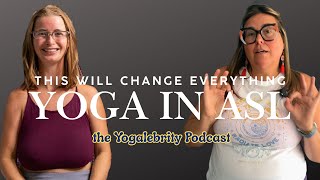
In this Yogalebrity podcast episode, host Angelica interviews Nene, the founder of Nene Yoga, about her journey from a 200‑hour yoga teacher training to becoming a pioneering yoga instructor who teaches in American Sign Language (ASL). Nene explains how she discovered yoga while in college, realized the lack of accessibility for Deaf people, and decided to create ASL‑based yoga instruction. She discusses the challenges she faced during her 200‑hour and 300‑hour trainings, including the need for interpreters, captioning, and the legal obligations under the ADA. The conversation covers practical logistics such as hiring interpreters, associated costs, and agency resources, as well as the shift to online training where captions become essential. Nene describes how she built a YouTube, Instagram, and TikTok presence to reach both Deaf and hearing audiences, and how she developed an online ASL yoga course for beginners. She shares the impact of her work—connecting with students, fostering confidence in the Deaf community, and encouraging hearing teachers to adopt inclusive practices. The episode also includes a brief demonstration of ASL signs for yoga terms, advice for Deaf individuals entering yoga, and a philosophical closing about finding personal joy. Links to Nene’s course and social media are provided in the description.
Chapters
Welcome everyone to the Yogalebrity podcast. I am joined today by one of my favorite human beings in the entire world, Nene from Nene's Yoga. She is an incredible yoga teacher. She is a YouTube sensation. She's also on Instagram and on TikTok as Nene Yoga. But what I love most about Nene is what she does for the world. A lot of us are yoga teachers and we teach yoga, and that has value, and it definitely makes this world a better place. But Nene has taken this to absolutely the next level. She teaches yoga in American Sign Language. I think that is so incredible. She is not only a great yoga teacher, but she also is a very hard worker. She puts out consistent content, so there's a lot for the community to get and benefit from. So, Nene, thank you for joining us today.
Well, thank you for having me.
So tell us a little bit about— she— you're going to share your story now, and, um, so you'll get to hear the story of how Nene became a yoga teacher. So would you share with us the story of why you wanted to start teaching yoga? Like, what started your journey to become a yoga teacher?
Um, that's a good question. So it all came by— came to me accidentally. So when I decided to do the 200-hour yoga teacher training, I actually needed— I was in college at the time and working full-time, so I just needed education, physical education. Class. And I didn't want to go running or, you know, play soccer. Not to sound lazy, but that's— so I needed one. And I found a yoga class. I thought, oh, it's gonna be so chill and easy because I'm working full-time with little kids. Um, but, um, no, day one I fell in love with it, and I was just like, okay, this is me. And then Somehow during the session or the class, I look up to the wall and it said Yoga Teacher Training, 200 hours. And I look and I'm like, so I took a picture of it and I went full force to take the full 200 hours. So why? So now, so while I was taking it, um, I was like, whoa, the whole world needs it. Then I got thinking as I'm you know, finishing up the training is deaf communities don't have access to this. None of them do. Like, okay, so I'm like, you know what, I'm going to help the deaf community. I know what it's like to have a language barrier and I can hear and I still have a language barrier. I don't hear 100%. So I went full force and then, yeah, so I really wanted to help the deaf community have access. They deserve to know what's going on. They deserve to know what's a tree pose, or they deserve to know this. They can see what you're doing, but they— and also too, I have to emphasize this, American Sign Language and English are two different separate languages. A lot of the Deaf community's first language is ASL, American Sign Language, or however. So they— so English, when they're reading English or reading the captions, it's not they might not understand 100%. So that's why sign language is so important because their first language, some of them, is ASL and they understand and they feel more connected. So I really wanted to just help everyone through yoga and there is a way, there is a way of life to put yourself first. So that's pretty much the reason why. Yeah.
When you took yoga teacher training, when you enrolled in yoga teacher training, immediately, like, how was your experience as someone in the Deaf community? Because I'm assuming that your training was not geared towards people who were Deaf. So there was probably like learning curve within there. How was that experience? And you know, people who are hosting trainings, and I know you took a 300-hour with me. And so I learned a lot about how I can make my program more accessible to people and more friendly. And you're very good at being very vocal as an advocate. And I love that about you. So what do you— what was your experience so that all of us can learn, like, how we can be more welcoming to the deaf community inside of our trainings?
So when I was in the 200 hours, I did it through college, so I had interpreters, and that's through college. College pays for that, and I got the services that I need. I was definitely the only one deaf, and there was definitely attention there, and I didn't need that, but It's just what it is. But as far as making everyone else, making their trainings welcoming is, you know, if the deaf person needs an interpreter and they want to do your training, gotta like try somehow to work it out and be as accessible as possible. We are humans as deaf people. We just need a little extra help with the accessibility. So my experience with 200-hour, I had the interpreters. It was cool. It was good. I actually requested the specific ones that I can understand. So that's another thing. So the deaf people need to— because some interpreters may sign— they have different styles. Of signing. Every single Deaf person or interpreter, whoever, CODAs, have a different sign language style. If you pay attention, it's different. Like, my signing is different than the rest of them. It's the way your hands are, and I don't know, it's really interesting to observe. But I really wanted to make sure that my interpreters signed everything how I understand their style. If I don't understand your style, I would like to get another one. And none of them feel offended by it because they want the deaf person to understand. So, but now that the trainings are gearing more into online, digital, just online, like virtual, the biggest accessibility is providing captions. That's the most that the deaf can really get. Just captions and then, yeah, I don't know. It's just for my experiences. Some deaf people have different experiences. I'm just sharing mine. So if it's in-person, interpreters are good, good to have. And they also like take turns. So you might want to get like multiple because then you're There's wrist injuries from signing all the time. It's very true. It's very real. I call sign language dangerous. Yeah, sign language is— I don't want to say it's dangerous, but it can be. Like, you can flick your eye, your glasses, depending on the emotions you're expressing or sharing, even if it's happy or excitement, and then you hit yourself or whatever. It's a real thing. Just like somebody singing as a career and they got to watch their vocal sync with sign language. So, and then, yeah, just as far as accessibility, interpreters and then captions, really, that's like the main things just for the deaf community.
What kind of cost is that that you're looking at? Like, first of all, like, how do you even get an interpreter to to come to your, your teacher training? And like, what would that kind of cost? And is there like a range? Like, how would you— how would somebody facilitate that happening?
Um, from my own experience, I did it through college, so the state pays for it. I don't have to worry about it. And it's kind of like by law, they have to provide if the college is there and you go to that college. They, by law, under the ADA law, they have to provide an interpreter for all deaf people or whatever accessibility is deaf with note taker or whatever. Cost-wise, I don't know, but I've heard that it can be lengthy per hour. I don't know. I haven't personally hired an interpreter. Yet, but deaf people have said, say that to hire one, it's like affordability is a challenge. So yeah, but I did it through college, so they took care of it. They know. So yeah.
So if someone just owned a yoga studio, that could be, that could also be true.
So if someone owns a yoga studio, and they're running a yoga teacher training, typically the owner would have to provide that. That's why the deaf person and the owner would have to work things out. But the deaf is very adamant with access. So if they really want to take it, they'll pay for yoga courses and everything. Yeah. And they have to kind of look at the ADA law because ADA law is very real. The judge will pull that up at any given way. So, and it's that right there is challenging because not a lot of people are aware of that too. And it's not their fault. It just means we just need to keep educating. And, but yeah, typically from what I understand, I could be wrong, uh, the owner who's running their training in person probably would need to hire one. Yeah.
Yeah. I was more curious about like how they would go about doing that, you know, because I would have no idea how to hire someone to do, and it's not that I'm like, you know, I'm obviously willing to do those kinds of things online. It was really easy for me. But in person, I wouldn't even really know who to contact or how to do that and what to budget for that, you know?
Yeah, there's definitely agencies that you call them and I'm sure they tell you all the information. That's what I understand. Yeah, there's like definitely agencies, like interpreters that work under an agency. You call the agency and they send out the interpreters to wherever it needs to go. And the agency will tell you all the information, where, how much, all of that, like per hour or whatever. That's what I understand.
Yeah, that's really fascinating. I mean, it's great that it was offered at your college though, and that's probably a good avenue for people who are in the Deaf community who really want to get certified also to teach yoga. Or like I've told you a million times, you could create your own certification in American Sign Language?
I'm working on that. I'll say that much. I really believe that the deaf thrive more and better when it's done in American Sign Language. There's definitely a connection there. It validates them. It really does. If somebody is teaching in a training and I go to that, It's like instant connection, instant. There's no barrier, there's no hearing anxiety that we all experience, it's none of that. So I'm working on it, it's just, it takes time and education and learning.
Yeah, yeah.
Don't worry, Deaf Community, I got you. I'm responsible for you.
So when you got out of, uh, yoga teacher training, how long ago did you get your 200-hour?
2019, about August 5th, 2019.
So when did you— so after you got certified, yeah, what did you start teaching? Where did you start teaching? What was your kind of plan for that?
I taught just at parks, um, and stuff. Um, I did go to studios myself while I was in training, and I was frustrated. I couldn't hear them. Lip reading was out of— it was out. I just ended up looking at the students next to me and I knew like, nope, that's dangerous because they're— whatever level that they are is their level. Where's your level of doing such poses? So I got really mad and I left and I was like, I'm gonna I'm going to make sure that my yoga is accessible. So I taught at parks and I did it my way because I don't have to go through that. I mean, it's normal to go through frustration, language barrier, or can't hear anything. Yeah, but, but why put yourself in it? Why put myself into a yoga studio again and go through that same thing? Nothing changes. You can tell them, but their teaching style is to walk around or assisting, or, you know, they have to think about the whole class, not just one person. So that's why I just did parks. Parks, um, just little grass areas, little things area, just right after my 200-hour. I think it was after or before. I had to teach like 10 hours free yoga for everyone. And no joke, people just showed up, which was great. That got me experience as well to just teach at parks and stuff like that. So that's what I did right after my 200-hour. And I just kept going, kept teaching. Also, I was pregnant at that time, so I later got pregnant. Well, actually, right after I got certified, I found out 2 weeks after I got certified, I was like, oh, right. I'm glad I have it under my belt so I can use this as my business to raise my children. But yeah, so I just did everything me because of the language barrier that I experienced. And then I understand the deaf communities and they don't want to go to a hearing studio, why not just like, I'll like be the teacher and sign and there's no— and I've even held Deaf yoga classes, fully Deaf people, and it's so cool. I can just be quiet and just sign. It's cool. Yeah, so that's what I did right after 200, just continued that teaching.
What inspired you to go on to YouTube and start teaching yoga on YouTube?
Um, I wanted to reach more people globally, or people even in the hearing community to know that there's American Sign Language or ASL yoga teaching. I mean, and I also knew it was different. And I also knew that nobody else I mean, maybe there's one deaf teacher, but nobody else is doing it. There's no— it's just me. And I get this all the time. People tell me, I'm getting like, people call me, text me, Instagram. They tell me, "Every time I go on YouTube, all I see is you." I go, "Do I pop up that much?" So all I really wanted to do is just spread the love, the awareness, the sign language, the deaf community. We need to be recognized too, not shunned. Yeah. Yeah. Just, and also too, the Deaf community. So the Deaf, we're all sporadic wherever we live because it's not common to have Deaf children. Like, you know, whereas there's more hearing people than there is Deaf. So some, and some may not be able to come to wherever my location is for me to teach yoga. So I wanted to think, well, I'll put a video out teaching yoga and they don't have to drive, or some of them can't drive for whatever reason, or it's too far, or they're from another state or whatever, and there's no deaf yoga teacher in their state or whatever. So I wanted to spread out more. And I do see a big connection through that much more because the Deaf, and also I don't want to say it, but the Deaf don't know yoga, don't know much about it. They're like shy about it or whatever. If I just teach yoga through YouTube or whatever, they can just practice on their own and kind of boost their confidence. Because like I said, ASL and English are different.
So yeah, what has been your experience? You know, what are some of the really great things that have come out of reaching people with ASL and yoga?
Um, I would say the connection, connecting with people. Um, and keeping and just really, some of them are really thankful that they've changed their lives around. And I'm just like, oh, you do? Me too. Let's change lives together. So that's like the biggest thing is to really help people and to really put themselves first. And yeah, it's, I don't know, it's hard to explain, but I really wanted to get the deaf community coming out, come out, like it's okay to do yoga however way you want. There's no one or this way, perfect way. It's what makes people can do yoga and then do their own twist or whatever. So I don't know, it just makes me happy that people— and even in the hearing community, they're all just reaching out to me like, "Oh my gosh, I'm learning sign language right now!" And it's just such an exciting thing. Like, all I'm doing is just sharing what I love and then people really seem to respond well with it. And that makes me happy. That's all I want for everyone. Learn from me, and then I want to learn from them, you know.
That's really awesome. That's really, that's really very genuine. And I think that, um, I always felt like having at my yoga studio, I always tried to represent a lot of different types of people because people really like to see themselves in their yoga teacher. So having someone that represents the deaf community and is a deaf person, like, really helps them to get that connection with yoga. And I think that's really beautiful. And when it was time to kind of level up and get to your next level as a yoga teacher, you decided to get your 300-hour, and you did your 300-hour online with me. Um, What, what were really like some of your goals with that? And, you know, why did you specifically choose that course? And what was like some of your experience through that course that was different than when you took it in person? Um, you know, like how, how was that? Can you just share a little bit about that experience?
Um, yeah, so I took my 300-hour. I only did it because I wanted to continue learning. To continue educating myself, I felt like something was blocking me and I'm like, no, I wanna, I wanna jump on and get my 300-hour, like, and I didn't get it to get certified or anything. I wanted to really dive in and keep and learn more. In fact, I learned more. I was just like, this is what I needed. I also got the challenge that I needed. Um, 200 hours. Um, it was— there was— I don't want to say this negatively, but for me, the connection wasn't— there was no connection. There was no connection. And this was in person, so I guess that's a downside of doing it through college, but there's no connection or anything. Um, I sense a lot of energies with here and here, like more up and I don't know, I don't know, it's just because that's just me. But, um, with the 300, um, I honestly just wanted to learn more for my students, do more for my students, um, create more, like what am I not doing, what am I doing, what am I not doing, and all that. And then I didn't know that the 300 hours helps boost your business, and that was like, oh yeah, I would love some help because I'm not very techie. And when I'm determined to learn something, even if it takes me 9 hours and I've learned something, 9 hours, I'll never forget that, during the training with you. I am determined and I will do it. So the 300 was definitely more connection, accessibility, because there's captions for me. I was able to go back. Something I don't understand, go back, go back. Go back. I will sit there and go, okay, now I get it. And I really liked the accountability of finishing every single week, which was nice. It was perfect for me because I can do the training at home while I'm raising my family. So it was just making time for it. And the biggest thing was I was definitely ready to push forward for my students, teach, and whatever challenges or what am I shy about or anything like that, um, it only shapes me to evolve and be a better teacher. So definitely I was a better teacher after the yoga, the 300 hours, because the 200 and 300 was a big gap. For me. So I knew something was lacking, and there's a gap for a lot of reasons, um, but I think I was just ready to just go. Um, my experiences was amazing. Like, Angelica, you literally overdeliver. It's insane. Like, um, if there was a problem, you were determined to get this solved, even if it's a little over the time. And that's just like the 200 hours, like, you guys are going, like, time's up. So that was a big difference. Um, and it's really cool to see that from the 300 hours that it's not so much the 300 hours, it's the work that you put in. So the work that I put in, I saw What's the word? I know the sign language of it. I saw results. There you go. I had to picture the sign language word, results. So I saw the results. As I was seeing the results, I pushed more and more, only for me to teach for the Deaf community. I wanted to be better and I don't know. And always for, well, I don't want to say always, but the 200-hour was me just learning and I had no idea about yoga. I learned a little bit back in high school day. A friend of mine comes from, not so much the background, but knows. He's from India, so he knows a little bit. So he told me about it. That stayed in my mind and then bam, 200-hour and then now the 300-hour. It's just to make me a better teacher. That's all.
You had a lot of growth in your 300-hour. You had a lot of, um, you were able to really see a lot of, of growth in your following. A lot more people started following you, and you were a lot more consistent with your content. And so can you talk a little bit about what you have created really since then? Because you also have a course online. So could you tell us a little bit about your course?
Yeah. So during my first week of yoga teacher training— was it the first week? I was creating a yoga course. Or was I already creating it? I'm not sure, but I was already creating it and I wanted to create a course that helps the deaf community understand what yoga is. Simple as that. So I have a yoga course in sign language, not just any other yoga courses with no sign language. It's in sign language. And that is the most exciting thing I've ever made, given that I had to learn along the way. Of making it, editing, and putting it all together, what platforms. It was along the way exciting. I created it for the deaf community so they can relate. I want them to relate in their language, which is American Sign Language, to do the course on their own. On their own, because I know a lot of them can be like, with time, so commitment is a challenge, or they have other things going on, whatever. So the course is ready for them. They could just go back, go back, like with me, with your course, go back, go back, because there's nothing wrong with going back. So it's exciting. I made the course. It's A yoga journey, definitely for the beginners, because I know a lot of the Deaf community are new to it. They're new and that's cool. You don't have to be a pro or anything. Um, yeah, so they're new and I want to try to educate them through yoga as gentle as possible without overwhelming them. So that's what my yoga course is. So I have it up, it's on my website.
Yeah, and we will put the link to Nene's course in the description of this video, uh, and podcast. But do you think, um, people who are not— that don't speak American Sign Language, people who don't do American Sign Language, would they benefit from taking your course as well?
Oh yeah, 100%. That's why I bring inclusivity, speaking in English and in sign language. So for the Deaf community, I sign. For the hearing community, you can hear me speak. So it's actually for everybody. I just sign so that way the Deaf is included. I want to be included, so it's nice to be included. So yeah, it's for everybody, the hearing and the Deaf. It's— you're getting the same information. Nobody's left out.
And I think too, for yoga teachers to get a course like yours would allow them to kind of see another perspective and maybe even help people get access to yoga who might not otherwise be taking yoga, right?
Right. Yeah, absolutely. It's just I don't know. So with my yoga course, my biggest intention was to like bring in the deaf community and the hearing community. And I also want the hearings to learn some sign language. You can learn sign language through the yoga course. Like I'm constantly signing yoga with sign language right here. Like, so it just gives them a little another language to kind of pop in their head, like, to learn. So yeah.
Yeah, you know, that actually got me to think, like, could you teach us a couple of signs? Of course. Yeah, so what is— how do we do yoga in American Sign Language?
So I do— do point your finger and put it on your head, and then put the middle finger and your thumb interlock. Like this, but with two hands. Yeah. And then go like this because— yeah, good job. It's like chakras. So chakras is all this. So your yoga is mind, body, and spirit. Yeah, yeah. Yoga.
I'm all like, I'm just doing it. I'm doing it. I love that. That's really awesome. What are some other words Is it like, what about warrior?
Uh, warrior, warrior. So warrior. So a person who's a warrior. So yeah, so do a 10, lay them flat, and then do horizontal side to side, and then like this, like a person. Yeah, this means person. Yeah.
Oh, this means person.
Yeah, it means person. Warrior. Warrior. Yeah, warrior is a person, like a warrior.
Okay.
Some people do like this, but don't worry about that. I sign warrior. I know some of the deaf community is gonna correct me, and that's okay, but I sign warrior.
So, okay, well, you're the expert in the yoga words anyway.
That's okay.
What do you— what are some things you would really like to share with the deaf community that are thinking about getting into the yoga practice? What would you really like them to know?
I would like them to know that there is accessibility. There, and it's okay to be vocal about your needs. If you need captions or an interpreter or whatever, say it. The person who's running the yoga teacher training will most likely appreciate you saying it upfront to them first place, not rather than hiding it or anything. We don't want to be little. If you want to be a yoga teacher, you've got to stand up for what you need. Stand up for yourself. You're worthy. If you need an interpreter, then say it. If you need captions, say it. Don't be afraid. And when we vocalize— I don't want to say vocalize— share, say, okay? When we are vocal about what our needs then we can do more for the audience and be a teacher or whatever. We're going to be able to do it. Without it, like without my hearing aids, and if I did the training without captions, I wouldn't know what to do. So it's really important to really stand up for yourself. So I think the Deaf It's okay to do it. It really is okay. It's not something to be ashamed of or because you're deaf or the reason why you're deaf, it doesn't matter. What matters is accessibility and we are human, we deserve to be equal. So it's okay. I want the deaf community to feel like it's okay. Some are very vocal and some may not. And I want those who feel like intimidated or— it's okay to speak up because you're only bettering you. Everyone else who don't know, don't know. So, and that's the one thing I would say.
What do you think that hearing yoga teachers need to know? Like, what are some things that yoga teachers in the hearing yoga community should know, and that will make their classes more inclusive, but also just in general, like things that they should know that you think that they don't?
Um, maybe allowing the deaf/hard of hearing person, what if they have a lot of hearing like me, to be in front, like ask their students, "Hey, Jia Mai moving, I'm gonna, this person needs to be in front." Like speak up for them too. Don't be afraid to talk to anyone who's deaf, hard of hearing, or whatever. They're not harmful people. Like some people freak out and run, "What do I do? What do I do?" If, well, ask them, "How do you wanna communicate?" You can write, use your phone or whatever, just write, like typing. Gestures, you can do gestures. Face-to-face, big thing. I don't care how deaf you are, face-to-face, eye contact, and really don't over-exaggerate your lips. Deaf, us deaf don't thrive on that. We don't. It's a no-no. It does, it actually makes the situation worse and it makes them feel belittled. It does, it does. It might not feel intentional, but to us it does make us feel like we're being belittled. So definitely eye contact, ask how they want to communicate, uh, just write it down first. Maybe just write it down then they can tell you, "Oh, we can do gestures." Be willing to do gestures. If you're not comfortable, write it out and say, "I'm not comfortable with gestures. I don't want you to misunderstand me. Let's just write like this," and the deaf person will be cool with it. So really just like, don't be afraid. You know, if you know a little bit of signs, Share it. Ask them what's a certain sign that you learned. Like, thank you is a really important one. You don't want to mistake that because if you do it the wrong way, it's a whole different meaning. It could be an inappropriate word or anything. It's so true. So definitely, one, don't be afraid. It's okay. Just write it out. Eye contact. Keep your lips normal. Talk normally. Where we feel like we're saying, if you just talk normally, just write or whatever. That's what I would say. That's what I would say.
That makes me think about how you and I share the TikToks of the guy that does the bad words in sign language.
Yes, yes, he's funny. This person is funny. Like, I'm deaf myself and I totally get it. He's funny. It's— you just have to know their intentions. Are they hilarious? Are they trying to be funny? You know, you— that's— yeah, yeah.
I wish that I could read lips because I would love to. You do what for Follow the girl that reads lips and she tells you what the celebrities are saying on TikTok.
I don't follow, no.
Oh, next time I get one of hers, I'm gonna send it to you because, okay, it's so fun. She'll like get with the celebrities and she'll, you know, she's, she's deaf but she can read lips, and so she'll tell you what they're saying, and it's really fascinating.
Yeah, and that's another skill that some of us Deaf, hard of hearing people have is we can read lips. Some of the Deaf people don't want to because it's very tiring for the eyes. It's very true. It's very true. We even have tired ears. Like we've been trying, like if I hear somebody, this is daily, it's like I'm trying really hard to hear. Like, and then I'm like, I didn't understand that. And then it— I'm figuring out a puzzle and then I'm like, oh, or say it again. It's a real thing. But yeah, but lip reading is a fun— it's a good skill to have. I lip read. Hey.
Yeah, you're good at it.
Yeah, I'm lip reading you.
Right? Right? So, um, If you— if let's say it all ended and tomorrow you reached samadhi, you went on to the ultimate enlightenment, and it all was over on this Earth, what is the one thing that you would really like to leave to this planet? What do you want to leave to the humans on this planet? What do you think people really need to know about yoga and life?
Um, for me, I would say find your own joy. Find— don't find everyone else's joy. That will just dumb, dumb you down fast, get you down that hole. Find your own joy and own it. Own your own joy. Do what makes you happy. Okay. Um, I'm getting chills saying this because it is true. We're all so busy making others happy, making other yoga teachers happy, or like make them, like give away your powers or whatever. No, I want everyone to find themselves. Okay, put themselves first, have that self-care, meditate, something. Okay, have that calm nervous system. Once you do that, you can handle life. Yeah, yeah, I say that.
Yeah, I think that's beautiful. I like that. Yeah, that's good. Um, so if you would like to get Nene's course on American Sign Language and yoga. Definitely check out the link in the description, um, of this show. And you could follow her at Nene Yoga. It's Nene Yoga, or is it Nene's Yoga?
Nene Yoga.
Okay, Nene Yoga on YouTube, Instagram, and TikTok. Uh, we will also have links to that in the description below. Thank you so much for joining me today. I absolutely appreciate you. Um, this has been a delight. I know that when, um, I first met you, I feel like the both of us like mutually just really wanted to work together. Like, I was like, please just be my client, I think it would be amazing. And it's funny because when I started doing online yoga teacher training years ago, uh, before we met, there was a checkbox that you could check that said that, um, your your teacher training was available to the hearing impaired. And I checked that box because I was like, well, I could make captions and Zoom can do captions. Like, I'm here for it. And I didn't even know that you were going to come along into my life at that time. So I'm so glad that it worked out. And, um, you definitely are someone I feel really connected with in my life and, um, as a, as a peer and as someone that, um, I've really enjoyed getting to know. So Thank you for being a part of my life.
Yeah, thank you for being part of my life. It's such— it's awesome to take your 300. I just loved it. My, my favorite yoga teacher training. Not because it's your training, but your training actually did just beyond. I have no words.
Well, thank you so much. Everyone definitely tune back in for the next episode and make sure to subscribe and leave us a review. Really It helps us to get the podcast out to more people. And definitely share this podcast with as many people as you possibly can so that we can get the word out about, um, American Sign Language and yoga. Thank you so much for joining me, Nay Nay.
Thank you so much. Thanks for having me.







