Yogalebrity Podcast Episode 84: the Herban Farmacy Stacey Heiny
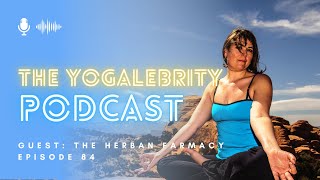
In this episode of the Yoga Celebrity Podcast, host Angelica interviews Stacy Heiny, also known as The Urban Pharmacy. Stacy shares her personal wellness journey that began with Pilates over 17 years ago, progressed through a painful thyroid collapse after long‑term birth‑control use, and led to a complete lifestyle overhaul. She describes moving from a diet high in processed foods, animal products, and sugar to a whole‑food, plant‑based (SOS‑free: salt, oil, sugar‑free) approach, emphasizing the “pleasure trap” of processed foods. Stacy discusses her work in clean beauty, especially her partnership with Beautycounter, and explains the pervasive toxicity of fragrance chemicals, phthalates, and other hazardous ingredients in cosmetics, cleaning products, and household items. She outlines her five‑pillar holistic framework—body nourishment, belief system, honoring Earth, mind‑body connection, and success environment—and how it informs her coaching and community. The conversation also covers her “Get the Glow Up” mini‑video course (skin‑from‑within lifestyle, lymphatic drainage, nutrition, hydration, sleep, recipes) and a 10‑day SOS‑free whole‑food plant‑based detox. Practical tips are offered for chemical‑free laundry detergents, fragrance‑free candles, and DIY cleaning. Stacy mentions her monthly membership group, certifications, and the collaborative Ultimate Weight Loss Bundle with other creators, urging listeners to purchase the bundle for a discounted price. The episode ends with a call to trust one’s instincts around food and to adopt plant‑rich, toxin‑free habits.
Chapters
Welcome to the Yoga Celebrity Podcast. I'm Angelica, your host on the podcast, and today we're doing something a little bit different. I usually tell the origin stories of yoga teachers and where they came from, or we talk about business of yoga. But today I have an incredible guest who is going to tell us all about her journey from using lots of pesticides and processed foods and terrible things for your body to changing everything about her diet and her lifestyle to be as chemical-free as she could and to eat whole plant-based foods. I'm so excited to have Stacy Heine on the podcast today. She hails from Indiana, which ironically was the state that I was born in, and so we have a little bit of a connection there. Anyhow, I'm really glad that she's here today and Excited to have her. So Stacy, your Instagram is the best way to get ahold of you, right? What's your handle?
Yeah, The Urban Pharmacy. It's T-H-E-H-E-R-B-I-N F-A-R-M-A-C-Y. So it's herbs and it's a farm because we actually do have a farm. So that's part of my—
Awesome. Awesome. Yeah, that's great. That's great. So tell us a little bit about what it was like before you came to this realization and you were living your life this way?
Yeah. So it's funny that you said, you know, usually you have a guest that, you know, talks about yoga, etc. But really, my whole journey started, Angelica, with Pilates. My actual, like, my whole, my whole journey to wellness really did start with mind-body connection. And once I started kind of feeling my body, even though I was quite inflamed, and at that time, looking back, I was sick. Um, I— it was really just that, just 20 minutes a day of doing a little bit of Pilates, tapping into my core, doing some breathwork, was really where all of the, all the transformation began. And that was about— that was like over 17 years ago. And, um, I'm gonna try to kind of make my story as short as I can, but, um, you know, I was eating a lot of processed food, I was eating a lot of animal foods, um, I was inflamed, like I said, and I started to, you know, I was gaining weight. I never, I never really have been overweight or obese, but I have struggled with food addiction, processed food addiction, something that I've been very passionate about over the last couple of years and helping my clients with as well. But again, it started with Pilates, and then I went and I watched a documentary about the animal agriculture, and then my life started shifting even more. So I felt like it was just this big, great awakening. And it kind of started with reducing my animal consumption for the animals. Then I journeyed into the environmental aspect, understanding about what animal agriculture is doing to our environment, but also the chemicals that are out there that are destroying our environment. And then I went, you know, then it all became about health as I hit like, you know, my mid-20s. And then I ended up buying my Pilates studio. I had been teaching for a while. At that time, I was actually still— I was going to school for exercise science and I was working in a bakery. So isn't that hilarious? I was a Pilates teacher, but I was working in a bakery. So I'm telling you what, when I tell you that I used to be very addicted to processed food and sugar, I am not joking. It is very much part of my story. So I did that and I owned for several years. Then I actually went off the— we're not going to get too in detail to this, but I went off the birth control pill, which I was on for over 15 years. My thyroid crashed.
Yeah, that's poison. That is poison. That birth control pill is poison.
My thyroid crashed and I was in ill health even though I was teaching people how to be healthy. You know, I was ownership, all that stuff. I ended up getting very burnt out while I was owning, so I had to really get a grip on my health in that capacity. I started a clean beauty company or a clean beauty brand working with them, and now I've sold my studio. I'm at home with my son. We do homeschooling. He's 5 and a half.
Oh, wonderful.
I work for clean beauty and I serve my clients with nutrition, mind-body connection, and holistic living.
That's fantastic. That's fantastic. And, you know, I will say that having grown up part of my childhood in Indiana, it's incredibly difficult to live there and be a vegan or a vegetarian because I was made fun of relentlessly. Oh my gosh. And on top of that, there's almost no place to eat out.
Yeah, actually.
Yeah. I was in a farm community. Oh Lord. We went to this restaurant that was literally at the, the Cattle Auction House. There was only— the only thing on the menu I could get was a small iceberg salad.
Oh no.
And they didn't even have a dressing that didn't have dairy in it.
Yeah. If you would have to give me an iceberg, uh, you know, whatever, an iceberg salad, I would have to ask for like 3 heads of iceberg lettuce, right?
There's no calories in that.
You know, when I, when I find myself in those terrible situations, I'm like, please just bring me as many baked potatoes as you guys have in that kitchen because I will eat them all.
Yeah, yeah, yeah, yeah. I guess I could have got french fries. French fries are a vegan's friend. And oh yes, in Indiana. Yeah, yeah. Um, so you made this transition, and what are some of the things that you learned, um, that really helped you? Because I actually remember when Roundup, which was made by Monsanto. Um, I'm not sure what they're calling themselves now, but I remember when we started using Roundup on our farm, like when it came out. And the whole concept of Roundup is that it actually explodes the stomachs of the bugs. And I always thought, like, it's like people don't think this through. And I was always like, so it explodes the stomachs of the bugs, what do you think it's doing to your stomach And then on top of that, this whole idea of like, a lot of people are like, well, I don't have to eat organic. And I do try to eat organic if I can, because even when they talk about like the Clean 15 or whatever, and they have like thick skins, like what, so avocados have thicker skins, whatever, but they were made. Why? When we plant that stuff, we spray it with everything and then they grow. So it becomes a part of their biological makeup. And so you can't really get away from it. But I would love to hear your thoughts on that.
Yeah, I mean, just like you said, when I did find out about the bugs' stomach exploding, that was way back in the day, right? Like, that was over a decade ago that I found that out and was like, wait a minute, how are humans not connecting the dots? And we're all having gastrointestinal issues. I don't know anybody, honestly, that has perfect digestion these days. Not only is it because the chemicals that are in our food, but It's also the high amount of stress that we're, that we're put through. And then all of the inflammatory processed foods that people are consuming. And the reason why we can't stop consuming these is because we're stuck in the pleasure trap. And that's something that I've been learning so much about. Um, if you, if you guys want to reference that, Dr. Alan Goldhammer and Dr. Doug Lisle actually wrote a book called The Pleasure Trap, and it's all about how processed foods, hit the dopamine receptors in our brain and we cannot break free. It's the sugar, it's the flour, it's the oil, it's the salt. It's so addicting. And I definitely struggled with that for so many years, which is why I live the lifestyle that I do now. So that, that's been a big, great awakening in the recent years. But yeah, like it was about 7, 8 years ago that I started learning about beauty and about how toxic the beauty industry is. I mean, I don't know if everybody that's listening to this knows, but in the United States, we haven't had a federal law passed in over 85 years. 85 years. Yeah, I saw that.
I saw that about the beauty industry.
Yeah. 30 chemicals have been banned, where in the EU, there's been over 1,500 that are known to be carcinogenic, hormone disruptors, obesogens, allergy-inducing chemicals. And we are exposed to these in the United States just like it's willy-nilly, you know. So I really started waking up to that when I started, when I linked arms with the clean beauty brand that I work for now. And, you know, I—
the brand that you work for now is Beautycounter.
Yeah, it's a B corporation. It started about 10 years ago. It's a Santa Monica-based brand. And basically the coolest part about it is that They're a B Corporation, which puts equal emphasis on people, product, and planet. So it's not just about the bottom line. Of course, every brand wants to make money, right? Like anybody that's in business is looking to make money or to make a big impact in some way. But they, like the packaging, if anybody watches the video, like I use this anti-aging line, it's in glass bottles, right? And we've taken so many pieces of plastic out. Not everything is in glass, but like you know, you want to try to link arms with brands that are trying to protect not only consumer health but also the planet at the same time. That, that goes in. You and I were talking about Ahimsa earlier and how that folds in with yoga. And you know, that is part of it. That's part of holistic living. I teach, I teach 5 pillars to my clients within holistic living. It's body nourishment, it's belief system, It's honoring Earth, mind-body connection, and success environment. And when we can really pull all of these together and we look at our life with a bird's eye view, we're doing all we can to protect our human existence here on Earth and our earthly body, right? So, but anyways, going back to that, that about 7 years ago, that's when I started doing, doing the clean beauty thing, got really into understanding the toxic chemicals that are just not in our skincare and our cosmetics, but also in our children's products, in our cleaning products, in our laundry detergent, in our dishwashers. Yeah. I mean, they are everywhere.
Laundry detergent is big for me. Whenever I use something that has any kind of scents in it, I get immediate irritation in my skin. I've been looking for something to use that it doesn't have, you know, or like make your own laundry detergent or something. Yeah. Like I, it's so many chemicals. It's really bad for our body. We forget that skin is our biggest organ.
It is. And, you know, and you mentioned the scent. I used to make my own laundry detergent kind of when I started going down this rabbit hole. That was actually before I found Beautycounter. I was like, oh, I'm going to make my own stuff. I'm going to be a homemaker, you know? But the thing is, it's like a lot of the times when you switch to safer, the sad part is they don't work the same, right? Like, So it's, it's like you have to find a balance, right? Like I was cleaning my studio with vinegar and lemongrass essential oil. Like I wouldn't bring anything artificially fragranced in, but you have to find good brands. So let's just talk about the laundry detergent. I'll drop a few names. Molly Suds is a good brand. They're cleaner. They use sodium bicarbonate in there and sodium percarbonate. And they— it works. Molly Suds has a whole bunch of different things. I also do like the Ecos brand. That one is typically safer.
Oh, that's the one we use. Okay.
Oh, great. Yeah. So let's talk about fragrance though, Angelica, because that's something that most people don't realize. I mean, if anything, and like, if you see me on video, you can see I get my hair highlighted, right? I'm not a perfect nontoxic person. It's very hard to escape. But every little thing that we can do to just reduce our toxin load really does matter. And fragrance— fragrance is like the number one thing that if you want to just try to eliminate one thing, get rid of fragrance and you will be well on your way to reducing so many harmful chemicals. And the reason why is because fragrance is actually an umbrella term. And there can be 3,500 chemicals in the word fragrance. Not just fragrance, but eau de toilette, parfum, perfume. So those words that are in your body products, your cleaning products, all of that stuff, that can be tons of carcinogenic ingredients. And that's where they hide. So it's very— yeah, the things that make the scents linger, those are known as phthalates. Those just release the scent like all day long. Incredibly harmful, not only for your skin topically, but also for your lungs because you're breathing that stuff in. So we have to think about candles, right? Not to say you can't ever burn a candle again. You can find safer candles. You can find one. With essential oils, or you could diffuse your essential oils if you want to. Right. You could burn a Palo Santo stick, open up your windows, right? Set the tone. So that's the thing. Candles, we want to try to reduce those fragrances. I mean, people are hooked to those candles. I used to be one of them. I would burn like a candle in every room. I would get every single Bath and Body Works lotion that you could find. Seriously, I would have every flavor. I would have every color of Lip Smackers. I would have it all.
Yeah, we were all And they marketed it hard for that.
So hardcore.
God, if you were an '80s child, my first job, one of my first jobs was at The Limited.
Yeah. And they like spray, they spray stuff out like to get to make like at the top of the ceiling, you know.
I actually worked for L'Occitane for 10 years. Are you familiar with them? It's a French company. Shower gel, bubble bath, body lotion.
Oh, wow.
And they're one of the first places.
Oh yeah, I am. I know what you're talking about.
They use essential oils. Yeah, a lot of people will call it L'Occitane. It's L apostrophe O-C-C-I-T-A-N-E. It's L'Occitane.
It looks so much more fancy that way.
It means from— it means the girl from the south of France. It's from Provence. So I traveled to Provence very many times to go to the factory, and, and I got to see them make essential oils and go to the lavender fields. It was incredible. But that's where I learned about essential oils before they were popular with the mass world. Yeah. And So when I was in my late 20s was when I was a district manager for them. And in my early 30s, I learned about, like, all of these different, like, these chemical scents and how, you know, our— one of our selling points was that we used real plant matter, not— we didn't use, like, fake scents in all of our eau de toilette and our perfume. And yeah, you know, yeah, it was really cool. I don't know, I think you have one in Indianapolis. I'm not for sure.
We do, I'm pretty sure.
Um, yeah, but they have good candles that are all made with essential oils and that kind of— I mean, it's pricey. You have to pay extra for, for those things.
Sure.
But it— but I also think, and this is the way I thought about it, is that it's a luxury item. Like, we're so used to being consumers and just have like these, you know, 2 for $5 deals at Bath and Body Works. Well, you get what you pay for in life. Yeah.
You know?
And do you really need a candle burning in every room? Are you in every room? You know, right? I went to visit my aunt in Indiana recently. We were there and we went to her house and we stayed at her house instead of my sister's house because my sister has a lot of cats and my husband's allergic to cats and the, the cats come with the fragrance. And so we stayed at my aunt's house and my aunt's answer to her cats was to put those Glade plugins in every single room.
Oh my God.
And I'm just like sitting in the living room trying not to breathe, like Oh no.
Yeah. Yeah. That's terrible. Yeah.
One of the things that really struck me about you, because you and I are both in a bundle together in the Ultimate Weight Loss Bundle by Chef AJ. And I remember I got Lisa, who's one of the heads of it. She's Raw Food Romance. She released all the stuff to me like the day before everybody else got it because I am friends with her. So I was like, let me see everything. Send me the link. And yours is one of the first ones that I looked at because the visual, like, first, you're stunning. Like, you were absolutely beautiful. And your, your photo on the COVID I was like, wow, like, that looks so professional. And your skin just glows and your hair is so healthy and vibrant. And you can tell that you're really practicing what it is that you're talking about. And so immediately that You're actually— your section in the bundle was the first one that I was drawn to. So can you talk a little bit about what it is that you're offering in the bundle?
Yes, absolutely. And that was a picture of me when I was a little bit more tan from the summer in our greenhouse, holding some of our beautiful, like, yellow and white cherry tomatoes. They were— they're just candy. They're— they're Earth's medicine. They're Earth's candy. And, you know, so I I've been working, like I said, with Beauty Counter for 7 years. I'm, you know, I'm a lot more than just beauty. That's, that's a lot. You know, my brand is a lot more than that. It's healthy living and healthy holistic living in general. But I figured— and actually Chef AJ, who is the other part of the bundle, Chef AJ and Alyssa together, she gave me the idea because I've been live on her show showing people how to apply Beauty Counter and how to use clean beauty. She's like, why don't you do something that has to do with beauty? I was like, hey, that's actually a really good idea. That's part of my brand. That's a pretty, that's a pretty good business move, right? But, um, so I called it Get the Glow Up. And, um, what it's about, it's a mini video course. Um, it's not professionally edited or anything. So just, you're gonna get me in a real life, you know, scrappy in my office showing you and teaching you, um, how to get the glow up. And what it's mostly about, Angelica, is how to live a lifestyle that's gonna help your skin from within and a little bit about your external world as well. So, uh, we talk about lymphatic drainage, right? We, and that's, you know, depuffing the body. We talk about the power of mind-body connection and the mind-body-skin connection. We talk about how to reduce the chemicals, the chemicals, chemical exposure on our skin, and that can— how that can help us. We talk about specific foods that are going to help us get the glow up, different vitamins and minerals, and how that can help us glow and have healthy skin. We're going to talk about hydration, the importance of sleep for your beauty. And I also include some recipes. So like some specific herbs to make a really like a beauty tea. And I just finally mastered this recipe that I've been trying to master. It's a no-bake brownie that is made with like roasted sweet potatoes and dates and flaxseed, which is incredibly good for your skin. Wow. It's like a fudgy no-bake brownie. And I—
I'm excited to make that. You're going to love it.
It's going to be so good. So, yes. So it's just lifestyle factors that we can, that we can implement to help us get the glow up. That's what it's all about.
And there's almost 100 creators in the bundle. It's $49. I'm going to put the link below. It's a limited time offer. So if you're listening to this on the date that it was published, run very quickly. And get that. It's in the description below because there's also so many like really huge names in there. The McDougalls are in there and Plantiful Kiki is in there. Raw Food Romance is in there. Chef AJ is in there because obviously it's Chef AJ's bundle. And I have a 25-hour yoga certification program that is in there as well. So if you're looking to learn how to have your own home practice or you just want to teach people around your neighborhood or your family yoga, it's a great way to do that. And that normally retails for $149 and it's in the bundle. So you get it included for $49 as well as your course, which is just so— I love bundles, they're so incredible.
They're incredible. And you know what? You're getting a bonus one from me as well. Secrets out. We're doing— I'm doing a 10-day detox and it's all whole food plant-based. It's not anything crazy where you have to just drink fluids for 10 days. It's not a juice cleans. It's not a water fast. It really is what I wish I had years ago when I went plant-based, understanding the pleasure trap, which I talked a little bit earlier about, the salt, the oil, and the sugar. Like, if you want to take your plant-based journey to the next level and try to get off of the processed vegan foods, which believe me, I have been there, done that. Like, don't give me a vegan donut because I'm going to go back for 5 more type of thing, right? Like, don't even, don't even put me there. It's, it's all whole food, plant-based, SOS-free so that you can—
What does SOS mean?
SOS-free means salt, oil, and sugar-free.
Okay.
It is also free of flour. So, you know, for some people who have a severe food addiction, which I will very openly admit that I have, And I mean, flour is a trigger for me. I love sourdough bread. I think it's incredibly beneficial for your gut microbiome, and there is a place for it in a healthy diet, like, absolutely. But, you know, if we're eating pastas every day, which I love pasta, and if we're eating breads and if we're eating crackers every single day, that can be, that can be pretty hard to get off that pleasure trap. And kind of, you can kind of diminish your appreciation for the whole grain itself. You know what I mean? It's just so palatable.
I know it because yesterday I had chili that I made from the bundle and I was excited about it and it didn't have any oil and it didn't have any salt. And it's this really nice, healthy, like, 3-bean chili. And I put Saltines on it.
Oh, girl.
And I ended up eating the entire package of Saltines. The whole sleeve. Like, not even paying attention. I was on a Zoom call and I was just like, The whole thing.
They're like, there's just— who, who has a— like, who really has a serving? And let's talk about Triscuits. You know, Triscuits used to be—
let's not talk about Triscuits. Okay, let's not.
But I mean, if you look at the— if you look at the serving size, I think it's 5 crackers. Who's gonna eat 5 crackers that are oily and salty and taste so good? Same with Tortilla chips. I mean, I was definitely on the pleasure trap. I've been plant-based for over a decade now, but I didn't realize how addicted I was to just packaged foods until about 2, 2 and a half years ago. Actually, literally the beginning of COVID is when I figured it all out.
And yeah, I think it just kind of hit me during this conversation, actually, because I was like, well, last night we had We had real sauerkraut, like fermented. Mm-hmm. And we had pierogies cuz we're Polish and we had, um, yum yum. And we had salads. Mm-hmm. Um, but we had a Beyond sausage too.
Oh yeah.
And I was like, I haven't even tried any of that.
I know that it would just be dangerous for me.
It's so good. That's what I heard. Before, before we started recording, I was telling Stacy about how For many years, I started at 11 years old. I started to become a vegetarian, and then as I got older, I was vegan, um, once I moved out of my family's house. And we didn't— vegan wasn't really a thing, you know, like 40 years ago, um, but, um, vegetarian was really big in the yoga community. And, um, so one of the things we didn't have, those processed food— the most processed thing we had was tofu. So I would be, like, really excited anytime I saw tofu at the salad bar, you know? Like, I loved when we would eat at places that had big salad bars. And I ate a lot of salads, like, naturally. But I also ate a lot of macaroni and cheese and spaghetti. I ate spaghetti every single night my sophomore year of college because it's cheap and it's filling. I gained 20 pounds that year.
Oh my gosh.
Like, I have gained— since they came out with Beyond Sausage and Impossible Burgers and all that, I've gained 70 pounds.
Oh my gosh.
Yeah, like in the last like 10 years. It's because I never ate processed food before. But I do have to admit right now at this moment on this podcast, I am definitely addicted.
So addicted. So many people are, you know, like sugar is more addictive than crack cocaine. So we have to realize that, like, I, I no longer It's so funny, Angelica. Like, I, I must have organized my pantry. I don't even know how and why I still have bags. I have bags of sugar in my pantry. Have I cooked with them in the last two— with it in the last two years? Nope. But for some reason I still kept it because I'm that addicted. Like, I might need the sugar someday. And like, so anyways, when I cook now And let's talk about spaghetti real quick first. Hold on, just— I don't want anybody fearing spaghetti. You can actually lose weight on a high carbohydrate, low fat diet. What happens in the spaghetti situation, the noodles are not making you fat. They are a little bit higher caloric density than eating the whole grain itself. Yes, but if you're eating the noodles with just an oil-free marinara, that's that's key, oil-free and sugar-free marinara, you're not getting very calorically dense food. Like the tomato sauce itself is very low in caloric density. What happens is we'll end up putting cheese on it, right? Right. We'll end up putting the Pecorino Romano on there. We'll, you know, we'll accidentally buy those higher calorie oily marinara and it will just catch up with you. And, you know, so every time I cook now, like if I'm baking a baked good, I use the whole fruit and nothing but the whole fruit. That's what Chef AJ says. Says, you know, like if I'm going to make something sweet like a brownie, I use dates to sweeten my food. If I'm going to make a hot chocolate, I use dates to sweeten my hot chocolate. I blend it up. You— I mean, it's delicious. It's creamy. But I use, you know, I use dried fruit mixed with water and I'll make paste. A lot, and I just— that's what we sweeten our food with. I didn't want to bring my son into this the way that I grew up because, I mean, Angelica, like, every Sunday we would go to Sunday school and I would wait the whole week just to get my Dunkin' Donuts. My mom would take us after. I would get the— I would get a whole box and they would be gone before we even got halfway home. The blueberry, the chocolate, like, just It's the pleasure trap, you guys.
Sprinkles.
We're all very addicted and it's just like we have to take off the veil and realize that whole food and plant, plants can taste delicious, but it's gonna take us a little bit to reduce that sensitivity of our taste buds because right now that piece of broccoli is probably not gonna taste super sweet to you. You know what I mean?
What did you do? Like, did you just rip off the Band-Aid on it or did you do it over time? Um, you know, and also, how did you get your family on board?
Well, with my husband, it's been a journey because I said that I've been plant-based for over a decade. For him, um, he did not really take this seriously, uh, in terms of health until he started coming home from his corporate job and I was going through my nutrition certifications. I have multiple certifications. I never stopped learning. In fact, I just signed up for another one because I will always continue learning to help serve my clients the best. But like, he would come home and he would hear the science, he would hear the longevity factor. He— and once our son was born about 5 and a half years ago, he's like, yeah, I do kind of want to live long. And then, I mean, he's 40— he's 42, 43. Um, and coworkers, like his best friend actually died from a heart attack. Um, a coworker of his had triple bypass surgery. The number one reason we die early is from heart disease, from heart cardiovascular issues.
That's how my mom died. My mom died when she was 61 from that. My husband and I were just talking about that last night. His parents are considerably older. My mom had me when she was in high school. She was only 17 when she had me. And his parents were in their, like, 40s when they had him. And he was always like, you know, my parents are older, they're not going to live as long, blah, blah, blah. And I was like, we were talking about last night, and I was like, actually, my mom died. His parents are still, like, very active.
Yes.
They're in their, like, late 70s, early 80s. His dad's in his early 80s. His mom's in her late 70s. And they're just, like, really active. They drive around. They do— they go on trips. They do all this stuff. Love it. Yeah, because they lived a much healthier lifestyle. They didn't eat very much processed food. They did eat meat. Um, but they walk after every meal. They go on a walk, all of them. Like, they just lived a much healthier lifestyle than my parents did. And so, um, it do— it makes a difference.
It does. It does. It really does. You know, most of these chronic illnesses that we are ailed with can be reduced, can be avoided, and a lot of them can actually be reversed. This is something that I teach through the Physicians Committee. I'm a, I'm a licensed Food for Life instructor with them, and helping people understand that you can actually reduce your risk of getting cancer. You can reduce and eliminate getting type 2 diabetes. You don't have to have high blood sugar. The reason why people have diabetes type 2 is because they're eating too much fat. They're eating too much saturated fat. It's, it's blocking their cells and the sugar can't get into their cells. It's, it's this processed food problem. And for, so for me, like you asked me, how did I do this? When it came to transitioning to a whole food, when it came to eating plant-based or quote vegan, cuz at, at first it all started, I was like, I'm going vegan. I'm not gonna have any honey. You know, now I'm actually teaching my clients how to make medicine with honey. There is room for some foods like that. Now that I understand there are some benefits, and it's not like cold turkey, it's not all or nothing. I do have leather boots. I feel absolutely terrible every single time I wear them. I think about the animal every time I wear them. And it's something that I'm not perfect, just like I said earlier. We can't be completely low tox or non-tox.
Well, the other thing You, you can't get away from it all. Like, I would, I would feel more guilty, like, having grown up on a farm, that animal already sacrificed and already died. You already had those boots before you became a vegan, before you had this epiphany of realization. It would be more disrespectful to the animal to then not at least use them, right? Right. Yeah. Like, and that's another thing too, is like, um, there's woman on Instagram that I follow, and, um, she was— somebody was like, oh, well, there was accidentally meat in your food, blah, blah, blah, and you should just throw it away. And, and I commented, like, if you happen to get something at a restaurant, like, say you order spaghetti and they put Parmesan on it, like, sending it back, not eating it, whatever, that dishonors the animal in my opinion. Like, that animal has already died, that's already there, it's not going to take back its life by, uh, throwing it away. It's actually worse in my opinion because now you have to like make another meal and all, you know, like, you know, if you're— if you like, you're like truly disgusted by it, that's one thing, but if you can like work around it, then it, you know. Yeah, I mean, I've had— I, I ordered eggplant parm one time and it came out with beef in it. Like, who the makes it that way?
Yeah.
And I was like, I did send that back. I'm like, I'm not going to eat beef because that would just make my stomach really upset. But like, yeah, like, who makes it that way? I don't— it was very unexpected. But, but I'm not going to send it back if it has a little bit of Parmesan cheese on it like that. I'm just going to eat that and go on. So I wouldn't feel guilty about your boots. I would feel bad if I didn't wear them. At, you know, like you're not buying anymore. But at the same time, you know, you buy something on Amazon that's supposed to be like vegan leather or not, you know, and then it comes and you realize that it's probably dog leather, you know.
Yeah. Or I mean, you know, and you could argue all day about that, like the vegan leather is made from like plastics and that can actually leach, you know, right, that can leach harmful chemicals out into the air. So, you know, there could be an argue back and forth about that all day long. But When it comes to the eating aspect and the health aspect, like I told you, for my husband, he started learning about the science and reducing your cancer risk and reducing your chronic illness risk. That was big for him. He wants to be around for our son, and he really has made this massive change, especially once COVID hit. I think he definitely was like with his corporate world. There were some animal products and stuff that were surrounding him and he was eating them and he was significantly more overweight than he was even, than he is even now. And that was just 2.5 years ago. We have been on this journey for a long time, but it was really once he went SOS-free because he started working at home once COVID hit that I really, you know, I had control of what came, went to his body and he just, his inflammation just went down and like, it has been a total transformation for him. But for me, I, I stopped eating meat and then I got super addicted to dairy because I was like, I don't know where I'm going to get my protein. You know, that was like 12 years ago. I'm like, I got to eat a lot of dairy.
So did you read The China Study?
I did. I actually had T. Colin Campbell on my podcast.
Oh, wow. Yeah. So, you know, like, the protein thing is a myth.
Yeah. Oh, yeah. No, guys, we don't. We don't need as much protein as we think. And guess what? Watermelon has protein.
All of the green plants have protein.
Everything. That's where all your animals get the protein.
Right. And we're getting a secondary source, right? If you eat the animals, you're getting a secondary source of protein. You're not even really getting the protein which came from the plants to begin with.
Yeah, right. So it's a beautiful thing how it all comes in just a really beautiful package. From plants. But, um, so I, I got so addicted to dairy and so addicted to sugar that I was going to like the soft serve ice cream places, um, like daily, you know, where you could put all the toppings on. I would have that like multiple times a day. And then I was like, God, I just feel so horrible. So I stopped eating cheese and dairy and I started kind of going— I actually never had any of like the fake shredded cheeses. I started trying to make my own cheeses with, like, cashew.
Those are phenomenal. You know, those are really good, especially if you get a dehydrator and you put some probiotics in there and let it go, like, overnight. They're really good.
We just got a freeze dryer. Can you, can you imagine all of the fun things we're going to do with that?
Lisa got a freeze dryer, and I know I take stuff over to her house and I'm like, can you freeze dry this dragon fruit?
Oh my God, that's so funny. I love it. I love it. Yeah, I forgot that you guys know each other. That's great.
Yeah, we live in the same town. We live less than a mile away from each other, so.
Oh my God, I got to go out to Vegas for my first time and meet both of you.
Oh yeah, we'd love to have you. We'd love to have you. It would be phenomenal. But I know we need to wrap up because we both have other things that we need to do. But if people want to get the bundle, they can go to the description below. And if they want to get some —of the fragrance-free and more healthy chemical-free makeup, they can hit you up on Instagram on a DM. And what is your Instagram again?
Yeah, it's @theurbanpharmacy. Herb like herbs and farm like a farm. The Urban Pharmacy.
And I'm so excited to have you here. I'm excited for people to get your portion of the bundle. You also have— and like what I think is really incredible, you have a monthly membership group that people meet and you meet with them 4 times a month.
Yeah, 4 times a month at least. And I teach about those 5 pillars that I talked about earlier: body nourishment, belief system, honoring Earth, success environment, and mind-body connection. And I teach healthy, whole food, plant-based, salt, oil, and sugar-free cooking. Totally up to you if you want to add the salt and sugar after you make my recipe, but to try to help people get off that pleasure trap. And to just live their most healthy, holistic life. It's my mission. Well, I think that's awesome.
And it's like a great way to deep dive in. I totally love the— your community and your monthly program offering. That's phenomenal. I wish that I had had something like that 10 years ago. Thank you so much for joining me on the podcast today. I absolutely, deeply, truly appreciate you. I'm so glad that you're here. I'm so glad that we can make this happen. I know it's a little bit different than what I normally have on the podcast, but I felt like your message was really important. And especially I want people to grab this bundle before it's gone. Is there any last words of wisdom that you would like to leave the listeners with?
Words of wisdom is to, um, to trust your instinct when you look at food and when you look at the beautiful produce that's in the grocery store and it catches your eye, put it in your cart and or avoid going to the grocery store at all and order from Instacart so that you don't have to be triggered. But trust your instinct because you know intellectually and within you what's best for your body. Um, so trust that and try to just flood your body and flood your cells with healthy, um, plant foods. And then also to get the bundle, because if you guys want to live a healthy holistic life, like, this is going to be one of the best ways to get you started. And, um, you have so many recipes from this bundle, but also amazing yoga and mind-body connection techniques, et cetera. And you're just gonna love it. So make sure that you get it.
Well, thank you so much for joining us and do definitely subscribe. You can check this out on YouTube if you wanna see the video. You can subscribe anywhere podcasts are, Apple, Spotify, Google, Amazon, everywhere that you listen to podcasts. This podcast is there. I'm also on TikTok and Instagram at Yoga Liberty, and I look forward to listening— or look forward to sharing with you on the next podcast. Thanks for joining us.







