7-Fig Entrepreneur Ranks the Top 7 Side Hustles for 2025!
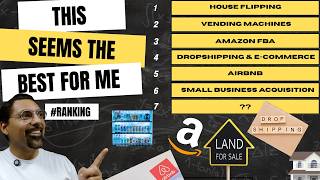
Anthony Wyler, who has managed $1.5 million in land deals, ranks seven side hustles by startup cost, time, and profit potential. Land flipping tops his list: $3-5k for marketing, 1-2 hours daily, $10-50k per deal. House flipping needs deep pockets and 3-6 months per project; Amazon FBA requires $10-20k upfront but faces rising fees.
Chapters
I'm about to save you from wasting thousands of dollars and hundreds of hours on the wrong side hustle. After overseeing over $1.5 million in land deals, I'm ranking the 7 most popular side hustles of the year, and number 7 might surprise you because it's actually my number 1. My name is Anthony Wyler, and I've coached over 300 people through their first land flipping transactions. And I've actually tried most of these side hustles myself, failed at some, succeeded at others, and watched hundreds of other students go through the same thing. That gives me a unique perspective on what actually works versus what just sounds good online. Now, here's the thing. Everyone's telling you to start a side hustle. Your feed is full of people claiming they made millions on dropshipping or that passive income is just one property away. And you're probably sitting there thinking, which one actually works? How much money do I really need to start? And how many hours will this actually take? And let's be honest, is this even legit or just another internet scam? Look, I get it. When I had $100,000 in student loan debt and was desperate to build something of my own, I tried absolutely everything. Some worked and most didn't. So here's what we're going to do. I'm ranking these based off of 4 real factors: startup cost, time investment, actual profit potential, and scalability. Not hype, real numbers based on what I've seen work in the real world. And I'm going to be brutally honest about each one. The good, the bad, and the ugly. Because finding the right side hustle isn't about following trends. It's about matching the right opportunity to your situation. So starting off with number 1, we have house flipping. And look, I understand why this ranks so high for most people. The profit potential is massive. We're talking $50,000 to $100,000 per flip when done right. But here's what you need to know. You're looking at a minimum of $50,000 to $100,000 just to get started. And that's if you're using hard money lenders. You'll need contractor relationships, market knowledge, and the ability to manage complex renovations. Time investment: plan on this being a full-time job for 3 to 6 months per project. The reality check is that the competition is fierce. Every market has dozens of experienced flippers with deep pockets. Contractors will let you down, budgets will blow out, and one bad flip can wipe out your profits from two good ones.
So who's this for?
People with construction experience, significant capital, and the ability to manage complex projects. If that's not you, keep listening. Number 2 is vending machines, and the pitch sounds great. Passive income from machines that works while you sleep. Startup costs run about $3,000 to $5,000 per machine, including inventory. But here's what they don't tell you. Location is everything, and good locations cost money. You're paying the business owner a percentage, dealing with maintenance, restocking, and vandalism. And the time investment, it's a little bit more than what you probably think. You're driving routes, handling inventory, fixing jams, and dealing with location owners. Most operators I know work around 20 to 30 hours a week once they have around a little over 10 machines. A good machine nets $200 to $400 per month. So you're going to need volume to make real money, which means more capital and more time. Now, who's this for? People who like predictable, steady income and don't mind the physical work of maintaining routes. But if you want true passive income, this probably isn't it. So coming in at number 3 is Amazon FBA. Now, I've got personal experience with this one because I tried Amazon arbitrage back when I was desperate to make anything work. I'd spend hours at Trader Joe's taking photos of products, buying at a discount, and then shipping it to Amazon. Now, here's the brutal truth when it comes to it. After all the Amazon fees, I was barely breaking even, and that was when the competition was way lighter. Today, you're going to need probably $10,000 to $20,000 minimum to test different products, enough stock to stay in the buy box and hope that someone doesn't come in and undercut your listing price to where you are SOL with your inventory sitting at an Amazon warehouse forever. And let's not forget that one bad review will kill your listing and your seller account. The time investment is massive upfront. Product research, going to multiple stores to have enough inventory to ship, packaging and shipping that meets Amazon standards, and listing optimization.
So who's this for?
People with patience, complex systems, and enough capital to weather the learning curve. And if you're okay with having your house become a mini Amazon warehouse. If you're strapped for cash, this one will eat you alive. Number 4 is dropshipping and e-commerce. The promise with this one is that you sell products without holding any inventory. The reality, it's completely different of a game than when it was 5 years ago. Startup costs are lower, maybe $2,000 to $5,000 for your store, ads, and testing. But here's the thing, customer acquisition costs have skyrocketed. You might spend $30 to acquire a customer for a $50 product. Now, that leaves you almost no margin after product costs, and success requires constant testing, ad creative, and dealing with angry customers when your Chinese supplier ships late or sends the wrong item. You're essentially the middleman with no control over the product or fulfillment.
So who's this for?
People who understand paid advertising, have a high risk tolerance, and can handle customer service nightmares. Most people lose money for months before seeing any profit. Number 5 is Airbnb arbitrage, and this is where you rent properties and sublease them on Airbnb. Sounds pretty simple, right? But you'll need first month, last month rent, security deposit, plus furnishing costs, easily $10,000 to $15,000 per property. Then you'll need landlord permission, proper insurance, and you better hope your city hasn't banned short-term rentals yet. The work never stops with this. Guest communications, cleaning coordination, maintenance issues, and reviews that can make or break you. One bad guest can cause thousands in damage. One neighbor complaint can get you evicted. Profit potential is real with this one, $1,000 to $3,000 per month per property when done right. But it is far from passive, and regulations are tightening everywhere.
So who's this for?
People with strong operation skills, customer service patience, and the ability to navigate complex regulations. And if you can't handle 2:00 AM guest emergencies, please skip this one. Number 6 is small business acquisition, buying existing businesses. And this is the highest barrier to entry on our list. You're looking at $100,000 minimum, and that's for very small businesses. Most decent opportunities start at $500,000 plus. Yes, there's seller financing and SBA loans, but you still need significant down payment and personal guarantees. The learning curve is steep. Due diligence, financial analysis, operations management— this is PhD-level stuff compared to other side hustles. One wrong acquisition can ruin you financially.
So who's this for?
Experienced business operators with significant capital and risk tolerance. This is not a beginner play. Now coming in at number 7 is land flipping. And here's where things get interesting because this ranks last on most people's list because they don't understand it, but it's actually my number 1, and here's why. Startup costs are as low as $3,000 to $5,000 for your first marketing campaigns. There's no tenants, no toilets, no renovations. You're buying raw land below market value and selling it for profit. Simple. Now, competition is far less compared to the others that we just went over. While everyone fights over houses, land deals sit untouched. Most investors don't even know that this opportunity exists. and the time investment, you're going to be looking anywhere from 1 to 2 hours a day once you have good systems in place. Now, the profit potential is anywhere from $10,000 to $50,000 profit per deal, and you can start with partnership deals using other people's money. Now, here's why land flipping is number one. It has the lowest barrier to entry with the highest profit-to-effort ratio. Now, let me address the biggest objections I hear. Isn't raw land hard to sell? Actually, no. That's because of massive demand for rural land from people wanting to escape cities build off-grid homes, or just want to own a piece of America. Another common question is, how do you know what the land is actually worth? So a simple spreadsheet with formulas based on recent sales and current for sale listing trends. I teach this to beginners all the time. If you can use basic Excel, you can price land. Is this another get rich quick scheme? Look at the results. Real people, real deals, and real profits. This is a legitimate business model that's been around forever. We're just systemizing it. You find undervalued land, market it properly, and connect sellers with buyers. That's it. The fundamentals are so simple that I've seen complete beginners close their first deal within 30 days. Now look, every side hustle on this list can work for the right person with the right resources. But if you're starting out looking for something with low barriers to entry and high profit potential, land flipping at least deserves your attention. And if you want to explore land flipping further, I've got a free community where I share deal breakdowns, answer questions, and connect beginners with experienced flippers. The link is in the description. But whatever you choose, stop watching and start doing. Pick one model, commit to it for at least 90 days, and see what happens, because the best side hustle is the one that you actually start. I'll see you in the next video.
More from Anthony






How Vincent made $76,000 in profit with High Ticket Land Flipping while working a 9-5