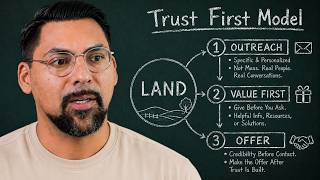
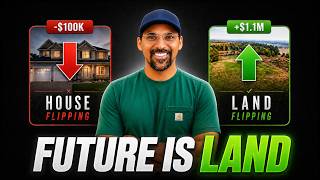
In this YouTube video, the speaker highlights the explosive growth of homesteading content on YouTube, noting billions of views and millions of subscribers who are learning how to live off‑grid. He links this audience surge to a 50% increase in rural land sales since 2020, arguing that the demand for small parcels of countryside property far outstrips supply. The core opportunity he presents is an arbitrage model: locate owners of inherited, unused rural acreage—people who pay taxes on land they never use and are eager to sell—make them a cash offer below market value, then flip the property to a motivated homesteader for a large profit (often $25k‑$100k+ per deal). He emphasizes that the flipper never needs to own or physically handle the land, can use transactional funding, and requires no real‑estate license or prior experience. To find deals, he uses a tool called LandStats, which provides heat‑maps of counties with high concentrations of motivated sellers. He cites several success stories (e.g., Scott, Casey, Clyde) who earned six‑figure sums in weeks or months using this method. The video ends with a call to follow for more land‑deal content, promising no fluff and direct insight into his own transactions.
Chapters
So check this out. Right now, homesteading content is getting billions of views on YouTube. Billions. There are channels with millions of subscribers teaching people how to grow their own food, raise chickens, collect rainwater, get completely off the grid. And it's not just people watching these. People are actually buying. Rural land sales have surged over 50% since 2020, and demand is still climbing every single month. And here's the reason this caught my eye. All those people, and there are millions of them, they all need land. They need a few acres somewhere rural, somewhere they can plant a garden, run some animals, put up a well, maybe an RV, or build a small cabin. They are actively searching right now. They've got money set aside, they are motivated, and there are not nearly enough affordable rural properties to meet that demand. So where does the land come from? And that's where things start to get interesting. Across the country, there are millions of rural landowners sitting on inherited acreage they have never once set foot on. Grandpa left them 20 acres out in the middle of nowhere. They live in Chicago, they live in Atlanta, they have no use for the land. They are paying property taxes on it every single year, and all they want is to be done with it. They have no idea what the acreage means to someone who is desperate to start a homestead. No idea at all. And here's the best part. Your job is just to connect the two people. That's it. You find the motivated rural landowner who wants to unload the inherited property, and you make them a fair cash offer way below what the land could sell for on the open market. They take it because for them, it solves a problem. Then you turn around and sell that same property to one of the millions of homesteaders actively looking, and you pocket the difference. We're talking $25,000 to $50,000 $100,000 per deal, and sometimes even more. And you never have to own the land. You never have to touch it, visit it, or put your own money to close it. There's something called transactional funding. The industry uses it all the time. No real estate license is required. No experience is required to get started with this. So I use a tool called LandStats that shows me heat maps exactly which counties have the highest concentration of motivated rural sellers. It takes the guesswork completely out of it. Scott made $245,000 in his first 60 days. Casey did $290,000 in 90 days and Clyde closed one deal, made $41,000 and paid off $37,000 in debt. Follow me for more land content like this because I post this exact stuff I'm doing in my own deals and there's no fluff.