The Real Estate Market Is Dead?
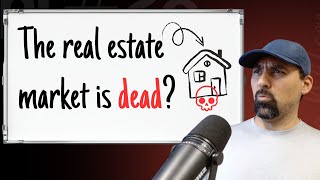
In this instructional YouTube video, Anthony argues that the conventional real‑estate playbooks—Airbnb short‑term rentals, fix‑and‑flip, and the BRRRR (Buy‑Rehab‑Rent‑Refinance‑Repeat) method—have become unprofitable for most beginners due to a confluence of higher mortgage rates, tighter inventory, increased regulation, and slower market dynamics. He backs this claim with recent macro data (30‑year low home sales, near‑all‑time‑high median prices, 7% mortgage rates) and specific performance metrics (occupancy drops, revenue per listing declines, reduced flip margins, higher loan costs). He then pivots to present vacant land flipping as a resilient alternative that sidesteps many of the new barriers: low seller motivation, minimal rehab risk, less competition from institutional investors, and stable or appreciating land values. Anthony shares his personal journey—starting with $5,000, leveraging investors, and generating $50k profit in four months, eventually scaling to seven‑figure land deals—and outlines a concrete five‑step starter plan for newcomers: (1) set up a legitimate business entity, (2) select a data‑driven market and counties, (3) compile a list of off‑market land owners, (4) conduct personalized outreach with credible offers, and (5) package and fund the deal via investors or personal capital. Throughout, he emphasizes seller psychology (owners of unused parcels, often out‑of‑state), buyer profiles (builders, recreational users), and the importance of data‑backed comps and quick turnaround. The video concludes with a call to join his free community, The Land Lab, for scripts, pricing sheets, and peer support.
Chapters
So people keep saying that the real estate market is dead. Airbnb is cooked, flipping is impossible, and the BRRRR method, that just doesn't even work anymore. And if you tried to make the numbers work in the last year or two, it probably feels true. But the market isn't dead. It's just not the same for the old strategies that I've just mentioned. And at the same time, there's one quiet corner of real estate that is still working right now. And in this video, I'll show you why Airbnb, fix and flip, and BRRRR got so hard. Then I'll show you the one model that still fits in this market, which is land. I'll walk you through a simple starter plan if you want to try it out. If you don't know me, my name is Anthony and I started Flipping Land back in 2022 with my dad after failing a bunch of different side hustles. We had about $5,000 in capital starting out, so we used investors to fund the deals. And in our first 4 months, we made around $50,000 in profit from land. Since then, I've overseen over 7 figures in land deals and coached hundreds of people through their first transactions. And I want to give you a clear, honest breakdown of what actually works in this market today. So make sure to save this video so you can come back to the numbers later and check out my free community as well. So let's start with what changed, which is the weird real estate market that we're currently in. And right now real estate looks broken from the outside. Existing home sales in the US dropped to the lowest levels in almost 30 years in 2023, and then 2024 was even a bit lower than that. So sales are near 30-year lows right now. At the same time, prices are still near all-time highs though. The median home price is a little over $400,000 and mortgage rates are still much higher than what people got in 2022. 2020 and 2021. So this means that most owners are locked into cheap loans and they don't want to trade in a 3% rate for 7%. Who can blame them for that? So we have this weird mix— very good deals, very few motivated sellers, and still expensive houses. And if you're trying to make Airbnb flips or BRRRR method work in the world today, you feel it. They can still work, but they're not simple models for normal beginners anymore. And let me show you why. So why did Airbnb get so much harder? From about 2015 to 2021, Airbnb looked like the dream. You could buy decent houses in a hot city, throw some furniture on it, list it on Airbnb, and the numbers just worked. Those years are long gone in a lot of markets, and here's why. First is that supply exploded. Hostel, the money people were making, and everybody piled in. In the last few years, short-term rental supply in the US grew by double digits year over year in a lot of markets. And at the same time, though, demand stopped growing fast. So you have a lot of listings chasing the same number of guests. And what that does is that pushes occupancy down and starts a price war. Second is that revenue per property got squeezed. Industry data shows that after the crazy peak in 2021, average occupancy and revenue per available rental dropped in some hot vacation markets. Average revenue per listing fell by anywhere from 20 to 50% from the peak. So the same house that printed cash in 2021 might barely cover the mortgage in 2024 or 2025. This is a big one, is that regulation finally caught up. So big cities started to crack down on short-term rentals, and New York is the best example. When the new law kicked in, Airbnb listings dropped by something like 60 to 90%. Other cities added primary residence rules, permit caps, or heavy taxes, and even smaller cities are adding permit fees, hotel taxes, and rules that can change your numbers overnight. Now layer all of that on top of today's prices and rates. Let me give you a simple example. You buy a house for, let's say, $400,000 and you put 20% down, and that's what, $80,000 in cash? And at a 7%, 30-year loan, your principal and interest payment is probably going to be around $2,600 a month. And then we need to take into consideration taxes, insurance, utilities, cleaning, and platform fees. You might be at $3,400 a month just to break even. If bookings are slow and you only bring in $3,500 to $4,000 in a month, there's not much real profit left. You're basically running a hotel with city rules and guest drama and real downside risk. So yeah, Airbnb still works for some people in some markets, but it's crowded, regulated, and way less forgiving for beginners than it was a few years ago. Now let's get into why fix and flip are getting squeezed right now. And this used to be the star on YouTube and HGTV. You buy ugly, make it pretty, and you sell it fast. You walk away with $50,000 or $100,000 per deal. Now, the problem is what happened to the middle of that story that we don't see, which are your costs. Data from 2023 and 2024 shows that home flipping activity in the US dropped at the fastest pace in about 15 years. And at the same time, the average return on investment for flips fell to the lowest level since before before the last housing crash. In recent reports, the typical gross profit on a flip has been around $60,000 to $66,000, which isn't that bad. And as a margin, as a percent, is in the mid-20s before expenses. Now that sounds good until you remember what's not in those numbers. That's before you pay for rehab, before interest on loans, before property taxes, utilities, and insurance during the hold, and before your closing costs on taxes on top of that. The time to flip has gotten longer. In some reports, the average flip takes around 5 to 6 months from purchase to sale. Every extra month holding costs eat at your spread. Now put yourself in a beginner's shoes here. You buy a house for let's say $300,000 and you plan to put $80,000 into rehab and you think it could sell for let's say $470,000. And on paper, that's a $90,000 spread. Then the rehab runs over by $15,000, rates move, buyers get pickier, and then you end up selling for $435,000 after sitting on the market. Holding costs and interest eat another $15,000. Your $90,000 spread can shrink to $10,000 to $15,000 or even turn into a loss. Now, Now, if you're a pro flipper with a strong crew, deep pockets, and years of systems, you can still play this game. But if you're a new investor with a W-2 job and a family, this model is brutal in the current market. So now let's look at the BRRRR method, which is buy, rehab, rent, refinance, and repeat. And this used to be the infinite money model online because you could pull your cash back out and keep stacking doors. Now, the math worked a lot better when rates were 3% and prices were climbing fast. Today, 3 big things changed. And first, your loans are more expensive. Most BRRRR investors do not get the best owner-occupied rate. They use investor loans or DSCR loans. And as of 2025, many DSCR loans are in the 6.75% to 8.5% range, and investor loans are often half a percent to 2% higher than a normal home loan. So this means your monthly payment is way higher than it would have been a few years ago. Second is that refinance is not a magic button anymore. Big lenders and Freddie Mac and Fannie Mae have put out reports showing that refinance volume is still tiny. Most people with low rates are not refinancing. And that means the banks are picky. They want solid debt coverage and strong appraisals. And because values are not shooting up like 2020 and 2021, the new appraisal may not support pulling all of your cash back out. So you might leave $10,000 to $50,000 stuck in each deal. Third is that the market itself is locked. Higher rates have kept a lot of owners from moving, and studies from the Fed show that when market rates are way above a homeowner's current rate, moving activity drops a lot. Less movement means fewer distressed or underpriced deals for you to buy. So BRRRR still works in pockets, but instead of being an easy snowball for small investors, it's turning into a pro sport with thin margins, higher risk, and longer timelines. If you're on your first or second deal, that's a tough place to learn. So if Airbnb is crowded, flips are squeezed, and BRRRR is slower and riskier, what still makes sense in this weird market today? And for me, it's been land. Vacant land. No house, no tenants, no rehab. Just dirt that you buy right and sell right. Now, before land, I tried all the trendy stuff— dropshipping, Amazon FBA, crypto. None of that stuck. And by 2021, I was broke, sitting on over $100,000 of student debt, and nothing was working. Then thankfully, my dad told me to look into land, and he said, if it checks out, we'll partner together on it. And we spent around $5,000 setting up a simple business and systems. We learned how to pick markets, price land and talk to sellers. In our first 4 months, we made around $50,000 profit without using any of our own money to buy the properties. And that one decision changed everything. We built a lean land flipping business that I now run in about 2 hours a day, and I've helped hundreds of other people do the same. So why is land so different from the other models in this market? First is the seller psychology. When money gets tight, people will do almost anything to keep their home. But that 10-acre lot out in the country they never visit, that's a lot easier to let go. They're paying taxes on something they don't even use, and many of them live in another state or another county and have no plan for the land. And second, you're not fighting Wall Street. Big funds chase apartment buildings, single-family rentals, and giant land projects. Most of them are not fighting over a 15-acre parcel in a small county. And third, there's no rehab risk. You still need to check title, access, zoning, flood, all that good stuff, but you are not guessing what a rehab will cost you. You're not praying that lumber or labor does not spike in the middle of your project. Fourth is the data on land is better than what people think. Recent reports show that residential and recreational land sales actually grew in 2023 while home sales hit 30-year lows. Now, most land in those reports was still selling in under about 60 days when priced right. Across the US, land values have stayed stable or moved up in most counties since 2019. So while house deals get harder to find, land held its own. And finally, it's remote-friendly. My students close deals in states they have never visited. You can comp, make offers, and work with local title companies all from your laptop. No job sites, no showings on your lunch break, and no tenants calling you at midnight. Now, this is why LAND fits this market so well. And this is how land flipping actually works. So let me give you the basic model in plain English, because we focus on 3 things: the right markets, the right sellers, and the right buyers. So first, our markets, because we start with states where sales data is public. That way you can actually see sold prices and not have to guess. Then we pick counties where land is moving. For beginners, I like counties where 5 to 10 acre lots are selling in a normal price range and usually moving under 90 days when priced right. No ghost towns, not super dense city centers. Let's focus on sellers now. We target people who own land they're not using. They often live in another state or county, and they've held the land for at least 7 to 10 years, and they kept paying taxes on it without doing anything with it. That is where the motivation lies. They're not bad people. They're just done with the land and don't know what to do with it. So now are the buyers. We resell those same parcels to people who can actually use them. So small builders or people who want to build a home or people who want a recreational lot or storage or whatever it may be. But when you match the right parcel to the right buyer, the spreads can be very clean. Here's a simple example. You put a 10-acre parcel under contract for, let's say, $30,000 and you resell it for $60,000 to $65,000 and you pay the closing costs. And maybe a funding partner. So you're going to walk away with $20,000 to $25,000 in profit for a deal you worked all from your laptop. Now, not every deal is that good. Some are smaller, some are bigger. But that is the basic idea, is that you find undervalued land, you solve a problem for a seller, you bring a clean, improved listing to a better buyer. Now, let me give you a simple starter plan if you want to try this out. Here are 5 steps to your first land deal. And this is not financial advice. It's education based on what's worked for me and my students. You have to run your own numbers and talk with the pros before you buy anything. So here's a clean 5-step path. And step number 1 is going to be setting up a real business. Now, before you contact sellers, build a basic foundation. You need an LLC, a simple website, and you need a business email and a real phone line. This doesn't have to be fancy or expensive, but it makes a huge difference. When a seller looks you up, they see a real land business, not a random Gmail account with no online footprint. That alone makes them more likely to pick up the phone and trust the process with you. Step number 2 is that you're going to pick one state and a couple of counties inside of it. You're going to look for decent population density, nothing tiny and not crazy dense, 5 to 20 acre lots that are actually selling, average days on market under about 90 days when priced fairly. You can use free tools to check population density and paid tools or public records to see recent land sales. And your goal is simple here. You want proof that land is actually moving and the price range is in your comfort zone. Step number 3 is that you're going to pull a list of likely sellers. So once you have your counties, pull a list of off-market owners. You're going to focus on 2 to 50-acre parcels owned for at least 7 to 10 years. And it's a bonus if the owner's mailing address is in another state because these are the people who are most likely to be done with the land and they've already proven it that they don't need it. Now you have a list, but these aren't leads yet. You still have to reach out the right way. Step number 4 is where you reach out with a clean, legit offer. And this is where most people mess up because they send spammy copy-paste messages with no local detail and no proof that they're real. You want to do the exact opposite of that. When you reach out, reference their actual parcel, mention something local about the area so they know that you did your homework. Keep it simple. Starting off, you could say something simple like, hey, I run a land investing business and we buy properties in this county, and I saw that you own this parcel near— mention whatever landmark that's nearby— and would you ever consider selling if the numbers made sense? And when they respond, explain that you close through a local title company or closing attorney, please. Make clear that a third party handles the money, the deed, and the paperwork. That is what makes people feel safe. Not your logo, not your Instagram. It's the process. Now lastly, we're going to package the deal and fund it the smart way. When a seller is open, this is where the math matters. You pull real comps by zip code and acreage. You remove the weird outliers. You look at what similar land has actually sold for in the last 6 to 12 months. Then work backwards from that. What you can actually sell it for in a normal 90-day window. What is your target profit after closing costs and maybe paying a funder. What does that mean? You can actually offer the seller. If you have your own capital, you can definitely fund the deal yourself. But if you don't, you can bring the deal to an investor and you guys split the profit. There are plenty of investors who do nothing but fund land deals. We got our first deals funded that way. They put in the money, we found and managed the deal, and we both got paid out at closing. Now, the key is you don't have to be rich to start. You have to get good at finding and packaging real deals. That is the key skill set. So is real estate dead? No, it's not. The old easy versions of Airbnb flips and BRRRR are just not built for this market. So they can still work, but the competition and barrier to entry has never been higher. High prices, high rates, and tight inventory. They all hit those models at the same time. But land is a different game. You're helping people off of land that they don't use. You're doing simple deals through title companies, and you could work it all from a laptop in just a few hours a day. And the data shows that there's still demand for land and solid sales in the right markets. If you want to go go deeper into this and not just piece it together from videos, I built a free community called The Land Lab. Inside, I break down real deals, share my pricing sheets, and give you outreach scripts. And you can talk to hundreds of other investors on the same path. And I'll see you inside.
More from Anthony





How Vincent made $76,000 in profit with High Ticket Land Flipping while working a 9-5