The Men Are Talking!
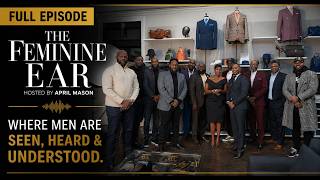
Matchmaker April Mason hosts an Atlanta panel where Black men discuss how unprocessed trauma and lack of self-knowledge sabotage relationships. Participants share histories of abuse and molestation, arguing that healing and inner work, not love alone, determines whether they can build healthy partnerships.
Chapters
Let me settle this once and for all. You don't have a love problem, you have an identity problem. Yes, you do not have a love problem, you have an identity problem. It's not the dating pool, it's not that men don't want to commit, it's not that women are gold diggers. It's the fact that you, my love, have an identity problem. And as a matchmaker, dating coach, and a love transformation architect for nearly 20 years, I decided to write a book called Identity Switch Your Love Life. You don't have a love problem, you have an identity problem, to explain to you where the issue is. This is the same formula that I have been using to help my clients get engaged and married in a year. So head over to identityswitch.com and grab your copy today. Well, welcome gentlemen to the Feminine Air, where men are seen, heard, and understood. And I curated the most powerful men that I know here in Atlanta. For those that may be watching, it's a lot of money in the room and education as well. I have a personal relationship with each person in this room, and I chose because I respect and honor our friendship. And so I decided to do something called The Feminine Ear. And the reason why I did it, I have two reasons. Number one, I feel like men are talked at and not talked to. And we are in a climate where everybody's arguing on the internet. Everybody's saying women are doing this and men are doing that. But at the end of it all, we still like each other. So we hear the decentering men, but you really can't decenter men if you can't stop talking about them. So I feel as though I wanted to give men a platform to actually be seen, heard, and understood without being judged. And my second reason for doing this is very selfish. I have grandchildren. I have 3 grandsons. And my mindset, as well as to my— with my 2 granddaughters, is who will they have to choose from by the time it's time for them to settle down if they're being raised by people who are arguing back and forth? And cannot seem to get it together. So that's my selfish reason for doing this, because I know my grandsons, they're going to have to have quality women and they're going to have to know how to choose them. But we can't have quality women to choose from if we're not talking to the women. And men don't know what it means to pick a quality woman, to pick a woman that's good for your peace, your legacy, and your portfolio if no one's actually asking the proper questions. So I ask you all to be here so we can just have a chit-chat. We don't have to go deep, deep, but some of y'all, I know y'all can talk.
All of us.
All of us.
I know y'all can.
Let's get talking. We be precise with those—
No, no, I know. I want you to give it to me. I want you to give it to me. But before we start, let me ask, how many men in here are actually married? How many are single? When I say single, it means you don't have a wife. Oh, good.
Love it.
Good, wonderful. Yeah, I have.
So ladies, as you can see, we're not getting married nowadays. So before we get this thing started, we just want to let y'all know most of us ain't married, and we're not married for a reason.
He speaks for himself. Some of us have been married.
I thought he was married.
No, I am married. I'm here for the married guys right now. But you know, hey, anything, anything can happen on this show, all right? It's the feminine ear right now, might be the masculine voice by the time we're done. Never know.
Well, my first question— anyone can jump in and answer this— is, in today's climate, we hear a lot about men's value only being based on what you can provide. What do you feel that women are missing when it comes to who you actually are? Not just what you can do, not just what's in your hand or in your bank account. What do you believe that women are missing? And this could be for the married fellas as well too, because I work with a lot of married men, and a lot of them have some problems. But I want you guys to answer that. What, what do you think the women are missing? And because you maybe want to see— be seen for more than what you can provide, what, what would that look like?
Well, you want to go?
Yeah, I guess I'm gonna hold the microphone. Yes. So I hate the conversation about me and being providers, right? Uh, here's the reason why so many single women say they want providers. And I'm a, I'm a Christian, God-loving man. And the question I ask single women is, who's providing for you now while you're a single woman? And I think the conversation needs to be around, hey, when a man and a woman gets together, right, are we connected to the source And now as a man brings about resources, right, in the home. And so when we talk about, hey, I want to provide, I want to provide, I want to provide, I'm like, who's providing for you now as a single woman? And I think a lot of times we can get into idolatry where we see a man as a provider but not realizing that the source, he's the provider. And when we do get into relationships, a man is just a resource from the source. Okay, so that whole conversation about provider, I'm just like, can we reposition the thought process of who's been providing for you while you've been single, while you're single, while you're a single mother? Who's waking you up when you lose your job? Who steps in to provide for you? Now when you find a man and you guys choose to come together not seeing him as the source or the provider, but seeing that man as another resource in your union.
Now, how have that work? Would you explain that?
How does that work?
Or have you explained that, that you are just the resource through the source?
You about to take off running?
No, no, no, no, I don't, I don't think—
I think, I think what it does is that it repositions their their thought process. Okay, because it's like, if you've been single for 20 years, 30 years, 40 years, and you looking for a provider and not realizing that somebody's been providing for you all these years, so now when you come to a man and you looking for him to be a provider, and maybe he lose his job, or as a businessman, things may be tight that month, and you feel like you want to run, and it's like, wait a minute, This man is, he's trusting the same provider that you should be trusting. And when we come together, it's now an element of a resource. And I think sometimes we may put the man over the man.
Okay. Okay, Reverend.
My name is Michael Onubogu. Um, I'm actually the son-in-law to Miss April Mason Mason Mason. Uh, I'm a software engineer by trade. I've been building apps for the last 20 years. I'm the CTO of a health population company. That works with the largest fire district in San Bernardino, California. I'm the proud father of 5 rambunctious kids. But what I was going to say is, I think your question, Ms. April, was what are the women missing? And I'd answer that by saying I think the women are missing an avenue for connection. And let me explain. So, first of all, let me say that that narrative of men being providers is something that originated from men themselves. We have always— like, most times when you— when guys talk to each other, it's always, what do you do? How much money do you make? And we use that as a value system to even categorize each other. Now, when women have just basically followed— well, I'm not, I'm not going to generalize, but this is my perception, my experience. Women have just generally followed those tropes, right? And so when I say that men— women are missing an opportunity for connection, what I'm saying is if you only define a man by what he's able to do, then you miss that opportunity to understand him. Because men are just not some— we're not a summation and a culmination of our resources. We're also a culmination and, uh, of our convictions, our notions, our values, our propensity to do good things, bad things, right? So we are, we are really just beings that also embody different things that far, you know, supersede just the ability to provide. And then furthermore, we're now in this era, what I'd like— we're in an era of what I would like to call gender convergence. Now, I'm only speaking to traditional heterosexual genders, right? And so what I mean by that is women are able to do the things that men used to do in the past, right? Uh, those traditional, uh, you know, normative, like, roles. Like, women are able to work. I saw a woman the other day, like, literally operating a construction thing on the side of the road, and I was like, damn, I didn't know that women do that now, right? Women are making money. Women are able to embody elements of clarity, structure, iteration, and men are doing the same thing. We're being more nurturing to our kids. We're connecting with our sons. We're connecting with our daughters. KD, I heard you talking about, uh, that, you know, you needed a daughter. I think you said something along those lines, right, about a daughter. So what I'm trying to establish here is when you're in an era where women are able to do the same— did some of the things that men can do and they're doing it well, and men are also able to do the, the things that women can do and are doing it just as well, there has to be much more that brings us together and forms an avenue through which we can bond. And those things are intrinsic. Those things are internal to who you are.
Well, I'm gonna tell you this, man. I think what's interesting, uh, KD Bo, um, I am a 30-year 32-year radio veteran, been in the industry for a long time. Spent 15 years in-game host for the Falcons. Did all the things, man. I've been around.
You got the boys too, though.
Thank you.
Thank you.
Yeah. Father, husband.
You say something, they gonna listen.
They gonna listen. All right, well, let's see what they listen to.
Tell them the right thing.
Okay. So, man, that's a lot of pressure. So here's the thing. I think, you know, I don't, I don't think I want us to miss the fact that we also are providers, because I don't want to be pigeonholed into that, but I want to be appreciated for that too. Now, especially for guys who, you know, providing comes easy. Okay, easy for us, what we do, it's easier for us to do than maybe our emotional intelligence. But I don't want it to look as though we're not doing anything just because we're not giving you that emotional thing that you need from us.
I hear that. Let me ask you the question then. If you don't want to be seen strictly for your bank account, but you're not capable or have the capacity to give the emotional part, then what else is there?
I don't just want to be seen for the bank account. Okay, so that's— but that's, that's a distinction I don't want you to miss. Because sometimes it's like, well, that comes easy for you, so technically you really didn't do anything because that's just— that's easy for you. No, no, no, no, no. It may be easy for me, but if I didn't exist to do it for you, then somebody else would have had to do it, or you got to do it yourself. So no, I want to be appreciated for that. And I'm talking about the guys that's been sole providers of the home for, you know, decades. And sometimes just because it looks— we make it look easy, they think that, you know, you ain't got to really be appreciative and do all the things.
But no, I want that.
I want the things done too. I want you to be like— because honestly, if somebody else brought you this kind of gift, you would have been so, so appreciative. But for us, many of us, man, many of us— I'm not, I'm not looking at nobody, I'm just saying many of us— that's, that's the life and the struggle that we deal with. Well, you just—
okay, so money.
I don't, I don't just need money. But you're getting money. Don't act like you're not getting it. You're getting it. And so let's be grateful for that part.
So do you mind if I respond to that?
You're absolutely right.
So let me give you some, some context. So I grew up— I'm a trad— I'm a traditional— oh, I'm sorry, I have to remember to do that. I grew up in a family where, um, my dad, my father was a traditional provider.
Yeah.
And I've learned everything I know from watching him, uh, and what I found is I would not be the man I am today without even seeing elements of what he did. Yes, I like— I wouldn't, I wouldn't know how to manage things. I wouldn't know how to be resourceful. But I'm also a product of a deficit of that emotional side too, as well. What I mean by that is, see, our kids right now, the kids, the, the Gen Zs and the Gen Xs and the— well, not Gen Xs, but the lower generation— they need more because our society is literally transforming into a society where everything else is covered. The, the provision is, is covered to a certain degree, and the, the reasons for that is women are able to provide too as well. Women are doing that as well. That's not discounting what men are able to do.
Sure.
I'm just responding. I'm not responding directly in contrast to you. I'm giving my opinion based on the question, which is what are women missing? And what I feel women are missing is the opportunity to connect beyond what you can do. So, so hold on, if I may, let me ask you a question.
If today, yeah, Mr.
KD, you are very successful But if today— if tomorrow your wealth went away, yeah, your family went away, your cars, your job, your respect went away, how would you define yourself? And how would you define yourself to your children, to anybody that came up to you across the street? To be fair, I'm gonna— I'm gonna like say something in response to that, even though I said it's not rhetorical where I want you to respond, but I'm trying to highlight a point that women who basically label men as just providers, even though we know that's what we are, are missing an opportunity to understand the man beyond his means, understand him as a person, understand him on a level that would make him in turn provide for them more.
Now I have a— I want to jump in here, and I, I, and I understand that. Now here, I'm gonna play devil's advocate a little bit. So what, what everything that was said, but everything that was said, we are living in a time in history. This is the only time in history where we are living where men have to be more than just a paycheck. Agreed. So when you have to be more than just a paycheck, but you only have been used to showing up with your occupation, what you drive, what you look like and all those things, right? What else is there? How would you describe yourself? And you was digging in my question, so I had to— I had to stop you there. How would you describe yourself to or present yourself to a woman when that's what you're leading with? And my reason for saying that is I have met so many men in my life that they lead with those things, and then they say— I hear it all the time— we want women to see us for more than that. Well, what else are you showing? It's almost like, are you saying because you don't have the capacity or the emotional intelligence to dig within yourself to find your intrinsic value, that you want us to dig for you and see it for you and present it. Because if you ask most women, most men don't come to us that way. They do not come to us just sharing, you know, this is who I am. You want us to see it, but we will see what you offer first. But then we have to dig for the other stuff. But then men will say, why don't you see that?
But yeah, so you're about to say what I'm about to— what I was gonna say too.
I'm gonna chime in. Let me chime in. I got two mics. Let me chime in. Yeah, we double covered over here. Okay, I'm gonna chime in. Dukes, like Dukes of Hazzard, um, oil and gas hedge fund finance background. Um, I categorically disagree with everything that's been said.
Okay, we don't like you either.
Yeah, so, you know, I'm gonna go ahead and throw some worms in this whole thing. Um, divorced? Experienced. Experienced. Okay, see, we're married, right? Will Cox. Okay, so, um, what I'm gonna say is that there's a spectrum of women, right? Currently we're talking in a very similar fashion to each other because I think a lot of the women that we all maybe look towards or approached by or have connections with are similar. But there's a spectrum of women. I think it's largely, or should be largely, on the man to be looked at as a provider, and it's up to the man to select the right woman. I agree, right? So the, the term providing is not— you know, we're talking in a very similar fashion because I think a lot of us is similar in terms of quality, in terms of our capacity to provide. But providing is also a spectrum based on the women. There may be a woman who doesn't need the same things that the women that we typically sought out may need. That's the spectrum part, right? So there's a spectrum of women where You should select what you're able to provide to. That could be money, that could be resources, it could be not resources, to April's point, right? It could be the capacity to have emotional intelligence, the capacity to talk through what— what if the woman's the breadwinner? What if it's the woman that's making $350,000 a year? What if it's the woman that's working in private equity and you're there to supplement that. Now, that's not me, but that is a— that is an extraordinary amount of men that it could be, right? So when we start talking about this, I think we should look at this— we should zoom out. We're zoomed in largely because we're given our perspective, right? But if you zoom out, I think each of us have the intelligence to be able to, you know, give an appropriate conversation and dialogue by behind what it really means to provide. And it's not always just, I got a house, I got a car, I have resources, I have money, what I bring to the table, right? I think it's, it's appropriate to say there's a spectrum of what we can bring to the table. What if money is not a proposition to be had for a woman? And to April's point, then what if we take your money away? What do you have? Do you have them? And she mentioned emotional intelligence, but there's a spectrum of things, a long list of things that you can have. Can you motivate a woman? You know, many of us look for women to motivate us. Can you motivate a woman?
What are the—
what are the roles of reverse? Again, not myself, but that category is there, right? That category is there. So just throwing a little topic in the air. For discussion.
You want to hear what he got to say? I just think—
take your time, Doc. Take your time.
Don't rush it.
Name is Dr. Bobby Price. I'm in wellness. Um, yeah, that's enough.
Okay.
I think that the real issue is this. We're not having adult conversation. That's the real issue. It sound— it's adults who are pandering like children's rhetoric. We're not talking about real things. We're not talking about anything that has anything to do with what God would want us to do. We're not talking about anything that leads to legacy. We're not talking about anything that leads to be us being complimentary to each other. We're not talking about anything that leads to, I'm building you, you're building me. That's the real issue. Because until we get to a real adult conversation, it's impossible for us to get to a point where we have some middle ground. We can't be on one side of the coin. It can't be just the conversation around, are you 6 feet or do you have 6 figures? It can't be just that conversation. And then men are having to respond to that conversation, but responding from it from a logical sense. When we look at the numbers, it just doesn't make sense that everybody can have six figures. So when we start to look at things that really make sense, we gotta really say like, okay, we're having kid conversation. And if we could get to the point where you understand that only about 1% of America, uh, of men is making over 6 figures. Okay, and then you start to break that down to Black men, and then you start to break that down to taking other things out of the equation, which I won't mention. Okay, so once we get to that, all right, let— now let's have an adult conversation from there. If we can have an adult conversation from there, then cool. If we can't have an adult conversation, then it's probably a conversation that you don't need to be involved with. And I just think that that's the real issue.
It's—
I don't want to put any blame on the women. I don't want to put it on men. I just think that it's a very, very childish conversation on the internet, and that internet conversation has now extended itself to reality. Yeah, that's, that's, that's exactly what's happening. And then the other issue is that you have to be very careful about what you speak into life, okay? Because whatever your words direct, then that's what the universe is going to give you. So what if you say— if out of your mouth is always, I want this financially, financially, financially, then then of course men understand from our standpoint, we're hunters. So we're going to put on the, on the line, the hook, whatever you're grabbing for. It's not that men are leading with it, it's the fact that that's the only thing women are willing to grab when we put it out there. We lead with character, they step over that. Yeah, you understand that? If we lead with the fact that, hey, I'm being intentional about being with you Yeah, but what's going on with your finances? Like, what's your credit score? You see, it goes right back to the childish conversation. So that's why it's so important that we get to a point where we say, all right, well, let's have a real adult conversation. Because in the 1940s, we were married at a clip of almost 80%. Today we're about 38%, and that's lowering and lowering and lowering every year. All right, that's— if, if we really want to have a real conversation about bringing families together, we have to have real honest conversations about where we're really at instead of these sort of blown out of proportion ideals about what reality is and what it isn't.
That's good, man.
The truth is, honestly, how many of us, you know, how many of us actually take the time to look at what— who we actually are? I need it. How many of us look at what— who we actually are in relationship to the person that we have? Because often, to your point, we look at all of the other external circumstances to determine, okay, well, I know what I got, but it should be this. And so you don't bring your full self to the relation in many cases because you're thinking about what It's like you're in a relationship with who you want to be in a relationship with and not who you actually are in relationship with. Because in truth, yeah, man, sometimes, you know, yeah, I'm masculine and I'm strong in many areas, but in other areas, man, I'm a little boy. Yeah. And sometimes I need a feminine ear. I need a touch. I need a certain— and if I'm thinking about who I should be versus who I am, I'd never even admit that. That's real life talk. I would never even admit it. Because the moment you say, oh, did I hurt your little feelings? No, you didn't. Actually, you didn't. You know what? I'm— that you actually did not. And then we go there, you feel me? Right, right, right.
That you mentioned that, bro, because women get to be a princess. Yeah, bro, women get to be a princess.
Yes.
Well, do you want to be—
and then when we say, hey, I need to be a boy in this moment so I can deal with some of the issues that I've had in my life, so It's good. And I need you to be a soft spot for me in that moment.
That's so good.
Then women don't want to embrace that.
Some, some don't.
Well, they don't. I think that a lot of women haven't been trained to do that. They don't know how to do it. Even the ones that want to do it, they don't know what to do with that.
Is that called providing?
That's their, that's their form of provision, providing a space for us.
Yeah.
So you know what I was discussing?
You picked her!
Yeah, yeah, exactly.
Absolutely.
You had the choice to evaluate the women. Exactly. You pick them now you complaining about it.
No, no, no, that's a different conversation.
That—
no, I'm gonna tell you why it's a different conversation because we come into relationship not perfect. None of us don't know what you don't know, okay? So like, as we're going, we have to grow together. It is my responsibility to find out your shadow, the parts of you that are missing, that are hurt, that you swept under the rug. But it is also your responsibility to find mine too and provide a safe space for me to work through that.
Yeah, I do agree.
So, so you can't, you can't say, you can't say, no, you chose the wrong person. No, we are all wrong. We're all right too. But we gotta provide space for each other to grow. Our relationship is about healing each other, brother. It's about healing each other. I don't care how perfect you think you are, there's something broken in you, and you won't see it until you find somebody you really love. You won't see it. It's going to show up because she's going to provide the type of love where you want it to be seen.
And, you know, and to add to that, um, I believe that we choose people based on the toolbox that we currently have, our motherboard that we currently have. And if you were not giving the tools on how to vet, what to look for, for me as a woman dealing with men, I don't go in looking what you can do for me. I go in looking for your broken little boy first. When I find that, and I find it pretty quickly, I decide if I have the capacity to be the container for that. Because I know that I will be dealing with that the most. I will be dealing with Clark Kent more than I will be dealing with Superman. And I believe if we understood that, yes, you guys have the looks and you have the resources. Yes, we like money. Yes, we like resources. Yes, we like shoes and purses and all those things. But at the end of the day, if we are not actually connecting to who you actually are and that little boy, because I don't think a lot of men understand that your presence can heal us. Not anything that you're doing, but what you're actually being. Just standing in that space in that moment. It may not cost you anything, but as a woman, and I can speak to the part of us that have been broken, your presence is like, just because you're here. And I don't think a lot of men understand that goes back to a part of the value that has nothing to do with money. And also, when you talk about who you chose, a lot of times the choice is made because of beauty and booty, and there's no deeper dive into who she is. And then what happens is the men that I work with, I say, show me your phone and show me the last 5 women you've dated. They all look alike, don't they? And the thing is, they want the look of this woman, but they want her to act like something else. I've had a client come to me and say, well, how do you get a woman to change? She won't change. I said, oh, that's easy. Change the woman. Mm-hmm.
You fit.
I mean, what you going to do? I mean, you can only counsel it out for so long. Change the woman. But he didn't want to do that. And she ended up siphoning $100,000 from him and squatting in his house. And he was in a pool house. I said, what is it about her that makes you just keep going through this? He said, April, she fine though.
Go ahead. So everything that you guys are saying— first of all, I'm Keon Davis, own a company called Smoothing Group. Um, but everything that y'all are saying is so amazing, right? And it's so profound. And I think I can— I can be wrong, but I think I might be the youngest man up here. You are, right? And in that, it's so good to hear what you guys are saying because for me, I had a revelation of— I'll be 40 in like 2 weeks, right?
He the youngest.
All right, but in that time frame, I realized within like the last year, I really only became a man, right? That's when I started to become a man. And it wasn't like when you're 18, you like, oh, I'm good, you know what I mean? When I'm 21, like, I'm solid. It's like, nah. Like, it's some stuff that I had to go through and I had to learn, but the only way to learn it was to go through it to understand what manhood actually is, right? And so when you're talking about relationships, like, I was divorced, I went into another relationship, and I thought it was all the things, right?
But what'd I tell you though, you know what I'm saying?
It wasn't it, you know what I'm saying? She told me off the top, you know. But still, she looked good, right?
Exactly, exactly.
You know what I mean? But from that standpoint, what I realized when I say that I just became a man was that I learned that the problems that I had up until this point were rooted as a child, right? I learned that you will only become a man when you deal with the last trauma that you had as a child.
You know what I mean?
So I looked at my childhood, not having my father. That's why I got these abandonment issues, right? That's why I'm attached. My attachment style is a certain thing. And it was only when I went and visited my dad, my late dad's house that I've never been to until I was 39 years old, visited his house for the first time, right? Seen him as a child for the first time, learned about my family on that side for the first time that I realized what my issue was, right? And so for this long time, being an athlete, growing up, being that guy, right, being the, the one that I can pick and choose who I want and all these different things, but not understanding why, right? And so when I learned that, I realized that throughout all of those processes, throughout all of those things that I was missing, I was looking for that companionship from my pops, right? And not having that, it gave me those abandonment issues. Not having that gave me those attachment styles. But then learning what it was, it actually healed me.
Right?
It actually started to heal. And I'm like, oh, I don't need to be here, right? I don't— I really don't even like this, but I'm here because I can't— I don't feel like I deserve anything else, right? I'm here because I feel like even as much as I work and as much as I do and as much as I provide, as much as I show, as much as I give, it's still not enough because I'm doing that for acceptance.
Right?
I'm doing that because I'm looking at them to say, you know what, hey, you doing enough. But I'm killing myself by doing this. And back to what you said, you're not getting appreciated for it, right? So I think that, like I said, everything that everybody's saying is, is right. But back to your point, like you said as well, it ain't nobody that got this junk figured out. Nobody. There's not one person that got this junk figured out.
I think I got to figure it out.
Oh my—
hello. Trouble.
The youngest in charge. Youngest in charge right here. Um, I don't— yeah, yeah, I agree. No one hasn't figured out, but it also goes back to my point of it's a spectrum, right? Um, the, the woman that will receive you when you were 35 is different than the man you are at 39. Totally different, right? Might be totally different than when you're 45, right? If that occurs. That's my point in terms of it being a spectrum and being able to look at women the same way women may look at us, or the same way, you know, we may change as, as men, whether it's maturing or just getting a clear vision on what we want in terms of alignment and what we're able to provide, what we're willing to provide, what we see as providing, right? So it's a spectrum on all sides. And to that point, that's where I, I don't think it's, you know, when I mentioned providing, when I'm making mention choosing You know, I say it's our choice to choose whoever because it allows us or forces us to look inward. Yeah, before we look outward, right? He's done the work, so now he's all right. I feel like I see what I'm seeing, straight. And he can, he can, he can see a woman that may be more compatible with him than 5 years ago. And that's, that's all I'm getting at when I say the, the spectrum part.
What did you mean? You said our presence can heal you. What version of our presence can heal?
It depends on what, first of all, what that woman needs. But every woman has a broken little girl inside. Sure. And it's only the presence of the masculine that can actually heal her. And I think a lot of women, we don't know always how to choose the safe masculine. That can have the capacity. Like I said, me going in looking at where's the little boy, the insecure boy is. If a man did that for us as well, that would be something major too for us. But it's his presence, not nothing that he's like doing. Perfect example. And I've told the story several times. My grandfather was my hero. Like Moses Mason was him for me. But my grandfather was extremely, extremely masculine man. We migrated, their family migrated after the war from Mississippi to California. One day we were getting up and like we normally do for Christmas, going to get the Christmas tree, co-op, Berkeley, California. I asked if we have donuts. He said, my grandmother said yes, but my granddaddy said, my grandmother said no, my granddaddy said yes. So we get the donuts and he said, when you get in the house, take the donuts and put them on the stove? I did. But I was like maybe 6 or 7. I go back to the kitchen. Ants are all over the donuts on the stove. And I run in, oh my God, oh my God, the donuts, the donuts. Now, my grandfather, when I say he's this big, tall, 6-foot-4 burly man, in that moment, he said, come here. Come sit on Big Daddy's lap. And he said, what's wrong with my baby? And I said, the donuts, they messed up. He said, We're going to go get you some more. That stuck with me, and I'm 50 years old. So when I look for a mate, that tenderness heals that little girl that did not have that after her grandfather died. So for me, it comes together. I look for warmth in a man because my example was a man that was a masculine man, was a provider. My grandmother graduated from Jackson State. My grandfather only had a third grade education. But he helped build a lot of those Victorian homes in California and San Francisco. So to see a man be a man's man, but then when it came to me, he held me like this. That's a non-negotiable for me. It's because for me, that was my protector. And he died in the 7th grade.
Yeah.
When I was in the 7th grade. And so when you have that level of tenderness and love. And I'mma take care of you, but I'm soft enough to hold you too.
So it's not just about us being present. It's about us being healed and present, I'm assuming.
Yes.
And, you know, let me take that back. It's not necessarily about you being totally healed. It's about you recognizing what you're standing in front of and what you need to be in that moment. Because I don't believe none of us will ever get to this pinnacle of healing. I believe we heal through each other. Yeah, but understanding in that moment what that woman needs from you. She doesn't need you to fix the problem. She doesn't need you to lecture. She— all she needs for you to do is just be there in that moment. Now, and I know it's tough for you guys to do because I know how we are, but to ask in that moment, babe, do you want me to fix it or do you want me to just listen? And sometimes, a lot of times, It's more so, it's just, listen. So for me, when I say the present, it takes me back to my grandfather because in that moment he was so present. And like I said, I'm 50 years old now and I remember that like it was yesterday. And I had to be between 5 and 7 at the time. And he just made sure that I was cared for. So it was his presence that reassured me that everything was going to be fine.
All right. For me, I'm Daniel Wilcox, retired NFL um, custom home builder, designer builder. And as I listen, man, like, you guys— everything you guys have said has been so powerful. We're so crazy, like, we, we crave unconditional love, right? Like, we dish it out. Like, when we get with you, we all the way in. If we ever ask a woman for a hand in marriage, we are all the way in. We're going to take it to the ends of the earth. And I think for any of us, if any of us are professionals— all of us are pros, all of us are at the top of the food chain, right? So in order to get there, you have to be driven, you have to be dedicated, you have to be focused, you have to be consistent. It's so many powerful things and qualities that each one of us have in us. So those qualities we take into our relationship, you know, we want to be the best at every single thing we do, even being a spouse, being your partner, then whatever we could be for you. We want to be the healer, we want to be the guy that's going to listen. And I've, I've had that conversation, April. Well, my wife like, I don't want you to fix it. Well, I'm a damn fixer. What do you want me to do? You know, I build shit with my hands. I caught balls for a living. I use my hands. I fix shit. That's what I do. So it's extremely hard for somebody that's always been able to mentor everyone around them to not be able to mentor the person he loves most and to pour into her as much as he'll pour into every young man, every young female, every teammate, every coach, every person, his mom. As a pro, you get a lot of money and you become, you stop being the son. You stop being the little brother. You become the daddy to almost everybody. So now you're in a role, a hierarchy role where you now you're the provider for your entire family. So everybody come, you're everybody's bank. All right? Everybody love when you say yes. Everybody hates you when you say no. And I preach all the time. Look, man, I need you to love me the same way You love me when I told you yes, when I say no to you. So it's so extremely hard for a man to be in a position, I think, where any of us is, where we at the top of the food chain, and you work as hard as you do to get there, to be denied by the person you love the most and not be understood by the person you love the most. In my 18 years of marriage, to always just be the listening ear to her problems, but her not being able to hear my problems. And be patient enough to understand my pain and my hurt too. Because when you see 6'3", 250 walk in the room, everybody know I'm different. Everybody know he look— he looked like somebody different. And she see it every single day. So as much as I try to be her healer, a lot of times, you know, I'm the one that causing the pain, you know. And I don't know how to stop that sometimes through the— through the whole mix of everything. And I think almost every man in here, you know, look for the same exact thing in a woman. A lot of us don't know how to put those things in words, and that's the crazy part, right? Because you grew up with unconditional love from your mom. That's your first experience of true love, you know. And then whatever we do for our careers, probably our second fusion of true love, you know. So those things drew us in, and we fell in love with those things, and what those things allowed us to be as great as possible as we could be in that department. So when you find a woman that you're going to spend the rest of your life with and you look at her, you look for a lot of the qualities that your mom had. You know, old school values, you know, great morals, great character, you know, things— loyalty. You know, if I mess up, I'm gonna mess up. I'm not gonna be perfect. You know, when I mess up, I need you to love me the same way you did the first day you met me. I don't need you to get mad at me. Now you withholding things, and now you backing away from me with things. And everybody know what I'm talking about. You can't start pulling it away from me. You can't start pulling it away from me. Yeah, you know what Yeah, I ain't that dude either. I'm not him.
Yeah, yeah.
And you know, you got to be a dog, a dog to play in the NFL. And then some of us separate ourselves, right? We separate ourselves into cream rises to the crop. You know, I'm Himothy. I was Himothy before I met you. I'm still Himothy now that I'm with you. When I look at everything like sports, fellas, everything, like, I'm the head coach. Shit, you can't be the head coach too. Ain't two head coaches on no team. So in my team, I'm the head coach. I need you to be the OC, the DC, the assistant coach, or something else, but you can't be me. So in the process of doing these things, I have a hierarchy in my mind. It's God, the husband, the wife, the kids, right? It always starts with God first, right, Pastor?
He talking to you, Kansas.
Always start with God first. Don't mess with—
I was just playing.
You always start with God first. Then the husband, then the wife, then the kids. As soon as I give you the kids, the kids can't come before me.
That's all I'm saying.
My next question— I just want to move on to my next question.
Even before—
just let me, let me, let me tell you real quick.
It's gonna be real quick. It's gonna be real quick. No, no, no, we're not, we're not hating. We're not hating. We're not hating. We're not hating. I, I think, I think there are moments where we can have, um, some growth, right? So 100% He mentioned being in the NFL. All of us are in, are in some form of the NFL for what we do, right? Um, and I'm hearing the hierarchy part, which I agree with. Um, but a lot of time, a lot of times I don't think we reposition our perspective in a manner that could be helpful to us, right? If you're— when you're in NFL, you fell in love with the process to get there.
Correct.
All right, how many of us are falling in love with the process of getting to know your wife, getting to know your— you know, rhetorical questions. Yeah, you know, not everybody got—
why?
I appreciate it. But, but falling in love with that process in terms of like, where does that fall in the hierarchy of, of, of when it comes to choosing women, choosing our perspective? How many of us are really spending the time that we spend on business on selecting the women. I know I don't.
Wait a minute. This is not the same man that I met in 2022.
You have grown. Look, that camera turned on.
Oh my God.
PR trained.
Oh my God. This is— I'm so proud of you. Because our very first conversation, baby.
We ain't gonna talk about that.
We not gonna talk about it.
But you was—
It's like sports.
Yes.
Yes.
Yes.
I'm so proud of you. So my next question is, how many of you in here have been hurt by a woman, and how has it affected you today, and how you choose women, and how you see women? I'm gonna go to you right here.
Repeat the question for me, Miss April.
How many of you in here have been hurt by a woman and how has it affected you and affect how you see women and how you choose women?
First, starting off, I'm Kenny Pugh. I'm a day trader and IT executive. So I come from the perspective of having been hurt in the past. Openly admit that even as a high school person, I carried that into my college years, became a member of Kappa Alpha Psi. So I never let women get close to me because of the heartbreak that I felt. When I was in high school or even in middle school, right? I never learned how to deal with heartbreak in a healthy way. So I just put people outside, kept them outside. Um, and so that carried into my adult years. And so ultimately, you know, my journey, you know, I went, uh, accepted my call in the ministry. I'm an associate minister, so, uh, I do that. So you can refer to me as pastor.
Yeah.
Uh, and so I went through that process, man. Um, I even went through multiple years of celibacy just so that I could learn to connect heart to heart with the person and not connect with them body to body, because we can do that. That's the easy part. And I think you said something very key when you talked about having real conversations. The reason why we're not connecting, because we're not having real conversations and we're not creating environments to have those real conversations. That's a whole separate topic. But yes, I have been hurt. I went through a divorce and had to deal with the, you know, kind of the results of going through a divorce, dealt with infidelity, not on my side. And so having to go through that was very hurtful. And it forced me to take a step back and say, hey, what did I do to contribute to this situation? Right? Because it's easy to point the finger. So as a part of my getting married, the first two things that I said when we were in premarital counseling, I want to have a family and I want to build wealth. Those were the two main things. Of course, the core things, you know, loving family, blah, blah, blah, blah. I wanted to have a family. I wanted to build wealth. And when those two things didn't materialize, I began to become hard. And so I think that's what ultimately triggered— I would be in places, but I wouldn't be there with her. So you talk about presence. I was there, but I wasn't present. And my athletes— I'm a coach, coach track and field, coach basketball— my athletes became my kids that she couldn't give me. And as a result of that, I poured into them because that's what I wanted. I'm an athlete. I went to the Ohio State University. I'm an athlete. So I wanted to have that experience that she couldn't provide to me, provide for me. And I began to become hardened on the outside. And that led to her making some decisions that she had, that she ultimately made. I won't point the finger. I'll take accountability for my role. But I just say this. Yes, I have been hurt. Um, and that's one of the things that I have to deal with as I continue to go forward, right? Who can I connect with? And trust is a big thing for me. If I look at you and I sense I can't trust you, all bets off. And so that's what I'm leading into at this point in time.
You said something that was very powerful. You, you, you, you jumped in and you said, um, you'll take accountability for your part. Yes. And her doing something that she did.
Yes.
Why is that so easy for us to do but so extremely hard for them to do?
You understand what I'm saying?
Like, we— like, you went out and did what you did, but I'm taking accountability for my part in you doing what you did. But, but it's hard for them to, to, to look the same way with us.
Yeah, and I think you made a good point there. The only way I was able to release that, that stress is through counseling. And when I sat across from my counselor, I was like, hey, I don't know why this happened and I'm pissed off about it, but at the, at the end of the day, he said, what did you do to contribute to this whole scenario? I took accountability. Once I did that, freed me. And so to your point, um, of why can't that be reciprocated, that's a character, that's an item inside of a woman that you need to look for. You have to now cultivate that in your marriage. For us that are unmarried, it's one of the first things I look at. Can you do that? Can you reciprocate that? I don't want you to want me for my money. I got that part of it. I paid for house, cars, car insurance, tuition for for kids that weren't even mine biologically. And ultimately, I felt like the betrayal of going through that experience hurt. But what did I do to contribute to that? I wasn't present, but I was there. And ultimately, I took accountability. I can't speak for somebody else's situation, but as I go forward, April Mason, the thing that you asked, yes, I've been hurt, but I now know with clear lens what I'm ultimately looking for. And I ultimately want to connect with that person.
Yeah, that's why men crash out, people, right there. I'm telling you right now, like, he just— he hit the nail on the head. That's why men crash out. Men crash out in relationships when stuff happened infidelity-wise on the woman's side because of the fact that the woman— we don't realize it while we're in the relationship, but our woman honestly is the biggest investment we got. We've invested so much time, energy, money, and, and, and, and Think about how hard it took for us to get to these spaces, to get the money to be able to invest in you. We don't get this money at 20 years old, 18 years old, when you overlooking these guys and don't think they got nothing for to offer you, to provide for you. So when you find out you've did all this for this woman, bought the clothes, the underwear, the tampons, the jewelry, the wedding band, the trips, the house, the car insurance, the homeowner's insurance, The life insurance. You did everything to provide, took care of the kids, kids that weren't even yours, and they gonna step out and give it to somebody for free?
What?
You know it was free, ain't you? You already know it was free because they don't want to be seen with the dude, right?
Tell the truth, baby.
This is, this is, this— I'm giving y'all the floor. I'm, I'm giving y'all the floor, and I'm, I'm enjoying this.
Is that what God told us to do? Is God make a woman our greatest investment, right?
That's exactly what we call females. It's a fee. We call females, it's a fee.
Yeah, God put us in the garden and he said work, get busy.
That's what we do.
Your purpose is what God told you to do. He made your woman a helpmate to you for that purpose. The first thing you should look for in a woman is, is she going to help me with this purpose that God gave me? If you making her your greatest investment, it's taking away from the purpose that God gave you in the first place, because— and she's not able to be the helpmate.
Yeah, I don't think any of us set out that way.
No, I'm just— I just wanted to say that to you because I think it's important for the room. It's important for the room because we all do it, right? Because society has told us that that's what we supposed to do, right? Yeah, but that— not in that way. Not in that way. That's the way that society has cultivated it. I just, I feel, I feel bad because a lot of brothers do this. And I'll say I've, I've been, I've been guilty of it in my early 20s. Now I'll tell you, I'm a little different.
Yeah, he different.
I started having sex when I was 11 years old with girls that were 5 and 6 years older than me. Okay, so I've— I always had women in my life, and most of the women that I slept with had dudes. The first woman I slept with, she was pregnant by her boyfriend. I was still having sex with her. This is 12 years old. And I can name scenario after scenario after scenario like that. So my perspective on women, I'm just learning from them. I'm not upset with them. I'm not mad with them. I don't think they're bad. I don't think they're good. I just think this is women. Going through that experience, what it told me was the important thing is once I got my purpose, I knew what it was at 16, 17 years old. It was just no way for me. I was only going to divert my purpose away from that 'cause I knew God gave it to me. There was no way I grew up in the neighborhood that I grew up in and I was gonna have this vision or this goal or this idea. It just didn't match up with my reality. And so because I knew I had something that was special, it was no way I was ever gonna put a woman above anything I ever did. So when I was in school, they was always the last thing I did. And I'm not saying that this is what we're supposed to do with women. What I'm saying is, is until you get the woman who is aligned with the vision that God gave you They are not supposed to be above your purpose at any and all time till you die.
This is true.
Why do we do it though?
Because that's what society tells us to do, and we feel guilt and shame when we don't do it.
It's easy to do it.
Look at these women.
Actually, can I respond to that please?
Yeah, if you don't mind.
So let me, let me just say something. So first of all, I want to shout out to you. What's your name, sir?
Kian.
I resonate with you, and I, I just wanted to say what you said was very remarkable because that was my experience, and that is the experience of a lot of men. The experience is we basically fumble into relationships. That's what we do. We fumble into relationships based on how we pick women. Some of us learn from it and then learn to pick the right woman.
And some of us don't.
And the point I'm trying to make is, you see, when people say that like, women are like this, women like this, women like this, like, honestly, most of the women you guys have met, I have not had that experience. I've not had that experience with picking women that do those things because, well, one, I was lucky. Two, after I learned, I had the first experience where I was married for 10 years knew her for 15, ended in divorce. I had to do exactly what Keon said: look inward, look beyond what I was as a provider, look beyond what I could do to understand who I was so that there was a basis for me to have adult conversations, right? I had to go and look at those things, my convictions, what motivates me beyond, beyond money, because money can be taken away. What What motivates me beyond, like, how strong I am? Because I'm gonna grow old and be weak. So I had to learn all those things to be able to meet the type of women that I could have conversations with, with, and pick it and pick them and pick the right one the second time. And I picked a perfect wife.
And did I?
Did I pick a perfect wife? Now, I'm not saying that she's a perfect person. No, no, no, not just for me. I picked a perfect wife I'm not saying she's a perfect person. A perfect wife is a decision and a conclusion I have arrived at, irrespective of her insecurities, her iniquities, her flaws, right? So when we all talk about— and I want to highlight something you said, Maurice— when we all talk about women do this, women do that, and we talk about hurt, and we talk about relationships and how we arrive at relationships and how we pick women, We have to understand that none of us have been— when we were born, put on this earth, none of us have actually been taught properly how to engage in relationships and build meaningful connections. Most of us actually fumble into it, right? Vice versa, of course, but I'm talking about men now, right? Most of us literally fumble into it. Some of us learn how to navigate through it, learn from our mistakes based on what we value. When I went through a divorce and I went through a divorce, it was like one of the, for me, the worst divorces I'd ever been through. I started taking care of this woman. I don't even want to say relate to her because she might—
Don't get your blood pressure high.
But she took me through a very painful divorce for me. Despite that, I literally had to ask myself, Do I want to get married? I literally had to go through therapy, Bible study, walks, lost 100 pounds, and I had to ask myself, despite all that, all that stuff is great, but do I want to get married? Do I want to be like— I had to be honest with myself. Do I want to be loved?
Yes.
Right?
Okay, well, the way I run my business, let me do that, that analysis on my relationship. What happened to where I ended up in divorce? And that's where taking accountability— I think, KD, I think you said that, or somebody else— have to take accountability. I think Keon said that. Yeah, take accountability, really understand not just what happened that she did, but what happened that I did, and then make the conscious choice to say, I want to be married. And those things help you figure out the right person instead of generalizing that all women do this, because there are good women out there. You guys are not— you guys, but the men who are saying, I'm falling into the same woman, I'm picking the same women, guess what? Insanity is doing the same thing over and over again and expecting different results. If you make ineffective decisions, you will get ineffective results. Most times it comes from you. And the same for women too. If you pick the same— and I've coached women, I used to run, uh, a, uh a relationship academy on behalf of my mother-in-law.
Because I couldn't do it no more.
Yes, and I coached hundreds of women and they would say the same thing. I met this guy, I would literally ask a couple questions and tell them, you know, this guy you're talking to is the same guy that you talked to like 3 years ago. They just have different names and they sound the same. And this person comes from Tampa and this other person comes from Jacksonville. They're the same people until you go and look at those things that are irrespective of what you can do on a primal level, right? Your ability to be nurturing, your ability to provide. Unless you go and look at those intrinsic things, you will keep making the same mistakes over and over.
I think that goes back to what I said about being able to— we, we choose and make decisions based upon our toolbox. Exactly. Based upon whatever our motherboard is, is what we do. Now my next question is about—
can I answer that question?
Yeah, well, this is what, this is what we're here for. This is why I'm letting you guys talk because I just— this is, this is what it is.
I think the thing that, like, when you was talking about being hurt, right?
Yeah.
So one of the things for me that I had to learn and understand was that my philosophy and understanding of a relationship or a union, or even as a man, right?
You're gonna—
I'm gonna be my best self, right, when I find my partner, exactly. When I find that person that's supposed to be next to me I'm going to be my best self. Amen. So through that process, that's what I understood, right? But back to your point, it wasn't about the purpose first, then the woman, right? It was the woman, then the purpose. So what I ended up doing was finding myself indulging and trying to find this woman so that I can be my best self next, right? You know what I mean? And so now that took me all the way off course to where, like you was talking about earlier, instead of me standing on who I am, being who I am, like you said, himothy, I've been him since the birth, right? You know, and so understanding that I had to, you know, I like that, but I had to, I had to take accountability on that spot, right? And so for me, like you said, being hurt, I was sent through the wringer, right? And I'm talking about after the divorce I thought I found them. I thought I found them. It was everything that I was missing in the divorce, or I thought, right? And I mean, the business, the this, the that, all the things, but didn't realize that I was on a hamster wheel and I was doing everything in my power to just be enough, to be, to be like, hey, I'm here, like, I'm good, you know what I'm saying? Like, I'm on the ham— like, I'm going, I'm here. And then every time it was like, it was like somebody kicking a field goal and you kick the field goal and you can kick it far enough, right? But they end up moving the goalposts as soon as you kick it, right? You go kick it for the distance and then while the ball in the air, they move the goalposts. It's like, oh, you almost made it. You try again right now. You're going back on the hamster wheel. You kick it again, they move the goalposts again. You like, goddamn, right?
I'm still—
I'm putting all this energy and effort. And it was to the point where I almost committed suicide, right? I was burning on both ends. I'm trying to— I'm, I'm trying to like— I'm like, I don't even know what I'm doing wrong, you know what I mean? And so from that standpoint, it was like, that's when that healing journey started. There you go. That's when it was like, wait a minute, bro, like, it ain't me. Yeah, right. I just got off of my purpose because now the same connects, the same interviews, the same opportunities, the same things, the same reason why you was looking at me in the first place. Right? The same reason what attracted you to me in the first place. I'm not even him no more.
Yeah, you lost it.
There you go.
I took my eyes off it, off of that, to be good enough for this person, and that ain't even who I'm supposed to be with.
And to your point, your validation through a woman, right? And to your point about purpose, about purpose, let me, let me explain something to you. There are certain women that, um, A good friend of mine deemed me Amplify Woman, right? And most of my male friends that know me, they know I look for the man who has a purpose because I couldn't be with someone that didn't have one. And I believe a lot of times men don't know how to spot that girl, right? Because when you meet her, you gonna have to rise to a whole nother occasion. And she's going to require more from you than what you're accustomed to. So before I can even like a man or develop feelings, I have to see what would be my purpose in his life. What legacy are we building? Because I believe men should pick women that are good for their peace, their legacy, and their portfolio. Which brings me to my next question.
Get it out.
We hear as women men say, especially on the internet, no, she's just got to be peaceful. I need her to bring me peace. I need to bring me peace. What is peace to a man, Jack?
I get to answer that one, huh? I think it's been some really good points here, and I just want to— I want to kind of chime in and say a couple of different things.
But introduce yourself, please.
Oh, I'm sorry. I'm Jack, uh, therapist, which I've been so quiet because people pay me a whole lot of money to listen. Uh, founder of the Good Men Club, and, um, that's about it. Okay, so I'm gonna say a couple different things. First thing is most men are afraid to admit how much we need women in our lives due to the lack of love that we actually have for ourselves. We need women because women give us a, a sense and an urgency to be able to understand who we are underneath the atmosphere, the armor of what we actually— the exterior that we have. Yeah, we got a purpose. Yeah, we got profitability, we got provision and all of those different things, but the things that we have inside of us, women are able to pull those out. So when you talk about peace, you talk about the ability to, um, just be able to have an atmosphere of ease. I often ask men, well, why, why don't you cheat, man? And it's not exactly why most women think— men cheat because they just want it easy.
If I can—
if I could just— one word is just easy. And if you have a woman that, that is— I'm not saying it's easy, but she provides that atmosphere of things just being easy. It's not about the whole, I wanna, you know, I want a peaceful house, I want a peaceful, um, you know, no attitude, no, uh, no lip, support me, support my vision, all those different things. That's peace, yes. But the real peace that you looking for, that you asking, that you hoping that comes from a woman, doesn't come from a woman, comes from us. We gotta have peace so that we can bring peace into a relationship, because if we don't have it on our inside, your whole household is going to be chaotic. Because a whole lot of men say they want peace, but they causing war and chaos in everybody else's life. Every woman that you, you bring, you bring, you say, hey, I want, I want compatibility, I want— but if you causing chaos by not being accountable, by not owning up to some of the things that you're actually doing, you'll never have peace. But you got to have peace with, with yourself. That's what— when we say we want peace from a woman, it's really us saying we want peace from ourselves. Because if you ain't a peaceful dude, you're gonna have chaos everywhere. And I don't care, I don't care how you try to spin it. I know my man gonna get on here and say, but the spectrum—
no, man, no, man, you gotta, you gotta add some more words, man.
No, but peace comes from us because The man sets the atmosphere of a relationship. Our tone, our tone can change the whole atmosphere of a household. Same way April, you was talking about how your grandfather sat you on his lap. It changes the atmosphere, the tone. I can be chaotic. I could, I could— he could have raised his voice, he could have screamed at you. And when a man does that, the whole house freezes because we, we create that dominance. I got little girls. My wife could say— she could scream, she could yell, she can, she can do it. All I gotta do is say, hey, it's the atmosphere, it's the tone. But it's the same way with a woman. If you set the tone with that, that you're chaotic, that, that you're, you're unstable, it's gonna— she's gonna follow suit and she's gonna have that attitude, she's gonna have that demeanor. So we got to set the tone.
A lot of guys don't know that.
They don't know that, man.
Safety that we're looking for, I don't think a lot of men understand that.
That's what it is, emotional safety. Emotional safety and emotional security is why most women leave.
Mm-hmm.
They leave, they, they leave a relationship because we forgot to provide the emotional security that they needed.
We, we oftentimes, bro, it's because we don't provide it to ourselves.
That's why I say we got to bring the peace.
Like, we don't know how because nobody—
like, she—
there it is. We didn't have that.
But here's the thing though, even though, even, even though you may not have it, one thing that I'm a firm believer— now The stuff that you guys hear from me— all of us have had personal conversations about all of our relationships and things. And you guys came tonight because of how you view me, right? I haven't always been like this. And I wasn't given the tools. What I realized is my choices started to look the same. And I don't believe that we can actually use any more— especially as smart as everybody else is in this room, we can use the we weren't taught. Most of us are pushing 50 if we not it, right? It comes a time where I, as a woman— you talk about women don't take accountability. You never hear me talking negatively about my ex-husband online, even though it was not the best, right? Because I chose him based on the toolbox and the wiring that I had at that time. I was taught, if he loved God, he'll love you. I wasn't taught about compatibility. I wasn't taught about, um, purpose. All the things that I share and that you all share my videos and send them, sneaking them, send them to your girls and stuff. I wasn't taught that. I took accountability for the fact that I grew up. And here's the thing, I personally, if I hadn't done that, I would not like men. I would, I wouldn't, I would despise you all. Because if we go back, and you have to, when it goes back to what you said about helping, uh, your presence with a woman. For the— well, my story is out there. For those of that may not know my story, all of my abuse came at the hands of a man, and I literally had to go within and say, but I still like them. Because it's kind of like, how do you— how do you like them but you were raped by two of them? How do you like them when you dealt with sexual abuse from 5 to 17 by multiples? How do you still like them? So this goes back to what I talk about the peace, the presence. And when you said taking over the home, if a man raises his voice— I remember I was standing with a friend of mine, Mike. Mike is about 6'6", and we would always just joke around. And I didn't know that although my heart had been healed, my posture hadn't. Mike and I are standing there talking, and we going back and forth because we always would debate. And he stood up and raised his voice, and I I did this. And he said, did you think I was going to do something to you? I said, what do you mean? He said, the way you backed up. Well, in my marriage, I dealt with domestic violence and my previous relationship to where you wouldn't recognize the left side of my face. So I should not like men at all. My point in saying this is we can no longer use— we weren't raised that way. I wasn't. I dealt with all of that from men that were supposed to cover me.
Yeah.
That didn't. But yet we're here and having this conversation tonight because I did the inner work and took accountability for the things that I did, but also realizing and not blaming myself for not having the proper toolkit, but deciding to say, you know what? I need to put some more things in. Something is off. Why do— why is my appetite for that kind like that? Why is that? And I remember I was talking to Bobby about this guy that I was dating. And I remember him standing at the door, and he pointed at me. And I remember turning into, like, this little 5-year-old girl. And he reminded me of the man that abused me in that moment. And I realized— I was like, wait, I chose him. There was something in me that chose him. And I didn't even see— I haven't seen him no more. You know, that was 2020. We didn't— that was it. That was OK. But it's having that level of awareness that I don't believe a lot of people actually have. So yes, to your point, I've coached women for almost 2 decades. Women do not like to take accountability. I will give you that.
Get it into the camera.
Women do not like to take accountability. Women do not like to take accountability. I'm very aware of that. And I'm not saying that it's right. But what I am saying is that everybody in this room has to take accountability and say, you know what? I'm seeing the same cycle, so I must be the problem. Even if that cycle is choosing the same type of individuals, because I did that. I went through and I'm looking at the men that I was choosing, and I'm like, but why, but why, why? And it goes back to what Keon said, looking for the validation to come through other people. But if we don't take accountability and become aware of what we are doing, these same conversations online, they gonna continue to be the same. He did this, she did that. And it's like, but Once again, what did you do? I didn't know not to pick that man because that man that I married was a reflection. He was a duplicate of the man that abused me, my stepfather. So I married that, right? And then because I didn't clean that mess up fast enough, my daughter's first marriage, she married the exact type of man. You see, it starts to duplicate itself and it becomes a perpetual cycle.
Actually, a book about that, though, Harville Hendrix, Getting the Love You Want. He raises the presupposition that we marry subconsciously the parent or the caretaker that wounded us.
Yes. And so, and that's what I—
that's—
yeah, we did it. So when you said we don't know, it becomes a time— when do we know? When do we decide to know?
I think that's a part of life, though, right?
Like, it's a part of your evolution of growth.
Growth.
Like, when you think you know it all, that's when life is over. But the fact that you're willing to continue to learn as you get— as you grow through these relationships— I'm growing. I've been growing every single year in my marriage. You know, I'm still figuring out who I am.
I can't tell because you just came in here talking about, I don't lie, 18 years, I don't know if I like this.
Somebody, somebody got to get the party started, and a lot of times it's me. Okay, so, but I can, I can relate to every man in every single thing they said. Bobby, I was a lot like you. You know. And no, we just eased over what Bobby said. He was molested by women, you know what I'm saying? We just eased over it and nobody's saying that. It didn't even bother— it don't faze us because we're men. The same shit happened to you, it happened to me. I'm telling you right now, like, me, Keon was on the same page, everything you said, bro. And a lot of that you learn from those experiences, right? We don't know we've been molested because it feels so good to us. We, we like—
well, and the men that came before you teaches you this is what— oh, that's cool. But if, if I was an 11-year-old girl talking about, oh, I was getting busy with a 17-year-old, yeah, it would be something totally different.
But I was, I was 12, 13, 14 years old sleeping with my auntie's best friend, you understand what I'm saying? Like, and my, the first girl I— my first job I had, the courtesy clerk was 29, I was 15, and I'm sleeping with her, you know. So yeah, you know, and I'm sneaking in her window as soon as I get my, my license. I'm thinking this, but it's the coolest thing I got, I'm sleeping with an older woman. And I'm not even realizing I'm being molested through the whole process. And I started just like you started. And through those experiences, you learn so much about women and who women are, and you realize women are a lot like men. And me and April had this conversation too. I was like, I, I realized early on that women are no different from us. They want a lot of the exact same things that we want. And just like they want somebody to protect them, we looking for the same exact thing. We looking for protection. When I met my wife I knew my wife was— she had morals, she had old school values. Damn, she was damn near Big Mama in a little bit ass body and a little cute ass silhouette. She was Big Mama. I said, sorry, you pick mama right now, you know. So, and I fell in love with that and her nurturing. I was around men all day, every day. It's 100 of us on the football team, there's another 30 coaches, and then it's another 2,000 people that work in the building. And when I came home, I wanted something soft. I wanted something tender. It was that little boy in me that you was talking about, right? And I had to find that little boy in me, and I realized the little boy in me needed my mom in that essence. Not in a sexual manner, but in a manner of that unconditional love. I was looking for that. And with my wife, I felt 100% sure that I was safe with her. And because I felt safe with her and I felt like she was going to give me the unconditional love that I needed to move forward with my life, because I didn't need no drama, I needed that peace that you just finished talking about. You know, I really needed that. That was my therapy. She was my therapy when I came home. Damn, she damn— she almost made me not want to go to work. I wanted to stay at home. I went to bed with her rubbing my back and running the nails down the back of my head. All that turned me on. I loved it, you know. And when I found the right pieces to her— and she wasn't just beautiful, she was smart as hell— and I fell in love with her with the first conversation we had. The very first conversation we had lasted about 2 hours on the beach. Yeah, I was in paradise, so it could have been the sun. I don't know. And the water was pretty too, you know. But she was just as beautiful as everything I've seen. And when I— as talking to her, while I'm talking to this woman, I'm finding that I'm loving somebody for what she's telling me that she's been through and what she's telling me that she is and what she's telling me what she wants. And I'm falling in love with all the things about her on every single aspect. You know, aspect. Of course I'm a man, so the beauty had to be there for me to even be attentive in the first place, you know. So she had all that, you know, but I found out it was much more depth to that. And I connected on with her with the same level that we just finished talking about, you know. She went through the same thing you went through, April, you know. And a lot— unfortunately, a lot of our beautiful women has been through that, and they're dealing with that, and they have to hurt. And like she said, she started to take accountability I'm in therapy every single Thursday, fella. I need it. I ain't gonna lie to you. Every Thursday, 10 AM, I'm in there. I'm in therapy, and I'm talking about every aspect of my life, from what I'm happy about, what I'm unhappy about, what I need to do to be a better father, what I need to do to be a better man, what I need to do to be a better husband. Okay, so ain't none of us gonna ever be perfect, and we ain't gonna ever figure this thing out completely. But I love the fact that you said you found the perfect wife, because that's exactly how I felt when I got married. I felt like I found the perfect wife. And there's always going to be some things that she's going to do that I ain't gonna like, and it's gonna be some things that I'm gonna do that she ain't gonna like. But I need that unconditional love to love me through that. If you can't love me through it, it ain't gonna work.
And you think, you think that once you found her, that being who you are— like, I can already tell you a dog, you know what I'm saying? Appreciate that, understanding who— what?
Yeah, yeah.
But understanding, right, what she been through and knowing how you operate and function, did you automatically take that protector role? I did. And not in a sense of not, not providing, right, but protecting. Because one of the things that I don't think nobody in here talked about was a man being dangerous, right? Like, we always talk about protect and provide, but it's like, how can you— how can you really— like, what type of protect you really talking about though, you know what I mean? Like, are you, are you able to—
because like, because we love y'all, but we are afraid I love you guys at the same time. Because when you think about— I don't think men think the only reason why the men around us tell us to be careful, to not go outside at night— oh, this happened to her because of what she was wearing. Not because of us.
Right.
We know. But because— exactly. So because the only reason why women need protecting is from men. But we love y'all at the same time. So I don't think men sometimes understand the push-pull You know, within it's like when you walk by and it's like, oh man, you can smile. Well, can we?
Yeah.
You know, because a lot of us have gone through the dangers of men, but we also know the other side. So it's kind of like you, we really got to vet. We really got to see, you know, and to be honest with you, I believe a lot of women would take more protection than money.
Right. But that's what I'm saying though. So like, You said something about your grandfather, about men, the posture, right? So the posture— and because like, for me, like you said, we athletes, bro. Like, we don't— I don't— I can tell if somebody can move laterally or not. I can look at you and tell, like, oh, he ain't got it, you know what I'm saying? Like, I can look at you and tell, you know what I mean? And so the same thing for women is like, you guys can look and tell the posture, and not only the posture but the poise of somebody as well. So like, even Even like, bro, I promise you, I can tell, right?
You'd be surprised though, when it comes to women, a lot of women cannot. And this is why we hear a lot of the stories. I think that you guys sometimes think that we have more of the common sense that we should. But you got to remember that a woman that's not connected to her femininity, spirituality, sensuality, and wisdom, she's not going to be able to see that. She's going to— it's easy for a woman to be duped by the things that we talked about earlier, you know, the money, the cars, and all that. And then it's like you're not paying attention or you're not aware and you're not watching how he move. You're not watching certain things he says and how he says them. If a man is rude to anybody and I'm in his presence, he will never see me again because that's not called for, especially if it's anybody that is in of service. But you'll be surprised at how many women will accept that because of what you provide, right? So if a woman is looking for the bag, there's a lot of things that she will let slide.
Because it's little stuff like—
To his point, on the dangerous side, what about when it's time to be rude?
Right, Nero.
No, I'm talking about when it's uncalled for. The server. An example, my ex was talking to the lady making our hot dogs, and the lady said the name of the hot dog wrong, and he started to mock her. We broke up, right?
But it's poison. That's back to, you know, like everybody knows, like, shivery— they always say shivery dead, right? But it's like, as a man, you know, like, you're not gonna let your lady walk on the outside of the street. Like, that's common sense. No, but it's not common, right? But it's not though, you know what I mean? So it's certain things like that that, like, certain— just certain things don't make sense.
Or let another man disrespect you.
Yeah, no, you're not gonna do that. Like, you don't even touch my girl.
Disrespect on you in Miami, you know?
You did good. When I tell you that man spilled his drink on me— he— no, it was not the man. It wasn't even the man. The girl. No, no, no. It was the girl, man. When I tell you, when we were in Miami, he told dude, back up. We had all our drinks. He told dude, back up. What did he do? He kept dancing. And all the drinks fell on me. This one right here.
On that.
I ain't never seen—
we on that.
And the girl kept getting too close to me and she was drunk and he said, scoot over. And she— he's like, she on you? I'm like, yeah, scoot over. When she didn't scoot over—
hey, we're just gonna, you know, I'm gonna handle that.
I'll go— I'll hang out.
Time to be dangerous as well.
You know what's important in those instances for women? I think this is an important point to bring up. What's important is to understand is when, when you— we give you guidance, it's not just for your protection, it's to protect me. Yeah, I know what I will do.
Yeah, to protect you.
Yeah, yeah.
You, you can't imagine how many times I've said to myself, damn, I almost went to jail, bro. Oh my God, do you understand that? Like Yeah, man, like 10 years of jail. And so a lot of times women don't understand that it's not just for your protection. I know that I'm not going to be my civil self anymore, and once that pops off, you can't help me no more. You can't pull— you can't say, baby, let's go no more.
Oh, we can't— we can't even—
it's done. So that, that's why women really need to understand, like, when they hear this, like, you should listen to a man or be submissive. When he's giving you directives around your protection, it's not just for you. And how you move next, that's how you protect your man.
And you know what I will say, thinking about that night? Shit, yeah. You know, my daughter said that night, because she says, Mom, go have fun. With you and Jason there, that was the most fun that I had had in a long time because you two were there. You were like, you made sure that no— listen. And for me, my daughter, she took my purse and she was like, just go. And in that moment, I was like, I could literally be free, even though there was a bunch of men around. But because you and Jason were there and making sure our whole section was taken care of, that's what I say a man's presence, right? Because they were just there. And it was a lot going on that night. But it was just like this level of freedom that I had just being there with them. And we were just having a good time. And my daughter, when we walked back to the room, she was like, Ma, you had a good time, didn't you? I said, yeah, I didn't have to worry. I didn't have to watch my back or anything. It was just a fun time. And anytime anything got out of line, this one, he was with it. He was about that life. And as a woman, this is what we mean when we say we can flow in our femininity when we feel safe.
I told my kids, I brought them into the, uh, room. I mean, it was a couple of years ago, man. I said, all of my family, everybody, because it was— that's when the police brutality was, was— they're still crazy, but it was wilding, man. I brought them in the house, sat them all down, say, hey, I will die for every one of y'all in here. Don't put me in a situation where I have to. And I meant that because, you know, sometimes they'd be popping off. You ain't got to— sometimes my wife driving, blowing your horn, talking, doing the most. Okay, you can choose your choice, but you can't choose your consequence.
Yeah, I mean, I'm not—
I mean, I ain't no tough guy, but I ain't— you ain't gonna walk over me either. No, not at all. But then at the end of the day, I'm— I will be less of a man if I did not protect what's mine. Yeah. And make it clear. And I'd be less of a man to tell y'all that this is what you're dealing with. Kayla, love you, baby. Okay, you're gonna have to tell me if something's going off, it's going on. I can put the system around me to make sure that I don't—
you know, let me get this—
I can put the system around me, I can make sure that—
but hold on, but also it takes a mature woman It does, it does though. No, for real, listen, because what April had, even though she was in that pocket, it takes a mature woman to not be provoked or to not want that, you know, for, for other people to provoke and to say, you know what, I'ma see what Bobby gonna do. Yeah, that, that part, right? Like, you— we all know women like that that just want to see, to get a kick out of— you remember that line in the, in, in the, in the Five Heartbeats? And, uh, uh, uh, uh, JT was talking to the girl.
Oh yeah, yeah, yeah.
He was doing a whole, uh, uh, uh, Quiet Brother or something like that.
Shy Brother.
Doing Shy Brother. And the dude came back from the bathroom threw the drinks on the table.
I gotta, I gotta fight every night to prove my love.
Some women aren't mature enough to handle the protection that some of us men are willing to give. Okay, well, they don't deserve it. However, how do we get to that level? I think, I think the reason this is important, the reason the feminine era is important is because we need to have conversations like these. But sometimes I don't think fellas have enough of them amongst ourselves. So sometimes we need a woman's ear or a woman's advice. A feminine ear, a feminine touch, a feminine vibe to bring us back to the reality of these are some of the things that we struggle with. These are some of the things that as men and women we could, you know, because some of us don't receive things well coming from other men because we view it as competition and a challenge. So, so, so if a man says something, it's like, I gotta square up a little bit. I don't really take instructive criticism as much as I— as much as we should.
Why?
It's the—
it's the—
it's, it's one, it's the nature of us, but two It's that little boy too.
It's definitely a little boy.
It's that little boy crying out and saying, well, my dad didn't do it. My dad, my dad wasn't there. Well, my dad was there, but he really wasn't there in terms of his presence. Or it's just the whole idea of being challenged, and a woman takes away that armor, right? Like, we all wear it. We all looking at you. I, I didn't size everybody up in here. I know, I, I know, I, I know who gonna be a problem.
It's something, it's, you know what I'm saying?
So if something, something pop off, I know who gonna be— I'm like, okay, he gonna be a problem.
It's less about the father in that point.
It ain't about far.
It's, it's—
yeah.
Hey man, when I walked in No, I walked in, I know where the exits are, and I, and I, and I know who gonna be a problem. So I mean, for us, we, we size each other up, unfortunately. And because of that, we don't have a level of transparency with each other because I don't want you to see my weakness, my weakness, and me dropping my guard.
Yeah, no, no, I already had something for that. Did nobody tell you to facilitate nothing? I, I already had— I, I've already peeped at these two. I know he wasn't gonna say nothing. What? Well, well, I know Ed is— you know, here's the thing about Ed. Ed, you will never know Ed is in the room until you know Ed is in the room. He will not say anything. And I'll be like, you hit— because when we were at my house, Ed was— everybody was— we were talking and having a good time, and I'm looking, I'm like Okay, Ed is gonna always be in the room observing. Ed is going to know everything that's going on about everything.
Yes.
Yeah, he's the sniper. He's the sniper.
So before we go to Ed— yes, real quick question. I just want to pose it and then I'm gonna give it to Ed. Ed, my boy. I think the common denominator in a lot of these conversations is we're coming from a ton of different valuable perspectives, whether it's finding your purpose first finding love first and then your purpose, finding, you know, going another route altogether. It's the common denominator is still self-evaluation. Yes, self-work, introspective, right? Um, you know, I think there's a question to be had, and it's kind of a two-part question topic, rhetorical, so, you know, we'll move on. But the question of could these questions be posed or reflected upon faster, younger, right? Um, because, you know, as a— I'm the youngest here— could that be a conversation that you have today? You know, how you feel today, could you have that 5 years ago? Could you have had it at 35, 30?
With proper guidance.
And then the question becomes, would you listen?
Probably with proper guidance, right?
So the thing is about that, and what I looked at is we were taught by cats that didn't get therapy, right? We were taught by cats that only knew a certain way. It was, it was, it was understood, like, hey, you got the chick, hey, hey, we praise for that, right? Not knowing that it's a problem, you know what I mean? And so even, even now, like, one of the goals that I always have for myself is that it's like I need to be the man that I needed when I was 12, right? I need— I try my best to be the man that I needed when I was 12, right? That I'm talking about from example-wise, not just talking, but like, hey bro, like, you doing that wrong. Like, come on bro, tighten up, you know what I mean? And at the same time, be able to get in the game with you and show you and not just tell you. Because I think that's the problem that we have, is that everybody's gonna just like, bro, you need to be doing this. It's like, bro, you're not even doing that, right? You know what I'm saying? You don't even live like that. You trying to tell me like you don't even do that, right? So I think that's where the friction comes from. And I—
go ahead. No, go ahead.
No, no, no, no, no.
Go on, Sean.
I've been waiting on you.
No, you know, my name is Sean Crenshaw. I'm the founder and CEO of Ovation for Men Fragrance, one of the top Black-owned fragrances in the country. First of all, you know, I've been silent because I've really been enjoying the conversation, man. And I think what I've picked up on is that we have a lot of there's a thread amongst all of us, um, that I think we all have in common. And, and one of the themes that, that I've been really, really being drawn to is, one, the accountability piece. You know, um, you're either a bad pick or you're a bad picker, and it comes down to that, basically. But the solve for both of those is this inner work. And the peace that we talk about is it has to start with us, because those that we pick are the beneficiary of the peace that we have been able to establish for ourselves. And there's an intention that you have to have to say, when I make the choice to pick who this is, I'm making a choice that there is Black love, there's a Black family, there's Black economics, and there's a Black brotherhood that I have a shared experience with then not only am I the leader of my own legacy, but I too is somewhat of the keeper of my brothers that I share something with. And so that is kind of the progression of where I am. You know, divorce, you know, I was him. I was that guy that was cheated on and the infidelity. And then the hurt that I had from that, I became that other guy. So I was out in the street, and Atlanta give you a whole lot of options to be that guy. So when we talk about the hurt, when we talk about the hurt, how do we behave after the hurt? I was that guy. I've been that guy and that guy. And so when you, you know, so when I listen to all of our stories, it's just been so refreshing to know that we all have a thread and to honor each other's place. And when we talk about peace, peace is a feeling and peace is a place. And we have to create the space and create the inner space for the feeling and the place. And so I just want to— I just want to congratulate all the brothers for just having the courage to be here, because that's another emotion that we don't talk about a lot, is courage. What is it that we bring to a relationship? We bring stability, we bring courage, we bring accountability. Provision has many, many definitions. Sub A, B, C, D, point number 1. There's so many things, and we are in a society right now where everybody want to just put one thing on it, a dollar sign. Yes. And we have to have the courage and the understanding to, to say provision for you and I is so many other things, and here are the things that, that it also includes. And when you get to that point, man, you— I mean, the peace, it'll exude it, you know, peaceful. I'm sitting here just as peaceful and enjoying this conversation You know, and, and, and just in awe of what the, the, the journeys that we've, we're taking. So thank you, April. I appreciate you. I apologize that it's taken me this long to even comment because I wanted to comment on so many things, but I was enjoying just to hear my brothers speak.
Yeah, I appreciate you.
And so I just thank you.
Can I say one thing? Can I, can I tell them your age? Because, you know, I think you look good.
Yeah, you can, I guess.
Talk to them dirty, baby.
He, he's get— he's getting ready to be 57. So in my close, I have one question, and I want y'all to be brief, and I'm going around the room, starting with you, Ed. Go around the room. In 2026, we're coming up on 2026, and if you could describe what you want in your relationship that would take it over the moon to make you feel like this is it for me? What is it that you believe that you need, whether you're married or whether you're single? What is it that you believe you need for you to say, you know what, this is the— my ideal relationship?
All right, good evening, fellas. I'm Edward Griffin. Um, by day I'm a director of marketing— well, director of learning and development Um, I'm a serial entrepreneur, run multiple companies. Marketing, branding, web development is my background. Um, director of marketing for Rick Ross. Um, so for me, I think— and thanks for sharing all your stories because I observe, I learn, and I share with other people. So that's kind of my thing. But what I would say is, for me, you talked about it briefly, but I think the fixer, right? I don't want to be the fixer. I think for me, the biggest thing is you know, seeing my mom growing up from a single-parent home, she was one of those people that, you know, I watched her and I'm like, man, I wish she wouldn't go through that. So when I would find women or get with women later on, I felt like I was picking the women I need to fix. And it's a constant thing. And then by the time they're fixed, you're like, well, I don't even—
you don't like them no more.
I'm done. I mean, we've done it. I don't even want you.
Yeah, I mean, like, no more.
And that's a— and that's a tough thing because I think So I'm a visual person. I think about things from a perspective that like, your feet won't go where your mind hasn't already been. And that's super important to me. So I vision, I think about things from a visionary standpoint. If I can see it in the end, then I know it's gonna work, right? And so I think for me, again, I don't wanna be the fixer. In 2026, I feel like I need to be the person that, you know, you can come to me and I can see, my vision with you. But at the same time, you understand, I'm in a position where I understand that I don't have to fix you. You come with, you come healed because I've done the work, 4 and a half years of constant therapy every week. And that's super important to me. So I need someone to come to me with that, that's already healed, right? That's important to me because you have these people that you want to work on them and you need to get it better. You need to get better at this or do this or do that. But at the same time, I'm tired of being the fixer. That's not the space I want to be in. You need to come fix, we can work on it together, but I don't want to be the ultimate fixer. I'm done with that. So in 2026, I think for me, I'm already working on it too. I have, I'm dating and I think this is the one.
So yeah.
Real talk.
Yes, so I think this may be the one, so I'm working on that. So I appreciate you, April. I love being a part of everything you're doing, and I love seeing you and, and watching you from afar. But I appreciate you for sure, and thank you guys for sharing.
Okay, well, for me, yeah, you got 30 seconds because I know all I need is 2.
Okay, go ahead. Respect. That's all I need. You know, I wanna, I wanna be able to do better at giving it, and I want to receive nothing but that. Like, my entire situation, to me, that's the most heavy part of it, is having the consistent respect. Like, I'm gonna be the man, you know. I don't need you to be the man. I'm him.
You himothy.
Yeah, I don't need you to be the man too. So respect. I'm just keeping it like Aretha Franklin said, respect.
Hey, can I ask a question, April, before you— before you go on?
Yeah.
So I always hear this phrase, right, and, and it's it's like men want to be respected and women want to be loved, right? That's the biggest— that's, that's what everybody believes. I don't— I think that's bullshit. Yeah, you know what I'm saying? Like, to be honest, excuse my French, but I think that when they say that love is the only thing that's tied to everything, right? So like, I can respect you and not love you, right? I can support you and I love you, right? So all of these other things that we're talking about that we say that we want and desire, they can stand on their own, right? I think love is the only thing. So quickly, I think that love— men want to be loved too, right?
I agree.
Basically, you know what I'm saying? Is that your 2026?
Go ahead. No, my 2026 is, is just discipline. Okay, discipline, right? I want to be in a disciplined relationship. I want myself to be as disciplined as I can be because I know with discipline comes everything else, just like love, right? So discipline for me is the target. It's been this target this year, and it's gonna be the target for next year, because everything I want, desire, and need is going to come through discipline.
Uh-uh, we ain't skipping you. Don't do that, don't, don't do that. Uh, we're gonna come back.
2020— for 2026, uh, for me, uh, a relationship where my inner child thrives. That's what I want for 2026.
For 2026, I think the things that are going to stand out to me is someone who has a healthy model of relationship in their life and someone who wants to, uh, embark upon and embrace the process of that healthy model, model of relationship. And so if I come across that, then I'm gonna be head over heels over that.
Go ahead.
Um, Kanta Simmons, um, in 2026, I want a mirror. I want someone that reflects what I'm on, you know, and it's like I can see myself in her and she can see herself in me. And I've realized that, and to produce that, the man that I have to become to be able to attract to attract that. So I'll say a mirror. Okay, a better reflection.
I want patience. Uh, I'm a husband, I'm a dad of 3 little girls that I'm trying to figure out how to raise.
Wait, make sure you say 3 triplets.
I got triplets.
Yeah, yeah, hey man.
Amen.
So for me, patience is important. Patience is, uh, for, for as a man, I'm really trying. I'm dealing with a whole lot of women in my house, so it's, it's a lot of emotions, a lot of ups and downs. So I think for me, patience is really, really key for this year, and I'm really trying not to implode and explode at the same time. So with, with my level of patience and understanding how to become a better father, uh, I know that the things that I say and do impact them, uh, but it also impacts my wife. So I want to be able to set the tone in the atmosphere of my house and my home so that it's peaceful and that they see me as, uh, someone that they can look up to and respect and depend on and trust and love, and as a peaceful man. So I'm practicing patience.
Beautiful.
For me, in 2026, what I would love with— to be able to do better in my relationship, especially, you know, with my wife, not just myself, is to improve on the capacity to navigate conflict, um, and navigate conflict better.
My wife and I—
I, I think for me we are aligned in pretty much everything, um, and there are ways that we can improve. But in this area, I've struggled. I will— I'll just be honest, I've struggled in this area to be able to navigate and resolve conflict because I like to— I have a tendency to be in control.
I'm a Virgo.
Virgos like to, you know, so in 2026, I would like basically even the patience to even realize how to properly and continuously navigate conflict better.
Man, um, so this 2025 has been a year where I shut down my whole tour, which was a 12-city tour, my retreat. And I, I got that direction from God, and when I got it, my whole idea was like, that's a lot of money. And, um, but I've always been obedient. Like, whenever I get a message, like, I'm— I've always been obedient. So I was obedient this year. And this year I've gotten so close to God in such a way where I don't feel any separation anymore. Mm-hmm. And I feel like the direction was there to set me up for next year. And what I mean by that in terms of like the goal for 2026 is to put God in everything I do, not just relationships, but in be very intentional about the decisions I make, What would God do in this situation? Be very intentional in the thoughts that I have, the time that I share with people. Um, everything I do, God-driven and from a divine perspective. So, um, I'm looking forward to seeing like what that manifests because I know exactly what the purpose was for this year to kind of sit, take a step back so that I can have that, that connection with God so I can have that spiritual protection going into next year.
Okay, come on, Reverend.
For 2026, more, um, consistent vulnerability between the two of us and, and an enthusiasm to do the work. An enthusiasm to do the work.
Thought I escaped. Um, I'll say between 26, in terms of something I'd be looking for, is someone that's genuine, right? So, um, and, and a part of it is, is me not knowing, right? Because I, I have a spectrum of women and I could be with, right? And the, the common denominator that I say would be as a, as a defining quality of someone genuine in terms of being genuine with themselves, because that's how I am at this point. I'm, you know, I have a very low tolerance for anything that's not myself, so I'm very comfortable showing up as myself. Um, you know, I've done a lot of, a lot of the work that, that many of you have already mentioned, and, um, you know, I'm not perfect, I'm close.
Hello.
And we'll end with that.
April. Well, I'll just say, gentlemen, thank you so much for giving up your time. This kind of just happened. It was not planned. And what— I came in town to go to the Brandy and Monica concert, but things transpired in a way that we're here. So I appreciate you. I know you all are busy. You guys are all men of purpose. So I know, I know the Atlanta traffic was a lot, but I appreciate each and every one of you for coming out. And I wanted you guys to talk. You see, I didn't ask a lot because that's what the feminine ear does. She listens. And then she takes that and she digests it. And then she's able to deliver it so others can actually better understand you. So thank you guys so much for coming out. I appreciate you.
Oh, we think we all feel hurt tonight.
Do you feel hurt?
Yeah, we all feel hurt.
Let me settle this once and for all. You don't have a love problem, you have an identity problem. Yes, you do not have a love problem, you have an identity problem. It's not the dating pool, it's not that men don't want to commit, it's not that women are gold diggers. It's the fact that you, my love, have an identity problem. And as a matchmaker, dating coach, and a love transformation architect for nearly 20 years, I decided to write a book called Identity Switch Your Love Life. You don't have a love problem, you have an identity problem, to explain to you where the issue is. This is the same formula that I have been using to help my clients get engaged and married in a year. So head over to identityswitch.com and
More from April

🎁Which version of you is repping your brand? #aprilmason #relationship #identityswitch

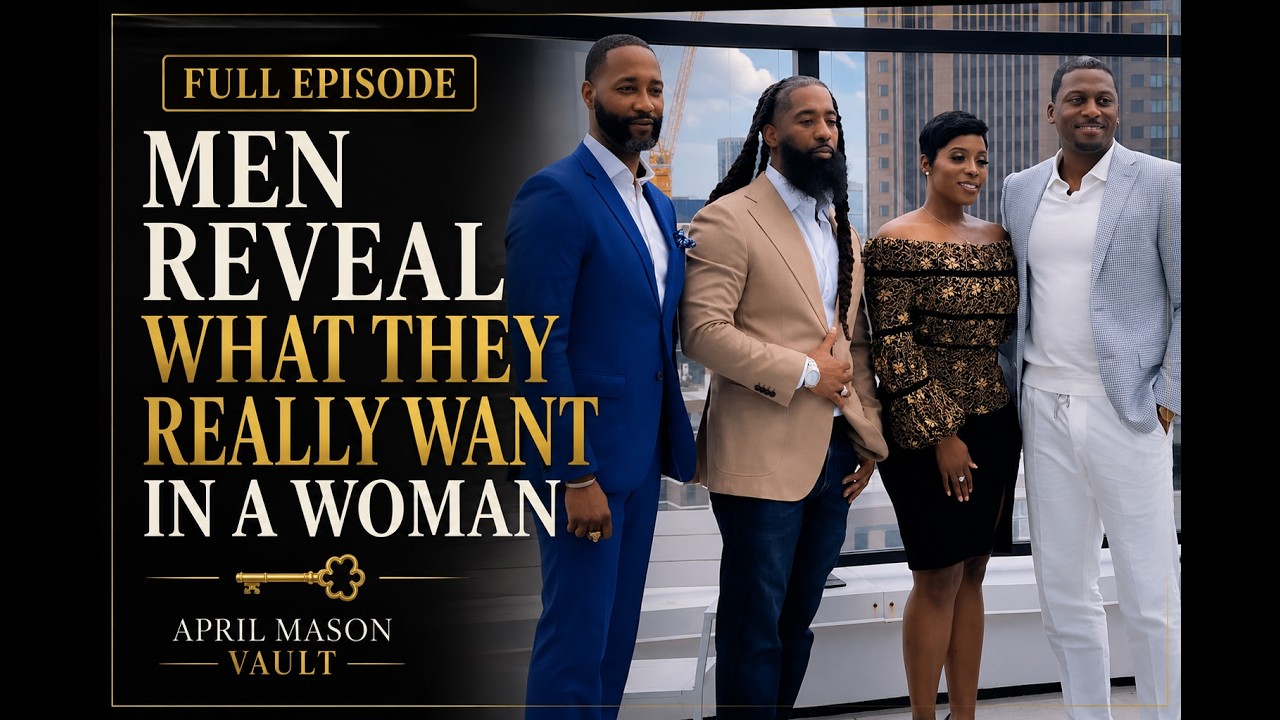



“Excuse me sir, can I borrow your muscles for a minute?” I always need help when men are around! 🥳