Audience Bridge Insights #20 - $3 to Acquire, $3 Back in 7 Days w/ Andy Mackensen, The Assist
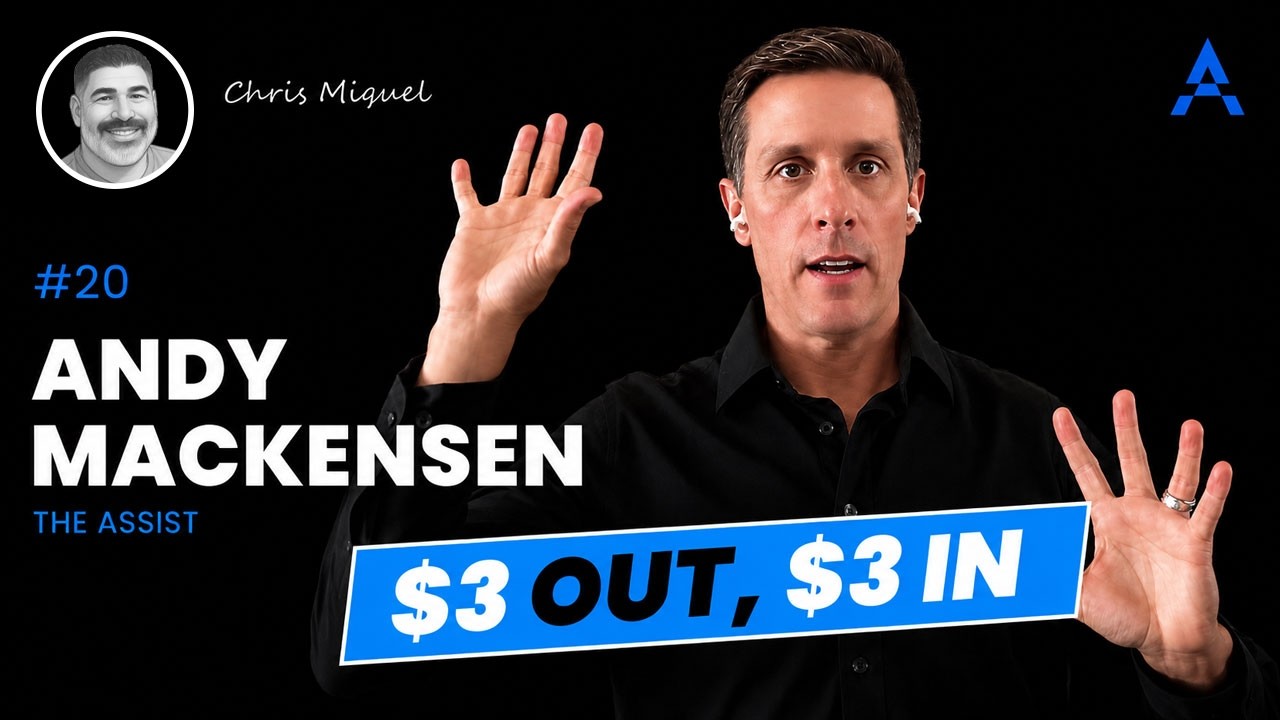
Andy Mackensen grew The Assist newsletter to 300k subscribers using a paid-media flywheel that costs $3 to acquire a subscriber and returns $3 within 7 days. He uses a quiz to capture zero-party data, enriches it with company information, and runs sponsor activations as 60-90 day campaigns instead of flat-rate deals.
Chapters
We basically help professional women become more effective at work, advance their careers, make smarter decisions.
What do you do if you have a woman that signed up, she's the only woman on the entire team for your team package?
It's a great question. How do we create a measurable business result for a brand?
Are you still targeting the same audience? So it's still just women?
Subscribers. It's all about acquiring the right subscribers. It's not just trying to bring anyone onto your list. You really want to attract the right person. Now, once you're able to get the right person to your landing page, that's the Most people are either like B2B or B2C.
You kind of like mix the two together. So what's your goal?
Acquire a subscriber or a user that delivers the most value over the longest period of time.
Welcome back to another episode of Audience Bridge Insights. I'm your host, Chris Miquel, and today I have Andy Mackinson, the co-founder and head of growth at The Assist. which is a highly successful newsletter for women professionals with, I think he said, currently 300,000 subs, which is amazing. He's also the co-founder and CEO of Lead Roller, which helps B2B companies generate leads and revenue. Andy, glad to have you on here. How are you doing?
Somewhere in the realm of spectacular to phenomenal. So we'll just see if we can get better.
Wow. I don't know what's in between that. I had the pleasure of watching—
I'm still trying to figure it out.
I had the pleasure of watching Andy speak. I believe it was at the newsletter conference. He gave a speech on his acquisition flywheel for The Assist, which was showing him how he's able to basically buy traffic and get signups to his newsletter and able to get basically payback in 7 days or less. I think that's what it is. We'll get into that. He can kind of explain a little bit more. But outside of— I mean, he's basically doing probably the best job, definitely when it comes to more of that, I would say B2B. Space on acquisition and revenue generating than most people in the space. I compare him to like Matt Paulson at MarketBeat, who's got his own version of this, but this is more in the finance niche. And he's got his similar funnel and stuff where he gets paid back pretty early as well. His is in 7 days, I can tell you that. But I think he likes to get paid back like in 30 days. So you can kind of give us a little quick rundown of kind of like your flywheel process and then how you're able to, from ad, you know, paying for the ad, getting the click, getting the lead submission, and then monetizing that to get your payback.
Yeah. Well, hey, if I'm being mentioned in the same camp as Matt Paulson, I'll take it. I see Matt as a mentor and someone who's doing an incredible job in the industry and he's figured a lot of things out over the years. So I appreciate that. Yeah. I mean, The Assist, we're building the leading media and education platform for ambitious professional women. So we basically help professional women become more effective at work, advance their careers, make smarter decisions, while at the same time, you know, helping trusted brands reach those professional women in ways that drive measurable business results. So the reason I say measurable business results is, you know, when you, when you look at at least my experience from the newsletter industry, a lot of newsletters are just, they're selling placements, right? They're selling ads. They've got a rate card. Hey, it's, $2,000 for this placement, it's $5,000 for this placement or whatever, whatever the rate card is. And then they're basically just selling that inventory. And then the brand, the sponsors or the brands that enter that deal, it's kind of, you get what you get and you don't get upset. That's kind of what I've seen in general in the industry. And so we, we started out that way, but we've taken, we've taken a different approach now where we're really really leaning into how do we create a measurable business result for a brand? And we really have 2 main verticals. One is direct-to-consumer and then the other is B2B. And so on the direct-to-consumer side, most brands, most direct-to-consumer brands, all they care about is an acceptable CAC, right? Hey, you know, we can pay, we can pay $100 CAC for XYZ product. If you can deliver that $100 CAC, if you're working with the right brands, they basically have unlimited budget, right? So it's, it's trying to, it's figuring out how to leverage the newsletter asset the audience asset that you have to deliver that new customer to the brand at an acceptable CAC. On the B2B side, it's a bit different because they're, yes, they're looking for revenue just like direct-to-consumer brands, but they care about pipeline, they care about attended meetings, booked meetings. And so they're trying to get new users into their flow to book a meeting, attend a demo, ultimately become a qualified opportunity. which builds their sales pipeline. And then a percentage of that pipeline converts to new deals and revenue. So we look at the Assist ecosystem across our, you know, we've got newsletter, we've got web, we have education and community, and then we also tie in paid media so that we're basically like kind of using an entire ecosystem approach to drive qualified traffic to either a direct-to-consumer brand or a B2B brand. And so that's how we look at things a little bit differently. The end result is if you can deliver for that brand at either the acceptable CAC for a D2C brand or an acceptable cost per attended meeting or cost per pipeline is what the B2B companies measure. If you could do that, then you've got a repeatable flywheel, right? Instead of closing one newsletter sponsorship deal, then testing you out and then them not finding the results and then moving on. And now you've got this sponsorship sales system where you have to continually bring in new sponsors to feed your sponsorship revenue every month. Now you've got the converse of that is now you have a repeatable system where you have renewals every month, you have repeatable revenue, you can count on it, it ends up being recurring revenue. So that's kind of our overall motif and how we look at the newsletter and media space.
So that, I mean, that's interesting you say it. So like most people are either like B2B or B2C, you kind of like mix the two together. So are you guys producing, you know, some lifestyle content and stuff as well to get more B2C stuff, or is the B2C stuff still kind of tied to that professional use case for, for your audience?
Yeah, it's a great question. I mean, the Assist newsletter is— it has a B2B bent to it because it is about professional women and how to be better in the workplace and how to advance their careers in the workplace. At the end of the day, though, everybody's a human being. And those professional women, while they are seeking tools and software and advice on how to perform better in the workplace, they also make decisions for themselves regarding B2C stuff. So, so we consider The Assist kind of a hybrid platform where we do talk about lifestyle and wellness and sleep and travel, everything that our audience is interested in on a personal level, while at the same time Talking about professional development content that is going to genuinely help, you know, that, that, that woman in the workplace do better, be better, and advance more quickly.
Got it. So in the beginning of your flywheel, you have your ads and we've chatted before. I'm pretty sure they all go to the same landing page.
Yep.
Is that correct?
Yeah. Why don't we talk about it? It's basically the system. It's a, it's a framework. It's called SCALE, S-C-A-L-E. It stands for subscribers, Conversion, activations, lifetime value, and enrichment. So the subscriber piece, you know, I gave a whole presentation on this at the newsletter conference, but to just kind of boil it down, subscribers, it's all about acquiring the right subscribers. It's not just trying to bring anyone onto your list. You really want to attract the right person that fits directly with the content that you're talking about. We do that through some tactics with ads. You know, one of the big things is calling out that individual in the ad, especially with Meta Andromeda. It's like the targeting's gone, right? It's like you have to actually call out the person, use the right copy in the ad, let Meta and the algorithm figure out what the intent is of your ad and who the right people are to serve that ad to. So it's about calling out and making sure you really understand who your ICP is and having the right ad copy to attract that right individual to come in. I won't talk about— there's lots of experts about paid media and how to do paid media acquisition. That is a big part of what we do and a big lever for our business. But my leverage paid media. I mean, we grew organically for the first 3, 4 years and we grew organically to, I think, like 30,000 or 40,000 subscribers. And it took like 3, 4 years. Then once we, once we flipped on the paid media engine, I mean, that's, that's how we got to, you know, 300,000 subscribers.
And you guys, you guys, you guys use an agency to manage that or you do that in-house?
We used to do it in-house and then we moved it to an agency that currently does our, our media buying now. And we're also helping the agency with some of the ad copy and stuff like that. But they, they do a lot of the heavy lifting for the, for the ad creative itself. So that's, that's subscribers, right? Then you get, okay, now once you're able to get the right person to your landing page, that's the key thing is like, what do you do from there? So landing pages, the thing that we learned over the years is just have a consistent split testing program in place because when we launched our first landing page, it was converting at like 35%. So 35% of the visitors would, would give us their email. Over time, we started changing one variable at a time, split test over time, removing some of the fluff, getting rid of some of the distractions, We had menu items at the top. It's like, get rid of all that, make it simple, make the messaging dialed, you know, have social proof on the page. So we just did like lots of different, like one-variable tests. And if you do that consistently over the course of, you know, 6 to 9 months is what it took us. We bumped the conversion rate of that page from 35% up to 60%. Some of our pages that were hyper-focused, like the director-level audience on LinkedIn, we would have an ad calling out directors. When they land on the landing page, it would state This is for directors, directors only, right? And so that page was converting, you know, is converting at 70%. So, you know, the more you niche down and the more specific you get, the higher the conversion rate. And so you get the right people to the landing page over time. You split test to make sure you ratchet up that conversion rate on the landing page. And then what we do, once someone opts in on the landing page, they enter into a very short quiz. It's a 5-question quiz that basically says it keeps an open loop that says, wait, your subscription is not yet complete. Answer these 5 questions and you'll see the results after. afterwards. We get about 83% of our users to complete that quiz right after opt-in. So very, very high rate of completion. And in that quiz, you know, you want to ask the first question you ask is a very simple yes/no, very low cognitive load, very low friction. You want to— the purpose of the first question is to just get people to engage with the quiz and get into it. Once you have— once they've answered the first question, then we, then we ask some additional questions that is we're collecting some zero-party data. So for us in our industry, We ask, what is your, you know, what department are you in? Because it's helpful to know if you're sales, marketing, HR, operations, like all of those individuals care about different things. And it also helps us with our content and what we deliver to them. And then we also ask what their seniority is. So an individual contributor at a company versus a VP, you know, 2 totally different intents there as well. The reason we ask those 2 clarifying questions in the quiz is once they, once the user completes the quiz, they land on what we call a quiz results page. And on that page, we have different offers, either affiliate offers, direct deals, we even have sponsor, you know, we have sponsor placements on those pages as part of our sponsorship deals. But we put, let's say you're an individual contributor in marketing, you're gonna see a different quiz results page with different offers that are more catered to what you care about versus maybe a director level or someone who manages a team that they'll see, they'll have different software or different affiliate offers on that page. But the purpose of that approach from landing page to quiz to quiz results page is we are monetizing the user immediately. And that's one of the biggest mistakes I see in the newsletter industry is newsletter operators often wait to monetize. They have a thank you page after the opt-in and say, hey, go check your inbox. That's great. You do want users to check their inbox, make sure that it's not in spam and all that, that, you know, deliverability is a real, a real thing, but they're really waiting to monetize that user on their regular newsletter sends that go out a couple times a week. So, so we built this so that we can monetize as much as possible upfront. We get about 40 to 50% of the media cost on that quiz results page. So if it costs us $3 to generate a, you know, an email address, from LinkedIn. You know, we'll generate $1.50 on that page. And then once they've finished that quiz results page, they then enter a 7-day welcome sequence. And that email welcome sequence is designed to— we look at it almost as if you're familiar with software and product-led growth, it's an onboarding. It's having— it's really putting our best foot forward of giving the new subscriber our best content, Recommending are the top tools and software that, that we believe will help them based on their particular role. And again, that ties into some of the monetization, that 7-day welcome sequence then monetizes over 7 days the remaining 50 to 60% of the revenue that we need. So all said and done, after 7 days, we paid $3 for a lead. We've now collected $3 in revenue. That subscriber is essentially free. And then we let the newsletter, the long-term newsletter sends our education products. You know, we have a community, we host free live webinars with training that we sell cohorts on the back of. We let all of that do the long-term, like the LTV of a subscriber. But what that 7-day sequence allows us to do is allows us to monetize the user immediately. And then we can put that money right back into paid media. So we have a paid media flywheel. where we're generating about 30,000 new subscribers a month via that method. And the only cap on that is we need to get more sponsor dollars and more budgets so that we can spend more upfront and monetize more through that system. And so that's what we're doing. We're slowly ratcheting up. I know, exactly right. So that's kind of the conversion system right there that I just outlined.
Yeah, let me just stop you there for a second so we Follow up with a couple questions. So on the survey results page, when you're showing them these offers, obviously your survey questions are B2B related, right? Seniority level, department. I'm assuming all those offers now on the survey, those are B2B offers mostly. You're not showing B2C offers, or do you have kind of a mixture in there because you just know that these B2C offers still convert for you on those pages?
It's a mixture. I would say it is more heavily focused on B2B because Let's face it, software companies, you know, monday.com, Notion, ClickUp, these are some of our long-term partners because they have a high LTV product to sell. They can pay more per click. So, you know, those are some of the top partners on the page. That said, there are companies like, you know, Mitty Health, which is a women's health and wellness company. There's, there's Hers, you know, so there's, there's some direct-to-consumer brands that we also have on that page as well.
Cool. And then on the optimization side where you're doing your A/B testing and improving your, your conversion rates and also the targeting based on the ads, like usually, I don't know if usually, but, you know, I talk to plenty of people and media buyers and stuff like that. They're like, you know, they're honing in on, on the back end. Right? Who's actually buying or who's actually becoming an engaged reader or wherever that is to pass that information, say, back to Facebook, for instance, to help optimize with their targeting. And a lot of times they'll do that and they'll actually increase the CPC or whatever, or the, you know, which ends up being a CPA for that acquisition. But it's a better reader that ends up monetizing along with better LTV in the back end. Did you see that by— is that part of the optimization process of when you're improving a landing page? Did you see any increase in cost because it was targeting different people that helped that, or the cost has always been kind of the same and your conversion is just what made it better that you were able to earn money back faster because you were getting basically more leads in the pipe?
All of the above. I wish it were a simple one One-word answer, but because this is a system, all of the different variables, they all come into play. So, you know, we were paying a much higher rate per new subscriber, but because the landing page wasn't converting as well, but once we got the landing page to convert better, the cost per lead, cost per new sub went down, right? But now we're kind of skipping ahead to the enrichment, the E in scale. You know, you talked about passing back and And getting that information back into the ad platforms. I mean, we were flying blind for many years. I mean, we were just basing it off of cost per lead, which I think is what most smaller newsletter operators look at as like, hey, how much does it cost for a new sub? But now when this gets into leveraging AI, we've built our own internal CDP where we're tracking everything. And when a new subscriber comes in, And they maybe engage with an ad on our quiz results page that goes into the CDP. If they click on something in the welcome sequence on a specific sponsor that goes into the CDP when they're clicking on ads and the regular newsletter sends over the long haul of how long they're going to be on our list, all that is tracked. And so now we've got a metric to revenue per subscriber. And that's where I think Matt Paulson has actually mentioned this. That's where the real magic happens. That's where it's like a cheat code for paid media because once you can get that visibility all the way down to revenue per subscriber and then, you know, some, we do some enrichment so we know what, you know, what company they're at, what the company size is, what industry, et cetera. So now we can build some cohorts and some different segments. All that gives us information to say, hey, this is a really good subscriber and we send that back to Meta via CAPI, you know, Conversion API, or we send it back to LinkedIn, the LinkedIn ad platform. All of that is being handled with our CDP that we built with cloud code. I mean, and it sends it all back to the ad platform, optimizes it, and then it sends us more of those subscribers that we're saying, hey, these are the best ones, give us more of those.
Yeah, what we spoke before, and when you mentioned that actually you're— I was shocked, still am kind of shocked that your LinkedIn CPL was lower than your Facebook. I don't know if it still is. At that point you said it was lower. That was like, I mean, I always seen like LinkedIn, like 3x the cost to get leads than Facebook.
Yeah. I still don't know how all the machines work because we'll have a stretch of 3 months where LinkedIn will be cheaper than Facebook and then it flip-flops and we're just like, what's going on here? So more data analysis to be looked at. But one of the key insights that we found After we were able to measure all the way down to revenue per subscriber was that LinkedIn, you know, we look at cost per new subscriber, but then we also look at, well, what's the cost per new clicker, right? Is it like not all subscribers click? And so we want to optimize towards clicker, right? And then there's cost per engaged user. Is someone coming onto our list and churning off in 30 days or are they engaged, you know, for a long period of time? So we measure the different costs of who those users are. And turns out that maybe you could already guess what the answer is here, but, you know, the cost per engaged user for LinkedIn is actually less than Facebook.
Yeah, it's your demo, right?
Exactly right. Exactly.
All right, let's get back to the flywheel. So we were— we did SCA.
We're skipping around.
Yeah. Yeah.
So subscribers, conversion. I talked about the whole conversion mousetrap that we built. Activations. A, so this ties into a little bit of the preamble that we had at the beginning, which is a lot of newsletters, they are selling flat rate sponsorship deals. Here's my rate card, here's what it costs. You know, basically you can rent our inventory. We're gonna do our best to give you results, but we're not guaranteeing anything. I mean, that's basically what the pitch is. And so sponsors are gonna test you out and see if it works. And if it does, they'll renew. Do another sponsorship deal. We just got tired of that because there's some sponsors that do work, some sponsors that don't work with just doing flat rates. And so we said, hey, how can we add more value? How can we look at The Assist not as just a newsletter, but this entire ecosystem that we've built? So we have web traffic, we have a couple of websites that we own, we have a paid community, we have a membership where there's a community of women that we can leverage. And then we also have experience with paid media, media buying. You could call it media buying, you could call it paid arbitrage, you know, buy a click for a dollar, sell it for 2. But ultimately it was looking at what are all the assets that we have and what can, if we were like the marketing agency for this brand, not the newsletter inventory provider, if we were the marketing agency for this brand, what would we do to give them a much higher probability of results? Almost like how can we get to the point where we guarantee results, right? And so that was the mindset that we, that shifted us. And we started doing this about a year and a half ago. And so now today, like an example activation, which would be different than a placement is, you know, in fact, I've got a call with a brand a little bit later today. They have a membership platform for some supplements and like peptides and stuff like that. We are designing a 4-part editorial series So it's going to be a really nicely done editorial once per week for 4 weeks that educates our audience on this membership program and what actually what peptides are, right? Because when you think about newsletters, newsletters are really good at top of funnel awareness. It's really tough. It's really tough to do minimum, middle, mostly bottom of funnel, right? It's like a lot of brands are like, hey, I want to pay for an ad and then I better get 50 customers out of this. And it's like, well, this is the first time this audience has ever seen your brand ever. So it's tough to expect like you're just going to get a result right away and get a customer. So for us, it's kind of a crawl, walk, run campaign. So now we're saying, hey, instead of just testing us with a placement, we're designing a 60-day campaign where it's like we're going to warm them up with educational content in the beginning. And guess what? Like, don't expect much results in terms of like new customers, right? And it's like we actually have to introduce your brand to our audience. Educate them, make them aware. Then we start moving towards middle of funnel. Hey, take this quiz, right? Take this quiz about your, your health, X, Y, Z. And then, and then ultimately towards the end of the campaign, towards the tail end of the campaign, we are sending them directly to the product page or directly to the opt-in for the demo page, whatever the, whatever the result is that the brand wants. Right. So it's kind of like that, that warm-up period and then getting them engaged and then finally asking for the asking for the sale, you could call it. We found that to work way better and taking newsletter sponsorships and looking at it from a campaign approach and from an internal marketing agency. Because here's the other thing we do. Instead of sending a newsletter click right to their landing page to buy the product or to opt in for a demo, we're creating bridge pages. So call it an advertorial, a comparison page, some sort of educational page that, that the assist owns that we create. And we're sending newsletter traffic from our newsletter to that bridge page, educating them, you know, pre-positioning them to like, know, and trust the brand. And then we're asking for the click on that page to go to the brand's page. So it adds an extra step in the, in the process, but it warms the user up and makes them much more likely to actually to take action on that final page. So, so, you know, we're implementing that. It's like that's part of our campaign is we actually create that page for you. And we drive traffic to it.
Yeah, I mean, I love that whole concept. It's amazing. I've been talking about this quite a bit frequently with different people that unfortunately newsletters, because it's email, are still seen for like direct response type of campaigns. Like you said, they want to get the ad click, immediate sell, and they don't give any credit in the attribution model ever for what most of it is, is top of the funnel awareness. Like a lot of times people are talking about stuff in a newsletter, their audience has never heard before, right? Just like you're on social media and you have the thing, they haven't said it's like, or magazine, whatever it is, it's an awareness campaign. And they'll, a lot of traditional media haven't picked that up yet. Some, they are starting to pick up more about the value of newsletter. For them, it's just like the scale. It's so hard to scale the audience on certain newsletters. For the buys, but all these other direct response people give it like no credit. They're like, oh, I need to have an 80% ROAS on the send. You're like, well, you know, I can't promise that. You know, if it happens, it's amazing. But like, what about all these people you're going to be retargeting on all display and Facebook and all this stuff you're doing? You give us no credit. They didn't even know about your brand before. The fact that you're kind of doing that with these activations and you're doing the whole warm-up awareness thing tied and still try to get that backend piece. It's amazing though. Another bonus tip for that bridge page is you're sending traffic to your own property, which deliverability-wise is great because you're not sending them to a third-party link offsite somewhere. So it's probably going to inbox more than other stuff would, like a third-party offer. And then if— I don't know if you've thought about this, you're a pretty brilliant person— that with these awareness campaigns, if you're able to now kind of build the tech so that you can provide them, you know, all the data of who's clicking and stuff like that. So they can feed that into their attribution models like, oh, hey, look, this person clicked on, on from the assist the first time, whatever, during this campaign, that was our first touchpoint. And we end up converting them even on Facebook or whatever. But this is what, where it started. And the ones that convert all the way through from you, it's even greater, but still getting, giving you the Percentage of the attribution along the way. That would be an additional like—
100%. I mean, from our estimates, there's a— there can sometimes be a 30 to 40% attribution leak. So it's like you're actually sending way more results than you're getting credit for. And that can be the difference. That can be the make it or break it of whether a sponsor renews or whether they, you know, take a hike because they're like, oh, well, these, you know, we didn't get the results that we needed. Well, By the way, no, actually you did because of the attribution leakage that you just described there. And so that's a real problem for newsletters. One of the ways we're solving this for B2B is we're now doing matchbacks. Adam Ryan, great guy. He's been talking about this. He's built a product around it. It's basically completing the feedback loop that I'm talking about specifically for B2B, where if you can get the B2B brand to even just send you a CSV of all of their qualified opportunities, all of their deals that closed. And then we can ingest that into our CDP and compare, hey, who of these companies and accounts opened one of our emails, clicked on our emails, clicked specifically on that sponsor that wasn't tracked. We're doing this now, this full feedback loop. And, you know, honestly being, you know, as Adam Ryan is leading the charge here and saying, this is a great idea. And so we've started doing this with some of our brands. And we're getting that feedback loop and, and, um, we've gotten some renewals as a result because we were right on the edge, right? Hey, did you give us the performance we needed or not? And we, we did the full look back, sent them back, hey, by the way, there's like 8 opportunities here that are on your list that like very clearly came from our list. Um, and that was the difference between whether, you know, renewing or not renewing. And so, um, I, I think that, that having completed that full feedback loop with the sponsors is super important. It also deepens, it makes the sponsorship stickier. It deepens the relationship. You're really working together with the brand as a full go-to-market team.
Right. Yeah, that's awesome.
Yeah. So activations, just to wrap that piece up, we don't even have a rate card anymore. We used to have a rate card. We don't even have one. Literally no rate card. If someone says, send us a rate card, we're like, well, we don't know what you want. What is it that you're looking to achieve?
Deep.
So we actually have to hop on a discovery call, really understand what are your marketing challenges? What are you looking to achieve? How are you measuring success? What are your metrics? CAC, cost per lead, whatever it is that they're trying to achieve, really understand that. And then we take that call transcript from that discovery call, we pop it into a prompt that we have, and it literally spits out a proposal in Lovable, a very, really nice looking attractive proposal in Lovable that proposes the activations similar to what I just described. Hey, is it a 60-day campaign? Is it a 90-day campaign?
Right.
Warm-up content, bridge page, uh, pay— we'll even, um, we'll even pay for some additional traffic from LinkedIn. Like, like we just kind of bake in this whole, it's, it, this whole activation instead of just like a placement. And then our salespeople will, will then hop on that call and, uh, present the proposal and, We position that call as an activation review call. It's not, it's not saying, hey, we have a, we're proposing, like we're proposing a deal to you. It's like, hey, we put together some activation ideas. Let's hop on the phone. I'm going to run through it with you live. I just want to make sure we're on the right track, but that's it. So it's like super low pressure. You schedule that proposal call at the end of the discovery call so that you are, you already have the meeting on the calendar. I use the term BAMFAM before I heard Alex Horowitz. Or Mozy using it. It's book a meeting from a meeting. That's like sales 101. When you're at the end of your sales call, you always want to have the next call booked on the calendar. But you have that discovery call, you book the proposal call, uh, you, you, you feed the discovery call transcript into, um, a prompt, some sort of LLM. You get the proposal, you walk through it with them live, and guess what? You're gonna get great feedback. They're gonna say, oh yeah, that's awesome. No, that doesn't make sense. Whatever. You take whatever that feedback was on that call, You revise the proposal one more time and your close rate's gonna be so much higher on sponsorship deals.
And that original review, there's no pricing on it still, just on the last one?
Or the original review, there is the, yeah, we do put pricing on it and it's not a, you know, not a silver, gold, platinum package thing. It's, we name the different packages and sometimes we'll literally just We'll just propose one package. It's like, this is what we think is best for you. Here's everything that we're planning on doing in the activation. Here's the investment. We don't say price. We say this is an investment. And then you wait for the feedback. If they're like, well, yeah, that's just way too high for us, then you start either taking, peeling stuff off. Um, never, this is the other thing, discounting. Discounting is a tough one. Don't ever, I don't know. I don't want to make an absolute statement and say don't ever discount, but Shy away from discounting as much as possible. Like you present them with a full activation and it's a, let's say it's a $30K investment. If they're like, oh yeah, we can only do $20K, don't give them the same thing for $20K. Like you actually have to peel some stuff out or revise. Sometimes we've completely revised the activation and made it a $20K activation with different components. Anyway, discounting is a, I see some people sending out proposals to a sponsor and on the proposal, They have the price and they have it crossed out and then it says like 15% discount for this. And it's like, well, for what?
Why?
What is the reason why you're discounting? You have to have a reason if you're going to actually do a discount.
Yeah, you're devaluing your audience or your service.
You're just devaluing yourself. Yeah, exactly.
Cool. And what's the L about? L?
Well, L is my favorite one. Oh, which one's your favorite one so far? L is my favorite. I haven't even talked about it yet. No, just kidding. But L stands for LTV, lifetime value. I mean, that's at the end of the day, that's the game we're all playing here. We're building media businesses here and we are trying to, the whole intent is to acquire a subscriber or a user that delivers the most value over the longest period of time. That's the game. And so when we look at LTV, It's not just about, hey, we paid $3 for a lead. Now let's fire as many ads in front of them as possible until we can make our money back. We look at, yes, sponsorships are important. That's a core piece of any newsletter business, I believe. But we also add in additional revenue streams. So not only do we have our sponsorship program, but like I mentioned on our conversion path, we have affiliate deals and CPC deals with with software companies, with other brands. So we're layering in not just direct deals with sponsors, but affiliate deals as well. We've launched our community. We have a paid membership called Smart Girl Society. It's for women that want to— it's similar to the Assist audience, which is women that want to level up their careers. But we have a much bigger focus on AI upskilling and how to actually leverage AI to save time, to stop doing all the busy work you're doing, and so that you can level up, work on higher dollar per hour activities, and then also use AI to be more visible, to get promoted more quickly, to get paid more, et cetera. So we've got our paid community, and then, you know, we have AI cohorts that we offer. So we'll do a free live training on a webinar for an hour, Pitch a $2,000 AI upskilling cohort. Um, that's, that's more of like a direct, um, a direct outcome. So, hey, you go through this 30-day, this 4-week cohort, you will walk out the other side with a working AI workflow in your actual job role. And we coach them along on how to do that. So, so there's an education, uh, revenue line item here. We are building, going to start building some higher ticket offers, $5K, $10K, $15K packages for more like B2B teams. So team, uh, AI upskilling. And then, and then you get into the data intelligence layer, which is, you know, everything that we're collecting into the CDP. We're feeding back better sponsorship reports at the end of campaigns. So our sponsors actually get it, you know, call it the, call it campaign intelligence. So they're actually getting intelligence from, from who clicked on their ad and who those people are, et cetera. But there's also a data product that at the end of the day that showing intent signals and people who are in market for, for XYZ products, those are all monetizable revenue lines. So that's kind of the LTV approach is like, think about all of the other things that you can do for your subscriber, for your user, and build additional revenue streams outside of sponsorships.
What's your current LTV over CAC? And what, I guess, what's your current LTV over CAC? What's your goal? And then What's your, I guess, your floor based on like a channel source, whatever, Facebook, LinkedIn, email, whatever, Google? What's like the floor LTV over CAC?
Those are great questions. So we make about $20 per subscriber over the life of that subscriber currently. Costs about $3 or $4 to acquire a new subscriber. So you can do the math. It's 5x, you know, 5x LTV over CAC. which is, we consider healthy. That said, 20 is not our end goal. We want to continue ratcheting that up, get it to 25, 30. I mean, if we can get some of these higher ticket B2B team offerings in, that's, I don't see any reason why we couldn't hit 50, but that's to be built and that's why we're working every day and striving.
You're hitting 50, you're going to get that PJ.
Exactly.
Exactly.
So, and then, sorry, was there another embedded question there with LTV/CAC?
It was just, it was like you said the highlight, is there like a floor? Like if you're seeing LTV over CAC of like, you know, say you're making $15 from a certain channel, is that good enough or are you just, you're going to stop running that and just put more into the other channels?
Anything that is over a 1-to-1 LTV/CAC, We spend on. That said, when there's limited ad dollars, we're always going to focus on the higher LTV-to-CAC channels. And with our CDP, we're able to go all the way back up to the individual ad that's driving that user. So we can even optimize, hey, we need to actually spend more money on this specific ad inside LinkedIn or inside Meta.
Well, just so you know, I believe you're doing very amazing because I think Didn't Paulson just publish on Twitter or LinkedIn somewhere that is like his historical LTV over CAC of all his ad spend and his revenue was like big 5x or something? Oh, it was? Okay. We just posted it. I can't remember if it was 5x, 6x, it was something like that. So you're right there. Just gotta get that volume up.
Just get the— that's it. That's the game. Get the volume up while maintaining a similar or better LTV to CAC ratio. Yeah, that's the game. Yeah. Um, one of the other, um, insights that we've had recently is, uh, you know, because we, we've, we've built this entire business with sending users through a 5-question quiz right at the, right at the top of the funnel, we're testing a new way in, uh, to the Assist where instead of an ad saying, hey, join the free newsletter, and then you land on a landing page and it's like, give us your email to get on the newsletter, we're testing what we're calling a diagnostic funnel. So the ad is, you know, what's your AI leverage score? And then they enter into a multi-question quiz that is more robust than what our typical quiz is, where we're asking different questions around their AI usage and what their AI challenges are and stuff like that. And then when they complete that quiz, they land on a quiz results page, but it is a personalized quiz results page because of the joys of AI and everything that AI can do now with You know, dynamically creating pages, etc., where now every user that comes through, they get a custom result that shows them what their score is, where their gaps are, how they can get better, what they need to do to use AI better to leverage their career. So it's the thought process here is we're providing more value upfront immediately, giving the user a genuinely— we're providing prompts like the prompts are dynamically generated based on how the answers the quiz so they can copy that prompt, immediately put it into chat or Claude or whatever. So we're delivering much more value on that results page. There's no sponsors at all. So we're doing a complete divergence of like, hey, we got to monetize this user immediately, like right away opt-in. Instead, we're providing more value upfront and then the page is optimized to get on to our next webinar. So the thought process there is, hey, instead of sending all of these clicks and this newfound trust that they're just discovering the assist. Instead of sending those clicks off platform to an affiliate deal, let's actually capture them, bring them into our ecosystem, put them on one of our webinars where they can really spend some time with us. You increase the like-know-trust factor much more quickly if someone spends an hour with you on a webinar. And then we can sell our owned products and services, our education products, our community, et cetera. So So we're just launching that now and testing. Maybe if someone else has done that, I would love to chat with them and see what the results have been. But it's a complete 180 different approach than how we're currently acquiring users. And the thought is, hey, if we can get people into our own ecosystem, get them to really show them how good our training is and how good our community is, that that will actually be better than trying to monetize them with affiliate offers. But we'll see. It's right in the beginning phases.
When they go through the funnel, the AI funnel, they're still signing up for the assist. They're still going to be receiving all that stuff.
That's the other thing that we have to test. I actually got this idea from Matt Paulson when he presented at one of the newsletter conferences this past year. When someone opts in on his list, he like has some fine print underneath that's like, hey, as a benefit of opting in for this, you also get free subscription to XYZ newsletter, right? So that's what we're doing on the quiz. And, you know, people are coming in to get their AI leverage score, but we're also saying, hey, you know, you get a free subscription to the Assist as well. So we're going to, we're going to look at the long-term effects of that. Hey, what are the, what is the quality of those Assist subscribers? Are they still engaged? Are they engaged at the same level? Are they clicking at the same level?
And so are you still targeting the same audience?
So it's still just women for this AI thing, or is it kind of same audience? We basically, we took our top performing ads for the Assist newsletter. Modified the copy a little bit to be— to talk more about the AI leverage score. And so far, yeah, I mean, it's that anytime you just take a winner and you modify the winner, that's the best. That's the best way to start, at least before coming up with like new creative.
What do you— what do you do if you have a woman that signed up, but she's only— she's only woman on the entire team for your team package?
It's a great, it's a, it's a great question. And we've, we've, we've talked about it. And for the, for the B2B team stuff, it is for adventures a little bit away from the assist audience and more of like a B2B services arrangement where, yes, there will be, there will be men and women on those teams likely.
All right. So it's not, it's not women's only. It's just, right. Yeah. Yeah. You're feeding it through the women.
That is it. That is a good question. Okay. So we've cut, we've, we've talked about LTV. Now the last is enrichment. And this is, this one, I don't know, this one got me, I think the most excited this year when, when we started to, when I, when I used Claude to connect our CDP to all the enrichment stuff that we're doing. Basically one of the other benefits that we have with asking those quiz questions in the beginning is we collect, um, we collect their first name, their last name, and their company name. And what I learned is that if you have those 3 plus their email address, it's like the enrichment, the enrichment gods, uh, the floodgates open, right? And so we take the company name, their actual name, and then their email address. We have some enrichment tools that we use, but it's pulling all this additional data back in. So company size, industry, geez, there's like, there's like 20 different fields that we're pulling in now. So it costs $3 to acquire an email address. They are giving us some additional information and then we're able to take an enrichment tool and pull in a whole bunch more. So basically we're converting an anonymous email, which basically that's what most kind of small to mid-level newsletter operators are doing. They're just collecting an email address. Hoping for the best. And we're taking that anonymous email address and getting just a much more rich, unified profile for on that one individual. So now when they click on an ad or they open an email or they engage with something or they buy, they buy into our community, we know exactly who those people are and, and how to better— like we talked about feeding that information back into the ad platform. That whole enrichment process allows us to have a much more rich dataset. Also, like I said, it allows us to provide value to our sponsors at the end of a campaign, to provide an actual intelligence report. The intelligence report itself is just— sponsors don't get that in the newsletter space as much unless they're working with Morning Brew or some of the much larger players. They're just not getting that kind of intelligence. And that alone is enough value for some of these campaigns. Some campaigns can perform below what they wanted, But because you gave them the data and the information on who these people were, which helps some of their other marketing programs outside of newsletters, like it's valuable and they, and it helps you keep a renewal going.
So there you go.
Scale.
Yeah. And you can also use it for identifying new products. There you go.
Yep. And ready to go.
Awesome, man. Well, I appreciate the breakdown of the scale. I think we're coming to the end of it. I know you got to pick up your kids here. Do you want share where people can find you or anything like that?
Yeah, I'm on LinkedIn, Andy Mackensen. Last name's always a tough one to spell. M-A-C-K-E-N-S-E-N. And hit me up there. And that's basically where I live. It's also theassist.com.
But yes, that would all be in the descriptions and all that stuff. Links everywhere. It's great seeing you again, chatting. I think this is going to be a really good episode for people learning how to actually operate and monetize their newsletter the right way to actually build a business off of it. So thanks for coming on. Absolutely. My pleasure, man. All right, bro. Take care.
Thanks for having me. See you, Chris.
More from Chris


Audience Bridge Insights #21 - He Kills Most Facebook Ads in 3 Days. One Has Run for 2 Years.

Audience Bridge Insights #18 - The AI Standing Between You and Your Subscribers — with Chad S. White

Audience Bridge Insights #17 - AI Is the Biggest Change to Email Since the iPhone w/ Dan Oshinsky
Audience Bridge Insights #16 - CPM vs CPC vs CPA: How Newsletter Ad Money Actually Works
Audience Bridge Insights #15 - Why MarketBeat Just Cut Their Email List in Half (On Purpose)
Audience Bridge Insights #14 - Co-Reg Isn’t Dead — You’re Just Doing It Wrong (w/ Tim Bourquin)
Your Newsletter List Size Is Lying To You! Make sure you identify this hidden metric.
Audience Bridge Insights #13 - Your List Size Is Lying to You (with Armando Roggio)