Beyond Brands By SMA - Episode 2 with Ben Wise
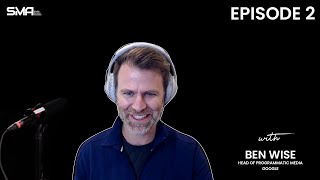
Ben Wise, head of programmatic media at Google, discusses how AI now drives campaign setup and creative optimization. He warns that ad overload is changing consumer behavior, emphasizes the irreplaceable role of human creativity, and predicts AI fluency will be the key skill marketers need next.
Chapters
Hello, audience. Today we are thrilled to welcome Ben Weiss to the podcast. Ben is a powerhouse in the digital marketing and sales world, currently leading the programmatic media team at Google. Over his 15-year career, he's worked with some of the biggest agencies and brands across Canada, helping them optimize their advertising investments and stay ahead of the curve with cutting-edge ad tech. Ben's impact also goes beyond the corporate world. He's deeply committed to giving back to the community, having served on the board of directors for the Daily Bread Food Bank, including 2 years as chair, where he helped guide the organization through the challenges of the pandemic. He also mentors young professionals, advises startups, and even co-founded Captivate, a platform dedicated to enhancing persuasion skills through psychology and behavioral science. Today, we'll be diving into Ben's career journey, exploring the world of programmatic media, and getting his take on everything from consumer behavior shifts to the future of AI in marketing. Ben, welcome to the show.
Thank you very much for having me. What a beautiful introduction. I should take you wherever I go.
Thank you so much, Ben. So yeah, let's, let's start at the beginning, Ben. Talking about your career journey, what drew you to the digital marketing and media world and how did your path lead you to Google?
Yeah, so I mean, the leading to Google, honestly, it's a lot of luck. I was, I finished my MBA in 2009, which was a tough time to graduate from a business program. I ended up in a small consulting company for 2 years, and about halfway through that time, I was like, you know what, tech is what I'm most interested in. It's what I'm most passionate about. Went out of my way to learn as much as I could, to get involved, go to events, get on the projects at the consulting firm that had kind of a tech angle to them and just build up that skill set. And then I was lucky enough after 2 years there that I landed the role at Google. I applied for one thing, didn't get it, never heard back even with the referral. And then like 6 months after that, I actually got a call back from a recruiter for a totally different role. And I was like, Google recruiter, yes, please, let's chat. And so it was, yeah, a lot of luck as with anything.
Okay, that's awesome. That's awesome. And you know, you touched upon a little on your early days. So looking back on your early years in digital marketing, do you remember any major shifts in the industry that influenced your approach or philosophy towards the world of marketing?
Yeah, I mean, back— I mean, so I started at Google like 13 and a half years ago, um, and I've been on the ad tech and programmatic side the entire time. But I remember working with clients in like 2014, and our recommendation was like, you know, 20 to 30% of your display and video budget you should be looking at through programmatic tools. Um, and everything else was kind of done directly. And, you know, 10 years, 12 years later, if you're buying direct and it's not programmatic, like, you, you need to have a pretty good reason why. It is, I think, just kind of proven— the technology, and not just Google's, has really proven itself to be a more effective, a more efficient way to transact media, and it keeps growing. So I think that idea of the role in programmatic from being kind of a bit player compared to a lot of other things now being a huge, massive part of any campaign for any advertiser. Seeing and being a part of that shift, just getting to play my own little role in that part of the industry has been really great to watch it evolve over time and the way that people think about the opportunities, challenges of the programmatic space has just developed with its size and technical sophistication.
That's awesome. So you really kind of saw the shift, you know, in that media happening because you've been at Google since the very beginning, like you mentioned as well, right here in Canada. So you must have seen that trend change over time as well. So I mean, that's amazing. And you know, just, just leading out of that question, I would also like to ask— I was saving it for later, but I might as well ask it right now. And this is like, you know, of picking from your babies, and you can never do that. But what would be that standout campaign that you've worked on, and could you just shed some light on that, please?
Oh God, um, it's hard to choose. Even if you give me the questions in advance, it's still hard to choose. Um, I think what— I mean, 6 or 7 or maybe 8 years— sorry, my sense of time pre-COVID is is wishy-washy. But at some point, um, when I was working as an account executive on the ad tech side, I did a lot of work on the creative, um, technical, uh, products, um, worked a lot with creative agencies on it. And we had an idea of like, we, we actually created our own award, funnily called the Stuff You Click On Award, and it was all about like finding the campaign that made the best use of data and technology in the creative execution. So I think there's a lot of amazing creative out there, great you know, fun spots, really great storytelling, really flashy, amazing graphics, whatever it may be. But we wanted to focus on how do you really use the, um, really great kind of data and technology to drive that, um, that business impact. And so, I mean, maybe it's a little unfair to choose this, but the winner of that in its first year was a campaign by Weight Watchers that really just— it was really pushing the envelope in terms of how well you can use data for the targeting, but also for like the creative optimization. So I mean, it was the very early days of dynamic creative optimization, or DCO, as a concept, as a technical product. And Weight Watchers back in the day, and working with their agency, who, you know, a lot of folks that I'm still friends with, it was just a really cool campaign. And you wouldn't know it as a consumer because it didn't look that flashy, but it was just really well targeted to you. And the message was really well suited to you. As you received it. And I think that that's the kind of thing that makes marketing effective. You know, everyone will tell you, I— oh, you work on display ads? I never click on display or a search ad. I always just scroll past the search ads and I look at the other links. And everybody says that. But we also have a ton of data that would say like, actually, everybody clicks on ads. You just don't realize it because a really good ad is something that's interesting and relevant to you. You click on it because you think it's content. And because it catches you with the right message at the right time. You don't realize that's an ad when you click on it. And I think really using the data and technology to serve that right ad with the right message at the right time is what is compelling to users. They just don't even realize it's an ad.
Wow, that's amazing. And for our viewers, in case they would want to have a look at this campaign, would this be out there somewhere?
I don't think you can see it anymore. I think DCO, or kind of that dynamic approach to to, to the creative has become much more mainstream. So I think a lot of the stuff that you'll just naturally come across when you're online will fit that.
Okay, got it. Awesome. No worries. But yeah, talking about, you know, catching the audience at the right place at the right time, I think that's also a huge component of programmatic advertising and programmatic media. So just shifting gears to programmatic media, can you tell our viewers a bit more about how it functions? And what it is.
Yeah, so I mean, it's— there's a lot that goes into the world of programmatic, but like the very straightforward basic answer is essentially you are using technology platforms to automate media buying. So there's a whole bunch of really fancy tech pipes that connect everything so that you can get your ad in front of the right user at the right time. And there's lots of different targeting and bidding and creative capabilities built into that. But essentially it is using all of that technology to automate the way that you buy media so that it is more effective and more efficient.
Okay, got it. And you know, as of course the head of programmatic media at Google, what would you say some of the challenges that you face when it comes to identifying those right spots or just programmatic media in general?
Um, I, I think it's, it's a very complex ecosystem. So a lot of the, the ads you can go out and buy in digital more broadly, you know, if you're buying search ads, you're probably buying search ads from Google. If you're buying TikTok ads, you're buying them from TikTok. And Facebook, you're buying from Facebook, etc. Um, when you're buying programmatic, those are kind of the, the underlying technology connects you to thousands and thousands of inventory sources. You can be on any website, any app, TV shows, podcasts, billboards. And so the, the complexity of that ecosystem, I think, is probably the biggest challenge because, A, it is one platform that has to be able to do all of those things, and B, you have to understand a little bit about the, the broader landscape of where you would want your ads to show up. And you can— there's some more automated ways that people want to use and just say, you know, find me these types of users, or here's a, here's an output of like a conversion target. We trust the system to go and find those. Other times it's, you know, we have a partnership with whatever sports team, we want to make sure we're hitting that right content, or we know people are super excited about the latest season of Bridgerton coming out on Netflix and we want to be on those ads. And understanding that full ecosystem, it's a lot. It's hard to keep up with everything. I do it full-time, programmatic all the time. I speak to a lot of those publishers on a very regular basis. And it can— I'd say for anyone, any practitioner or anybody doing the strategy behind programmatic, it is understanding all of the multitude of options that you have. You have the capabilities for everything, but you have to understand those capabilities and then map that to what you're actually trying to achieve as a marketer.
Absolutely. That's really interesting and insightful. Thank you so much for sharing that. And you know, another question on this would be that, of course, with the advent of programmatic media and programmatic advertising, it has already changed the world of advertising quite a lot, you know, reduced a lot of manual labor as well, I would say. But what do you think in particular can be some of the changes or the transformations that it'll continue to lead to in the world of advertising?
Yeah, so I, I would say there's, there's two big things. One is AI, um, not surprising, that is, you know, the, the buzzword of the year, um, and the way that AI is going to inform the setup of your campaign, what you target, how you reach users.
It starts—
we're starting to see it on the creative side, how AI is gonna, you know, that dynamic creative used to It had huge options, but it was still like controlled by, by you as the advertiser. And I think a lot of that is going to become more and more driven by AI. But again, that's a lot of like, as you said, automating basic tasks. I think it is more and more of the basics will be handled by AI and more and more, which hopefully frees up time and effort to, to reallocate that to the, the strategy and understanding the ecosystem and understanding what you want to do and how it matches up and understanding understanding your consumers and where they're going to be. So AI is number one. And then the second one, I think, is for a long time people have talked about kind of the media world as like two distinct things. You've got digital media, which is like when I'm on my phone or I'm on my laptop, and you've got traditional media, which is like radio and billboards and regular television. But as more and more of the ways you consume, you know, digital or traditional media. Um, and for people listening on podcasts, I put traditional in, you know, air quotes. Um, a lot of those things are now becoming digitally enabled. So this idea of traditional versus digital, like, that line is blurring. And through programmatic, you can buy the bit— you can buy the, the ad space for the billboard on the side of the highway. You can buy you know, the audio I'm listening to in my car. You can buy the TV in my living room, like the screen in my living room, that when my— me and my kids are watching hockey, um, and it's the same user experience as it was when it was digital, when it was traditional, but we're bringing some of the robustness in terms of targeting and automation and measurement and creative capabilities, um, from digital into those spaces. So I think the, the second thing, you know, I said AI is number one. Number two is the the meshing or the melding of traditional and digital and that delineation going away and it's just media. So those would be for me, I think the two biggest things that I see that I'm really excited.
Got it, makes sense. And just to follow up on this would also be, this is a little different from programmatic, but of course there's been a huge shift in advertising as well from traditional to digital. In your experience, do you see that trend continue to be the same, or do you think that, you know, traditional is not going to be there anytime in the near future, or do you think that balance is still going to be there?
I think there's always going to be both, but as I was saying before, like, I think that idea of digital versus traditional will go away. It's— if I'm driving down the highway and there's a billboard there, like, there— that, that's an opportunity for an advertiser to get their message in front of me. If I am listening to music when I go for a run, that is a chance for an advertiser to reach me with their message. Same with TV, all of those traditional things. Unless people stop watching TV on their couch and stop driving places and seeing billboards, yeah, those are useful surfaces to put ads on to reach customers in a unique moment. And certainly you need to understand kind of the, the context of that moment in the context of the media that I'm consuming as a viewer or as a listener. But, you know, I think that part of the trend is really like there are just more and more things that are being seen as advertising surfaces or advertising opportunities. And because of digital capabilities, we can put ads in more places than we used to. So the options will continue to proliferate. Some of them will still feel very traditional because it's a billboard on a bus shelter. Um, it might be digital in its execution, but it's still going to feel like a very traditional, um, a traditional ad for the user that's walking down the street or that's waiting for their bus.
Got it, got it. Thank you for this, Ben. And also, you spoke a little about consumer behavior with how, you know, people have these habits of viewing advertising. And we have also kind of realized that digital marketing and digital media in general often intersects with human psychology and consumer psychology, more to say. Right. So how do you think consumer behavior has evolved over time with the advent of digital platforms and programmatic media?
Yeah, really good question. And, you know, obviously I have the Google side, but also the Captivate side of my experience, which is really focused on the psychology side of a lot of this. And I think it's changed in a few ways. So one, I think there's a I was saying how like there are just more and more advertising options, which as a brand who wants to reach customers or potential customers, I think that's a huge opportunity because maybe my message is more relevant in certain— in a certain context or in certain situations, and I have a lot more different ways that I can now reach the right people. The, the kind of the other side of that though is users are exposed to far more ads than they used to. I don't know the data offhand, but I'm sure you could find the, like, the number of ads the average person sees in a day. Yeah. In 2024 versus 2004, it's probably gone up a heck of a lot, right? Yeah. So the, the challenge for brands is, you know, that's the opportunity for brands, but the challenge for brands at the exact same time is there's a lot more noise out there. And to get your ad creative and message and timing to actually break through I think it's become more challenging. There's more ways and capabilities to do that, and so you need to be on the cutting edge and figuring out what that is. But it is going to be more of a challenge if I'm seeing 500 ads a day instead of 100 ads a day.
Absolutely, that makes a lot of sense. And you know, that also kind of brings me to my next question, which is also a bit about automation and AI, with of course the advent of so many ads coming along. And Google Canada has definitely been advancing AI tools that not only help optimize not only improve ad bidding and campaign performance, but also allow for greater personalization, right? And this personalization can drive, of course, emotional connections by delivering content tailored to individual consumer preferences and behaviors. So my question for you, Ben, in this regard would be, with AI transforming marketing at such a rapid pace, particularly through innovations at Google, how do you see brands using AI to connect more deeply with consumers on an emotional level?
Yeah, I mean, what's interesting is that I think since like the very rapid rise of, you know, ChatGPT is the first, but lots of options including Google's Gemini and others. Yeah, AI is so top of mind. But I think the reality is, especially in programmatic, that like AI is not new. We have been talking about AI in different forms for the last decade and sometimes, you know, it's automating some of the more basic workflows. Sometimes it's in like the analysis of massive amounts of data so that the bidding or the targeting is more effective because there's no way a human can look through as many permutations and options as, as the machine learning algorithm can do. So I, I would say AI has been around for a while, and I think the impact that we've seen is it's been very, very positive for advertisers because it makes You know, at the end of the day, it makes the ad advertising more effective because it is more relevant. You are finding the right users more effectively. And at the same time, as it automates some of those previously manual things, yeah, there's still that human element of advertising that's not going anywhere, but it frees up our time to think about that more and to put more effort and resources towards that human side of like, what is a really creative message that's going to break through? What is a campaign concept that is going to break through and really connect to our users? What more research, what more data can we get to better understand our customers or our customer profile and their persona and their ideas and their interests so that we can make better products and better marketing messages to reach them? So I think, you know, AI is far from replacing people in the marketing industry. I think it's going to free us up to do a lot better work, take a lot of that manual stuff over, over from people. But the, the human spark, that creative spark, is still so important on the creative and the media side when it comes to advertising. Um, so as amazing as AI is on all those things that it is doing, it's also amazing in that it enables the time for us to do all those other things too.
Absolutely. That's really interesting, Ben. Thanks for sharing that. And also thanks for sharing your insight on how the world of programmatic advertising and media has been using AI for a long, long time. That also brings me to the next—
I think they forget it because it wasn't in a chatbot.
Yeah, absolutely. And this also brings me to my next question then about AI. Of course, there are a lot of uptrends and upsides to AI, but there are a certain amount of downsides to it as well. So what do you think, especially within the world of programmatic media, can be some of the challenges, both ethical organizational that AI can pose towards, you know, organizations?
Yeah, I mean, I think one of the interesting challenges is going to be probably more on the creative side. I think there's a lot of process and quality assurance in place in advertising today, and for good reason. And I think that has created some hesitancy and some certainly justified hesitancy in how you kind of overcome that with AI. So like the cheesy example I like to give is every Nike ad has to say, "Just do it." The AI cannot hallucinate and have 1 out of 100 ads that says, "Just about to do it," or, "Just gonna do it." You know, that can't happen. You cannot have a Nike ad that gets that wrong. And I think that level of control is going to be really, really important. Um, so I, I don't think a lot of creative tools are necessarily there yet, but as you've said a few times, like, this stuff is advancing really, really rapidly. Um, and so it's just, it's just a matter of time until a lot of that kind of quality assurance that's so important in advertising comes through. And so, so we'll get there, but I think today The challenge to more adoption is probably in like people don't want to cede control because the AI is really good, but it's not perfect. And a lot of the times clients and brands expect it to be perfect and aren't willing to take that risk because they're, you know, the value of their brand and their brand perception is, is so valuable that they, you know, even if it's a little more effective, the, the hit that you're going to get on your brand is not worth it yet, but it's going to get there.
Got it. Got it. Thanks a lot for that, Ben. And I would also, you know, kind of want to shift gears a little towards more of community engagement and mentorship that you've done, you know, in huge amounts, I would say. My first question for you in that regard would be that you've served as the chair of the Daily Bread Food Bank board. So how has that experience and, you know, your involvement with community shaped your leadership style?
Um, it's a really interesting question, and there's a kind of a few different aspects to that. Um, so one is, um, the work with Daily Bread has really exposed me to a side of Toronto or a side of Canada that is very different than working at Google. Um, and I think it gives you a really important perspective of life in Toronto or across the country that in the tech bubble you might not see in the same way. And that just gives you a tremendous amount of gratitude, but also makes me feel with that a tremendous amount of responsibility because there are friends and neighbors and people all across the city that are struggling. And I think people who are not struggling in the same way— I mean, let's be honest, you know, 90% of my any success I'll ever have is down to luck. And a bad turn of luck and we could be in different situations. And so I think if you've, if you've been blessed with that luck, you should be paying it forward and doing everything you can because, because it literally is like your neighbors. So I think that gratitude and that responsibility is the first part. The second part from a like a more specifically like tactical skills, when you work for a really big company like Google, You, you are so focused on your area of expertise. So I mean, programmatic is a big industry, but also like within the advertising world that some might still call that a niche. And I am so, so deep into that. Um, but with Daily Bread, um, or kind of anyone who has the privilege of serving on a nonprofit board, you know, you in the course of one meeting, you could be talking about fundraising strategy, then government policy, then HR, then culture building, then advocacy, like, like the breadth of things that you go through. Um, I've just— I've learned a ton about that, um, about kind of all the aspects that go into running an organization, uh, that you might not necessarily get if you are a really in-depth kind of subject matter expert in one thing. And then the last piece is just exposure to other leaders. And at Daily Bread, we have some really, really amazing leaders that we're fortunate to have as part of the organization, both on the board and on, on staff. Just some incredible people. And just being able to observe and learn from some really talented people has definitely helped me. So, you know, I, I quote the Daily Bread CEO— his name is Neil— I quote Neil all the time on things that I've learned, and it informs a lot of the things that I will do in my day job as, as a leader.
Amazing, Ben. I think this piece of advice is going to be so helpful for our viewers who are also aspiring leaders. I think just getting involved with communities can really transform your leadership style. So thank you so much for sharing this information. Yeah. And in addition to your community work, you also co-founded Captivate, which focuses on enhancing persuasion skills. Can you tell us what inspired you to start Captivate and how it helps people use psychology to become more effective communicators?
Sure. So Captivate, we've been running it for about 2 years and it's evolved a lot in that time. It's me and a really good friend, Darren. And it was, we kind of through work discovered that we both are just really interested in the psychology of persuasion. We're both salespeople and we've read about it. We researched it separately. We look at how we can use that in our own in our own roles. And we kind of discovered this shared interest and this shared passion, and we said, hey, why don't we start a newsletter? Because it's a really interesting topic, it seems to resonate with people. And what's amazing about it is the ease that you can start to use some of these things. Once you have a better understanding of the psychology of like how people are making decisions, you can start to approach some of that influence and persuasion that you're trying to do in a much more effective way. But it really is just a lot of very little things that you need to do differently to appeal to people in a different way. So we started, as I said, as a newsletter. We, we send that out every month with like one specific concept. We want to make sure that we're going deep and everyone understands that. And we really try to translate the kind of academic research, I think, from, you know, take it out of the ivory tower and make it easy to understand and really easy to put into use. So, so that's the newsletter piece. Then after, you know, 4 or 5 months of doing the newsletter, we had people internally at Google and externally reach out and say like, hey, we really like the content. I think my team could really benefit more. Would you come in and do a training? And so we, you know, we put together an hour-long training speaking session and delivered that a bunch. People really liked that. And so since then we've been trying to grow that side of what we do as well. We've got A few that are booked that are coming up. We're going to be in Calgary in a couple of weeks, then we're back in Toronto at the No Longer Rising, at the TMU DMZ. We're doing a session all about the psychology of storytelling. We're working with the Toronto Ad Club. We're going to be doing something with them in the new year. So a lot of different things because I think the psychology of persuasion is just so relevant. And it's not just for salespeople who are trying to convince you to buy something, is not just for marketers who are convincing you to buy something, although certainly very applicable for those groups. But, you know, think about your career, think about the way you work with colleagues in the office, understanding, you know, if I've got to convince my boss that this program idea I have is a good one, I need to persuade him on that. If I need to convince another team that they should focus more on programmatic, I need to influence, persuade them about that. If I want to get a job in the first place, I need to persuade you to hire me. So I think we would say that those are skills that are relevant to anyone if you're working with other humans, not just sales and marketing. So we do a lot with sales and marketing teams, but we also do a lot across the board with, with companies. So that's kind of Captivate in a nutshell. It's just a lot of fun to work on. It's really interesting content. And kind of the different channels that we're experimenting with, whether it's the newsletter, whether it's, you know, our YouTube channel or our Facebook— or not Facebook— or Instagram, our LinkedIn page. All, you know, we're trying to be everywhere and just testing out different forms of content of, you know, whether it's stand and deliver a keynote speech, um, a 30-second short video on your Instagram Reel, or 5 or 10 minute newsletter in your inbox where we're trying to figure out what sticks. But, um, the ideas behind it, I think people are really enjoying. At least that's what they say to me.
Yeah, absolutely. And I can, I can also say that because I subscribed to Captivate, I think, 7 months ago. And what I really liked about Captivate was that there are a lot of actionable insights because it's coming from people working in the organization, right? Uh, so very actionable insights that you can take out to the real world like tomorrow. So yeah, to our viewers, I really urge you all to, you know, have a look at Captivate and sign up for the newsletter for sure. So thanks, Ben, for sharing that.
Thanks so much for sharing it.
Absolutely. And that brings me to the end of the podcast as well with two last questions. The first one, Ben, would be what's that one trend within the digital marketing atmosphere that you can bet on for the near and the foreseeable future?
I would say for, for the near term, um, foreseeable future, I would say like for every marketer has to really understand AI. Um, and you don't need to understand the technical stuff, like you don't need to know how to program it or you don't need to understand neural networks. Um, I, I know the term, I have no idea what it means. Um, but you need to understand how to use it to make yourself better at your job. And whether that is automating basic tasks, whether that is using it as a thought partner for brainstorming and coming up with ideas, whether it's helping you write more succinctly or more clearly. And it doesn't do any of these things on its own. It's like having an assistant, or like a, you know, I like that phrase that I've heard where it's your thought partner. And it should, everything you're working on, it should make you better at it, um, both for the work that you put in front of consumers or customers and the work that you're doing internally. Um, so get, get deep with the tools, get in there, try them out, talk to people about how they're using it, share ideas. Um, it's still early days in what all this stuff looks like, um, and so I think really leaning in and understanding how to make use of the technology that's available and continuing to practice and find new ways, I think, is the, the most important thing for marketers., in their careers right now.
Got it. And just one quick follow-up on that, Ben, would be what's your favorite AI tool that you use, uh, for your daily tasks?
Well, uh, this is going to sound like I'm just using the, you know, the, the corporate Google line. I do genuinely really like Gemini. Um, you know, we have— we've been using, um, LLM models or LLM tools to help with Captivate, whether it's ideas, help with writing, help with editing, help with storyboarding for presentations. And, you know, I've used more than one. You know, I started using ChatGPT before Gemini was available, and I still test out multiple ones, but I definitely use Gemini the most. I think the quality of the output, the quality of the ideas it comes up with, the way that it writes, the way that it adjusts based on different prompts that, that I can refine over time. Um, it's— I mean, it's, it's become normal because we use it a lot, but I mean, if you were to tell me this is how we'd be doing things 10 years ago, I would have thought you were out to lunch. So it's pretty, it's pretty amazing.
Got it. Thanks, man. Thanks for sharing that. And that brings me to our last question as well, which is, what final piece of advice would you share with young aspiring marketers and also business professionals here at Schulich and beyond?
Sure. I mean, and I've thought about this a lot because I get the question on a somewhat regular basis, and I think the best piece of advice— and this is not— I didn't come up with this— the best piece of advice I've ever received that I like to pass on is no matter the job that you have, make it the job that you want. And I think most places give you the leeway and give you the flexibility to adapt what you're working on to suit what you're most interested in. Now, you can't do that from day one. You do need to be like— you need to earn the right to do that. You need to be nailing the core of your job. But if you're able to do that and you're in a, you know, a supportive work environment, you can add on to that or expand your scope or take on new things or find those projects that you want to work on. And if it— if you're finding the right things, you'll be more engaged, you'll be more interested, you'll be more keen to learn, which is more fun for you to work on. But it's also, you know, the output, the quality of your work will be better if you're working on things you really care about. And I remember, you know, I go back to the example 15 years ago when I was in consulting where, you know, a year through the 2 years when I was at that firm, I I decided that like I really like the tech space. It's what I was really interested in. So I went out of my way to work on that every, every chance I could. I helped with the white paper about social media. I helped launch the company blog. I got active on, you know, Twitter and other social platforms. And then because you, you establish a bit of that expertise, then I got called in to work on more projects that were all about that. So, you know, over the course of that, like that year, I went from kind of generalist to being much more specialized in working in that space, and it was what I was interested in. So my work was better, I was more engaged, and it opened up more networking, more— it opened up more doors that eventually led me to Google, which has been a great run.
Awesome. That's, that's really interesting, and that's the first time I'm hearing this as well. So thank you so much for sharing that with our viewers. I'm pretty sure a lot of people would be taking some notes and insights from this one. So yeah, thank you so much, Ben, for, you know, being with us today for this podcast. Any final thoughts that you'd have for our viewers?
I mean, I know there's probably a lot of students that listen to this, and as a student, like, get out there and meet people, network, whatever form that takes, if it's emails, if it's asking for coffees, I hope most people are going to be generous with their time, especially with students. I try to answer every request I get for a coffee. Sometimes I need to push it back a month or two to find the time, but people help me out. I want to help others out. Um, so, you know, get out there, meet people. That's the best part of the industry, and that's going to be the biggest part of your future success.
Got it. Thank you so much again, Ben, for joining us, and thank you all for listening, uh, to Ben and Beyond Brands. And definitely remember to subscribe to Captivate, Brent's newsletter, and beyond.
Thank you so much for the invite. It was really, really fun to chat.
More from Ben
The Franklin Effect: Turn Your Biggest Critic Into Your Strongest Supporter (Psychology Explained)