Episode 200 / Ben Wise / Google Canada / Head of Programmatic Media
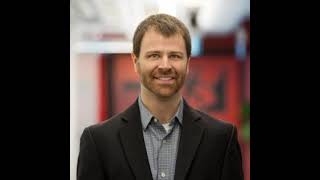
In this episode of the Shiny New Object podcast, host Tom Allerton interviews Ben Wise, Head of Programmatic Media at Google Canada. Ben outlines his 11‑year journey at Google, moving from tech support to sales and now leading a programmatic media team. He emphasizes the value of extracurricular and volunteer work—board service at Daily Bread Food Bank, advisory roles, mentorship, and internal 20% projects—as a way to develop new skills and broaden industry exposure. Ben shares his core career mantra: “make the job you have the one you want,” illustrating how he leveraged personal interest in tech and digital to build a portfolio that helped him land a role at Google. The conversation then shifts to his “shiny new object,” a behavioral shift rather than a product: breaking down silos between traditional and digital media. He argues that consumers view TV, YouTube, streaming, and radio as a seamless experience, citing Google research that 61% of Canadians consider YouTube on a TV screen to be “TV.” Yet the industry still plans and creates media in isolated verticals. Ben calls for a consumer‑first mindset, improved cross‑team communication, and broader expertise among media buyers so that TV, YouTube, connected TV, radio, and audio work together. Benefits include consistent brand messaging, more fluid budget allocation, and higher ROI. He notes that the most successful teams are those who proactively reach out across disciplines, such as TV buyers learning from YouTube specialists. The episode closes with Ben’s preferred contact method—LinkedIn connection requests referencing the podcast.
Chapters
It just takes a willingness of everyone to communicate more and a bit to kind of push themselves out of their comfort zone because it is new, it can feel scary. But I think if you, you have those conversations and you stay curious, then we'll get there as an industry.
Hi, before we get to this week's podcast, I'd like to tell you that Automated Creative are releasing a book called How to Make It in Marketing Volume 1. It is a collection of the best marketing career advice we've had from over 200 episodes of the Shiny New Object podcast. You'll hear from some of the biggest, brightest, and best names in the industry showing you, telling you how to grow your career. You can reserve yourself a copy at this URL. So get your pens out. It's Bitly, so bit.ly/makeitinmarketing. So that's Bitly, bit.ly/makeitinmarketing. But the Make It in Marketing bit is in capital letters. Bit.ly/ lowercase and the rest is Make It In Marketing uppercase. I think you should get your heads around that and enjoy. It's a great read. Hello and welcome to the Shiny New Object podcast. My name is Tom Allerton. I'm the founder of Automated Creative. And this is a weekly podcast where I chat to marketing leaders about their vision for the future of the industry. What a treat. And this week is no different. I'm on a call with Ben Wise, who is Head of Programmatic Media at Google Canada. Ben, for anyone who doesn't know who you are and what you do, could you give us a bit of a background on what your career has been like and what you do today?
Sure thing, Tom. First, thank you for having me. Very excited to be here. I've honestly spent most of my career at Google. I've been about 11 and a half years now. I started in more of a tech support function, did that for a couple of years, moved over to the sales side, bounced around between a few different products, a few different verticals. And for the last 4 years, I've been leading our programmatic media team, which essentially means kind of defining the sales and go-to-market strategy for programmatic media and leading the team of kind of 10 to 12 direct sales folks that work with a lot of the largest clients or agencies in Canada.
Fantastic. So in your career, what has been the best use of your time, money, or energy?
Cool. So, so what I would say is kind of the best use of my time and energy has really been finding interesting extracurricular activities that help me grow outside my day-to-day job. You know, lots of people will talk about having a side hustle, which is great. For me, they've to date been all volunteer roles, so I, I don't call them that, but they're essentially kind of the same thing. So I'm on the board of directors of the Daily Bread Food Bank, which is the largest food bank in Canada. I'm advisor to a few different early-stage startups. I am involved with a few different mentorship programs. And then within Google, I've had a number of different 20% projects over the years. And I think the reason that I, I would say these are, have been so valuable is First, you know, they give me the chance to leverage the skills from my day job in a new setting, but they also have given me the chance to just learn a ton of new skills— management, leadership, governance, customer success. And then on top of the skills, I've gotten exposure to lots of different industries and segments that are way outside of the scope of my day-to-day job. So it's been really interesting. If I could hit you with a bit of a cheesy quote here, but—
Yeah, go for it.
Success is the combination of preparation and opportunity. So I think these extracurricular activities can give you a nice combination of the preparation through all the new experience you get and the opportunity through the different exposure that you get to different, different lines of business or different organizations. So if I could give an example, please. One of the organizations that I work with, they had an HR issue around kind of people management for, for some, for a specific employee. And one of the other folks that we were working with from the board was the SVP of HR at the largest, one of the largest companies in Canada. So I kind of sat back, but I got to hear exactly how this extremely senior leader would approach it. What was his line of questioning? How would he frame that discussion? And so now back to kind of my day job, when I have a similar issue and, you know, those types of things have come up a couple of times, I'm able to take exactly how he approached it and apply it to my own scenario. And it's definitely made me a people— a better people manager because of it. And things like that, examples like that happen all the time. So you get to learn a lot, you get to experience a lot. And at the end of the day, if you find things that you're interested in, passionate about, They're also just a ton of fun to work on. So it's been really great.
Well, that's a really interesting mix of stuff. And what a great story. So in your career, have you ever picked up a bit of marketing advice from one of these gurus or businesses that you've, you've shared? Or do you have like a tip that you share most often when it comes to guiding people in a career in marketing?
Sure thing. Sure thing. So I always answer this question with the same thing because it's been, you know, by far the best advice I've ever had, and that was to make the job that you have the one that you want. Now, obviously, to be able to do this, you know, you have a job description, you have a core role that you have to be nailing and doing an amazing job. But that should kind of earn you the freedom and flexibility to find things that kind of stretch your mandate in areas where you're most interested in or most passionate or both. So before I joined Google, I was in a little consulting, a boutique consulting firm for a couple of years. And after about a year there, I decided I wanted to learn a lot more about tech and digital. Prior to that, I've been very kind of generalist and that, you know, the future of my career was in that space. So kind of went out of my way. I started researching the topic. I raised my hand for any work that was in that area. I started my own blog, which ended up being kind of the foundation for when the company launched a blog. And without too much time, I was able to establish myself as kind of the go-to digital guy, which was then self-reinforcing because every time a new project came up in that space, they would ask me to be staffed on it, which was great. So it kind of led to me being kind of the local expert on an area that I was most interested in, which meant that the work I was doing was increasingly the area that I was— that I wanted to do it in. So from a kind of on the day or at the time, it's great because you get to work on the most interesting stuff for your needs. And then from a kind of career perspective, you know, a year later I ended up with an interview at Google and I had a ton of great examples and a portfolio of work all around technology and digital stuff that helped me land the job at Google in the first place, which I've, you know, now been at for nearly a dozen years. So it's worked out very well and having that ability to kind of take my role into the, in the direction I want was super valuable.
What a great way of selling yourself, actually.
Brilliant.
Yeah, just having that portfolio and really demonstrating your passion and your interest to get yourself a job at Google. Brilliant. I really like that. This episode of the Shiny New Object podcast is brought to you in partnership with MADFEST. Whether it's live in London or streamed online, to the global marketing community, you can always expect a distinctive and daring blend of fast-paced content, startup innovation pitches, and unconventional entertainment from MadFest events. You'll find me causing trouble on stage, recording live versions of this podcast, and sharing a beer with the nicest and most influential people in marketing. Check it out at www.madfestlondon.com. We're going to now talk about your shiny new objects, which is Breaking down silos between digital and traditional. Ben, what do you mean by that?
Yeah, good, good questions. I know, you know, listening to a bunch of the older podcasts that you've done, this shiny new object that I want to talk about is not a product, it's not a feature, it's much more a behavior. So if you think about the way that digital media is run, it's still pretty siloed in our industry. There's people that work on traditional and there's people that work on digital. But I think to understand where I'm going, I think I would start by take a step back and think about the consumer. Think about your own behavior with media, and you probably move seamlessly between lots of different formats, lots of different channels, maybe using, probably often using more than one of them at a time. So as an example, my eldest son is hockey obsessed and he'll very often ask me to turn some hockey on the TV. Sometimes whether it's a live game, it's the highlights, it's the news, you know, the talking heads about hockey. And the content itself could come from a regular TV cable, could come from a streaming subscription, or it could come right from YouTube. Now, when my son asks for it, he doesn't ask for those things. He just says, I want to see some hockey on TV. He means the big screen in the living room. To him, all of those things are just TV. Another example, think about the way you listen to music. When we're in the car, I could be listening to the terrestrial radio, I could be streaming music from my phone. We even have a few old CDs, relics of the past that we listen to. But again, I don't think about, I want to listen to a CD, I want to listen to my phone, I just want to listen to music. And to me as a user, it's all the same. Now if we take that to a, you know, a wider, more broad view, Google has done some research in Canada and something like 16 million Canadians stream YouTube content directly on their TV screen, the big screen in their living room. It's a, it's a key aspect of the way users watch TV, and it's the way that they actually think about it and the way they define it. We found that 61% of Canadians say that YouTube is TV when it's viewed on their television screen. Now, it's obviously great to have the data to support this, but essentially that is just saying what my 10-year-old son thinks. It's all TV when I watch it on the big screen. So now take all that consumer behavior and come back to our industry. We think of all of those things when we're planning media, when we're developing creative as distinct separate things, even though our computers, even though our consumers don't think like that. And really when you think about that, the way that our industry is operating in many cases just doesn't make sense anymore. It hasn't kept up. Our consumers are far ahead of us. And I think really to reach your audiences, we need to start breaking down those barriers between that traditional group and that digital group and engage them together so that they can engage their consumers in whatever channel they're actually watching. That kind of begs the question, how do you actually do this? The first step, I think, is, as I said, start with the consumers and their actual behaviors. Whether you're a traditional person, whether you're a digital person, Start looking at how are consumers, how are you reaching consumers? What are their behaviors across all of those different medias and start to understand what's actually happening and what their experience is like. Second, I think communication is by far kind of the biggest key to success here. This one, you know, it's not rocket science, but a lot of those different groups, I think, act in silos within their organizations, whether it's an end client or an agency. There are different teams. Maybe they all get together, they get the same brief at the start, they go off, they do their work, they come back 2 weeks later and here's the plan. And they've all been created in their own silos. And then you kind of layer on 2 years of remote work from COVID when people weren't around each other. That's just made the problem even worse. So I hope and I expect that as people are back in the office now going to 2023, we'll see a lot of this communication between those groups start to come back. Which will just help them build a better story, help them share the same message to their users no matter the medium. And then I think the final thing here is that everyone needs to expand their horizons of what they're looking at beyond their core. So we're still going to need experts. There's a lot of nuance when it comes to buying each of those channels or planning or building creative for each of those channels. But if I'm a TV buyer, I need to start understanding all of those other areas because my TV plan is just one element within the larger campaign and I need to understand how they work together. Similarly, if I'm the, you know, buying YouTube, I need to understand how TV works because YouTube should be complementing TV. They should be working together. We're actually seeing not everywhere yet, but there are a handful of our clients where Google's video specialist team are meeting much more regularly with TV buyers. From our clients and agencies. Those TV buyers are not going to be planning a YouTube campaign anytime soon. But these meetings, this education gives them the understanding of how what they're doing on traditional TV can work with online video and YouTube and connected TV and that other media, radio and audio and all of those things. So it helps them deliver better results for their clients in the end. And again, you know, these three areas, none of them are rocket science. But it just takes a willingness of everyone to communicate more and a bit to kind of push themselves out of their comfort zone because it is new. It can feel scary. But I think if you, you have those conversations and you stay curious, then, then we'll get there as an industry.
So who's doing this well?
Well, I'm— I don't think I'm allowed to name specific clients, but the You know, it's— I wouldn't say there's any specific vertical or specific agency that's standing out. I think the people that are doing it well are the ones where the individuals on those accounts that are working on those things are the ones coming forward to, to have those conversations, to reach out to new partners and expand their horizons. So, you know, it's those TV buyers that want to spend time talking to Google about how YouTube works. It's a radio buyer who spends time with Spotify to understand how digital streaming is working and how they can all work together. And it's the people that are meeting outside their comfort zone and learning those new things to get a better, more holistic view.
And when you're saying those different disciplines should work out how each other works, so I get the theory, I buy it, and you've articulated it beautifully with the relevance to your son's hockey needs on the big screen. But what does that actually mean? Like, so you want like a TV buyer to sit down with a YouTube buyer and go, all right, what's all this about? What's the output? Is it like you have the same similar content on for each YouTube and traditional TV, or is it trying to find a middle ground? Or help me to understand what would happen in those conversations specifically.
Yeah. So I think there's, there's probably a few different things that are all of benefit to the advertiser if you do this well. The first is the messaging that, you know, the brand's story or the brand promise that you put out in market is seamless. It is the same no matter where the user gets exposed to it. You know, it doesn't take long to try to think of some examples of, you know, where a TV ad and a 6-second bumper ad on YouTube or a display ad or a search ad were kind of different messages because they were trying too hard to tailor it to the medium and kind of lost sight of the overarching strategy. And that kind of creates a fragmented view to the user. So I think the first and probably biggest benefit is around ensuring that your customer has a seamless view of what your brand promise is in market. So that's kind of number one. I think second is depending on, you know, specific goals of a campaign or how a campaign is progressing, sometimes some areas are going to be more effective than others depending on how you're measuring it, whether it's reach or relevance or completions or brand lift or whatever it may be. If you have an understanding and you take a more holistic view, hopefully that means some of your budgets can be a bit more fluid. So if Channel A is struggling a little bit, can you shift some of that budget to Channel B or vice versa? And I don't think we see that often. I think once a media plan is set, it's set, at least between those channels. And so you should also end up with much more efficient spend on your media and a better ROI to your goals depending on what you're going for. So I think it's that kind of the seamless user view and a better, more efficient media spend.
Ben, I'm really annoyed that we're at the end of the podcast. I'd love to keep you talking about this because I know that in 5 years, 10 years' time, some junior media planner somewhere will be slapping their thighs thinking, oh, people used to do this all differently. What was that? And it should all come together. And it's thought leaders such as yourself that are pushing industry towards that very logical approach to buying media in traditional and digital, if those things still even really mean anything. So, Ben, thank you so much. If Someone wants to get in touch with you about this topic or anything else, where would you like to get in touch? Where would you like them to get in touch with you? And what makes a good outreach message to Ben?
Yeah, I think I spend a lot of more time than I care to admit on LinkedIn. That is the best way to get a hold of me. Send me a connection request. Say you heard me on the podcast with Tom and you wanted to follow up. I'm always happy to connect and I'll probably be pretty quick because as I said, I, I'm on it a little bit too much.
Ben, thank you so much for your time.
Thank you. This has been great.
Hi, just before you go, I'd really appreciate it if you could take the time to write a review of the Shiny New Object podcast on Apple Podcasts or iTunes, whatever it's called these days, or whichever podcast provider you use. We're an indie podcast, so it would go a long way for us if you could just share the word and give us a bit of a support on those channels, that'd just be fantastic. If you haven't got time, that's also cool. And yeah, if you could tell your colleagues about the podcast and also if possible, don't forget to subscribe. And I'd love to hear your feedback. If you'd like to speak on the podcast or be a guest or you think I'm asking the wrong questions, anything, I'd be super interested to hear what you think. So please email me at tom@automatedcreative.net. That's T-O-M at, I'm not gonna bother spelling it. Anyway, you'll work it out. Thanks so much.
More from Ben
The Franklin Effect: Turn Your Biggest Critic Into Your Strongest Supporter (Psychology Explained)