Behind The Spotlight: Alessandra Pollina
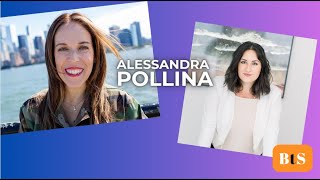
Alessandra Pollina founded Quotable Media Co. to fill a gap in storytelling platforms for women-led brands. Her company runs Quotable Magazine, the Female Entrepreneur Podcast, and a Boston networking group. She emphasizes how seeing your name in print and having a complete bio with links helps writers and entrepreneurs get discovered.
Chapters
Good morning, so excited to see you. Welcome to this, today's episode of Behind the Spotlight, uh, the Instagram show that not only brings you information but brings you really cool people to know. Today I'm really excited because we're going to have Quotable Media on. It's Alessandra Polino. She is the owner and founder of Quotable Media Company, which helps to elevate women-led brands and produces Quotable Magazine, which in full disclosure, I am I get to have an article. And Paulina is here. I'm going to bring her up.
She accepts it.
There she is. Hi. Good morning. How are you?
Good.
Good. We'll see if my dogs behave this morning. But I was just talking about Quotable Magazine and how fortunate I am to be a contributing I don't even know what to call it, to be completely honest.
I was like, uh, you're a member, you're a contributor, contributing writer, a member of our network.
Oh, great. I just wanted to read this because I want to make sure I got it right, that you're working to elevate women-led brands and produces Quotable Magazine and the Female Entrepreneur Podcast, right, through workshops, education, and run the Female Founders of Boston networking group. You also sit on the Mass NOW National Organization for Women, and you were awarded 40 Under 40 from Boston Business Journal in 2022. Where you live in Boston with your 9-year-old son, which, you know, I love a boy mom. Yes. Welcome to the show. Thank you so much for being here.
Thanks for having me. I'm super— never done a live before, to be honest.
Well, I'm glad to pop your cherry on this one. I'll be very gentle, I promise.
Well, I'm feeling good. I mean, the fact that I even got on here and like, I think people are seeing me. I think you're seeing me.
Yes. Yes, it's not difficult. It's not difficult. We have some people are going to join. And I always like to say hey when they like to join. Hi, Judy Weber, nice to see you. Alessandra, one of the reasons that I wanted to bring you on is I really wanted to talk about Quibble Magazine and talk about how— why you founded it. And maybe you could share some of the struggles, but also how you're really allowing space for women like me to come in and share not only our genius, but to be able to educate and empower, inspire your readers. Yeah.
Yeah, you want me to kind of start with where it came from and to be? First of all, do you hear me OK? Because of the way I probably— OK. OK. Not covering the speakers. So yeah, so I mean, I had a PR agency for almost 12 years now. Started on that side of things. And we were working with, you know, incredible clients who we knew had incredible stories that we wanted to share as much as possible. And we were doing that through PR on other platforms. And I always felt like there were, I always felt like there was space for more. I always felt like there wasn't like quite enough opportunities for some of the, some of the ways we wanted to tell stories, right? Not necessarily breaking news, not necessarily someone who's already like totally made it and been like, you know, at this level of success. Like sometimes there are people who want to be able to tell their story. Maybe it's just a great Q&A or a great behind-the-scenes spotlight of how they've done what they've done and they have such great information and stories to share. But there weren't necessarily the platforms for really showcasing those in a way that like was really something that, that made sense. So that was really where the idea came from. I was just like, maybe we could do this ourselves. Maybe we're meant to make this platform. And I had the podcast before that as well. I've had the podcast for a couple years before the magazine. So a part of it also came out of that. I was getting so many pitches for the podcast. And it was like, I can only do so many interviews. I could not get it together to release more than one episode a week. And even that was like a lot for me. And I always wanted to do solo episodes too. So it was like, usually not more than 1 or 2 interviews a month, which is like so limited. So I was like, if only we could just have another place to share the stories of these incredible people who are being pitched to the podcast too. So it was kind of a combination of both of those things where I was like, if we did this in a written form, you know, that would be really cool. And also, you know, there's something about the printed page that was really Because again, when it came down to our clients on the PR side, it was like people could be in these great like online publications and they'd be excited, but get them in something on a printed page, like even if it was a much smaller publication, something about seeing yourself actually on the page. And that, that was a huge part.
No, I totally agree with that. You know, I, And it's old school also. And I think that through doing these interviews from behind the spotlight, that's the conversation I've been having over and over again. Like, we got shiny, and we got, you know, talking about pain points, and really leaning into that, and not being ourselves, and mommy bloggers, like, making, you know, making their kids look shiny all the time. And in the last couple of years, we're coming away from that. And now we're having the conversation, like, I'm just me. I'm going to show up as me. I'm going to write as me. I'm going to just— do the things that I want to do and tell the world what I'm about. And I think that having like something tangible— I know I, I'm ordering copies of my articles, you know, honestly, to show my mom. Because I don't know about your mom, my mom's tech savvy and everything, but I think she'll understand more when she has a magazine of what I do. Or when she, you know, when she sees me on TV, she gets it. But I don't know if she completely— I know she doesn't watch this, so I'm not worried about saying anything. I don't know. And I, I hear that a lot from my clients, my— and my friends as well. They're like, I think she thinks I post on Instagram all day long. I'm like, that's not what digital entrepreneurship's about. That's definitely not what having visibility is about. And being visible in a magazine where it's tangible and you can be like, you know, I can't wait to hold it, be like, look guys, I'm in this magazine. I'm a contributing author or writer and I get to do it all the time because I've really honed in what my story is and I really know what I want you to understand and I want to be able to empower you. Inspire you and educate you. And that's how I found the magazine, to be honest, is I was looking for something that wasn't so, you know, Fast Company and Business Insider. Because I said— I think you agree with this, we've had this conversation— like, those are great, but they're not going to get you clients. Something like Quotable, and, you know, and that's one of the reasons I'm in it, people are going to actually get to know me and I'm accessible. And that's one of the things I really like about it.
Yeah, that's a big part of it, is like being able to build those relationships sort of too. So yeah, that's the other piece of it is the contributing writers. I wanted there to be, because again, from the other side of things, it's like people want us to be able to submit an article to an outlet. And there is more and more of that these days, but it's also harder and harder to cut through the noise and get in there. And I think there's a big thing, a big part of it to be, something to be said for having that consistency too. And that's why in the idea of the contributor network where it's like, you're going to be in every issue. So people who, there's something about that, like, you know, it's going to be in front of them no matter what, you know, they're You're not going to have to remember to go to check your, the website every, you know, and everything is published. Like I know a lot of people consume content online and that's great. Everything is on there too. But for people who, you know, you don't have to remember to do that and they're going to still see you in front of their face every issue. And that's, I think, really cool too. And they're going to get to know you and how you talk, how you write, and what kind of information you can really help them with. And that's going to really build that, that experience. And I, and that's, that's the other big piece of it too, is to create that platform for people like, like you who are an expert in their field and want to be able to showcase that a little bit more in another, another way.
Yeah. And I like that you mentioned consistency because that's what I feel like I say a lot. You know, when people hire a PR firm and they're not leveraging their PR or they're doing their PR on their own and they're really not talking about it, you know, I realized something recently that I don't talk enough about how I'm a former TV producer. I went to an Hey Mama event yesterday. I don't know if you're a member of Hey Mama. Yeah. It was like the best event I've been in a really long time. But I got the opportunity— I was a featured guest, and I got the opportunity to stand up and say who I was. I didn't say I was a former TV producer. Like, but in the article, it says it. Right? In my bio, it says it. So it's just one of those things. Like, we— you know, it's that practice, and it's that consistency. Because if this was my one and done, I would have— I'd be a lot more upset with myself if this was one and done. But I know that all my other stuff is coming and that consistency is an important part of it. And we talk a lot about being consistent on social media. I wish the conversation would be like, let's be, let's be consistent in our visibility, not just posting.
Oh my gosh, I have one thing to say about that. It's not really like super related, but one thing that I keep thinking, I need to create some content about this. It's so basic, but, um, people, the amount of people who don't put their website in their bio, like when you have a short bio that you can put at the end of like an article or anything like that and people do not put their website. Like, there's no way to find them. Like, we added that at the end of so many of the bios for the, for the contributor network at Quotable, for the magazine, because so many people didn't have that. And, and it's something that I always notice because I always have that at the end of my bio because I'm like, well, how they like about me, I want them to know how to find more about me later. Like, the article's not necessarily like, depending on what you're, you know, what that visibility opportunity is it's not necessarily gonna say it. Like even at an event like yours, like they might not necessarily say that. They probably would at like a live event, like how to like connect with you later. But like in a lot of it, don't put your bio and/or like how to find you online. I mean, if you don't put your website in that bio, you're missing an opportunity to get your website mentioned in that piece. So that's one. And that is like that consistency thing. Like just have a great bio that, you know, has those like, those bits.
100%, your credibility markers, what you've done. You don't think Oprah's in my bio? She's in my bio. I've been in Oprah, right? Like those things that are going to make people go, what? But what you're saying about the bio, like it makes me crazy sometimes. So I'll hit, you know, the person's name in an article and then it just goes back to like an author page. But now I can't find you. I'm glad I can read the other other articles on this platform, but I still can't find you and what else you're doing. I have to go search for you. And a lot of writers' names are not the same on X or on Instagram or on anything else. So I appreciate about Quotable magazine is that that's there, but also that you're not just going for the top shelf people. You know, sometimes when I'm working in the TV space, they're like, oh, how about— I'm not going to mention their names because we all know who I'm talking about, right? Those girls, those ladies that are all friends and all promote themselves and all promote each other. But the space that they take up is— there's not the allowance for other people. And I think that when we have other platforms like yours and allow the regular, the woman who's, who's been doing this for 8, 5 to 8 years, who has a solid business but has a real story to share and she can't break that barrier, actually being inquotable can help you get to that next level to break that barrier.
Exactly, exactly. And one of the things I love, like, that I've had several people tell me is like, you know, they have young daughters and they're like, their daughters see the magazine and they're like, oh my gosh, and, and, or like there's two sides of it. One is like, oh my gosh, like I'm seeing my mommy like on the pages of a glossy magazine, that's really cool. Also sometimes they've said, yeah, she doesn't think it's any big deal. Like she thinks it's just like, yeah, my mom's a bit— my mom runs her business, my mom's in magazine, like hey. And that to me is also so cool because that is actually a huge thing. And the fact that like girls can grow up thinking that that could be the norm is also amazing.
I'm playing with my hair. This is making me crazy today. I'm not— I'm listening. I'm listening because when my girl mom friends say that, I'm jealous because I have boys. And, you know, like, right, you would— I— right, it's like what I— this is why I think of it because I'm on the other side of it. My kids are in college. My kids are 20 and 22. And now I see what they've been listening to for 20 years. Of me building my businesses and building my brands. This is my third brand. They've been watching me, and now I'm seeing how they're creating things for themselves in college and how they're different than their peers because they've seen their mom. My older one said to me probably last year, he was like, you know, when I think I can't do this, I remember that you built a business in our living room. That's everything. And your, your little guy, like, he's listening and watching, and I think that Sometimes as moms, we're so focused on what they need versus like what we're— what they're actually gleaning from us. They can get the bad stuff too. But I think entrepreneurial moms' children are going to make a huge difference in the world because they're showing up already thinking like, I can do that. Why not me? I have an idea. I'm going to make it happen. You know, when a 10-year-old, 9 or 10-year-old does a lemonade stand because he wanted to versus, right, the mom wants to, it's a big deal. I don't know, are you seeing like signs of that in your family?
Well, he's so like, he is 9, he's kind of like too, like saying like how cool it is or whatever, but I see that he thinks it's normal. Like he's literally said to me, can just anybody make a magazine by themselves? Or I'm like, no, like it's actually pretty uncommon. Like I don't know anyone else who's ever done it. And he's like, he just kind of thinks it's like the norm. But yeah, he's definitely like, I mean, he's gonna have a YouTube channel first. I mean, he already does, but he's gonna figure out content, I think, uh, first. But he definitely sees like business, like, yeah, he's gonna— he has no barriers to like, let me just do that, let me just try this. Yeah.
No, my kids are not into that. I've been like, we build your brand already, like, Mommy now has to do this. But they're like, they're not interested, which, you know, but they do like— I'm like, do you want to come? When I was on Drew Barrymore, I was like, do you want to come? What do you mean? But like, my older— my younger one, the 20-year-old, would be like, but my friends think it's really cool that you're on. And I was like, what? Do you think it's really cool? You know, because they've grown up seeing me on TV, or during the pandemic doing TV from my kitchen, that it's normal. And I love that level of normal, right? The level of normal is like, I'm sharing my gifts with the world. And it's just— I talk to a lot of— you know, I had kids young. So I talk to a lot of little kids' moms, moms of littles. And I just love to see— hear that he has a YouTube channel and that he's bringing it up. And then he's walking in mommy's footsteps because she showed him the way. And for you to create something— well, what was it in you that allowed you the space to create a magazine that nobody else had done like you have?
Good question. Good.
Hard-hitting.
That's a really good question. I don't know, like, why I was like, let me do it. I mean, my parents were really supportive. Weren't really entrepreneurial, but sort of in some ways. I don't know, I'm trying to think. I mean, honestly, I think it mostly came from my husband. We got together young and he was just like, why don't you do this yourself? Why don't you do that yourself? Before I had ever even considered entrepreneurship. And it just kind of, that kind of became like a thing, I think. And then I got used to that, you know? And I think part of it for me, honestly, I always feel like I have nothing to lose. I think part of that, and part of that came from starting young, I never had pushy corporate job that people talk about, like having to take a leap from, because I started my business young because I wasn't finding the opportunities that I wanted. And that was why I started my PR agency. Cause he was like, why don't you just take on clients yourself? And I was like, oh yeah, I could, I could do that and make more money than working at another company. And then kind of same thing for the magazine. It was just like, well, why don't we just try it? Like, why don't we just try one issue, print a couple, you know, small amount. It's not that expensive and we can do it ourselves. And then, you know, it grows from there. I think like a lot of it for me is like, just take one step, just like do something and then let it grow from there. Not that you have to like jump in and make like some big, whole, huge thing from day one. Just start and then everything has the ability to grow.
I love that. Just do one thing. Just try. You know, so much— I find that a lot of women, a lot of coaches and the women in coaching women, a lot of the conversation becomes permission. So she just gave you permission, guys. Just try. You want to have a magazine? You want to have a TV show? You want to do a show like I'm doing? You want to do anything in the world? It's just about trying. And I know that we get in our ways. Like, what are the things that you think people get— people allow to get in their way when they try— want to do the one thing and try?
Well, I mean, I think— and this again comes back kind of to like the PR background. But there's just so much of that like, kind of who am I to do it, that mindset that people have of like, why should I put myself, like, why, why me? Like, why would people want to hear me talk about this thing? Or why should I be the one to create this? Like, I'm not any, you know, cooler, better, you know, whatever, more knowledgeable than her and that kind of thing. Even though, you know, the her is not doing it either. Someone has to do it. Like, we want the things. So I think that's like a huge, a huge, huge part of it is like, yeah, you don't need that permission. And the thing is, I think that people feel or will notice if they try that so many people do want you to do the thing. Like I bet whenever I ask someone to come on this show, they're like thrilled. Like people want the opportunities for whatever the thing is that you're interested in creating. Like almost like, I'm pretty sure, like I've never done something where they're like, no, I don't want to do that. Like, you know, we started, I started saying we're gonna do the magazine and everyone wants to be part of it. And I think like that's so much, so often the case, but people don't like even want to put it out there enough to like see that people want to be a part of it or they don't, they're afraid of taking that risk. But yeah, I think just remembering like there is something you can bring to the world and even if someone else is doing something similar, they're not doing it the same way you are. And that unique like personality that you're going to bring to it and that you only, you're going to bring to, you know, the client or the customer or whatever in the way that you do it. And that in itself, is reason enough to do it for those people who need you. Yes.
Yes, yes, yes. Like, I hear this all the time because I'm friends and I help support other people in the PR space. And I get like, why are you doing that? I was like, we do different things. And we can support each other because we're women and we're friends. Like, it's OK, you know, to have— to be friends with somebody else who's in branding because you do branding different. Or you do— We don't do the same. We're both in PR. We don't do the same thing at all.
Yeah, exactly.
There's so much space for so much space to do not only what you're doing, but to actually support other people. And that's the thing I'm hearing lately about networking groups and women's support groups or women's Facebook groups. It's like, well, I'm in there and it's just about sales. And when I go in, I'm like, no, it's not. People are just trying to promote each other. They're trying to get to lift all boats together. And I think this thought process is changing where these groups are now about, like, these are the people we work with and these are people that we're supporting. So like our writers network, like I've reached out to a bunch of those people. Like, we're all in this network together. Let's all make this happen together instead of fighting against each other or being competitive against each other. That collaboration over competition is— that was my phrase for 2024. I'm trying to live into it. And I partnered with you because you believe the same thing. And I really appreciate that.
And a big part of it, not to like change the subject, I mean, if I get it, but like, this is so, so valuable and so important. I mean, that's what you're saying, but so it's not the conversation, but I mean, less about the magazine, but that's exactly one of the reasons why I was like, let's create more community around the magazine. Like any space that I'm in, I'm like, let's create like a community around this because yeah, even, even if there's only, you know, even if it's like a group of like 3 of your business friends, like there's somebody knows or something somebody can do or offer or say that can have a profound impact in your business. And I think that, yeah, taking, taking like part in your community as much as you can, really being a part of what's going on and helping people, helping each other, that comes back to you so, so many times over. And that is, I think, worth keeping in mind. Yeah.
That's how I live my life. You know, I said to my husband, I'm too old to like be— what's the right word? To be catty. Like, I'm just not into it. That's not my thing. I'm going to talk about people. But like, honestly, at 10:00 today, I have a peer mastermind, you know, that we just kind of get together once a month and talk about our businesses. Some of them overlap, some of them don't. But it's just about listening. And it's just about having that space to be like, I'm having a hard time showing up today. Can you support me on that? And they can rah-rah me and I can rah-rah them. And like, sometimes that's all you need. Or like, hey, can you look at this landing page? I, I actually am in a Voxer group with a whole bunch of people from a Facebook group that I'm in that are all entrepreneurs. And I asked for some feedback on my landing page and the other woman who's in PR, she's the one that answered first.
Yeah, right. I love—
I support her and we comment on each other's stuff. It's just, I think that broadness of like, let's show everybody else that collaboration is the place that we can all win instead of competing with each other because You know, society, media kind of competes us against each other all the time.
Yeah. Yeah, I totally agree. I could not agree more.
I know you do.
People in the same space have the, like, great ideas too. Like, she probably has great ideas for you because she gets the space, you know, you're in and knows what people, like, think and say and do in that space. And that can be really helpful. Yeah, no, I totally, totally agree.
Before we go, tell us a little bit more about Cordwell Magazine, how we can find it, how we can get an issue. And what's coming up next?
Oh gosh, yes. Well, yes, you can find it on the Quotable Media Co website. There's a magazine page, or it's quotablemediaco.com/quotablemagazine. And also on Instagram @quotablemagazine. And you can subscribe, or you can purchase a single issue if somebody wants to just get the new issue that's coming out. Highly recommend subscribing though. And then you'll get them all sent straight to your door. Yeah, if anyone's interested in being— you don't, you know, the contributor network for this year is like closed because we've already begun, but you can always submit a one-off article. So if anybody listening is like, I'd like to get an article in there, we do publish contributed articles in every print issue from, you know, at any, you know, I don't want— I was gonna say random contributors, but like from one-off contributors. And then also online as well, if it doesn't have to be, you know, if it doesn't fit in print. And what was the other thing you said, what's coming up? So we have an issue coming out right now. So people can get that. And then sort of unrelatedly, but unrelatedly, I'm hosting an event in May, which is sort of in collaboration with the magazine. It's kind of a quotable as a whole event. And that's, you know, you'll see details for that coming up in the next couple of weeks, like the New England area. That's going to be fun. And we're going to, yeah, definitely have a lot of magazine-specific things related to that event. So that's gonna be—
I'm excited. I'm not that far away. I'm only a 4-hour train ride. There you go. Oh yeah, it's so great to hear the partnership and encouragement. Thank you, Des. Thank you for watching. We appreciate it. Um, thank you so much for being here. It's really nice to get to know you and have a conversation. I knew that we were definitely, uh, aligned, is why I signed up to support the network. And I just appreciate you coming on today. So thank you for being here.
I appreciate you being part of the network and expertise and wisdom with our readers.
Thank you so much. I'm writing my next article. I promise I'll get it to you soon. Thanks everyone for watching this episode of Behind the Spotlight. As always, you can find Codewell Media's information in the chat, and I'll see you tomorrow. We have Carmen coming in, so I'm excited to be able to support her as well and have her on Behind the Spotlight. Thanks for watching.
Thank you.
More from Beth
"How to Make $10K From Every Podcast Appearance | Replay Available Until November 24th!"