Beyond The Spotlight: April Adams Pertuis
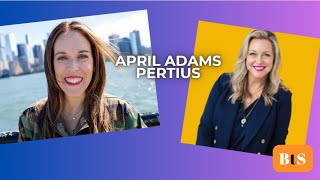
April Adams Pertuis explains how women entrepreneurs can turn personal stories into business visibility. She covers breaking through self-doubt, building a story bank tailored to your audience, and using AI as a drafting tool while keeping authentic details machines can't replicate.
Chapters
Morning! I'm so excited to be on. I haven't told you, but I am starting a new series where I am bringing on the best and the brightest in the digital age and a lot of my good friends. Today we are going to be welcoming April Adams— I don't want to say it wrong— April Porteous, a story coach. You know, I've been listening to what you've been saying about what you need and the information that you really wish you had, um, and I think that April is gonna be— let's hopefully the Instagram gods are working for us because as you know they don't always. I'm trying to accept her. There she goes.
Hey, hey Beth, how are you?
Um, good morning April, how are you?
I'm good. I always feel like you have to like reposition yourself. Okay, I'm good, I'm good.
I was like, the Instagram gods, hopefully.
I know, it's like, oh, your head looks like it's think at all.
Yeah, I'm like, I'll sit down a little bit further. But I was just telling our friends that, uh, I'm bringing you on not only because I have this new, I guess, project I'm working on that I'm bringing on all of my good friends who have amazing things to say and listening to what our audience is talking to us about. And you, my friend, being a story coach, I thought was such an interesting thing that I don't think most people really understand what that means. Well, you give us your, like, You know, don't give me your bio because that's a no-no in my world, but just tell us about you.
You know, I just have a fundamental belief that our stories matter, that, you know, our personal experiences and the journeys that we have, that we've been on and are on, actually carry weight and value to other people. I don't know about you, but when I've gone through tough times or challenging situations, or I've had doubt or questions, or I'm seeking to learn, I've always sought out people who were willingly, you know, not teaching, not just teaching, but they were willing to share their story with me, whether that was in a book that I read or in personal conversation or on their social media, whatever it may be. And I've learned so much through other people sharing their stories. And it, you know, just always makes me realize like, okay, I can do this, or okay, I'm not alone. So I have a background in terms of the bio situation, you know, I have a background in storytelling. I'm a trained journalist. I've worked in storytelling for 30 years, but it's more because even as a kid, you know, I was so curious and I was always just asking people to tell me their story, you know, and ask a lot of questions to try to get that story out of them. So it's just innate, like how I work and how I operate. And I always say through storytelling, the world makes a little bit more sense to me. So as a story coach, I'm always trying to help others see, number one, see the value in their own story, get out of their own way so they'll actually go tell that story. I always say the story at that point is not about you, it's about helping your audience. And just, you know, honestly getting more women's voices into the marketplace.
Which you know that I am fully behind you. But it's funny you say that because I was just on a trip to Morocco with my entire family, all 12 of us in a little van, and we had hours to drive. And I just started asking my parents questions about when they were 20. Yeah, they got married at like 20, right? Like that, you know, back in the '60s. But like what it was like to be my dad at 16 and what he did in the '50s and the '60s and how he was. And I learned so much more about my father. Yeah, I've known my entire life. And who always tells stories, but he didn't— he never told those stories.
Yeah.
And I think it was a reminder to me not only to remember that not everyone hears my story, even if I think I tell it a million times, but there's those stories that I'm not telling. And I'm not telling those stories for a reason, and it's not a good reason. So I need to bring those stories out. And that's something that I think was what you're talking about, is what you actually do for women all the time.
Yeah, I always say if you know, pay attention to the stories that are holding power over you. Those are the stories that once you learn how to dig them out and tell them the right way— and there is some structure and strategy behind the how you tell a story— but once you figure out how to do that, and I can help with that, but then you will step into the power of that story. That's when that story is going to, like, you know, take off and bring so many people to you and you're going to be able to help so many people by telling that story. But you'll never be able to do that when you sit back and you're quiet and you let that story have power over you, which I talk about with my clients too, like being in the media, what stories you're telling.
And like I said at the top, I don't want your bio. I actually want your origin story. I want a story about you because if you're going to tell me your canned bio versus a story up front, like listening to a podcast, I'm out.
Yeah.
If I'm not interested in you. But I do hear from my people all the time about what storytelling they can do and the best ways to be visible with their story, especially in the speech—
Sorry, I lost that last bit of the question.
Oh, no. Of course, I got a phone call. OK. What's the best way to get more visibility or more visible with your story in terms of speaking?
Well, number one is decide to go do it. I mean, it's really just a decision, you know. Most of us are just like, uh-huh, you know, I don't know if I should. Yes, you should just go do it, you know. And we're just way overcomplicating things. Look at social media. People are just scared to death to even do what you and I are doing right now. They will not get on their social media and just talk. So I say start there, you know, start with the things that are going to make you a little uncomfortable. And before you go out and speak and you're in front of a live audience of, you know, 50 to 100 to 500 to 5,000, you need to get comfortable, you know, just hearing your own voice and seeing your own face on social media. I tell all my clients, start live streaming. My gosh, like number one, you'll, you'll actually connect with people. You know, you'll actually start by allowing your audience to just see you as a real person. And a lot of people don't want to do it because they're like, well, I stumble and I say a lot of filler words. And I'm like, start counting my filler words, people. I've got so many of them. And I've been speaking publicly for a really long time and I don't pay attention to that. I always say, if you want to be a really powerful speaker, stop worrying about your performance and start focusing on your impact. Like, how can you go reach people? How can you just talk to people? Treat your audience like a best friend. Beth, I could go off on this forever, but that's a place to start. And then you do want to look for stories that you have that make you relatable and connect to the story you know your, your client, your audience is struggling with. It's the story that's holding power over them right now. So how can you file back through your own Rolodex of stories, experiences that you've been through, and look at how Maybe if I just told that story, you know, like I'm not a financial coach, right? I don't deal with financial advice or anything, but I often will tell people a story about just how I, I learned to heal a money story that I had around my parents filing bankruptcy and basically, you know, losing everything when I was a kid. And it kept me for a really long time from truly stepping into my power and owning my worth and going after my dreams. And, you know, now making more money than I've ever thought I could make. And, and it really started with me looking at my husband one day going, I'm going to make how much he makes this year. I just put myself on a challenge, you know. And so that, that, you know, that has nothing really to do with like what I do for a living, but that is a really relatable story. That my audiences loved me sharing because number one, I'm human, we all have junk in our past, we've learned and adopted stories and philosophies from our parents and other influencers, and we also have the ability to rewire that. The same is true of our stories. Like we can look at the story and say, oh, but you know, nobody's gonna wanna hear that, or that's boring, or who's gonna wanna hear from me? Then you can start to rewire that and go, I'm gonna challenge that belief, and I'm just gonna start putting myself out there and testing the waters by sharing my story stories. And yeah, maybe there'll be some stories that, you know, aren't really that interesting, but who cares? You gave yourself the practice of telling the stories and starting to find out what will resonate with your audience. But you will never ever know until you just first decide and start doing it.
So that's what I'm hearing. What it's about is just getting up and actually opening your mouth and saying something. And that's what I talk about a lot too with my people. It's like nobody, nobody knows what's in your head. And you— and I feel like especially entrepreneurs in the first 3 to 5 years, they think that they're really projecting this brand story, or they think they're telling all this stuff. And they're making it so complicated. And it's really this big. I actually had an experience before Christmas where I had a woman that was very interested in working with me, really wanted to be on TV, and has never been on camera.
That makes no sense to me.
Exactly.
Right? We do have to look at like, what do we desire? To me, I do train and help a lot of people tell their story by way of getting out and speaking. And to me, the first thing I do with my clients, I'm like, okay, well, where are you currently speaking? Well, nowhere. I don't have anybody inviting me to come speak. And I'm like, you have your own invitation inside your phone right now, you know, waiting on you to decide to take action. So we have to be seen, you have to kind of put yourself in the arena in which you want to play, right? And in which you want to be seen. And so if you want to be in the media, if you want to be speaking, if you want to be, you know, writing books or whatever, I would say writers write, speakers speak. And, you know, like, that's what we just need to start doing. And those are both great vehicles for sharing your story, whether it's, you know, out being interviewed on podcasts or in the media. Stages, you know, getting out on stages, writing books, all of it, using your social media, all of it as a vehicle to, to share your story. And at the end of the day, it goes back to why would you share it? Because it's going to help somebody else, right?
And I think it also helps you. Oh, for sure. You know, a lot of, right, a lot of people talk about wanting to do things, um, but when people actually get to work with women like you and I, we make you do the things. And that's why I like you, April, because you're a doer as well as I am. And I just find it so interesting that it's really everything. You know, I have all these conversations all the time. It actually always comes back to personal development. It actually always comes back to getting out of your own way and being silly and being embarrassed by yourself. I was watching Rachel Bronson— she's Mrs. Maisel— in an interview for the Emmys last night. And she was talking about how Mrs. Maisel's the character of Mrs. Maisel was so much more confident. And she gears so much of the confidence that she had to play into what she's doing now in her life. And it reminded— and exactly what you said, she was able to portray that. So on stage, you're telling these great stories, but it's like, oh, right, I'm good. I can. This is safe. Like you, I've been a speaker since I was a teenager. And I often get questions of, well, how do you just do it? And I was like, like, um, because you just do it. And I, and I find sometimes that I have trouble connecting with people who have that barrier. What do you say is good? Or how do you help people through that? Yeah, you know, I know I need to do it. I know I want to do it in my heart, but actually getting to do it, I think, is the hardest part for a lot of people.
It is the hardest part. And that is the part that no outside source is actually going to be able to help you with. It really is a confidence issue. It's an issue around something internal that you don't believe you're worth it, or you don't believe that somebody is going to find value in it. And so that's a real clue that— you said it, you know, it's personal development work— it's, it's a real clue that you need to look a little bit more inside. Because if you're, if you're not taking action, if you're not stepping out there and going after the things that you say on paper you want— we all just, you know, just spent a whole bunch of time the last few weeks probably writing down goals for the new year. If you write those down but you don't have aligned action that goes with them, like I want to be in the media but I'm not getting on camera, you know, that's problematic. So why are you not getting on camera? What's going through your head? Well, you know, what are you saying to yourself? Well, you know, we— I could list off a bunch of things that I think probably women are saying about themselves when they see themselves on camera.
What do people say to themselves?
I don't like how I look and I don't like how I sound. That's the number 2. That's the top 2. And I'll give you everyone a really quick tip on that because here's the thing. None of us probably just adore how we look on camera or how we sound. And the reason why we don't like how we sound on camera is because this is like very scientific, but the way we hear ourselves speak, we hear ourselves through our inner ear.
Ear.
So the way that our voice projects out back to us reverberates back into our inner ear, and it sounds different than how everyone else in the world hears us when we speak, including the camera. So when you hear yourself on a playback, you hear yourself on video, you hear audio, how you sound— that's actually how you sound to everybody in the world except for you. You gotta get that out of the way. I know it's terrific when we first realized that, but then you just go, okay, well That's really me. And then we again have to stop being so critical of ourselves about how we look and, oh, I don't like, you're like, I don't, I don't, I hate wearing glasses on camera, but I can't see if I don't. So it's like, I got over that a long time ago, right? Like we can just, so is that going to be the thing that stops me? That's what I always stop and ask myself, huh? Is that going to be the thing that keeps me from going out and reaching the audience that I want to have an impact with? Right. And it's like, no, I mean, I'm just going to show up with glasses. That's what I'm going to do. You know, I much prefer to look like this, but everything's blurry. So I look like this because I'm here to try to reach people with my message. You know, so it goes back to—
we got to get out because I can't see my computer.
Yeah, I know.
I have my notes and I'm making that.
No, I hear it a lot.
And it's funny, it's— I laugh because I did a segment yesterday on a New York news station. And my husband was playing it back and I was like, no, no, turn off the volume, like I can't hear. And it makes me feel like I need to do some voice coaching.
Nothing to do with that. It will never change. That's how you sound. That's honestly how God created you. So like, oh, we can't change it, you know.
And well, that helps, April.
We really do. I mean, this just goes way beyond story and media and all the other things. We just really need to embrace who we are and love ourselves, right? Like, like, yeah, get all the self-love coaches in here because that's what we need, you know. We really, really do need I need that. And that, that's the inner work that a lot of, a lot of women do need to do, and I encourage them to do. But when, when, when you're ready and you're really ready to step out and make that impact, go reach the people. Media is a phenomenal way to get out there and, you know, explode your reach. You have, like you said, you have to have something juicy to share, and there is nothing more unique and special and helpful than your own personal story. We can all write a fancy bio, we can all get the media sheet and all that kind of stuff, and those are great, but at the end of the day, people want to hear about you, you know, your unique path that you've taken. I mean, look at all the books that people have read. How much do we invest in buying people's books and reading their stories in those books? There's a reason why. You know, we do that. We, we follow certain people on social media because they're showing up and just being real. We watch them put on their makeup, watch them take their kids to school, you know, and we learn a little bit about them outside of just who they are as professionals. And so I think it's really just important that people take a good long look at that. And that's why storytelling matters.
Yeah, I tell my clients all the time that, you know, are looking for ways to do more content. I'm like, how do you make your coffee?
Yeah.
You know, I— and that's something that honestly, I— and I'm going to say it out loud so that I do it. One of the things that I don't do is those little things of like my normal day-to-day. And people always— I know people want to know that stuff, or they want to see a piece of it because they want to know my heart before they want to work with me. And I made a matcha latte this morning for myself, but I forgot to record it. So tomorrow, all of you guys—
tomorrow, that's right.
But I did have a few more questions for you because I have, look, I have like a, a story bank. So if you work with me, my clients create a story bank. But I don't know, like, what's, what's the right story? Not the right story, but if I'm looking to search my stories, how do I know what's the story to tell?
It's always going to come back to who your audience is. It should always come back to who your audience is. So I always say the number one rule of storytelling is to know who you're trying to speak to. To speak to, to know who you're trying to reach, who is your audience. And when you have that dialed in, right, you know, you know your audience, you know, sort of the things that they're dealing with, some of the goals and, you know, dreams that they're working on, then you can start to connect. As I said earlier, connect where they are to maybe where you've been, and you get to find the stories that, you know, you think will be of high value to that audience hearing from you. So when you, when you're really, really clear about who your audience is, storytelling becomes actually a whole lot easier. You know, there are, I have a lot of stories, like we all do, and I don't tell all of them, right? Because I'm like, my audience could care less about that. So I don't, and it's not me dumbing down my story, like no, really, they're gonna just, that's not gonna be important to them, so that's not gonna help. So I really do try to filter out and find the things that are actually going to be helpful in order, in order for me to share, you know, and even just like going back to your example of making your, your matcha coffee or your matcha latte, whatever, it's like, that's not really like helping them necessarily, right? But like, it's just the day-to-day life of seeing you as a real person. We see all your awesome videos and we see your media highlights because you're showcasing that because you want to show what's possible for your client, right? So we see that side of you, and we also need to see the messy bun, just waking up, drinking coffee, and, you know, just being that real person. And so there is value in that because it makes, you know, others who are sitting home, you know, with same kind of situation in their, in their sweatpants, be able to see that that's— they are also the type of people that could be out on the media and be getting those, you know, highlighted features if they just step into it. It really is, you know, just like what you did. That's the only difference. You just stepped into it.
Yeah, I, I enjoy stepping into it, and sometimes I step into other stuff too. But like yesterday, I— so I have this TV segment on WPIX 11. It's a New York station, and I was having the hardest time figuring out what to wear, you know. Um, I look fat in this, I look short in this. I know one of the anchors is like 5'9" and I'm 5'1", so yeah, you know, I have to wear heels. Are they going to see my thighs? Are they going to see my feet? Can I wear sneakers? It was the whole thing. Um, and I was scrolling on TikTok and there's this whole new thing. I love TikTok. I like— I'm a shopper on TikTok, but about clean, clean— what, like, it's like clean girls and mob wives and all this stuff. So I decided to like lean into this whole mob wife like era look yesterday. So I wore like leather pants and a leopard blouse and my fur coat And I put it all over social. I have never gotten so many DMs about what I wear. And it had nothing to do with the segment was. It had nothing to do with media. But I got so much support for pretending to be a mob wife and just having— like, being on this trend. And I talked about how I wasn't a millennial. I'm far from a millennial. But it— and having this conversation now, it, like, kind of reminds me of— you know, I live in Jersey. And I do know mob wives. I have met people. Who I think are in the mob. So it was just one of those things that I was like, I want to lean into my Jersey-ness. Because it's a lot of where my— I guess somebody just posted, I love your outfit.
You got a New Jersey thing. I see that right there. Now I'm going to have to go back and look, because I missed that yesterday. I'm going to look. Now I'm so curious.
It's very funny. Even in the segment, the anchor, who— Alex Lee, who's a friend of mine, she was like, we're having a whole Mob Wives era thing here. She's like talking about it.
I love it.
It was very funny. But it just reminds me, and I hope, like, that women listen, the people that are listening, think about when they're doing the things too. Like, being Jersey is a part of my brand, but I don't tell stories about it. And the reason that I want to do the mob wife thing is because it's very Jersey. And I have— and I do dress like that sometimes when I go out, especially when I go to big Italian restaurants in northern Jersey.
Oh, I can imagine.
But that storytelling—
that storytelling, even right there, like, honestly, that's a form of storytelling is how we physically show up, like, how we dress. The dress, you know, the, our wardrobe. I didn't think of just, you know, all of this is a piece of storytelling, you know, so I love it. I love that.
So I didn't, I really didn't understand that. Thank you for that. Aha, that was amazing. I know we're going to wrap up in a minute, but I did have one more question, very off topic for what we've been talking about. OK, I'm a big AI. I love AI. I create from AI and I, but I think that storytelling is going to be really crucial because AI is so nonpersonal, right? You know, when is everyone— what should everyone do, be doing about storytelling and how AI is making it a shortcut for us?
Yeah, OK, I love AI too. I think there's, there's a lot of uses for it. And you know, I just, just yesterday I'm getting ready to lead a challenge next week and I was doing a lesson for it and there's a whole lesson in my challenge coming up about being seen as a speaker that I show you how to use AI to build some of your, you know, your material.
I'm in. Oh, OK, sign me up.
Come to it. But here's the thing that I want, like, I want everyone to remember, AI is a robot, OK? It's just a robot of some crazy proportion. And at the end of the day, and you can take what AI spits out, but I highly encourage you to always go back. I always have a saying with my team. I'm like, have we Aprilized that? You know, we use AI, but I'm like, that has no April in it whatsoever. I would never say that word. That's not, you know, and when we start to tell our story, like, AI will never be able to tell the story of how the first public address I gave was at my grandmother's funeral at 25 years old. That was the first time I publicly spoke. AI is not going to be able to spit that story out. So that's going to require me to conjure up those memories and write about that time, right? So your story is going to be the unique blueprint that is going to make your copy and your social media post and all the ways you show up really shine, because so many other people in the marketplace are going to get lazy and they're not going to tell stories and they're just going to rely on AI. And so I'm telling you, storytelling will be your competitive edge. When you use AI coupled with your authentic story, you will not be able to, to lose. I mean, like, you're, you're really going to have such a competitive edge. So it is— we need to have authenticity still. We need to have original work, and AI cannot produce the storytelling moment the way that you can. And that's going to be you putting out original work, which will become way more appreciated in years to come.
Wow, that is the second headline of this, of this interview. That's, that's— I think it's really poignant. I hope people really hear that. But you mentioned your challenge. Before we go, I want to give you a chance to talk about your challenge. How can people sign up? Why should they be there? I'm telling everyone who's listening right now, go to April's challenge. I'm going to be doing it too. We can do it together.
Yeah, come do it. We're all going to do it together. It's a 5-day challenge. We start next week. Um, it's, it's— you can do it on your own time. It's not like you're going to join me or Zoom or anything. I pre-recorded everything for you, so Um, each day you'll just get a quick little short lesson, less than 10 minutes, where you can start to really build out the clarity around what you have to offer to an audience and start to put together really valuable assets that allow you to be seen as a speaker. We're going to be helping you think through your talk topics. We're going to be helping you think through your audience, like who would you want to go speak in front of. We're going to be helping you think through exactly what your authority and your your ascension plan is, and that's something that you'll have to find out more about in the challenge. And like I said, we'll be doing some fun things around AI, but at the end of the day, how can you really show up and tell people who you are and how you help that audience so that you can be seen as a speaker? If you want to do more speaking in 2024, this would be a challenge for you to take. I mean, if you don't desire to speak in front of groups, then this is not going to be for you. This is really designed for people especially women business owners who really want to be in the front of a room that is going to allow them— it's kind of the same as media. When you go get a media spread, you're getting attention and eyeballs from people that you, you, you didn't earn. You feel like you didn't do anything to get there. I mean, like you didn't, you didn't get them. Like the media spot earned all that media for you, all those eyeballs for you. So the same is true when you go and speak in front of someone else's audience, right? If I go speak at my local Chamber of Commerce, the people are there because the Chamber of Commerce got them there, you know. So you get the opportunity to meet and spread your wings so far and wide when you go and speak. And when you stand up there as an authoritative figure and you share your story very strategically, it grows your business. I mean, this speaking is the number one tool that I use to grow my business. I know you are as well out there. I go anywhere and everywhere that my ideal audience is, that people ask me to speak, I say yes because I don't like building fancy funnels and I don't do a ton of Facebook ads. I really just love to speak to people and it grows my business. So if you would like to do that too, the first step is being seen as a speaker and I want to help you do that in our challenge next week. So the link, you can go to my, my social media at Light Beamers here on Instagram and and find it, that's probably easiest. It's in my bio, it'll be in my stories, it'll be in my post. I mean, I'm talking about it everywhere. But the link is just lightbeamers.com/speaker, and then you can get signed up. It's free.
That's awesome, April. Thank you so much for being with me today.
Yeah, thank you so much for fun.
Yeah, 100%. Come on back next month. We'll be doing this, um, all the time because, like you said, we need to get in front of other people's audience and give them the information, the impact they need. And I know my people When you said any speakers out there, I know my people are people who want to be speakers.
So people, thank you so much, are seeking media attention. Absolutely. Out there speaking as well. They go hand in hand. They absolutely do. You go get on a stage somewhere, that essentially is stuff you add to your media kit, right? I mean, they go hand in hand. And at the end of the day, it just gives you all this opportunity to share your story, which again is about making an impact on us.
Make an impact with our story. Thank you, April. I'll talk to you soon. Bye, everybody. Thanks for joining us.
Bye.
More from Beth
"How to Make $10K From Every Podcast Appearance | Replay Available Until November 24th!"