Beyond The Spotlight: Auret Esselen & Jewel Tolentino
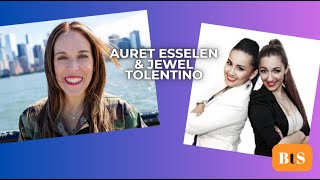
Auret Esselen and Jewel Tolentino explain how to build profitable YouTube channels without needing millions of subscribers. They use SEO to target specific audience questions, monetize through ads and sponsorships, and share a case study of someone earning $2,000+ monthly with just 3-4k subscribers.
Chapters
Episode of Behind the Spotlight. Today we're gonna do two for one, and I'm very excited about it. And I'm also pretty excited about my new glasses. Not, not kidding. But we actually have the two women, the two amazing individuals behind Essatino Media. They are all YouTube all the time. I, I met these girls at a mastermind, and they just blew me away. And I know they're gonna blow you away, because who doesn't want to have a very, very successful YouTube channel? Nobody, right? That's the answer. The answer is nobody. I'm gonna invite them on, or they have to actually ask me to be invited. Um, while everyone starts to come on, we're gonna have a conversation because their channel has surpassed 56,000 subscribers with multiple revenue streams, right? Both multiple rep He has what, like 7, 7-figure funnels from his podcast, you know, and his YouTube channel is definitely one of them. So let's learn to get your YouTube channel up and running. Hey ladies!
Oh hey, how's it going?
I'm so happy to see your faces. Thank you so much for coming on Behind the Spotlight.
Yeah, thanks for the invite.
Of course. I was just talking about you. I was reading the bio that you guys sent me. 56,000 subscribers and 5 figures a month in revenue. That's amazing. Congratulations. Thank you.
Thank you so much. Yeah, we actually just recently hit 57,000. So from when I last said that to you.
Yeah, that wasn't too long ago. So you're growing rapidly is what it sounds like.
Yeah, we have a steady growth and we, we do YouTube a little bit differently than what is portrayed on YouTube.
You have to tell us, how do you do it differently? Tell us everything.
Yeah, for sure. So the way that we run YouTube is we do it specifically. So the, the typical way that people are taught is to— you got to go viral, you got to do the crazy thing, you got to jump off this, you got to scream into the camera, you got to basically be who you're not. It doesn't work.
And the—
you want the million subscribers and this and that. You actually do not need a million views and you do not need a million subscribers to make a living off of YouTube.
Yeah, it's like most people think that you need to have a ton of subscribers and views and that equals income, but you know, having a lot of subscribers and views doesn't necessarily equal a lot of income. Like we know YouTubers that have, um, like over 300,000 subs and they're making like $400 a month and then We had a client who actually, they had less than 1,000 subscribers. They released a video that had less than 100 views and they got a $10,000 sale out of it. So, our strategy is really all about optimizing your channel for revenue and business growth rather than just views and subscribers. Because they're different strategies. Yeah. Right.
Like, that's the same thing on— social media, like everyone thinks you need to have all the, you need to have all the followers, but you can make money from a very small following on YouTube, on social media, and in your email list.
Oh, absolutely. And that's the whole idea here is that you're using that content on YouTube. You're releasing these videos on topics that speak to the person that you want to reach, like targeted topics. And you're giving them, you're giving them an invitation essentially to come back and opt into a lead magnet of yours or you know, check out the other resources on your website. So it's all in alignment with the, with that strategy.
That, that's really interesting because I do have a YouTube channel that I don't use to be completely honest. And I'm very inspired by you ladies. I've been watching your videos and following you for a little while now, but I always wonder like, how are you actually attracting clients from posting on YouTube?
So the way that we do YouTube is we do it with the search method. So search engine optimization, there's Avenues to go down on YouTube. There's the viral method, there's trying to go get on recommended feed, uh, there's, there's all different kinds. But we specifically like the SEO method because when you can get someone to type in exactly what they want and your video comes up and you're not doing clickbait or anything, and you— that question, which people, they do clickbait. I hate clickbait, right? And then they, they get that exact video, the exact search, and you answer their question, you help them out, you give full value. And then at the end you do a quick pitch for either getting on your email list, selling a course, or becoming a client of some sort if you have a service. It's so much stronger in my opinion to do it that way than, you know, let's jump off this building and then sell a course on something completely different. That's it. That's what people try and connect the two and we try to make it as aligned as possible.
It all comes down to your content strategy. Like, that is the foundation. And then, you know, focusing on getting people to your videos with the search engine method, and then monetization, staying consistent, all that, the thumbnails, all that other stuff that people— I know people get really overwhelmed with doing YouTube. It all comes after content, like really making your content good. And a tip that we usually like to give to, um, to our clients is Think about what are those burning questions in the minds of your potential clients. Think about conversations that you've had, like maybe on discovery calls or at networking meetings and events. What are those questions that you get that people really wanna know about your area of expertise? And create videos on those topics. Like, start there. You can go as broad as you want or as specific, but those frequently asked questions, like, that is, going to attract the person that you want for your products and services.
Yeah, it's very much like media. And I start with the same thing. It's like, what are your people asking you? But I do clickbaity things for like titles, to be honest. But, you know, but they have to be aligned clickbait. But, you know, you have to make them click on your episode of the, of the podcast or we're talking about your video versus the other 10 videos on the same, on a similar topic. But where do you find the leverage point? Because in media, the leverage point is really that resonating connection, and not only connection with the story, but connection with you. But is it similar on YouTube?
Yeah, so you are obviously, yeah, you're definitely creating connections through your videos, and you're doing that in many different ways. So one way might be answering a very specific question. Like for example, we create different tutorials like how to Let's say how to, um, do something on Facebook or something, how to upload your banner.
Let's just do that, which is surprisingly easy to do, but there are people who don't know how to do it or don't want to learn how to do it. And they'll watch it. They'll like our energy and then want to hire us for something else.
Like it's the whole idea there is like you're, you're answering a question. You're delivering on it without any fluff. You're getting straight to the point. And you basically gave them what they came there for. So you're, you're building trust with every single video. You're building trust. And it could be like a how-to tutorial like that, or it could be just you riffing off of a specific topic, but, but giving them what they came for. And, uh, and the biggest thing Jewel touched upon is your energy. So there might be like, like billions or hundreds of thousands of other videos on the topic. Like there's other videos out there on how to start start a YouTube channel and like all the stuff that we talk about, but people will come back to your videos because they really connect with your energy and the way you explain things and the way you talk.
Yeah. The pace that you— I get so many comments on the way that I speak. They like that I go slow. I make it very simple. I don't go very convoluted. And yeah, that's, you want to pay attention to those kinds of things.
Your leverage point is just going back, going back to your question. Your leverage point is you. Like your own leverage point essentially. And it's okay if other people don't resonate with it. Like you're really just, that's why you're gonna be attracting people that you wanna work with 'cause they align with the way you talk and your values and that kind of thing.
I always find it interesting how brand owners have such a hard time showing up as themselves, you know, especially on video. 'Cause I think we watch TV and we watch movies and we think that we're supposed to be a certain way. Like, when I first started doing videos, I would be like, hi, this is Beth. I had like a news reporter voice. I don't know what I was doing. You know, and I had all the filters. And, you know, yeah, I put like lots of makeup on. Obviously, I don't have any on today. And I made you— I used to get more comments about my hair than what I said. And it would make me so— I don't have big Jersey hair, but I usually— my hair's a little bigger. Unusual today, but I'm like, but I think that we're afraid of being ourselves and not, and not connecting versus being ourselves and letting our people connect to us. Like, what do you see as the biggest things that people do that fail on YouTube?
Well, for one, uh, trying to be someone that you're not. That can only go far, and honestly, you're just gonna hate wanting to do a video, and you're just gonna feel T. Like, when people see us at events and stuff, I will, you know, I'll say hello and they're like, oh, you speak exactly like you do in your video. You look exactly like you do in your video. You don't have any crazy filters or anything, or, you know, you're different or anything like that. I'm pretty much the same as what you see on camera. And when you try to be somebody else, it's going to deplete your energy, and eventually you're going to want to leave your channel. As you know, there's a lot of that happening right now on YouTube.
Yeah, a lot of people burn out. I mean, a lot of people burn out on YouTube. There's, there's tons of YouTubers right now that are like quitting all at once. It's like a big thing that's happening right now. Really?
Yeah.
Tell us more about that. Like, what do you see? What are you seeing the trend? Is it that people are just giving up and abandoning their channels?
Well, I mean, these are ultra successful channels, channels that have got to the millions and millions. And I've been watching review videos on people who have compiled all those videos and they kind of are seeing the trend. And the trend is basically doing videos that they didn't want to do, acting like a certain way that they didn't want to have to act like, growing too fast and not knowing how to take that on, the fame. Sometimes people are famous and they didn't want to be famous. Privacy, all these things, and they just, they're just not aligned anymore. And a lot of them, they, they have millions and they're about to hit, you know, 10 million or things like that, but they just want to leave it and go do something completely different because they've just exhausted it so much. When we tell our clients with their YouTube channels, like, we first want to know why do you want to start a channel? And we'll even be really real and upfront and say, you know, I don't think the YouTube channel is the the right format for you based on what you've just answered. Because you've gotta, you've gotta know that this is gonna be a vehicle for you. And YouTube is a long-term game. It's not one of the quick hits. It's not like TikTok or anything. Like, it is— that's why not a lot of people have YouTube channels comparatively to all the other social medias. Everybody has a YouTube account to watch YouTube, but not most people don't have YouTube channels because it's one of the hardest ones.
It's actually a lot of people don't consider YouTube to be a social media channel as well. Like they just use it as a consumer, but like, um, it's not necessarily like when you go to all these websites, you often see Instagram and Facebook and maybe LinkedIn, but you don't often see YouTube.
Like it's, or if you do, it's, they have one video. Yeah. That's about it.
Just like a few videos.
I have 4, I think I have 3 or 4 videos. I think that's what— you know, I had big hopes. I had big hopes of, like, uploading all my podcasts and doing all that stuff. And I just— you know, I paid attention to other things because I didn't really understand— I know I didn't understand the power of it. I thought that it was— I thought that there was a— what's the right word? Like, a quick way to do it. And then I— not that I had to dance, but there was, like, a way to do it that I didn't understand. And I think that what's changed in social media showing up in YouTube is that it's just real. People just want to be real. No more flashy, no more mommy bloggers. Our kids are perfect. No more of that stuff. But so is it worth starting your new YouTube channel now with all these people coming off?
Yeah. Oh yeah, I think it's so worth it because for many reasons. But one of the strategic ones is a YouTube video can live for literally years and years and no other content on any other platform in my opinion, does. Because if you do an Instagram or if you do a Facebook post, maybe it'll last a week. But like when you do an SEO video that's SEO'd, we have videos that I filmed 4 years ago, 3 years ago that are still getting comments, still getting emails from, still getting clients. It's crazy. It's the, the shelf life of a video, especially when you do evergreen videos, evergreen content that can be served all year round, it's way more powerful than any other platform.
And it's like a form of retention too, because we'll have people saying, oh, I've been watching your videos for years. And then, you know, they'll come onto a live stream and we'll talk about our course or something and they'll go and purchase the course. Like, you never know who's watching. And, um, and you know, it's, it's the second largest search engine. It's, you know, people are— there's like billions of people on YouTube per month. You can leverage off of that and you can be visible on that platform despite the, like, billions of videos that are on there. It's just, you know, creating the right content, being consistent, you know, showing up consistently, and, you know, having a strategy behind the channel.
Assuming that if I actually wanted to do this, you— I know you do have the Profitable Challenge— Profitable Challenge Channel program. Yeah, I wish we could edit these, to be completely honest. I know that you have the Profitable Channel program, and I like that you just kind of snuck in that you have a group program into your answer. So I want to give you some PR strategy for that. But yeah, but tell us more about it because, um, I know there are women out there listening that are like Okay, so maybe this is my time for YouTube and these are two beautiful women that can help me. Tell us about it.
Yeah, so we have a very specific profitable channel framework and formula that we use that is specific for educational-based channels. So if you're someone who wants to leverage your expertise and you want to build authority on a platform and you want to know how to get customers, from your viewers, from social media, you know, specifically on YouTube rather, then this is, this is a good course to take because we talk, we dive deep into content strategy, what types of videos to create that will attract your ideal customer. We talk about how to stay consistent. Like we have a very specific system that we teach and we'll get you to plot things into your calendar and keep you accountable to that as as well. And we also teach our SEO method. So we have a 5-step SEO method which teaches you essentially how to rank your videos higher in the search engines so people can find your videos and click on them. And of course the monetization pillar, which is how to put in all your good links in the description, how to put those call to actions, how to monetize in other ways as well.
Because most people think it's just you get money from the Google ad revenue, but that That's just the cherry on top. First of all, you don't need to be approved in the YouTube Partner Program to make money from it. The example that Areej was talking about earlier where one of our clients, they had a video with less than 100 views and got a $10,000 student into their program, that was— they weren't monetized yet. They had 1,000 subscribers or less or something like that. It's just creating the right content, getting the right audience, and getting found, basically. Getting found in search. That's our method.
I love that because I don't think a lot of people think YouTube is a search engine. But yeah, right? But it actually— what I'm learning and listening to you ladies today, it really is a search engine. Because when I need to go do something or try to figure something out, I do go to YouTube and put it in, but I've never thought of it as a real search engine and that SEO is really the key to it. So thank you for giving us a key to that. Um, I'd love also to ask you guys for a tip because let's give everyone a quick win so they know that you are the people for them and they can go to the Profitable Channel Program to actually work with you guys.
All right. A tip.
What would it—
what should it be?
Yeah.
Can we, um, are you thinking of something more specific like tip for someone who has a channel or doesn't have a channel?
Me because we're on my channel. Um, so I have a channel, there's probably 4 or 5 videos on there, but I've never actually done anything. Like, what would you tell me to do first?
Well, okay, first I would ask you, what do you want your YouTube channel to do for you?
I would want my YouTube channel to support conversions into my DIY programs.
Okay, and what's the name of your DIY program?
I haven't made it up. Yes, it's called— no, it's called Publicity Primer.
Okay, and it's, it's, it's probably something about how to, how to get publicity, how to—
it's actually like the steps in the things you need to know to understand before you even get into the media so that you can make money from all the effort that you put into it.
Okay, so I would tell you to create how-to tutorials, like what are the questions that you're always getting asked and create a video on every single one of those and do different variations of them. And it doesn't matter if they're obvious questions or simple questions. Like, you wouldn't believe what people are actually searching for. And it's not obvious to everybody. And give full value in the videos, right? The description, always— people, they disregard the description. And they're like, oh, that's just for a bunch of words. The description is your moneymaker. So many times we have our clients come to us and I go take a look at their description. There's either nothing there or it's like an entire essay or something. People, YouTubers are so primed to go to the description that you need to put your most valuable links in there. So if it's a course link or an opt-in link or your email or a donation link or whatever it is that you want people to go to, And you want to make it as easy as possible for someone to find the link that they want, click on it, and just be very clear. Like if you look at our YouTube descriptions, they're very nice to look at. They're very easy to navigate. Yeah.
It's easy to navigate because a lot of people just like put a chunk of text and then like 20 links and then, and it's like hard to kind of find what people are looking for. So you want to make it easy to navigate in, in your description. And for you, Beth, I'd also tell you to do videos on limiting beliefs. Like, think about the limiting beliefs in people, because I'm sure there's a ton of them you could think of in the space of PR, and, and do videos on those topics because you're building up that belief again for people to work with you.
I appreciate the, I appreciate the advice. And I know people watching and that will be watching will need that advice too. You ladies are so amazing to talk to. So knowledgeable, and I, I love the fact that you want to give it away. You know, I think sometimes as small business owners and definitely digital business owners, we're afraid of like giving away our framework or giving away the things that we do. And you guys, and you really gave us so much today to think about, but I know for me and thousands of other people that we can't do it without you. You know, it's not so, it's not so easy. So, you know, Can you guys brag a little bit? Tell us about a case study or maybe your, your best student and what happened to them and their business.
Yeah. So, okay. Well, our, our best student is probably, uh, he is, um, he's retired. Um, he used to work at General Motors. He's retired. He is approaching 60. He had never even started a YouTube channel before. He took our course 3 times. I believe.
Yeah, because it did.
It's a, it's a, it's a new concept when you don't know or how to, you know, title a video. It's, it's crazy. You know, you sometimes need to repeat the information over and over. So he took it like 3, 4 times. And actually every year he re-watches the course to see if there's anything that he missed. And we do do updates on it as well. But anyways, he created a channel because he lives on a really big plot of land in the middle of nowhere outside of the city. And he fixes things around his home, so like the dryer or the sink or something like that. And he, uh, they suggested to him to start a how-to tutorial channel on the things that he's fixing around his home. And honestly, he just started it for fun. He wanted to make some extra income. He was living off of his retirement. And his tutorial videos on how to unplug a sink or something to do with the laundry or something to do with his side-by-side vehicle, they've taken off. And he, at I think 3,000 or 4,000 subscribers, he was already making $2,000 a month just from the Google ad revenue, just from Google ad revenue. And to him, that was exciting that he started another channel on his side-by-side vehicle. It's kind of like an ATV type thing. Specifically, he started another channel and he's getting sponsorship deals with that now from companies with ATVs and accessories. He's getting free accessories and he's created a whole fan base with the ATV community. And yeah, literally started from nothing. Like, literally did not have any YouTube channel, was not doing anything.
Yeah, but he knew that he sounds so cute. I want to go follow him now.
Yeah, he's awesome. He's like such a sponge for YouTube. He lives and breathes it. He's so happy. I mean, he's living his best retired life. He gets to film these videos, make money from it, and play in the outdoors. Yeah.
Okay, so I'm gonna go call my dad after this because my dad is retired and a little bored, and I think that he can go make YouTube videos about the things that he does. Because— but what you just told us is it doesn't matter if you know how to use any social media or any, uh, camera really. Like, you just need your phone. Because I think in our heads we're making— like, I'm sure people watching are making it complicated, you know, but I need to do this, I need to do that. But you just really showed us you just need to have a passion and willing to put the time in to create the content that other people want to watch. So thank you so much, I really appreciate you being here. Tell us again how to find the Profitable Channel program so that everyone can sign up and work with you and they too can make thousands of dollars from just being themselves.
The course is at theprofitablechannel.com. And yeah, you'll, you'll just see a landing page there. If it resonates with you, we invite you to check it out or message us as well, like DM us on Instagram, or we're totally open books. You can ask us anything and we'll be happy to help.
Thank you so much, both of you, for coming on Behind the Spotlight. All the ladies' information will be in the caption. So let us know and please DM me if you sign up and let me know what's happened to your life since you've gotten to work with these ladies in the Profitable Channel. Thank you so much for coming. I'll see you guys soon.
Thanks for having us. Bye-bye.
More from Beth
"How to Make $10K From Every Podcast Appearance | Replay Available Until November 24th!"