Behind The Spotlight: Ellen Yin
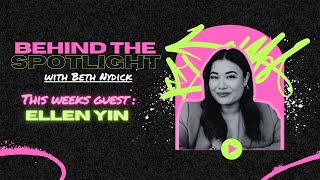
Beth Nydick and Ellen Yin break down how to turn podcast appearances into actual revenue. One client landed a $50,000 deal from consistent podcasting; another got a paid speaking gig from a solo episode. The key: treat each appearance as a repeatable system with pre-show prep, post-show clips, and strategic follow-ups, not just visibility for its own sake.
Chapters
I'm very excited to come to you today from California on my way to the Alt Summit, but first we're getting to have a conversation with Ellen Yin from Cubicle to CEO. Not only is she— offers great information on her podcast, but she's also coolest chick. So we're gonna have a conversation today because my podcast —what Ellen dropped today. Hi, Ellen! Cubicle! Hi! Did I hear you're in California right now? I am. I'm in Costa Mesa. I got to record a podcast in person earlier this week. That's such a treat. Then I'm off to the Alt Summit tomorrow morning. Oh my gosh.
I feel like the Alt Summit is the one conference that has been like in my periphery, on my radar for years, and I've just never made it there. But I know that our mutual friend Jessica Yellis, who's in, you know, in Mix Your Mind with us, she is like a diehard fan, goes every year. So I know you'll have the best time.
I know, I can't wait to see her there and a few other people who are going to be there. It's going to be such a— and I too, I— it's always been on my radar and I just applied this year and it was amazing to get chosen. You know, I'm doing my— how to make a— for your next podcast appearance. So anyone watching that's going to be at Alt, send me a DM so I know you're going to be there. But you know, we always talk about how— and I— we met in person. What was it, in November? It was so much fun. But we always talk about that in person, right? Being able to really be together. And I think that that intimacy really makes a difference when you're going to collaborate or when, you know, when you have somebody on your podcast because you actually know who they are.
It's not just some stranger, to be honest. Exactly. 1000%. And Honestly, in-person events are the fastest way to make those connections to get on a ton of podcasts. So if you're wanting to do some sort of media visibility tour, that's the place to invest your dollars and your time if you want to make rapid-fire connections. I feel like the trust that's built from one face-to-face conversation trumps years of trying to build a relationship over, you know, over DMs or whatnot.
You have a sold-out in-person event coming up.
I do, yes. Next Friday, actually. It's coming up really fast. The whole thing came together in literally like 2 weeks. Another mutual friend of ours, Veronica Romney, just wrote a book called Identity Marketing. She's a marketing genius, and she just happened to have a speaking engagement, I think in Canada, actually, that same week. And I was like, hey, what would it take for you to come down and visit me in Oregon after, and we'll host you for, for a live event. And so luckily she said yes, but it meant we had like a week to throw it all together and start selling the tickets. But we were very fortunate. Our community here in Oregon showed up big, and we, yeah, we sold out of all 50 tickets in, in 48 hours.
That's because you're such a great community leader, and you use exposure to guide those things that you're doing. I, you know, I've seen it years. What is your thought process around visibility? You know, honestly, I'm kind of getting away from the word visibility because it doesn't really mean anything, but exposure to the community of buyers is really where I want to— is where my head is at in the media conversation. But how do you really like to utilize it and what's your strategy around it?
Oh, you know, it depends on the event, I would say, like who, who was going to be there, what was the intention of the original meeting. But I think the, the sooner you can give people a taste of how you can support them or give them like a taste of a product or solution or just like bring them into your world from an in-person event, I think it just that recency bias is really important to keep in mind when you're leveraging these like exposure opportunities, right? Because to your point, Beth, when we talked about this, in your podcast episode on our show Cubicle to CEO. It's bonus episode 62, by the way, dropped just this past Wednesday if you want to hear it. But, you know, it's not enough just to appear in front of somebody one time and then just kind of like wipe your hands of it and walk away. You have to really, while the, while it's still recent in their mind and they're like, oh yeah, Beth, I remember hearing that episode. You, you want to show up in multiple places. You want to invite them back to engage and consume more. And so you, I mean, you've done such a wonderful job of it. I mean, even us, doing this Instagram Live. I don't think I've done an Instagram Live in like a year. And so I, I'm really glad that you, you suggested this because it's such a fun way to collab. And even though these days it's so hard to get people on live, this can serve as replay. You know, it's again another touchpoint for you to really connect with somebody. Yeah.
And it's part of the strategy that I teach in the Mic to Millions is it's got to be a part of what you're doing and how goes. Like I was, I actually, I was on Lori Harder's social media this morning and she had somebody speaking and the tease made me mad. I was like, I don't agree with this. And I put it in the comments and she was like, listen to the rest of the episode. And I was like, oh, you got me with the tease.
Yeah. Yeah. You want to evoke some sort of response, right? And yeah, polarizing content, you know, it works for some brands. It can backfire for other brands. But I think anything that creates conversation at the end of the day, it is a good thing. And especially, of course, if you remember to come back and engage with the conversation. Sometimes I feel like people post something polarizing and they just kind of walk away and you're like, wait a second, like you gotta come back in and, you know, engage, engage in that dialogue that you started.
So yeah, one of the conversations we had on our episode was really about having a system in place to promote though, because I actually had a sales, a sales call, a first call with a new client this morning. And she was like, well, I did a podcast interview yesterday and I sent the questions, but the interviewer didn't even ask me one. What do you mean? I was like, well, that's— you're going to learn the system so that doesn't happen because most people show up for a podcast interview. I know you don't do this. Thank God. That's why you're so successful in podcasting. Like, let's just have a conversation. You're like, what? Yeah.
I know it's, and it's hard too because like, yes, some of the best, you know, gems come from genuine conversation, but there needs to be some sort of direction to allow for those kind of impromptu moments to pop up, right? And I think to your point, sometimes like do, doing something like this in this live Instagram container, that's a great time to chit-chat and kind of, you know, see, see what evolves from there. But I think something that's meant to be more evergreen, like a podcast episode, I definitely believe the research dictates the quality of, of the interview for sure.
It does. And knowing the platform you're going to be on, like before I was on your show, I've listened to your show anyway, but really I re-listened to say like, okay, what, how does she structure it? What are the questions that she asks? If you're asking, if you're like, you don't do this, but some people are like, you know, my rapid fire at the end of the conversation, you're not one of those girls. Girls can just fire away, then you need to be prepared. And if you have not listened, you're SOS. Yeah, exactly.
Yes, exactly. You're in the hot seat, literally. We actually— it's funny you mentioned that. We used to do that on our show. We did a— it was called lightning round and we would like plop it in the middle of our episode. But you know, this is, this is another great lesson for anyone watching the replay of this is sometimes you test, segments in your content and you have to listen to the audience feedback because what we discovered is that people— we thought it'd be fun to include this like light banter moment, like who's this entrepreneur outside of their business, right? But we got the feedback like, hey, like some people were like neutral to it, but there were actually a lot of people who were like, I actually just skip through it. Like I don't care about, you know, what this person's favorite color is or what their phobia is like. They, they are there to listen to our podcast for a very specific reason. And so when Knowing what people come to you for and what you're known for is also really, really important. So that, that audience feedback is, you know, invaluable.
Yeah. And you listened, which is great. Some people don't, which you said, and that's where part of the conversation we had was there's different types of podcast shows to be on for different things that you're doing. Yeah. Right. You're much more authority show. People are coming to listen to the expert who you've deemed credible enough to put on your airwaves, to put in front of your people. But that kind of thing probably works better on a storytelling where it's really about who you are, your authenticity, where you came from, and having that conversation. That's not the tips and hacks and the systems that we talked about, but it's more of like, I have 2 dogs and I live in New Jersey, right? And whatever, right? The people coming to your show aren't, but in my arsenal, I have authority shows that I'm on, niche shows where I'm talking directly to my client, directly to the person that I want to be working with. And then those storytelling shows, um, which I think are really fun because then you get to talk about the stuff that interests you. Or as Lisa Johnson would say, your secondary messaging. Yes. What the things are important to you that are not about your primary business. Totally.
And it makes you more well-rounded in terms of what people can discover about you online, right? And gives you an opportunity to answer questions that you may not have been asked before, which is my favorite thing both as a host. It's my favorite compliment to receive as a host is when a guest tells me, you asked me something I've never talked about before. And it's also my favorite thing to experience as a guest on someone else's show when I get asked a question I have not been asked before. So yeah, I can totally relate to that. And I think too, what really excites me about your bonus episode on our podcast is how intentional you are, not just about preparing for the interview, but what you do with the interview after, how you're really leveraging and maximizing that media opportunity. And so I'd love, I mean, you have to listen to the episode if you want all of the tips, but I'd love for you to share, maybe actually here's, here's a good one. We talked about in the episode how you can turn every podcast guest opportunity into a $10,000 or more payday, right? But I'm curious, Beth, what was your biggest payday ever from a media experience that you can actually tie back? And ideally, if it's a podcast, that would be great to use.
Yeah, it was a podcast after a stage, right? Okay. So I was still doing some publicity and all the Systemize stuff we talked about. And I had been, it wasn't actually in New York City, it was in New Jersey. On, um, I forget the stage, but it was at the American Dream Mall. And this client see me at the mall, and then she had heard me on some podcasts, and she DM'd me, now I've seen you in person, now I've seen you on this, this podcast and this podcast, I can put it in later, I don't remember the names of them, how do I, how am I your client? And she ended up being a one-on-one client for a year, and that was a $50,000 contract.
Wow. $50K payday. That was from a podcast. It was a big one.
Yeah. And it was from consistently being on podcasts, seeing me on stage in person. And that's how she got to know me because it's not one experience anymore. 3 years ago, it could have been 3 experiences. Now it's, we know it's a lot more experiences. So if you're consistent doing media, you're consistently going live, you're consistently on people's platforms and you're saying the thing that matters.
Yeah, right.
You're saying it actually connects to what their pain points are, because everyone watching has probably been on some podcast and they're saying to themselves, well, Beth, I've been on podcasts and nothing happened. You know my answer, Ellen. My answer is it's your fault because you did nothing. You probably put in your story once and maybe posted about it, but you never put it out again. Because, Ellen, your podcast came out this week. I have, um, Lori's podcast with me is coming out next week. You're going to see all of this information in 3 to 6 weeks again, and then 9 weeks, and then 12 weeks. Why would I not continue to support not only my friends, but your platform and the credibility it gives me with your audience so that we can— it's like a different way to— I'm not saying affiliate, but like collaborate where we're supporting each other's communities to see each other and then be involved because it's a lot more than just I'm on the podcast and I gave you my strategy. It's now in your ecosystem and how do I fit into your community and not yours, but like the people listening, how do I fit into what your plans are? And when you know that I'm the person to fix the problems or I'm the solution to your issues, because I hope you agree with me. Like, I just think podcast guesting is the way. It is. Yeah, it totally is.
It's such a genuinely fun way, first of all, to collaborate, but also so such low-hanging fruit in terms of like visibility or media or exposure, as you were saying. And I love that cyclical tip that you just shared and that you expanded on too in our interview in Bonus Episode 62, because it really is such an underrated and underutilized way to bring back your, your expertise. And we can all take a note from big media companies. Like, there's so So many times where I've read an article from some big publication, right? And then like a year or two later, it cycles back in my newsfeed and I see this whole new slew of comments. It goes viral again. And then of course, inevitably there's always someone else in the comments who's thinking what I'm thinking but didn't say out loud. And they're like, didn't I read this like 2 years ago, 12 months ago, you know, whatever it is. And I mean, big media companies do it all the time. They recycle and repeat content because they know that a different set of eyes is going to see that. Same thing for your podcast interviews. Why wouldn't you continue to get it in front of new listeners?
Right, and engage that host again, right? If I'm gonna, I'm gonna share your— not when, I mean, not if, when I share it again and I tag you, you'll probably put it back in your story and then your people will— it's that. And then when you have 5 or 6 of those and those are consistently going, that's when people look at you like, oh my God, what is Beth doing? What is Ellen putting out there? Right now there's so many layers, conscious and subconscious pieces to it. But the problem that I see most often is people do nothing with it. Yeah. I've been on— I know I'm going to hear this week again at all, but Beth, I've been on 50 podcasts and nothing happened. That's what people say to me all the time. Like, really? I can really make $10K? You really make a difference in your business because you're collaborating, you're putting your information out there and you're being seen. Yeah, like that's a part. And I do hear this a lot too, like, well, I don't want to go on camera. I'm like, well, then don't bother, to be honest.
Yeah, no, it's so true. I think people really, really desire that face-to-face. And I love it when our guests bring us creative ideas for how we can further amplify, right, their, their message and their case study on our show. Because like, to your point, you offered to do this Instagram Live. Love it. I had one guest who she was, she did like a copywriting case study around like a certain email that had generated like half a million dollars for her business, which was crazy. And she was like, you know what, I'm actually going to leave that email sequence in a Google Doc. And we put it in our show notes. And she's like, for a week after this episode airs, I will actively check that Google Doc and I'll let people like add in their comments or questions and I'll come back and answer it like asynchronously within that Google Doc. And I was like, that's I think that's so brilliant. Like, what a great way to add that additional, very personalized touchpoint and amplify the original interview beyond the medium in which it was first recorded, which is audio. And now it's like tech space, right? So yeah, I just think, I think it's so, there's so many ways that people can get creative with how they share beyond just like a story clip or something, right?
And speaking of story, it's actually also about the stories you're telling. Often— and again, you don't do this, and I love you for it. I love you for a lot of reasons. That one's just one. They'll read your bio, and then they'll be like, welcome, Ellen, to the show. Tell us about yourself. And you're like, what the F? You just read my whole thing. And then people don't know what to do next. Yeah. Right? When I'm listening to a podcast, if you don't have me hooked into you the first 3 minutes, I'm out. Yeah. I'm not interested enough. And so often people go into the, well, I help small business, blah, right? What is the, what is the thing that you think about when you're starting your, your own podcast interviews that you keep? Maybe mistakes you've heard or things that you do to not do that for yourself.
Hmm. Well, as a guest, I really try to move through my origin story, if you will, as quickly as possible, because to your point, it can be, like anyone can look you up if they're really that curious about, you know, your whole background. So I really try to keep that teaser section to like no more than 2 minutes, but ideally more in that 60 to 90-second range. And then I really just at the, at the end of that, you know, quick synopsis of who I am, I really try to tie it back to what's the conversation at hand today? What are we actually here to talk about? So like that's really important. But I would say from like the hosting side, It's helpful when people know how to tie an anecdote about their own life back to a tangible takeaway that the listener can borrow. Because what happens a lot of times is guests who are not well-versed in interviews or not media trained, you know, they can go off on this tangent and tell this long-winded story that may very well be interesting and meaningful to their life, But for the listener, if it's an unrelatable experience, let's say, there is no, there is no nugget to, to borrow from that. Right? And so I think you can always tell when a guest is really good at what they do, like you, because you're able to tell a story succinctly and then also leave room for the host to expand, to ask expansive questions. But before you stop talking, you're able to also share like, oh, and here's like this little thing that you can now take into your life or your business.
Yes, 100%. That's something we talked about in the interview as well. So I think a big miss with it is that you're not including your offers in your framework in the stories. Because I just worked with a one-on-one client, and listening to her story, she'd be like, well, first I graduated high school. And I was like, oh my God, timeline story. I'm like, and I say this all the time to my clients, I'm like, no, I want to know the color of the tile in the bathroom that you ran into when the bullies were chasing you in high school. Sensory. Give me a moment, not a story, like not the whole thing, but I want a moment so I can actually see you in like on your— I don't mean like a metaphysical soul level, but I mean really on your soul level. Like, oh, you're my person. I was bullied. I was the bully. It doesn't matter what side you were on, right? You still experience, and you can at least remember the tile in the bathroom at the high school.
Exactly. Because stories are memorable. And especially if you can like— it's exactly what you were saying. You know, like the hand claw machine that we used to play with as kids to like try to win the stuff down? Animal. I imagine it like that. Like you drop somebody, or actually a better analogy would be like Google Maps, like, you know, or not Google Maps. What? Maybe it is Google Maps. Like when you can like drop that little person like onto a street and then it shows you the street view. Like that's how I imagine telling a great story. It's like you literally just like plop somebody into that moment in time. You capture the feeling, you capture the visuals, and then again, you lead them to like, and this is the, this is the thing I want you to remember or apply. From said anecdote.
I love that, Ellen. And I might just use that in my class this weekend. So people start texting. I'm going to be like— But it's important to have those pieces, because most people in our spaces are not media trained. You've been in the media. Mrs. Oregon has been in the media, right? I voted, of course. Thank you. And that's something that I— so— what's the right word? Adore you for is not it, but like, I really— you're so inspirational on that piece, right? You're doing something. You have this big business. We're all so busy, but you're doing something outside yourself to show other people the way. And talking about that on podcast and how that connects back to what you do and the investing that you do— I think so often people get so, um, tunnel vision. This is my business. I need to talk about PR or copywriting or marketing or dogs, whatever it is. Yeah, about it instead of having that larger view. And that's the media training that we do within my program, that it's how to actually show up on video, how to actually tell these stories. How— like, I'm not a script girl, but what is the script for what you're doing on the podcast? I knew what I wanted, the 5 points I wanted to get to on your podcast, and I sent them to your people beforehand. So we had a plan showing, because I would say showing up without a strategy is like driving a car without having a license. Yeah, like you kind of know how to do it, but you're not really sure.
Yeah, and I'll add to that, it seems counterintuitive, but I feel this especially on the host side. I always come to every interview, right, with like a whole list of questions that I've researched on the case study we're debriefing that day, the guest, everything. However, it doesn't mean I end up asking every single question on that list or that I even ask it in the order that I've prepared. However, when you come prepared with a set of questions or a set of stories, if you're on the guest side, it actually allows you to think more freely and be more creative than I think if you just come in wide open. It's almost like those guardrails help keep you on track but allow for those, you know, those impromptu moments to take form as they will. So I totally agree that it's actually a tool that facilitates. More creativity rather than restricts it.
Oh, that piece of— I might have to use that little piece of video because exactly what I say all the time. And it's, it's not— people think it's restrictive and not creative, but I think you can be more creative. And you know what, because this is a business tool that we're using, it should not be up to like, we'll figure it out. We should know what we're talking about. We should know how we're connecting that to our offers and that to our framework. Because I say this to my clients a lot, say you, say you, Bill, $500 an hour. You go do a podcast, go do 10 podcasts. That's a lot of money you left on the table that you're not getting back. And why aren't you planning and using a strategy and figuring out how to do that? Because otherwise I would say visibility without a strategy is noise, right?
Oh, that's a good one. That's a really good one. Yeah. Or performance.
Like it's not, it's not doing anything for your business. So why are you wasting your time and that other person's time? Because if I did nothing with your, the podcast interview that we did, like that, it's a waste of your time to be interviewing me too. Yeah.
No, that's, that's such a great, I love that one-liner, that visibility, yeah, without strategy is just noise. And I know you just mentioned, you know, some of the interviews that I did in my role as Mrs. Oregon. And that actually reminded me that yesterday, actually, I ended up landing a paid speaking engagement at a nearby local chamber of commerce. Thank you. And it was directly from the person who recruited me for that speaking engagement. She said the podcast that made her, or the podcast episode rather, that made her go, I've got to have this person speak at our event, was actually, and ironically the event is a small business conference, right? So obviously nothing related to pageantry of any, of any kind. But last year, shortly after I had won the crown of Mrs. Oregon, I did a solo episode on my podcast where I talked about like why the heck as an entrepreneur or founder did I decide to compete in my first pageant and how am I marrying my volunteerism and the work that I do as Mrs. Oregon with my business? How are these two things correlated in driving the mission to support women entrepreneurs? And it was that episode that she listened to that made her decide to book me for the speaking conference. And so you never know what an interview will lead to. So don't think that just because the top— like Beth said in our interview, I had asked you, Beth, like, well, what if like you go on a podcast episode, right, and the host decides to talk about something that doesn't really feel like it's your main message that you're usually talking about? And you had that great tip in our conversation around that secondary messaging and how even these seemingly unrelated stories can always bring people back into your world. And I just lived a real-life experience of that, so I wanted to share that.
And congratulations. That's amazing. Thank you. Good old paid, paid speaking from— right? Work so hard to make these things happen. And I feel like often they just kind of go like the claw. They just kind of drop in your lap. It's the time you get the bear. Yeah. Right?
I still to this day never won anything from one of those. But you know, someday.
Next time we're together, Ellen, coming on the Behind the Spotlight today. I'm so happy to be promoting the Cubicle CEO and my friend Ellen Yin. Everyone that's watching, you've heard just a little bit of the interview that we did, so it'll be on Cubicle CEO, it'll be on my platforms. And don't just listen to my interview because Ellen's interview is a gold mine full of amazing, credible experts that she's been brought on. And Ellen does not open up her email— her podcast to everybody. So you know that you're listening to that authority podcast style. So you can really learn a lot of great information. And plus, she's the best. What'd I say? She's the coolest.
You're the best, Beth. I really appreciate you. Thank you, everybody, for watching. And hope— if you're catching this on the replay, yeah, listen to episode 62.
Awesome. I'll talk to you soon. Bye. Bye.
More from Beth
"How to Make $10K From Every Podcast Appearance | Replay Available Until November 24th!"