The 3 Shifts You Need in 2025 to Make Podcast Guesting Profitable.
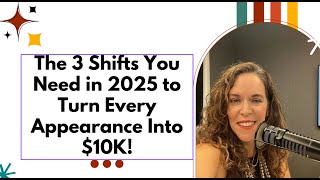
Beth Nydick teaches how to turn podcast guesting into revenue. Pick shows that build credibility in your niche, use a four-part story framework to drive action, and set up promotion and follow-up systems. She recommends charging $500 per hour of guest time and shares tools like her M-I-C messaging framework.
Chapters
I want everyone to feel like they've not only gotten education out of this, but I really wanted to inspire you to think differently. I really want you to inspire you to understand what's available out there. This comes from 25 years of being in the media, owning a PR firm, being a TV producer, all the things that I've done in my adult life. I won't tell you about the things I did in my not adult life because those things were more fun because that was before phones. So nobody pictures, but what I really love talking about now, somebody has their thing up, is making money from podcasting, right? Because if you're just doing podcast guesting and you're not making money, it's an ego boost with logos. And I want you to really start thinking about how to step up to the table and change that, because I think about it this way. If you hire me to speak to me for an hour to do like a, you know, like a one-off call with me, I charge $500. If I'm on a podcast, I better be making $500 for the hour I'm spending with that person on the back end. So I want you to really think about podcasting as the time spent for you to make an ROI on it. It's not a conversation. You're gonna hear me say that over and over and over again today because it is not just a conversation. And if you think it should just be a conversation, then I'm not— I'm not the right person. You should go get lunch because this is about creating the opportunity for you to make money using a business tool. You have a marketing strategy, you have a content strategy, right? You have a sales strategy. What's your visibility strategy? And inside of that, what is your podcast guesting strategy? I'm gonna give you one today. Because I've been there. I did all the stuff. I have all the logos. I've been all the places. But what was happening for me was that I wasn't making any money. And to be honest, if I'm not making money, I kind of lose interest, to be completely honest, in my business, in my life. I do other things that I don't need to make money. But I really learned that visibility without strategy is just noise. And that's what I'm gonna teach you today. How it's not gonna be noise in your business anymore. It's gonna be a strategy that makes you bank, like I like to say. Okay, if you don't know me, my name is Beth Knightick. I'm a former TV producer and the founder of Mic to Millions, a profitable podcast guest system where we don't settle for just exposure. We settle for proven methods that shine and make us profits. And I believe that I've had a conversation with most of you, and I'm— what I'm really about is you creating your own possibility of success. And I really want you to think about what your possibility of success here, because podcast guesting is really powerful if you leverage it. If not, again, it's just something that you spend time, maybe even wasted time, because most people like us, we go on, we talk, we share, and you're just hoping something sticks. Today we're gonna give you a plan and I'm gonna show you how to make podcast guesting actually work for you. Because like I just said, I said it early, but you create your own possibility of success. I hear it all the time from my clients. Well, I just need one more team member, or I need that marketing assistant that's gonna really feel my business. No one's coming to save us. No one's coming to make this right. This is a strategy you need to learn. The Institute into your business, because if you want it to grow, scale, be successful, give you the freedom, all the things that you want, learning how to use this right is the way that you can do that. Because podcast guesting is free. If somebody tells you to pay for it, DM me and I'll tell you not to. You don't need to pay for it. It is— you're not, right? Because you're not spending money for ads, you're not doing affiliate emails and making your list crazy, you're not trying to dance or sell on TikTok or do that social selling, or even what I've seen lately is the, how to have a successful business without showing your face. That stuff blows my mind, you guys. It's like, it makes no sense. But you really honing in on what can work for your business. And as digital entrepreneurs, it's our voice, it's our message, it's what we're saying. So by the end of this session, I'm gonna lose my voice already. You're not gonna just understand the strategy. I want you to learn and understand how to put it into action because I'm really not about theory. I'm about what actually grows your business. And if you know anybody from Jersey or we've spent some time together, you know I'm not about fluff. I'm, I'm about making those shifts and making that action in your business. That is hard. That is uncomfortable. That is different than everybody else out there is talking about or saying. And one of the reasons that I really honed in on podcast guesting last year is because everybody else, I felt like, when they were talking about visibility and they were talking about publicity, was just talking about getting it. And that to me, honestly, is the easy part. If we did a networking event right now, I bet 5 of you could get podcast appearances on 5 of your podcasts. 'cause most people here probably have a podcast, right? You could, you can make that happen for yourself. It's the leveraging it, it's the amplification piece of it. It's the after you pay somebody $5,000 a month to get you that article in Forbes or to get you on Entrepreneur on Fire, what are you doing with it? Yeah, I made, I make everyone a little uncomfortable. I hope so. You got, you know, I do it with Jersey love, but I want you to start thinking about it in a different way. This is a business tool. Okay, let's get into this. Let's get into the shifts. So Shift 1 is about the right podcast. People tell me all the time, they're like, well, I, you know, I've been on 50 podcasts this year and nothing's happened. And honestly, what I want to say, but what I say on the inside is like, well, that's your fault. Why were you on 50 podcasts? You had 50 podcasts that were the most aligned that were the places that you were supposed to be, or it was your friend's podcast and you're like, well, they talk to entrepreneurs, I'm gonna go on that podcast. I'm gonna spend time on Rob with Robin or Carol or Allison. Like, right? But if Robin and I have the same audience, I wanna spend time with Robin. I love Carol and Allison, but you guys aren't gonna help me. I hope that's starting to come into view because you don't need more podcast spots. You need the right ones. You need the ones where your clients are listening. And one of the ways that we could do that is by asking them where— go ask your 3 top clients or your 3 top ideal clients, where are they watching, reading, and listening for you? And go be at those places. This is not rocket science. One of the reasons one of my downloads is how to find the right podcast for your brand. It's a Cosmo-style quiz. That walks you through the right audience, the right things you should be doing, all that kind of stuff. So you can really have that analysis of where you're supposed to be and why you're supposed to be there. But one of the big things is this kind of shows you're showing up on, because when you're looking at the places you could be, I know everyone's just thinking about, well, they're just podcasts. I don't think about it this way. I think about it this way. There's 3 different, because not every podcast is worth your time, and you don't need to be everywhere. You need to be somewhere that counts. It's like when they tell us that we should be on every social media platform, right? Everyone's on Facebook, Instagram, or LinkedIn. But what if you don't work with corporate people or people that are on LinkedIn? Why are you wasting your time? It's the same thing. Why are you wasting your time on shows that aren't your shows? And when talking about visibility, I think about it this way. There's credibility spaces, there's visibility places, and there's revenue places. I wanna say that again. Credibility, publicity, or visibility, and revenue. And the different shows can give you different things of those different, those different categories. Number 1 is the expert category. That's somebody who's trusted by a leader in your space. Those are those shows that you wanna be on. Because the audience already believes that you are an expert because you were on that show, right? It's that transferred credibility. And when you land that show, that audience is primed to see you as that expert. Okay, I was gonna tell you guys a secret. I wasn't gonna tell you, but now I'll tell you. I just booked a huge podcast that I had to sign an NDA for. You all know her name. I'm gonna be recording it in March. I'm very excited. I'm now going to make plans for being seen as an expert on that level because I'm going to be on that show and I'm getting a couple other shows because I asked her if she would introduce me to her friends, to be completely honest. And that's the way it really works, right? It's all those relationships. But that's my credibility play for first quarter and second quarter of 2025. I want you to start thinking about that credibility play. It's the different categories of publicity You have to think about what's gonna serve your business. 'Cause the second one is these niche shows. Like I said, everyone's an entrepreneur, but if you talk to people who are in branding or you talk to early stage entrepreneurs, like what's that demo? And not, I talk to female entrepreneurs that scale their businesses. Like that's not a demo. I want you to really hone in on where you should be because those are your people. Those are people who want your offer. and you don't need to convince them that you are the solution. They already know. I want that to stick with you. It's that really honed in demographic so that you can be on the right show at the right time. And once they know that you are their people, and I'll— we're gonna talk about how they're gonna know that, then you're on the right platform. And the third show is that storytelling show. This is the one that you cry on. This is the one that you cry listening to. I'm a, I don't know anybody else. I'm a Pisces and a middle child, so I cry a lot. I cry at commercials. Any— nobody else? Just me? Okay. Oh, thank you, Rob. Thanks. But that's what I mean. It's like that connection. It's where you're building trust. Oh yes, Carol, all the feelings, right? Where people buy is with people that they trust. So if you can tell your story in a way that make, make listeners feel something, um, feel like they're heard, feel like they're understood, feel like they're not alone, that's when you're getting the DMs, I need to work with you. And this translates to all different kinds of media. I was in the New York Post last year talking about pivoting my business and I was getting DMs from, me too, I need to work with you. And I got a couple clients from that one article. And it's the same thing with podcasts. The reason I like podcasts better than other forms of traditional media It's because it lasts forever. It's always there. Because most experts, when they go— like I said, when they go on media, they're just thinking about their goals. They're not thinking about what that platform and what that kind of show is going to do for their business. Because when I go on a show, I'm not talking to the host, right? Say I go on Lisa Allen's show. Lisa, you're amazing, and I want to have a conversation with you, but I'm actually talking to the people who tuned into your podcast. That's who I want to make love me. That's why I want to make understand that I see them, I feel them, and I understand them. And you're like a bonus. If you listen to me on my podcast, I often don't talk to the host and I talk directly to the audience. Like, for example, I'll say something to the effect of, you know, if you're listening right now and I know you guys love Lisa, but like, listen up, if what I'm saying is working for you or XYZ, and you are on podcast and you don't have a checklist, go to my link in bio right now. Don't stop listening, but go to my link in bio on your desktop and go download my checklist 'cause I know it's gonna help you, right? I'm talking to you. That's the person I wanna connect with. Lisa's the vehicle. I hope you're starting to think about podcast guesting differently already, right? It's a tool, it's a vehicle, the different kind of shows, I really want to change the way you're thinking about it. So then when you can, when you can see what the system is to make it work for you, it's easier to input and you can understand the process behind it. Okay, so I want to stop here. I know I just gave you a lot of information. Any reflections in the chat? Any questions? Or I'm thinking about it differently. I love to get some feedback so far, just so I know we're on the right track and you guys are with me. And I'm gonna take a drink. Awesome. Talk to the audience directly. 3 types. Awesome. Yeah, it's really important to think about it a little bit differently. Thanks, Krista. Where is she? There you are. Okay. I just wanna make sure everyone keeps up. It's not it, right, Prisca? It's not a conversation with the host. It's a conversation with the people listening to what's going on with them. Oh, wait, I got a question. Let me go back.
Yeah.
Credibility, revenue, and visibility. Thank you, Carolyn. Yeah. $500 an hour, Nikki. It really— that's, that's the difference. It's perspective. I, I was just asked to go on a new podcast and I said, can we do this second quarter? I don't have time right now. If that was a different level podcast, I probably would've made time, but their audience was small, unengaged, and new. I'm gonna do it 'cause I think it's a good cause for what they're doing, but I'm being much more discernive of what I'm doing and how I'm doing it. Okay, let's move on to shift 2. So that is own your messaging. Most people go on and, right, they're just gonna have a conversation and they're just gonna like talk about their passions. You know what kills me? Because the truth is your message needs to be strategic and it needs to have the right content to make your audience— if we were in a room, I'd make you say it— feel something. How often do you listen something or watch something and you're like, you know what, I'm actually feeling this? Because if you're not, you're not going to remember, you're not going to care, and you're not going to tell your neighbor. And when you're on these podcasts and you're just giving out all this free information, it's not going to give you anything in return. So I created the structure so that your story will create that demand and turn those listeners into buyers. And it's this 4-part structure: hook, conflict, journey, and resolution. Because not only are you not talking to the podcast host, your stories aren't even about you. It's about your audience, right? Where that's who really we need to connect with. So they can see that your story, your journey is theirs, and we're inspiring them to take action within their own journey, right? We want to make them feel— yes, you guys are getting it. I'm so excited. Uh, make them feel something, right? So when you're talking about a story and these 4 parts— hook, conflict, journey, resolution— the hook has got to keep them in. How many times do you listen? Like I said, do you listen to a podcast and you're like 3 minutes in and you're like, this is effing boring, I'm out. It never happens when I listen to the Jason Bateman podcast or Stars. I don't know if anyone else— no, just me. Okay. Um, but right when you're listening to podcasts, I can't think of the— I was listening to one recently, you know, I have on my, on my library, and I was like, this is boring. Actually, to tell you truth, I was in a podcast recently. I was like, I wouldn't even listen to this. It wasn't just me, it was a bunch of people and I kept trying to take the conversation to like a feel level, and everyone kept being up here. I must have said the word I like 15 times, and nobody else did. And I was like, this— I wouldn't even listen to this, Carolyn. So that happened to you too, right? If I don't want to listen to this, no one else is going to listen to this because I'm the most interested in me. So when you're thinking about the hook, it's that first 3 seconds. You want to trigger curiosity. Urgency, emotion, something controversial, something, uh, what's the right word? Shocking. Something that's deeply relatable, right? I, I don't know, I haven't told my Dr. Oz story in a while. Anyone know the Dr. Oz story? I don't— I haven't really told it last year. I was telling other stories last year. So my hook for my Dr. Oz story was that I went on national television, I was on the Dr. Oz Show, and I made the biggest mistake that you could make on live TV. Anyone interested? Give me a raise of hands. Anybody want to know the story now? That's what I mean is the hook, right? The hook is all about how you're going to get them, uh, as Jen Gottlieb says, lean in, really want to know more, so that you can take them into the conflict piece of it. And that's where you get really personal. And I mean like this, what I say to my personal clients or in my Mic to Millions program, the Profitable Podcast Guest System, I have to say it a lot so that it works in my mouth. I wanna know the color of the bathroom tile in your high school, the place that you hid from the bullies, what it felt like, how big it was. I wanna be able to see it when you're telling me that story. And that's what I mean about that conflict and that shocking, that piece that brings them into it. That's what I mean, because I want the audience, me, to connect to your struggle through my own. I want to see myself. Oh my God, my, my tile in my high school bathroom was blue too. And when I used to hide from my bullies, right? Everyone had a bully somewhere in their life. Everyone hid in the bathroom because their boyfriend broke up with them or their girlfriends were mean to them. You can see that, right? You guys with me? Give me a little, a little something, a little yes. Yep. Awesome. Okay. That's what I mean, that vulnerability and So often, um, it's about— second, Toriel, I'll answer your question. Um, it's about that vulnerability so that you can build the trust. Toriel asked, how do you do that when the details like that don't matter to you? It's all about the storytelling, and that's what I teach you, is how to figure out what those details are so that they connect to you, right? So how could you tell the details in the story if somebody else is listening. And I'm gonna go back. It's not about you. If they don't matter to you, that's fine. It's gotta matter to them. It's gotta matter to the audience. And that's what the difference is. Okay, moving on to the journey piece. That's the aha moment. That's the part that you went from a burnt-out corporate exec to a mindset coach and how you changed your life, right? How you got that moment you got fired and what you did next. How are you taking them on the journey? And not just showing them— sorry, not just telling them, but showing them, giving them the feel so they can be a part of it, the moment, so they can experience that with you. It's not about coming— becoming a good storyteller. It's about having a framework that you can work through, that you know you can hit those points so that people recognize you as somebody who can help them. Because what we really want to do, yes, paint the transformation, But what we want to do is bring them along this, bring them along our story. So at the end, at the resolution piece, they are ready to take the next step. And we are not doing this salesy. We are doing this from a very deep, torn-up piece of ourselves, right? When we're telling those stories, especially on a storytelling podcast, we're telling those like, my mom did this story, my best friend did this story, my my father-in-law was— died and nobody paid attention, none of my friends showed up for me story. Like, everyone can feel what those things are like, but when you get to the other side of it, when you've gotten through the friend— the bad friendships, when you've gotten through the burnout, how have you been in that— been in the sunshine? And how can you help them get to the sunshine too? That's the piece that I'm talking about. So when the stories are so important. We talk all the time about messaging, right? Our brand message, our brand voice, the messaging in our marketing. This stuff is so much easier because it's just about us. This stuff is so much better because it's real. We're not trying to sell them something. All we're trying to do is make a connection, a heart-to-heart connection. And yes, Carol, it's empowering. It's just that authentic piece of it And honestly, I don't think any of us want the BS anymore in 2025. Like, I'm not here for it. I'm— I don't know if you guys can see behind me right there. It's actually a neon sign that says, "But first, champagne." And I'm starting a new podcast that my friends have to come here, and I'm calling it "But First Champagne" because I want to have the conversations after the first 3 glasses of champagne. After, right?
After.
Thank you, Nikki. After you've been with your friends for 3 hours, what are those conversations? Because that's really what I wanna be doing. I don't wanna have these high-level conversations anymore. I want the like, oh my God, I can't believe you went through that and you got to the other side conversations. And your audience wants to hear those. Your audience wants to understand how you went from zero. I was just talking to Lisa Johnson. She's a business coach out of London. She went from zero, from $40,000 in debt to $22 million in the last 7 years. I want to know how that happened, who she had to become, what she did. Right. I want to know all the stuff, but she's going to tell me her story so that I know she's my person, because that's really what it is. It's that truth. It's that who you actually are. Oh, thank you, guys. I haven't really— like, I haven't really talked about it much, but I'm really excited about it. And I found that on Temu. So it's all good. So we're going to tell our stories differently. That's the first shift. Thinking about how you're showing up differently. And if you can't tell, that piece is really important to me. That's the piece I love to live in because as a former TV producer, it's about one of the best things that I did learn was how to write scripts. And that's what I do for my clients inside my, the Mike to Millions program is helping you script this without giving you a script. I'm not a script person. Like if you gimme a script, I'm not gonna do well. I have to go off script. But if you give me a framework, and that's what I do for my clients so they can move through these frameworks so you can be there and tell your stories. Because I honestly believe that podcast guesting is gonna be the way to build your business in 2025 and 2026. It's, it, it really was more about like, well, everyone's doing it and now we're getting into the structure of the strategy of it. And I'm trying to be on the forefront. I'm trying to be that person that, you know, if somebody says I wanna monetize my podcasting, I want to be that person that pops up. And that's why I'm talking about it this way. Thanks, Michelle. Okay, let's move on to number 3. And this is the action piece of it. Okay, so I'm like, I should talk a little slower. I always worry about time and then I get like halfway through and I'm like, oh, okay, we have time. So let me go a little slower. So follow up. I would say 90% of you miss this piece of your revenue. Because it's not that your interviews aren't good, it's that your follow-up is probably nonexistent and you're missing out on money and you're missing out on clients because you're doing nothing but the dreaded— and if you've ever heard me say this before, you put an Insta, you put an Insta story or you post about the podcast once on your social media and then you do nothing else. That is to end today. You are no longer Gonna post and ghost. I can't. T likes that one. I can't. I just can't. It makes me so mad. And if you see my Instagram stories, I'm like, you can't do this to me anymore, because I see it all the time. You think you're helping yourself? Unless you have hundreds and hundreds of people looking at your stories every day, you're not doing anything for yourself. It was a waste of your time. It was a waste of the podcaster's time. It's a waste of your resources. Doing nothing. It just makes me mad because you've taken the time to book the podcast, be on the podcast, hopefully prep for the podcast, and then you do nothing on the back end. It's just wrong. And what we need to do is the people that have heard us need to be, need to be taken on the journey to pay us, right? I would say follow-up is where the money is, but follow-up is not a thing that we're taught, right? Follow-up's not a thing that everyone's supposed to do. Unless you've done sales, follow-up really isn't in the ethos. I'm— can I tell you guys a quick story about my son, if you care? Um, so I have a senior in college. He wants to be a— so he wants to be a Secret Service agent. He's applied. He actually is taking the test in 3 weeks. So he had to get all this information to the office of Secret Service, and there was a problem with his transcript, so he had to He had to send it 3 times. Barbara in the Office of Special Services at the Secret Service called him to give him admiration for following up so much. He was like, uh, I don't understand. I just— this— what do you mean? She was like, most people that have this issue never get to the second round because they give up. And he called me and he was like, Mom, like, I just did what you're supposed to do. And I was like, first of all, I was like, good job, son. You listened to your mom. But second, I was like, think about all those other people that didn't follow up and what in a better position you are because to you that's the normal. And, and I'm so proud of him because not only does he wanna serve his country, but like he's actually doing the things that we're all supposed to do, right? Show up authentically, tell the right things, but follow up on what you're trying to accomplish until you get there and not give up because it's hard. So I want you to think about the same thing. And thank you, thank you, Melinda. It's so weird to like— he's like an adult. I don't know if we have any other moms of like old, old, old kids, but like it's so weird to have like an adult and talk about like getting jobs and all that BS stuff and Secret Service. Like he said to me, um, nobody told me that I could have a job that I can be— I could train and be paid to play with guns. I was like, great, I'm so excited. Can I have girls instead? But anyway, anyway, I digress. Okay. So let's get to this, to the, the follow-up, because I really believe that follow-up— sorry, visibility without follow-up is a vanity metric. I see it all the time. You're on all the shows, you got all the logos, you're doing all the stuff. But again, it's just noise. You don't need more interviews. You need to turn the ones you have into revenue. And this is one of the ways that we do it. I have this 3-piece structure. I call it the Follow Up Like Crazy because it's not really about— actually, I just realized I probably shouldn't call it the follow-up. It's more of a promotion system. I'll have to change that in the deck. Okay. It's a promotion system. It's the before, it's the during, and the after. What most of you are probably doing are just promoting the podcast episode after it comes out. If you follow me on social, you might have noticed that I promote anything when I book it. I'm gonna be speaker at the Alt Summit next month. I already promoted it last week. I just booked another stage yesterday. I'm gonna promote it tomorrow. People in your audience wanna see you succeed, but they also wanna see what you're doing. And if you are out there in your emails, in your social media, in communities, I booked this, I'm gonna be on this, I booked this, I'm gonna be on this. What are people gonna think when your name comes up? Yeah, they're going to be like, oh, she's always booked, she's always killing it. Because I tell my people everything. This summer I had a medical issue that I really wasn't working for like 3 months. I was kind of out of work July, August, and September. When I came back in October and I started having discovery calls and getting back with my friends and stuff, they're like, Beth, you had the best summer. You were everywhere. I was literally in my bed watching TV. But my team was sharing everything that I had been doing second quarter, first and second quarter, just to remind people of what I was doing, what I was about. And it was all stuff I had just done. It actually was stuff I had done 2 or 3 years ago too, just to remind my audience, my authority, where I've been, what I've done, who I am, even though I couldn't show up right away. One of the things, the best things I did for my business I'm going a little off script here, was I, I preloaded 300 captions and graphics into my social media for LinkedIn and Facebook just to run in the background. And that's been going on for like 3 years. It just kind of runs. It's just there. So something new is always coming out for my audience. and it's all podcast stages speaking. It's all videos. It's all of me talking about my messaging, and that's part of my promotion. That's part of what I'm doing. So let's get back to the pre-pro— the pre-show buzz. It's building that anticipation. Okay? It's building the anticipation. It's creating engagement, and it's giving you that post-game plan because when you do it right, people are gonna think that you're everywhere. So think about thinking about the pre-show buzz when you're on social media or you get an email and it says new podcast out now. What do you do? Probably nothing. You probably go, oh, and you delete, save for later. Tell me what you do. Give me more. That's amazing, Michelle. Delete. Right? What are you doing? Unless it's your BFF, you're probably doing nothing. But if that post or email was a huge tease, I'm gonna give this huge insight, learn the things that I haven't told anybody exclusive to this. If I'm gonna tell you that because you're drop— I'm dropping a new episode, you'll par— you'll probably clock it. And like Carol said, Carolyn said, you'll save it for later, but you'll probably actually listen to it because you're gonna see it over and over again. That energy that you can create with that pre-show buzz primes your audience for when the episode comes out to actually go listen. Because it's sub— it's subconsciously clocked in their brain. Oh, I wanna learn how to make $10K for my next podcast appearance. I better watch out for when this opportunity comes out for me to listen to Beth again. That's what that pre-show buzz does. It allows your audience to see your authority. But also wait for what's coming out. It's like, oh my, thank you, Melinda. My email promotion is why she's here. I'm hot in my emails because that's my people. And we complete— I, like, again, I tell you guys everything. I had, like, a human design reading recently, and she said to me, pay more attention to the audience you've already built than building a new one. And that's what I've been doing. And today, For this webinar versus the last webinar, we had, I think, 70 more people sign up. And I think it's just from really focusing on you guys and not trying to build this new audience all the time. Okay, great. Let's go to the next part. Let's see. Yeah, Tavon is perfect. Okay, so the episode is out. One of the secrets that I work when I work in my Mike to Millions program, even with my one-on-ones, this is what I want you to do. The morning your next podcast appearance comes out, I want you before the week before, I want you to say to that podcast host, hey, let's do a live on Instagram, Facebook, I don't care where it is. Let's do a live teasing the episode. And if you do that, you will become the most downloaded episode of their series. I've had this happen with my clients over and over and over again. Because nobody else is promoting it the way that we promote shit.
They're just—
they're just not right. They're putting it in an email or they're putting it once. They're not going anywhere. When you're live on their platform and you do a collaboration post, especially on Instagram, your audience is going to see it and their audience is going to see it. I just did a collaboration post promoting my friend's book yesterday with Jen Kim. I've done this before. The last time I did it, I had 37,000, 3,700 people see that post. I don't have those kind of numbers. So if you're on a podcast and they have numbers, and I don't care if they're low numbers or high numbers, their people don't know you yet. By being on their platform live, having the conversation, teasing what's to come, maybe even giving new information, that's going to put you in a different category. That's gonna put you in the, oh, she must work with Beth category, because I'm the only one teaching this. And I love when I see people steal it. It's my favorite. If they're not my people, right? Because your audience needs you to guide them through it. Go listen now. This is happening now. The exclusive thing's doing now, right? Why? How are you listening? How are you getting them to go listen? It's not because you're posting, I'm on Beth's podcast. When I see stuff like that, I go, who the fuck cares? Tell me why I need to listen. I'm happy for you, but I don't really care that much. Like, even if I love you, I don't care that much. Great. Good for you. But I want you to do something different that's going to make me care. That's going to make me understand that this podcast, this conversation is going to change my life. This podcast is going to make me $10K for my next appearance. This podcast is going to do something for me. Yes, Lisa Allen, exactly. She said, ask the podcaster to do a live collaboration to promote the episode with a teaser. 100%. And they're gonna be like, oh my God, that's a great idea. So many friends of mine now do that for their own podcast, and I get DMs all the time where they tag me because it was my idea. Okay, number 3 is after it comes out. This is where the magic happens. This is where you get those DMs or people who like your post. Another hint: if somebody likes your post, go DM them. Thanks so much for listening. Did you— what did you like about it? Thanks so much for liking. Did you get a chance to listen? That is the beginning of a conversation. And what do conversations turn into? Clients. And that's what we all want. So stop thinking of your guest spots as one-time events. Start thinking about them as a lead magnet, because they really are a lead gen or a lead magnet. And it's a goldmine of content, right? So take those assets. If they don't give them to you, there's plenty of AIs or Opus AI or any of those AI platforms that'll turn it into mini videos. We'll turn it into posts. We'll turn it into carousels. You're gonna email your list with them. But remember, don't just say, hey, my episode is out. Why should they care? And why is it important that they go listen? That's what you need to communicate. And the importance Taking it back to your story is that conflict piece of the story. And I hope you're starting to see how this all works together. And I— but I don't want you to get overwhelmed thinking that this takes a lot of work. This doesn't. This takes about 45 minutes a week to accomplish everything I'm talking about. It's a system that I— we institute into your business. So this works like clockwork, and it's a part of it, a part of what you need so that you can make money by podcast guesting.
Let's see.
Okay, so, so what's been missing? So now you're seeing all the problems, you're right, you're, you've been showing up, you're dropping the knowledge, but you're still hearing those crickets. And most people make this mistake of not having a system. They don't guide listeners to the next steps. They don't follow up strategically. And that's why I created this repeatable process And I wanna show you, I'm actually premiering, which I realized yesterday that I didn't tell the world, but I'm premiering the new Mike's Method today. And this is, this is really like the crux of the framework and how I work with all of my clients. And I hope you guys notice this blown up Mike because that's what happens in my mind when you don't do the things that you need to be doing to make money from podcast guesting. It literally like poofs on fire. Because it's such an availability for you to really use to really get to where you wanna be. So the Mike's Method, it's not a theory, it's a system so you don't waste your podcast guest again. It's a framework that I use for my clients and my friends to make $10K. But when you follow it, you're creating that revenue generating strategy, that system that you can work over and over and over again. And remember, we're not being salesy, we're not being aggressive, we're just being ourselves. We're offering our solution to the problem. So going over the— going over it, the M is messages that convert, telling the right stories on the right platforms, because you're not gonna be telling a vulnerable story on a niche— on a niche market platform, right? There's times for hacks and tips, there's time for stories, and there's time for thought leadership. The I is for intentional guesting, really knowing where you need to be and, and what the offer needs to be in that platform because not every offer is right for every platform and every podcast opportunity. C is the call to action clarity. One thing, and we didn't talk about it, but I'm gonna tell you, if you're on a podcast and they, and you wait till the end of the episode for them to tell the audience where to find you, you've missed out. Most people don't listen. When that part starts, I click off. So I want you to make sure you're talking about it within your story framework. And when you get to the end, if you do this, and you don't have to raise your hand if you've done this. So you can find me on Facebook at Beth Knightick, but on Instagram I'm Beth Ritter Knightick, and on LinkedIn I'm Beth R. Knightick, and on Pinch— huh. Send me to one place, guys. Send me to one place so I know where I'm going and I know where I can find you. Because if you give me too much, I'm gonna be lost. And if you try to spell something out, I'm— I can't talk. I know it's all these things that I learned that you're not supposed to be doing anymore. And then streamlining the follow-up, which is that promotional, it's that email marketing, it's that social media marketing, it's that promotion marketing. So it's not just a one and done. It's something that you can use for your business over, over, over, over, and over again. I'm not talking about you need to be on 52 podcasts this year. If you could be on 8 strategic podcasts this year, that would change your business. That would get you the clients you need. That would make a difference on you getting on the stages you wanna get on. I think that one of the reasons that I booked the Alt Summit is because all the promotion that I've been doing on the stages and the podcasting I've been doing and the people I've been doing it with, because I've never applied before and all my friends are like, that doesn't happen. So I'm super excited and anyone's gonna be there, let me know. But this podcast guesting affects the rest of the ecosystem of your world. It's not just about podcast guesting, it's how it's really interacting with everything you do. From your offers to your messaging to your branding to how you're showing up to the messages you're saying and how you're telling those stories. So you have two choices. You can keep guessing and hoping for results, or you can follow the proven system, which is the Mic to Millions, the profitable podcast guest system. And on the side, I hope you guys are seeing the '70s colors now, the '70s and '80s feel of it. Because that's my favorite. Because let's see what I wanted to say, right?
That's—
it takes the guesswork out of podcast guesting and gives you that system. So if you've seen what's possible and you know there's a system, and there's 2 things you can do, right? You can take all this information and take a couple pieces of what we've done together today and try to institute some of it, or you can make a real change. And what I'd like to offer you is to have a phone call, to have a conversation with me about it. And it's not a call about Mike to Millions. I like to do these strategy calls so I can learn about you, someone who's taken their time to come hang out with me. But what we'll look at is your podcast guesting, pinpoint where your opportunities are, and create an action plan that actually works for you. And if you want to be— move into Mike to Millions, great. If not, I want you to leave a clarity and next steps so you can start monetizing immediately. And all I ask is that you tell your friends about me. So I'm gonna put the link in the chat. I'm only— I only opened up a few spots. So if it's something that you like to do, please take your time. Please don't take your time. Please make sure you get into it right away. But I wanted to handle some objections. The stuff that we talked about today, I hear people say this all the time. I don't have a big audience, guys. I don't have a huge audience. I'm not good at sales. I'm not the best at sales. I'm, I'm okay. But you don't need either. You don't need to be good at sales. You don't need to have a big audience. You need to have a system, an intentional system that you follow so that it works for you. Because the biggest mistake is I always say it's banging your head against the wall and thinking something else is going to happen. The biggest mistake is showing up without a plan, is doing the things that are going to get you nowhere. And I just don't want— I just don't want— it hurts my brain. It hurts my heart to see that happen anymore. And I'm done watching you do that. So one of the things I did for today is I created this VIP story bank. So if you book a call today or you sign up today, I'm going to send you this story bank as a present for being here. If anybody, anybody else here do these kind of webinar calls or just, yeah, right. And I always feel like, okay, I walked away with a little bit of information. If you book a call today, I'm gonna give you the story bank too so that you can start doing this. I really want everyone to start telling the stories that make a difference into your business. And this is like a plug and play framework that's super easy to institute because I don't want you to struggle. The, the barrier to entry for making this work for you is that storytelling. And I wanna make sure that that storytelling is working for you as my giveback for you to just be, just being here today, signing up to have a call with me. So here we are at the, at the end of the conversation. And I'd love to open up. I'm gonna stop my screen, but I want you to feel confident about taking the information that we talked about today. So give me some questions about implementation. How this works, what's anything, hot seat. We can do a couple of those. We have a few more minutes. But overall, thanks for listening, guys. I really appreciate you being here and really being active in the chat. So I'm going to stop my screen. And I'd love to hear some— I'd love anyone want to unmute? Go ahead, Krista. She's— Krista knows she's got me.
Hey, Beth.
Thank you.
Very informative.
I definitely have found some things that I am doing that, yay, that's, that's the right thing. And then I found some things definitely I can add to my podcast guesting. So thank you for that. I had a question. So oftentimes I've been like, I'll ask the audience, whoever I'm guessing on, to, you know, join my email list and I'll tell them about my freebie that they get when they, you know, join and subscribe. Can I also, like, I guess, because you're like, only ask them to do like one thing, can that be the only thing? Or could I ask that like more towards the beginning and then like say, hey, follow me on LinkedIn or Pinterest or whatever, like at the end? Like, can I do like a little bit more, or I can just stay to one?
You can, but it's a little confusing. So one of the things I recommend then is when you're telling your stories, and like I give that example before, I'll be telling a story about making a mistake on a podcast or, you know, whatever I have connected to my opt-in. And again, this is all strategic. This isn't like I'm just having a conversation. So when I am promoting my how to, how to find the right podcast for your brand, I'm talking about the mistakes people make about being on the wrong podcast. And in the middle of the conversation, and I'm in the middle, I mean like the first 5 to 7 minutes of the whole podcast, I'll be like, you know what, Krista, I have the, you know, Everybody, I'm gonna put it into my LinkedIn bio. Go to my LinkedIn bio right now as you're listening and go download it so you have the information. It's gonna be everything we're talking about. So Krista, I'm not being like, go get my freebie. I'm really connecting my resource to the conversation so it feels more natural. Okay. One thing I didn't say is that what we're, what we're doing as guesting is a performance. And I want you to also think about it that way. Right? You are showing up as yourself, but it's a performance. So a performance has a script, a structure, a framework, all that stuff. So when you're telling your stories, they better be connected to your frameworks. They better be connected to the outcome you want. And that's when you can slip in that lead magnet conversation. Okay.
So really, it's just kind of— I have to think about it more strategic— strategically, like, where— like, whatever podcast I'm on, like, think about the offers and freebies that I have and then, like, connect it to whatever story, because it, like, my story can change obviously depending on what the audience, right, you know, is. I try to, like, you know, gear it towards obviously providing value for whatever audience, right, we're speaking to. But, okay, I just, yeah, I guess I didn't think about, like, because I always like, oh, well, here, yeah, join my email, you know, list and get this.
Nobody wants that. And, you know, Chris, book a call with me. We can kind of talk over what it is. But you have to think of it again, like, if that's being sold to— I don't wanna be sold to when I'm listening to a podcast. I wanna naturally feel like you're my person because I'm getting to know you and you're— you understand, right? You're— I'm seeing you. I'm understanding you. And I'm stuck in that conflict piece of your journey. So give me the solution to it. Right? You're the solution to it. Gotcha.
Okay, that makes sense.
Thank you so much. Different way to look at it. Thank you, Krista. Who, who's next? You guys just unmute and ask me questions. Go ahead, Robin.
So I have not been a guest on someone's podcast.
Okay.
I am getting into having a podcast.
Good.
But I, so I wanted to learn, jump on today to understand both aspects because I was doing Instagram Lives and doing interviews and different things. And so it was a natural fit to go ahead and have a podcast. It's going to be Style That Speaks. But I, I love the fact that, okay, if I have a podcast, does that give me credibility? Okay, so, and I also want to open up the doors and know what I'm looking for on being a guest on a podcast as well. So that's why today I was like, okay, I definitely need to—
oh, I'm so glad that you're here. Everything I said works for you having your own podcast too. And when I was up at 6:30 this morning thinking about what I was saying today, what I would ask you to go do is go watch Drew Barrymore, her talk show. Go watch, you know, who I really like is the way that Jimmy Kimmel— go see how these people who are professional interviewers are interviewing. It's not an interview per se, like a job interview. It's a conversation.
Yes.
You ask me a question, I tell a story, you tell your version of the story. It hurts my brain when I'm listening to a podcast interview and they're like, oh, Beth, that was really interesting. And then they just go on to the next question. Like, again, boring. Like, it's got to be a two-way conversation. So even— yes, Lisa Allen, 100%. Graham Norton is the top of this. He is amazing at this. You know, all of— I DVR him. I love him. But like, as a host, how are you going to sit? How are you going to talk to your audience? The audience that is being brought to you as well. And Robin, either way, it doesn't matter if you haven't started. I'd rather you learn this now to start with all this information than just kind of go out there. And again, like, I'm happy to have a conversation. Book a call. Here, I'll put it in the chat. Going to book a call with you. Awesome. Awesome. I appreciate it.
Thank you.
Thank you. Who's next?
I have a question.
Hey, Prisca.
So, hi. It's Prisca, by the way. Prisca. Yeah, so, um, so when I've been on Guessing before, what I find is that like, this seems very like proactive, like where I'm kind of leading, but I feel like a lot of times it's more like, like they're struck, I don't know, maybe their lack of structure or the fact that they, um, they like have, I don't know how they're thinking, but like how do, how do we know like beforehand, I guess, how do that we're aligned in the sense of like we can make this work for both of us instead of like they're leading the conversation into whatever direction instead of like, yeah, I don't know if that makes sense.
Yeah, it totally makes sense. So I would go listen to a whole bunch of their podcasts and see if you feel that way. And then the other side of that is it makes me feel like this. Politicians don't answer questions that journalists ask them. Why do you need to listen to a podcast host's questions? Make it your own. Like, if they're not in charge, go be in charge. If they're saying to you, you know, just come on and we'll just have a conversation, be like, that's great, but here's the questions I want you to ask me.
Ah, okay.
Right. Be the— be in charge. And like you said, it's so funny you said proactive because that's definitely where I come from. And to be honest, that's a conversation I have with my husband all the time. I'm like, let's be more proactive. But being proactive and taking control of the situation is what you should be doing as a business owner. Everybody can have a podcast. It doesn't mean they know what they're doing or they're good at it. So make it work for you instead. Okay.
And then just to piggyback off that too, like, even when— because I think I've heard you say the promoting prior to things, I've suggested that, and then like, I don't hear from the person to do that. I'm like, like, hello, we could be making this more successful. Like, it's so frustrating to like me wanting to do it more than the person that's hosting it. So like, do— does that typically happen or do people usually— okay.
Yeah, you know what I've been getting lately is like, oh, your podcast is coming out tomorrow. And my responses to them is great, I will promote it in 2 weeks. Like, I can't— I have other things on my— like, I'm not ready for that. Like, why, why are you giving to me the day before it's done? If 2 things, if they don't have their stuff enough together, then maybe it's not the right place for you. Or if you know that that audience is your audience, it's an opportunity. For you to just be like, this is what we're doing. If they haven't sent you assets, make your own assets. You can do it. Just go live, just tag them. Like, there's all different ways to do it.
Okay, thank you.
You're welcome. Anybody else? See all your smiley faces. I feel like I talked very fast. So if you'd miss something, let me know too.
Okay.
So thank you everyone for coming. If there's no other questions, I never know to— honestly, I never know what to do at this point. Because it's like, I don't know if you still have questions or you're like, okay, just end the call. But I really enjoyed spending some time with you today. If you— if anyone has any— anyone's saying I should ask a question, but I haven't. No? Okay. Let me just see the chat. Oh yeah, Lisa Allen, definitely. Like, you should— in thinking about— I like doing the qu— doing the story, like, using the framework, creating the story, creating what the lead magnet is together, bringing in your framework, and then giving it to them. It makes their job easier. Because everyone has a podcast, but a very small amount of people are actually good at hosting or good at interviewing. I've had— I've been on very bad podcasts. But to know that you can do that, that's super helpful because it allows me to control the conversation more. Because I was worried about that. How do you control the conversation to insert the information you want to put out there, especially to drive back? If there are It's 2 different ways. If they're not, like, again, if they're like, let's have a conversation, and they're not being proactive, how are they treating their audience? And are you really getting in front of the right people? You know, no, Serena, it doesn't. I wish it does, but now I wanna know who you're talking about. Serena sent me a message. The other side of that is create a 1P, a Google Drive. So I have a Google Doc that has a, a link to my headshot, my one-sheeter, like my media press page, and then has my topics with my questions and everything's there. And when I agree to be on a podcast, that's what I'm sending them. But I have all the topics, but I need to, I need to add questions.
I love that.
It's gotta be the right questions connected to your framework. Yeah. Yeah. And connected to what the lead magnet is. And that's what we do with Mike to Millions is we put that all together. So that you are really together with what you need to say and be doing so that the audience can really connect with you so they can get into your DMs. Because one of the things that I do regularly is tell them to DM me, right? And it's not DM me for to get something. It's just DM me. Yeah. Let's have a conversation.
Let's have a conversation.
Oh, Serene, I would love to be a Marie Forleo spot. She's— yeah, I'll get there. I'm not there yet, but maybe this one that I'm going to be on— I have to fly somewhere. This one I'm going to be on can get me on that one. They're friends, so we'll see. But okay, so thanks everybody so much. If you're serious about monetizing your guest spots, please, please, please get into my— book a call with me. You're going to put it back in the chat. We have a conversation if you want clarification, anything you need. I'm here for you. I truly appreciate everyone showing up today and giving your support. The one thing I ask— two things I ask— book a call so we can have a conversation. Tell your friends about today. I'm going to take a photo, which I should have done before, but I'm going to take a photo and I'm going to tag everybody. So if you would tag— I mean, would make sure if you would tag me back, we just make it big so it's not all of our things. I can't get rid of this. So what I'm doing, to be honest, this is what I'm doing. So I'm— and I— it's just the way my brain works. So the picture is going to have the photo of all of us, and then on the right side is going to be Mike to Millions. So everyone smile. So, and that's what I mean. Can I show you guys? Can you see it? Right. That's on purpose. Everything I do is on purpose with strategy. And that's why when my clients work with me, we really work through what the strategy is. And I like when you, I forgot who said it, but who said about being really proactive. Like, that's the piece. I think from my word for this year is intentional. Intentional referrals, intentional podcasting, really being much more intentional about the foundations of what I'm doing because I'm tired of watching everyone spin their wheels. And I'm not spinning my wheels anymore. This is what's made a change in my business. So I appreciate, I appreciate everyone being here, and, and some of this and some smiles and some nods go a long, long way. Have a great day, and I hope to see you guys soon. Thanks so much.
More from Beth
"How to Make $10K From Every Podcast Appearance | Replay Available Until November 24th!"