Behind The Spotlight: Laura Belgray
Copywriter Laura Belgray distinguishes between good laziness (cutting busywork) and bad laziness (resistance fueled by ADHD). She warns that AI tools like ChatGPT produce generic "soup" that erases your voice, and argues that concrete, sensory language and real vulnerability sell better than polished corporate speak.
Chapters
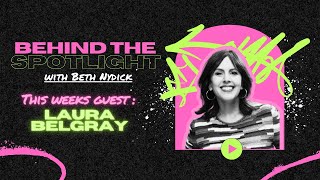
Hey everybody, welcome to this week's episode of Behind the Spotlight. We have a very special guest today. Again, you know I only bring you my very special friends. Today my guest is the one, the only, Laura Belgray. She's going to be here in a second, but I want to tell you, if you don't know Laura, and you should, she's an award-winning copywriter, founding of— founder of Talking Shrimp and author of the national bestseller Tough Titties, which I have read and I wish I had a hard copy, but I read it on my Kindle. It's all about living your best life when you're the effing worst. And because you know I love the F word, Laura is one of my favorites. She's written TV spots for clients like NBC, Fandango, Bravo, and she helps entrepreneurs find words that make buyers go, her word, bananas. Her course with Marie Forleo, The Copy Cure, helps you find your voice and sell your anything. She's also really known for like telling it how it is, having real conversations. We love her rants, we love what she's about, we love her. She says her lazy— her laziness is her secret weapon, and we're gonna ask her all about that. Because what I hear all the time from clients is really about, I don't know what to say, I don't know how to say it, my copy doesn't convert. But when you look at what Laura's copy is, and when you go look at her social media, and I'll tag her in the, in the you know, down below. It's really just her. It's really her realness. You know, I don't love the word authenticity, but she has a real digital personality that's palpable, that you can understand what she's talking about and you can understand where she comes from. And one of the best things I think about Laura, or like what I connect with the most, is Laura was like a— is a city girl. She's a New York City girl, born and raised. And she also, um, worked at MTV She was, she was writing for MTV before it was the MTV. But we have a lot of those same experiences, and reading her book was really so fun because it was all about places that I had seen and I had been. So we're going to bring Laura on right now. There she is. Good morning. How are you?
Good. Yeah, you, you were going to say good morning.
I was.
Good afternoon.
It's afternoon now. I know, I've been, I've been, I've been talking, you know, when you, when I get people on the call, right? And they're in California. I'm like, oh, it's morning there. It's not morning here. I was just reading your, your intro, your bio. And I did mention your lazy, your laziness being your secret weapon. And, you know, we're living in this digital world of like more is better and hustle, hustle, hustle. How does your strategic laziness make you successful as you've been over the last 10 years?
I'm not sure that my laziness makes me successful. I've always wished that I weren't so lazy, but I like to say that I think that there are two kinds of laziness, like there's two kinds of cholesterol, like good cholesterol, bad cholesterol. So there's two good laziness and bad laziness, and I have both. I think that the The bad kind, let's not say bad, but maybe negative, is just resistance. It shows up as laziness, but it's really resistance in disguise and possibly ADHD. Everyone who's read my book tells me I have ADHD. Really? Yes, because I cannot stand to do anything boring. I mean, for many reasons. Like problems with time, etc. But, you know, it's like my husband comes by vacuuming, I can barely be asked to lift my feet. Like, oh God, he's like, I'm so sorry. Like folding laundry, cleaning, anything that I think paperwork cannot do it. And so that all like kind of masquerades as laziness and Avoiding things that I think are going to be hard. But then the good kind of laziness is not locating my self-worth in being busy. I do not find it— it's not a badge of honor to me to be busy, to be— to have a schedule crammed with stuff, to always be working. I actually feel bad about myself if I'm working too hard. And I would— I don't feel bad about myself loafing around. I never feel guilty about relaxing. Never feel guilty about not working unless I have just so much to do that I should be. But it's not, it's not a point of pride for me working hard and working all the time.
Yeah, I totally agree with that because I think that's right. That's like busy work. When you don't work all the time and you still are successful, it's because you're doing the things that are moving the needle. It's you're doing the things that make you happy. You know, I honestly, I read the book and I didn't get that you had ADD from the book. So I don't know. I'd love to know where that came from.
Maybe you don't have it. No, I think it's, it's a lot of people who have it who've been diagnosed, or, um, I don't know, but then we have ADHD coaches coming out of the woodwork these days. And so a lot of them have written to me, be like, have you considered that you have ADHD? Like so many things. And somebody was like, well, you do have ADHD vibes.
Oh, okay. I didn't recognize it. I'll say I, I do have a client that's an ADHD coach. So I'll have to see what it is. And I, you know, I loved reading your book. It took me back to my time in the '90s. And one of the things I really appreciated about the book was how open, honest, and vulnerable you are, which I think for me has always been part of your brand language.
Yeah. Yeah. Yeah. I would say that I'm a bit of a TMI queen. Like, I have people who are like, was it really scary to put all that information about yourself? Like, reveal so much about yourself? In your book, like, so publicly. And it's like, no, um, that doesn't— but like, I don't have a problem being honest. I enjoy it. I enjoy sharing parts of me that, like, most people don't want to share.
Well, it was very evident from everything in the book, and it took me back to my times in the city as well, because I agree with you. I think, and for myself too, sometimes I hide behind like the professional language And I want to be more vulnerable and I want to be more like that, as open and honest as you were. I don't, you know, I don't know if the question is like, how do we get to that since it's so natural for you? But do you have any like tips or hacks to help us out here that aren't as comfortable?
Well, like what helped with my book, and I know you're not, you're not really thinking about like In terms of— you're not talking in terms of writing a book necessarily, but what did help with that was I like viewing my younger self as another character. Like, that's not me. Um, and so there's a little bit of distance there. Like, the parts that are so like, oh my God, um, I can't believe you did that, can't believe you shared that— I'm like, I'm sharing it about somebody else who's not me. But in terms of like you know, current communication, uh, I think you just have to remember that people want— people are drawn to, attracted to realness.
Not pro—
I mean, professionalism in terms of keeping your word and delivering on time and delivering what you promised, that's all great, but professionalism as a front as a way of presenting yourself, um, and in terms of like polished and corporate, nobody's drawn to that. It's not attractive. And I think that if you want to, if you want to attract the people to your business who you would actually enjoy hanging out with in real life, then you have to be publicly the way you are with your friends. Like, you don't have to share everything in your business. Like, in your business life, you don't have to share everything about you, but still, your, your manner, like, just the way that you are, the way that you present yourself, the way that you communicate, should be human, real, and unvarnished.
Oh, I like unvarnished. Like, all spicy— I mean, all shiny. Was there a time in your professional life, like, you know, I know you worked at Viacom and you got more writing jingles, but when you really transitioned into this digital world, was there like an incident or a story you can tell us that when you realized that like you just being you, like your quirks or your, like I always say, like my weirdness or my Jersey-ness actually was like, oh, people really like this. This is going to be something I need to lean into. Or was it like, this is just who Laura always, always been?
Yeah, I don't think there was one particular incident. I just discovered that it was a revelation to people when I started, you know, blogging and writing emails and being like— when I started in the online business world, it was kind of a revelation to people that you could be yourself and drop the corporate speak and write like you talk and be a real person. And I, like, I would hear so often, like, oh my God, you can say that in your business? I'm so inspired. Like, you can write like that in your business? I'm so inspired. So I knew that that was a thing that was just like, that's something that I took for granted in a way that other people did not think was possible. And so I knew it was a thing. Like, I knew, like, this is something, this is This makes my brand.
Yeah, I think, well, you also have such a dry wit, right? Like, like, yeah, you in person, right? Because we've met, you know, we've hung out several times. Like, you, the person I see online is the person I know, but you have such like a quick, you're so smart and you have such a quick wit. I'm thinking about working with clients and, you know, I know you have some amazing things coming up in your business. What is like the major thing that you think people get wrong when they're trying to just be themselves? In copy, in emails, and in captions.
I think nowadays what they get wrong is thinking that ChatGPT can be themselves for them, right? I am—
oh, I saw your rant. Oh yes, go ahead.
Yeah, yeah, I'm on a tear about it because ChatGPT has gotten a lot better at sounding like a person and at being Sassy, quirky, um, like everybody who thinks, oh, I have to be like that person who is sassy and quirky, um, and like salty and has an attitude and has edge and is funny. Like everyone thinks that they have to have that voice in order to be real, and that's a mistake. You have to sound like you in order to be real, not like whoever you think has like nailed it, um, online. And everybody who started using ChatGPT to write for them and is like, oh, it's nailing my voice. It is not nailing your voice. It is a soup of everybody's voices that everybody else wants to imitate. So they feed that stuff in there and are like, I really like this person's style. Can you write something for me in this style? And say like ChatGPT remembers that as and puts it into the database as like, okay, this is irreverent, sassy, snarky, funny, or this is powerful, persuasive, lyrical, whatever it is. And then when it's trying to nail your voice, it'll categorize you and say like, Okay, you're irreverent and, you know, and snarky. I'm gonna just create a soup, like a tepid broth of all the, like, of everything I know, like all the phrases that might fit that. Not yours, not the way you normally talk, but what I know to fit that category. And it'll come up with stuff for you that does not sound like you. And it just makes shit up. And I'm not interested in anybody's story that was written for them by ChatGPT without any of their, or like with very little of their input.
Yeah, it's the input. Like, I totally agree with you, that's soup. But after I saw your rant, I did, I was writing some stuff on chat and I was like, add some Laura Belgray. And it does have, I don't know if you've looked at that, but it, it gives me like, because you have like these one-liners or these two-liners, or like you bring in something so far-fetched into it. And it actually sounded like a little bit like you, but not like— I agree, not actually like you, right?
And did it sound like you?
No, no, it wasn't. It wasn't something. Oh no, it sounded like— I'm like, I'm not as dry as you are. I try and witty as you are.
It's like, be you. Nobody, you know, no one's out there saying like, I like you. I like Beth Nidic because she reminds me sometimes of Laura Belgray. That's not why they like you, for you.
I used it, yeah, I used to be like, you know, uh, write like you're from Jersey. Like, I always like to play with it and see like that kind of stuff. I use it for like, uh, more brainstorming stuff, but I've always liked to write. So I know for people who aren't writers it's difficult, but talking about people who aren't writers, you are the mecca for people who aren't writers to become writers.
Well, thank you. Um, yeah, I love helping people express themselves in their style, finding, you know, find— helping them find their voice, their unique voice. And that doesn't always come from being a fantastic natural writer. It comes from learning to put in, like, what is real, just the concrete details of your everyday life, putting those in make your writing great.
But I like concrete details. I'm going to write it down. Like, that's what— that's, I think, the special sauce that a lot of people miss, is that, that, that specific detail about your life. But that's what I talk about when I'm talking about how to show up in podcasts and how to tell a story. One of the things I always say is like, what's the color of the tile in the bathroom of your high school where you hid from the bullies? Like, I want that kind of detail, right? Right, like I want to know what you're putting. Like, I drink matcha, not coffee, so like I always talk about my matcha lattes or what I put in it, and it's so interesting how many emails I get back like, what brand matcha do you use?
Yes, right, people love the— they love the concrete details of your life. That's what makes the writing— that's what gives it grip.
Oh yeah, he agrees. Yeah, he agrees.
And keeps it from being vague and generic and like everybody else. So like somebody writing a piece of copy, like a life coach writing, you know, I, here's how I, you know, I learned to step into my power. And then just talking about the day, like the day I stepped into my power, I was feeling low, but then finally I, you know, took on a new attitude and felt powerful. Like it's just vague language. Instead of saying, like, I was sitting in an office meeting and, you know, after Chad, you know, raised his hand and reiterated my entire idea that I had just said, I told Chad, that's a great idea and it's mine. Like, you know, just describing the scene, like, you know, in those concrete details with the dialogue or whatever it is. Yeah. In the bathroom. But not just the tiles in the bathroom. Like, instead of saying, I, you know, I was bullied at school and had a terrible middle school experience, say like, every day the same kid, you know, swiped my hat off of my head and tossed it around with the other kids. Um, that's bullying, or whatever, whatever form it took. We want to see it. We want to be able to picture it.
And that's what makes it unique and you and interesting so that we can continue reading it, right?
Right.
Working with my clients, and I hope— I feel like you have the same pushback. People are always like, well, I don't have anything interesting to say. I like— nobody wants to know those details. What's your— like, I know you're not a coach, but what's like your response to when people come up against that in your programs and when people work with you?
Well, if you don't have any— anything interesting to say, why do people like you? Why do they like talking to you. Surely you have friends. I mean, if you truly don't have any friends, or there's nobody who wants to listen to what you have to say, nobody who thinks you're interesting, then you might have a point. Maybe you don't have anything interesting to say. But, um, like, it also doesn't have to be completely original. Like, if you are reading a book and you find it fascinating and like, oh my gosh, this is so good. I wish I had thought of this. I wish I were this smart. Like, I wish this were mine. Then you can talk about it and just say, I wish I'd come up with this. How brilliant is this passage of this book that I'm reading? You all have to read it. Like, having a take on somebody else's work is interesting and totally valid. Yeah. So if you don't have anything interesting to say, I'll bet that what you have to say about something you think is interesting is actually interesting.
That's really eye-opening. That's because I, I was watching— I don't know if you saw Emma, the woman that is the CEO of Skims and Good American. She came out this week, was talking about like work-life balance, and people were really pushing back on her. And I was thinking about this morning, I'm like, what do I have to say about it? And thinking about I can comment on what other people are saying about it and not just what she's saying about it. That's a lot of permission to just have that conversation. Um, but you're so natural at it. Yeah, let's talk a little bit about the— so people who are listening, that of course now they've fallen in love with you because you're like the coolest chick ever, right? I know, always like to be in the room with Laura. What is— what's coming up for you? How can people get involved with you? I know you have some really exciting stuff in the works.
I do. And like, if you're just encountering me, um, experiencing me for the first time, it might be too soon, but I have just, um, announced to my list that I, I'm bringing back, um, after announcing last year that I wasn't bringing it back, I'm bringing back my mastermind, um, slash— I call it a live mentoring party— Shrimp Club. It is an 8-month program that has been going for— it'll now be going into its 8th round. So since like 2019. Yeah. And it's so successful. And I've created like—
I have—
I'm pretty proud of this. I've created an unbelievable community of people and it just grows every year. It grows by 20 people every year and they love each other. And so anyway, I announced that I am gonna open it, like do an early bird pre-opening special next week, which if you join next week, you're going to get a free ticket to something that I'm doing for the very first time, which is a 2-day writing workshop in New York City. And, and that'll be back to back with our Shrimp Club retreat next year, which is always such a hit. Like we have shrimpers who've never missed one, they come back and take the extra spots every the returning ones. And it's so good. It's such a great event. So it's going to be like 3 days of incredible, like, creative work, writing and brainstorming. And like, it's, it's really special. And so I, I'm excited for anyone who takes me up on that. I'm only offering 8 seats. For, you know, 8 free tickets to that one for people who join Shrimp Club right now. But, um, you know, hit me up to get on my list. Uh, you might not get those emails right away if you get on my list now, so also write to me, like write back to the first email you get and say I want in. Or you could go to the Shrimp Club page, which is talkingshrimp.com Shrimp Club, all one word, and, um, put yourself on the waitlist there so I make sure to hit you with the info.
Oh, that's so— and congratulations, and so exciting to bring an old program back that works for you. So everyone that's listening, if you want to uplevel your copy and really learn how to actually connect with your audience so they can convert into actual clients, Shrimp Club is the place for you. I have so many friends that have been in it, so many friends that I've seen skyrocket. And I can't wait to open their emails. And I'm always so impressed with how they— I know I need to come into it— how they really talk about themselves and what they do and like what their interests are and, you know, talk about pop culture and how do you really connect pop culture or what you're like Bravo into, you know, selling branding. I just think it's, it's just amazing. And I always enjoy being with you. Before we get off, who is the person— like, if someone's listening— not if someone's listening, people are listening and they're like, I'm in on Laura, this sounds really great. What— who's the ideal person to come into your program? Where are they and what are they about?
Um, ideally they have a business, they understand online business, but it's not absolutely necessary. If you— like, it could be somebody who's, uh, an author or aspiring author and has a big creative project typically writing, that they want to get off the ground. We talk a lot about, a lot about business, but also a lot about writing. And this is somebody who, who really wants to get paid to be themselves through, by making their business or creative work a full expression of their personality and does not want to hide behind ChatGPT. I don't mind you using it for brainstorming, but I Like, be warned, if you bring that stuff into a hot seat call, I'm going to call it out and say, this sounds a bit ChatGPT. I'm not going to shame you for using it, but I, I believe in writing that ChatGPT could never write. So that, and that's what I encourage. And it's, and everybody has it in them. So I love bringing that out. So that if that is of interest to you, getting paid to be yourself, making your business and work a full expression of your personality and getting paid for it, um, Shrimp Club. And you like my vibe, Shrimp Club is for you.
So if you want the truth, you want to move, you want to actually move in your business, and you want to get paid for being you, Laura's Shrimp Club and Laura's Your Gal. Laura, thank you so much for coming on Behind the Spotlight today. I always adore you and being with you, and I got to learn a little bit more about your laziness and how you're— and you're, you know, how you really Use that for good. Please keep doing content from your couch. It's my favorite. A lot of other people's favorite too. And I just want to wish you a good day. And thanks so much. I'll see you soon.
Thank you. Thanks, everyone. Bye.
More from Beth
"How to Make $10K From Every Podcast Appearance | Replay Available Until November 24th!"