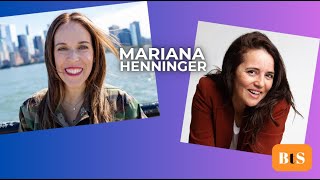
Behind The Spotlight Podcast: Mariana Henninger
In this episode of Visibility with Beth Nydick, host Beth welcomes author and book coach Camille Campins Adams to discuss how writers can not only finish a book but also turn it into a powerful marketing tool. Camille shares her background—a business degree in marketing, a master’s in creative writing, and two years of book‑coaching experience—and explains her two main service offerings: high‑ticket one‑on‑one coaching and the more affordable "Write With Me" monthly membership, which includes weekly group coaching, accountability calls, and peer feedback. The conversation moves through the essential steps of writing a book: clarifying the type of book (business, how‑to, memoir), defining a clear argument or point, and creating a solid manuscript blueprint before drafting. Camille emphasizes the importance of audience‑centric messaging, turning personal stories into relatable (or empathetic) narratives that serve the reader’s needs. They discuss marketing tactics such as media appearances, giving the book away for free to drive program sales, and the realities of bestseller lists—how Amazon categories and keywords can produce a bestseller more easily than the New York Times list, which relies heavily on sales volume and industry connections. Throughout, both hosts stress that a book should be written to be worth reading, not merely to generate sales, and that the ultimate goal is to build a recognizable personal brand. The episode concludes with details on how listeners can join Camille’s Write With Me program at a founding‑member price.
Chapters
Good morning and welcome to another episode of Visibility with Beth Nidic. Today I'm bringing you somebody special, my friend Camille, that not only helps you write a book but actually knows how to do the marketing and how to get it out there so that you can become the leader that you want to be. She also has this amazing new program that we're gonna have— be gangbusters. Let me bring her up into the show. There, there she is.
Ah, I'm trying to get this in so that it holds me up. Can you guys see me okay? Do I look like a weird head?
I love the headband.
Thank you, my daughter picked it out. My 3-year-old was like, Mommy, we need to buy these sparkles, that's the best. I know, I love it. Hi, Beth, I'm so excited to see you face to face again. It's been like all of 2 weeks. I know, I know.
I was just telling our audience how, um, if you want to write a book, Camille's the one to work with. But I know you have this new program starting. Yeah, about it.
Oh my gosh, I would love to. So yes, I have been a book coach now for 2 years. And I have my, my business degree in marketing, my undergrad, and then I went and got my master's in creative writing. So I've always loved blending marketing and writing together. But if I'm being really honest and authentic, like we've talked about, I thrive in the writing process. I thrive in the creative process. You know, Beth, that I am a strong believer in our Creator, and I feel that we can be divinely inspired if we actually allow ourselves to enjoy the process, right? We're so fixated on, you know, outcome, outcome, outcome, sometimes it muddles the divine inspiration that we can receive. Hey, did you wave at me? The divine inspiration that we can receive when we actually take a step back and we give ourselves the freedom to almost just be and enjoy the journey. And so I started Write With Me, because to work with me one-on-one for book coaching, it is a a mid-four-figure investment. So it's several thousands of dollars to work with me one-on-one. We would work together very, very closely. I give you feedback on everything. I even have other editors on my team that also give you feedback. So we're doing a lot of the developmental editing. So for somebody who really has a deadline and they want to get their book done and they want that one-on-one support and feedback and accountability, one-on-one book coaching is a great option. But for those who Excuse me, I have like something in my throat. I think everybody in my house is getting sick. But for those who want to have a more economical investment, right? Like something around $100, $150 a month and still get access to me through group coaching, we meet every single week on Thursdays, plus we have 3 silent writing. I call them accountability calls, but they're silent writing calls. So we have it on the calendar where we get together and we write. And so if you are leaving comments, I can't see it because I have my little clip.
Oh, we got a hello, Capri. We have a couple other people joining. I think it's so important to understand, like, because every— you know, I talk to a lot of people. They either want a book, a stage, or a TV show. And the question I always ask them is, like, well, what's the book? What do they want to write about? And it's that desire to want to do know the overall message, but I think it's really hard for people to sit down and just write a book without any other intervention from other people's ideas or feedback. But why do you think it's so important for us digital people to write a book?
Well, honestly, I think we all have a story, and I've said this always from the beginning, like, we all have a story. We are all overcomers, and I'm actually in the middle of creating this special program called Well, actually, it hasn't been announced, so let me seal my mouth. I'm partnering with some, with a big organization to create a very unique program. And one of the things that I'm, as I'm writing this, I was working on it yesterday, I realized that we are all overcomers. We have all overcome something, and that is what our story is. That is our mission. Like, the things that we have overcome are the mission that we have on earth. To spread the message to help other people overcome their adversity or whatever challenge they're up against. And so I feel that it is our calling and it is our duty to help those who haven't overcome what we've overcome and kind of either give them the framework, which is a very standard nonfiction book. Here's the framework, this is how I did it. Or you can write a memoir, personal narrative story that shows the hope, right? It shows your hero or heroine's journey and shows someone that it is possible to get to the other side, that there is there is hope still for your challenge or trial or whatever it is you're going through. There is hope. And how— what a wonderful thing to, to be able to read a story and say, you know what, they went through what I went through. I am not alone. And that's what happened with Marsha. Like, you know, my client Marsha, we've talked about her. She lost her mother during COVID Her mother had been very ill for a long time with Alzheimer's and dementia. And she wanted to write a memoir. She didn't have a business. She didn't necessarily want to go and like start a whole program on how to overcome grief, but she wanted to, you know, basically honor her mother and share her mother's story. And she went on TV, she went on radio, you know, she was able to book all of that stuff. But what was so incredible were the messages she was receiving from other people saying, "Wow, like I went through something just like this with my mother or my loved one, and thank you so much for shining light on this, for reminding me that I'm not alone in this journey and that there are other people going through the same thing." I mean, there's a lot of reasons why you would want to write a book, but all of these are included in that.
That's a really powerful one because I have a book in me. I've talked about it a little bit. I've thought about it a little bit. And I'm sure other people watching are the same way. Is it a good idea?
Do I do—
like, if somebody actually wanted to see if that's what they wanted to do next, how would they go about even just starting?
Oh my gosh, I get this question all the time. I would say that the biggest hangup is like, oh my gosh, I know I want to write a book. I really want to write a book, but I have no idea how to get started. So there are a lot of things I walk my clients through at the very, very beginning. One, you have to get really clear on what is the type of book that you want to write. Do you want to write a business book? Do you want to write something that is more of a how-to, a self-help, or do you really want to tell your story? Sometimes people come to me thinking they want one, but really what they need to do is write the other. And so that's something that can always change along the way. But if you can get at least clear at the beginning on what type of book you want to write, then that helps a lot. And then at that point, you need to understand what is the point of the book? Like, really, like, what's the point? I'm not just going to write to write. Like, you have to have a point. You have to make an argument. At the crux of every book, there is some sort of argument, an argument for continuing to move past these challenges, continue— like, it's this universal truth, this universal thing that we're making an argument for. And so Understanding that would be huge, right? Because now when you go to sell the book, you can tell people like, well, this is the point. This is why I should care. Because nobody cares just about your story. They want to know how it affects them, right?
How it affects the audience. And that's how you sell the book. It sounds like that's how you write the book. And then on my side, that's how you get visibility for your book. Because it's great to write a book, but if nobody knows about it and you don't sell any copies—
Yeah, exactly.
But I'm sure you can come across people that are like, I'm 3/4 way through. You know, I hear that from people all the time too. Well, I started my book. Do you have a secret hack you can give us to help people finish the book?
Oh boy. If somebody comes to me, I'm gonna be really honest with you. If somebody comes to me and they have 3/4 of their book done, but they haven't done the foundational work, we actually go back to the beginning and we do the foundational work because you could be writing haphazardly. And listen, I did this, there's no shade. I did this in grad school. They didn't teach us how to plan a book and plan for our thesis. They were like, hey, you need to write 10,000 words this semester. Okay. At the end of this, you have to have a completed work. Like I had to have, I think my thesis was like 35,000 words, which is enough for a book, not enough for my memoir. My memoir will probably be well over 50,000 when it's all said and done. But I just remember like at the end of 4 years being like, this is not a work. Like, this is not one work. This is like a lot of essays. So I ended up turning my thesis in as a collection of essays. And thank God I had the opportunity that you could do such a thing. But that is what tends to happen if you don't do the planning at the beginning, is you don't have a cohesive narrative. You have to have a narrative arc, especially in memoir. But you have to have like these main bullets that you're going to hit, right? These like goalposts, as we say. So you have to do that pre-work to be super clear on it. So like, let's say you, like even what I did in grad school, I'm actually reusing a lot of that for the memoir that I'm working on now. So what I'm doing is I actually went back, I replanned out what the book looks like. I figured out what scenes I need to have in the book. And then I'm going digging for what I've already written. What do I already have versus what do I have to write? And then I start reorganizing it from there. So you have to have the foundation. You can't build a house without architectural blueprints. So I will go back and say, listen, if you were just writing haphazardly, I'm sorry, you need some sort of blueprint that you're going to follow. Otherwise you're going to really hate life at the end of 50,000 words because then you're like, how do I organize this?
Do people come to you with mostly just an idea or they have some, some stuff written? Like what, you know, what's the usual? I don't want to say the normal. Nothing's normal.
Yeah, no, more often than not. More often than not, people come to me with an idea, or they have, they have an inkling, they have a calling, they have this desire to write, but they aren't really clear on exactly what it is, or how to put it together, if it makes sense, if anybody's going to care. I get that a lot. "Is anybody gonna care?" Like, well, yes. Okay, first of all, your story matters, and people will care, but it's a messaging thing. Like, how are we gonna position it? How are we gonna message it? Just like, you know, when you're pitching to producers, I'm not gonna say, hey, I'm super cool, check out my life, I wanna come talk about my book. You're gonna say, no, what's in it for the audience? Why are people gonna wanna tune in? So it's shifting that perspective to make it relatable and to make it relevant to the people on the other side. And by the way, relatable is a bad word in grad school. They were like, don't ever use the word relatable because most people can't relate to the exact thing, but they can empathize. You can teach them. Or you can, you can pull on their heartstrings and you can help them empathize and see your perspective and they will be able to see parallels, right, between your life and their life, even if it's not exactly the same circumstance.
That totally makes sense. And invisibility too. And when I do it, I talk about this all the time. It's not about you. It's not about your story. It's about how your audience, the audience is going to integrate into that story. So for a book, are they going to tell their friends? Do a review, buy the book, buy your next one, go follow you on everything. Like, what's in it for them? We get so egocentric because when we're creating our sales pages or our copy, you know, we're thinking about what the audience needs to hear to do so versus what the audience needs to hear to feel something.
I love—
we're on the same page on that because if you don't feel the book, you know, think about— I've been in a bookstore, I pick up a book, I'm like, well, you know, I'm— but I'm a cover shopper.
Packaging.
So unless it's an inviting cover, then I'm moving.
You won't buy it. I just, I just don't. My shelf is a hot mess now because I'm constantly pulling books out for clients. I'm like, check this book out, check this book. So then I think it doesn't always end up in the same spot. But you see the color coded, like, you know, you have to think about the COVID The COVID is important. It is a big part of what sells your book, believe it or not. People will buy a pretty book just to put it on their bookshelf. And it's hard to say that as the person who appreciates the words that are on the inside, but we have to be realistic. The other thing too is you do want to make sure that your argument is something that's going to make your book worth reading.
Right?
I always used to say that, and it might still be on my Camille Campins Adams website. I have a camillecampinsadams.com website that I haven't really updated in a little bit. But in there it's like, I want to help you write a book worth reading. Like, don't just write a book to write a book. Write a book that people are going to want to read. Do you know that most people, I think the average book sells maybe 250 copies, and most of those copies are being purchased by friends and family. Don't be that person that is desperate for book sales that you're like pounding down the door of all of the people that you know in your inner circle and telling them, go buy my book, please. Like this is not a charity. This is not like a favor that they have to do for you. If your book is compelling and your book is well written, they're going to want to read it because it, it's going to be helpful for them. And if it's not for them, don't force them to buy the book. If they want to support you, great. But yeah, I mean, I've definitely seen that a lot. With you getting on TV, getting on radio, your book is going to sell. And by the way, I'm going to tell you a secret. You know, like getting people on radio, give your book away for free. Offer to give your book away because if you have a business or you have something else that will lead people into your world, right? Like a program, a high-ticket program, a membership, whatever the case is, you're gonna make so much more money selling that than you are selling a book for $4 or $5. Okay? So yeah, don't be afraid to give the book away.
I'm with you. There's this speaker, his name is Larry Wingate. I met a couple years ago before COVID And I was talking to him about book sales because he has several books and he's like, Beth, I make more money from the back of the room selling my book after I do a talk than anything else I do. He doesn't do programs. I see him now starting to do other stuff and, and talking to authors that it's like, it's a, it's a marketing tool depending on how you want to use it, right? Marsha was different. She didn't have this business to back it up. It's really a marketing tool for somebody to be in on what you're doing. But I get this from people too. Well, I want a New York Times bestseller. I'm like, do you know how you get a New York Times bestseller? They're like, no.
It's a lot harder than you think.
And much more expensive than you think, too. But how do you feel about the awards? You know, having an international Amazon bestseller, or Amazon, or being on a bookshop list. Like, how important is that for your authors and for you?
I mean, I think honestly, who doesn't want to say that they're a bestseller? I wouldn't, I wouldn't put out a book with that as my goal personally. And I do help people get to bestseller. Amazon is a lot easier to get to bestseller than you would think. A lot of it is a categories game. It's a keyword game. You can run ads. Amazon bestsellers, they might be getting harder now because so many people are coming on and posting through KDP. But it, it's really not that hard if you pick the right categories to say, hey, I'm an Amazon bestseller. So it doesn't really have as much weight for people who know. Like, for people who don't know, it's like, oh, that's cool, you're a bestseller. For people who know, you're kind of like, okay, everyone's getting a trophy today. You know? It's kind of like the world we live in. It's like, oh, a trophy for everyone. Well, it's not that hard. To get New York Times bestseller, it's a political game too. It's who you know. Like, the book that I give an example of, Educated, You know, you get books that are endorsed by Reese Witherspoon, endorsed by Oprah, you get it into the right hands, you're gonna get a bestseller, a New York Times bestseller. It's a numbers game, right? You're gonna have to sell over 6,000 copies, in some cases more, to get on those lists. Can you sell 6,000 copies? It's a lot harder than it seems. It's also a lot easier than it seems, depending on who you are, what you're doing, and the marketing strategies, right? But getting on TV and radio will help you sell books, but it's not gonna sell you 6,000 copies, right? It just isn't. It's a PR strategy. It's not as much a marketing sales strategy. So I have a love-hate relationship with the bestseller list. I do think that a lot of it is who you know, especially the New York Times list. So I don't even strive for that one. If you're famous, you have a much better chance. If you're, if you're a nobody, it's an uphill climb for sure.
You're just a person, right?
Yeah. One of us.
All of their copies so that they could— like years and years and years ago— so they could get on that, you know, be qualified for that list. Um, and yeah, you know, Reese Witherspoon picks up your book, not only are you going to be a bestseller, you'll probably be a movie.
So you'll be a little pretty. Yeah, exactly. And I think that they've changed it a little bit where you— all those sales can't come from one person, they have to come from various— like some of it has to be Amazon, some of it has to be Barnes Noble. It has to be from like various book sources and outlets. So there's just, I don't know, there's just a lot to it that I don't think is worth the stress, right? Like the stress of like, oh my gosh, you're putting so much pressure. You have a week to sell 6,000 copies. And if you pre-sell them, if you pre-sell, it helps you. But then the problem with that is with Amazon, they only do day-to-day sales. So like You want to hit Amazon bestseller, you need to have a lot of sales on one day. So it's like they're all different, they're all competing, and it's, yeah, it's not the ultimate goal for me anyway.
The ultimate goal is to be known for what you're doing, right? I always ask my clients, I'm like a new cohort for the Fame Lab, and it's like, what do you want to be known for? Do you want to be known as an author? Do you want to be known as a speaker? But what is that? Do you want to be known? Yeah, I want to be known for talent, for getting people to be more bold in their life than they are right now, right? What is that thing? And then connecting all your assets to it. That's how you have a successful business or successful life. You could have a New York Times bestseller and not go anywhere either, and it could ruin your life. I think people think these things you can put in the air and it, it'll make a great birthday cake. Actually, it's poison. So I appreciate you as well. Yeah, before we go, tell us a little bit more about because I know that I'm like, okay, now I want to write a book. And I know other people watching are going to feel the same. How can we get in touch with you? You know, when is the Work With Me starting?
Give me all the details. So you can DM me if you want to know more about Write With Me. Write With Me is a, it's a monthly membership. I actually just launched it recently, so I still have a founding member price. So if you want to come in early, it's $119 a month for founding member. And the reason it's at that price point is because It is a smaller group. I don't want it to be this like, you know, 40 or 4,000 person membership. I want it to be smaller. 100 to 150 people max is really where I'm going with it. But you get a lot of me time. So like every Thursday currently we're meeting for group coaching and I will give you feedback. And the idea is that we also support each other in the group. So if you want to share your writing, you can have other people in the community give you feedback because that was really beneficial for me. In grad school, we would do workshopping sessions where we would get like a group of 5 or 7, right, 5 to 7 writers. We would all exchange each other's work and we would actually give each other peer feedback, which is super cool. So my goal is to be able to do more of that. And then we're holding you accountable. So you have access to me. You can come Thursdays to the Ask Me Anything Q&A sessions. Anything that you might be stuck on, um, I'm there for it. So Write With Me, you can always just send me a DM. I've been posting about it also more recently, and then the price will eventually go up to $144 a month. I just don't— I haven't been called yet to raise it. So now's the time to get in at a cheaper price. I hate to use the word cheap, but it's because it's so valuable. But you know what I mean, a lower price anyway.
So if you're interested in writing a book, go start with Camille. All of Camille's information will be in the caption. Camille, thank you so much for coming on today. I'm so happy to see your face. And I'll talk to you. Bye, everybody.
More from Beth
"How to Make $10K From Every Podcast Appearance | Replay Available Until November 24th!"