Behind The Spotlight: Sage Polaris
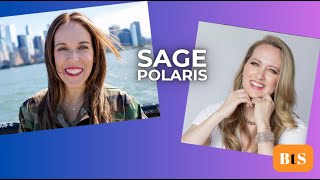
Copywriter Sage Polaris breaks down her "4 buyer types" framework using Simpsons characters to improve email and landing page copy. She shares how shifting a client's messaging to feature the CEO personally generated 133k webinar sign-ups and $1.25M in sales, then outlines the four biggest marketing mistakes she sees in 2024.
Chapters
Welcome back to the show. I am so excited that you're here today. We're going to talk all about copywriting, doing things that are your passions, and understanding that sometimes mistakes and misunderstandings are actually the best thing that could ever happen to you. You know, we always talk here about visibility and what it actually takes to run a business. I love bringing on my friends that not only have used visibility to build their Here we go. Because I know that that's what I use to keep my business going, and I teach all of you all the time to have you keep your business as well. And here comes Sage. Hi, Sage! Hello! Good morning!
Good morning! Thank you for having me.
Thank you for waking up early in California.
And, uh, it's all good. I am ready to go and excited for the day.
That's great. Did you start your day with Muay Thai today? Because I know that's something that you do.
No Muay Thai in the morning. I don't know how people start their day with that. But yes, I do love going. I like to go on the weekends when I can take a long nap afterwards. How do you—
how do you start your day? Do you have like a morning ritual that you do every morning?
Oh, so I try to go for a walk in the morning. And this morning I decided to hang out in my garden because I knew I needed to be back for this. So I just planted some sunflowers and some wildflowers just this morning, and it was so fun.
I have to come visit you because that's something that I would never do. I would never— I'm not a big gardener. I like to hike. I'm with you on the hiking and being outside and being in nature. But I've never been a gardener. I haven't learned how to love it. So maybe you could teach me how to love it.
Yes.
That would be nice.
I have the advantage of being in California, so everybody seems like they're a great gardener here because weather is forgiving. So anyways, I saw Capri.
Hi, Capri! I love that. I love that so much because, uh, I'm gonna come— I'll come enjoy your flowers. But I love also that you do a martial art, you know. I mean, we've actually— we've talked a lot, but we never had this conversation. I actually grew up doing judo. And I got to a blue belt in judo. And then my youngest does, uh, jiu-jitsu now. My husband did aikido, but now we're a jiu-jitsu family. And he is on his purple belt because, right, because you have to be 16 to get your blue belt. Yeah, he's on his purple belt and been, and been doing stuff. But tell us a little bit more, like, what attracted you and how, why you're doing it. Why you're practicing it. I know the right words. Why you continue to practice it even after being a mom. Like I said, you need a nap afterwards. It is, it is tiring.
Yes. So I found Muay Thai. Well, I started with boxing during the pandemic. I just honestly, being a mom, I had some inner rage going on because it was a lot. You know, that year that the pandemic started, I took 6 months off. I was homeschooling my kids and I was running the business still. And I gave myself a lot of space. And when I had more space meant I started more hobbies. So I started gardening at that time, like taking a real interest in it. I started looking for activities that we could do at the park. So I hired someone privately to teach us boxing. I hired someone to teach us yoga. So that we wouldn't break any rules but could still be active because I definitely noticed all of our bodies changing because of the lack of activity. And so I, you know, I'm here in LA. It was a very intense time in the city. Like things were very much locked down. I know everyone had a slightly different experience, but my husband was an essential worker. So everything really fell in my lap. And I had a hard time with it. And so I needed that activity. So boxing was the beginning of it. And then as things started to open up, I found a Muay Thai gym that's like 5 minutes away from my house and just really fell in love with the activity of it. Like it's a high intensity workout and it's a lot like dancing. And, um, yeah, to me, like my coach is always saying rhythm is your friend, right? Like you need to get the rhythm of the movement. Yes. But then also I will say like the high impact piece of it, like it's both kicking and hitting with your hands. There's like nothing like that adrenaline rush that you get from sparring with someone because you are all the way on and you cannot, your mind cannot stray because if you don't, the moment your mind strays, they see an opening and they'll hit you in the head or they'll hit you in the side or they'll kick you in your lower legs. And so you have to be all in. And I love that. I just love that feeling of being nowhere else but on that mat, getting ready to hit or be hit.
I totally understand that. Having, having boys and doing martial arts and having around the whole life, it's that also that's time, that it's that time away because what you do is so creative. Being a copywriter and teaching copy is so creative. And as running a business, right? Not— it's like running your household, right? You have multiple children, multiple streams of income, multiple sides of your business. I know today I get to be in your group and see you do your magic live. I love when you have hot seats because you get to— but I'd love, you know, I'd love to learn more about what I think is really special and what actually attracted me to meeting you was the 4 types of buyers. Yeah, because I know what kind of buyer I am, but I had a really hard time identifying and understand how to create copy around the other types of buyers. So when you talk about your different— your, your—
I love it.
Just talk about it because I don't even want— I don't want to even preview it. Just talk about it.
Thank you. Yeah, I mean, so when I'm not on the Muay Thai mat, yes, I am running a copywriting business for the last 12 years.
That's the clip right there. That's, that's the, that's the audio clip right there.
I love it. Yeah. So when I'm running the copywriting business, I came up with this framework where I started to realize like there's so many assessments out there for you to find out like more about your personality, right? Like some people like Human Design, some people like Enneagram. To me, they're like different flavors of the same ice cream. So it's like there's all this information you can find out about your personality. But when I saw DISC, which is one of the personality quizzes, I immediately knew that that didn't just apply to your personality. It also applies to how you make buying decisions. And so I took that formula of DISC and I kind of switched it up and I started to teach it through the lens of the 4 Simpsons characters. Because, yeah, it's so fun. And so these 4 Simpsons characters all make buying decisions differently. Right. And so I wanted people to like have a quick way to understand, like you have these 4 buyer types. When you understand them, you'll realize that when you're writing your copy for the words on your website or the words on a landing page or an email, really anything that you write, you're persuading people, right, to make a decision. And when you're persuading them, you're often leaving out these 4 buyer types because you probably think most people buy the way you want to buy. Right. And so you just tailor your content to those specific people. So when you start to understand that there's actually probably 3 other buyer types that you're not even considering and through the lens of The Simpsons characters, understand how to appeal to them, then your copy lands better. And so it's a really fun way of connecting with people, but also realizing like you can have a good time with this. And when you understand these characters, it makes it way more fun.
It definitely— and it makes it more— I understand it better. And then one of the reasons I joined your program, um, was because I was like, okay, now not only did I understand you, but I understood like how your brain works. So I knew I could understand learning from you and getting your templates and getting all, you know, all the, uh, all the examples. I was like, oh, her brain works in this the same way my brain works. Because there's, right, there's a million copywriters out there. I picked you because I understood you and you my brain understood you. I think sometimes we pick people— you know, we pick people because we like them. But it's like, I don't think we always think about, am I going to be able to transfer her genius into what I need to be doing? And that's probably why we're friends too. I understand you. We understand each other.
I love that.
Very true. Very true. One of the things, though, I didn't know about you— and because you filled out the information for our interview— was that you had a misunderstanding that resulted in $1.25 million in sales.
Sales?
I don't know this story. Yeah, I'm like, please tell it more often on podcasts when you're out in visibility world. Just do me a favor. But tell us a little bit about that.
I so appreciate you saying that. And yeah, I agree. I try to tell this story more, but I feel like it needs to be told again and again. And maybe that's something for everybody to take away from this, because I know, Beth, you do an incredible job teaching people about how to be visible. And one of the things I think we get caught up on is like, well, I've told that story before. I don't need to tell it again. And the truth is like, you're constantly interacting with new people. And it also, I found even if someone's heard this story about me supporting a client making $1.25 million in a single launch together, our first launch together, they still are like, you know, it's a song I've heard before, but I love hearing this song on repeat.
I get that all the time. They're like, please please tell the Dr. Oz story again, or I'll get DMs, I love that story. My last webinar, I told the story and in the DMs they were like, that's the best story, I love when you tell it.
Yeah.
And it was like, she's, that person had heard it a million times, not a million, a few times, but she wanted to hear it again. So yeah, tell us the story. That's amazing. Wait, first time client, one launch. Okay, we set the stage. Tell us the story.
So it was kind of wild because that client who I worked with, I had gone to San Diego, I was speaking at a mastermind. It Rick Mulready's, and he had invited me to be in this room with about 30 people who were in his mastermind. He didn't mention the other speakers. He's just like, can you come teach about copy? I'm like, yeah, sure. I'd love to be there. I was honored because I had helped him with his sales page for his business. And as I was going down there, I looked at the landing page for the event and I was like, oh, it's me, Pat Flynn, Amy Porterfield. Like all these legends were also speaking in the marketing space and just You know, Sage Folaris is coming.
You belong there 100%.
It was a big leap for me, and I knew that that was gonna be like a big integral piece of my business. So I went, I spoke, I taught this same training that we started to talk about, the color-coded copy system that relates to The Simpsons. And while I was there, someone was in the crowd and he was changing his Facebook ads based on what I was teaching, and he was using the framework for the copy for his Facebook ad, he immediately started to get a better cost per lead. So when I came back to LA, he contacted me and he said, hey, like, we're already seeing better results from what you taught. Would you come do a whole campaign with us? And I was like, yeah, that would be amazing. I loved it. So anyways, when I got inside their business, I realized there was a misunderstanding on their part about what was possible with their brand. So they had 1.5 million followers on Facebook, but it was not— and like a huge email list. I think they had 60,000 people on their email list. They were doing all kinds of incredible things. But the misunderstanding that they had was that they should always feature the brand, the corporate name of the brand, rather than the person who had the 1.5 million followers on Facebook was the CEO of the company. And I said, you need to pivot all your language to focus on him speaking directly to the audience when you're writing emails, when you're showing up on your platforms, instead of focusing on the brand, the brand's company name. So then it became a much more personal interaction, or what felt personal to the audience between him and the audience. They had never done a webinar before. So we came up with their webinar topic and used the same system that we've been mentioning, the color-coded copy system, to optimize all their pages. We got 133,000 people registered for the webinar.
Holy crap.
Which was an awesome problem to have. Yeah. And then after that, you know, on an $11 per month membership, we, we offered that at the end of the webinar and they had sold $1.25 million in that launch. So it was pretty amazing, but it was like this, they were so close, right? Like it was a small shift. And I think that's often what it is in any business that I see is like there's these little tweaks you make along the way that make the biggest difference. So a couple of things obviously that they had, and every launch is different, is that they had an existing audience, right? So that was amazing to see. Like, if we just made some pivots towards that specific audience, how could we get bigger results? And they also, you know, they had a great team in place that could support that size of a launch. But before you have all those things, like, even when you're looking at your different pages and putting a button higher up on the page for those people who are faster decision makers in the world that we live in today, those are little tweaks that you can make that, you know, regardless of your audience size, if you made that, you would see a different result, right? So those were the types of things that I was supporting them in.
That's one of the things you told me to put on my page. So when I put it out next Wednesday, we'll see what happens. And that's— I can just imagine you're like, oh, it should be about you, not the brand. You were like, a throwaway idea, right? But it was such the idea that it's— for me, it's indicative, like, you can't see what you're doing. You need somebody like Sage or Ivy in your business to help them. So it's just like, for me, it's like a blaring mistake. You're so sweet. You're like, it's a misunderstanding. But I think that's like a huge blaring mistake. But what do you see are like maybe the 4 biggest mistakes that you see people making in marketing this year?
Yeah. I mean, we opened with it and, um, that is to say that you know, well, and by the way, whether or not you're watching the replay, I would love to hear like, what's your takeaway from this conversation? Cause I'm going to share these mistakes and I love hearing, um, what's like the thing that you're going to try in your own business. So, or you can just say hi in the comments.
I've had a couple saying hi to you and I, we have Gurpreet has been saying hi, Sage. Yeah. And Megan, Maggie, Christy.
Yeah, it's so good. Okay, so getting back to these mistakes I see people making, I kind of hinted towards one, but the biggest mistake I see people make is assume that other people buy the way that they buy. So don't make that mistake. Like, start to understand these different buyer types. Um, the other mistake that I really see people miss on is growing their audience in between making offers. So if you've put something out before, and my heart goes out to you if, you know, it didn't work out, you didn't get the result that you wanted, um, and what are you doing to actively grow your audience between your next offer, right? So, and I'm not like, um, in terms of marketing channels, I have several that I use, so I'm not saying it has to be your email list or it has to be your Instagram. What I will say about that though is like, go where you are strongest and go grow that audience first because it can get a bit distracting. And maybe that leads to the third mistake is like, we as marketers or online business owners sometimes feel like we have to be all the places at once, right? Like I have to grow a YouTube channel, I have to have an Instagram, I have to have a Facebook. Plus my email list, you know, all these things. And yeah, it's a lot. And I'll even say like, or I have to be on social, but I'm mostly a service provider. And so you forget to continue to foster your referral network, which is another marketing channel, right? Like we love to learn all these other splashy places, but sometimes it's just how many referral partners do you need to talk to for the year? And that's your main marketing channel. And you don't even have to have an email list necessarily for that. Right. Yeah. So I think the third mistake I see people make is they get distracted and instead of trying to do strategies that works for other people, can you go internally and just look at if you have it the last year of historical data in your business and figure out where did I show up last year that brought me the most sales? So can I go back to that place and continue to foster those things first? And then the way I think about it is like maybe spend 10% of your time on a new channel that you haven't done before, but put 90% of your focus on the channels that, you know, work. So I really find that that will get you really far in growing your audience for your next offer. Right.
Oh yeah.
Yeah, it's, it's a big one. And I, I get that this online space is so distracting and we see people doing amazing things in all these different areas. I will say, and I feel like this is another thing too, I guess this is the fourth and final mistake that I think is important to consider in your business is not going back and looking at what's working and instead like constantly creating new things, thinking that you know, there was something wrong with your existing, whatever you have in your business. But that might not be true. And you won't know until you go back and look at the numbers from previously in your business. Now, if you don't have any specific numbers to look at in your business, that's fine. Um, but if you're just getting started, let's say in your business, go back and talk to your friends about what they think your biggest strength is. And how can you leverage that to create a profitable business from it, right? Like there's a couple different ways to look at this. Because I've been in business for 12 years, I have lots of data to go back and look at. Yeah, it's kind of ridiculous. I love it. I geek out on it, but I know it's not everyone's forte. So it's totally fine if you just kinda, you know, go talk to people in your circle or even talk to previous clients and say like, what did you love about my work? So that you know to focus on that. And then maybe that turns into a referral opportunity. So there's lots of ways to go back and look at what's working in your business and then to repeat that. Right. And you can add little extra things that are new, but just don't stray too far away from what I call your profit sweet spots, the things that you know are working the best. Yeah. Yeah.
No, it's a great reminder because I think, right, we get distracted. I've been having this conversation a lot on these, on these, on the show that like I don't really scroll as much as I used to because the scrolling would make me feel like, even though I know what I'm doing and what I'm doing is working, I'd be like, wait, maybe I don't have the right people in place and maybe I'm not doing the right thing because it, you know, the hooks are the hooks. They get in your brain, they make you crazy, but they make me crazy. But I was like, I can't, like, I just, I had to pause some people because their marketing just talks So whatever fear I have, or whatever insecurity I have, or whatever, like, it might not be working. But for me, I know how I'm doing this launch so different than I did the last launch. This launch, I'm doing this. I have a lot of podcasts that have come out. I'm doing a lot more TV. The last launch, I didn't do a lot of my visibility activities that I always do. And the launch was really different.
Yeah.
But the referral thing, I'd love to talk about that because that's what I'm hearing is a lot of people's focus. And I feel like people are kind of going away from maybe being in these huge programs to really following people like you and I in close proximity, because it's about creating those relationships within that proximity. Like, I know the people in your group and in my group like each other, right? Because we like each other. And it's, yeah, find those people in the places that you already are, either paid for or not paid for, to be like, okay, we're going to have our little group and these are the people we're going to champion, we're going to work with, we're going to refer to. But having that for, for the year instead of like a one-off thing, I think it's a different conversation. And I haven't had that conversation or seen that conversation lately. Yeah.
Yeah. I think, you know, This is how I, in my brain, the strategic way that I look at collaborations and referral partnerships. So I have 3 main revenue streams and each collaboration referral opportunity for each revenue stream is slightly different. So for my private client work, um, I am a part of a networking group where we connect each other with referral partners and that's like the whole gist of that group that I'm in. And it's done over calls and I know how many calls I need to do per month to get the referrals I need for my private copy business. Now I will say I also have the benefit of having a copy template membership, which Beth is a part of, and that feeds into having private client work as well. So I'm kind of feeding two birds with one seed there.
But I don't—
I know to not rely on one or the other solely. So those are the two main referral opportunities for my private copy work is talking in this networking group that I pay monthly to be a part of, and then also my membership, having those people turn into potential clients as well. Um, and on average, just to give everyone a number to go off of, and this is different for everyone, but I'll just— it's nice to hear the number just to see like what's your benchmark going to be? And then you can come up with that for yourself. But I know I need to talk to around 10 partners, potential referral partners a month for that to land me 2, 2 private clients each month for the whole year. So that's 100 partners that I talk to. I spread it out. It's not like all in one month, 10 hours a day, right? Yeah. On a 10-month year, because it's easier for me to do the math. That's about 100 people that I talk to. Now, that was the first year that I did it. I had to talk to 100 people to get the referrals I wanted to fill my private client work. This, I think I'm going into the second year of really leveraging this in my business, and I'm way more refined about who those referral partners need to be. So I am guessing that I won't need to talk to 100 people this year. I don't know what that number is yet because the year is not over, but I'm excited about that. Because I think I've refined who's, who's going to send me business. And so, you know, that first year, it's almost like going back to year one of anybody's business. Like, there's a lot of work to be put in, but then it starts to snowball. The effort that you put in that first year then supports the next year, and it gets easier as you go. But I'm not going to like try to make it sound like it's not a lot of work in the beginning. It is.
Yeah, because I'm with you, because that's what I started last year as well. And having those phone calls, and I have my, you know, my whole Excel spreadsheet and my Airtable and all, you know, all the things.
Track it.
Tracking it, putting it together, understanding what everyone does, and then offering support when I don't need support. And I think that's important too. But I just want to acknowledge, like, not only are you a brilliant copywriter, but I love listening to you and talking to you about strategy of business because that's what I geek out about as well. But I want to make sure we get to, uh, what you have for everybody listening before the end of it because I know you have your triple email open rate, uh, promotion going on. Can you talk a little bit about that? Because I want people to be able to get into your funnel. Like, you know, also when we do these— when I do these calls, I'm like, let's not— let's, let's be honest about it. Like, yes, we're having this great conversation, but it's also to have your people see me and my people see you and get into your funnel and get into my funnel. So like, now that we're having an honest business conversation, I have your triple email open rate PDF and I have, you know, I have all the stuff and I definitely use it. And for my open rates, tell everybody how they can get to it so they can use it for theirs.
Oh, thank you, Beth. I so appreciate this opportunity to connect with your community and keep the conversation going beyond just this live. So I will say, um, the triple email open rates, it's a perfect dovetail to what we were just talking about, which is A lot of people who are service providers and depend on referrals, they know that they want to have an email list and they need the tools to get them started on it. And the triple email open rates is perfect for that because either you have a list and maybe you've ghosted it. You're like, I got to get back to that. I need to reopen boxes and start leveraging this tool again. There are 3 emails that you can copy paste and personalize and reappear in your potential client's inbox. And if you go to sagepolaris.com/3xopenrates, you can grab that. It's also on the link in my bio. And please give me a follow. I would love to like connect with you. You can DM me, use the triple email open rates. Tell me how it goes. If you've had an email list that you've been maintaining for a while, people use this to scrub and remove unengaged subscribers from their list as well. And what's awesome about the templates is it sets you up to make your next offer to your audience. So I love when people use them and sometimes they get creative with it. I saw someone use it to get someone to come to her birthday. Whatever it takes. Yeah, you can use it on social, like you can use it in other places even though it's meant for the email list. But yeah, I love seeing people use it. And again, they can go to sageflaris.com/3x Open Rates, and they'll be able to grab that and use it in their business. And it's a free tool, free emails that you can use in your business.
Awesome, Sage. Thanks so much for sharing, sharing that, sharing the truth behind your business, sharing some misunderstandings, but also sharing your passion for gardening and Muay Thai. I can't wait to come out and visit you. We can garden and do some martial arts together.
We'll have a good time.
I'm so ready. Soon, soon I'll be out there. Thanks so much, Sage. As always, you'll be able to connect with Sage in the comments. All the information will be there. And like, as always, thank you, thank you so much for coming on. I adore you, and I'll talk to you soon. Yeah, bye everybody.
I appreciate you too, Beth. Bye.
More from Beth
"How to Make $10K From Every Podcast Appearance | Replay Available Until November 24th!"