Beyond The Spotlight: Frenchie Ferenczi
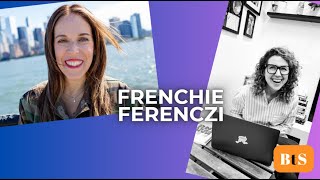
In this episode of "Beyond the Spotlight," host Beth Nydick interviews growth strategist Frenchie Ferenczi. The conversation opens with light banter before moving into Frenchie's core philosophy: authentic, personalized growth strategies beat generic, rinse‑and‑repeat systems. Frenchie stresses the importance of deeply understanding a business’s financial targets, reverse‑engineering offers, and selecting the right tools from a metaphorical Home‑Depot toolbox rather than forcing a one‑size‑fits‑all approach. She highlights two common pitfalls—ignoring concrete revenue numbers and fearing "salesy" messaging—explaining how clear, confident communication about offers is essential. The dialogue then shifts to mindset, with both hosts discussing limiting beliefs, internal narratives, and the need to coexist with personal doubts rather than trying to eradicate them. When addressing growth plateaus, Frenchie identifies the two primary levers: audience size and pricing, advising entrepreneurs to balance or expand both while building operational support to sustain higher revenue. The interview culminates with a detailed overview of Frenchie's 12‑month program, "The Advisory," which combines thought partnership, strategic planning, and implementation support to help clients break through plateaus. Throughout, Frenchie's background in startup community building (e.g., scaling The Wing) and her unique blend of offline and online experience are referenced as the foundation for her coaching style. The episode ends with calls to action for listeners to join Frenchie's email list and explore her program.
Chapters
Welcome to this week, today's episode of Behind the Spotlight. Today we have my very good friend Frenchy. I can't wait till she comes on. First of all, she's got the coolest name ever, and she's actually like a— you know when you meet somebody and you're like, they're super cool and then they do amazing work in the world? That's my friend Frenchy. She's gonna come on in a second. She's a growth strategist and thought partner for industry experts, founders, creatives, and she takes the outside approach to helping them build a lifestyle business. If you're not following Frenchie, you will after this interview, because I love, I love her emails, I love her social media, I love how she puts out in the world that you can do it your way. You don't need to do it the way everybody else says you need to do it, because the way that you do it And hopefully she'll come on in a second. There she comes. There she is.
Hi!
The craziest part about doing these is this second right here when I'm just like, I'm going to talk until it works.
I'm just going to fill the air. I know. I know. I always joke— I don't know if you're into Harry Potter. I was like a late into Harry Potter person. But there is like track 9 and 3/4 that they need to like run into. And I'm like, this is what all this technology stuff feels like. Like the breakout rooms on Zoom, going live, all of it. It's like Harry Potter style.
That's what— you know, my kids were never into Harry Potter, so I missed all of it. I like the movies.
There you go.
But I, you know, maybe one of those things that I can read instead of watching stupid Netflix shows. Like Riverside or whatever.
I just listen to it on tape. I sound so freaking old. It's an island to audiobooks.
I'm listening to the Britney Spears audiobook right now. So I'm with you on that. Oh.
I love a good audiobook.
It's fascinating. I love any good celebrity salacious, like, tell me what really happened. Years ago, Letterman and Leno both wrote books about what actually happened when they got the seats on NBC and CBS.
Ooh.
And I worked at Leno right before that. So I was like, wait a minute. I was in the building when this happened. I was there. I was doing this.
I was doing that.
So I love that. I love that. Because, you know, I'm a secret celebrity.
You are.
Well, in my head. I'm a secret celebrity. But you're a celebrity in my life, Frenchy. First of all, you know you have the coolest name ever. Like, hands down.
People are always like, is that your married name? Sorry, I'm trying to adjust the plug. And I'm like, no, I was born with this name. And I did not change my name when I got married. Because I don't— you don't give up Frenchy Frenzy. No.
It's a good one. I didn't give up my name until my kids were like, can we have the same name, when they were in high school. OK. And when my book got published, my husband was like, can you put my name on it too? And I was like—
Oh my gosh, hilarious.
Sure. But this morning, I was listening to Instagram and TikTok and stuff. And a lot of people are talking about Twitch. So I went on Twitch to sign up. And they wouldn't take my name because it's spelled Dick. They— so my username, they were like, you can't use that. I was like, but that's my name.
Oh wow. Now you see, that would make for a really good— I think you need to like bring that to the top of the ranks.
Oh, I didn't even think about that. Okay, you know, I'll put it on my list of things to do.
Yeah, exactly. Important things that you have to tackle today: change the world and also make sure that Twitch accepts dick in, um, yeah, in names.
It's definitely my name. Well, let's talk a little bit about how we can change the world with our businesses and how you are a growth strategist. Like that transition?
I love it. I love it. Great.
I was saying before you got on, like, I really love your style because it's just you. It's really authentic. It's really what's going on. I told everyone to join your email list because you're one of the only people I read their emails because I'm like— because I want to know what's going on in your world, right? I want to know what's going on with spaghetti and the kids. Like, I want to know all this stuff. Stuff. So I really appreciate that. But you know, one of the questions that, that we had posed for us to talk about today was like, what do business owners need to do to reach the new levels of growth? And I'd love to hear your answer. And I'm sure authenticity is a part of that.
Totally, totally. I mean, I think so. I think authenticity shows up in a lot of different ways, right? Like shows up in our messaging. It shows up in the stories we tell. It shows up in all of that. But I think that when I think about authenticity in business, one of the things that I think is really kind of important, and this ties in very closely to growth, is to learn how to get strategic for your business. And there's a lot of content and conversations out there that are all about like my rinse and repeat strategies. I mean, nobody sells it as that, but that's basically what they are without the personalization. And I actually think understanding the like core of your business and what it needs to flourish and what you need to do to nurture it is so essential and so foundational and we forget to do it. And so I think when I think about business owners and their growth overall, I'm like, there's so many different tools out there that we can potentially even Google for free. The hard part isn't learning the tools. The hard part and the biggest opportunity to growth is actually to identify Which tools in the toolkit am I going to pull out to build this thing? And to stick with the Home Depot analogy, you're like, okay, some people need a flathead screwdriver and a drill and some other people need a wrench and pliers. And you're still building the same business, but if you need a wrench and pliers and you're trying to use a screwdriver, you're not going to get very far. And I think a lot of times what has sold really well so far for people have been these systems and these step-by-step approaches. And those are good starting points, but they are not a strategy. They are just a tool and one of the, you know, the pathways to growth. So really learning how to personalize your strategy to you and your business is so foundational and so overlooked. Yeah.
And that's why they hire people, need to hire people like you and I, because you can learn all that stuff, but understanding how to create the strategy around it so it actually works for you and your business in the world that we live in. You know, Frenchie, I don't know this about you, but how did you actually get here?
Oh my God.
What's your background, and what's your experience to actually get here? And I ask that selfishly because I want to know, but also, like, one of the things that I know that I don't do as often as I would like is talk about how I was a TV producer.
Yeah.
And I know that would actually help people understand who I am. So I was just wondering if you could tell us a little bit about who you actually are.
Yeah. I also don't talk enough about it. So I come from startups. I spent 10 years working in startups. I most recently, I was the head of community at The Wing, which was a very big for us New Yorkers, tri-state area people. I grew The Wing from 4 locations to 11 locations and 3,000 members to 12,000 members. And then the end of my time at The Wing was very tumultuous and very messy, messy enough to write an op-ed about it a few years later. And I, when I left, I had been I had been kind of canceled, whatever that means. And so I kind of was in this place where I had always known that I wanted to start a business. I didn't know what kind of business I would start. And I realized like I'd been building these startups and scaling these startups for 10 years. I could actually start to help smaller business owners do that for their businesses and really avoid some of the common pitfalls and mistakes that I see people, that I saw these like larger businesses making, that I see individuals making. And the larger businesses can sometimes get away with it get away with it because they have investment money and runway. But like solopreneurs can't necessarily get away with that, right? With like that level of mistakes. And so I realized there was an opportunity for me to really just use my experience and knowledge to help people grow their businesses. So that's like the real short version of the journey. But yeah, I think one of the things that like I kind of find myself frustrated by when I look at a lot of the online space, and one of the things I love about you is the fact that you bring this like producer experience to teaching people how to do their PR, right? It's like, there's so many people who grew a business and then became business coaches or worked for an MLM and then started calling themselves a business coach. And not to say that those are not necessarily valuable experiences, but I think that, I think part of the reason that my clients get such good results and get so much benefit from our work together is because I bring this other world, not online experience experience to them, right? And they can really leverage that and capitalize on that.
I'm so glad you said that because it makes me crazy because I get pitched— first of all, I get pitches from people for PR services, which makes me a little crazy because like you haven't even looked to see what I do. But I, I recently met somebody who's a dentist and she's teaching people how to get media because she got herself on the local news. Or the girl who got one, one article in Allure I'm like, it's a system, right? Yes. But it's more than just getting on the platform. It's what you do with it. Because so many people say to me, they're like, well, PR doesn't work for me. And I'm like, no. You probably learned how to do it, but you didn't learn the nuances and the things that I could bring to the table and things that you could bring to the table. So I think it's really an interesting conversation that we're not having. And as the trend, I think, is moving from that rinse and repeat to, can you really look at my business and tell me where the holes are? So you had mentioned mistakes that large ones and small ones make. Can you give us a couple examples of those mistakes that we're probably all making and not really aware of?
Totally. Okay. So the first thing, and this is like, so sometimes I'm scared to say this because I'm like, is everyone going to think this is obvious? But I've taught this enough times that I know it's not obvious, is that people are not actually understand, like people are not looking at the financials and the revenue goals closely enough. Right. And so one of the core pieces of the work that I do when I'm building people's strategies, I'm like, okay, what is our revenue target? What are our offers to get there? How many of each offer do I need to sell on a given month, quarter, so on and so forth to get there? Because then we reverse engineer the strategy to support that outcome and that result. But people forget to do that all the time. And they're like, I want to make $300,000 this year. And I'm like, how? And they're like, yeah, exactly. Well, I'm going to write tonight. You know, I need to write emails more consistently. I'm like, that's still not a how, right? And, and I'm not, I really don't want to like make anyone who has ever thought that feel bad. It is very much like what, it's very normal. It's very much kind of like what we're taught and told is that like, you know, people give us these like tools and pathways, but don't necessarily tell us how to integrate them. So I think that foundational tool, know your numbers, Doesn't have to be hard numbers. I hate numbers. Like, I'm not like, you know, doesn't have to be hard numbers, basic numbers, but just to understand what are the indicators that the work you're doing is working. I'm obsessed with this idea of like, we have to do the right work at the right time. But the only way to know what the right work at the right time is, is, is that if we actually like understand what the outcome of that work needs to be. So that is number one. Number 2, being too precious about what we sell and how we sell. And I see that, I've seen that big and small, right? So I think that everyone has this fear of being salesy because we've all gotten the PR pitch from someone who doesn't even realize, or it's like, "Hello, Frenchie Forenzi Coaching," and I'm like, "Okay, bro, like, yeah, delete." But talking about what you sell in a compelling way is not salesy, it's not slimy, you give people the in or the out and it's actually necessary. And I think in larger corporations, what I see happening is that there's such a focus on the perfect launch and all that, that we kind of, that things just take longer than they need to. And I see on the smaller level, we're kind of scared because we feel like we're asking people to do us a favor sometimes by buying our offers when just putting it out there is You know, I am a little sensitive to this whole idea of like, well, you're doing people a favor when you let them buy your thing. Because I'm like, okay, that seems like a little bit over the top, right? But there is this balance of like, you know, we've all had that feeling when we find the thing that really makes sense for us in the moment, that that's really exciting for us. And if you don't talk about it frequently enough, then people aren't going to find it and then you're going to miss out and they're going to miss out. And so there's this co-creation that happens, but you have to play a role in the co-creation. So I think those are two of the big ones that I'm just like, always be selling and talking about what you sell and get clear on the numbers. And I think the third that I'm just going to add as a bonus because it's been on my mind a lot lately is, and this is more for the solopreneurs than the bigger businesses, but please do not let anyone external assign any mindset issues or limiting beliefs to you. You are allowed to have whatever shit is happening in your brain. Going on any time. But like, you need to be the one to decide what is happening. And we take on a lot of messages from others telling us that we have limiting beliefs and that's why we're not doing X, Y, or Z. Limiting beliefs. I don't even know how I feel about that phrase, but let's just for the sake of conversation, like, let's use it. We need to coexist with whatever garbage we have happening internally. And so it's not about overcoming them. It's about living with them and being like, you know what? The way that I'm thinking about this doesn't feel good. And also I'm going to take the steps that I need to take. Right? Like for, I'm sure you've had clients first time that they're going to be on TV. It's really scary. They're going to be like, who the hell am I to be on television? But they still show up because of course they do. Right? And both things can be true at the same time.
I really appreciate you saying that. I actually interviewed Karen Gillian yesterday. We had a similar conversation that like, I no longer scroll because as I'm scrolling, I'm thinking like, oh my God, I'm not doing this. Oh my God, I'm bad at this. Oh my God, my coach must not be the right coach. My coach is amazing. She's giving me everything I need. But that internal dialogue, because the hooks are so good, right? Because they're using psychology to make us think that we're not enough or we can't do enough. I really try to look at it very story-wise. Like, I can create a story that I'm not good enough. Or I can create a story that Frenchy doesn't like me, right? If you didn't answer my first DM, you don't like me, I'm not good enough, my business is too small. Or like, Frenchie's busy, or they're busy and they just don't, they didn't do it yet. So, ask again. You know, I have a lot of amazing people coming on, and friends of mine like you coming on, that sometimes I had to ask them 2 or 3 times, because we're all busy. But I can see how people can make a story out of that, because the messages they're getting is that they're not X enough, or they can't do X enough. I actually had a conversation with my therapist recently and I was like, how do I know if I'm actually OK? Because the message I get in life is that I'm not right. And that's when I stopped scrolling because I was like, I don't need the messages anymore.
Totally. I, you know, I was thinking about this like not too long ago about this idea of like self-improvement. Right. And it's like if you ever renovated a house, like you kind of know that it's never done. And I think humans are like that. Like, are we OK? I don't know. But like, we're all kind of like a work in progress. Progress. So there's no like real, you know, that's, I'm always like, set a clear goal with an endgame and all that. And like, that can work for your business, but it doesn't always work for us on an individual level. Like on an individual level, there's always things that are like working in our favor, not serving us. Like, and it's about kind of like living with all of it, I think. I mean, I haven't figured that quite out yet, but I don't think we ever do.
Right. I look, so my kids are in college and I look to them a lot because they have no fear.
Yeah.
And I'll tell them what's going on and they'll be like, you know, they think they're mini business owners because they've listened to me for 20 years, listening to me build my business and everything. But they actually have really good advice and they're like, Mom, hit send, do the thing, ask the thing.
Yeah.
You know, I, and I was like, if you have little kids, they'll tell you to do it too. So when I've got pieces, right, that you can do, or the person that you're working with, um, because I, I, you know, I know people that have worked with you and people that work with me, they walk away feeling differently about themselves because they finally got people who see them, see their businesses and help them grow.
Yeah.
And that's what I'm hearing a lot too, is like this bro keeping, keeping you in my cycle so that you never get out and never get anywhere. I think that the era of that is over and the era of actually real people that help you through things is what's coming.
Thank you, Taylor, for that. Totally.
Well, I know one thing that you do, and I love your advice on this because I hear this a lot. I mean, you know, I did research on you, of course, but I'm looking to see what people are talking about. And they're talking about plateaus. And I've seen you talking about that recently.
Yeah.
Is because, right, you can get to that 6 figures, but how are you getting to the 250, 750? How are you getting through those plateaus no matter where you are in your business?
Yeah. I mean, God, we could talk about this for like 12 hours. Oh yeah, give me that time. So I think that there's a couple things. I think this is like another place where people will really come in and be like, oh, it's your limiting beliefs, like that sort of thing. I don't think it's quite that. But essentially, right, quite simply, there's two levers that we have, our pricing and our audience size. And so you kind of have to, like high, high level, I'm like, kind of have to figure out the path where you increase both in some ways or find a balance between both to get to that next level. So what I really like to do when I'm thinking about what is the next level of growth is to one, understand how big of an audience are we working with and Should the priority really be focusing on audience size and reaching more people, which is typically, I think long-term you need to do that, but also it can take time and it's not always super straightforward. And then playing around with your pricing. And so I think that sometimes we overcomplicate it. It's like, do I need a funnel? Do I need this? Do I need that? For an effective funnel, whatever you want to call it, let's just say it's a lower-ticket funnel, you need a really big audience for it to make you money. It's not like if you have the same size audience and you install a funnel, install, it's gonna suddenly work for you. So I think that in terms of breaking through the plateau, it's not about throwing the baby out with the bathwater, which I think is sometimes what happens, but it's almost like, what is the additional layer that you can add on to your business so that it can get to that next level of revenue and of growth? And then on the back end of that, right, and this is why I always start with the money, but on the back end of that, what is the operational framework that you need in order to support and sustain that? And typically I think that's where Like sometimes you need to play a little bit of like fake it till you make it type of vibes where you're like, okay, whatever I want to invest in right now from a support perspective might feel out like a little crazy, but makes perfect sense for the person who's making $350,000, which is where I'm going. And sometimes we need to make strategic decisions from the place of where we're going and not from the place of where we are today. And I think sometimes that gap is where getting that additional support and getting someone who can really help you see the path forward to that and make you feel confident that it's like, or help you feel confident that it's the right decision and show you why it's the right decision can be really valuable and really important.
You unknowingly just validated a decision I made. I literally got the chills because last year I did exactly what you're saying and I stepped into a mastermind that is where I want to be, right? But I changed my, I changed my business last year from running a PR firm to running a strategy. And the things that have happened and the doors that have opened and the opportunities I've created in the last, I would say, 6 weeks is what I've been trying to do for 12 months, right? It's— thank you for that validation. I know you didn't know that. I haven't told you.
I didn't, I didn't. But like, I love it.
But it's about like Being— it's about being in the room. It's about creating and creating these relationships. Because I did a deep dive, I think it was 2 weeks ago on Facebook. I spent 45 minutes and I found myself a multitude of opportunities and, and created those. And now I'm creating those things into things that are actually going to make me money.
Yeah.
Like, it's just about stepping in front of it and doing it. And if I didn't have the right guidance or the right people in my corner, I don't know if that would have been possible. And having people like you in my corner and other friends of ours in the corner where I can just DM you like, hey, what's this question? Because, yeah, it's like, it's always that act or dress for the job you want, not that you have, right? It's be in the spaces for the job you want and maybe not what you have. And I know you have a special space that's a 12-month space. I think it's called the Business Accelerator.
Yeah.
Before we get off, we have to talk about it.
Yeah.
I know, just magic you're doing there. Will you tell the audience a little bit about it so if they're interested they can go find you?
Yes. Okay. So it's called The Advisory. I've like, I might've changed names along the way. I do that a lot. I'm like just experimenting. But so The Advisory is a 12-month program that's really designed to accelerate your business, right? So business accelerator, advisory, same, same. But what I've really seen for people is that there's like 3 things that they need in order to break through a plateau, right? Kind of like we were just talking about. So one is thought partnership, right? Like we can't go it alone. We need to be able to bounce ideas back and forth. And for most of us, our partners or our dogs are not particularly helpful in doing that. So that's like a key piece. So it's all about that thought partnership, strategic planning with the support to do it so that you're actually like building out your plan, but also like, again, going back and forth with someone on like, Should I be in this room or that room? Should I make this higher or that higher? All these decisions that we need to make along the way that if we don't make can totally block us and slow us down. They need to get made. And oftentimes with like a little nudge, it's much easier to make it. And then there's the actual implementation, which is like, okay, I have the thought partnership, I have the strategy. Now I need to go do the thing. And when it works, yay. And when it doesn't work, we need to go back to the drawing board. So it's this consistent cycle of all 3 of those things that kind of work together so that you're always kind of like staying on track towards where you want to go. And so that's really what the advisory is all about. I don't want it to be overcomplicated. It's not about my rinse and repeat, whatever. It's about you and your business and how there's your brain that's really smart, my brain that's really smart, and like the genius that comes out when our brains come together.
I love that. I always say you get my brain in your brand for the duration of our time together.
I know. I love that.
I know you're the same way. It's having somebody who cares about your success look at your business and help you along the way. So if you fall in love with Frenchie, like I know you have, go find out about her advisory. Make sure you follow her. Please get on her email list because I love watching. I love listening, reading them, like listening. Oh, and snaps, right? And the podcast and all of her, all the content you put out. Thank you so much for putting that out in the world. This has been another episode of Behind the Spotlight. Frenchie, thank you so much for coming on. Don't forget to like and subscribe. I hit that little bell and go to my link in bio to download the 5 Proven Subject Line Formulas so that you can get booked on the next podcast. Frenchie, I look for your next thing. I appreciate you so much and I'll talk to you soon.
Talk to you soon. Bye.
More from Beth
"How to Make $10K From Every Podcast Appearance | Replay Available Until November 24th!"