Media Planning at it easiest
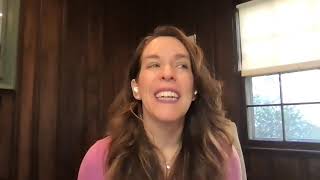
Beth Nydick walks through a step-by-step framework for getting media coverage: identify where your audience listens, clarify your core topics, build a tiered list of journalists and outlets, and send personalized pitches with a media kit. She argues publicity is faster and cheaper than ads or webinars for building authority.
Hey, hey, hey, it's Beth Nydick.
I am so excited to be here with you today and talk about how to have your brand ready for PR. I'm a publicity and business coach and my clients confidently appear on TV and media knowing that they're not only— is their business foundation really, really solid, but they don't have any of that disappointment and frustration of public—
Hey, it's Beth Nydick.
I am so excited to be here with you today and talk to you about Publicity. Now, a little bit about me. I'm a publicity and business strategist, so my clients confidently appear on TV and media knowing their business foundations are all set, but without all that frustration and disappointment that they have around media. So let me tell you a little bit about me.
Years ago, I was on Dr. Oz.
I love Dr. Oz and being in the studio and being on TV. And I thought my business was ready. I had talked to a coach and I had my website, you know, had all the right things on it.
But what I didn't know is that my pod— Hey, it's Beth Nydick, and I'm here to talk to you all about publicity.
I am so excited to talk to you because I'm really passionate about helping people activate and understand their maximum potential. At work and in life. I'm currently a business and publicity coach and a cocktail cookbook author, and my clients confidently show up in media nationally and internationally with knowing their business foundations are really solid and without all those years of frustration and disappointment around publicity. Now I'm going to start with a little story.
It's about my why.
So years ago, I became a Dr. Oz blogger.
I got to be on the show and all over his website.
But my first appearance didn't go as planned.
Showed up in my cute little red sundress, was on camera. I did a great job.
They asked me back that day. But what I didn't have all set up was my business because days later I realized that the thousands and thousands of people that had visited my website that first week, I didn't capture one email address. My opt-in was paused. I know, so bad, and I would kill any of my clients that would do that today. So one of the reasons I do what I do is because I never want you or anybody else to have that feeling that I have years later about making that huge mistake.
Let's get started. What's publicity?
As an entrepreneur, you know, there are a billion ways to get work right and promote your business. Webinars, Instagram, Facebook, LinkedIn, Clubhouse, conferences, panels, TED Talks. All that's great, and some of that takes serious time, serious energy, and even more serious money.
So how do you choose the right way to promote your business?
Well, for one thing I know is for sure is publicity is the fastest, easiest, and least expensive way to grow your business while establishing yourself as the authority in your industry. Who doesn't want to be a thought leader?
Hey, it's Beth Nadek. I'm so excited to see you. Come on in. We're going to talk all about publicity. Let me tell you a little bit about me first. I'm a publicity and business strategist. My clients confidently show up on media knowing their business foundations are set and without all those years of disappointment and frustration they had through publicity. I'm also a podcast host of Behind the Spotlight, where I interview your favorite entrepreneurs and take them off a pedestal and onto a barstool right next to you. I'm super passionate about helping people activate and understand their maximum potential at work and in life. And being an entrepreneur, as you know, not so easy. So let me tell you a little story. 2015, I became a Dr. Oz blogger. So excited. I was doing food blogging at that time. I go on the show, I have a great appearance. They can't wait to have me back. I'm on cloud nine until a few days later when I realized that my opt-in was on pause. Yes. Thousands of people visited my website and I captured not even one email address to put in my funnel. I still can't imagine what my business would have ended up like if I had gotten those thousands of emails and been able to put them through my sequences. But it's okay, I'll get past it. But I want to find out why publicity is good for you and how you can use it. So there's a billion ways to promote your business online, right? Webinars, Instagram, Pinterest, a book, Facebook ads, even Clubhouse. But all these strategies cost time, money, energy, and some others cost a lot of money. So how do you choose the right way to promote your business? Well, I feel like this: if you're not into doing the webinar, or you're not into that hard sell, publicity is the fastest, easiest, and least expensive way for you to grow your business while establishing yourself as an authority in the industry. Who doesn't want to be a thought leader? Because I, I do. I hope you do too. Product-based, or even if you're a real estate agent or an insurance agent, you can still be that person that leads by light, that leads by example, that leads by a message and not just a business. So what is publicity? It refers to the opportunity to spread your message and offerings to everybody, right? That includes traditional media like TVs and magazines and newspapers, but it also includes your website, podcast, influencer platforms, as well as social. And getting that kind of publicity, what does that mean? That means you can share your message with the world, even millions, thousands, or billions, depending on what you're on. It means you're getting endorsed by a recognizable media source that people value and that you already trust. It means that people will be eager to buy your businesses. It means that people will be eager to buy what you have to offer because you clearly have the credibility and visibility to prove that you are a total powerhouse. But is your business ready for press? Are you really ready? But is your business ready for press? But is your business ready? Are you ready to step into the light and ask for what you want and be the owner of the business, the founder of the business? Because all you need to do is step up with that message and that vision and start telling everybody People will be engaged, people will be enrolled, and that leads to what? More credibility, more money, more clients, and more freedom. Let's start with your ideal client. Okay, so you have your ideal client from your marketing, but now I wanna transition that to your ideal client as your ideal audience. They need to be the same. So think about your ideal client. Where are they watching? What are they reading? What are they listening to? What are they consuming? Survey them 100%. Send off an email survey. What are you listening to? What are you reading? What stations do you listen to? What platforms? What podcasters? Get the information from them because that's the market research you need to really be successful in getting your media out there. There's nothing like being on the wrong media and doing all that work and getting nowhere, right? So let's start with your message and your vision. I want you to really work on that and have that honed in to be clear. And I don't want you to think that it's such a big undertaking because I want you to think about that for this season of your business, right? So what is your vision and mission for the next 18 months? And that's it. Don't think beyond that. Or 6 months, depending on what your business is. What are you talking about now? And let's put those into talk buckets. So what do you wanna be known for? And what's your superpower? If your superpower is connecting people, how does that attribute to your business? If your superpower is creating something out of nothing, how does that attribute to your business and what are you talking about? So I want you to think about it this way. There are 4 talking buckets, right? And your topics of conversation, topics of content, postings, the emails, the videos, anything you're doing, They have to fit within those talking points. Okay? And those talking points become your segments and your articles. So everything is really dialed in to that one central message. Like, I talk about publicity and I talk about, you know, doing what you need to get your business ready to leverage it. But what I'm really actually talking about is the availability of opportunities through possibility that you have around you in your community. Right? It's a little bit different. And I want you to think about your business a little bit different in that way. So where to start? Let's start with the publicity pyramid, right? Just like the food pyramid. What should you be— what should you really be focusing on more? And what's at the top? So at the bottom, websites, guest posting, local, right? Your networking clubs, your women's clubs, your women in business clubs, your, your online community being on each other's websites, on each other's social, then as well as, you know, churches and synagogues and your local stuff. And then it's online magazines, online national magazines, online international magazines, podcasts, video, TV. And for me, I think conferences and panels are at the top because I feel like that's where you get the most clients. Again, you get more— a lot of credibility from being on recognizable platforms, but actually get clients, like someone listening to you for 10, 15 minutes and then being offered the opportunity to get into your world by opt-in, by following you on social media. That's really where you're gonna get the most bang for your buck. So let's talk about getting your brand visible, right? So now you know who you're talking to, what you wanna talk about, and how you're gonna start talking about it, right? But let's get your business ready. So let's define your goals. Are they visibility? Are they sales? Are they authority? And what are your assets around those goals? So is your website saying the same thing as your objectives and your goals? How about your about page? Is your about page just telling me how you rescue dogs, but your business is pencils? Where— that's great that you want to show us a little bit of your lifestyle, but the added value needs to be about the pencils and how the pencils can help connect that. Like, you can connect anything. I'm sure you've seen online. I have a friend who's a mommy, and she talks a lot about being a mom and how it's hard and what she does with her kids. But she always connects it back to her productivity business. And it makes a big difference because you can follow the story. It resonates with you. It makes sense. Talking about two different things doesn't always make sense, right? So within your assets, I want you to have your website and your about page and your press page all saying the same thing. As well as a media bio kit, a media bio and a media kit, which are really, really important to have. You can Google media kit, you can go on Canva. I have a product on my website about media kits and how to put them together. But that's a really important one-pager that you need to put together because that's your calling card. It's almost like your business card in a way, um, where like you send a pitch and you also send your media kit so they can find out who you are, They are going to go to your social, but also giving that, giving them that one-sheeter can really help them see if you are going to fit into what their messaging is, especially for speaking engagements. It's super important. So once you have all that, all your assets together, then who's going to help you? I'm going to help you. Your sister is going to help you. Your brother is going to help you. But who in your realm, in your community, can help you? And this is what I really want you to take out. Take out your pencil and take out some paper. And write down 10 people that you think have a connection to somebody in media. I don't care what it is. I don't care if it's your local radio station at the high school. I don't care if it's a local synagogue or church or anywhere else. Just write down 10 people that you think have a connection to somebody in media. Anytime I do this or I'm in a room where people are doing this, I have to tell you that somebody always says, oh my God, I didn't even think about it that my cousin works for NBC. Or my, you know, aunt's best friend is a producer here, or my friend wrote a book. Like, you know somebody who knows somebody. Let's start thinking about them. I even want you to stop this video and go text them right now. I'm not kidding. Stop the video and go text them right now. Because once you know what you're talking about, let's figure out who we know that can help us get talking about it. Because journalists is the next step, right? They're always, always, always looking for interesting stories to feature in their magazines and newspapers and even video channels. When I worked at The Tonight Show, one of the things we did in the morning is we would— they would be sent local newspapers from around the country. So I was looking for that little girl who raised $5,000 for her mailman so they could do a story on that. I was looking for the Guinness Book of World Records in Kansas City for Q-tips. I don't know, it was— we were just looking for interesting stories to bring. So really looking at where the journalist is coming from rather than how you want the journalist to be for you, I think really makes a really big difference. So start compiling a list of these magazines, newspaper, you know, platforms, blogs, channels, people you want to meet on Clubhouse, anything you want to do. But these are your primary targets. But remember, your primary target audience also needs to be there. I tell a story that a client of mine, um, was in finance and he kept wanting to be on like morning TV and cook. I was like, it makes no sense. It doesn't go together. You want to be the finance chef? And he actually liked that idea for a while. Um, but we went back to just being finance and he does really, really well right now. But So really putting it together. So let's think about your ideal list. Be familiar with these media outlets and listen to them, watch them, read them regularly, because you want to know what's going on. And I mean, read the content, but also read the editor's message, the opening email, read what they're also telling you besides the content to know where you, to know what they're doing and what they're launching and what's going on for them. And your dream list should be The Oprahs, right? And the Good Morning Americas, but should also be your local ABC station. And you're in, you know, the big blogger in the next town. I always say there's always one big blogger somewhere. Let's get connected with them. Large and small, you want to have your list. If you have kids that are college-ish age, you'll know it's like you're having your college list, your reaches, your safeties, and the ones you think you can get really easily. It's okay to dream. It really is. But now that you have your list, what are you gonna talk about, right? We're gonna go back to those talk buckets. What do you have a really deep passion for? And what could you talk about forever? If I said to you, you have 30 minutes, go, what can you talk about for 30 minutes? I'm like, I can talk about anything for 30 minutes. But seriously, what can you talk about for 30 minutes? What subjects do your colleagues and friends and family, what questions do you get all the time? When I was doing food blogging, I always get, what should I make for dinner? I still get that a lot too. Now I get, how should I find this editor? So if I'm getting this question, how should I find this editor, all the time, guess what? I should create content around how to find editors. And creating that content also creates my framework for what I'm going to be talking about, right? So once you figure out what that framework is of what you want to talk about, it goes everywhere. And that doesn't mean if you have a PhD that you can't talk about something. You can talk about whatever you want to talk about as long as you come from it as standing for something, taking a side, and having a passion about it, because those are really the two things that you need for anything. He's moving through. Okay, so after you figure out exactly what you're being asked, what you want to talk about, you can answer a couple questions. What training do you have? Do you have a special framework around something? And what specific results can your clients achieve? Do you help clients sell their house in less than 10% of the time? Did your clients save more money than anybody else? You know, 20% more money they did this month than, than they did last month of working with you. Whatever advice you have, it's gotta add value to the audience you're trying to get to, right? So they're not really interested in what you have to say and what you're all about. They're more, the producers and the journalists, they're more interested in how you can add value to their audience, which makes their audience continue to watch, which makes their advertisers happy because they're having lots of eyeballs on their advertisers. Like, it's not in a vacuum. You need to think about how the whole business works and not just your little point of it. But you wanna have successful story. So I had a client say to me today, she was talking about how to define movement, how to be— what was it? I had a client the other day say to me that she wanted to do a pitch on body language on Zoom. And I was like, that's great, but that's not unique. Anyone can talk about how body language is on Zoom. I was like, how did— how do I identify 5 passive-aggressive actions on Zoom. That's much more targeted. That's much more interesting. You know, then picking the negative standpoint can be interesting also, but you wanna know how unique it is. Can it connect emotionally to the audience? Do they resonate with it? Does this say your brand is the brand to follow, or does it not put your brand in a good light? Like, you don't wanna have your brand be the negative in the story. You always want it to be in the positive. And how does your story reflect your brand message? So if I show up, I'm going to make sure that I'm talking about possibilities because that's part of my brand messaging, as well as the publicity and business that I'm talking about. But my message always needs to be in there. How does this work on social media? Is it something visual? Great, social media. Something audio? Then great for podcasts. So it's really dissecting what those things are and not just being like, I have a great idea about how to make cupcakes. I'm going to go make cupcakes. Great, but what are those cupcakes for? What's interesting about the cupcakes? A chocolate cupcake is a chocolate cupcake, but a chocolate cupcake that uses cinnamon and spices, that's a little bit more interesting. Google it, see what, who else is talking about it, what platforms are already talking about it, and what comes up. Once you identify that, then you identify, once you identify the list of journalists to pitch, there's a couple next steps. Great, but right? Create the pitch email, create the pod, create the media kit. Don't cut and paste emails, make sure it's really personalized. You're not emailing 30 people a day. Let's start with 5. Let's start with 5 people that you can connect with, that you resonate with, that you look at their social and you're like, you have pit bulls, I have pit bulls, let's talk about pit bulls. Like, there's got to be something that connects you more than you wanting to be on their, on their platform. So don't cut and paste it. Follow up. I say track it in a Google Doc. Follow them on Twitter. I know I'm not a big Twitter person, but I'm becoming a much bigger, bigger Twitter person. And remember, don't be afraid to slide into their DMs. Like, seriously, I DM so many people, and I DM a lot of people like this. I actually, you know what, last month I DM'd the content director for Oprah Magazine, and I just said to her, I really liked your article on, I don't remember, whatever it was. Thank you so much for sharing your genius with the world. And guess what? Every once in a while we talk. And when I am ready to put something in Oprah or to pitch a client to Oprah, then I can say, hey, I'm working on a story for this. Who can I speak to? And she's more likely to help me. It really makes a big difference. So today we went over your avatar, the pyramid, and 5 steps to getting your brand visible: your goals, your assets, where to pitch, and how to pitch. So get pitching, get moving, start talking. Please, please, please go to that list of people you think they know other people in media and start moving. Let me know what happens, and we'll talk soon.
More from Beth
"How to Make $10K From Every Podcast Appearance | Replay Available Until November 24th!"