Aaron Gaynor: Business Isn’t a Sprint, It’s a Marathon | TBFTT Ep. 4
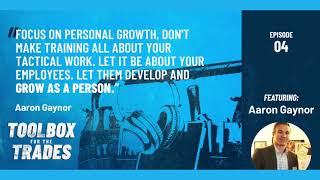
Interview with Aaron Gaynor (owner, EcoPlumbers) on the Tools for the Trades podcast. Gaynor recounts entering the trades in 1997, building a construction-focused plumbing company that grew to ~$3.5M before filing bankruptcy in 2007–2008, then restarting and refocusing on residential service. EcoPlumbers now emphasizes training (quarter‑million+ yearly), transparency (shared KPIs and dashboards), employee empowerment, eco-friendly branding (“Save the day, protect the future”), and strong reputation management (≈8.5k reviews). Company size and performance: ~80 employees and $13.5M revenue last year (≈42% YoY growth). Gaynor describes leadership practices (one‑on‑ones, daily huddles), personal habits (4am start, gratitude, ice showers, running), and long-term goal (aspiration toward $100M).
Questions this video answers
Approximately $13.5 million.
1997.
2007–2008.
Around 80 employees.
About 8,500 total reviews, roughly 2,500 on Google.
Foreign.
You're listening to Toolbox of the Trades brought to you by ServiceTitan, a podcast for top service professionals where we interview leaders for their best tips and tricks of the trades. Learn how industry trailblazers stay ahead of the competition and how you too can be at the forefront of an industry. Let's jump in.
Hello, contractors, and welcome to the Tools for the Trades. I'm your host, Jackie Aubel, and today's guest is Erin Gaynor, the owner of the EcoPlumbers in Columbus, Ohio. Last year, the EcoPlumbers made over $13.5 million in revenue and are pacing to go well beyond that in the coming year. I spoke with this technician turned owner about the challenges he overcame early in his career and how he used those lessons to create a business that continues to grow year over year. We discuss how planning for the future, empowering your team, taking responsibility and ownership for your goals, can deliver tremendous business and personal success. Enjoy. Aaron Gaynor, owner of the EcoPlumbers. Welcome to the Tools for the Trades podcast.
Awesome. Well, thank you for having me today. Look forward to it.
No problem. So according to some numbers I pulled, it sounds like you made about $13.5 million last year.
Yeah, as a total company, we did 13.5 million, roughly about a 42% growth from the previous year. So great year, Very proud of our team. Did awesome work last year.
That's incredible. And I know when you first got started with service time, I think it was a couple of years ago, you were pulling about 5 million in revenue.
Actually, I believe it was less than that. We've been with Servicetide now a little over maybe five, six years. So we were way down there, like around maybe the $3 million revenue range. So we've had some significant growth and Service Titan obviously has been part of that, allowing us to collect our data, use the information that we've been able to collect from Service Titan, and off to a great jump already this year. So we're looking at 40 something percent growth again already.
Holy crap. That's incredible. Congratulations.
Thank you.
Tell me a little bit about the markup of your business. I know you're called the EcoPlumbers, but talk to me, how many technicians do you kind of focus are you in terms of service? Do you have other vertical? Other. Do you offer other services as well?
We're a residential home service plumbing company. We do plumbing and drain and sewer. So that's our main focus. 99.9% of our business comes straight from homeowners every single day. So we're around 80 employees right now. And our focus is, is just taking care of the direct customer. So very fortunate to have such a growing service based business here in Columbus, Ohio. And our team is doing a great job. Our field techs do fantastic job. Our service techs, our sales team, our dispatch, our call center, our managers, all of them make it happen. You know, they're doing that right now. We're sitting here talking. They're the ones making all this happen. Somebody's in some sewer somewhere doing that right this moment, right? So without them, we don't have a business.
That's great. Tell me how you got into the trades.
So I got into the trades. Can't believe I'm gonna say this right now. 23 years ago, now, 23 years ago, 1997. Got in right out of high school. I was working at Value City Furniture. It's a midwest furniture store. So you might not know it, but either way, I was working there throughout high school and after high school working second and third shift. And I had a buddy of mine, his brother in law ended up being his brother in law, worked for Ferguson Enterprises and told him that he knew a guy that wanted a couple of young guys to learn to trade. Basically apprentices, more of a helper in construction. Paid like $7.50 an hour, making around $14 an hour loading semi trucks at night. So this is big money to give up in 1997. But it was first shift, so I took the job.
Did you have plans originally to go to college?
I signed up, but that didn't go too well for me. Not a great student. Wasn't a great student in school. I don't think that's some secret with most of us trade guys, you know, working hands on. I was a troubled student. I got in trouble in school. I was troublemaker a little bit in school. Learned some life lessons though, throughout high school. And the trades have been good to me. They really have. I like to say a lot of times to the guys here and the team and members that, you know, plumbing, plumbing trades really saved my life and gave me a good direction.
Talk to me about that. What makes you say it saved your life?
I just look at it as it really gave me something to get up to, go to work towards. I learned to trade quickly. I was able to think about it and understand plumbing code fast. And it gave me an opportunity to grow. They didn't hold me back. Like it didn't say, well, wait for five years for this, wait for 10 years before you could do this. It was just, it was wide open. If you wanted to learn and you're able to learn and you're ambitious and you did what you said you were going to do, they just opened up the floodgates and just let you go. The companies I work for and it really gave me focus and ability. And then, you know, it gave me an opportunity to go beyond just being a plumber into where we are today.
That story, I feel, resonates with probably a lot of technicians and contractors out there right now. So talk to me a little bit about how your journey from apprentice to business owner of a $13.5 million a year company.
Well, it's an interesting one. So when we got into, my buddy and I both, we grew up together. We knew each other from seventh grade on. We went into the trades about one week apart from each other. He started one week before me, so I always have to hear about that for my whole life. So we both got into trades together. We work for plumbing, basically the same plumbing companies throughout the years. And then around the age of 23, 24, we got our state plumbing license and you know, we did the. Let's start our own plumbing company in the early 2000s. And you know, kind of, if anybody's ever read the book E Myth by Michael Gerber, it's pretty much that story being a technician to being a manager to an entrepreneur. And we started a mechanical plumbing company during. And it was all construction based. So we were doing residential and light commercial work throughout the early 2000s. And because we thought, wow, we could do plumbing really good. And we were fast, we were good, we were young, we were ambitious, didn't know anything about business really. So we had some lessons to learn. And during the downturn in the economy, we had grown the business to around three, about three and a half million roughly. And during that time, we lost the business, you know. So we ended up having to both file bankruptcy in 2007-2008. So lost, lost everything. I had lost my house, lost my car. The worst part was lost, lost jobs that we had created for people. Just a valuable lesson learned. And I think as, as I reflect on that, it was just really, you know, I take full ownership of it. We never really owned a business. We were just a company that subcontracted from builders. And as soon as Centex Homes decided to pull out of our market, which was about 60% of our business, it was, it was crippling. We tried really hard to fight and keep it going. The reality, at some point you just kind of Got forced into the bankruptcy. So that was a moment of restarting. And at that time, My son was 3. I was living at my mom's house, sleeping on her couch. And I just remember thinking to him, he was over there staying one night and I just held him up and I just said, hey man, I promise you this won't be your life. And from there just got up and got to work and every day just stayed focused. So had to restart, went back to the builders that I did work for because I knew plumbing, right? So I went back to doing that and I just said, hey, if you guys will give me an opportunity to do some of your future work, I'll warrant you. All the work from the previous company I was worth on my own time, which would be the right thing to do, but wasn't required by me by any law, and just started warranting all their work from previous work. And then my service manager is with me today, who's also a friend that I've known since fifth grade, got to work with me. My sister helped me sign up for stuff. I borrowed $50 to start this company. Borrow 50 bucks. That's all I had was 50 bucks that I borrowed from family and got my sister and her ex husband at that time to help sign up on a couple of things for me and just got to work.
Dang, that's incredible. The question that was coming to my mind while you were talking was how do you motivate yourself to pick yourself up from your bootstraps again after something so traumatic like that? And you answered it while I was thinking about it, which is your son. Talk to me a little bit about how that type of familial obligation really inspired you to take to try again.
Well, I think it's kind of built into me just in general, like growing up in lower income household, going through struggles financially as a child in life, I just didn't want that. I refused it. I literally just refused that that would be how I would live or my son would live. And just made that decision, drew the line in the sand and just never looked back. Basically all it was just said, I'm making a decision today. And I. I mean, I made it once before, but I knew I didn't know all the things I needed to know. I didn't learn business the way I should have. I thought I knew plumbing. It's more than plumbing, it's more than H vac, it's more an electrical. Like that's what we do out there. Maybe in the trade, but that's not what we do. I mean this is a full out business that needs all pieces, parts from marketing to call center management to managers to logistics to fleet to marketing, like marketing strategies like CFOs, financial, like it's so much more than that. And I had to go figure that out and I needed to learn those skills. And that's where I dedicated myself to on my spare time when I wasn't working in the field. I read everything I possibly could listen to, anything I could listen to. I stopped listening to talk radio, I stopped listening to the radio, I listened to audio podcast, anything I could listen to that would feed my mind in the right direction. So I understood what it took to run a real business for success, for not just myself, but the obligation to my future employees and team members and to my son and to my family.
That's incredible. And this is definitely a theme that I've noticed while speaking to contractors like yourself is that need to create something to support not only your family, but your team members as well. And also like how you have to essentially put yourself through your own MBA of sorts. Like you just have to be scrappy and figure out like, you know, what are the tools that I can use that I can absorb right now so I know how a business works. Can you remember specifically any of the resources you mentioned the E myth before, but what other resources did you.
I mean, I read the book Think and Grow Rich and it changed my life. I've read it six times. Think and Grow Rich people think the book is only about being rich. It's about more than that. I've read it six times. That book changed my life. So that was one of them. It really made me believe. Create, set a goal, set a target and just get to work on it. And once you know why you're doing something, what that target or goal is and you have the belief and the desire to do it, you'll find ways. And then from there I just literally just started finding ways because subconsciously I was committed all the way, no matter what, and I was going to figure out what I needed. I still have a long ways to go to achieve my goals, the goals that we want to achieve as a team, as a company and personally. But to answer your question, that one was one of the books that really opened me eyes up to what could be possible for myself and the people around me.
That's incredible. So I'm doing a little bit of mental calculation. You started in the trades in 97, you said when you were 23, 24, you got your plumbing license, working early 2000s, and you and your partner actually grew that business to about 3 million. I'm 30 years old now. I can't imagine pulling in that much revenue in my early mid-20s. What was that like for you to achieve that level of success so young?
I mean, I think there was times that we took it for granted. I think we thought that the market was just going to build houses forever. I mean, it seemed like that's all we ever did, ever since I got in the trade was just more houses, more buildings, more. Everything just was going on. You just felt like it was never going to end. I mean, I didn't do any understanding, you know, the economy and economics and any of those types of things then. So, you know, we just. Oh, yeah, you're in your 20s and you're making pretty good money, and you didn't have a lot of money growing up. So, trust me, we didn't always make the best financial decisions, that's for sure. I mean, I'm not going to sugarcoat that. That's definitely. I think a lot of us do that when we start to make some money we never had before, especially if we never had it that much in growing up in life or even if you did, just so it was. It was exciting time, it was fun. We had good times with our team, with the people we worked with. It was a great lesson. It was just a really great early lesson. I'm very fortunate that it happened to me when I was younger and I learned that lesson young and younger, to be able to bring that forward to me, to where I am today. People ask me sometimes, I used to say, you know, it's the worst thing that felt like it was the worst thing that ever happened to me, but ultimately end up being the best thing that ever happened to me from a business standpoint.
That's incredible. Talk to me about those lessons you learned. Like what are going back in time. I mean, it sounds like you actually wouldn't change the lesson you learned in any way, but now having several. Having years to reflect on it. What are some things that you wish you had known? What are some lessons that you can now solidify in your mind looking back?
Well, I think kind of hit on a little bit before was just that I needed to really understand business, and it wasn't the economy. I mean, I could blame the economy. And I think the moment of changing was when I just decided to take full responsibility. That was it. I took full responsibility for the situation. What happened, economy or no economy, that's what happened. Aaron Gaynor didn't run a successful business. Bottom line, pull it together and figure out what it looks like to do that.
I mean, taking responsibility and ownership and not just deflecting blame when things don't go your way, I think is a giant part of growing up.
Definitely was a moment of growing up around 28, 20, 28 years old. And that's what I did. Took full responsibility and just got to work and figured out what I needed to do to move forward with a lot of help. I mean, do it all by myself by any means. Like I mentioned, you know, my service manager today, Bron, who's with me, my sister Rosalind, that started the company.
So talk to me about starting the company. You mentioned you borrowed $50 from your family members, you were pulling in some work for some. For some builders that you knew while also fulfilling warranties from the company after it went bankrupt. So talk to me about that process. How did you start from there to where you are here?
I wish I had the total answer for that. Like, I mean, you just get up. I mean, you just have to be willing to get up and just go every day and just know that you're going to create something better. You know, that process was just an everyday challenge with also looking into the future, like knowing exactly what you wanted to become and who you wanted to become and why and what your purpose was and just get up and do it. So that was the process, I would say, from a, from a day to day. I mean, we just, we just did the things we had to do in each day to create success for the next day. You know, I could have easily gone and got a plumbing job somewhere else. I was a good plumber. I knew how to manage crews and do stuff. Just wasn't in me. I just had that question asked before, why didn't you just go work somewhere else? I just couldn't do it. Something would not let me go do that. It just told me, like, you can't go work somewhere else. You need to do this one thing. I think kind of pride myself in this timeframe. And I could have, but even though I was a business owner, was that coming through is I never took a dollar of unemployment. I never changed my child support payments to my. To my son's mom. I just figured it out. So. And that was just. That was the part that I think made it stronger. It's like, you're going to make this happen. You're not going to let anybody else have to take any more responsibility for Your issues. You've already had to deal with bankruptcies and other stuff and money you still owed to the government for things you can't get out of, some things you can't get out of. So had to figure them out and just solve them. So here we are today because of those lessons. So, you know, the past does create you, but the past doesn't equal your future. And I had to leave that behind and move forward. Wasn't always this way.
Sometimes you got to learn those lessons, you know?
Yes, we do.
So moving. So, you know, you started out. Now you are where you are today, which is a very impressive. Owning a very impressive business. Tell me, and I have a feeling I know what your answer is, but tell me what you think you're really good at.
I would say it's a great question. I think sharing vision is something that I'm good at. I've created a skill for being able to share a vision with people. I think I'm good at understanding people, having empathy, understanding what they're going through, and then finding out what makes them tick, what makes them move, what do they need to help become successful. And motivating in the right ways. Not just a rah rah, motivation all the time, but actually motivating more to the core of finding out who they are and what they want to do and then making sure that we create and share a good vision. So I'd say I do a good job at sharing vision of the company, who we are, who we want to become, why we want to become that. And I think that resonates with people. And that's something I've been able to do pretty good.
Talk to me about why you feel that tailoring vision to individual people in your organization. Because you hit the nail on the head. Not everyone is motivated by the same thing. Tell me how tailoring that vision to different employees helps you in the long run. Opposed to that rah rah, let's get it done. Let's make money.
Yeah. So a couple of things. I mean, one thing is everybody wants to be part of something. I mean, that's tribalism in all of us. We all have tribalism. We want to work somewhere. We want to be part of something. So, you know, really tapping into how can you contribute to this? You know, I mean, everybody needs all levels of people doing different things with different skills. So just trying to find out those skill levels and then getting them to understand how they can contribute into the big vision and then making sure that their contribution feels meaningful. So I think Hopefully I'm answering the question for you correctly is just finding that, finding how they can contribute and letting them know and celebrate what they do as much as you possibly can. You know, you're going to mess up, you're going to forget things, you're going to miss people here or there. But when they can see that the vision is clear and they know what they're coming to work for every day and the team and everybody's working towards a common goal, it's pretty magical. What can be accomplished. I mean, look at what Service Titans became. I remember when I first met Ara at Service Titan six years ago. I think you might have been working in that room that you're in, about that size of that, maybe a little bigger with all these people and to think about what you guys have accomplished. So impressive stuff. When you get everybody moving in a direction to accomplish and achieve a goal, cool things can happen.
Talk to me about how that affects your, how that ripples down to your employee culture and your company culture.
Well, I mean, I think at the end when they see a target, they know clearly what it is. They know what we're trying to achieve. People want to, want to hit it or beat it, and then they find ways to work together. When people come to work and they're not sure what they're doing, why they're doing it, what the outcome is and what's in it for them too, in some capacity, right then you just kind of come to work and you just do. And then you're just doing whatever you feel is you need to do, whether or not it's in line with the vision or not. You're doing something because everybody needs to have something to do or some vision they've created on their own. So instead of letting them create their own stories and their own visions, let's help create it with them and get them involved with it. But making sure the vision is clear and they understand how they can contribute, what we need to do and then giving, empowering them to make decisions in the best interest of the company, the team and the customer.
Talk to me about how you share your vision specifically and how you empower them to make the right decisions. I know a lot of companies share financial data. They kind of break down like how the company works and how the business side of things work. Is that a strategy that you employ at the EcoPlumbers?
Yeah, we're very transparent with our numbers, with our team. Everybody knows the daily targets that we're hitting for, from a, from, you know, from a Revenue standpoint, you know what our sold hour efficiency goals are for the day, whether we're winning or losing, what's the weekly targets and goals and budgets, however language you want to use, we post those numbers up. There's big display screens all around the building, out in the tech areas, in the dispatch rooms, call center, everywhere. So everybody knows from a number standpoint. We also post, you know, our reviews making sure reputation wise. We post client concern issues, we call them, customers are calling have issues. We post those up so people know and can understand. And we just, we just were transparent. And the culture, you know, I think people get nervous about this. I've seen before is it can become brutal if you don't control it, right? If you make it all about the numbers and everybody is just going crazy and, or they feel like they're being shamed, they're at the bottom. That's, that's not the goal. Like we don't measure our team on the display boards against our budget. We only have a measure against themselves. So they're only measured against their own team members of where they're competing, where they are. And then from a competition standpoint, it's friendly and good competition for the right reason. And the team gets together and really the managers ourselves, our culture has created more of a culture of how do we support the other people to bring them up.
I think that's great. I think that transparency is so crucial, especially if you want to grow and scale a business. Now we all know that there is a very serious recruiting and retaining problem within the trades amongst technicians. So how do you feel like these best practices or these practices rather that you're implementing this transparency, the shared vision, what are you think the rippling effects for you retaining the best talent and recruiting new talent?
I think it's because they know exactly where we are and where we stand as a company and where they stand. So there's no fuzzy gray line between each other on what needs to happen for us to provide a successful working environment. I mean if we're not winning, we're not achieving things from a financial standpoint, from a customer, from a reputation and customer standpoint, we don't have any business, we have nothing to offer. So when they know that they, how they can contribute to that and be part of that, you see them get engaged and then they want to grow and they want to be somewhere where they know that they're being recognized and celebrated and taken care of. You know, we're not perfect. We still have things that we can improve to make our culture and our team better. Don't get me wrong. But I think then they really want to get engaged and they want to help you figure it out. Like, they literally want to help. Most people think that your team, field teams, or your techs or your dispatcher, call center, whoever, they don't want to help. They do. They actually do want to help. They want to help you be successful, and they like you to be successful as long as you're also giving back to them.
And by giving back to them, giving them that sense of ownership, giving them that transparency, so they feel like they're contributing to the greater goal of making this company successful.
Yeah, celebrate them. Celebrate them. I mean, either whether it's through financial, whether it's through parties, whether it's through gatherings, whether it's through something, just a nice gesture, whatever it is, just celebrate your team.
How important is it to you that I'm trying to. Because you mentioned before about your earlier company that you specifically mentioned how you were. The bankruptcy was hard, but it was. It was almost even harder that you lost the jobs of the people that worked for you. How does it feel now to have a team of almost 80 people that feel like they are controlled, contributing to an overall goal and are working together as a team?
Well, as I told him in our last. We had a better annual company party we just did a couple weeks ago. And then we had. We know we're nextar members, so. And then we had nexstar on site doing the training. And at the end of that training event, we all went around and said, what are we grateful for and what are we. What responsibility are we going to take? Right. And then at the annual party did the same thing. Only thing I could say to them is that I'm grateful that they entrust their families and their careers in me. And that's my responsibility. And I take that responsibility serious.
I think that's awesome. That's great. I want to move on a little bit because I was very impressed when I was doing a little research on the EcoPlumbers. So I know that in the contracting space in this industry, we're all about helping one another, and there's a lot of camaraderie within the trade. But what do you feel like your company does exceptionally well compared to other plumbing shops or other H vac shops, stuff like that?
I think we invest in our people significantly. Like, we train everyone. Everyone goes to training. Everyone has an opportunity to go to training events. You know, we utilize our network significantly. We have nexstar on site multiple times throughout the year. We send people away to public events, we go to other shops, we communicate with people, we do other stuff outside of nextar. I mean we just invest in our people. Like we train them, we spend money investing and training them and giving them the skills and resources to be successful and then we put them to work, we let them get to work, we empower them to go do the job. So I think that's something that we do really well of maybe that other companies don't spend the resources or the money or think the money's going to could be used somewhere else. Like, you know, the previous two years ago, I remember when I stated I'm going to invest my us as a company, I should say more quarter million dollars in training. Again that, that at that time, still today, a quarter million dollars, a lot of money. But it was just a statement to the team that I want them to know that we are putting a quarter million dollars into your training, your education this year. And we did that two years ago and every year then we've, we've hit that and grown past that and we will already, like this month in January, I should say, we had two on site trainings which were three days apiece which had over 30 employees in them each day that were pulled out of the business to go train and learn and educate them to become better. And our team still beat the budget significantly for January with the team out because they're committed to, committed to us because of the training and the energy and the effort we put into it.
That's awesome. And this is not just technician training, this is for CSRS dispatchers as well.
Yeah, yeah, yeah, we do it, we do. Everyone, everyone gets training.
What do you think are the most important training, types of trainings that someone should give to their team? Like if you had to categorize specific themes or topics, what do you think are the most important?
Personal growth. Focus on personal growth. Don't make the training all about your tactical work. Let it be about them. Let them develop and grow as a person. Make sure that the investment is into the person, not just into the tactical work of the business.
So instead of sending a technician to learn how to, you know, install a new type of tankless water heater, for example, like take them through a training where they can expand on maybe like soft skills like how to better work with a customer or something like that.
Absolutely. So, you know, like there's, you know, our network and other nexstar does a good job at this. They talk about how you can communicate with the customer through service system. How does your, you know, how did you take responsibility for your part of the job? And from a tactical standpoint, from an operational standpoint, right. And then we get into more of the personal kind of stuff like where are you personally? Do you set goals? Do you think about your life? What are you, you know, what are, what are your long term visions? Like, what are things that you need and want as a person to be successful in life? Like getting people to think like that at work, outside of just, hey, how can you improve your KPI? Like, can you get a. Can you improve your conversion by 2%, your average ticket by $50? Yeah, of course we want that, but they're not going to do that if they're not taking commitment into the why they want to do it and they have any personal growth or any, any reason to do that for themselves. So I would say that just focusing on people's personal growth, once you do that and they get a commitment and they know that you care about them personally and what happens to them personally in life, then they will commit into tactically what to do and operate the business better.
I 100% agree with that. Because if they go to you and they say, well, I want to buy a house by the end of 2022 or something, it's like, okay, well maybe we can get your average ticket up so you can get more commission and start putting away for that. Man, I, whenever I hear stuff like this from customers like you, I'm just, I'm just bamboozled because I was never taught that in college. And it's, I didn't start really thinking about personal growth goals until very recently. But it sounds like you're really setting up your employees for success, which I can.
Yeah, we do every year like we just did this year, the beginning of the year, we have everybody go around and we go through how to set goals to small things. A lot of people don't have anybody sit down and talk to them about it, right? So we have our team come together, we do a company, you know, a couple company meetings and we have them all write their goals out. We put them in little envelopes. Like you remember how you used to do this in school back in the day and you had like that thing, you open it up, dig it up, or whatever they would do long time ago. We put them in envelopes and we have them all write it down and we give them a second envelope or a second card and tell them, write it down, take it with them. So they have it so they can think about, I'll put it in an envelope. And what I'll do is I'll hold onto it for a year, and at the end of the year, I give it back to them to see what you accomplish and you have a chance to discuss it. And guys, some guys will be like, I did this and I did that, and I took care of this. I can't. I did that. I can't believe I got that done. So we just have them do simple things like that. We've done it quarterly, too. And then we have them write them out for annually for a year. And just giving them a time here in the office instead of the meeting being about, you know, you need to do this better. We need that. We need this. Hey, guys, let's spend 45 minutes just thinking about you.
That's great. What are your goals right now for you?
Well, it's a great question, obviously. Keep growing, keep learning, keep finding ways to become better. You know, working on leadership skills, letting my team advance and grow, letting them lead more, giving them the opportunity to lead a lot more. Working on, you know, signed up for a marathon. I ran a marathon before, Just signed up for a marathon again this year. So my CFO and I, and we got some of the people in the company, we told them they sign up for half or full, we'd reimburse them. So I got a couple people involved with that. So getting after marathon again, which was a cool achievement when I ran my first one, was a real fun, cool achievement. So looking forward to doing that again, especially with the team this time and just constantly just finding ways to come a little bit better each day.
That's great. What is a marathon? Is that 24 miles? 26.2, 26.2. What's your minute? What's your average mile? Minute. Mile.
That one was not. I did that one first one a long time ago. I finished in about four hours and like, around 10 minutes, I think. But for me, when I did that, my very. The first marathon was. Had nothing to do with time. It wasn't the point of time. It was the commitment to get it done and never stop. I didn't care how long it took me or the goal was never stop running and finish the damn race. And if you can build that muscle in you and that strength, then you'll know that you always will be able to complete something, even if it takes you longer than you think. It doesn't matter. Just stay the course until it's done. And that was A great moment to help me understand that. And my son was there that day which was cool to see.
That's awesome. How old are your son by the way?
16.
Great age, great age.
That's what they say. He's a good kid, He's a great kid. I'm very fortunate.
That's awesome. So I think that's all wonderful. One thing when I was looking at the EcoPLumbers website that really stuck out to me was your slogan which was save the day, protect the future. And I actually have always. I've been watching your testimonial, I've watched your Silverstein testimonial several times since I originally enjoyed the team. So I wanted to talk to you a little bit more about that and kind of figure out like the messaging and the branding behind the EcoPlumbers because it seems like you're very dedicated to providing eco friendly solutions and being an ethical business. So talk to me a little bit about that.
Yeah, came up with the branding around 2009. Came up with the idea was looking for some opportunities to do something different in the industry space. Obviously I shared with you what happened in 2007, 2006. 2007 was online looking around for like what could I do that's interesting new, what's different out there? And I found an organization out of Australia at that time online called Green Plumbers and they were bringing an organization, they were bringing some training to the United States. So I sent him an email, say hey, let me know when you come, I'll sign up and go to the training. And I did that and that was great. I mean I learned a lot about water quality, energy savings, solar systems, I've done those. So a lot of that type of stuff and was like this is cool, this is an opportunity maybe to do something a little bit different. So I really started getting into that, understanding more of the water sense which is now standard low flow stuff. A lot of those things now are just pretty standard stuff this day and age. Did a lot of the water conservation projects in LA County. We installed 17,000 toilets out there during the drought stuff and the project stuff that we did out in LA for the droughts. So those were fun, fun times. So we were able to kind of build on that, understand that and start to build a little bit more of a brand around that that would be more meaningful. We went paperless. I don't know when the first iPad came out. Can't remember maybe 2010. Yes, I'm like that 2010. And I remember we bought iPads and it was like three or four of us that worked at the company and we're going to people's houses and we had an iPad and people were writing reviews like, I can't believe my plumber has iPad. And I don't. So, like. And that was things that we just kind of did to really drive that culture and build it. So we just, we built on that. We created more of the EcoPLumber brand. We trademarked that. And then as time went on, we kind of developed that slogan of saving the day and protecting the future is more about, you know, how do we help people today? Like, what do we do today to help people that are in need right now by saving the day today. And then how do we also do that? By protecting our future and their future overall. And that future mindset comes into more of like, their home, right? Their home. Like, this is people's largest investment, typically in their life, the largest thing they'll ever purchase. This is where their families live, they call home every single day. It's like, it's our job and responsibility to take that serious and make sure we're protecting that properly, through many ways, whether that's the investment in the right stuff for their home to be safe, safe in general from potable water, sanitational issues, to make sure that's good, making sure that we're doing the work and the workmanship, not just code above code and taking care of them, and then making sure that we're offering things that are, you know, eco friendly to allow them to save water, save energy, and do something grander than just fixing plumbing.
How would you say establishing a brand like that so early on? What have been the benefits for your company now, you know, 10 years later?
Well, it's been big. I mean, one thing that we ran against when we started was, well, to build a service company and marketing brand, you need money. And I didn't have any of that. So definitely had to find some new strategies. But also own it, right? Like, own it. Like, you know what? This is great. This is actually cool. Like, these are things that I can buy into and believe in myself and. And did. And I definitely think the branding and the name helped us out for sure. I mean, we just got the name at the right time, in the right area. Kind of like the book outlier. Sometimes you just happen to be in the right place at the right time, economy, doing the right thing. And we were here, we were there. All this stuff kind of found in. You had to be looking for it, but we did. And this Worked out. I mean, if it would have been called Aaron's Plumbing, who probably wouldn't maybe have taken off the same way. Don't think anything would have changed from the culture, the behavior. But I don't know if the consumer customer would have recognized that name as something to them as easy in a marketplace as they can, you know, with the name EcoPLumbers for us at least. And nothing wrong with people calling their company by their names. Like, I'm just using an example for us have a competitive edge to grow in a market. And I never didn't really want the company to be about me, like as the owner. Like, I wanted the company to be about the company and the people. Obviously every brand has some level of a face or somebody that's out representing the brand itself, which obviously even today doing this is representing our brand, our company, our team and the industry. But at the same time, like, I didn't want it to be just about me. And I think by doing that, we made it not about me and made it about everyone else. Because reality of the company is it is all about everyone else.
Yeah. And the reality also too is that, you know, not today, not next year, but maybe not for another 20 years, there may come a time where you don't want to do this anymore. And if it's called the EcoPlumbers versus Aaron's Plumb Plumbing, it's a little bit easier to kind of make that transition.
Absolutely. And it gives it the ability to grow into something grander. And like I said, you never know what life's going to bring us.
Gotcha. Another thing I wanted to touch upon which you kind of mentioned before is holy cow, you have a lot of reviews. You have so many reviews. You have over 8,000 8.5 thousand reviews in total, 2,500 on Google alone. So talk to me a little bit about what your strategy there is there. We know wor mouth is some of the most important advertising a service provider can get. So how do you guys drive that?
I mean, a couple of things. One is we took it very serious a long time ago. When we got started, we were on Angie's list and we didn't have any other way to compete. So we signed up for Angie's List, which they say is free, but really cost us $18,000. And I didn't have any. I didn't have $18,000. So lucky I was able to basically finance that. And we signed up on Angie's list with a long time ago. And that's where the reviews Were which was Angeles was big here. It started out at Columbus and Indianapolis might be. I think most people are aware of Angie's List in general. And we just kind of dove in there and when we went to the customers, we delivered a high level of service. We went the extra mile and we asked. And we just asked them, would you mind helping us out? Like, we're a small company, we're doing this what you know, we deliver on this service. Would you do it? Would you help us out? And customers just started really writing a lot of reviews. A lot of reviews. A lot of just started piling up. And it just built momentum. And from the reviews from that area kind of built that social validation. We were a lot smaller company than the companies here, but people thought we were bigger. We looked bigger, we felt bigger in a good way, though. And the reviews were coming in. So it really took off for us by taking this serious and asking. I mean, we did ask, like, you know, what's. If you don't ask, can't receive, right? So we asked people, if we delivered on our promise and we did our job, would you mind taking some time to just let other people know, let the community know what service we're delivering? That was our original pitch that I did in the field myself was all I'm asking you to do is just if you were happy with our service, you felt we did a great job, would you please take the time to let the community know how we did? That's it. And whether we did bad or good, we took that as it is and learned from it. So think engaging on that and then just delivering. You know, we do make mistakes. I mean, we've messed things up big. We've damaged things. Like any other company, We've, you know, we've done that. The one thing I think we've done a really good job at, for the most part, is we don't hide from anything. We don't run from it. We go straight ahead, get right in front of it, tackle it, solve it, make it right the best possible way can and just move forward and just keep doing that every day when something comes our way.
Yeah, I think that's a good strategy. Can you think of a specific time where you guys might have messed up and then had to just face it head on and how that worked out for you?
I mean, yeah, I mean, we've. We've had excavators digging sewers and the bucket hit somebody's house. Like, guys swung the bucket around and hit a house. Like hit the side of house. Right. Like happens. We've had times we're digging things up and we've hit other things. We've had times where, you know, we've flooded somebody's house. Like we've had a flood. We tried to tie something together and it broke and flooded. Like it happens. Like it's going to happen. Anybody in business is going to have these mistakes happen and you're just gonna have to deal with it like and, and handle it professionally. Understand what your team did. And again, it goes back to responsibility. Just take responsibility for it and handle it. And you do that. Usually it always fights back. And the one thing you start to realize over time is like, I've had people that we've messed stuff up in their house pretty significant. We've made mistakes. Like our guys do a really good job by the way, more than we ever make mistakes. But we're on this topic of this is it's they end up becoming long term customers. And the reason why is because they trust you that when you do something wrong, they know you're going to do it right, take care of it. And then from that point forward, after that mistake, it's surprising how many people actually still become our customer forever.
Because you owned up to a mistake, you took ownership and you fixed it. That's building.
Why would they want to call somebody else if it goes wrong, that might not follow through afterwards.
Yeah, 100% agree. I've seen a lot of themes in our, in our, in our chat right now and that's taking ownership and responsibility, looking toward the future and empowering your team. And I think those are like definitely three values. If I had to assign you personal values, that's what I would give you.
Well, thank you. I'll take those values.
Talk to me. I know we've been talking for about 45 minutes or so and you're doing a fantastic job. Really, really thoughtful answers. Thank you very much.
Open book, whatever you want to know.
I would love to learn a little bit more about how you got out of the truck because, you know, that's a big issue. Like technicians are always here at service titan at nexstar, it's like, like it's very important to work on your business and not for your business. I forgot what the prepositions are, but you know what I'm talking about. Talk to me about, tell me about that transition. How did you go from, you know, still working jobs as a plumber to then starting to look at the business more strategically?
So I don't know if I Can say exactly the time it happened. It just started to happen over time. I knew that that was the goal. Like, that was the goal. I came up with this number. I don't know where, how one day when I was working and way back in 2000, I think eight of a hundred million dollars, that was my number, okay? So I said, well, $100 million, that's my number, okay? So you're gonna figure it out. And every single day, still to this day, I tell myself my that number Every single morning I wake up. I have a ritual that I go through every single morning. And every morning, I still focus on what that looks like, how I'm gonna get there and understand that. Right? So it's $100 million, 520 team members. Average revenue is about 192k per head. About 182 office people, about 338 field technicians. You know, and building opportunity and growing. It's like it's painted in my head like it's already, like done. It's just not done. So from there, it was just then from that it was like, okay, now I know where I'm going. So now I have a reason to get out of the truck. Okay. So then it was from there to going to. Now I have my reason, I have my vision, I have what I'm going to do. There's a lot more to that. That's a real quick kind of snapshot of where that that number and what it is. And then started figuring out what do I need to do? How do I create this? How do I create a service business? What are the skills I need to learn? All the things I've kind of shared a little bit earlier and that. And then I went to more of sales. So I started selling the work, which is a pretty common model now. And in. And some of the plumbing areas is like, I just started selling all the work and then leaving and having guys come do it. Because I was able to communicate with customers. I was able to sell tankless water heaters. I was able to sell re pipes and stacks and all this stuff. And like, I've done that stuff over the year. I'm a plumber by trade. I'm a master plumber with, well, licensed plumber. They changed the name licensed state plumber. So I know how to plumb, that's for sure. But that wasn't going to get me to where I wanted to go. So I needed to learn more sales skills, communication skills. And there's a lot of plumbers that would do the work So I just started selling it. So I just went out, sold, had some guy, just one of the guys with us, still with us. Adam was one of the guys that was doing it to just come and do the work. And Braun, my service manager. Other guys would come and they were able to. They said, cool, you sell it, we'll do it. And that's where it started. And I just started selling and selling work, selling work and, and learning the skills and reading the books, as I mentioned, and listening to audios and podcasts and advancing those areas from marketing, branding, to really understanding that, you know, that I have. I'm going to have to let go of being a technician if I really want to achieve my ultimate goals. Interesting thing to me was that it was like the trade and plumbing was what I was doing, but that wasn't really what I was doing. I was really trying to learn how to run a business and own a business and be successful with a business and create opportunity for people. Plumbing just ended up being the avenue that got me there. And that's why I'm saying I'm grateful for the fact that plumbing basically helped save my life because it gave me the opportunity to get to what I ultimately wanted to do, which is run a business, which was run a business and create opportunity and grow people.
What advice would you give to contractors who, maybe where you were like around 2010, 2011, who are in that transition of, you know, they want to grow their business, but they haven't let. They haven't let go of being a technician. What advice would you give to them to kind of give them that nudge and that launchpad to inspire them to go further?
Gotta believe. I mean, just gotta have belief. You just gonna have to believe that it's gonna, you're gonna figure it out. You just gotta take action. Like, there's no perfect formula. There's. I mean, yes, there's certain KPIs and measurements and things you need to know to run a successful business in any business, in any industry, anywhere. They're all the same things, basically, right? I mean, gross margins. Gross margin, great. Net profits. Net profit, great. Like, those types of things are what they're going to believe and let go and then let. And let people step in, give responsibility to people. People like responsibility. They do. They might not know what that responsibility looks like. So you're gonna have to teach them or train them or give them opportunity to own something. Then you have to be willing to step back and then let them make some of the mistakes you made. I noticed A lot of guys and myself used to do this all the time. It's like, you want to go in bike? No. That's how you do it. No, do it this way. No, do it like that. Because you know when you're doing plumbing, like, that's how we get taught. Like, and you have to just let people go out there and realize not everybody's going to do it the exact same way you want to do it and just trust that they're going to get the same end result and take care of your customer, your company properly and just give them an opportunity. Just step back, give them an opportunity. Don't be scared of what's going to happen. And then start investing time into yourself. Like you're going to have to at night when you're. Before you're going to have to, you know, sorry, don't watch tv. Read a book. Read something that's going to allow you to empower yourself to take that ownership and step forward with your team. And you can do it like, we did it, I did it. All guys across this country have done it and they're still doing it today. So just empower your team, trust them, and step out of the truck and start learning the skills that will allow you to run a successful business for yourself, your family and your team.
I think that's great advice. Till you talk to me. I understand if it's private, but can you talk to me a little bit about your morning routine?
Yeah, no problem. I get up around 4am roughly in the morning. In the morning, I'll jump up every morning. I do my. I go through a gratitude to go through gratitudes. I go through ims, I do cantation. Spend some time really just kind of thinking and focusing about what I want to accomplish today. What are we looking like, you know, making sure I have true connection with, you know, being grateful for where I am today. People in my life like, you know, things I have and then really get into some more. Kind of like telling myself that I can accomplish things, building that muscle and that strength to do it. Because there's fear. We all have fear still all the time. So building that muscle, going through that and then going through like the vision of the company. Heard me talk about the 100 million, the goal, like just telling myself and envisioning every single morning, every day. I don't miss a day, Never have missed a day since I started doing it. I do an ice shower, cold ice shower, two in the morning. So I love that. That really gets you fired up and gets going can get cold over here, get cold sometimes here in Ohio. So that's part of that basic quick routine. Get my heart beat up now, get some, some, some basic little energy. And I run, I run a lot. So I use running as kind of my meditation all the time. So that's kind of the basic part of it. And I come to work in the morning and sometime between, you know, typically 5:30 and 6:30 in that time frame, usually on the earlier end, I'll review my goals, I'll review, you know, what we want to accomplish. I go through, I review the schedule, my schedule for the day. So every day, the night before, I always write out my whole schedule the night before, anything I'm going to do. So it's all planned so I can make sure I'm thinking about it and reviewing that. Then I get in here and just kind of go through it one more time, make sure I'm good, I'm clear. Go through my, go through the PACE report, KPI report, three day call boards to see where they are. Look at opportunities by department, making sure everybody's got the opportunities in the department. Look at week to date and month to date, which is kind of the PACE reports. Check in on install capacity numbers, plan for our 9am huddle, make sure I got a good plan, make sure everybody's on the same page on what that plan is going to look like and make sure I'm pretty informed enough when the team and the managers come in to do our huddle, which we do every single day and we set our targets every day. Then I check in with dispatch, I check in with service managers, check in with the warehouse, and then I like to walk the floor. When I say walk the floor means I like to be out and about with the guys, chatting, talking to them. How you doing? What's going on? How you been? How was yesterday? How's your family? You know, what happened with your kid with this, what happened with that? Like, just get a chance as much as possible to, you know, be engaged with them and let them know that, you know, I'm here and I want to check in with them. So that's kind of how the morning rolls pretty quickly, if that answers your question.
It 100% answers my question. You're very intentional about your time. I think that's wonderful. What do you think? Are some. I can imagine it must be hard if you're looking over all these different reports and checking on all these departments to potentially get stuck in like a wormhole, like seeing something that maybe doesn't look right and being like, oh, I gotta fix that right now. Does that resonate with you at all?
Yeah, I mean, obviously I look through them and I mean, we have a lot of. We meet with our team, we let other people do it. We have a lot of collaboration. We have a meeting, we call it our pacesetter L10 meeting, which is an EOS kind of process that people use EOS or traction. So we all collaborate. We have a meeting every Monday at 11am with all of our frontline managers. We have scorecards. KPI reports all types of stuff. So we get everybody involved look at it. I feel like I have a good enough understanding of be able to see between the lines of stuff. You know, checking the cake, checking KPIs just to check if things are online and then digging if things, you know, need more. So, yeah, it could be easy to get stuck in just this if you get into. So habits and routines can be dangerous if they're. If they're. If you don't look outside of them. Like they can be great until they're not great. And what that means is that you basically have created such a habit of such a demand focus that you don't see anything else. So I think this is intentional to make sure that I don't get too locked in as you. I think you caught it like more of a wormhole or something. Right. Blinders on, on the side, making sure that I don't have that happen to me. Because it can.
And just to clarify, you mean like to not always stick to your routine, but be flexible?
Yeah, you gotta be a little bit flexible in things like. Yeah, I mean, definitely disciplined on it. I think that's one of things I've been pretty fortunate with and pretty disciplined. And what I mean, discipline is like, I'll see it through. Like, I don't abandon stuff.
Yes. You run 26 miles, so you've done it several times.
So yeah, I mean, we'll do those types of things. So seeing it through and being flexible when you need to and letting other people's opinions mean something and be involved and engaged and don't think that you know all the answers to everything.
Yeah, it sounds like you've definitely empowered your team. You trust them and that probably alleviates quite a bit of stress on your end.
Yeah, I mean, it wasn't always that way. I didn't always trust them all the time. It took time to build trust and for me to understand that, to let go of the vine, let them have responsibility, keep letting them empower Work with them. I mean, I know I have my moments to be a difficult person to work with sometimes because I know I have a vision, I have somewhere I want to go, I have things I want to accomplish, I have things I'd like to see happen. I have to sometimes pull that back to let them grow, but also push sometimes when I need to. It's just knowing when to do both of those. And those are something. A skill that I believe that I've improved on significantly over the last three years for sure. And probably over the last six to eight months even more. So just kind of understanding that balance a little bit more and getting in there with them when you need to and push them when they need to and then pulling away and letting them do what they need to do when they need to do it. So, you know, and then building that trust and that muscle, that muscle with them and getting to a point where they. The one on ones that I have with them has probably been very powerful. When we do our one on ones because we have this time where we get to really collaborate more. And in that meeting, I don't do any work, I don't bring anything in. I don't. I mean obviously I'm aware enough of the company to have a conversation. And my number one question, they do a manager report. So I get insight for the week before we talk this. What's the most important thing we should be talking about today? And I let them tell me.
Gotcha.
And that's helped build a lot of trust because that we were aligned and our alignment keeps growing.
Gotcha. Yeah, he's mentioned that you've really built up this skill in the last three years. More specifically six to eight months. What makes you say that?
I just feel like that myself with my team, I trust their judgment even more than ever. I think we became more aligned as a management team. Our managers are all. Was a younger team. Like I used to try to do everything and I realized like as I let go, as I let go, let go, still kind of interfering with a lot of not too over the top. I've let them grow, do stuff, but really let them become who they need to be. We have a lot of young managers. Like none of our managers on our management team. Besides somebody we just hired recently has ever managed before in their whole entire life. We promote within, we like to grow. Our call center manager, he's 26. Our dispatch manager, she's 20, she just turned 27. You know, our drain and sewer manager runs operations. He's like 34. He's a, he was a service tech, a train tech, sales guy. My service manager came up with me, you know, so the only place he's ever known management is here, like so with us, you know, I have a marketing manager who came from a firm, but that's different than the, the front line. My logistics and operation. My logistics and warehouse manager worked here in the warehouse loading trucks and putting together stuff and has grown into that role. So it's very much us all growing together and then promoting within. The one thing I love about them that they have is that I know at their core they all have grit. Like they've all been through things in life that you can't duplicate and they've worked through it and they've done that. And I know when things get hard, they have the will to make things happen and stay the course. And we will teach them all the management skills as they go. I personally like grit. I just love people that have good, solid grit and also are personable and can understand what their team needs.
This has been a fantastic interview. I have learned so much and I have a whole lot of respect for you. Is there anything about plumbing, running a business that we should have talked about that we didn't?
I mean, I don't think so. I know one of the questions you had sent over before at some point was like, what is the key to success? Is some, one of the things you guys have said and just kind of out there, some of the question you might ask and I mean, I'm not sure that there really is one. Like there's study the greats, pay attention to what's going on, invest in your team, invest in yourself, take action. You know, what you think about is what you become. But you won't be coming if you don't take action and just believe and take some action. I think that everybody has the opportunity if they really want to grow their business and do stuff, it's available. You just have to be okay taking action and realizing that you're not going to know 100% of everything. If you know 70%, then just go and figure out the rest as you go. And I hope that we can share some story because I know one of my goals was personal goals in life was to, you know, hopefully grow this business, but also give back to this industry in some capacity. And even just doing these types of things when I get the opportunities allows me to do that. And just letting people know that like you can make it happen. If you want to grow a successful home service company, regardless of what that is. If it's 5 million, great. If it's 2 million, do that. If it's, you know, a billion, do that, do that. And then just take care of the people that work for you and make sure that you're putting them in a great position to be successful, too. So I have a lot to learn. I've had a lot of great mentors that I've been able to connect with through nexstar and the network and your guys as CEO, ours, when I was getting going, doing stuff, was just an awesome person to get to know and he's had some influence on my life. Don't talk to him as much as we used to years ago. But you know, he was a passionate, great person to get to know, too. So. And just find that network of people because they're out there. They'll support you. People give you information if you ask.
I think that's a great way to end it. All right. Thank you, Aaron, so much for being a part of the Tools that Trades podcast.
My pleasure. Thank you.
The grit and know how required to tackle your community's toughest jobs hasn't changed, but the way companies run their business has. Servicetitan is the only field service software that was born in the Trades Built for the trades. If you're interested in seeing what Servicetitan can do for your business, request a demo@servicetitan.com trades and we'll send you a new Milwaukee tool set, plus a free iPad when you sign up. That's servicetitan.com trades. You've been listening to Toolbox of the Trades presented by Servicetitan, the leading home and commercial field service software. Please subscribe to Toolbox for the Trades wherever you get your podcasts. To hear all of our episodes.
Want to learn more?
Check out servicetitan.com podcast. Thanks for listening.
More from Bill



ServiceTitan Virtual Agents: Simplify Before You Scale | Podcast Ep. 110 | Mastering ServiceTitan



Life After Live Events: How to Turn Post-Conference Energy into Real Profits | Podcast Ep. 297




