Advice for Recruiting Top Trade Talent | Podcast Ep. 63 | Toolbox for the Trades
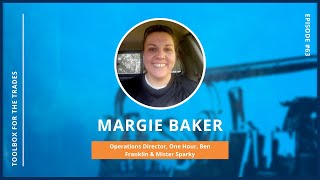
This is a YouTube video titled "Advice for Recruiting Top Trade Talent | Podcast Ep. 63 | Toolbox for the Trades" featuring a podcast interview conducted on October 12, 2021. The conversation is between Jackie, the host, and Margie Baker, the operations manager for One Hour Heating and Cooling, Ben Franklin Plumbing, and Mr. Sparky Electrical in Richmond, Virginia. The discussion covers Margie's career path into the trades, her experience managing a young, tech-savvy workforce, training and developing technicians, leveraging technology like ServiceTitan for communication and dispatching, and maintaining strong customer relationships. The episode provides insights into operations management, recruitment, training, and customer service in the trades industry.
Margie Baker, you are the operations manager for One Hour Heating and Cooling, Ben Franklin Plumbing and Mr. Sparky Electrical in Richmond, Virginia. You are a service titan, like basic power user at this point, a lady titan, member of Spark Sessions, member of the Torch Network. Welcome, welcome, welcome to the podcast. I'm so excited for you to join.
Thank you for having me. Super excited to be on.
I know we've crossed paths a couple times now. You're just a delight and I'm really glad to learn a little bit more about how you got into the trades and unlock some of that knowledge that's in your noggin, which you have a lot of. So let's start this podcast the way we do every single one. How did you get in the trades?
It was actually a fluke, fun story. I was actually working with Scott's Miracle grow. I've been there for about five years and I needed to kind of take myself out of burnout role because that's what I was in. I was working 90 hour week, six days a week. And I actually came on board of the company I worked at as an outbound call specialist for evenings part time, knowing nothing of the trades, nothing of anything else. Just I had done sales and marketing for Scott's and they wanted some help in the evenings here. So that's how I took on the role and then from there just kind of progressed on up through the company.
Dang, 90 hour weeks. That sounds like a nightmare.
Oh, it was a blast. It was absolutely horrible. So it was, it was absolutely, it was absolutely horrible. Only had Sundays off and it just. And it was like that all year round.
So were you when you got into that company, were you one of those. I feel like whenever people ask, answer the question, how did you get in the trades? It's always like, well, I didn't expect to get here. I feel like that's the common denominator. Was there anything that you particularly wanted to be when you were growing up or you were going to school?
Always, always was attracted to coaching and teaching, which kind of still fits with the role I'm in now. So. So never really got down the teaching path. I do coach, I coach on the side. I coach field hockey as well as I coached our local women's rugby team for several years until we had our little boy because that takes a lot of time. But I do, I still assistant coach at a local high school with field hockey. So just, I love coaching.
That's awesome. And who would have known? Raising kids is hard. What a nice little insight. To drop on the podcast.
Shocker there.
So tell us about how you went from working in the office part time as an evening outbound specialist to operations manager. I would love to know how that progression went for you.
So started evening outbounds and then I had been here probably about a month and Chris Jr. And Chris Senior approached me and asked if I'd be interested in the full time dispatching role. Moving full time, benefits, the whole nine. And of course, obviously I was very interested in that. So moved on over to dispatch and gosh, I was in dispatch for two to three years, give or take a little bit, and started. I actually switched from there into a comfort advisor or sales outbound or outside sales, but was also still doing a lot of office work. Like they couldn't quite cut the tether. We just, you know, we're smaller so we, you know, we had dual roles. And then I ran an outbound sales team while doing also outbound phone call team in the midst of doing comfort advising. Then I came into sales and marketing for probably about six months to a year. And then finally Chris snagged me over into operations and I've been here ever since.
Nice. Out of all of those roles, was there, I mean, you've obviously been into the operations role for a while now. Is there anyone that, you know was a really good fit for you? Are you kind of just one of those jack of all trades that molds into whatever the need is?
Yeah, I'm a big team player. So where the company needs me is where I tend to be, you know, tend to go, you know, so it's again, we're a little bit smaller, you know, we do about 5 million a year. We're not a huge company by any means. So I still get to dispatch on occasion and everything else because people take holidays, you know, so you get to still do a little bit of it all as an operations manager. So you kind of got jump in when you got to jump in. So that's the fun part about being operations manager. You get to do whatever you gotta do.
I mean, that's pretty cool. You never have like the same day. You never have the same, like boring day after day. It's always something new. Yep, very cool. All right, so I wanna get into dispatching for a bit because I've never had someone on this podcast who's been so in the weeds with dispatching before, but before we even get there. Yeah, really, it's been a lot of owners and folks who have come on who have experienced dispatching. They're like, oh my goodness, that was so long ago, like I can't even remember, like, what, what year was that? So I really want to get into the, some of the dispatching tips that you have, but when we first spoke, you mentioned that the shop, as it exists right now where you work, is actually pretty young, like a lot of Gen Z's and millennials. And that was one thing that you particularly called out during our interview. So I'd love to know how that makes your shop unique.
It makes us very unique. One, it makes us have to really build our credibility. You know, we have one or two guys with gray hair and that's it. You know, so outside of that, all of our guys are pretty much 30 or younger. In our, in the field, we have one or two younger 30 year olds, but that's still millennial. I mean, I'm a millennial and I'm 40. We forget that millennials are 40 now. The owner and myself are both millennials and we kind of go down through the Gen Z and having that, it gives us a uniqueness. We really don't have many people afraid of technology here, which is really great with Service Titan, you know, so they are all in on the program because they love it because, you know, that's what it is. That's what they grew up with. They grew up with technology. You don't have anybody fighting that train, which makes using the software really nice because it's just very easy. Like, hey guys, we got a new feature here. It is and like, oh, so cool. We got some new buttons to play with and they get super stoked about it and, you know, move on down the line. And it also, I think it develops and helps with our culture, you know, and I think that's something very unique to, you know, and I'm sure a lot of maybe boomers and Gen Xers might disagree with, but, you know, it really makes you value your family type culture in the company because, you know, we have a lot of people that, as Chris and I always like to say, all of us here, you know, work to live. Nobody here lives to work. But you might as well like where you work if you're going to have to do it every day. So we value that as a company and that tends to just, you know, ride through our culture with it. And the guys really love it and it just helps us keep texting the door because we strive and live, live and breathe by that culture.
I love that. When you said family oriented business, that is definitely an adjective that gets thrown around in the trades a lot, I think, normally, because the shops tend to be family owned. What does family oriented mean to you?
So personal story, not part of the family. So just toss that out there. You know, it is a family owned second generation company, as you said, you know, that tends to be the way the family owned goes. There's several Hodges that work here, you know, that aren't just in the ownership. We have one of the electricians, two guys on the H Vac side. So several family members in the business. But again, I'm not part of the business in that. In that respect. But my son, three years ago now, or not quite three years ago. Two and a half. He's two and a half. Was born three months early. And literally it was. My wife had the baby and it was split. You know, just obviously had to go. Had it. Had to go take care of. Not once was there ever a question about my job, what I'm gonna have to do, what we do here. It. I didn't get it. I can tell you, Jackie, on most. I rarely get vacations, you know, because you just get phone calls all the time. You know, I didn't get a single phone call while I was there, minus text messages of well wishes. Do what you got to do. You. You're where you need to be. And that's what I mean by family. Like it was. They're there for you no matter what. I've seen him put people on planes that couldn't afford a plane ticket to go to somebody's funeral. Like, amazing ownership and amazing, amazing people.
Thank you for sharing that personal story. I don't. I'm actually getting a little emotional about you saying that, and I can't imagine that about you. That. My sister, by the way, used to be a. Was a NICU nurse for five years. So very familiar with that world.
Superhero.
She is a superhero. Thank you.
Yeah.
So I'm so happy to hear that Chris was able to give you that support and that now your son is doing well. But yeah, that is so important.
And.
And I think those tiny moments where owners and leaders within the company are able to give you that flexibility when it matters, is really what creates retention and what creates a bond within the business that kind of can be extended to that definition of family. Right. That's awesome. So, you know, you mentioned that the fact that the shop's pretty young, that also helps with retention. But I know it's also because you guys grow a lot of technicians in house, and I love the phrase. I was writing out the questions for today's interview.
And I was like, you grow your.
Technicians in the house. And I was picturing like a little Chia Pet or something or like some little plant. But I would love if you could share some of the success stories that you guys have at one hour about like some techs that have come on as apprentices and have really just now had these really full blown rewarding careers.
Absolutely. So just like everybody else, finding technicians is extremely difficult. You know, we have the same struggles that everybody else does throughout the country. You know, our people going to the trades are decreasing every year, unfortunately not increasing. So we decided, you know, it's a lot easier to find good people that, you know, as we like to say, look good, talk good, smell good and teach them the trade than it is to find people in the trade and teach them how to look good, talk and smell good. It's way easier around. So, you know, we hire people for culture and work ethic and you know, develop them up. And it does take time and it's does take some money. But one of our great success stories, we actually had a gentleman that came to us. He was a manager at a sandwich shop and his brother in law worked for us. And his brother in law, he said, hey, I know we have, you know, a green, green tech position getting ready to open up. I'd love if, you know, you guys would mind interviewing my brother, my brother in law and you know, I'm trying to get him out of the sandwich shop business and get him into a career. And we're like, absolutely, bring him on in. And he had the right attitude, you know, go getter and brought him on. He is now a lead install technician for us. He's the head of our install and he does amazing work. He's now, I think we just hit six years, so three. About two and a half years in he became lead and he's just, he's a rock star. He works hard day in and day out and does just cares about his job, you know, and he loves that he now has. He always likes to say, you know, thank you for letting me find my career. And that's. And that's what he truly has. And he just does a phenomenal job with the customers and really just, you know, front to back, you know, few callbacks and few callbacks are few and far between when it comes to installations. And that's all you can ever ask for. Right? So he does a great, great work.
That's awesome. Can you tell me a little bit about the green tech program? So you guys basically open up positions for green, no experience whatsoever. Techs, what kind of training do you take them through? What does that look like? What kind of milestones do they have to hit before they get to the next level?
So excuse me. As you know, we're part of the Clockwork franchise, so we have some benefits of being a franchisee in regards to like success academy and different things like that, where we can essentially teach them how to talk to customers. Like it's a lot of that, how to. And then we take them out into the field for several months, I'm talking six to 12 months where they're just doing ride alongs with technicians and trucks or they're just not a gopher on an install, but pretty close to it. You know, where they're learning front to back on what, you know, how the units come out, how the units go in. We do brazing techniques in the back and just all that and in between with a bunch of ride alongs and then one on one sessions with myself and other management team members in the back of just walking through customer led scenarios of, you know, how do you approach the door, how do you knock on the door, you know, what do you say when you get to the thermostat, you know, front to back on just how to talk to customers, how to present solutions for customers and how to bring it up. And at the end, you know, indirectly, how do you ask somebody for $500 after it's all said and done? Because you know, that tends to be the hardest thing they have to do. But we walk them through it step by step and the franchise helps a lot of that too because they have a lot of great training programs too that they go through. And it generally tends to be, as I said, about six months to a year, just depending on the technician and how much they pick up on where they go. Normally we move them up to maintenance tech and then from maintenance they gradually we move them up into service. And all of our maintenance technicians run on call with our installers for new install callbacks because they tend to be a little bit simpler, they're not as complicated as your older systems. So that gives them that experience of having to go run on call. And it's a win win for our service guys because they're not running new install callbacks. They're getting the better opportunities, as they like to say. So it keeps everybody happy. And then the install crew takes pride in what they do, so they really want to get out there and see what they're doing.
Too nice. I'm going to hop around a bit. So you just covered a lot about the personality stuff, like covering. So how do you talk to humans? How do you convince someone to give you $500? What about the technical aspect?
So that we do a lot of that in the ride alongs. And then as I said in the back, like, we do different brazen trainings. We have a program we use called Interplay that has. Yep. You're familiar with it?
I'm familiar with. It's come up. This is now the second time it's come up. That's the VR one, right?
Yes, Yep. So that just gives them some experience in there for being able to troubleshoot. And the cool thing about Interplay is they'll actually let you fix the system wrong. Like you can in, you know, like in the real world, you know, you can jump stuff and bypass it. And all of a sudden the system's working and it's showing on Interplay. Yeah, you got to work and you're like, yeah. And it's like, failed. You did it wrong. So back through. We're not doing shortcuts. Very cool.
Very cool. And again, going back to what you said earlier about, you know, having a younger shop, getting these green techs kind of early on in their careers, or trying to find a career who've grown up with technology, they're probably like, oh, hell yeah, I get to wear a VR headset. That sounds like fun.
Exactly. You know, it's just a video game. Yeah.
Real quick. You have experience in the field too, right? Because you were a comfort advisor for a bit. So what's your technical level of understanding across like H vac plumbing and electrical?
Plumbing and electrical. Probably a lot less than my H Vac knowledge. Just because we came out with plumbing and electrical a little bit later in my career with one hour. But plumbing, you know, water rolls downhill. So, you know, that's the basics of 90 of it. And electrical, you know, two circuits connect, you know, we're doing something right. So but.
And don't. And don't combine the two.
Exactly. Don't combine the two. But on the H Vac side, technically speaking, I could probably get out there, do a couple of capacitors and some contactors and different things like that. But I'm not going to be going in there and doing any major refrigerant repairs. So that's just not my level of expertise as far as the systems themselves and design and flow and how to explain them and how to talk about, you know, sizing ductwork and sizing the systems and load calculations. I've done all that. And that's gravy just from the experience of being a comfort advisor. Cool.
You mentioned that you were part of the Clockwork franchise. We love Clockwork here at Service Titan. In addition to getting access to these trainings, we. What are some other things that have been really great benefits to you guys being part of the Klocwork family?
So I would like to put it this way, so everybody that's on this or watches this most likely is a member or knows about Masterminds. Klocwork is kind of like masterminds on steroids.
And just for anyone who is not a Service Titan customer, the Service Titan community has a Facebook group called the Service Titan Masterminds Group. And if you're a customer of ServiceTitan, you get access to this group. It is, for lack of a better word, it is lit. There's like 30, 40 posts a day. It's insane. So Clockwork has their own Masterminds group?
Well, not, not Masterminds group per se, but just. It's that same. It's that same camaraderie. You know what I'm saying? So, like, you get on Masterminds and you're asking questions and you're bouncing ideas from everything from marketing. It's about not reinventing the wheel. That's what the franchise. That's what the franchise system's for. So you have the ability, you know, if your shop is, let's say, just doing horrible at converting leads, you know, I can get on the phone, you know, Jim Smith, who's down, you know, down the street and say, hey, what are you guys doing? You guys are converting at 80%. And it's just that willingness to share and help and help everybody grow. And that's. And that's really what the franchise systems for. And, you know, it gives you all those tools to do that.
Got it. Thank you for answering that. Don't get. I mean, I've heard benefits, pros, cons of franchising. Not a lot of operations managers who get to kind of really use some of those benefits of it. So thanks for sharing. Going back to technology and why the fact that your shop so embraces technology is a benefit. You've only worked for Clockwork for, not Clockwork for one hour in your trade career. You didn't come from the trades before then. I'm assuming through your many masterminds groups and interactions with other shops, you've heard a little rumor that for other shops, it's a little bit more difficult to implement technology.
Yes. Just a little bit between franchises and everything else, it's extremely difficult. We had a meeting several years ago. Gosh, it was probably my first year operations manager, so this is probably five, six years ago for our franchise. And they were doing a generational experiment, and one of the things it had at this meeting was, hey, stand up if you're a boomer. Stand up if you're this. Junior and I were the only two that stood up for Millennial. Gen Z wasn't even on the board yet to let you know how long ago this was. You know, like, Gen Z wasn't technically legally allowed to work yet, so they weren't even on the board to talk about. And we look around the room and we're like, all right, yep, yep, yep, we're young. And then it was a great pitch by the. By the franchise, because then they were talking about, you know, software programs and stuff like that, and him and I were like, oh, my gosh, this sounds amazing. And everybody else was like, yeah. So it definitely, it definitely helps just to not be afraid of that technology and really dive in. And we have a couple of guys that are on the older end of the spectrum that having the younger shop makes them want to dive in. They're less resistant to it because if everybody else is having success with it, like, they can't be the admin out.
Yeah, well, you know, it speaks to leadership. Comes up on this podcast all the time, obviously. Right. It just comes up to the more excited and positive you are about a change at a company, the more excited people around you will get. If you go in grumbling and, you know, kicking, dragging your feet, because you have to onboard a new. A giant platform like Service Titan, for example, your team's going to pick up on that energy and they're going to do the same thing. So it really speaks to how important it is as leaders to be positive and energetic, because that trickles down to the rest of your employees. And the more people are excited about something, the more other people will get on board.
Right, Exactly. You get that buy in, and if you don't have that buy in, you're not going to be successful no matter what you're doing.
Yeah, so speaking of techs, as operations manager, you speak to them all the time. Right? Before we started this recording, you actually had to mute yourself because you're like, oh, got to take this call. So you mentioned when we first spoke that you had some tips for how to best communicate with field technicians. Using Servicetitan. So I would love if you could share those right now.
Absolutely. So I think one of the biggest hurdles that everybody comes in is, you know, you have so much communication that needs to be done, and it's hard to get that communication not only consistent, but fluent and accurate. Right. Those are the three big things you want to make sure that are happening when you're having communication between whether it's your dispatch to your operations to field. And what I love about Service Titan is it really cuts out the verbal communication. And that's the weird part about it, is that you can have a ton of communication without ever having to speak to somebody. And that's the great part about Service Titan because you just. You get less human error there. You know, if I have a form that they fill out and for parts, this is the simplest one. You know, we all have to order parts day in and day out. So simple form, it's not super complicated. Just, you know, what vendor, what part broke down, what's the model and serial number? Did you check the warranty? You know, was it after hours? Where's the part located? Just simple questions for the tech. They're all drop down, minus, like if there. I think there's one at the end. If there's any additional notes, the office needs to know that they can type in or what have you. But when they fill out this form, a simple trigger happens with it and a new tag pops up. That part needs to be ordered with exclamations on the call. And that triggers a report that goes every morning to my inventory specialist that orders parts every day and it has all the information they need. Has it been ordered? What's going on with it? Is it in stock? Is it not in stock? Is it under warranty? Has it been checked without one phone call? And it's just super simple. Then they take it. They either book the call because they have all the information or they pick it up from there, finish ordering, and then when they schedule the part, another trigger happens on the call. When they book that part, job of two tags pop up. One says part replacement and the other says warranty replacement. They X out which one it is. So if it's under warranty, they X out the part. If it's not under warranty, they X out the warranty. And then our warranty division gets all the ones that say warranty to make sure all the warranty parts are coming back in. Nobody's talked to anybody, but the communication is perfect. And it's insane. And it's all Done through service tighten without a single phone call.
I'm not paying her to say this, by the way. I just want to say that. And also, also, introverts rejoice. Seriously.
Yes.
Well, what I want to call out there, especially when you're running a multi trade shop like one hour Mr. Sparky and Ben Franklin, you're dealing with different trades, different manufacturers, different systems and just having to collect all that information on a call. So if you're not using a form like with Servicetitan, you are constantly like, you have to trust that your office person is asking all of the right questions, that your tech is collecting all the right information. And duh, we're humans, we make mistake. That's never going to happen. So you're constantly calling people back, oh, I already left the house. I don't know, I didn't take a picture of the part. Let me call. And it just becomes a mess. So I'm glad to hear that you were able to do that.
Oh, it's great. And especially right now, I mean all of us are experiencing the supply chain shortages. You know, an hour can make a difference on whether or not you get a part.
It really can. Speaking of the supply chain shortage, I don't want to. This actually will come out in a couple of weeks and I'm pretty sure the supply chain shortage will still be there when this episode drops. What are you guys experiencing? Like what are you guys. Do you have any experience you'd like to share? How are your, how is your relationship with your suppliers? What's going on with you guys?
I'm always a firm believer. Believer, you know, you catch more flies with honey than you do with vinegar. So we have a great relationship with our suppliers of vendors, you know, and that, and I think that's key. We're a carrier factory, authorized dealer. So where again I said this at the beginning, we're not a big shop. So I don't have a huge warehouse in back to stock, you know, $5 million in equipment to sell. I have a couple of, you know, units here and there. Really what I'm doing is every morning I get on, I log on to carrier and if I see something that we typically order is super low, like 2 ton units or whatever like that, I'll order one or two, get them delivered and we'll just hang them out back here from that. I think we've only had one extreme delay for a customer because they refused anything else but the system they exactly wanted. We had other options. They wanted the system they wanted. They Waited, they waited a month for it before it finally came out of stock. But they had cooling so they were a little bit more patient obviously in that particular case. So that, that does help. But outside of that though, we've been able to handle the curve. You know, I have a ton of indoor units, a few outdoor units, and we just kind of cycle them through. And when the getting's good at carrier, I don't touch my supply and when it's not, I just pick from it and go from there.
Got it? Yeah. So being proactive and making sure that you're just communicating, I mean, that's really all you can do, right?
There's not much more that you can do it, you know, minus. Again, just be nice to your, you know, vendors. They're going through the same frustration you are. They're getting the same yelled at that you are from your customers waiting on parts and blowers and everything else for months. I can tell you right now, I know for a fact I get a little bit better service than some other people that have treated them nastily because again, I haven't waited for anything. Somehow magically they find equipment for me. And we're not big of a shop, so I know they have bigger clients than us.
So backing up to communication a little bit. So you already mentioned with the parts form on Service Titan, that's like one of the best and most automated ways that you can get information quickly and get stuff for the customer as soon as possible. Talk to me about communication between your dispatcher, CSRs and technicians, because I know that's also a big sticky point. What are some ways that you've been able to kind of hack that and make that a little bit easier?
One, the text messaging feature inside of Service Titan is super easy and it allows that communication to stay either a tied to the job or be right there on the dispatch board. And then the ability to add the alert feature there was super nice. Then our technician, our dispatcher knows when they text it so they don't have to have it up all of the time. They get that little pop up alert that says, hey, so and so just texted you, you might want to look at it. So that, that's really, really nice. But they're all tied in with all of the parts and all of the different tags, you know, so if we have a lot of different communication, because that's, if you think about it, that's the majority of what we're talking about day in and day out with the text is are we going back to this job appointments, we finally got an alert for requesting a second appointment. That was huge. You know, so now the techs aren't having a call. They just put that in there. We set the alert up to go to the dispatch cell phone. They see what customer it's attached to, they're able to go to the notes and then just book the second appointment. Again, little to no phone calls. And that's really the goal. Right? We want them on the phone with our customers not having to be on the phone with the technicians, and we want our technicians with the customers not having to be on the phone with the office.
Got it. All right, so let's go into dispatch, because we're here. You got a ton of experience in it. So talk to me about some of the dispatch incentive programs you've used, because you never talked about those on this podcast. How do they work and why are they successful?
So the biggest thing, I think the biggest problem people have with dispatch is that it's not a normal. It's normally not a revenue producing position. Right. So that's the easiest way to incentivize somebody. Now you sell this, you get X. You know that the simplest mathematical terms for incentivization. So the big thing that we do minus, you know, we do have our typical, you know, if they do follow ups or they do membership sales, they obviously get their spiffs on those. But we actually do stuff for idle and standby time. The less about it we have, the more spiff you get. Because let's be honest, if our technicians are sitting still, they're not making money. And if they're not making money, we're not making money. And we're just all spinning wheels. We're paying somebody to sit still. So excuse me. So we go through the Eidl and standby time and we run that report weekly. And we have KPI goals for the Eidl and standby time that we do spiffs off of.
What are the KPI ranges that you're trying to reach that the dispatcher is trying to stay in?
We're trying to stay under an average of an hour per technician for idle time for the week, which if you do the math, that's really low because you're talking about less than five minutes between every call. So that, that is our ultimate KPI goal. And generally speaking, they hit it pretty much every week.
Oh, my goodness. And less than an hour of idle time per week. I'm just like, my mind is just like processing that. What that means. That is impressive. How many dispatchers do you have right now?
One full time dispatcher, one full time csr. They do have some overlapping roles. So first thing in the morning, our CSR does do dispatching because our d. Our dispatcher comes in an hour later and stays later. And then in the evening she does some CSR roles because she's making outbound calls because our CSR is not here and answering phone calls while her CSR is not here.
Got it.
Cool.
So what are some of your top dispatching tips?
Dispatch for profits is honestly number one. You know, there's your best guy for that particular job needs to be the one to go. And one of the biggest setbacks you have with dispatching is always that training and that transition of your dispatcher learning your technicians. Right. This technician is good at this and this technician is good at that. Service titan makes that easy. And no, they're not tipping me to say this honestly. You have, you know, from the ability for the skill sets that you can put on the technicians and then the notes you can put in for, you know, what they have for their vehicles, you know, you just hover over that technician or you try to book a call on that technician and you already know whether or not their skill set is there. So being able to put that in and develop the skill set for your company, that is important to you. So if I can attach, you know, like, hey, this guy's on fire right now with system sales, I'm going to put an estimate skill set on him. So all of our estimates only go to him if possible. Obviously, you know, you have a trickle down theory because not one person can run every single call, but by, by filtering it that way, it takes some of the knowledge base and that knowledge transfer that you have to have in dispatching takes it off the table for you and allows you to, you know, again, help use the software to its best of its capabilities and let your dispatcher really just work. Worry about getting your technician as efficiently to the call on time as possible.
It's like a baseball card for your techs.
Yep.
Like with stats and everything.
I like the analogy there. I'm a baseball fan, so.
Oh, good. What's your team?
Everybody's gonna hate it, but it's okay.
It's the Yankees, so I'm from New York, born and raised, but I am from Flushing, Queens, so literally grew up like a stone's throw away from, from Shea, which is now Citi Field, so I have to root for the Mets. And now I live in Los Angeles.
David Wright. So you know, it's okay.
So Xavier, like in.
In.
In the city? No, wait, we say you're right. Oh, he's a baseball player. David Wright. There we go. Jackie doesn't have a lot of baseball knowledge. Just those team names uncovered here on Toolbox for the Trades. Oh, so you went to high school with him? I do know that name, yes.
Yeah, he was the third baseman there for a while. Yeah, him and I were just a year apart in high school, so he was. He was just a year behind me. So, yeah. The Virginia beach area is a big hotbed for BJ Upton and Justin Upton. Their mom, Mrs. Upton, was my PE teacher. She obviously doesn't teach PE anymore. You know, so it's a. It's a big hotbed for baseball down there. There were scouts at, like, every game. It was ridiculous.
Great. I think we should try and make it so that we do as many baseball analogies as we can throughout the rest of the interview.
We'll hit a home run on it.
Already. Already, already, Already hit it. Oh, wow. It's going to be tough for me, but you're going to be able to do it really well.
It's okay. Can strike out every now and then, Jackie.
Don't worry about it, Margie, I'm just going to make you the host of this podcast. All right, let's go back to dispatching, because I know you're using smart dispatch at Service Titan, which is kind of like this new feature that not all of our customers have yet. Can you tell me a little bit about that, how that's helped you guys?
Yeah, pause. I have no idea what that is.
Okay, pause. Great. Amazing. I thought that meant that it was. We are forgetting that we're at 41, so that's probably at 31. Mark Smart dispatch and then handing it over. Great. Okay, we're going to pivot now. And that never happened. All right, so tell me a little bit about how your team thinks about customer experience.
So we're very. As our dispatcher and our csrs love to say we're very customer forward. The idea is we always go for a win, win, win. Back to our baseball theme. Win for the customer, win for a technician, and then win for the company. If you have to sacrifice a win, it starts at the company, then we'll go to the technician, then we go to the customer. Because if you take care of the customers, we're going to have jobs for the technicians. And if you keep your technicians happy, they're going to turn around and take care of your customers. So, and they're in fact, taking care of your customers is going to ultimately lead for wins for the company. So we're extremely customer forward. And really, you know, our goal is 100% satisfaction on every single call.
I love that. I've never actually thought of that. That kind of like trickle down of what that means. Like, the happier the customer is. Like, the company takes the head first, then the technician, then the customer, and that's the last possible option. I love that. Can you share with me? Because I know you deal with a lot of customer issues. Obviously, on the sales side too, do you have a particularly great and heartwarming customer story? And then on the contrast, you have a particular nightmare customer story you would like to share.
So let's see. So all names being changed to protect the innocent. Mrs. Smith. So we have, we have 100% satisfaction guarantee. Also on our new installations, we have a no lemon guarantee. So if a compressor fails twice within five years, we replace it. We replace the system. No questions asked. Does not matter. We'll come out, rip it out, not charge to the customer. We take care of it. Mrs. Smith had a system, and it had several repairs. We were probably about 6 years old for the system. It had parts and labor. We were on our 12th repair for this system, and it was our third major repair. We had only done a single compressor, but it was a cold snap and it was kind of the final straw for Mrs. Smith. And it was a evaporator coil that had gone out. So the evaporator. The evaporator coil. She would say, I'm done, Margie. Like, the system stinks. It's a lemon. Get it out of my house. And I was like, I completely understand. You know, there's a process we have to go through. I understand this doesn't quite fall under our no lemon clause or what have you, but we want to work with you here because we want to take care of you. So, you know, we were trying to get with the manufacturer to get the manufacturer tech reps out and do all the snazzy things you have to do for them to come and pull their reports and look at all the maintenance records and all the things to get them to approve. Hey, let's get a new system. We'll put it in for free and be done. So at about day 20 of waiting to get a tech rep out there, because that's how long it had been, obviously Mrs. Smith was being. Was extremely frustrated. And this is a big deal, I always like to say, about building rapport with customers and Keeping customers in constant contact with you and communication with you. Mrs. Smith, at no point, because of our constant contact, was mad at us, which was great, but it's because we had the communication. She was frustrated and she was frustrated with the situation, but she knew we were doing everything we could do because we weren't dropping the ball on her. We were constantly in contact with her. Like, look, we put another call into Goodman. This is where we're at. Put another call into Goodman. This is where I please you email Goodman. Let's see what we can do to attack it from both angles, whatever it may be. Probably want to cut Goodman out of there. Probably shouldn't say that on live tv, but we can bleep it. We can bleep it, but yeah, in on that note though, so we went through the whole process and I finally had a tough conversation with Mrs. Smith and I was like, you know, Mrs. Smith, I'm going to present an option for you and I don't think you're going to like it, but it's not. It's my job to present all options for you and I want to take care of you as a customer to the best of my ability. And she's like, margie, at this point, I really don't care. What do you got? So I was like, look, you know, as you know, before, that was the systems we were using. We're now authorized dealer with somebody else. And I think we just put a brand new system and go with this new company, you know, I was like, I can get tech reps out next day with them. This shouldn't be an issue like this. We shouldn't be getting our feet dragged through the water here. Like, we're not getting taken care of and I don't feel right for you for that. And she looked at me and she was like, margie, I'm not paying $10,000 for another system. And I was like, Mrs. Smith, I would never ask you to do that. I was like, that's just. That's not fair and that's not good business practices. I was like, I say let's go ahead, let's take care of it at cost. If you cover the cost of the system, we'll take care of everything else and you know, we'll get it in for you. And she was absolutely ecstatic. Has been a raving customer ever since, got her brand new system, has had minimal issues. You know, mine is normal wear and tear items and just happy and go, lucky as she possibly could be with that new system. So she Loves it. She's happy, have nothing but positive reviews. And she actually gave us a referral just last week for a new system called in. She's like, hey, I want my referral bonus so I can get more micropower guards on my account. So that's awesome. Yeah, no, it was great. And it was a hard conversation to have, but again, having that communication makes all the difference.
It really does. Because as a service company, you're dealing with, there's so much of the production side that you guys can't control. You're not actually manufacturing the units that you're installing. So there's so much stuff that's out of your control. And as long as you stay communicating with the customer, being really honest and upfront with them, that's when you're going to gain a customer for life. Even though she probably. She definitely. I mean, like. And being able to make extend that offer of goodwill, which was, we'll give it to you at cost. Just really now she's a raving fan. And those referrals just. I mean, I'm sure you made the money back just like, within a year.
Oh, yeah.
So that's awesome. So happy to hear that. All right, I want to pivot a little bit. We're going to talk about you as a woman in the trades because I think you have really great experience and have a lot to say about it. Before we get there, I want to talk a little bit about sales because you did a lot of outbound sales calls within the trades. What are some things, some of the big things that you learned within your outbound sales role, your comfort advisor roles that you think any techs listening, any selling techs or comfort advisors out there should probably keep in mind the biggest.
Thing I probably learned selling or talking to anybody. Well, two things. One, never be afraid to ask for the sale. Because if you don't ask for the sale, you get this really awkward pause at the end and you're like, okay, well, I guess I'm going to go now. So. And that's the end of it. The second big thing is don't be afraid of silence. After you've gone through your presentation, you've done everything you're supposed to do, they're looking at the estimates, whether it's on the tablet, whether it's in, you know, pamphlet form. No matter what you're doing, don't be afraid to just be quiet and let somebody digest. You know, for whatever reason, unless that system was broken that day, they weren't expecting to spend 5, 10 you know, whatever amount of money they're looking at at that moment. And as humans, you just need a second to digest that. And it's the biggest fault of anybody is that awkward silence. If you just sit and just let the customer digest, you will get more yeses than you will ever notes. Because they're going to sit, they're going to adjust, and then they're either going to ask a question that you can rebuttal, or they're just going to say, yep, let's go ahead and do it.
That's really good. You'll have less strikeouts if you let the silence sit you. Man.
I thought you'll hit for the cycle. You'll hit those singles, those doubles, those triples, and sometimes home runs.
I thought of it like 10 seconds into your answer and I'm like, I can't.
It's.
This is the worst quality an interviewer can do is I can't wait for her to stop talking so I can put in my one baseball metaphor that I got. I 100% agree with that. And I think as technically inclined people as you know, in society, we're trained to just make sure everyone's kind of comfortable. We don't necessarily want to ruffle feathers. It's especially very common in American society. It can be so uncomfortable to just sit there and be like, oh, I just asked you for $10,000. Let's see what you say. And I think it really, there's that big growth that has to happen as a selling technician, as a comfort advisor, to be able to just sit in that silence.
Totally agree.
All right, let's talk about being a woman in the traits, because I know you got opinions on it. What's your experience been like, honestly?
And I think this does have a lot to do with the company and the culture that we have. It's been superb. You know, I've had, I've had great experience, honest. The hardest part I had was inside of customers home, inside a customer's homes, generating credibility because they see a woman walk to the door and they automatically knock you down two notches. You know, they. She doesn't know what she's talking about. She doesn't know this, she doesn't know that. And then as soon as you start talking a little bit technical with them, all of a sudden now you're up four notches because, like, well, hey, she's a woman and she knows her stuff, so she must really know her stuff. So it tends to go that way. But I think with, gosh, I wish we get More women. More women in the trades. A women. A woman going to the house, it has a leg up over any male counterpart. Because honestly, 50% more than 50, 65, 7% of time you're dealing with a house, you know, a housewife or a woman at home, and you just have that genuine, just compatibility speaking with another woman, and it's so much easier. I can't tell you how many sales I've received because I spoke to both the husband and the wife, not just the husband, because that happens. And that's also no. Hey, sales tip bonus. Speak to both parties, whoever's in the home, not just one. Even if it only seems like one's the decision maker. I promise you, it's not the one you think. So I had many benefits. Quick story. I went into a customer's home when I was doing comfort advising. The husband answered the house or answered the. Answer the door and let me in the house. And I go through. Go through my spiel, and the missus walks in and I greet her, and I go through my spiel again, you know, just to, like, re. Even though I just did it with him and what have you, he stopped and he's like, awesome, you are speaking to her. So I'm going to go ahead and finish hanging this tv, like I was going to do. I did my entire presentation with her. He called me back the next day, and he said, you guys were $3,000 higher, but you're the only person that spoke to my wife, and she liked that, and she's paying for this. So we're dealing with you guys.
I mean, yeah, yeah, it's those little things, right? It's, you know, never making assumptions about what the home dynamic is, who the buyer is going to be. Just because your home looks a certain way does not mean that every home you enter as a salesperson, as a comfort advisor is going to be the same way. Same for technicians, obviously, too.
100%. And just being a woman in the trades. Gosh. Embrace the great things about being a woman in the trades. You know, the guys all call me the mother of the shop. And it works both ways because, you know, when Dad's around, which is Chris, we have a great dynamic. You know, it's like, you know, like, you have the little heavier hand, like, mom's here, but if mom looks at you the wrong way, you know you're in trouble, right? So you're going to ship up and you're going to be like, what did I do? And you go figure it out, and you're going to. You're going to correct it. So. But just having that, just that little bit of just, I don't want to say motherliness, because it doesn't even have to be motherly, but just that, that softer side for the technicians. I mean, I've been everything from a psychiatrist to a best friend to, you know, just an advice giver on so many occasions. And I think that's part of the role that you see as an operations manager now or any type of management. You know, your technicians lean on you for a lot more than just, you know, questions about technical skills. And then if they're not, the question you want to ask is, you know, and maybe that's the culture your shop has and that's not a right or wrong thing. But if you're truly saying you have family culture and they're not talking to you about their family and you don't understand anything about their family, you really have to be introspective and look in the mirror and see if you really do have that family culture.
That's actually a really good takeaway. I agree. I think once you get into that management role and you start having direct reports underneath you, a lot of the times the conversations you have aren't about work, they're about personal stuff. And if you're not talking with your direct reports about personal stuff, do you really have that open relationship with them where they feel comfortable with you?
Yep.
Dang. All right, so let's talk about your dynamic with you and Chris, because you've mentioned it a lot and it sounds like a mom and dad duo. It sounds like it's been really rewarding for you being there at one hour. Talk to me about how you guys work together and dive into a little bit more about this mom and. Mom and dad dynamic, because I want to hear more about it.
Chris and I kind of came up together because he was actually still in college when I first started here because it is a second generation company. So it was really cool because, like, as he moved up because he was doing comfort advising and going to. And going to school, and I started in the outbound sales. So we kind of moved up in the company together. And obviously now he's president slash owner of the company and I'm the ops manager and we just get each other. I don't know how else to put it. You know, I know what he's gonna say and I know what he's thinking, and it's vice versa. You know, we compliment each other. You know, he is very much A rainmaker. I don't know if anybody's ever watched that TED Talk, but, you know, he's broad thinking and just amazing out there. Just getting out there of, these are the ideas. This is what we're gonna do. And I'm back here just making sure the pieces fit. Like, yep, that's a great idea. We need to wait a minute because we need to finish this first, you know, and we have this great mutual respect where, you know, he truly listens and values my opinion, which, you know, that's. That's big. You know, he'll sit down and he'll. We'll talk and we'll go over many different things together. And then just the mom and dad dynamic. We catch it all the time where one of the guys will call him and then call me because they didn't get the answer they liked. True mom and dad dynamic. And like, hey, you know, And I was like, well, did you talk to Chris yet? Because this is definitely more of a Chris question. Well, yeah. Well, what did he say? Well, no, there's your answer. Why are you calling me? But yeah, he. We joke all the time and my wife doesn't mind, so I'll clarify that. But he is totally my work husband. So, you know, we go out and I can place his order for him. We were out recruiting the other day and we take our recruits to lunch normally and sit down. So you just have a nice, like, conversation with them and kind of explain the family dynamic and literally order the exact same thing for lunch. Except he's big on vegetables. He's a Whole30 dieter. And so he went to, he made the order and I was like, wait, no, you need to scratch the fries and replace that with broccoli. You need to scratch this and replace it with this. And he was like, what? She said? And I was like, you just need to read the whole menu, man. Like the whole thing. So you know what, you're getting on your plate. So. But yeah, so it's. It's a great dynamic and love working here. It's a great company.
That's awesome. Where were your.
Where were you recruiting at that point? We were at. Was it Friday?
Where were you, Scout? Where were you Scouting?
Where were you scouting? That was a referral from one of our technicians. Oh, nice. Yes, it was a referral from one of our technicians. And then we normally just take. We meet with our recruits at a lunch spot because it's easier for them during the day to meet for lunch because they're normally working and you don't want them to drive their truck to the shop and ever get put in an awkward situation. So we normally meet them out at lunch. Got it. Out for lunch.
So very covert operation.
Yeah. Codenames.
Codenames.
Though.
I want to talk a little bit.
I want to.
We're going to wrap this up in a second, but before we do, you mentioned that you guys opened up the Ben Franklin component and the Mr. Sparky component after you had already been at the business. Any insights that you want to pass along about, hey, what's it like to open up into a new vertical and what's it like to open up into plumbing and electric and electrical when you've been primarily doing H vac?
It was completely different in a huge curveball.
Nice.
So I thought you'd appreciate that. So the big difference was one, the vernacular and just the jargon. With the new companies, the operations generally are not that much different. You know, you're still dispatching the calls, you're still getting the calls. You're still marketing for the same calls. It's just what you're specifically marketing for has changed, you know, so your day to day operations, if it's solid, doesn't change. It's just the dynamic of what it is that, you know, you're, you're SEO and your p and your pay per clicks are a little bit different. That's really the only difference. And then you know, your actual slide ins and you know, your price book in that part is a little bit different. But overall, how you talk to the customers the same, how you get to the calls the same, how you market for the call is generally the same. You're just changing your words. So for the most part, if you, if you have the opportunity, go for it. Overall, it's not a complex change. It's just more of a learning your new jargon and making sure you have somebody that's a master in that division so you can legally do your work.
There you go. All right, final question then. I got some rapid fire questions for you. But what advice would you like to give folks listening who want to hire more women or maybe some younger generations at their shop?
Culture is key. Culture is key. If you want more women coming through your door, you have to make sure women are respected that are coming through your door. And sometimes it's taken a huge reflection on yourself, on, you know, are you throwing off anything that is saying, hey, you know, demeaning people down. And it could be completely, you know, subconscious. You might not be doing any of it intentionally, but I Have found, especially when we do get women hires coming in, that, you know, they're like, it's so nice to one, see a woman in management position, but two, to see a shop that is so supportive of women in their roles. So. And that's the biggest compliment we normally get, you know, so make sure your culture is there. You're not going to get a lot of millennials and Gen Z people if you're the live to work. It's just not the way of the world anymore. And that's unfortunately, that's who's coming into the business. Gen Xers and boomers are on their way out. It's time to switch the gears and switch the culture a little bit and, you know, change your lineup.
I'm constantly impressed. I think the counts at like seven or eight now. Anything we should have talked about that. We didn't. Margie.
Gosh, Jackie, you're so good at your job. You know, like, you're the best coach on the field. You know, you call the signs, you get them in. I think we're good. You help me hit it all out of the park.
Margie.
I can't. This.
That was incredible. That was the best game I've ever watched. That was wonderful. All right, are you ready for some rapid fire questions, my dear?
I am. Throw those fastballs at me, Jackie.
Oh, my goodness. How do you take your coffee?
With a little bit of oat milk.
Same. If you could have dinner with one person, dead or alive, who would it be?
Oh, dead or alive? Alexis de Tocqueville.
Who's that?
He wrote a. He wrote a book. He's a Frenchman. And gosh, now I'm gonna blank on the name of the book, but it was his journey on why the Revolution and Democracy worked in America. Democracy in America. Why the why worked in America and how come they couldn't get it to work in France? So if you like historical reads, it's a really, really interesting perception about somebody coming in just after the American Revolution and how this young country essentially grew. Fun fact, political science and philosophy major. So, you know, wouldn't think that, but double degrees there. So.
Oh, just flexing that. What's the number one thing you're trying to learn more about right now?
Oh, that's a. That's a tough one right now. It's actually probably how to nicely and safely and cleanly take out a wall, because we're going to do that at the house with our renovation project. So we've been working on that and I've been researching That a ton.
Well, best of luck. If money weren't an object so you had unlimited resources, what's the first thing you would do?
Oh, probably take my, my wife and her mother to Poland because that's where that's heritage and where they're from. So take them on like a history trip so they can, you know, go down and like learn about their history.
That's awesome. Do you have any podcast or book recommendations you'd like to share with the audience?
Oh, podcasts or book recommendations? Book recommendations for. Let's see. Gosh, I fired off so many the other day on Lady Titans. The Power. The Power of Consistency by Weldon Long's Amazing. Depending on your genre and self help books. That's. I'm a big fan of that. I'm a huge fan of Darren Hardy the entrepreneur. Roller coaster is an amazing one. Let's see. Any other ones in praise of difficult women? If. Did you. Did you listen to it?
I read it, Yeah, I listened to it. It's great. It's awesome.
It's amazing. And that just talks about a whole bunch of different women from everything historically to modern times and just essentially, you know, just be, be your own. Be your own badass.
I loved it. The last chapters on Carrie Fisher, I think, and it was super, super good. All right, final question. What's number one thing every contractor must do to run a successful business?
Gosh, the number one thing. I'm going to stay. I'm going to stay with my stay. Stay with my strong pitch here and stay with Gulcher.
Yep, that's what everyone says. Also, we forgot to mention that you are a lady Titan. You're part of the Lady Titans group, which is a group for the women of service Titan, anyone who identifies as a woman. And that's how you and I first met. And it's an awesome group. So if anyone's listening who's a woman or wants to support women, check out the Lady Titans. It's an awesome, awesome organization.
It really, really is. They're doing some awesome stuff right now for Tools and Tiaras. If you do happen to hop on, Jackie will throw the link on this for the.
Yes, I will.
For the little swag because all the proceeds from that's going to go to Tools and Tierra. So check it out because the swag school. And if you haven't seen the swag, the swag alone is just worth it.
More from Bill



ServiceTitan Virtual Agents: Simplify Before You Scale | Podcast Ep. 110 | Mastering ServiceTitan



Life After Live Events: How to Turn Post-Conference Energy into Real Profits | Podcast Ep. 297




