Business Planning and Budgets | Podcast Ep. 136 | Toolbox for the Trades
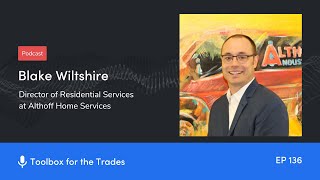
Transcript of a July 2023 podcast interview with Blake Wiltshire, Director of Residential/Home Services at Altoff Home Services (Chicagoland). Blake recounts his 19-year career path from entry-level roles to director, and describes how a three-day out-of-town business-planning and budgeting workshop (Nov 2020) transformed Altoff's strategy. Key themes: setting 3–5 top priorities (“rocks”), adopting ServiceTitan and modern marketing, developing middle management, preserving customer service during rapid growth, and hiring/onboarding practices.
Blake Wiltshire, you are the director of residential services at Altoff Home Services in Chicago. We're going to talk a little bit about how budgeting sets the stage for growth. But before we do, I need to ask you an icebreaker so the audience knows you a bit. I would like to know, Blake, if you. If you had 25 hours in the day, how would you spend your extra time?
I think that's pretty easy for me. I'd spend it with my kids. I have three kids, 10, eight and four. And, you know, with the summertime, our days are a lot longer right now. And so I actually have some outside time with them when I get home. And lately we've been doing a lot of fishing, and I've just. I've just really enjoyed it. And so for me, definitely spending. Spending time with them, I think that's.
An answer that's going to get everyone listening on your side and ready to learn from you. And also, I actually forgot to ch. Altoff is in Chicago, but do you guys have any other locations?
No, we're. So we're actually located in Crystal Lake, which is the suburbs, Northwest suburbs of Chicago. We do have another location in Hillside, which at the time of taping this, we're in the process of getting that up and going for us. So. So I have a manager that's going to be staffing that, and that should be a really nice growth opportunity for us in the next year.
Very, very cool.
Two locations, but in the Chicagoland area.
Awesome. I'm a big fan of Chicago. I am a New York City native. I've been living in Los Angeles for the last seven and a half years. So I really enjoy Chicago and I want to try and spend some more time there. So hopefully I will be taken out there sometime in the future, and then you and I can get some coffee or something.
But there you go.
Enough planning, enough Chicago planning. I want to find out how you got into the trades because you didn't plan to, so I would love to know how you got into it.
No. Yeah, I mean, I went to college, got a business degree. I knew I wanted to do something in business. I didn't know exactly what that would be, you know, So I, as luck would have it, I actually met the owner of our company, Todd Altoff, his son, like, the second day in the dorms, just walking around by happenstance. And so we hit it off and we became really good friends, actually lived together for a while. And when we graduated, he was moving back here to Illinois. I was from Mississippi, and so I was young and single and so forth and wanted to just kind of do something different. So I asked him if he wanted to live together up here in Illinois and get jobs. That was the plan. We're going to, you know, you know, find jobs. So I came up and I interviewed at a bunch of places and, you know, I had a couple offers and it was going okay. And his dad said, said, hey, are you gonna come. Are you gonna come interview here or what? And I was like, todd, I don't know anything about heating and air conditioning. He's like, that's all right. Just. Just come here. Let's interview. You know, interview, spend the day here. So I did. And at the end of the day, he's like, we want you to come work here. He's like, if, you know, give us like 60 or 90 days. If you hate it, go take something else. But, you know, I think. I think you'll like it. I did, and I hit 19 years, like a month ago. So I've been here a while. It's worked out. Worked out okay.
Yeah, it worked out okay is one way to say it. For sure. And I just. I have to ask you to expand because when we first spoke, you told me that you had a very interesting and high risk and big time job. So tell me about what was your first job for Altoff. And, you know, I just. It's always fun to comment on that because now you're the director of residential services. You've come such a far. Come far.
Yeah, I think for a lot of people, you know, when they think about in the trades people, you know, starting in the field, they start, you know, as the gopher and the grunt. Well, I can tell you firsthand, you know, you could do that in the office, too. So I actually started out being delivery guy and fire watch, which, if you don't know what that is, that's watching someone else work, holding a fire extinguisher and hoping nothing happens, but hoping anything happens just so that you're not sitting there all day. But I remember, I remember when I first moved off, like I said, I was from Mississippi, and I told my family I was moving to Chicago. And I remember a lot of my family members saying, oh, he's got this big shot job up in Chicago now. I remember really quickly thinking to myself as I'm sitting there with a fire extinguisher watching this technician work, that it didn't feel like a hotshot job at all. So, yeah, I mean, I started, I guess you would say, pretty much at the very bottom, doing. Doing those kind of things. And I moved in, started doing some warehouse duties, ordering parts, doing truck stock inventory, moved into dispatch, did some dispatch, moved into some service management, incorporated some install. Next thing you know, I've got. I've got all the residential, so that's the shortest version possible. But, yeah, I've enjoyed it. You know, I honestly, I can't imagine being, you know, in the position I'm at now without working a lot of most of those jobs coming through. So I've truly been in a lot of their shoes. So.
Yeah. And for the record, I interview a lot of folks who didn't come from the trades, who had to learn it really on the fly in order to take on leadership roles at their companies they're at now. And that's totally fine. That's how I would do it. But I think there's definitely some value to being someone who started, you know, at the bottom of the ladder and now you're here. Because when you tell someone to be on Firewatch, when you send someone to just drive parts out to a job on a hot day, you know exactly what that's like. You've done that. And so you know that at the end of the day, people are looking to grow, to grow out of those roles. So I think that's really important to get that context.
Yeah. And I think it's. It's also cool because now that I've been here for a long time, I'm actually selling others on that same type of, you know, future and, like, hey, look, I know that today doesn't seem that exciting, but, you know, you learn from that and you advance and you gather more. And, you know, that's. That's that trajectory I had. And, you know, I was really lucky because the owner, Todd Altoff, really took me under his wing early on. And, you know, we would stay late after hours and, like, review invoices and go through, you know, scenarios and talk about all kinds of things. He really invested a lot of time with me, and so, you know, I'll forever be grateful for that. But it was. It was a lot. A lot of. A lot of time, a lot of training, a lot of experience, a lot of situations, you know, bad decisions, good decisions, here they are.
So for real, right? So when you first. When we first spoke, you told me that budgeting really helped Altoff grow. So tell me about the budgeting class that changed everything.
Yeah. So, you know, I think for me, like, we were. We were doing pretty good, but there was just some things Missing. And you know, we had joined EGIA and we had started doing some, some of the little seminars and classes that they had. And they had one that was out of town. It was three days. It was a business planning and budgeting class. And I really separate those two things because the planning, the business planning part is probably as important to me as the budgeting part of it. And you know, you could certainly do some of this stuff in your office, but you just won't, you won't be able to separate yourself like you will out of town. So, you know, it's three days out of town, completely immersed in, you know, what you want to accomplish in the next year, what it's going to take to accomplish those goals. And it's amazing the clarity you get when you kind of separate yourself from your day to day activities and so forth.
I 100% agree with that mindset of getting out of your normal environment to make to do things outside of your routine. I live a mile from the surface Titan offices, but I still primarily work from home because my team is all across the country. But let me tell you something, when I go in person to the service Titan offices, I am so productive. Oh my goodness. I am just like crossing T's, dot and I's. I just, it truly is different, like getting that, that shift, like just getting out of your normal space can really be transformative for helping your mind grow and expand and look at things in new ways.
Well, it was for me. And you know, the class really is kind of broken into two parts. You know, the business planning part of it really starts with an evaluation of your current processes. And you know, you go through it's something like 500 different questions about your business and you kind of rank them about how, how you're doing. You know, could you do better? Are you doing this now? Are you not doing this? And you start with doing that, then you kind of reduce those down to the key ones are the ones that are most impactful for you. And you just look for gaps in your business. And it's amazing the things that you start to uncover when you're not burdened with, hey, this phone call or this person's calling or we got this situation to take you away from. So even when the class is done, your mind continues to go as you go back to your hotel and you kind of just jot ideas and whittle that down. So it was a major, major game changer. We came out of that first class. I think it was November of 2020 and you know, the instructor, Gary Ellicks, he calls them rocks. And we came out with our rocks. And, you know, the. The key concept is, is to have no more than five rocks that you're working on at one point, you know, because it's easy to get distracted and work on 15 things at a time. But what are the most important three to five things that you need to go back and work on right away? And so we left there, and I was completely energized. And we came back and we started working on those right away. And so, you know, one of those coincidentally ended up being to make the change to Service Titan. And at the time, it wasn't service Titan, it was, we need to upgrade our customer experience. We need to improve our. Improve our processes, our CRM. We need. We just need better. Ours was so antiquated. And we started evaluating and we ended up deciding to go with Titan. And it's. It's. It's really been a win, a major win.
So that's awesome. Well, thank you so much for sharing that. I'm sorry, I'm like, I got caught up on the five rocks thing. Can you. Can you explain rocks to me? Like, are rocks like goals? Are they. Are they actual physical rocks that you must burden yourself with every day until one is complete?
Actually moving? Yeah, we're not actually moving boulders, but sometimes it does feel, you know, I think the analogy there is that you're actually. You're actually moving these boulders. These are the biggest things, because it's easy to, like, well, I need to get blue paperclips instead of green, you know, and it's easy to go and make that change. Right. So doing the business evaluation, you end up writing, you end up coming to the conclusion, hey, there's like 30 or 40 things that we need to do. We need to change and improve. But once you start looking at those, you can see a lot of them are grouped together and they come out of, you know, one thing. They kind of whittle down to one or two concepts. And so ultimately, you probably end up whittling those down to about 10 or 12. And then of those 10 or 12, what are the most important 5. What are the biggest obstacles to your success, to your growth? What's going to help you achieve what you want to achieve in the following year? And then put out a plan. What's it going to take you to accomplish that? Put a timeline on it and just kind of work a plan to getting those. And that's been so pivotal ever since then. You know, just having that having that mindset to start the new year and it's, it's pretty awesome to go back and redo that evaluation and go, okay, we moved those rocks, we did that. You know, we're on to new things and it's just about continually improving what you're, what you're trying to achieve and do.
I love that. And I'm also going to say I'm going to be really disappointed if you guys don't have novelty rocks on your desk because that is a missed culture opportunity.
Yeah, yeah, I like that idea. But yeah, I use that term around here all the time now. It's become, you know, kind of a, you know, it's someone else's term. But we took it and kind of made it part of our culture. You know, I, I not only for our business planning, you know, I wish that we could shut down the whole company and I take, you know, like eight people to this thing, but you just can't do it, you know. So last year I ended up having my key managers fill out their own rocks, you know, what are the most impactfuls? And so we talk about that in our one on one meetings and you know, see how we're progressing in those things. And it's interesting. I like to get that before I go because then I like to see how that stacks up with what ultimately, you know, we want to do for the upcoming year.
I love that you incorporate those into the one on ones. I think so often prioritization gets stuck at the top level and it doesn't necessarily funnel down or people don't really think about it trickling up. So I think it's really smart that you incorporate that language with your direct reports. I think that's really, really awesome. You mentioned that you saw business planning and budgeting as two different things. The way I'm thinking about it, and tell me if I'm wrong, is that business planning is like, this is where we want to go and budgeting is, this is how we're going to get there. Am I right with that? Pretty much give me an mba.
Yeah, I mean, pretty much that's what it is. Like this is what we want to do, here's how we're going to pay for it type thing, or here's what it's going to take operationally, financially to achieve those goals. And really for me, the best part about the budgeting is just being able to align everybody on the same page. Okay. So, you know, we, this is, this is, this is what our goal is. This is what Our budget is for the upcoming year and these are the metrics and KPIs and things that we're going to strive to achieve to meet those goals.
Yeah, that's really cool. So you mentioned that one of your first five rocks was, you know, getting on a. Giving a bitter, giving a better customer service experience to your customers, which involved you getting on board with Service Titan. What were some other things, what were some of those initial rocks that you took from that first meeting?
Marketing for sure, was a big one. We just, we didn't really know what we were doing. You know, it was, it's like the old joke where, you know, we would, you know, do one ad someplace and then we'd wait for the phone to ring and it wouldn't and we'd be like, well, this doesn't work, this stinks. And we just didn't know what we were doing. And so one of those other ones was to find a company to help us with that, bring us along, make us, you know, well rounded, both digital, traditional, be where we needed to be and that's made all the difference. So we've, we've partnered with some organizations there and that they've also been a huge part of our growth and our success over the last couple years that we just didn't have before.
Yeah, because you guys relied primarily on referral marketing before you got a digital marketing team, correct?
Oh yeah, Almost exclusively on marketing. I mean, I can remember not that long ago where like if we put, we had, there was an ad and a Sunday paper like on a cover that, you know, and that was like a big thing for us. And I remember when we first, I like one of the first things we ever did was like, did a billboard. I remember being so excited to see this billboard and it's like to look how far we've come in a really short period of time, maturity, marketing wise. Of course, Titan helps with that too. We utilize some of the marketing pro aspects. But we've got a marketing team that we work with that's really helped jumpstart us.
That's awesome.
One of the other rocks from this year has been to develop a better middle management team. That's been one of the, one of the things that we've been working on this year and you know, as we grow, you know, you need more people, you need more people helping to keep things in place and moving along correctly and processes and so forth. So, you know, working on our, working on our team.
Got it. So having like a team below you that helps with all of the stuff that entails residential services at Altoff.
Yeah, you know, it's kind of weird. You know, we've, you know, you, you don't. My team would price say this too, but you, you kind of just like wake up one day and you're like, oh, man. Like, we're a lot busier than we used to be and we're a lot bigger than we used to be and it was by design. But, you know, you kind of just realize, like, wow, we've ran more service calls this year, you know, and we've hired more guys, you know, more, more, more staff. And you know, you need, you need, you need a good management team. And thankfully I have that here. We've got some really good, really good players that are, you know, helping to foster this growth. Without them, we wouldn't be doing any of this.
So that's awesome. You know, I'm just. As we're talking, this is like coming to. And it's not a secret. We do pre interviews here at Toolbox for the trades. Every podcast should free podcasting tip. But you know, we talk. You've been here for 19 years. And as we're talking now, it's really just hitting me because it feels like from what you've told me, Altoff has really like skyrocketed in the last couple years. So am I right with that? It feels like the last like three to five years have really been pretty well for home.
Certainly for home services. Yeah. So I mean, just the name itself, home services. So you'll see, like, even the truck behind me here has the name Altoff Industries on the, on the side. So our parent company, if you will, that has always been all tough industries. So I was hired and worked for the first 17 years for Altoff Industries. And you know, one of the things that we ended up deciding to do was to change residential's name to home services. Because if you think about it, Industries doesn't. If you're looking for a company and you're googling and you're looking around, Industries doesn't sound like they would come and take care of my home's air conditioner. Right. And so I wanted that to be more residential friendly. And so we made that change. That was another change that we made a couple years ago in the rebranding. And so, you know, we've got, you know, new logo, you know, new marketing material, the website, I mean, everything. So, you know, we went. When we came back, we were energized and we went all in.
So that's awesome. The reason I bring this up is because I talk to a lot of owner operators who kind of have this moment in their business. You know, they get on service titan, they do a big rebrand, they. They kind of shift the way business was operating as usual. And you've been there for 19 years, and you're obviously a valued member of the team. What advice? And this is a bit of a curveball, so take your time with it. But what advice would you give to owners who are looking to make big systemic changes in their organization, who want to keep stellar employees like you?
I guess a couple of things I would say be part of. Be part of the vision, right? So, you know, be part of that. That path. You know, paint that clear path. Be part of that journey. You know, I was lucky. Our owners have been very supportive of what we're trying to do, you know, over the last few years. I think it's. I think it's worked out, but they, you know, they've pretty much given us just about anything that we've asked for. And so, you know, I'm grateful for that. You know, I think one of the owners that always comments like, oh, great, you know, anything home services want, home services gets, right. I don't know if that's true, but we have gotten a lot, and I think it's been a good investment for the owners, but I think for me, it's. Be part of the journey. Be part of getting it carried out.
Yeah, getting buy in. I think that's an excellent answer. I'm so happy I asked that. So I know that as you guys have been growing, it's been really important for you to. To keep customer satisfaction at a high level. We didn't want that to decline. So how did you make sure that your processes didn't suffer as the company grew?
Well, that's one of my biggest fears always, is that we've always prided ourselves on really great customer service, really great quality. And I think that was a concern for us for a long time about growing. It continues to be, you know, I think the answer there is that we've got good people in place, we have a really strong culture. And, you know, I think the other part of it is we look for these gaps in our processes. Not just that, you know, the business planning workshop, but, you know, you take those same skills and you look at, you know, what. What's not working, what do we need to change? Let's make those changes. And, you know, so the people, the culture, and the willingness to make. Make improvements and changes. And look, it's something, it's. This is an ongoing thing. You know, we, we continue to grow. And one of the biggest concerns I have now is as we bring new people in, you know, forever. I used to, you know, when I would be talking to customers, I would say, hey, you know, she's been here for 14 years. He's been here for 20 years. You know, they've been here for 25 years. We just had a senior installer just celebrate 39 years a month ago with us. And so now as we start to bring new people on, you know, we're trying to, you know, how do we onboard them and get them, you know, kind of thinking the same way that we, we think and embracing the culture as quickly as possible. So that's, that's kind of been one of the, one of the challenges that we're dealing with now.
Yeah, yeah, Totally relatable. I mean, I think everyone who listens to this show, who's been on the show, like, has challenges with that. And I know this year you're pacing to hit 14 million. So since doing budgeting and planning, you've doubled your revenue. You're planning to hit 14 mil this year. When it comes to this concern about, like, okay, how do we get more people that have the same caliber, the same excellence that we have had for so many years. Are you thinking about starting an apprenticeship program? Are you thinking about growing text from inside? Are you like, what, what are you, how are you guys thinking about this? Totally understand that you're not, you have not solved this problem, but I love kind of brainstorming these things.
Well, we're a union shop, so, you know, it's a, it's a different set of challenges with that. There's some pros and cons, certainly. I think it's whether you're, you're pulling guys off the street or, you know, you're, you know, going to the union. I think it's having a clear set of standards and criteria that you're looking for in the right person and, you know, really not settling and trying to get the right, right person on as best you can. I tell we have these conversations with my, my management crew all the time, and we're like, okay, so look at, you know, what this position includes and let's write down all the qualities that the high performing person would need to have to make this role successful. And if we're interviewing somebody and they don't demonstrate those qualities, then I don't think it's a good fit. Right So I mean, it sounds simple, but you know, I think for us looking, looking to expand and hire before you actually need someone, to me is one of the biggest things because, you know, you think differently when you're in the fire than when you're out of the fire. So looking for people before you actually need them. And honestly, we've really done really, really well at bringing in entry level people, both in the office and in the field. It's not to say we've never gotten any, any good people experience, but I think there's, there's a certain, there's a certain amount of culture and things to embrace about working here. And you know, I think when you get plugged in with 12 years experience, it may not be the place for you, but when you get to start like I did at the entry level, whether that be in the field or whatever, you get to see all the things that we do, all the things that, you know, customer centric things and the bending over backwards and doing these extra favors and going the extra mile and just being. Providing more value to all the steps that we do that after you've been here for a little while, you get it. And so, yeah, you know, I kind of call it like the farm system. Right. So like we, you know, who are our next people coming up, like both in the field and in the office that can be our next, you know, our next managers or our next all awesome salesperson or our next plumber, our next service technician. So, you know, just kind of constantly evaluating that.
Yeah, I think that's smart. And agree with you on don't look for someone when you need it, look for someone always. Because I can totally relate to the. When you need someone, it's like any warm body will do. Just, just anyone will be fine. And working out of that desperation, you know, you don't, you don't necessarily make the best decisions. Right.
Yeah, you really want to avoid that at all cost. I don't think I've ever like made one of those decisions and been like super happy with it, you know, not, not often. Right. So. But yeah, no, I mean, you know, no one's batting a thousand when it's when, when it comes to hiring. But we're, we try to do a pretty good process of evaluating people for the right fit, you know, the right mindset. And certainly somebody who wants to serve the customer is a big one for us.
For sure. So we talked a lot about business planning, budgeting, how doing so kind of set Altaf off for this level on this in this journey to really like, you know, build their home services division to keep going on to residential, which sounds like it's working out really well for you guys now that you've done budgeting and business planning for a few years now. You said your first one was in November 2020. We're recording this right now in July 2023. You know, what have you learned about the process? Like, how have you tweaked it as you go year after year? You mentioned that, you know, we're always analyzing gaps and processes to see how we can fine tune things. So just to love, to love to know, like, what have you learned more about it since that first first initial exposure to this way of thinking?
I guess one that the job is never done right. You know, I think you could look at a company that's been around for 20 years doing the process, follow the same steps. You're always going to find gaps. No matter what, you're always going to find gaps in your operations. Don't let that discourage you. You know, number two, you know, don't be overwhelmed. You know, pick some. Pick. Pick the things that are most important and work through those. And I look at this way, it wasn't like before this, we weren't doing anything. Excuse me. It's just that maybe we didn't know the right ones to go after. And so, you know, this process has really helped us in selecting the right things to chase rather than. Or for me, if you ask any of my team members, I want to solve everything like right away. And so I will often have like 10 rocks going at one point. And so for me it's been really important. Like, no, no, just do these, work on these, do the next, drop the next ones in. So.
I'm glad you brought that up. This is actually, this is a theme that came up earlier on in the, in the show that I haven't talked about in a while, but it still resonates with me. It's, you know, the, the, like the, the sweet, sweet release when you solve a problem, you know, just like a simple one. It's like, I know I'm supposed to be focusing on this, but if I just like fix this thing now, that'll be nice. I'm the same way. Which again, I mean, I think if you actually had physical rocks that you were carrying around every day, you want.
To put them down, you'd want to put them down, right? Yeah.
You'd want to put them down.
Yeah. You want to get them, you want to get them moved, you want to get them put down. Yeah. I know. Some of my team members always joke with me because I. I'll say this. It's like. And I don't even say the saying right, but it's like it's either just right or just right now. And that's my way of saying, like, let's get going. Let's like, you know, because I think you can. You can always over evaluate something to the point of saying, well, we can't do it yet because this isn't perfect. And I don't know that you'll ever reach that point where anything is ever perfect. I think it's just being proactive rather than reactive puts you in a better position and meeting those challenges head on. I think, to me, my personal feeling is that when I. It's almost like a procrastination. And, you know, I don't want to procrastinate when it comes to solving these issues. You know, let's. Let's tackle them, let's meet them. It's going to be hard, but let's. Let's go through it and get it fixed so.
I know, but procrastination is just like, so much fun. Not really. It's actually. It's actually like true torture for myself when I do it. And I love when I procrastinate a task. And the task I procrastinated took solid two seconds to do. And I'm like, I'm so happy. I worried about that. For our full week. Blake, this has been a wonderful interview. Thank you so much for sharing your insight and your wisdom. I'm rooting for you guys to hit 14 million this year, so you're going to have to keep me posted. Thank you so much for being a guest on Toolbox for the trades.
More from Bill



ServiceTitan Virtual Agents: Simplify Before You Scale | Podcast Ep. 110 | Mastering ServiceTitan



Life After Live Events: How to Turn Post-Conference Energy into Real Profits | Podcast Ep. 297




