Customer, Employee, and Environmental Care | Podcast Ep. 147 | Toolbox for the Trades
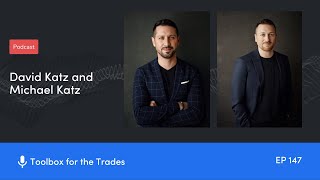
Transcript of a live Toolbox for the Trades podcast (Pantheon) featuring Michael and David Katz, co-owners of Trio Heating and Air. They describe immigrating to the U.S., entering HVAC with their first job in July 2021 and growing Trio to roughly $10M revenue through intense drive, rapid implementation of industry best practices (ServiceTitan), focused problem-solving, delegation, one-on-ones and 100-day plans. They explain a rebrand from Pacific Air to Trio, company values (customers, employees, environment — one tree planted per job), share practical growth advice (shop tours, raising prices to pay talent, ROI on investing in systems), and note planned ServiceTitan product rollouts (Phones Pro, Marketing Pro, Schedule Engine, Dispatch).
Michael and David Katz, you are the co owners of Trio Heating and Air. Welcome to Toolbox for the Trades live at Pantheon.
Thank you, Jackie. Thank you for having us start off by saying big fans. So thank you for making the time for us. You know, it's something that we listen to every day to commute from work after work. So it's really awesome to be here.
That means so much to me, really. I say this all the time. Doing a podcast is like shouting into the void and getting feedback like that always makes me so happy. So thank you for saying that. I have to let the listeners know that Mike tracked me down on my personal Instagram, so that is now a proven way to get on this show. I may regret saying that later, but I admire your gumption and I want to encourage future guests to potentially have the same gumption. You guys have an incredible story. Okay. And apologize for reading. Normally, I know this off book, but you guys moved to the US eight years ago with no H Vac experience. You did your first H Vac job in July of 2021, and as of today, as of this recording Trio is at $10 million in revenue. How'd you do it?
Take the lead on this one?
Yeah, I mean, no go through.
Honestly, I think, I think it's drive.
A lot of drive.
Just coming from a place where, you know, the work ethic is just, is just so hard. Like we were used to working long hours, like 12, 14, 16 hour days. And one of the, you know, just coming to the US and seeing that everything you put in, like everything you're giving out, your, your, your actual potential, you're actually being rewarded for it. And I think this was like, you know, a spark at the beginning of the way and it just kept going. And I think we still have a lot of this drive in us. We feel like we're just starting out.
Yeah, I mean, clearly you've only been in business for two years and you're at 10 million already. I mean, I can't wait to see where you guys are in another two years and love that about your work ethic and being able to apply here. So anything you want to add to what David just said?
Yeah, I mean, I would say, I mean, we've been getting really familiarized with the industry, literally from Service 9. You know, we, we basically signed up for Service 9. David was bugging me for years. You know, we have to go on this app. We have to go on this app. And I said, you know, let's just do it, and went on this App. And, you know, we came to the first Pantheon a year ago and even in July 2021, we were still really blind to the industry. You know, we were working from the installation background, so we were doing installation sales. And installation sale is kind of a niche service, an amazing service. We love it, we still do it, but it's more of a niche. It doesn't necessarily have the community, the drive, the career, the growth. You know, there's so much in H Vac and you know, we got into this industry and every single month, every single year, we're seeing more and more of how much this industry is just, I think, really on the rise in the last few years. I know it's been happening is amazing. And yeah, we looked at so many H Vac company owners, whether if it's local guys like you mentioned, or people that are from here in, you know, Southern California, and we're seeing the growth that they're having and we think we can do, you know, just as good or even better. So there was a lot of drive. You know, we have definitely a lot to prove a lot of work ethic in us. You know, we're young, we're very hungry, so we wanted to, to, to get in and just break records, you know, do it, do it better than anyone. So it's exciting that after all these very long weeks, Saturdays and Sundays and you know, all these 14 hour days, that it looks like it's working. So let's go.
I mean, it's such a big accomplishment. And we mentioned events of Pantheon for the first time last year.
Yeah.
So what happened after you guys attended, like when your mind's totally blown, what was that like?
I mean, so look at it this way. Everything that these guys are talking about, you know, a couple of these guys in the industry, Ishmael, and all these that they're saying about, they're giving you advices, right. On how you should run your business and numbers and all these things. We came to the first Pantheon, the entire business was running strictly on drive. And suddenly we're coming here, we're seeing all these different things like dispatch, what does that, what is dispatch? What does that mean? And then. Oh, it's technician. Well, what's the difference between that to that and when we came to Pantheon, what happened was it started to form every single hour. We were forming an idea in our mind. Okay, so the H Vac industry is supposed to have a service technician. He does the repairs. Then there's a sales guy, he does the sales. Then there's someone in the office, picking up the call, they'll call the csr. Oh, interesting. Okay. What is the csr?
I love how you had an H VAC business. You had Service titan already, and then you come to the conference and you're like, oh, that's what I do.
Good to know. So funny. Yeah, no, it was insane. Everything started to form together also. The pay plans, the structure, I think. So when we came into Pantheon, a lot of things got connected because, you know, I was introduced to the industry, but I was blind to it. You know, being in the installation industry, any installation company or can vouch for this. You're being approached with H Vac very often. Very, very often. And for some reason, you're blocking it out. You just don't. You're not interested in H Vac because installation is very simple, straight to the point. You make really good profit in it. So basically, no one is really, you know, pushing for the H VAC industry, but I wish they would because there is so much depth in it. There's so much depth. It's. It's. I don't. I don't think there's any other industry, and I think that's why we're so passionate about it. There's no other industry that combines three trays, even five trades in one. You know, you have heating, plumbing, air conditioning, ventilation. It's just. It's unbelievable. So I think. I think this industry is. Is on the rise, and I hope that more people will join by going on service time, because just like what they're trying to tell us every single time, go by the app, just do what the app is doing, and you'll learn how to have a multimillion dollar business. And that's what we did. We just followed the app. Here's the procedure implemented. Good. That's it.
I know. I mean, it's so true, though. And I feel like some people get that resistance to it. They don't necessarily want to follow what the app is prescribing. And I get that. I'm a contrarian at heart, so I don't like to follow rules myself, but it's true. And I think that probably is why you guys were able to grow as quickly as you did and get this amount of revenue. So, you know, there's so much content here at Pantheon, right? Your minds are blown. You're getting all these ideas. You're figuring out how the company you own works. Tell me how you simplified it. Like, how did you take all that you learned from Pantheon, and how did you simplify it to make it work for you.
At Trio, I think that, I mean.
We have to always do a couple of things. Like we have to listen to what, what's our biggest pain points, like what are we dealing with throughout the day. That's like really taking our time. That's, you know, we have to listen to our employees, what's their pain points. There is, you know, things that we're doing and asking, asking guys, you know, what made your week difficult, what made your day difficult? I think that just by focusing on those things, because people are going to come here and try to grab as much information as they can and they're going to listen to a thousand different opinions and talk to many people, but you really only need to take one, two ideas that are really just the next step things that you need to work on. And that alone is going to allow you free up your time, free up your mind, help the people in your company grow, and you can start working on the next step. I will see people are trying to work on four or five, 10 different things at once. At the end of the day, you're.
Not going to be able to accomplish anything.
I mean, one focus point at a time is really.
We are to blame for that too. I can definitely say it's not as glamorous as it sounds, you know, because it sounds easy. You know, you see a guy on stage and he's telling you an action to do and you know, this action could be very, you know, it's a sensitive thing. You know, you have to take in what you're hearing, you know, analyze it a little bit, obviously, understand if it's, if it makes sense to what you're doing and how your business operates. And you have to be really fast implementer. And I think that this is one of the things that apparently, I mean, we're learning about it in the last few months where we get a lot of interest, you know, for people reaching out to us, trying to understand what we're doing, how we're doing it. And what they're always saying is, you guys are fast implementers. And it makes sense because if someone will come to me and say, you got to focus on your call center, I'll hear a video online. You know, your call center is the number one most important thing. Guess I'm doing call center, jumping into the office, shutting everything down, putting everybody in a big room and just going into call center. And I will let any. And this is the risky part, right? I will let any other department or any other urgent matter Burn, crash completely until I fix this call center. Because I know that's the only way to do it. So the lucky thing that I have is that I have him that can step in and take over the rest of the stuff.
Delegate.
Exactly. So one seagull jumps on one thing, I jump on another thing. And another big nugget is, you know, the team that you have, I think that it took us a long time to understand what does it mean to actually trust your team. You need to understand what is it in their life they want to accomplish, what do they want to do, what's going on in their personal life. And I think people get burned from it because they don't know how to do it as well. There's a method for it. You know, you need to study, you know, a couple of books, a couple of videos, a mentor perhaps. But once you understand how to combine that and they're really interested in being part of the journey and wanting to be in that business and as long as you communicate openly to them, hey, here is what we're going to do. Because our businesses, if you ever go to our shop, if you'll be there for a week or two weeks, it's a different shop every week. The processes are different, the procedures are different, everything is just completely different. And we're always getting everyone used to it. Guys, something crazy is going to happen in the next few months. It's for a good cause. Let's stick together, let's help each other. And we're prepping them for it so we're honest with them. We're showing them everything. We're showing them the numbers, we're sharing everything with them. And once that new big thing comes, let's say installation department, that was a big thing for us. We doubled our install department in one month. And that was a big, stressful thing for us especially. I'm the one that did the install department, so for me it was very stressful. But I had him to support me, I had the team to support me. So I let everything else crash. They were catching all the balls that were dropping and. Yeah, and you made it.
So I think you just touched upon something with delegation that is so important. I think on this podcast we focus a lot on delegation for the sake of the owner, the person who runs the show, to free up their mind. But it also goes into trusting your team and knowing that they'll be able to catch anything that falls so you can laser focus. So it's kind of a two parter. Yes, you're freeing up time. But you're also able to really get nitty gritty into something and you're not worried about like, oh my gosh, is everything going okay with the CSRs, with the dispatchers? If I'm doing this installation thing, Let me summarize what I heard from you both. I'm a big fan of summarizing here at this podcast, especially for folks like me who think a mile a minute. I was like, wait, what did they say? So find your pain point. Focus on one thing at a time. Implement fast. Delegate and trust your team.
Yes. And at the same time, there has to be a lot to so if there's two things that I will say to people because this was one of the Managing was the biggest struggle for me. I can do a lot of different things. We were both amazing sales guys, broke company records in any company we ever worked on. I'm great with reviews. There's a lot of things that I'm really good at. Managing was my Achilles heel. That was literally the worst. And the two things that fixed it is just one on ones and 100 day plans.
Say that again.
One on ones and 100 day plan. To actually find the time to grab a manager from each department in a closed room, it doesn't matter where it is, in your office, in the warehouse, it doesn't matter. Sitting with them and going over five bullet points and seeing week over week where they're at. Are they still with you? Are they still in the same place? Not just hammering down on them when something bad happens, which all of us here in H Vac, I would say it's unbelievable how hard everyone in heating and air conditioning works. Really hats down to everyone. I'm new to the industry. I've been only for two years. It's unbelievable the amount of hard work. So really kudos to them for what they're doing. And it's hard, but you still have to find the time to sit with them and see what's going on in their personal life and empower them in each and every one of these meetings. And what will happen is slowly you start to get connected with them and you're at the point where you can tell them, I trust you. Do whatever you need to do. Because you're coming in in the middle of their day, you're not there throughout the entire day. You don't know the conversation that just happened. They know a lot more than you. Empower them, groom them, build them to how you want your business to look like it's going to be better for them too. They're going to learn a lot on the way and let them take the wheel and just run it and trust them. And when they go a little bit off, just be there to balance them back on.
I want to make a point of this. You know, every time we hear an advice, it's. It's really hard to understand. Okay, well, I understand. I need to do a one on one. How do I do it? Yeah, like, sure, you're sitting in this one on one and you're like, okay, what's now, what's the structure for this thing?
How do I stare into each other's eyes?
Yes.
For 30 minutes lovingly.
And that's where things usually fall. Right. You're trying to implement something, you're doing it once, you're doing it twice, you feel uncomfortable about it. So don't get the hang of it. Like, you just need to understand it's not just do it. You need to understand why you're doing this. Go into this. Like, so the idea of the one on ones is really just to align their goals and their dreams with the companies. And as soon as you're able to do this, I was like, okay, what this person wants to accomplish, what is their dreams? Do they want to buy a house? Do they want to buy a car? Do they want to support better for their family? Do they need more time with their family? What is it that they need? And then just build a plan with them for one month, two months, three months, and then you're meeting with them on a weekly basis and see how, like, how are we making progress on the company's goals, on their goals? How does this align together? If you can both win together, you're going to have a winning team. And it's not just, it's also like, we also understand how hard it is to delegate because you're looking at a task and you're like, oh my God, this person have never done this before. And I know I can do it better because I've done this so many times before.
Well, that's the Achilles heel of the high performers. Right? Same here. Where you're like, I know how to do this. I do this so well. If I just get out of the way, I'll do it myself because that's the way I want it done. And that's what I, I think you were getting at when you both said we had difficulty with managing. Is that right?
Yeah.
And so let them fail. I know it's hard. Everybody who's listening, I know it's Hard. We've been there. It was hard to delegate.
It's too.
But, but you're doing this and then yes, the person is going to get 70% of what you could have gotten. You could have done 100%. They got 70. But guess what? Next time they're going to do 75%.
Yeah.
And the next time after this, they're going to do 80%. And they might never do it 100% the way you wanted it, but they can get to 90, 95%. And that's what you need to scale your business. That's what you need to grow. You need a full team of, you know, just trust them. Trust them to do it. Trust them to grow, trust their abilities, empower them. You're going to see the business is going to start to have a life of its own.
Yeah. I have to be honest with you, management for me too, I am the queen of. I need things a specific way. And if they're not a specific way, I get a little test. I even did it today, like today and yesterday in this conference. And I try to be really warm and empathetic and I try to be direct when I correct as well. But it's still a challenge for me because there's that little bit nugget of resentment that's like, why can't you read my mind and see exactly what I want right now? It's so tough.
Yeah, it sounds. It sounds like me pretty much every day.
Yep.
All just staring off into space thinking about the times where we've done exactly that. That's why the three of us get along so well.
Yeah.
I'm really happy you guys talked about that. I think what you just condensed about learning within management is so critical to scaling and it's a lesson not many people learn this early on in their career. So I think it's wonderful that you're talking about it, that you're acknowledging that you're not perfect at it yet and you've developed a system that seems to work. So I want to talk to you guys about a couple things because you're moving so frickin fast. You just did a rebrand. You were originally Pacific Air. Now you're trio heating in air. So tell me a bit about that.
Yeah, I think, well, the company, I guess we can kind of backtrack and I'll try to keep it as short as possible. But basically Pacific Air became about in about five minutes. So basically we were both sales guys. You know, we're still very young, I think 22, 23. You know, 23, something like that. And we were working in the insulation industry. We were doing really great. Breaking records again, like I said. So we were making a lot of money for that age in that time, you know, coming from a country where you work really hard, but everyone are working hard, everyone are hustlers. So it's kind of hard to find your, your pace and your spot. But we came in here, we're making really good money, you know, 20, 25, $35,000 as, as a 20 something year old. It's a lot of money. So we were living a really good life. And I remember it was one day where we were living in the same house in San Francisco. And I was just watching TV and I was just going about my business and David comes out of nowhere. What happens tomorrow if you break your leg? And I was like, you know, in the middle of show, like, what does this guy want from me right now? He's like, what are you gonna do if you break a leg tomorrow? So what do you mean? He said, like, for work, for money, what are you gonna do? I don't know. And he just left. So he left me with that. So he just came in, dropped the bomb on me and.
Typical older brother taunting.
Yeah, yeah. And he's always like that. It's always that push, you know, which is good. But you know, what happened later is, you know, I, I went up, you know, I'm going into the bathroom and I'm like, this guy's right. I came out of the bathroom, you know, and I grabbed him in the kitchen. I said, let's open a company. And it's like, all right, what are we gonna do? Vent cleaning. All right. Simple enough. What are you gonna call it? Pacific Air. Sure, let's do it. And we went, there was maybe about.
Five seconds, like total, literally thoughts into this.
And the website was on that night. The website was on with the design and everything. It was horrible. It's still horrible. Please don't go on that website ever. Pacific Air usa, the new website is.
Coming up two weeks.
Yeah, but this will be out by then, so don't worry about it. Trio heating in air.
Amazing.
Air.com.
Focus only on that. Then look at the other one. But basically we opened the business and this was in our time when we were kind of. We got really efficient at our work. So we went down to like three four hour work days. And we're still making the same amount of money, so we had a lot of free time. So we were going into, you know, different business Ventures, whether if it's real estate or other things. And nothing really had the action that, that, you know, the industry, for example, has or installation, you know, sales and all that. And we didn't know at the time, but the companies we were working for, we helped Gruden. It's just dropping on us in the last year. We helped grow these companies reputation wise, sales wise, procedures wise. We just didn't, we weren't aware of it. And you know, when we, when we got into the industry, slowly, you know, we opened up into 80 and air conditioning and the massive growth came in. You know, we went from one vehicle to 30, 35 vehicles and from, you know, I don't know how many employees to 44 some employees right now. And basically where, where I was getting at is over time we kind of figured, you know, this is not what it started with. This is a little bit different. And we sat down and we basically said, okay, let's do a survey to try to figure out what are we about? Because obviously I can talk as much as I want, but I would rather hear it from the people in house. So we did a survey, you know, anonymous. We basically put a box in the office or a bin and everyone can just toss a piece of paper. They're answering a couple questions. What do we stand for? What do we believe in? All these different things. And basically there were three things that were standing out. And that's where the trio the name became about. So first of all, customers, you know, customer is always, you know, without them, it's, we're just not going to be here. So customers is the number one thing I think, reputation wise. And we've actually checked it out of all the heating and air conditioning companies in the industry, I would say, at least in our area, we have the lowest amount of negative reviews. And I mean that because one of my big things that I believe in is, and I think I mentioned it in the past couple of times, I don't like when customers feel like the little guy. It's something that's very. I just don't like that feeling when I'm on a phone call and I'm trying to speak to maybe a big corporate and, you know, I'm not getting the service I want and I'm one click away from them just hanging up on me and then I'm doomed. Like I have to go back, spend another couple hours. So I never wanted our customers to have any experience like that. So as soon as we feel, just feel like a customer is a little bit unhappy Someone's going to jump on a phone call and most of the times it's the technicians, project managers, or myself and David or the managers. Because everyone understand that customers can never be compromised. That's number one thing. So going far for them, making sure that we give them refunds, we don't negotiate with them, we don't fight with them, we don't leave a bad taste. Because at the end of the day, trust me, if you'll do it just like it worked for Amazon and a lot of other companies, it'll 10x itself, you're going to get more work. It's not going to seem like that in the beginning. It's going to seem crazy. Give them the refund, make them happy, give them the free service, send Kufus over to their house, do whatever you need to do to put a smile on their face and eventually it's going to bring it back.
Yep.
So that's one of the things that we stand for and we preach it to all of our guys. I think the second thing out of the, you know, the trio is basically the employees. So we actually spend a lot of time in the one on ones. It's not just something that I'm throwing up there that we're doing once a month. We're sitting with each employee and not us with each employee in the company, us with the management team and the management within each employee. And they have 100 day plans on the walls. So the 100 day plan is going to be there and it's going to say exactly where we're at. How are we helping them, how are they progressing? Are they making enough hours? Are they all of that? We want to make sure that they're 100%. So a lot of investment in them. And the third thing is actually something that we started a long time ago when Pacific Air just became about California fires. You know, it's a big, big issue in the last few years. And I remember in the insulation industry as well, the Napa fires that we've had actually unfortunately brought a lot of business. There was a lot of work to do in heating and air conditioning and insulation. And we wanted to do something to kind of give back. And we came up with the idea for planting one tree for every job that we do. And that idea was with us from the beginning. But the problem is pacificare didn't, as much as it had the leaf on the logo. And we tried to push it as much as we can, but we didn't really have the time. So TRIO basically stands for Making sure that our customers are always good. Giving them the best customer experience they ever had. Taking care of our employees, empowering them, educating them, making them small business owners within the business, you know, intrapreneurs, if you will. And planting one. One tree for every job that we complete on the behalf of our customers.
So it's customer focused, employee focused, and environment focused.
Yeah.
Or community focused even. I'm thinking about California. I love that you guys do that. It's so important, and I really can't. How many trees have you planted this far? So far?
Last year was 4,000 and some. I don't remember exactly. We haven't written down this year close on 8,9000, hopefully of the year.
Well, just so you know, when you keep hitting these milestones, you keep coming back on full block to the trees. I'm going to ask for the tree numbers in addition to the revenue numbers.
It's actually going to be on the website, counting every single time. It's.
There's going to be a live count of every tree planted anywhere in California.
That's for every job more than $1, it's accounted for.
I love that. Okay, gentlemen, I have a few more questions for you. You've been so generous with your time. We're at Pantheon. You were literally choosing to miss a session to talk with me. And that means so much to me. I really appreciate it. Is there anything else that you want to share to the audience? I mean, you're listeners of the show. You've been on the Service Titan, you've been in Pantheon twice. But you're still new to the industry. What would you like to say to the rest of the industry?
I mean, I think more than anything, they really have to use the. This momentum that's been happening in the last couple years, which is shop tours. I would say this is probably the biggest thing that I would say to anyone. You need to get up off your comfortable office chair. Let the couple things that are burn and burn. Most likely once you leave your office, everything is going to be quiet anyways. You're the ones that's making the fuss. Usually most of the time, the business owners. You're micromanaging. You need to get up, go to a shop somewhere near you. A lot of company owners nowadays are more open to it. We're witnesses to it. We only did, you know, granted, a couple shop tours. We didn't do too much, but we were very specific about the shop. So we wanted to meet and we.
Made sure to go there.
And what you do is you basically Go there, focus on one department, sit down with the head of that department, Ask them any question that you have. You can record it, you can take a picture if you want. I mean, I know we're not 100 million yet. In the next few years, we're going to be there, but come to our shop. You know, just like I found you on Instagram. Go on Instagram, go on LinkedIn, send us a message. We'll make the time. There's never time. We'll make the time. That trip that costs you $500, $1,000 is going to bring itself back 100 times more. You're going to 100 times more. So it's worth it. You need to go and do these shop tours. That's, for me, one of the biggest thing I would say, I think in.
General, people just, they can't see the ROI of the things that they're doing. Like the ROI of coming to this event right now. You're going to come back. Like, sometimes people can feel like, okay, it's going to be two to three days, I'm away from my business. You're going to come up with one idea. The one thing that you're going to implement that is going to make you another 100k, another 200k. The ROI is just incredible of investing, you know, investing in your people, investing in the right software, investing in newer trucks, investing in your website, investing in your online presence, investing in going to those shop tours. Every single thing of the, like, every single thing that you, if you focus on those things, the ROI is just incredible. You can't, it can't get any better than that. Yeah, I mean, one of the biggest turning points that we had was in Pantheon last year. We came back to the shop, we raised our prices, we started paying our employees better, we started, you know, putting KPIs in place.
And it was. That's exactly what I was going to say. I think if there's something to understand and it's a simple concept, so hopefully anyone is going to, are going to understand this and really even write it down.
It's.
If you're able to charge more, you're able to provide a better service, you're able to attract better talent because you're paying them more. So incentivize your employees really well, which will allow you to raise your prices. And I'm not saying just raise your prices to whatever, raise your prices to a certain quality of work. Stand behind that quality of work. Charge another $500 for any random job or any service you Want to grab and be able to bring in a manager that's going to help his team and bring more time to them and more attention to them. And when you work on this cycle of basically providing more quality service, charging better, paying your employees better, and performance pay, everything has to be performance pay. You can't just pay someone a really high price or pay them a really low price and push them and try to find the middle. It's not a negotiation. Give them a certain price point, make sure the performance being there and hold them accountable to it. And the way you hold them accountable is in the one on ones.
Yep.
So it just connects. So it's. I think that's probably the biggest.
And keep asking for help, Keep reaching out to people, Keep asking for help. Like the amount of creativity that you need to have in the business.
Yes.
I mean, it's always going to be there, but you're not going to reinvent the wheel. There are so many companies even, even here today. Read books, reach out, ask questions. You'll be surprised by the amount of help that you're going to get. People love helping people that have already done this and, you know, understand the struggle and the anxiety and the stress and the health issues and the impact that it has on, you know, the sacrifice that you make. Relationship. There is so much to it. Like those people understand it.
Yeah.
They've been there, they've done this. They have the solution, they have the answer. Just go and reach out, get the answer, ask the right questions, come back, implement and repeat.
Put your flavor in it.
Even if you're a $25 million company, $50 million company, like, I know once we get to even $100 million company, there are still going to be people with the answers to our questions.
Yeah.
So reach out.
I was still. I was at a shop just a few months ago and back in May, and I was surprised. But basically I gave them an idea that changed something really big in there. And I saw how fast they implement.
So $100 million operation.
Yeah.
He walks in, gives them an idea.
I mean, and I felt, because I got so many ideas from them and it was good, but, you know, if there's anything, there's books even out there. Home Service Millionaire by Tommy Mellow, an amazing book. You know, it was very hard for me to read it at first. I got it before I got into the industry. A friend just gifted to me. He said, this guy's amazing. You should listen to him. So I was listening to the podcast back at the time. It didn't really make sense to me because it's hard to grasp, but if you just focus on one chapter, on one little thing, you're going to be able to understand it. And over time, everything is just going to unfold. So shout out to Tommy Mello. He's posting a lot of videos and everything online. Take one of these videos. That video is worth $2 million more. Every single year, one video is worth $2 million more. You just have to know how to implement. Get the concept with your flavor in it and run it very, very fast. Don't wait, don't think too much.
So guys, I always say a mark of a great interview is when I don't do a lot of talking. And you, and that was this interview. So thank you so much for dropping by and sharing some insight. I have a final question for you. What would you say to someone who's considering a career in the trade? She.
Wow. I mean, number one thing, we've all seen this in the last two to three years. Stability was every other market just took a hit. Well, you know, we just realized how essential we are. I mean the service industry, whether if you're an electrician, plumber, you know, H vac, service technician, I mean we were thriving. That's when people realized, you know, how much they need us and we were there for them. And I think, you know, with everything that's happening right now with technology and AI, you know, it's taken a lot of jobs away from people. We're seeing this, I mean you're self checking out at, you know, at the grocery store and you know, it's writing code for people now and everyone's time was, you know, anything that used to take you 5 hours to do is now taking you 10, 15 minutes. Just let AI write your handbook for your employees.
Someone just gave that tip like two, two interviews ago. Why am I writing policies when I can just ask ChatGPT for a policy?
Absolutely.
It's three sops yesterday, which IGPT, it's.
A lot easier to read and fine tune it than try to come up with this and be creative. And so one thing that I don't see it changing is I don't see AI going to someone's house and fixing their air conditioning. I don't see it like everything labor, everything service related. I mean guys, this is here to stay. And one thing that a lot of people don't understand, a lot of people like even in our company are making way more than many lawyers that I know, more than doctors, more than you.
Know, software Engineers, especially when you put in the debt. When you factor in the student debt.
Yeah, I mean, guys, you don't understand the pay. Let me. The payoff.
Let me say something to what you just mentioned right now. H Vac Going into H Vac school is the only debt that you'll pay very, very fast, the fastest. And that's, That's a fact. If you actually go online and check, it's something that, that you're not going to carry for years ahead. I think that it's something that you need to understand in the heating and air conditioning industry, there's 18 an hour, all the way up to 500, 000 a year. There's really a big range. You can find yourself in any position and everything. You can learn accounting, you can learn software, you can learn dispatch, you can learn skill, you can learn management, you can learn warehouse, you can learn inventory. There's really so much into it. So I would say to anyone, if I would put myself back eight years ago when I just got into the U.S. i wish someone will drop me in an H Vac shop and say, don't move. Just stay in here. Because you're going to find your career, you're going to find friends, you're going to find industry leaders, you're going to find a community, you're going to find something that I promise you're not going to find anywhere else. You're not going to find it in retail, you're not going to find in restaurants. I urge a lot of the younger kids nowadays to go into the industry. If you're not like me, you don't like, you know, lawyer or doctor. You know, I never seen myself doing any one of these things. Go into the industry. You'll find something. Yeah, maybe I'll do a podcast with Jackie in a couple years.
So, yeah, I 100 agree. Real quick, do you guys use any of the Pro products?
Yes, Dukes.
Which ones?
Well, Phones Pro is being implemented currently as we're here. Marketing Pro. Marketing Pro is.
Marketing Pro is next in line.
Maxim Pro is next in line. Sleet is gonna come out in a month. That's definitely gonna be one that we're gonna implement. And then what other services?
Scheduling. I'm looking for schedulengine. Yes, Schedule Engine, Scheduling Pro, now Dispatch Pro and Marketing Pro. Can you guys speak to any of those?
So Schedule Pro. So Schedule Engine, Phones Pro, all these different things are being implemented right now.
Okay, got it.
And the dispatch is something that we actually heard about a week ago when Tom Howard came to visit our shop, and he told us about it. So that's something that we're interested to definitely see and, you know, test out because we're. It's funny, but as big as we are, we're just still. We still have only CSRs, we don't have dispatchers. So a lot. A lot of things to do. So that's something that's going to come out probably in a month from today. All the systems are going to be live for sure. Cool.
Great. Thank you guys so much for joining me on Toolbar for the trades live here at Pantheon. Guys, this was a phenomenal interview. I cannot wait to see where Trioheed Air is. A year, two years, five years from now. You got to come back.
I can tell you 25 million next year, the following year, 50 and the year after. This is 100 million. We're going for a record, and I know we're going to get there with the right team. I mean, our management team, our employees is just the most incredible team. We're so lucky to work with them. And, yeah, I'm really enjoying the struggle right now.
I love it. Well, remember me when you guys become very wealthy. I'd love to go to your island sometime. Thank you guys so much.
Thank you, Z.
More from Bill



ServiceTitan Virtual Agents: Simplify Before You Scale | Podcast Ep. 110 | Mastering ServiceTitan



Life After Live Events: How to Turn Post-Conference Energy into Real Profits | Podcast Ep. 297




