Cybersecurity & Leadership: Protecting Your Business | Podcast Ep 222 | Toolbox for the Trades
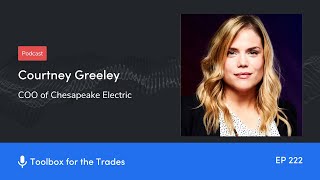
Podcast episode (Toolbox for the Trades, Ep. 222) — host Jackie Audbell interviews Courtney Greeley, COO of Chesapeake Electric. Courtney recounts her nontraditional path from the Air Force and NSA into cybersecurity and the trades, describes leadership and culture practices (core values mnemonic LIGHT), hiring and people-first management, and gives practical cybersecurity advice for service businesses (prioritize email protection, patching, network segmentation, backups, vendor vetting). The conversation also highlights benefits of in-person customer interaction and ServiceTitan/Toolbox Live events.
Hello, contractors, and welcome to Toolbox for the Trades. My name is Jackie Audbell, and today I'm speaking with Courtney Greeley, the COO of Chesapeake Electric in Annapolis, Maryland. Courtney shared a ton of leadership lessons from her past careers in both the military and cybersecurity. Plus, she gave actionable tips on how service businesses can protect themselves from virtual vulnerabilities. I hope you enjoy our conversation as much as I did.
Foreign.
Greely, you are the COO at Chesapeake Electric in Annapolis, Maryland.
Today, you and I are going to.
Be talking about career changes, cybersecurity, and operational enhancements. I am so excited to have you on the show today. Welcome to the podcast.
Thanks for having me. And those are some of my favorite things to talk about. So I'm excited to get into it.
I am so excited for us to talk about cyber security, because we have not covered that on the show. We've, like, talked about it a little bit, so I can't wait to. To dive into it. So let's get right to this, but we need an icebreaker. As always, Courtney, what song would be the soundtrack of your life if you had to choose?
It's funny because my. My husband has an award ceremony coming up, so we were just going through songs today. Some of them are probably not suitable for work. I'd say, like, one song that I come back to a lot. Taran Wells, Hills and Valleys. And it's applicable to even this. This conversation. And leadership is when you're on those mountains, you know, you didn't get there by yourself, right? And so staying humble, but celebrating, you know, and then just going through the valleys. You're also not by yourself, right? So nothing lasts forever. And I think it's just leaning on your team, your faith, and just kind of just going with the punches and just knowing that nothing bad is going to last forever and enjoying the good moments because they also don't last forever. So that would be mine.
That's a great answer. And what was the name of that artist again?
Torrin Wells. His cover never fits out right now too, so.
Oh, wow. Okay, great. I'm gonna have to listen to that later. All right, Courtney, you've got a. You did not come to the trades in the. The regular path that we hear you were. You came from outside of the industry. So tell us the story. How'd you get into the trades?
I do love this story, because if you were to ask me if I would be here a couple years ago, I'd say you're out of your Mind, you know, I started my career in the Air Force as a Arabic cryptologic linguist. And you know, I was going to stay there for a career and then my family needed me closer so I moved back to Philly, got out of the Air Force, finished my degree, and then I came back to the D.C. area before my clearance expired. And then I moved. I started working for the NSA on the infrastructure side, working with the chief engineers and, you know, leading the software and the hardware deployments and all that. Then I moved into the business side of the house because when you're a defense contractor, it's all about winning proposals and awards. And I had a lot of customer intimacy, so I did that. And then I got the business bug. I've always loved taking care of customers and it's listening to what they're saying and then delivering. So that's been a common thread for me. I worked there for, oh gosh, I don't know, 10 years at NSA and then I just felt like I had done it and it kind of, this is no knock on government contracting, but it was a lot of the same copy paste, copy paste. I then left the government side and started working at a couple cybersecurity startups and SaaS products. And I loved it because on the commercial side there's all this accountability. And I loved having to deliver what you said you were going to deliver to a customer. So I did that. Well, then Covid hit. I lost a lot of the osmosis of building trust and relationships naturally in an in person environment. So my husband, when I, he invited a local business owner over for dinner and he sat down and he just starts talking and I'm just like, from a business perspective, just like googly eyes, like, tell me more about your vision, tell me more about how you execute. And what I found quickly was our values really aligned well and he genuinely cared about his employees and his customers. And not only was he a great visionary, but he could execute, which is a really unique blend. I've had the fortunate experience to work with, I'd say some of the best leaders in the world and he's up there with them. And so I was like, she's like my CEO soulmate. Because especially when you're like that CEO and CEO role, it's like a marriage and you have to have communication and, and there has to be chemistry as well. So through some encouragement through peers and mentors, like, I just took the plunge. And that was almost two years ago to the day. And it has been such a fulfilling and like, next level journey. And so it's, you know, you get one life and so just take the chances, take the risks. It could work out, it could not. But either way, you learned something and this definitely paid off. So I love this story because it's changed my life. I love the trains, I love the people I love. Just everything about it.
Well, I can just see it in. For those watching the recording on YouTube, you can see it in Courtney's face, but even those just listening, you can hear it in your voice. Just the way that you talk about having this moment, this aha moment. So you were in the Air Force, you were in nsa, you were then in the startup tech world working on your cybersecurity muscles, but you were always craving that in person, that being able to develop a team. You mentioned intimacy, which I think is really interesting because there is intimacy involved in that. It's not just, you know, it's not just reserved for romantic relationships and friendships and familial relationships that can also be applied to business relationships. And it's so interesting that you have like, such specific, such technical, such. What was it, Arabic? Crypt link.
Crypto. Crypt. Yeah.
So cryptologic linguistics.
And so not only did you have.
To learn Arabic, but then you had to learn how to break codes in Arabic.
That's right. It was a lot of pressure. So I couldn't do it like full time. I mean, we would do it and then it was like, I mean, it was so rewarding to support, you know, the front line and sure, protecting them, but it was like, I mean, after a shift, you're like, did I get that right? Did I? So I just knew that wasn't, like, sustainable, but it's such a great experience. And that whole transition from the military as well, and, and then being here, one thing about the transition, you know, business is business, right? You truly, you take care of people, take care of customers, take. I say take care of employees first because your customers will feel the benefits of that. But take care of people. I mean, the financials, there's nuances, but it's the same type of stuff everywhere, same financial reporting. And so I was like, yeah, well, what's their. You know, it's not going to be that big of a transition. But what I found is that, you know, when you're in government or startups, the sales cycle is longer. When you're in business to business, it's a totally different world. You're making more analytical, strategic decisions. Not that you don't do those in the trades, but I'LL tell you what, that dispatch board, everyone gets dispatched and you need to be able to make decisions quick. You really need to be present for your team. Even though I wanted to be in person, I was like, yeah, I'm going to be hybrid. I'll be a couple weeks, couple days at home, couple days in the office and like, I can't get enough of this place. Like, I want to be here every day and, and, and being there to support the team. If I had known what I'd known, I probably wouldn't have done it. Right. I was a little, I think, underestimated it. But I'm so glad I didn't know because it's been, like I said, so rewarding. And I still get that tech bug with Service Titan and a lot of the other tools. It's so innovative and tech forward that, you know, I was scared to lose some of that as well. But it's, it's, if anything, just got my wheel spinning faster. I remember my first week here was like, we need a data scientist and we need software engineers. We need to build this. And it's cool to see like the cross, you know, the cross industry pollination, if you will. So.
Yeah, of course. Well, it's so interesting. In your past career, you really, you were so separated from the customer, you were so separated from the day to day. And now at Chesapeake Electric, you are ingrained in the day to day. You're interacting with that dispatch board every day, seeing how your employees are reacting to it, both your office staff, your texts, and you're seeing customer feedback in real time, which I, I can imagine it can provide so much reward for you. Especially I'm thinking about your NSA experience doing the, the contract side of things. I mean, I never did that kind of job, but I can imagine like trying to finalize a contract going back and forth between parties that probably took months before you actually pay off from that.
Yeah, and you're absolutely correct. Like, that is one thing too. When you're in software, you are layers away from the end user. Even so for us in the two companies I worked at, we're working with the C suite at Fortune 500 companies. And yeah, they're, they're signing off on the contract or, you know, the po. But ultimately, like, if you don't get that buy in at every level. And at that end customer, I always just want, like, how do I get to the end customer? I would go into like security operations center. Like, I want to sit with the analysts, right, Because I want to make sure that again, we're building something that helps them and we're not just putting profit before people. And so now here, exactly what you said, Jackie, like, it's so thrilling. I love a good customer escalation. I love, like a customer that's upset, like, give them to me. Because at the end of the day, like, they just want to be heard. And I love being able to solve their problems. But it's so rewarding to hear the calls and hear the feedback. And I did not get that previously. You're just removed so much and there's a lot more, you know, and, you know, like, it's a longer lead sales cycle and this is much more, you know, instant and gratifying. And you can still have those deep relationships. We focus very heavily on, you know, customer retention, the customer journey, and how do we go above and beyond. You know, there's something, I think it was Airbnb started this project. It's called, like the 11 star project. And I'm probably going to butcher it, but the idea is that, you know, we say, oh, five stars, that's good. What if you, like, push that? Like, what would 11 stars look like? And so we're always pushing the envelope on, like, how do we truly wow customers. And sometimes they're not even, you know, they're customers. We went to their house and they're not, you know, they're not paying us. But something, a life event happened, like, let's send them flowers. Let's. Let's make sure that we're a part of their family. Maybe in the future too, but just doing the right thing.
So I'm so happy we're having this conversation. Something that I have taken on in my personal life, and I'm pretty sure I've said this on the podcast before, is I think we need to start asking people what they want their lifestyle to be when it comes to work. Like, what do you actually want your work to like to feel? Like, what do you want your work to allow you to be able to do in your non work time? And for you, as I'm hearing your story, I'm hearing that you wanted to be able to see touch, feel impact. You wanted to be able to have that. And I think that's so important. You mentioned too, you were on the B2B SaaS side. That's basically what service titan is, right? I'm privileged in this role as the podcast host that I get to talk to customers like you on the regular. And we do everything on our end so that our employees that Aren't customer facing. We have employees on all of our all hands meetings and stuff. Like we make do our best to make sure that employees see those customers and get their reactions. But that being said, that is like such a, that's such a tangible value that comes with running a business and serving customers. And I can just see how much you light up by being able to do that in your current role.
I'll say too, like when you're employee first, I'll, you know, I tell, I tell the employees too. If there's a customer, we've had it where, you know, maybe they're being disrespectful, just exit. But like, I will always have your back there too. At the end of the day, we're not going to talk bad about them. And truly I do believe, like if someone calls in and they're, let's say we've definitely had some stories where they're aggressive or you know, dropping F bombs and, but it's one of those things where like something happened in that day for them, something's happened in their life. Like nobody wants to be like that. So the more like grace you can show them and you know, exit the call, the better. But you know, at the end of the day, it's always doing the right thing. And it's a big part of, you know, for us, the culture here. When I first came to, it's okay, let me tell you this. So core values, right? Everybody talks about core values. The Air Force, huge on them. I mean, I could recite them right now. They totally shaped my life. But then I got into the corporate world and I remember I'd been at a company for a couple years, never heard the word core values. Unfortunately, the CEO passed away suddenly. So we had a new C suite that came in and you know, right away it was like, mission, vision, core values. And I remember, like it was a couple months in and someone's like, hey, so what are our core values? And I, I pulled my badge and I was like, hold on one second. Because they gave us little things. I was like, we, we have integrity and we are innovative and you know, and then that's it. And you walk away. You don't live them. But there's such a power, like when you, you know, it's an EOS principle. You know, you hire, fire and reward people based on those values, right? I can't teach character. I can't, I can't teach how to care about the customer and have quality. But those core values are what set a culture for us, it's just paramount to everything that we do. We want to make sure you're the right person first, because it also facilitates diversity. You know, we don't want a homogenous work environment. We want people that are coming from different walks of life that have, you know, different ideas, and they can challenge the status quo. But that only works when you have those shared principles that you're saying, I know. Yep. You mean Jack, Jackie, and I, like, we share the same values. We think differently, and we come from different walks of life, but because we share those values, like, I'm gonna trust what she's saying. I know that she's doing things for the greater good and not for selfish intent and. And things like that. And I. I will say the most rewarding thing has been seeing that play out in real time. Here at Chesapeake Electric, we gatekeep a lot, too. When people are interviewing, we're like, hey, listen, I was gonna tell you the standards high. Okay? You're gonna make mistakes. On the technical side, you're gonna make mistakes.
If you're not.
You're not trying anything new, of course. But what we can't allow and what we won't is people come in, and I. I've always said, like, if I got to a position of leadership and I have the influence, like, I'm not going to have a toxic work environment. So it's fantastic. And. And you see how people behave differently, and it's just like, that is also the customers. Yes. But being able to grow the team and push them and. And all of that is. It is absolutely the most rewarding thing being here. Customers are second. Being able to help the employees has been first.
So, yeah, yeah, I want to touch on values, and I don't want to put you on the spot. Can you name Chesapeake's values?
I sure can. We changed them recently for a mnemonic device that spells light. So let's see. Lead with integrity. Innovate and solve. Grow together. High standards, always. And think of others first. Ryan and I will look at all the employees at least twice a year. We try for quarterly, and we do. We go through every employee, like, first and foremost, how are they living? The core values? It's just one of those things where we hold ourselves that standard, and if we're going to live them out, it has to be more memorable. But we look at, like, who. Who do we want to copy? Who do we want to, you know, and then those shape our values so.
Well, I think that's such a smart way to look at creating culture, because people are going to make mistakes. You know, human beings, by nature, we are flawed. We make mistakes all the time. And I think looking at your workforce and seeing how they show up in those. In moments of when they make a mistake, when they fail, and how they respond to them, if they respond to them in that light way, the way that you want them to, that's the represent representative of a good employee, of a good team member. And it probably also. Because at the end of the day, there's a lot of different factors. And let me know if I'm not. If you don't agree with what I'm saying. But I think at the end of the day, there's a lot of factors that can go into. As an employee, you know how your work is. But as you just described, light. Those sound like all things that I have the power to control as an individual. I can decide if I show up light versus even if everything goes wrong, even if my truck isn't stocked with the materials that I need, even if I get dispatched to the wrong call, even if I forget to, you know, call back a customer with an urgent manner, as long as I lead forward with that lightness, then I love that.
Jackie, like the way you're. I'm gonna have you pitch it to me because it's. You said leading that light way. And like, I'm. I'm actually. I'm gonna take that from you. I'll give you.
Take it from me. I was giving you credit in my head that you guys are just electric and it's light. I was like, oh, that's clever. That'.
Yeah. And I tell the team, listen, nobody makes more mistakes than I do. I mean, and I make some juicies for another day, but, you know, owning up to those. And I. I really like the lead with vulnerability, too, because, you know, it does show. Like, hey, it's okay to make mistakes. We want to learn from those, right? So we always say, like, all right, is this an outlier or is this something like, do we need to update a process? Was it training? And then the other thing is, Jackie. And you get this. Some days you just have an off day, right? There's no way that home and work is ever going to be totally segregated. We try as best we can, but, you know, looking at the person as a person first, we have scorecards and other ways to measure that growth. But, yeah, if they're. It's always right person. And then we want to make sure they're in the right seat, you know, if it's somebody that they're fantastic. We want to, you know, we want to be like them. Is a big, is a big thing too. But maybe they're, they are struggling in their seat. Is there something else somewhere else we can place them? Because the right person is like first and foremost for us. And, and I've seen when the anti pattern of that too when you don't have that and you're not sticking to it and these core values are just something that you throw out once a quarter or have on a website and you're not living them, you see that people tolerate more. I think we can all relate to having or working with someone who's a superstar in their field. They're an expert, but they're an a hole. I mean they're jerk like, I mean it's just the truth, right? They're not.
And to be fair, I think I have been that a hole in my career. Like I have, I have had moment. I, I did, I did a. I've had, I've had so many jobs. Service line is actually the longest job I've ever had, which I'm very grateful for. I've been here for seven and a half years. But when I reflect back on my younger days when I was a little bit less clear on what I was able to bring to the table, my own stuff, like, oh yeah, I was that a hole. But that being said, didn't mean to cut you off that.
No, that is awesome. I love that you're like, that was me. That was me.
That was me. I have been that and I have had that toxic, that toxic manager. I've had that toxic colleague. And it can really dang like even if you're not being the a hole in the moment, like when you have that a hole in that managerial seat in that C suite, that can really reflect poorly on the business. One thing you said in one of your last answers was how when you vowed to yourself if you ever got to a place of leadership, you didn't want to have a toxic culture. Can you speak more to that when you think of I don't want to create a toxic culture now being in this leadership position, what does that mean to you?
So here's the thing, right? We all know that leadership is not a title at all and we impress that on our teams. But when you get to a seat where you have accountability and the authority to make different changes, that, that's an honor and a privilege. Going back to what you said, I think like earlier, control those things that you can control. And as a leader, people look to you to make the hard decisions. Right. You're not there to, you know, popular vote. You know, one of the things about leadership, too, is you're going to make a lot of decisions that might hurt people that you care about. You're also not going to have a chance to explain yourself a lot of times. You have to understand the mission, though, is to make those decisions and. And grow the team in a way that's healthy. I'll say. Like you said with the toxic managers, there's a lot of ways to do things right. And the great thing about leadership, there's so many different styles and. And a lot of them work, but wrong is wrong. And I've learned the absolute best lessons from the worst behaviors that I said, I'm not going to do that. And I remember one time I was a program manager, and there was a senior program manager over this division. Amazing. I learned so much technical from her, sure. But the way that she treated people, it was nauseating. And I would look at the leaders and go, why aren't you fixing this? Like, why is this okay? It was funny because one of my colleagues at the time, we had seen some of this bad behavior, like, just kind of festering the whole organization. And we just went up to her. She were like, you know what? One day I was like, we should start a company. I don't know what we're going to sell or, like, what we're going to do, but. But people are going to know when they come to us, like, you're just not going to deal with a jerk. The reality is, like, it is on you. And, you know, for leadership, it is the people all day, every day. I find with new managers that's it's kind of a shock to them because they're like, they go from being really good at being the doer, right? And so then they try to translate that when they're managing everyone doing the things that it's this quantity of tasks that they get done. But really, it's a reflection of your people. Like, how are you caring for them? I always say the greatest test is how do things function when you're not here? Because that is going to tell you how great of a manager you are. But I just went down a rabbit hole. But, yeah, if you're in a seat that can make those decisions, shame on you. If you're not making the hard decisions and making sure that you're taking care of the greater good. And sometimes they're not popular decisions. But I've had employees come up and thank me for. Because they'll be a popular employee, but they're coming in, storming through the office demanding things. It's like, that's. That's not what we do here.
Yeah.
Yeah.
You would not be the first person on the show to say, we've gotten rid of top performers who just had horrendous attitudes because it was not good for the company overall. And it's a hard decision. You know, it's tough, especially when you look at your P. Ls every month. But no, it's true. And I love what you said about when you move from a individual contributor role to then a managerial role. And I've heard this too, on the show. You know, you have your star technician. Now you've moved your star technician to a managerial role. And they're just not. Not clicking. They're very different skill sets. And I will say I've never shared this. I had a manager once at a startup I worked at long, long, long ago. We were having, like, a group meeting, a virtual meeting. I was on. It was two lines, three seats. I was on, like, it was basically a table of six. So three facing three, but with our monitors in front of us. And we were on a virtual meeting with our colleagues who were on the other. Off in another office on the other side of town. And we're. We're talking. We're talking. And. And then all of a sudden, my manager goes, I forgot my. My colleague's name. We'll name him Bob. Excuse me, Bob. Can you actually repeat yourself? Jackie wasn't listening. And I was like, did you just. Did you just scold me like a child in front of my colleagues? But it's like, stuff like that that you're like. And then when I kind of now looking on it years later, I'm like, oh, it's because he was. I know he was struggling with being a manager because he used to be a high performer.
Yes.
And he was putting his expectations onto me, not recognizing the ways that I work and how I operate. Again, this is now with, like, deep reflection, but so many good tidbits that you're sharing here, and I think a big value here, too. Not to, like, not to say anything negative about my lifelong tradies who are on this, have been on the show and have done an amazing job. But coming from the Air force, coming from NSA, coming from B2B, SaaS, startups, like, you have seen so many different iterations of, like.
Yeah.
Of what companies can look like, so now you're kind of creating your own beautiful thing here at Chesapeake.
And that's a good reflection point for me too, because I, I'm, I'm type A. So I'm always looking at too like, oh, what could I have done better? Like, I did wonder, you know, am I too far removed? Like, again, I came into it like business is business. And it was so funny. I told Ryan, I was like, so all I ask is like the first 30 days, I just really want to absorb and discover and anyone that has set out with a 90 day plan, that's like a pipe dream because then you're thrown in the fire and what's your ideas and so par for the course, but anywhere else, like thrown into the fire and helping make decisions. And I was like, I don't know, do I fit here? But then I realized too, it is that the leadership and growing people. But she, I mean, you can't fake that. You have to really care about people's growth. You have to. For example, when we do benefits renewals, I really want to hear, what did you like, what didn't you. I can't, I can't please everybody, right? And we're, we are running a business and so we want to make sure that we're fiscally responsible with our decisions. But it is, it's listening to people and when you deliver on something that someone asked, it's so impactful and there, there's these like micro trusts that are built. You know, when I first got here, I was like, just tell me your issues. I was like, the good's good, right? Like, let's leave that. Like, what can we fix? And I'd say 95% of things that, you know, people had as issues were just super quick fixes. Bring up an issue as part of our like, business model. Bring it up. One of a couple of things is going to happen. I mean, they're going to say, that's great, let's change it. We can't do that now. And here's why. Or can't do that. And this is exactly why. But given them the why. But there's never a bad answer or result from that. But yeah, it was. I wondered if I fit in here and it took a little while before here you could click anyone from my past and I love relationships and all of that. Nothing probably bad. I mean, I'm sure there's some people out there. But then I get here and I see some of the vendors that take advantage of the business owners and it was like you're gone. You're gone. So I started getting this reputation of, I mean, I won't say the words, sure, but I, I knew it was rooted in, no, you're taking advantage of us. Like you're taking advantage of these business owners. Whether it's cyber security. You're giving us cyber security that I know how it works. Like, there's no way, what you're charging us for, there's absolutely no way you're doing that here. No way. And so I was really passionate about, you know, just, yeah. Making sure that you just do the right thing and, and sometimes that means you're, you're not going to be a fan favorite.
Thank you so much for giving me a segue. You. And I just geeked out on leadership lessons learned and I am here for it. But oh my goodness, you are a cybersecurity expert. I need to talk to you about cybersecurity. So in this example, you said, so when you came onto Chess Speak Electric, they had a vendor who was offering them cybersecurity. You went in, you looked at this contract and you were like, this is all bs. There's no way they can do this. So we are going to get rid of this vendor. Tell me, and especially for our listeners who are, a lot of them are business owners, owner operators who very skilled in the trades learning business every day, they are not cybersecurity experts. What should they be aware of?
Gosh, there's so much to start with. But I will tell you what was really eye opening to me. I went to an industry event, really hungry to learn. And so I'm sitting in the office, I think it was maybe a Tommy Mello event and I didn't even know who he was at the time. They had a session on cybersecurity, like it. And I remember the presenter, Shock it, which phenomenal company too. They were up there and Scott, the, I think he's the owner, he was saying, hey, so for example, this is how you can hack a password if it's this length. And I saw like people like, wow. And I was like, it opened my eyes that, oh my goodness, like, this industry really needs that. Not that education, but, but almost like a support system so people know exactly what you're asking, like, where do I start? What's essential? What do I need? Like, how do I get there? And you know, there's a lot of ways to start, but what I would say is you don't have to be the expert. First and foremost, there's a lot of great Companies out there that can help guide you through that path, ethical ones that you know, again put people before profit. And one that we, we work with here came from, you know, my cybersecurity days as well. So I know they're like top of the line cyber vigilance Sec. What they did is as we were making that transition, they came in, they looked at, you know, the whole infrastructure, networking, all of that quickly upgraded a lot of our networking gear. And it wasn't like this exorbitant amount of money, but it was enough to again there's a couple things, right? So you have the cyber side then you have the business resilience side, right? You need to make sure that your, you know, your network's up to date, your devices are up to date. When I got here, we quickly swapped away from PCs and, and MacBooks. I know some people don't like Mac, but the big thing was so that we could have, you know, agents on the computer forcing updates. Because a lot of times like if you have a zero day vulnerability and you're not doing the proper patching of your, you know, your endpoints, you become exposed. And I think a lot of companies probably think well that can't happen to me, like who would target me? But there's a lot of money to be had. And quite frankly, as I look from like an adversary, it's such a ripe industry to attack. A couple things because pe we know that private equity is scooping up companies and if I'm an adversary, I'm going, that's where the money's at. So that's where I'm going to want to go. Right? Everybody follows money but then also because they know like the lack of knowledge, you get hit with ransomware and all your business info, you're, you know the great thing about Service Titan is a cloud, right? So you could always access that. But there's so much more. We know that we're having storing stuff on our, you know, locally and it's gone. And you're going to pay that ransom if it's worth it to you. So a couple things is kind of look at your business. What I would say is go top to bottom looking at all your software products that you have. If you have servers, I don't know if people have mail servers or whatever at your like hard drives. Just go through them and start to tier those into what is so critical. If we didn't have this, we can't operate like the phone system. If you don't have a backup phone system, we all know, in this industry, like, game over, right? You're not getting calls in. So having a backup plan for that, you know, there's just some business continuity, disaster recovery there. But when it comes to cybersecurity too, again, reach out to these companies like Avigil and SEC to get advisory and they're going to give you the right, like, step by step, what's your budget? Here's where you need to start. Like, if you only have this much, here's the most critical thing and it usually a big portal is email.
Why?
Because the biggest threat to any business is the employees. So insider threats, and it doesn't mean that they're malicious, but everyone's clicking that email. Oh my gosh, the CEO needs something right away. You know, click here. We saw that the cybersecurity companies, like anybody, if you think you're not vulnerable to that, you're not being smart. And so again, making sure that you have, you know, filter spam filters in place, educating employees on what it means to get phished, but also just making sure that you're backing up your systems, your networking, your guest wi fi is segmented from your business network. So when someone comes into a meeting, they're not hopping on that same network that you're doing all your business on because you're kind of giving them a really good open door to that. There's a lot of ways to do it and tackle it, but the one thing you can't do is like not do it. I mean, everybody. It's not if, and I'm not trying to scare people, it's not if. It's when it happens. And if you're not prepared. We've seen companies in the home service industry that shut down, like, no more. So all those dreams and hopes, like, got to restart, all because, you know, you don't want to pay a couple thousand dollars to hire the right people. So that's it. I could keep going.
I'm so happy you brought that up. And you know, you. I like how you spoke about this. If I'm looking at this as an adversary, and I know that's a really big part of cybersecurity, is looking at this from an adversarial point of view. If I'm someone with bad intentions trying to, to infiltrate your company on a cybersecurity level, what am I looking for? What weaknesses am I looking for? And I think there's something to be said too, especially on the phishing side. So we've got an awesome head of security here at Service titan, Casio Goldschmidt, who's fantastic. So I've even, I grew up with the Internet. I'm, I'm, I'm a millennial, so I'm very familiar with it. Right. But even then there's things that I learned like, oh my gosh, people actually do this and I think it is so worth it. And so thank you for taking time and just giving us a good, just brain dump of where to start. And you mentioned the company you work with is Vigilant Sec.
Yes. So they're actually an offshoot too. You know, a lot of these startups are kind of like in stealth mode as they're getting. So they just came, you know, I think out of stealth mode and they're fantastic. But I'll tell you, like, they came same thing from the nsa, like top tier operators. And what I love about them, I trust them, I can sleep well at night. I know that the best is, is watching out for us. They're going to offer us what is needed for the business and what I'll do too. I, I don't know if you do like show notes, but I'll link some things in there and then also just a couple actionable things if you're like, where do I start? Just some notes there and kind of guiding you.
Yeah, that'd be great.
Nothing like that. If you leave with nothing else. Like you have to wake up and take action because this is the digital world and so anything that's connected is vulnerable as well. And it's your business, it's your livelihood, it's your legacy. So don't let a couple thousand dollars keep you from protecting yourself.
Great, great message. And I will happily take those notes. I'll happily take that. We'll include that in the show notes. We have to wrap up, Courtney. But before we do, you said she told me this. I did not prompt her to say this. She said she wanted to plug Service Titans Toolbox Live events. So please plug away, Courtney. I will not.
Okay, so the Toolbox Live events, we went to one and we went to our first one. I was like, I need more of this. It takes Service Titan and Pantheon and all the things that we love and it creates like a more intimate environment where you get to work with the pro products and the product managers and ask questions. And it has been instrumental in not only just our adoption of the product, but changing our business. Some of the best ideas we've had have been from other business owners through networking. There. I would pause right now. Go Google it. See what's coming up. If you have an event, it's so worth every dollar you're going to get 10x back from that. So I'm glad we did plug that because they've been transformational. And shout out to the whole team that throws those and puts those on because there's such a value add. So thank you.
You bet your butt I will be clipping this and sharing this with my team who runs it. So thank you for that, Courtney. This was such a fantastic conversation. Thank you so much for your time. Thank you so much for sharing your story, your knowledge. I cannot wait to see where you're at in a couple years. So I'm sure you and I come across a pantheon.
Thank you.
But man, this was great. Thank you so much, Courtney.
Thanks for having me.
More from Bill



ServiceTitan Virtual Agents: Simplify Before You Scale | Podcast Ep. 110 | Mastering ServiceTitan



Life After Live Events: How to Turn Post-Conference Energy into Real Profits | Podcast Ep. 297




