From Finance Pro to Plumbing CEO | Podcast Ep. 97 | Toolbox for the Trades
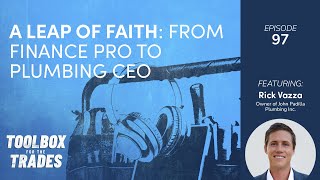
Podcast interview (Toolbox for the Trades, Ep.97) with Rick Vaza describing his move from finance to buying John Padilla Plumbing (purchase dated June 1, 2021). He explains motivations (avoiding ‘golden handcuffs’, desire for real-estate/trades exposure), how he sourced and financed the deal (seller financing plus down payment; SBA loan not viable due to license), role of seller (John) post-sale as trainer/apprenticeship lead, immediate operational changes (switch to flat-rate pricing, deeper use of ServiceTitan, launching an apprentice training program), strategic decisions (closed underperforming HVAC division to reinvest in plumbing), team growth (from ~5 to 10 plumbers; ~20 total staff), and near-term goals (increase call conversion, more marketing, add service lines or acquire complementary capabilities).
Rick Vaza, on June 1, 2021, you bought John Padilla Plumbing, having no plumbing experience whatsoever. Normally I start off the show with how did you get into the trades? But I think the more appropriate question for you is why did you get into the trade? So let's start there.
Yeah. Well, thank you for having me on, Jackie. And it's. I get asked this obviously a lot and I think my family especially asked it a lot when I expressed interest in a total career change from finance into plumbing. But I did grow up in a real estate family, so my dad was a real estate developer. So I was close, you know, going on job sites and stuff. So there was some like at least desire to touch real estate in a way. And then when I kind of learned more about the trades and what the opportunity had to offer is when it really piqued my interest. So just to give some context, I was doing financial planning. I Back in 2017, I was working at a big bank and I'd gotten a rather large promotion which, which would have been really exciting and was at the time really exciting. But it was also kind of eye opening to me. I was 27, 28 at the time and it was the type of promotion like a 55 year old would have been psyched about. Like, you know, would have went home and then it was a big deal. And I remember like at that time I had a conversation with my wife, like, okay, I've worked really hard to get good at this, but I could see the golden handcuffs starting to form. So. So I was like, if I'm ever going to leave, now is probably the time to do it because I'm going to get a little too far into the career. And so I actually gave my notice shortly after that promotion, which was really hard to do, but I decided I was going to launch my own financial planning company and do it from scratch. So not only was it, hey, I'm leaving this big salary, but basically I'm not going to have a salary. And do you mind supporting us for a while to my wife. So she was thrilled about that, as you can imagine. And then so Fast forward to 2018, I launched the company. We moved to San Diego just as a desire to try something new, honestly. And I was doing financial planning and investment management for clients. And a byproduct of that started to be a growing segment of my business was small business consulting. And so I got especially into that with COVID happening. As you can imagine, there was a lot with the PPP loans, Eidl, all that and my goal, even with the financial planning company, was to be more on the investment side. So whether that was venture capital, angel investing, whatever, private equity, whatever that ended up looking like, but I thought that was going to be a 10, 15 year journey. And I was having more of these conversations through Covid. It kind of brought. We've all heard of the silver tsunami within the financial planning community. There's baby boomers retiring every day. So that part wasn't as shocking to me, but. But I think just hearing it firsthand of like, I'm done, like, I don't care if we get through this. I've had enough, was really eye opening and then to kind of compliment that they were saying, and I also don't know what my succession plan looks like. You know, everyone complains about millennials. There's no millennials who can take this over. I was like, well, I have a decent resume and track record. I think I'm pretty good at this stuff. Like, you know, maybe I could be that succession plan. So it was through some of those conversations, none of which were with John. That's not how we ended up finding each other. But what just really perks me up around, hey, there's an opportunity here. So at that point, it was very broad. I'm just interested in buying a business. Very, very broad statement. And then as I learned more and just through a lot of the consulting stuff, home services very specifically became interesting to me. And then within home services, I was specifically plumbing, H vac and electric. And my general thought process was, hey, these are the trades that even do it yourselfers need to outsource. And then frankly, as I got even deeper into those, I was like, well, plumbing, of those trades, probably has the most recurring problems, right? Electric, I figure you kind of install it and hopefully that's going to run forever. Whereas plumbing, you know, there's drain problems regularly happening, there's fixture problems, there's all types of things. I didn't even know how bad the water quality was in San Diego. So we add the awful effects of our San Diego water quality, and it's an even better business. So that was really how it came about. I talked with Broker, just explained, you know, kind of my search criteria. I had to basically convince them that I was, I should be taken seriously for your point, like, hey, why would I even listen to you? You don't have any background. So I think fortunately, some of what I had done on the finance side, you know, just gained credibility. And then they, they introduced me to John and his son Johnny. Who was an instrumental part of growing their business before I took over. And yeah, that was. That was the connection. So really, what started as purely, I think this is a good investment opportunity has become a passion that I love coming into work every day for, which still surprises people. But it's nice when I hear things like, I haven't seen you this happy in a long time and total left turn in the career field. But now I've kind of tried to become an advocate to show a lot of other people how amazing the trades are and the opportunity that it can present.
Thank you so much. I can tell that you get asked that question a lot because of how well you told your story. The golden handcuffs. I really got to give you a virtual high five. That is so hard to walk away from that kind of money. That is so hard.
Yeah, yeah, yeah. It was. It was a hard conversation. I'm very fortunate to have a supportive wife who saw me not only do that, but then tell her, hey, this company you allowed me to launch and work so hard on building from scratch, I'm also going to be walking away from. So, yeah, she's been every bit instrumental in the success and just another shout out because I don't want to get too far into this without saying it, but I think it's really cool that I get to do stuff like this and be on podcasts. I'm so grateful for the opportunity, but I know my guys and the team are going to be listening to this, so I just want to give them a shout out because the only reason I get to do this is because we have 20 people back at John Padilla Plumbing, absolutely dominating every day and working really hard to be the best plumbing company there is. So for you guys listening, don't want to get too far before I give you kudos.
That's amazing. And we're going to talk about the team because I really want to know what that team thought when you came on board having no plumbing experience whatsoever. But we're not there yet. I also, I want to talk about how you identify John Padilla Plumbing as a good company to purchase. And the reason I want to talk about that is we've had so many conversations on this podcast about private equity entering the space and what it looks like to develop succession plan. So I've either had a trades person talking about their interaction with private equity for folks from PE talking about how they're getting into service. I have not had someone who went from the finance side and is now on the owner operator side of service. So you're. You're very unique to the show, which is one of the reasons I wanted to have you on. So I really want today's conversation to be about how, given your background, how you identified Jampa Dilla Plumbing and what changes did you make since coming on board to make it the. As you said, I think you said rocket ship that it is today, and having a team that's working really hard to do incredible things. So that's really where I want to go today. So going back to my original question, how did you identify John Padilla Plumbing as this is the company I want to purchase?
Well, the truth is, I had looked at a couple of companies just through that broker process, and John Padilla stood out when it came to me. The financials were clean and good. And when I talked with John and Johnny, it's funny, cause, like, a lot of it was a bit of a leap of faith. And they laugh because they say the same thing. But I think we just came to a trusting of each other through some of the meetings. So, see, the broker always lists like these clear paths to growth, right? And it's like, okay, well, why haven't you done them then? So what was really awesome, I think talking with John and Johnny, they knew the path towards growth. And I have a great relationship with both of them still. And we talk about and they love hearing, you know, what's going on with the business, but they knew some of the things that happened or needed to happen and to just their clear transparency like they were. It's 10 years of building a business from scratch. I mean, they were exhausted. And I think being younger, having a different kind of energy level to go there was one of the things that we bonded over. So the ideas that I was able to grasp from them. And then frankly, just diving into podcasts like service site and learning about industry best practices. One thing I will give myself credit for is when I get into something, I get obsessively into it. So, I mean, within months I had listened to I don't know how many of your podcasts, like, I did a lot of industry research, all these things. No, seriously though.
Yeah.
And I have a bunch of people to shout out who literally just stole best practices. And you know, it's kind of, I think coming in with a fresh perspective is like, why aren't we doing it that way? And in a lot of cases, they had an answer of like, hey, we want to get that way. And there's been various obstacles that have prevented us to do so. So to Answer the question. It was, frankly, a lot of it was, was a bit of a leap of faith. We had just really good connection through our initial meetings. You know, I can understand the financials. I understood the cash flow, what some of the challenges with cash flow were because they did a lot of property management work, which has net 30 terms. We worked through that. I understood it was just the financial stuff made sense and then it was just from a, from a leap of faith, like I didn't meet the team. So the question you're going to present later, you just had to trust like, hey, that team was good enough to present these financials. And I have a lot of confidence that John and Johnny are great people and they would in turn have a great culture. Now would I do that again in hindsight, maybe not knowing now, but it did work out. So we count ourselves lucky. But yeah, I hope that answered your question. I may have rambled a little bit there, but that, that's.
No, no, no, it's fine. I love a good ramble and I appreciate that you highlighted the connection from John and Johnn. What I hear a lot about when it comes to doing these types of transactions is really the relationship between the buyer and the seller. That is, that plays a huge part in it, you know. So I'm glad to hear that that connection was fostered early on and definitely maintained as you took on leadership, which we'll talk a little bit more about. But I'm also super curious. We were, you were really open with me when we first connected from a financial perspective. How did you make this happen? Right, because we talk a lot about acquisition, but we don't actually talk about what it actually takes from the money side to purchase a business. So would you mind expanding a bit on that?
No, I mean, so yeah, talk about more of the leap of faith. As I took one, they took one on me, truthfully. So, you know, a good, a good part of our transaction with seller financed and then the remainder. You know, I think the most analogous too. It's like a down payment on a house, right. So I put a down payment down and then they were able to sell our finance the remainder. So that's a big risk for them, right. They're saying, hey, we're counting on this guy who has no plumb experience to come in and be able to make us regular payments. So as much as I took that leap, it was mutual. And I think that was a big part of where John and I aligned because his statement to me, and I think this is why it's been such a good partnership, was like, I'm not ready to fully retire. And I'm like, well, great, because I need you, because I don't know pretty much anything. So he, you know, he then had a vested interest in my success. Right. Because obviously in order for those payments to go through, and I think even beyond that, I mean, you know, his name's on the door. He wants to see his company thrive. But I think that the way that we financially structured it also made it a win win for both of us where there was a vested interest in each other. So that was a big part of it. But, you know, the traditional route, the SBA 7 loan, which is what a lot of buyers will look at in order to make that first purchase, was off the table because I didn't have a plumbing license. So that was not a viable financing option. And initially that was a challenge from our first conversations. And frankly, we had to get creative interested. But this, if we're going to do this, it's going to be unconventional and this is how we have to make it work. And thankfully we were able to do so.
And I love that John also had a vested interest in the success of the company. Before we go into some of the changes that you made when you first came on board, what kind of role does John play at the business now? And it sounds like in what you've already spoken about, he was really able to kind of let go of some things that he wasn't super passionate about when it came to the business. Am I right in that assumption?
Yeah. I mean, I can't say enough about John, honestly, from like day one, it was crazy because I don't, you know, you go from the founder, operator, owner, everyone's coming to you for final decision. In the early days, people would still go to him. And, you know, I have such appreciation for the way he handled it because he just goes, I'm not the one to ask, go see Rick. And I mean, that, that was probably, you know, I would imagine a weird change for him. And he did that from the beginning. So, I mean, he has handled like every change of his role just with such grace and, and he's a huge asset to the team still. And I, I'm very lucky because I've talked to a lot of people who have gone through this process and they're like, what you have with John and your relationship is not normal. So I'm aware of that. But yeah, I mean, I think essentially the way his role has evolved is we just try to be honest with each other. And I said, what do you want to do? What's going to get you excited to come in here every day? And also how do we make sure that he's contributing and not just coming into just to check a box? Right. And so what we really unpacked was the apprenticeship was where his passion lies. He loves training, loves helping with the complexities of plumbing and the trade. I mean he's just got a wealth of knowledge. So that was a kind of a no brainer. And we didn't have really any processes in place for our training program. So actually shout out to a service titan podcast. I spoke with Great Dane Plumbing, no Great Dane H Vac, and he was willing to share his program with us. So we molded his program to ours. And now, I mean this program is awesome. Our apprentices are amazing. They're crushing it. They're getting promotions. They're going to be van ready in the not too distant future. It's just amazing to see people who have no experience and they're meeting with John, they're excited to come in. John's passionate about seeing them progress. The technicians are excited to ride with anyone. They're not fighting over, you know, that one great apprentice. That is so often the case. So yeah, John is just, it's been an awesome fit for what he loves to do and you can, you can see it when with his passion for it.
That is awesome. That's so action plan of the company because I'm sure that's something that many people who are listening right now have either seen, experienced or been a part of. Right. Especially I would imagine in family businesses too. Like if dad is handing it off to the sons, then you know, keep harping on. You didn't know what you were doing, Rick, but, but just giving you a little boost of like, all right, you did know some stuff. You did know a lot of stuff actually. You had a. And so often on this podcast I talk to technicians turned owners and they know businesses. I know statements. I know KPIs. I got this. So what were some of the immediate changes you made once taking ownership?
Yeah, so I think two that stood out to me. And again, this may have been an advantage of not being in the industry. So we were doing a lot of time and material work when I had taken over. And frankly, it confused me. I didn't understand it. It didn't make sense to me. I said, why are we punishing our best and most experienced plumbers for finishing a job faster with a lower rate of pay and Rewarding our slowest and most novice plumbers for taking long. So right, like that just didn't make sense. So moving the flat rate was kind of the easiest for me. Just it made practical sense of like, hey, we should sit down and figure out what's the expected time. These types of jobs that are repeatable, you know, we're running into them all the time. So we were able to, you know, sit with John and some of our senior techs, like hey, help me understand like how long should this take? Right. Like, you know, obviously there's going to be some variation here, but on average. And so that's when we really built out our price book and went more toward a flat rate system. Customers like it better. Like they want to know what the job is going to cost up front. They don't want to be sitting there watching their clock, you know, micromanaging the job. They want to know, hey, this is what it's going to cost whether I'm here 10 minutes or an hour and a half, whatever. So that one was a big one for us I believe. And then honestly this was not pre planned but using server site more. So I think initially when I met with John and Johnny, a lot of what they had told me was it was at the time being more used as just a dispatching software. So I think uncovering more of the functionality. So you know, we were talking about the ability to now do follow ups. So we've had members of our team who are specifically calling to follow up. And yeah, it's going to increase sales but it's also going to increase the customer experience. Hey, we sent you this proposal. Did you have any questions with it? Anything you'd like to review with us? That's a much better customer experience than hey, hey, thanks. Here, get an email and you know, don't talk to us until you want to pay us. Right. Like that's. Those are two different experiences. So those go hand in hand with kind of just the advocacy for the customer. Like in both, both of those things. While they're benefits to the business, in my mind they were also immediate benefits to the customer which is obviously how businesses succeed. So I think those were the two probably more obvious ones. And then you know, there's been some kind of follow on things that we've done since then.
I love that, that's awesome. And no, I did not pay him to say that. I did not pay him to do that shout out. But I do appreciate it. So let's talk about the team taking the news of you Coming on board, you already alluded that they didn't meet you until after you.
You.
You came on as owner. So what was that experience like? What was it like coming into a room full of plumbers and being like, hi, I'm Rick.
I'm your new boss? Yeah. So, I mean, I guess one thing I had an advantage of with financial planning is it's. This is a shock and awe that I've run into a few times. So I'm 33, that looks like 22, I'm often told. So I tend to have a shockingly young, like, I thought you were so young thing, and I used to get that all the time with my financial planning clients. So you just get used to it. You get thick skin. You understand how to handle the room when that happens. So it was funny, you know, as I've heard so many of these transitions are. It was a little awkward of this. You know, John's there, I'm there. You know, they think I'm like a new financial person. And then John's like, no, no, like, he's the new owner. And a lot of people like, what? Like, who is this person? And, you know, it's just kind of a. I don't know. I don't know how. If people have a great way of doing it, I'd love to know. I just think it is what it is, and you do your best. But I do remember you. One of my buddies, I had talked with him about it before because he had recently bought a company, and he said, look, the thing you want to remember is this is a big deal for you. It shouldn't be a big deal for. No, I'm sorry. This is a big deal for the team. It shouldn't be a big deal for you. So don't make this all about you. Reinforce the team and be truthful. You know, don't say things that you can't live, you know, live up to and follow through on, but make sure they know like, hey, you know, I bought this company for a reason. It's because it's a great company, your jobs are secure. I'm not coming in here because it's a crappy company and we need to make a bunch of changes. Quite the opposite. I bought it because it's great, and, you know, there may be some tweaks that we can do to make it even better. And I meant that. And so that was a big part of the messaging, just trying to sit down with people. The hardest thing, frankly, was this. You know, in the immediate, you have Kind of two competing priorities. One is you just want to. All you want to do is get in front of the team and talk to them and get in the van and do ride alongs and, you know, hang out with everyone and learn as much as you can. But on the other side, you're transferring your entity over and you need all new vendor agreements with all of your suppliers and you're just swimming in paperwork. So, I mean, I remember it was just. It was hard with. For my wife and we were prepared, but I didn't realize how hard it was going to be. I mean, you're just long hours. I mean, I think like the first three months, I felt like I was in the office, you know, 15. Like, it was just a lot. It was a lot of work. So, you know, we get that through that kind of some normalcy. I hope that gained some of the appreciation from the team where they saw how hard I was going to work to make sure that we were in the right spot. And I think just truthful and transparent communication was a big part of kind of my plan going into that.
I love that. Thank you for clarifying that. It's a big deal for them. Whenever a new leader comes in, immediately everyone's going to think, oh, great, now I have to prove myself to this leader. Or they immediately start getting nervous thinking that their job may be at risk. So I love that that was something that you prioritized. Also, I think this is now the third time you shout out your wife, so I must ask, what is her name?
Yeah, Whitney.
Whitney's the real MVP of this story. And the other thing I wanted to mention is when we first spoke, you mentioned how one great thing about you not having this plumbing experience is here you are, as this new owner, you are never going to micromanage your tax. That is never something they have to worry about.
Yeah. You know, it's so funny you mention that because I. I've been very fortunate to network. Pretty broad.
One great thing about you not having this plumbing experience is here you are, as this new owner, you are never going to micromanage your tax. That is never something they have to worry about.
Yeah, you know, it's so funny you mentioned that because I. I've been very fortunate to network pretty broadly through the industry at this point. And I connect with one of the owners of, I believe, one of the largest companies up in the Seattle area. And he was. He was really awesome. Kind of going into this process of helping me too. I didn't mention him, but when I was Looking at the business to begin with, he gave me some pointers. And he came from a totally irrelevant background as well. And he had mentioned that actually, as one of the things that I. Because I was so nervous about it, like, are they going to respect me or take me seriously when I don't know how to even turn a wrench? And he said, look, the thing that drives plumbers or H Vac or anyone crazy more than anything is they do a great job, that it's a profitable job and the customer is happy. And then their senior advisor tells them, well, I would have done it differently. He goes, there is nothing worse, and it happens all the time in the trades. So he goes, believe me, I think they're going to be pretty happy that you're not going to annoy the crap with that type of stuff. And it's funny, I think as I've gotten to know some of the guys more, they've expressed, you know, we don't need you to be putting in a water heater. We need you to make sure that the business is profitable, marketing successfully and growing. So it was funny because, yeah, the banks going back to that SBA thing, you know, they're like, oh, well, you don't have any plumbing background. And I'm like, yeah, but like, I'm, again, I'm not the one putting in the water here, so I don't know. It was an interesting thing. But, yeah, I think the team, whether they told me or not, they didn't seem to have as much of a problem as I thought.
I hope that this podcast opens up a wealth of vulnerability and conversation about real first impressions. But then I'm sure will make the team even closer. But since joining, you've actually grown. Since we last spoke, you grew from five to 10 plumbers, which is an amazing accomplishment. Congratulations. How did you do it? A lot of people are looking to do that right now.
Yeah, I think one of the big things for us, we kind of shrunk and then grew. So what I mean by that is we had a small H Vac division, which I think had been started maybe five years, four or five years before I had taken over, which is really hard to do. I mean, it was a startup, as most startups was, I believe, losing money for a lot of time and just took a lot of resources to lift. And I was actually excited because we. They had kind of hit a turning point in 2020, I believe, was kind of where they broke even. So perfect, like, I'm coming in and H Vac's Doing that would be a, a tailwind, not a headwind, but what happened. And it's funny because he's like one of our best plumbers now, but he was actually working as an H vac tech and I think had kind of dabbled in H vac just out of curiosity a few years prior, and then got kind of in that H vac setting. And he. It was a small team. Sorry, for context, there were two full time H vac techs. One who was kind of running both plumbing and H vac and then one installer, and then a GM who was a great guy, but he carried a pretty heavy salary. So there was a lot of overhead associated with that, with that line of business for how small it was. And when the H vac tech came to me and said, hey, I'm a better plumber, I want to go be on the plumbing side because I know I could make more money very quickly. You're like, well, I don't have a division here, right? So that basically was going to require us to continue funneling resources out of plumbing to keep H vac on life support. So it was like a boom, boom thing. I mean, we literally went from the day before I was talking to the GM about our plans to grow and the future and all this to literally the next day. I can't believe I'm telling you this, but we're shutting this division down. So it was, it was like that fast. And it was easily the most terrifying thing I've done in my short career. And you know, just, I remember shaking, telling the team and like, just freaking out because going back to what I just said, I told the team I didn't have these grand plans for change, right? I'm like, oh my God, I'm a liar. Like, they're gonna think I lose total credibility. And it, the, the best thing going back to the relationship with John. I brochure with him beforehand and he, he fully supported me. He like, I, you know, I back you 100. And then after I made the announcement team, a couple of guys actually pulled me aside and were like, thank you. Like, you know, we, we've known that that hasn't been successful. And now the fact that you're saying you're going to be able to reinvest back into plumbing is going to be awesome. So I think one thing is saying you're going to reinvest. But then, you know, as the, as we became more profitable because we didn't have to divert profits to H vac being able to reinvest so, you know, I think pretty quickly after that we got drain machines for everyone. We invested in mini jetters. We've gotten another sewer camera since I got all new vans for the team the end of last year. So we're finally, those are like, we ordered them in June of last year. They're just finally all coming through because of the delays. But like just, you know, I think then being able to say, okay, this is why we did this and now this is what's going to allow us to do it was a big piece of it. So it was like a step backwards to go forward or two steps forward typically. So that was a big part of it. And then I think we've really emphasized and this is just a credit to how awesome our team is. So customer reviews, which Serviceite has helped us with through their marketing pro efforts. But we've, we went from, we were 60 reviews and a 4.0 on Google when I took over. And that's not to say like, it just wasn't a focus. So when I, when I realized like, hey, how are customers finding us the plumber San Diego? Right? They're going to Google. So that was a huge part of like every day. Just, guys, this is what we got to focus on. This is what we got to focus on. And it seemed like such a large lift at the time. But then when everyone started really being like, oh, this is, this is not just important because we obviously want to deliver on the experience, but it's also going to help us win more business. And so, you know, you go from a 4.0 to a 4.1 to a 4.2, 4.3 and then you just keep trickling up. I mean now we're, I think we're like 305 and a 4.7. And you know, the call volume has gone up with that. Right. Because people are we. And this is funny, but we had a guy literally call in recently and he's just like, oh yeah, I saw your reviews. You guys look awesome. Just send someone out. Like didn't ask about. Right. Like, obviously we're still going to tell them price and make sure we're dotting our I's and crossing our T's. But like it that social proof is important. And I think if we focus on how do we make this the best employee experience, that's really what I focus on. I know that they're going to deliver on the best customer experience. So it's kind of a trickle effect. So what we really try to think about from an office Standpoint is literally how do we make this the best place to possibly work in San Diego now? Are we there yet? No. There's a lot more stuff that we need to do and we're going to focus on. But if the guys know, hey, the office is coming in to try to execute on that game plan, and all they want me to do is go give great service to our customers, how do you stop that? Right? That's inevitable growth that will happen. And like I was saying, the only thing we need more is more calls so that we can bring more people onto the team. Because we have an awesome team and the guys support each other, they take care of customers, and the reviews show it. I mean, people aren't just hitting the five star. They're writing little paragraphs on how. And it's. It's a plumbing problem, right? Like, they weren't happy to pay that money, but the experience was so good that they're going on and leaving these awesome reviews for our team, which is just so great.
And thank you for being so vulnerable about what it felt like to close that division and immediately have to kind of not go back on what you said. You know, I think word, word means something like what you say, especially coming in as the owner in this new business and saying, don't worry, nothing's going to change, and then having to make that change because circumstances change. Like, people change their minds, people leave, they want to do different things, and sometimes you have to adjust. So I really appreciated how vulnerable you are with that, and I'm happy to hear that it was for a net positive in the end, which is just awesome. So you already mentioned that you have some folks that want to.
Want to work for you.
You just need to increase your volume, which I think is an excellent problem to have. What else do you have your mindset on in the future? Like, what are your next goals for John, but what are your next steps for John Padilla Plumbing?
I definitely didn't come up with this, so I don't want to take credit for it, and I don't know who told me it. So I don't even know where to attribute credit. But, like, I heard a good analogy with the business is like thinking of as a boat, right? And there's kind of two things that you're trying to. You're trying to plug as many holes in the boat to reduce any leakage and trying to figure out how do we make the boat go faster. So when I think of that, there's obviously so many different things you can do to do it. So what we're trying to do is a few key initiatives a year to kind of push things forward. So last year the big one was some of the things we talked about integrating with service titan more rolling out the apprentice program. Those were huge tailwinds for the business. The apprentice program is going to be amazing because we now know we'll have a pipeline of talent. So as we continue to grow, they're going to step right into those spots, which is awesome. So now we're thinking about, okay, like our call volume. So one of the things is how do we increase our conversion rate, how do we make sure we're not missing as many calls? So we're kind of focusing in on the call CSR dispatching type of processes right now. And a byproduct of that, I think we're in a position to do more with marketing. So right now we've really only done the Google stuff and that's been, I think, call it the low hanging fruit. Well, now we want to get a little more aggressive, I guess you could say with like just getting our name out there. So we redesigned our vans, we've gotten some new shirts which are really cool. So we're kind of doing a, a much more like, hey, if you see us on the highway, we're not just a white van with the black letters that every plumbing company is, right? You're going to see us and like recognize us. So that, that was a part of it. So I think the marketing piece and then obviously catching that is a priority. And then we think about, okay, so that's, those are kind of plugging some holes, right? You're getting the people and then you're making sure that you. But as far as making those faster, so those are additional like service lines. So we don't right now do lining, we don't do leak detection, we don't do pipe bursting or trenchless like things like that. Now we work with some people who do and it's great. But you know, we, we could capture more of that business and I think that's a direction that a lot of customers are wanting more to see that option. So that would definitely be something that we would want to look to grow into, whether that's doing it ourselves or acquiring potentially another company who already maybe has that service line that's a good fit with our culture and could connect. So I am always talking to people whether that's potential employees, potential acquisition targets. I tell the team and they maybe sometimes think I'm not working because I'm not in the office as much, but what I say is, if I'm in the office, it's probably not the most efficient use of us growing. Right. I should be probably doing more of the marketing, the sales and making those connections. So I'm spending a lot more time doing that now because we do have such an office, awesome office. So those are like kind of the two things we're kind of always thinking about. Okay, what can push us a little faster and then what can we do to make sure we're capturing as much of that as we can and delivering a good customer experience?
I love that. And I didn't know you before you were the owner of Jampadilla Plumbing, but the way that you speak about the work that you've done, that you're doing, that you're going to do, you're very happy, I can tell, which is such a rare thing to have in your career. So just as a person to person, I'm very happy that you found that. That is incredibly awesome.
It helps to have two. Two new young girls too, who are. We have two baby girls who have been all part of this journey. So I've done all this with having two girls join the team, and they're awesome. So it's just a good. It's a good time of life and there's a lot to be grateful for, so. Oh, I love that.
How old are your kids?
Two and a month.
Oh, my goodness. Wow. Whitney really is the mvp. So this all being said, you know, so often I already mentioned this. I speak to technicians turned owners, and you come into the service industry with this whole different wealth of knowledge that you've been able to leverage. Not to say anything negative about tech turned owners, because I think they're incredible. I've spoken to many of them. But what do you think are some blind spots that they may have as it pertains to service as a business and a profitable growth business? Like, what would your advice be, especially now that you've been networking a lot of and you've talked to many different people that came up that way.
I do think a grasp of the numbers is so important, and that's where there is a lot of blind spots. And I think too many that I talk to kind of outsource that and rely on their accountant or bookkeeper, and that is just not a function that can be outsourced. So shout out to. I think you had him on the podcast too, but he's become a friend. But John Wilson, who owns a big company, Wilson companies out in Ohio. So I talked with him on him. He's a, a tech turned owner, but he highlighted, he went and got his accounting degree. Right. And so that finance piece is, I just don't know how you could possibly operate without it. And that's, I think what's been a catalyst for his success. And literally because like we can do a job and I just, and you know, it's not just me now and our team knows how to do this as well, but we know down to the profitability like per job, so it's, there are no surprises. And I think that makes it very easy for us to say no to certain things and know our boundaries and where we, you know, we, we're not going to take a job just to do it. We, we need to make sure we are clear with customers and explain to them why we can't do that. Like, it's not like we're trying. And I think the other helpful thing is we know we're not gouging people and we, we can stand behind our pricing because one thing, whether it was financial planning or plumbing, you could, you could charge $10,000 and someone's gonna love you and leave a five star review and you could charge $5. They're going to hate you and say you overcharge them and you're a scam. Right. So pricing is not the problem. I don't think in any service field it's, did you provide the appropriate value for that perceived price? And you know, when we're doing things like sending a text message with the customer with the plumber's picture and the customer gets that like, oh my God, I know exactly who's going to be here. There's no surprise you're getting follow up requests. All these things that we're doing to, you know, make that a better customer service experience. I think that at, you know, that perceived price point is, is there right where so many people I think get hung up on, oh my God, I can't charge that. And I'm like, well, do you know what your overhead is? Do you know how much this is all costing? I mean we're seeing 10% month over month price increases. So many. Like if you're outsourcing that to your bookkeeper, there's no way you're keeping up with that. And so, yeah, it's hard and it's hard to message that to customers of like, hey, we got to raise prices again. But at the end of the day, you have to operate profitably because perfect example, we Just had, mistakes are going to happen, right? We had a situation, we accidentally flooded a unit. It's basically the worst thing that can happen in plumbing. Right. But it happens. And so that's, you know, five thousand dollar deductible out the window. Like you need to be profitable in order to stomach those things. You don't budget for that necessarily. And then, you know, sometimes with the trades, they're going to be slow seasons. There's, you know, a period where this, this industry is so weird. You can go a week where you're like, oh my God, how are we going to fit all these calls on the board to a week where oh my God, why aren't the phones ringing? And I think a lot of times that's where you see technicians leave because they get unhappy because they're not treated well. Whereas, you know, when we have those periods, yeah, we're going to say, hey guys, go clean your vans out, go wash your vans. Hey, let's go in house for a training, let's do a team lunch. You know, let's do something to build the culture and up. And you're going to get paid for it, right? Because we've, we've had those funds in reserve for profit. And you know, I think a lot of times people like, oh, well, the owner is just taking on. I don't, I don't get paid that. Like it stays with the company. We're reinvesting in the company. We want that. So I think like the, the sticker shock around, oh my God, I can't charge. That is a fallacy because you can charge it. All of your competitors are charging it. Most of them are charging a lot more than we are and we know that. But we also don't really pay attention, honestly to what our competitors are pricing. We know what we need to price in order to be profitable at a reasonable profit margin and that's the way we're going to operate. And thankfully, I think having that finance background, when we do get pushback on it, I can answer it truthfully, transparently, and I have no issues. And also, I think not being a plumber, I have so much respect and appreciation for the work that they do that I will back them up all day long because I'm like, well, if you want to spend a day doing what they're doing, they deserve every penny of it. So yeah, I think, I think all of those things. But it does start with the finance. I just, it's not a role that can be outsourced and that just is what it is.
I think, I think that's a beautiful answer. And I also got hints from that answer that it sounds like a lot of your team has been trained too, and what makes a job profitable. So this way they're able to all identify that quickly. Was I right with that?
Yeah. And I think a cool thing. And it's just goes to show how supportive the team has been of me and my know, infancy with the company. But like, we, we did lose a large customer last year. We, we do some property management work and we've developed some amazing relationships with some and, and, and we lost some. And that's just the way business works. Right. But they were just beating us up on price. On price, on price. And so I, I, it was nervous. I mean, they were like 10% of revenue maybe for 2020. So it wasn't a significant amount. And I remember coming to the team, I said, guys like this, this is the situation, okay? We're, we're not making any money with them. They're trying to beat us up even more on pricing. Do you want the volume to stay busy or are you comfortable if we cut it and figure it out and 100% response, cut it and figure it out, we support it. And so like, that was cool because, like, I think for most owners, and I've definitely had the spirit, it's like, oh my God, if we get slow, like, everyone's going to leave and we have such great leadership. I remember like some of the times last year and you know, I still get stressed out. Obviously, it just happens. But last year there were a lot more of those times than this year. And I remember, like, I'd get, oh my God, that, like, we're not busy, like, everyone's gonna mutiny, like, and leave or whatever. And like, the senior guys would be like, rick, like, this is the industry. We all know this happens. Like, we're not going anywhere. Don't worry. Like, it's, you're good. Like, we're good. And I think just having like that reassurance too, is, was huge. So, you know, it's, it goes both ways. Like, I try to be transparent with what our plans are, and then I think that's gotten reciprocated from them. And you know, and some of them, I love it because they'll let me know when I am being an idiot when my ideas are wrong. So it goes both ways.
I love that. All right, we're about to, we're going to start wrapping up. Is there anything we should have talked about that we didn't.
I don't think so. I, I think just, you know, maybe just the point to drive home because coming from, you know, a nice, cushy white collar job, a lot of people thought I was like crazy doing this. And I just, I think the trades offer such a amazing opportunity. Like, it's, it's a, like just a quick example. You know, we have, we have a 19 year old on our team, right? He graduated high school. Everything that happened with COVID right? A lot of his friends, he told me, are just kind of in an abyss. They don't know what their future is. They're lost. They, you know, a lot of them are just being pushed into college just because it's the thing to do. They're going to take on a bunch of debt even though they have no idea what they want to be doing. He's going to be in a van, fairly. He's advancing very quickly and he's doing an amazing job and he's got just a tremendous attitude. I mean, you think of the career path now that he's going to have, right? That is just amazing. I think so many people kind of have a condescending approach to the trade. Oh, you're just the plumber. And like I've been in the leadership groups and the things around the city and I'm like, oh, I'm with a plumber. And you know, people kind of initially scoff at it and then you're like, well, my plumber has, they have no debt, they're making great money, they're able to provide for their family, like, things like that. So I think just the big thing, as you can probably tell, I've become a big advocate for the opportunity they can have. And it's cool. You know, I hope the guys will want to stay with us forever and never go anywhere. But, you know, it's also cool because they're, they're basically running their own business. And that's kind of what I've told them. Like, think about it like your, your van is your own business, right? You're out servicing customers, you're generating business. And hopefully you like, you know, if hopefully you want to stay with us because we do all the admin stuff you'll probably hate doing, frankly. So that's kind of the relationship that I want to develop with everyone is like, I want you to feel like you have all the training and know how that if you wanted to, you could go run a successful business, but you're choosing not to because you're getting so much support from Us. And so I think that the trade offers so many cool things because you can have that mentality, that entrepreneurship approach. You are tangibly doing work with your hands that you can actually take pride in and see your finished product. You're compensated very well, you know, especially in amongst today's different options. So I just, you know, you can probably tell, but I'm a huge advocate of it. I'm trying to get more people to. To take it, and, you know, I think that that'll be a big part of our growth plan of getting more people involved.
I love that. I'm a big advocate, too, so that's why we get along. Final question that I've been asking for my most recent episodes is, if you had to pick a song to be the soundtrack of your life, what would it be?
Yeah, so I like this question, and this probably fits in because I've referenced her a few times, but there's a song by Eric Church called Hell of a View, so if people haven't heard it, you can listen to that. I probably describe as my wife's life with me pretty well, where it's, you know, it's not for everybody. I don't know the exact lyrics, but it's like, hanging on the edge, you holding me holding you. So she's. She's definitely supported all of my initiatives in a. In just a way that's, like, amazing, you know, I think I've been so lucky to have her support so that I couldn't have done any of this without her. And my hope is at some point I can bring her in because she's. She's smarter than me, so if I can get her. Well, you'll really see us explode at a certain point. But right now, she's enjoying motherhood, so we'll see. I love that.
Well, thank you so much, Rick. It was great talking with you, and I'm so excited that you were able to join me on Toolbox for the Trades.
Yeah. Thank you so much. It's a pleasure, and I'm really grateful for everything I've learned from the podcast. So hopefully there's some nuggets that people can pull out of this one.
Oh, there definitely were. There definitely were.
More from Bill



ServiceTitan Virtual Agents: Simplify Before You Scale | Podcast Ep. 110 | Mastering ServiceTitan



Life After Live Events: How to Turn Post-Conference Energy into Real Profits | Podcast Ep. 297




