Get Out of Your Business to Work On It | Podcast Ep. 193 | Toolbox for the Trades
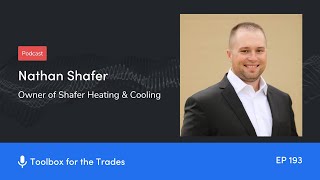
Podcast interview (Toolbox for the Trades Ep. 193) with Nathan Schaeffer, owner of Shaffer Heating and Cooling. Nathan recounts growing up in a third-generation HVAC business, hitting a burnout/bandwidth ceiling around $1–1.3M in sales, and hiring a coach at the end of 2019 which triggered a shift to working on the business. He implemented systems (ServiceTitan), core values, handbooks, and KPIs, replaced accounting leadership after discovering issues, and scaled the company to ~30 employees and a projected ~$8M in 2024. Nathan now franchises coaching (Phenomenal Business Coaching, Zig Ziglar) and coaches other trades owners using a 5-area diagnostic and prioritized implementation approach. The episode also touches on time management, DISC profiling, and Nathan's family rodeo activities.
Hello, contractors, and welcome to Toolbox for the Trades. My name is Jackie Aubel and today I am chatting with Nathan Schaeffer, the owner of Shaffer Heating and Cooling in Hillsborough, Ohio. Nathan and I spoke about the power of coaching and the importance of working on your business instead of in your business. I hope you enjoy our conversation as much as I did. Nathan Schaefer, you are the owner of Shaffer Heating and Cooling in Hillsborough, Ohio. Today you and I are going to be talking about the power of coaching and getting out of the business to work on the business. Welcome to Toolbox for the Trades. I'm so excited to have you.
Hey, thanks for having me, Jackie. It's an honor to be here.
I am so psyched to talk to you. Let's kick this off with an icebreaker. I would love to know, Nathan, especially because we're talking about coaching. What is the best piece of advice you've ever gotten?
I mean, I tell you, like most of us, I've had lots of pieces of advice and if only we would just maybe pay more attention to. To more of those. Right. One that I guess that's really made the biggest difference is, is kind of ties back to what you just mentioned a minute ago as far as getting out of the business to work on it instead of in it consistently. And that's exactly where I had seen the biggest difference. Not only in my business, but my personal life as well. And my first mentor or coach, first coach that I hired, it's exactly what he told me to do. As a matter of fact, he said he wouldn't coach me if I didn't do just that. He wasn't going to waste my money, my time or his time. And so that one kind of sunk in. That was kind of scary to do. But man, when I did that, man, things started changing and immediately, I guess that's probably when that stands out the most. That's made a huge impact along with many others. But yeah, awesome.
Awesome. Well, your last name is Schaefer, which is also the name of the business. So I can kind of guess how you got into the trades. But why don't you tell me the story of how you got into the trades.
Yeah, so I've grown up in the trades my entire life like so many of us have. Third generation. My dad and grandpa started the company back in 85 and start with one rusty old pickup truck. They were dairy farmers and things were not looking so good at that time. In the mid mid 80s they decided to start up a heating cooling company at the time is actually a mobile home service. Did everything to manufactured housing and started with one rusty old pickup truck, one toolbox, and a couple of hand tools. And so obviously, I was pretty much born into the trades. And by that time we had started focusing just on heating and air conditioning and all types of residential housing. Grew up holding the flashlight, getting the tools, different things. From a very young age at about 3 or 4 years old, going with dad, and then about 11 or 12 years old, I was the. The outside guy on the install cruise. And so I was going out with the other crews, and I wasn't in school, obviously got questioned a bunch. What's the kid outside doing, you know, on the. On the air conditioner. But got shoved in all the tight spots in the attics and crawl spaces, different things. And as time progressed, started running a little bit of service in high school. Left for college for about a year and a half. We just got associates in business and went out to school in Iowa, completed that and competed on the rodeo team. Met my wife, came back here to Ohio and got right back into working in the business running service and sales. Worked in the call center. Just really worked about every single position in the company all up and throughout my adulthood, up until about four or five years ago when I decided it kind of hit a spot where I was burned out. And that's when I decided to start working on the business instead of so much in the business. So I've been in every position, the company. My. My roles are obviously a lot different now. What I do. I'm not in the field any anymore. Do miss parts of that. But also, too, I really enjoy what I get to do now with really getting to help others succeed on my team. So.
Amazing. Amazing. So you're technically, I guess, since your father and grandfather started it, your third generation. Technically, correct?
Yes.
All right, awesome. And you guys, do you still primarily do residential? Do you also do commercial?
Yeah, we're about 85. About 85. 90% residential. So we do a little bit of light commercial, but primarily mostly residential replacement service.
All right, awesome.
A little bit of new construction, but very little. Some custom, you know, stuff on that, but that's about it on the new construction side.
All right, cool, cool. So tell me a little bit about this breaking point. So obviously you've been ingrained in the business. You know, every single element of it. Can you tell me about what happened when you kind of hit that breaking point and what you did to change things?
Yeah, absolutely. So I think, you know, all of us hit a Point. And there's different, there's different ceilings, different plateaus and business that you hit, you hit those, those, you got to break through that ceiling. But I had hit a point for myself at the time. I had, we had all three of our kids at that point. The one was just a couple years old, about three years old at the time, our youngest. So I had a young family. I'm working, you know, 60, 70, 80, 90 hours a week, you know, like, like so many do. And my parents at the time were still working in the business as well. I was working sales, working service, you know, running all the on calls. We had about eight to 10 guys at the time, I guess. And it hit about that one to 1.3 million in sales. So we hit a point to where I started to realize, man, this, this isn't working. Something's got to change. We can't continue to do it all ourselves. You know, we were like everybody else. Oh, it's hard to find good help. And people come in, they go. We had a couple that, you know, been there for a long time, for the most part, you know, just like a revolving door. And it's just like, man, this is, it's just rat race, you know, Like I'm working so many hours, I'm doing okay, but it's not like I've got anything to write home about. I'm not making bank or anything. And if I was making the money, I sure as heck didn't have the time to go enjoy life or spend it, you know, or do things with my family. And so I hit a point where I told my parents, hey, something's got to change. Either we've got to do something different and at the moment I'm not sure what that is, but we got to do something different and, or I don't want to quit, but I'm going to have to. I got to find something else. And I'm not a quitter. That's never been me. And so of course, luckily I did not choose that option. I seeked out help, started asking, doing some research, found a coach, talked to him, hired him, and he told me, hey, I'll start coaching you, but you've got to pull yourself out of the business. As far as working in the day to day, you know, that's tough to do, it's hard to let go. He said, but we're going to need someone to constantly working on the business every day, implementing systems, processes, doing all these different things, things, building up a team so that you can get to that Next level. And that's exactly what we started to do. And thank goodness I still say to this today that it was a blessing. We're a Christian based company as well. So, you know, I definitely believe God had his hand on this. That's why we're still here today. But when we did that, that was at the end of 2019, I made that decision and hired him. As we all know, 2020, there was a lot of big changes that came. And because of a mindset shift and, you know, we started putting our core values on the wall and implementing systems and processes and a handbook and all these many things that putting things in writing and just really giving a clearer path, a clearer vision, clear expectation for the entire team that we didn't have before. But also it helped hold me more accountable. You know, I wasn't just reacting to every different thing. And so one of our core values is positive attitude. And for us that means that we will overcome type attitude. And that's really what helped us not only get through 2020, we actually doubled the business that year. We increased it again, exceeded budgets in 2021, again 2022, which allowed my parents to be able to retire and I purchased the business from them. And so. But also too, if we go back to 2008, 9. Right. And all these different times over the last almost 40 years in business, that positive attitude that we will overcome type attitude is what's gotten us through that. But I still think to this day, if we wouldn't have gotten help, I hate to think what that would have looked like. A difference in, in that year and moving forwards compared to what we've done now. So. Wow.
Yeah. I would love to know what kind of barriers did you have to overcome to make this change? Because what I'm here, when I hear you talk about this, it really sounds like this was a mind shift, a mindset shift that you had to make. So tell me a little bit about what barriers you had to overcome to finally stop working on in the business so you could work on the business.
Yeah, I think a lot of it comes down to oftentimes we're afraid to let go. We think, you know, someone else can't do it as good as I can or they won't get it right or, you know, this, that and the other. But in reality, oftentimes they can, if not even possibly even do it better, you know, in some cases, because as owners, we're trying to juggle around 100 different things and we're giving a everything a little bit of time or a little bit of effort, you know, because we've got a million other things to do. When instead if that person in that role has a clear expectation, you know, they've, they've got guidelines, they've got a clear path, they can do exactly what is they need to, to do to work on and improve in that area. They can oftentimes do it just as good, if not better. And then even if they can't do it just as quite as good, it's okay, let them mess up, let them learn, help them, coach them, show them, you know, teach them the way and they're going to go out and be able to do that over and over. Now if you get 5 and 10 and 20 and 30 and 100 people doing, you know, what you could do, maybe even at just 75% capacity, wow, that's, that's a big difference, you know, you can do to yourself. It's a lot more people you can help and serve. So I think that's probably one of the biggest things. And then taking the time, the effort, it's kind of some short term losses, right. Or pains for long term gains just buckling down and getting everything in writing, getting the processes put into place, getting those things implemented, you know, showing the team the wifm, you know, the what's in it for me for them, that's everybody's favorite radio station, right? So showing them how it's going to help them and help them progress and achieve their goals. So I think that was probably some of really just the hardest things. Oftentimes we often know what we need to do. Most of us, it's not like there's any silver bullet out there unknown that we're all trying to find. Oftentimes we all know the answers. We just, we have a lack of implementation, which is why one of my mentors, Howard Partridge, wrote a book on fti. Failure to implement, the number one thing keeping us from achieving our biggest dreams and goals. So sometimes we just got to take action, we got to do it, quit talking about it, quit thinking about it, and hold ourselves accountable.
Wonderful answer. I love the, this concept of reframing your mindset to short term losses for long term gain. Because yeah, like you said, you have to buckle down, you've got to write down those processes, you've got to get your systems in place, which is going to take a lot more work or it's definitely going to be shifting the kind of work that you're doing on a day to day basis. I would love it if you could get specific about one of the hardest things you had to do while transforming your business. I know you were telling me a bit you had to like, learn accounting. And you also fired your CEO, CEO, CFO at one point. So I would love if you could just get specific on one of these examples of what you had. What was one of the hardest things you had to do when you were changing your business?
Yeah, so that example there is more recent. That was after. That was the one area that I didn't. That I not. The only area, I guess, in the entire company I didn't work in was the accounting. So as over the last five years as I've been running the company, I've focused on obviously getting everything digitalized. You know, we're on service titan, getting everything tracked, knowing everybody's KPIs and expectations of things. And I love that side. I love knowing the numbers. I like tracking the numbers. I mean, the numbers tell a story. However, I don't like doing the numbers. And so the accounting side of it, I'm a high D. And so there's a lot of detail there. There's just a lot of boring stuff to go and do that stuff. My mom always did that in the past and over the past probably four or five years, you know, planning ahead, hey, at some point, let's, try to, you know, allow her to be able to exit the business or do less, not be quite so dependent on as well as she learned everything the hard way, like so many of us do from the school of hard knocks. She didn't go to accounting school or anything. She's learned over the years. As we grew, she grew her level of knowledge. And so we did hire an accountant, obviously, and we had a CPA and we thought they were doing a good job. And there was, you know, some two or three there, but there were some things that were getting missed. And over the past year and a half since owning the company, after I got diving more into the accounting side, I started finding little things here, little things there just didn't quite add up. And the long story short, when it came down to it, when asking questions, trying to hold accountable and find out what's going on, we need to make these changes in the area that we're going. Whether we did that in the past or not, this is the direction we're going now to create, you know, the win, win, win outcomes, meaning the team member wins, the company wins, the client wins. You know that this is what we need to do, why we need to do it. That wasn't happening. And so had to fire the accountant. Did that and then come to find out on taxes, some big things that were missed would have cost us about a hundred thousand dollars. Luckily caught it last minute. And so, yeah, I'm like, okay, that's, I get it. We all make mistakes, we're all human. But that's why we pay, you know, these types of people, you know, good money to hopefully, obviously save us money. And so I had to make a tough call there. So, yeah, new accountants, new CFOs, just learning everything the hard way myself. And the one area that I hadn't done a lot of personal training in, I've always seeked that stuff out and I still do. Right. And I still continue to seek that out. But I've had to learn, have a better knowledge myself of those, what to watch for, what questions to ask and obviously, you know, to communicate better what my needs are as the owners, as the company and where we're going to make sure that we're getting that delivered. And so that was definitely a painful time over the past, you know, two years, but we've gotten through it and we're still tweaking things and getting things better and dialed in and cleaning some stuff up. But yeah, that's been fun.
So we've talked about this a lot on the show before, you know, stepping out of the business so you can work on the business. And I think sometimes when we talk about this topic, it's easy to glaze over and kind of do a, you know, 20,000 foot view of like, okay, this is generally what I did. But I really applaud you for sharing a story that is more recent because it goes to show that it's not like a light switch that turns on. Oh, all of a sudden now I'm working on my business instead of in my business. It's a constant muscle that you have to work. So I appreciate you sharing that. This is a, more of a. More of that was more of a recent example. Right. I'm curious. And we're going to get into coaching in a second and how you actually are a coach now. What are some telltale signs that owners are a slave to the, to their.
Business like you were oftentimes, you know, I think a great way to start that is ask yourself, do you remember why you went into business for yourself? Was it to be your own boss, chart your own course, make more money, have a little more free time? And really the brutal reality is oftentimes it ends up being quite the opposite. We don't have any free time or very little. No free time, no family time. The business consumes our mind 24, 7. We don't make more money. We have that much more risk, liability, and we oftentimes spend our time putting out brush fires. That's kind of the brutal reality of most small business owners, unfortunately. And so those are some telltale signs. If you're feeling those things, hey, it's probably time to hold on, stop, you know, ask for help. Let's. Let's see what things need to be worked on. Let's get back to getting yourself and putting the right things in place of why you truly went into business for yourself to begin with. And that might start with just reminding yourself, well, what was that? Why? And so that we can start working on, or you can start working on those things to get you back to where you need to be on back on course to where you do have those things. You are making more money. You do have more family time. You are charting your own course. And really, the business should be our vehicle to get us where we want to go in life.
So, yeah, I will say, if there's one thing I've learned from doing this podcast for almost 200 episodes, if I want more free time, I shouldn't expect it. When I start a business, you have to be very intentional about it. It's like, oh, I want to be my own boss so I can have more free time. It's like this podcast has taught me that that is not an easy feat. That is not ne. That's kind of like going around the block to get next door. There might be better ways to find free time. You certainly can do it if you master this art of business. But it is not something that's going to happen right away, especially if you want to become profitable and actually, you know, make yourself a pretty wonderful, wonderful livelihood.
Also reminds me of a quote or a lesson that John Maxwell had talked about was, are you willing to pay the price? You know, what are your dreams? What are those? Map those out, and then every dream comes with a price, and are you truly willing to pay the price of that dream? You know, and so, great, great point.
So since you turned your business around, since you got coaching, you stopped working in your business, started working on your business. You now have about 30 team members, and you're pacing to hit about $8 million this year in 2024. You also now work with Howard Partridge and have your own coaching business for folks who were in the same place you were five years ago. So I'D love to hear a bit about some of the core lessons you impart on your clients.
Yeah. Back up just one step. Because of the coaching, I'm not any more special than anyone else. I've learned things. I've just grown up in the business, doing the business, so I've had to learn everything, maybe even just the hard way, like most of us do. But because I asked for help, we started seeing these results, and that's really what it's all about. We all have to have a coach or multiple coaches, mentors around us to surround ourselves with, to hold us accountable, to show us the way. And that's one thing I love about Howard in the. In the inner circle, and he's really helped us with, and I enjoy not helping other small business owners with is. It's not relied upon any one coach. It's a whole inner circle, inner community of multiple coaches, because we've all got our different strengths in different areas. For example, you know, accounting is not my strength. The operational side of it things definitely is, but whereas vice versa for somebody else. You know, Ellen Rohr is when it introduced me to my new cfo. And so, you know, that's something that used to not be her strength, but now, obviously is one of her strengths. And so she's the one that actually helped me with some of those things and the finances and things. And so being able to surround yourself with those people that have been there and done that has just been truly phenomenal. Because of that, it's allowed us to, you know, grow the business. Yeah, we're pacing to do 8 million this year. We've gone from, you know, eight or 10 team members up to 30 over the past, you know, couple of years. Make the Inc. 5000 list two times in a row. And great places to work, you know, certified the last three years in a row. And so all these great things come from not being full of myself, not being proud, but, like, asking for help and then going and implementing those things. And so because of those lessons that I've learned, yeah, it's something I've always been passionate about. I love talking about business, specifically the trades. That's where my heart is. It's where I've spent my entire life. And so when this opportunity came up, after I had found Howard about two years ago, I've known him for, or known of him, I should say, for years. Originally from Ellen probably, I don't know, 10 or 12 years ago, maybe. Time flies. And so I've always kind of watched him from a distance. Just a phenomenal guy. And when I partnered with him a couple years ago, an opportunity came up and he created a franchise for the coaching business. And so they coach over 100 different industries in 20 different countries. And the relationships that I've been able to build over the past, you know, year or two with him has just been truly phenomenal and really helped us get to that next level. And so, you know, getting to spend some one on one time with people like, you know, Tony Melo or Dave Anderson or Michael E. Gerber or Brian Tracy and just John Maxwell, I mean, the list goes on and on of people that I have met and spent some one on one time with in such a short time frame, all because of the relations of people in this inner circle. And so it's been truly phenomenal. And that's what I have a passion for. When this, this came about, I was like, wow, what a, what a better opportunity to be able to go out and help other small business owners get through the same struggles that I've been through. And hopefully they can learn from my mistakes. And the things that we really work on are five main areas of the business and that's administration, leadership, sales, marketing and admin. And so we have different coaches and we have courses online and different things. We help them through that, really getting the systems in place within their business to excel in all those areas.
Do you have a particularly memorable story you've had with a coaching client or a member of your team after you implemented a new process through coaching?
Yeah, so actually, I mean, once again, just to go recent, um, I had a coaching call with one of my clients this morning one of Ziggler's most famous quotes of all time. And it's, we've actually adopted as our primary purpose here Shapry and cooling is that you can have everything in life you want if you just help enough other people get what they want. And with this particular coach member this morning, I tell you, there's no better feeling. You know, he's been struggling these last few months. He's got, you know, three or four team members right now. It's a, you know, insulation business and trying to work some of the things and he is completely stuck. Like stuff we just talked about a minute ago, being a slave to the business and working in the business. And so we went through and we did a, an analogy. He went through and scored different areas of his business himself. We're focusing on the key areas to work on first. Obviously we can't fix everything at once. You know, he can't fix everything at once. It takes time. Unfortunately, there's no snap of the fingers. However, the progress that he's seen and we talked this morning, we talked about some of his biggest wins, you know, just over the last, you know, 30 days from his last coaching call was just truly found. To see him be able to go from past calls or, you know, I talk to him throughout the month as well. But you know, we hear you're struggling, you're down and out on certain things. To see his, his face on the zoom call this morning where he's, he's smiling, he's, hey, I'm in my office for the first time in a couple months, you know, working on the business this morning. He's going to spend a couple hours in this morning, said, I'm actually, as a matter of fact, I'm taking the rest of the day off. That was on my schedule and I'm spending it with my family. And he's like, and I haven't done it in a long time. That gives me goosebumps. Again, just same as to be able to know that, you know, you had a small piece of, of helping them map things out and get through those tough times and be able to go do that. That's truly amazing. Be able to see that over and over again through other people, help them get to that point is. Is truly a feeling like no other. That's awesome.
That's so awesome. So I know every coaching client is going to be different, but you mentioned kind of mapping out like the steps to make. Cause you can't implement a bunch of things all at once. Is there a particular way that you approach like mapping what a client needs when it comes to transforming their business?
Yes, we actually go through several different things through some questionnaires and different things. We have a real simple basic evaluation where they'll go through and score themselves on those five main areas of the business on a scale of 1 to 10, and there's about 10 areas in each section and then score themselves on. So we'll go through that. They'll go through doing it themselves. Obviously they know their business and where they're at. And then we'll go through and talk about their needs, their wants, where are they at, what's their biggest struggles, what things are going right and then help them really pick an area to work on first. And then we'll go through and most, you know, most small business don't have a business plan. They don't have systems and processes in place. They don't have manuals. They don't have all these different things. And so based off of how that comes out, then we'll start coaching them. We'll go through. We have weekly calls, quarterly conferences, monthly coaching calls. You know, different coaches will get them in connection with different people that you can really specialize and help them in a certain given area. But based off of. Yeah, what those questionnaires and those first evaluations come back as.
Okay, got it, got it. You still operate your own business, right? You're still in the day to day. So how do you find the time to coach?
Great question. Time management. Right? That's definitely. Like many things, it's easier to talk about. Right. Than it is to do. The hardest one is the leader ourselves. It's actually got my best. I've got a phenomenal team here. We've built at shapering Cooling. So I've got a leadership team in place. I've got my main director of operations that runs the day to day and so oftentimes anymore I work from my remotely from my home office now. And so, you know, example, like today, you know, I had a team call with my team this morning, you know, I had a coaching call with a coaching client for an hour. Then I was back, you know, for a strategic planning meeting that I have every Friday with my director of operations. And so we go through and plan things out and on the strategic side of things, wrapped up on a couple other things here we are doing a podcast here. This afternoon I'll be meeting with my leadership team to recap the budget plan, make sure everything's set and adjusted correctly for next month. We're all out to the team. So it's really just making sure that I have those key things mapped out of what's the biggest needle movers and making sure that my team here at shapering Cooling is properly equipped, has the tools that they need and the resources and they know the vision as far as where the company is going. If so, I mean really they could. I mean honestly, it's like anything else, right. It's hard to let go. But honestly, I could leave for, you know, probably a couple months and maybe a phone call here and there. That would be it, really. And they would be just fine. I often don't do that. It's hard to let go. Right. It's easier said than done. But they do a really good job. So very, very proud and thankful to have them.
Yeah, well, that's what Tommy Mello says, right. If he was looking to buy your business or if he's looking to work with you. It's like I'm going to take you on a vacation for two weeks, and if your business falls apart while you're gone, then I don't want to buy your business. But if it's running smoothly, like, let's talk about. So I think that's really testament to you. Well done, my friend. For being able to accomplish all of that, I want to actually pivot a bit more into personal.
Right.
Because time management, I know I struggle with it. Was there any type of skills that you had to really nurture in yourself as an individual to be able to master this and to master showing up in the most effective way you can for the business?
Really, it's just. Really just focused on, hey, what's. What is the goal? Why are we doing what we're doing and writing it down? I'm a high D personality, so I'm like, go, go, go, go, go. If it's going to take too long, I can start a million things. Right, but you're going to stick through and finish it. And so really focus on the things that I need to focus on. Trusting my team to take care of the rest. Implementing the right things, what things are going to cause the biggest needle movers and staying true to that, you know, and if I find myself wanting to veer off and do something else or start something else, just asking that question, hey, does it align with. There's the goal, there's the target, it's over there. Is what I'm about to do or wanting to do, does it align with that? Is it going to veer me off and take me a different direction, you know, for whatever that may be or whichever business that may be. And so just really staying focused and having that plan written out and planning ahead, you know, making sure tomorrow is planned out, you know, today, et cetera, and so on. So just staying disciplined. It's still. It's. I am not a master at it by any means. We're still working, working on that. It's a. It's a work in progress for sure.
Yeah. A hundred percent with you on that. I. I'm. I'm also a high D. And it's so funny. There's an episode that will come right before yours with Tucker. Tucker Yarborough, also a high D. So I don't know if I just as a high D myself, find a knack for finding other high Ds. And for anyone who's not familiar, this is the disc profile assessment. The Ds are very like Laser focused. We love starting things, not necessarily finishing them. So really interesting and I love to hear those types of tips and, and I'm glad that you were honest and forthcoming that like I still have to work on this every day because it is, it's so tough. Like nothing is nicer than being able to just not have to do anything. It is. My favorite thing in the world is to procrastinate, but that's my own problem. Maybe we should do a series on Toolbox about like how to overcome burnout or some, or falling into some of those lazy traps, I guess. Lazy traps? Maybe that. I don't know if that's the right word. Maybe we should do something about that on this show and in the coming future.
I said, you know, with the, the disc model, I mean that's another huge piece of advice I could give. Obviously. Hopefully there's something, you know, in this recording that someone can take some value from at some point, one way or the other, be able to relate to or if nothing else, just motivate them right to, hey, keep pushing, get through it, seek help, whatever the case may be. Like all of us can do. Whatever it is that your dreams are, I mean, whatever your dreams are, you can do it or you can't do it. Either way, you're right. Right. I mean it's all about the mindset. It's all about your determination, it's about your focus, it's about who you surround yourself with, you know, who you're seeking help from. But you talk about the, the disc model you brought up a second ago. I mean that has been a huge piece over these last couple years that we have really spent a lot of time on, on studying. Myself and my director operations, we got certified as Level 2 disc trainers through Dr. Robert Rome. And really understanding first yourself who you are and why you think, the way you think and react, the way you act and what your secret fuel is and all these different things like as a high D, you know, for, for you or for me would be getting results. Like if we're not getting results, life's not good. If we're getting results, it's yes, let's, we'll just keep going. Like you can't stop them. Right? That's, that's just part of the traits of being a high D. Whereas A, you know, an inspirational, the I or the support of the S or the C, the cautious. And there's all these different things, but you need to have a well rounded mix of all of those on your team. And so Once you understand yourself and you understand your. Your strengths and your weaknesses, your blind spots, you can also then better, really better all the relationships in your life, not just on your team, but in all relationships, understand everyone else and the way that they communicate. And, man, you talk about a game changer as far as for getting results within your business or with, like I said, with any relationship in your life, understanding who they are and what, what makes them tick. Right. Why they communicate the way they do and what they need from you and the way that you communicate to them. So that's a huge, huge. I would highly encourage anybody if you don't do it already, utilize it in your hiring process and your training process, everything through and throughout. Right. In every relationship.
So amazing. Yeah. Wonderful advice. Looking back, is there anything you would do different when it came to transforming your business?
Don't wait. Start. Start now. Whatever it is that you're thinking, man, I need to. I need to start now. I need to ask for help. I need to get coaching. I need to go do xyz. I need to implement this. I mean, sometimes people get so stuck on ready, you know, aim, then they keep aiming, they keep aiming, they keep. And they never fire. And I'm not saying go out and, you know, be careless and always just ready, fire, aim. But sometimes you. You got to pull the trigger, right? You got to get started. Cac everything. I make sure everything works. But, man, just start. You don't have to be great to start, but you got to start to be great, right? So get started today. Don't wait. You can't go back and change time and regret. I wish I would have done this 10 years ago, you know? Yes, I wish we would have, you know, wish we would have started implementing all these things a long time ago, but we didn't. So there's no better time to start than right now. Really start focusing. You know, get that laser focus where your focus goes, your energy flows. So really start working on the right things in your business that's going to help move and excel you in the right direction that you're wanting to go.
Amazing. So something I learned about you when we first did our pre interview is that you and your entire family are participate in rodeo competitions. You guys are like, professionals. So I would love it if you could, as we. As we close out the show, if you could tell me about your most exciting rodeo competition.
Yeah. So, most exciting. Man, if I think back, I've. I've had some pretty fun ones, really exciting ones. That's actually, like I mentioned earlier how I met my wife. We were both on the rodeo team in college. So I team rope. Back then I used to rope calves also I tied on rope. I haven't done that for about seven or eight years. I just team rope now head and heel. My wife bail races, my daughter bail races. Both of my sons team rope and breakaway rope. And so the most recent ones or the past year or two exciting ones have been. This might sound crazy but on a much slower stage or a platform. But this past winter I won. I see one second, I think this back we won second because I legged the steer is what my eight year old son told me. Roping with my son at a rope and as a, a team roping, you know, there was 100 some teams in it and you know, adults and teenagers, different things. But I got to rope with both my boys in that rope and I won second with my eight year old son. And yeah, we only won maybe 1200 bucks or whatever, which to him was obviously huge, right? I mean way better than any youth rodeo and things he's competed at being 8 years old. But for me it wasn't the 1200 bucks. It was the fact of being able to do that with my son and go win, you know, at a, at a decent size rope with him. That was thrilling. Or to see my kids now my daughter, she's competing on some big stages. My kids have all qualified for Vegas big competition come up this fall and so that's going to be phenomenal anymore. Now like I'm competitive. I love to win. If we're playing stuff at the house, I mean I'll, I'll beat my kids or anybody else's kids all day long. Right. Like I'm just competitive. Like I don't care if, if, if they are 12 or not, but that's just me. But to see them go out and win and compete at that level now I tell you what, I, I've never gotten tears. I've competed for you know, 10, 20, 000 before and yeah, you win it, you don't win. It's frustrating, it's exciting. But then when your kids are out there and competing and at that level and for that type of stuff, that's, I don't know, maybe I'm getting older now, something with being a parent. But I get emotional. I get a whole nother level of excitement on that. So that's probably been some of the most exciting is seeing them excel so.
Well now that is a incredible answer and I am. Well also what's the name of your coaching business and I am going to fall out of my chair if it's something if it's like a rodeo pun, I really am.
So it's a franchise through Harry Potter. It's called Phenomenal Business Coaching. And then I've got my own franchise through that. So yeah, Phenomenal Business Coaching Powered by Zig Ziglar.
Next time that we chat, Nathan, I'm really going to try and read up on my rodeo references so I can pitch you some some catchphrases or some taglines that you can use in your marketing materials. Nathan, this is such a fun episode. Thank you for telling me a bit about coaching and I know this is kind of an evergreen topic in the trades and I know that someone listening today got a ton from what you had to share. My final question for you, I'd love to know what media are you consuming these days? Whether that be books, TV shows, movies. What are you into right now?
Honestly, I don't really watch. In the last couple years, I haven't watched really any tv. Don't watch the news or shows or anything. Just spend that time on something else. I've been trying to be better about reading. So a couple books that I'm actually in the in the process of reading right now is up youp Business by Dave Anderson as well as leading with questions. That's another weakness right as a high D is asking. I mean just that's just with all of us in leadership in general. But lead with questions, ask better questions. Nobody wants to be told what to do. So I really enjoying that book and practicing on definitely asking better questions. So that's a couple books I'm listening to or reading right now. I also listen to a lot of podcasts and different things. I listen to Tommy's podcast quite a bit. I really enjoy that and get a lot of takeaways from that. Some other ones with Weldon Long through EGIA and different ones like that as well. So listen to more podcast audiobooks and reading vs any tv shows or movies or anything right now.
Awesome. Awesome. Well, Nathan Schaefer, thank you so much for joining me today on Toolbox for the trades. I look forward to seeing where Shaffer Heating and Cooling is going to be in a couple years from now. I'm sure you guys are going to be doing some fantastic things.
Awesome. Thank you. Jackie.
More from Bill



ServiceTitan Virtual Agents: Simplify Before You Scale | Podcast Ep. 110 | Mastering ServiceTitan



Life After Live Events: How to Turn Post-Conference Energy into Real Profits | Podcast Ep. 297




