How a 2025 Employee of the Year Uses AI to Scale Landscaping Operations | Podcast Ep. 265
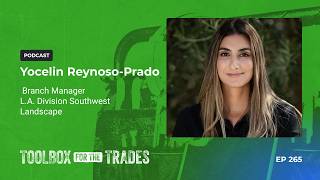
In this episode of Toolbox for the Trades, host Amanda Salvatore interviews Yoselin Reynoso Prado, the Los Angeles division branch manager for Southwest Landscape and the 2025 Lawn & Landscape Employee of the Year. Yoselin shares her unconventional career path—from medical billing and finance to landscaping—highlighting how curiosity and diligence propelled her into a leadership role in a male‑dominated field. She discusses the significance of being recognized as Employee of the Year, the challenges and opportunities of being a woman in operations, and the importance of honest, compassionate communication with clients and crew members. A large portion of the conversation centers on practical AI adoption: using ChatGPT and other tools for generating reports, analyzing sales trends, automating follow‑ups, and envisioning future budget‑approval bots. Yoselin explains how she balances AI efficiency with a personal voice to avoid sounding robotic, and offers step‑by‑step advice for teams beginning their AI journey. The interview concludes with reflections on opening a new Los Angeles yard, the processes she will carry over from the Orange County office, mistakes to leave behind, and her excitement about tighter client relationships and improved operational precision.
Chapters
Hello and welcome to Toolbox for the Trades. My name is Amanda Salvatore, and today I spoke with Yoselin Reynoso Prado, branch manager of the Los Angeles division for Southwest Landscape. Coming into the industry with a fresh perspective and an eagerness to learn, Yoselin has quickly proven her impact. Even Lawn and Landscape took notice and named her the 2025 Employee of the Year. We discussed the role of AI in the industry, the importance of due diligence, and what it truly means to be an effective leader and communicator. Her big takeaways: never be afraid to ask questions and always lead from the heart. I hope you enjoy this conversation as much as I did. Jocelyn Reynoso Prado, you are the branch manager of the LA division at Southwest Landscape. You were named the 2025 Lawn and Landscape Employee of the Year. And today we're gonna be talking about AI, operational due diligence, and also being a leader in the industry. Welcome to Toolbox for the Trades.
Thank you so much for having me, Amanda.
I'm so excited. I think you have an excellent story and I can't wait to get into the nitty gritty with you. But first and foremost, we always like to start off with a little bit of an icebreaker, and this one is fun. Who is playing you in the movie of your life?
I would say I have about 3 options. When I was younger, I used to get a lot of Penélope Cruz. I look like Penélope Cruz. And then I used to get a lot of Anne Hathaway. And then I got some Sandra Bullock, a Hispanic Sandra Bullock. Oh my God.
Honestly, all 3 would be great. That's so funny. Anne Hathaway was the celebrity that I would just kind of run into. I live in Los Angeles and there's There's certain celebrities that you run into a lot and you're like, what? Why? Why are you following me? And she was—
these are meant to be friends.
She was exactly, exactly.
We have a little bit of the same background, if you will. If I compare myself, the Devil Wears Prada, where I'm jumping into an organization where I absolutely don't know what I'm doing and I jump in and I try to change the game and learn the industry and I think it's a little bit on par.
I think it's very appropriate. Very appropriate. Well, let's find out how you did find yourself in this industry because you didn't start out here.
No, I didn't. Previously, I've worked in the medical billing agency. I've worked in workers' comp and I've worked in finance for court investments, worked with attorneys and the court system to properly invest special needs trusts, conservatorships, and all that stuff. After that, I found myself kind of in a loop where I noticed that I wasn't really getting the opportunities that I really wanted and the opportunity for growth. And I kind of put myself out there and that's when I found Southwest on Indeed. And sure enough, I applied. I saw my VP look at my LinkedIn and I was like, oh, that's a great sign, you know? And I started, um, researching the company and seeing what big, uh, companies they also worked with, and that was something I definitely wanted to jump into.
It sounds like you were dealing with a lot of detail in your previous jobs and your previous experience, and I know that that is something that when I was reading this article in Lawn and Landscape, that your due diligence and your communication is really something that sets you apart. But before we kind of get into Southwest and what you were doing, I would love to know that experience of being named Employee of the Year for Lawn and Landscape and what that experience was like.
So both of my VPs let me know at the same time. Initially, I was a little bit shocked, a little bit scared, just because I knew that it came with a lot of pressure. Knowing that clients might read the article and expect the same, or if not more consistently. So I felt the pressure of being better. So that was a bit scary. And then as it kind of, that kind of died down, I, and I had my photo shoot, which made me feel like a little celebrity. It really made me feel appreciated. I had a conversation later on with my bosses and I know what it means and I know what it means for the company to just, even put me out there, and I really appreciate it. And something I mentioned to my bosses, how nice that felt, but also how I would love to have the opportunity to extend that opportunity to somebody else in the future and make them feel that way.
I love passing it on and lifting up other voices. I think that is a great thing to consider, especially when you're in the position that you're in. What do you think is the secret sauce, if you will, that separated you and made you stand out so clearly to Lawn and Landscape?
I think the fact that I am a female in the industry, it's not very common, but also someone in the operational side. I think we see a lot of females in the sales team, in the office, but you don't really see it in the field and directing, taking on challenges. And starting off not knowing anything in the industry, not having any schooling in it. So I think that really got them to see a different picture, put it out there.
What about this industry? You're new to this industry. What about it gets you excited? Why are you really putting yourself out there and making some serious money moves?
I really, really enjoy getting to know the property managers and making their life easier. You know, being their eyes and ears. A lot of what we talk at Southwest is about being proactive, but also partner. I think so many times people are just looking for the income, and I think if you look at it from solving other issues, like even graffiti at their property, you might not think it's a big deal for you as a landscaper, but for the client, you seeing those things is going to allow them to take time and be in the office rather than out in the field. You know, we are their eyes and ears, and I think that makes their life easier. And with that, then they reward you in other ways, whether that be giving you more opportunities for other properties or renovations.
Let's talk about organizing and how you are utilizing AI within your operations. AI is on top of everyone's mind. 2025 and beyond. So where have you seen positive results with AI and how is it changing your day-to-day workflow?
So I'd like to say that initially when AI came a little bit more and more into the business, I was a little bit reluctant just because, you know, you sound a little bit robot-y when it gives you information. It's just straight to the point, has no feelings, no heart. I initially was not wanting to use it, and as time went by, I gravitated more and more to use it. And now I use it whenever I'm having a difficult conversation with a client, or maybe I'm running reports on someone below me to see where they can put more effort into, or maybe where they need to take a step back. From there, we can really analyze what we're getting out of each and every property.
Yeah, well, once you get that information from those reports, you're able to apply that into your day to day. Do you have any stories where AI really gave you an advantage when dealing with one of these properties?
So I've been playing a lot with AI. Both have been successful and some have not. I've tried to even take pictures of a property, tried to analyze what it would take to actually bark mulch without mapping a property. Utilize it to a different degree, but also utilizing it in terms of sales. I have worked along with my client reps to run reports, see what they've done from previous years versus this year, seeing where they're falling, where they're actually making a better sales. And then from there, we're really analyzing where we need to go see properties more, where we need to be trying to team up with the client a lot more because maybe we're not generating enough conversations with them. So we're really diving into more of the background and in terms— hoping that it propels more sales but more opportunities and a better relationship with those clients.
I want to touch on what you previously said about your concerns and your hesitation with AI. I know you're experimenting with these automated follow-ups, we're talking about reports, budgets, approvals. How did you balance the efficiency of AI automation but also continue with that care and relationship factor that you value so much?
I think you have to get the information from AI and then convert it to you. So many times I think people grab the information and then just spit it out, send it off in an email, and you can tell it's AI. It sounds robotic. We can all tell when there's little symbols or little things like that where you can definitely tell that it's not coming from the heart. And I think if we grab that information, convert it to us and what we normally say, I think it's gonna be more genuine.
There is something about taking that information and putting it in your voice. So that it feels authentic and that it is authentic. For someone who is in charge of organizing spreadsheets, keeping everyone on task, where would you suggest they start their journey with AI?
I think first have a conversation with ChatGPT. If you're using ChatGPT, ask it what you're trying to make out of it. Ask what are your concerns, what are your pros? Everything and then ask it to provide you feedback. From there, work along with it, act like it's your, your teammate, and then utilize that information and talk to your team. This is all new to us, but I think if we group as a team and really see where things work and where things don't, I think it's going to really propel us in the future.
When it comes to AI and automation, is there anything that you wish it did or that you're looking forward to coming down the pipeline? Something that would make your day-to-day easier.
So something that I'm working on and I'm trying to figure out, and, you know, a lot of it is not that easy, but I think we're going to get there shortly, is trying to follow up on budgets where it's doing it by itself. So it, the system reads your emails and it sees you haven't received this approval, it checks in for you. That way you don't have that backload, um, to follow up on, and it's doing it for you. I think it's going to make things smoother, easier, and once again, it's going to communicate to the clients that you care about the follow-up.
I would love to ask, like, when it comes to communicating and keeping that due diligence, this is something that kept coming up in the article over again about how you communicate and how great of a communicator you are. What is it about communication for you that is so important? What should people consider?
I think honesty. I think so many times we have an issue at a property and we're trying to cover it up. And I think if we come up, come from a place of honesty with the client, hey, this is what I found, these are my suggestions. However, I'm open to your suggestions. And having a real normal relationship and a conversation, I think they're going to see that, you know, you want the best for them and you're trying, you know. And I think so many other people are just trying to cover and trying to see how they can get to the next step without really handling that situation.
Well said. I think people are avoiding conflict. Yeah. When you do that, sometimes you're avoiding providing information, and people, when they feel like they're in the dark, are going to have some reservations, right? So making sure that you are being honest, I think, is an excellent place to operate from when it comes to communication. That's great.
Honesty, conversations, follow-through, I think, are the one of the most important things in landscape. I think so many people are focused on, is the grass green? And yes, that is so important. But if you don't communicate that to your client and they're not visiting the property, how are they supposed to know that you're doing a good job? So providing that information, that feedback, the goods, the bad, the uglies, it doesn't matter. Just keeping that conversation going.
I want to shift over to being a leader in the industry, especially as a woman. We were saying that there are a lot of women we see who are managing the office and they are in sales, they're picking up the phone, but we see far less when it comes to operations. Why do you think that is?
I think it's a male-dominated industry, to be honest, but I think as I've seen slowly but surely, more and more women are becoming involved. And I think there's so many pros to a woman being involved, you know, from project management. We're so on top of our stuff. A, B, C, D, but also good at designing, you know. I've seen a lot of women in this field really conquer it, and I think there's true potential for women to take over a lot more in this industry.
I would love to know what your experience was entering this space as a woman.
I initially was the only female on my side of the division, if you will, the operational side. If I'm blatantly honest, it was very scary to be in a room full of men, but men that know what needs to be done, what needs to be tackled. They've been in the industry for so long. But I always tried to listen. I always tried to ask questions. Even if it didn't concern me, I was involved. I think that is so important. I'm a big believer, just because you might not make the mistake doesn't mean that you can't learn from it. So I really had a hard time initially. There were a lot of tears. It was very hard. But as I gained those small little successes and positive feedback from clients and my team noticed, I think that really propelled me to want to go for it more and more and more.
It sounds like you had a really supportive team who wanted to see you succeed. When it comes To communicating, obviously you're doing an excellent job. What is your advice for women who are about to take a leadership role in this industry on how to communicate with efficiency but also authority?
I think not being as afraid or scared. I think that's the biggest thing. I think, you know, we do have some potentials in the background of other women being in the same position as me. And, you know, I want to be there to support the individual, but I think the biggest thing is for them not to be afraid, speak their mind. They're obviously able to get to that position, and so to take advantage. I would say don't be afraid to ask questions. There is always someone in the room that is able to answer the question, and if not, you know, we learned from it together. But I think women in the industry is, very important. I think as we move forward, I think we're going to see a lot more. Even at my own company at Southwest, we have so many females now, and I think that just shows how much of an impact we can make. Why do you think—
we touched on this a little bit, but why do you think having women on the team and in leadership roles is so important?
I wouldn't say that men don't have this, but we have a lot of heart, a lot of care, and we're so on top of the little details. Every detail matters. Being attentive to detail and being ABCD and, you know, keeping track of things. I think, you know, as either you're in the career or you're a mom, you know, you have to track so many things and it just comes to us naturally. So I think we already have it in us to be successful in that position.
There is something about a keen eye and that attention to detail. Also being able to communicate in an effective way where, like you said, not having that fear behind it, but having that authority and that understanding, but also some compassion, right, is nice to have as well. And being able to deliver difficult information with some compassion, I think women very often are able to utilize that compassion while they communicate. So I think that's also a huge part of it.
Yeah. Coming from the heart. I think it goes back to even the conversations you're having with your clients, the heart. And I think when you're dealing with employees, so many times I think we forget that all these crew members are actual people. They have families and Taking the time to just get to know them. I have one individual who was telling me the other day that his wife was in the hospital. She wasn't doing well and she's pregnant. And so I checked in with him. I asked him, how's she doing?
How's the baby?
You know, I think it's so important, so minor. It takes 1, 2, 3 minutes, but it shows them that you care and you deeply do care because if they have a rough time at home, it will impact. Your operations.
Yeah, you want to give people that space when they need it with their families and make sure that they're taken care of. It might look like they're just not showing up, or maybe they're late because they don't care, but in reality, they were checking in with a family member. They were driving someone to a medical appointment. Getting to know your employees then you're able to understand their day-to-day as well, which I think is so important.
I think it just makes more of a team effort. And once we see each other on the same line, I'm no better than you, I too have my own issues at home, or I too have this at home, or whatever it might mean, they might feel more like, hey, we're the same. And I think they'll talk and listen to you, see you in a different light.
So I know that Southwest Landscape operates from Orange County, but you are preparing to open up an LA yard. What is one process from the Orange County offices that you are definitely bringing with you, and what is one mistake that you are leaving behind?
I think I'd like to start with the mistake. I think for me, a lot of times I try to take the negatives and handle it all myself. I need to, just like I talk about Teammate, I need to carry that weight with other people. You know, after all, we're a team and the only way you can properly succeed is if you get the help. Sometimes it can't just be you. So I need to let go and help, uh, let others feel like they can help me. And then one of the positives I think in the OC branch is, and that's where I learned a lot from it, but the care in being patient with the crew members. I think a lot of times we just want things done so fast and that's it. But I think understanding why they weren't able to get something done and having that communication and that feedback and just the patience and grace with them. It's just all about team.
I love that. Teamwork makes the dream work. So what are you most excited about opening up the LA yard? What's coming up? What are you, what are you looking forward to?
I think we're going to be able to provide even more success at the properties. We're going to be closer to them. We're going to be able to sharpen up our pencils when it comes to pricing. And I think the clients are going to very much so see a difference in the jobs. The communication, everything. We're just going to be steps away from the properties, and I think it'll make a smooth transition for everyone.
Yoselin, I am so excited to see where your career and your leadership bring you, as well as hearing about how the LA division is going that you are in charge of. I am sure there is much success headed your way. Thank you so much for coming on Toolbox for the Trades.
Thank you so much, Amanda. It's been a pleasure.
More from Bill



ServiceTitan Virtual Agents: Simplify Before You Scale | Podcast Ep. 110 | Mastering ServiceTitan



Life After Live Events: How to Turn Post-Conference Energy into Real Profits | Podcast Ep. 297




