How Business Coaching Can Jumpstart Any HVAC Company | Podcast Ep. 61 | Toolbox for the Trades
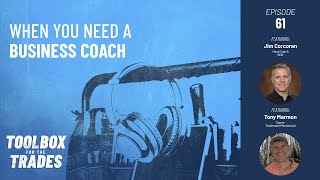
Episode 61 of Toolbox for the Trades (YouTube podcast) features host Jackie interviewing Jim Corcoran (head coach at BDR) and client Tony Marmon (owner of Trademark Mechanical). Jim describes BDR coaching methods (assessment, building trust, KPI focus) and how he and Tony have worked together since 2018 to shift Tony from working in the business to working on it. Tony recounts starting Trademark Mechanical in 2004, building service/retro departments, delegating responsibilities, and the concrete operational changes (staging areas, staggered technician start times, better inventory readiness) that helped scale the business. The episode emphasizes leadership, people management (right seat on the bus), and the value of vulnerability in a coach–client relationship.
First, you know, you're working on, you know, friendships, right? You're working on that connection. What's your connection? So if you don't have a connection, it's really hard to coach.
You're listening to Toolbox of the Trades, brought to you by ServiceTitan, a podcast for top service professionals where we interview leaders for their best tips and tricks of the trades. We learn how industry trailblazers stay ahead of the competition and how you too can be at the forefront of an industry. Let's jump in.
Hello, contractors, and welcome to the Toolbox for the Trades. Today I've got two guests for you. Jim Corcoran, head coach at BDR, and Tony Marmon, the owner of Trademark Mechanical, a 125 person H VAC operation out of Idaho and Washington. Jim started working with Tony in 2018, and since then the company has experienced tremendous growth, namely opening up new locations and doubling its staff. I spoke with Jim and Tony about how a business coach can significantly impact your business, and Jim showered Tony with compliments. I'm not joking. Who knew that a business coach doubles as a hype man? I hope you enjoy my conversation with Jim and Tony as much as I did. Jim Corcoran and Tony Marmon, welcome to the Toolbox for the Trades podcast.
Thank you, Jackie, for having us.
Jackie, happy to be here. I'm excited.
I am so excited to talk to you. Jim, you are head coach at bdr. And Tony, you run Trademark Mechanical. You are. This is our very first coach and client relationship that is being featured on Toolbox for the Trades. I couldn't be more excited. I would. Before we even get started, though, I want to make sure that our audience can identify who's who if they're not watching the video. So, Jim, can you please just give us a sample of your voice?
Hello. Hello, everyone.
And Tony.
Hi there, guys. Hi.
Awesome. Again, I'm so excited. Thank you guys for taking an hour out of what I know is a super busy day to talk to me. We're going to kick off this podcast the way we do every single one. And we're going to start with Jim. Jim, why don't you tell us how you got into the trades?
I think a lot of the ways, same ways a lot of our old timers got into this trades. Right. It was kind of family business and you kind of did it on weekends and after school and kind of get through college and decide that you might want to stay in this industry instead of getting into something else. So I got in it from a.
Family business what kind of family business was it?
Mechanical. So we did H VAC plumbing and electrical. So we did that. My brother started the company. My brother Tom started it back in, gosh, the 80s. He started it, and I kind of got into it when I was boy. I had to be about 15 years old probably when I got in this industry.
Wow.
Not a lot of people have been in the same industry that they started out in when they were 15. So that's pretty cool. And how did your career progress from working at the family business to becoming head coach at bdr?
So I got out of the family business when I was 32 years old, decided to go a different direction. It was probably time raising my family and trying to do something different for me, getting some more time at home and all those things that all the contractors that I work with try to get. So they tried to get some peace and quiet and not pulled into something 24 hours a day, seven days a week. So I kind of got into it that way, same way as some of our other contractors got into doing something different. So I got into kind of the supply chain side of it for a.
Little bit of time.
For a very short period of time. I think I was in it for about six months. And then I became familiar with bdr, Bruce Wiseman and Barry Burnett, two names that are well known for the BDR family. And I did an interview with Bruce, and Bruce said, hey, why don't you stop doing what you're doing in the supply chain and kind of work with me and work with contractor? So started that back 18 years ago. So I've been working with BDR for 18 years now.
That's awesome. And what I really love about when I first spoke with you and I learned about your background, that you were part, kind of part of the early forefront of taking BDR onto a national scale because they were doing primarily local training, right?
Yeah, they started in the Pacific Northwest, so they did a lot of work in northern Oregon and Washington. And Jennifer Fushanian, which is a service coach and myself, started at the same time. And Jennifer moved from Oregon to Michigan, and I was in Chicago and, you know, kind of talked with Bruce a little bit. Bruce gave us a little bit of lateral thought pattern there and, you know, said, hey, Bruce, what if we don't like us or we don't like you? How does this work to move our families to your location? He kind of agreed. You know, he said, hey, you know, it's probably the right thing. It's, you know, let's try to See if we can do it. So Jennifer and I both started with BDR in separate locations. So it's. It's worked ever since. BDR has all their coaches now are off site, so we don't have any coaches that work on site currently.
So you were basically at the forefront of remote work. Jim, how does it feel? You've been doing this for years.
Yeah, that's what people said last year, right, Covid? Oh, my gosh. We got to work from home. How do you do it? And I was like, I don't know. I've been doing it for 18 years. How do you not do it? Kind of came at it a different way.
Nice. Tony, I'm going to get to you in a second. But before I do, I do not want to make the rookie mistake that every single person listening to this knows what BDR is. So, Jim, could you just give a brief description of BDR and what your mission is?
Yeah. So BDR is Business Development Resources based out of Seattle, Washington, and we're a consulting company in the H Vac industry. So we do coaching and training for all different size companies throughout the nation.
Very cool. Awesome. All right, Tony, same question. How did you get into the trades?
Well, that's going back a few years. My dad actually got me in the trade. I needed a job. Geez. Let's see. And dad was a H Vac. He worked for a company here locally where we were where I was born. And he got me a job. And I just. Yeah, just. That was. Gosh, I'll go now. And I just. I liked it. You know, I liked it. I did stay with the trade for a little while, and I shifted and went into doing some framing. I framed up some houses for actually a contractor now that I do heating and air conditioning with. And, you know, I was like, you know, I like, I like framing, but I really miss installing ductwork. And so I shifted back to going back to H Vac. I did learn some good skills doing some framing, but I really might, you know, I really got to like the. The H Vac side and putting ductwork together and just. Just working with my snips cutting ductwork. That mechanic thing just really appealed to me. And I got back to that. So, yeah, dad got me into that. Man, I don't look back since. It's been fun.
That's awesome. Very cool. I don't think I've ever heard someone express so much passion about ductwork before. I think that's. I think that' first I told watch for the trades, but okay, so you both. So you work together. Tony, you are a client of Jim's. Jim, you are coach for Tony's business, Trademark Mechanical. When did you first start working with Tony?
Started working with Tony actually in 2018 with Tony's general manager at the time. So I actually worked with Tony for a short period of time and then really worked a lot with his general manager at that point in time. So been in it for. With Tony for three years now, so going on four. Yeah.
All right. So Tony, when did you know it was time to start working with a coach? And maybe now you can also just tell us a little bit about Trademark Mechanical, you know, how you run it and what were your goals and all that kind of stuff.
Sure. So started back in 2004, and when I first started after being in the trade for what, 12 some years, you know, I had to start somewhere. So I started in the construction field. I did residential new construction. I really just. That's what I knew how to do is really probably the easiest thing to do at the time for me. So I really just worked on that aspect in that market and then just started to grow into other markets, you know, started to build my service department, of course, wearing all the hats, so really needed to then look outside of what I was doing, which was just construction. Started to work on service, hired a service tech and then started to work on the other areas of H Vac, meaning retro, the retail side, replacement work. Really started to build that component and really, you know, seeing that was, you know, really, really able to separate myself from some of my competition and developing those, those departments. And then just started, you know, you know what, I gotta. I gotta figure out how to develop other processes and other skills and other techniques. And so that's where, you know, I was really looking at other options. And a mentor really made sense at the time. So reached reaching out to BDR and was really interested in what they were, you know, what their message was. And that's how I got hooked up with Jim. And it's been an interesting journey, but it's been. It's been a great one. It's been a great journey. So. But yeah, that's kind of it in a nutshell.
Nice. So started in 2004, started in New construction. Knew you had to build up that service side to get that recurring revenue, that turnkey stuff going. Right. And then around 2018, you're like, I think I've hit my peak into what I can learn and do by myself. It's time to bring in an outside Coach, basically.
Absolutely. Absolutely. Yep. Yeah. Time to change it up. When I first reached. Reached out to Jim, when we were first working together, a lot of where I was at was just working, you know, more on, I should say in the business and not on it, you know, wearing all the hats, you know, as it grew and, you know, I had certain skills now I was really learning how to delegate and how to, you know, build an actual organization and have other people, you know, assigned to certain seats. And Jim's really helped a great deal with that. Just the structure. Okay, here's what you're going to need for these departments. And here's the. Here's the sales coordinator. Here's the, you know, here's the retro supervisor. Here's, you know, here's the, you know, here's how, you know, really what to expect in some of the seats that really go to making that department solid and strong and building it from the ground up. So that's been really beneficial. Jim's really. And bdr, they've really helped a great deal in that area.
That's awesome. I have a couple questions. First off, what's it like to now be someone who loved working with your hands and now kind of overseeing an enterprise and doing all of the business stuff? What's that been like for you?
It's been interesting. It hasn't come real natural for me. So a lot of those skills. Sometimes it's still. It's a great pleasure for me to get out in the field and just to be in the construction site and smell the sawdust and the threading oil on the machine. That's really where I came from in this industry. So it's still fun, and I still enjoy doing that and being with the team and the installers out in the field. So every now and then, I really look forward to those times where I do that. But then I always think, okay, if I'm out here, who's back at the office working on the vision and the next step? So it's. But it is. It is nice to get away here and there. But it has been. It's been interesting, to say the least, on what really where, you know, really my passion is still out in the field, but I know I need to be here in the office and work on my processes and procedures and really, what's. What's next?
Yeah, I find the more contractors I talk to on this podcast, the more you learn that you have to really push yourself out of your comfort zone. And maybe the thing that really drew you to this industry if you want to reach the level of success that a lot of service titan customers and guests on this podcast have reached. So thanks for answering that. I know it's a bit of a vulnerable question. The next thing I want to do.
Can I step in there for one second?
Oh, of course. Please.
Yeah.
Yeah. So I really commend Tony, and I commend any client that I have or BDR has or any consulting group has for allowing us to be part of you guys and be part of your business and be able to reach in there. And you guys are super vulnerable. Right. I mean, you're exposing everything you have, and I've got a lot of compassion for that. You're opening up, saying, hey, man, I don't know this. Help me out. And for us, we're a bunch of a type personalities. I mean, we're all a type personalities. We're all crazy. We all know it all right? I mean, that's who we are. And now we gotta just let that guard down a little bit. So I first want to thank Tony for allowing me to be part of his team, because I really feel like I'm part of Tony's team. I was able to spend a couple days with Tony back about, I don't know, Tony a month and a half ago, six weeks ago.
Right. Probably.
And spent some time with him and his wife and his team, and it was just phenomenal. It's a great person and a great company, so I just want to throw that in there too. It's super, super tough for somebody to allow you far and deep into their business.
Yeah, 100%. Thank you for jumping in there, Jim. I agree with you and that's wonderful. I would love to know too, Tony, because there are different best practices organizations out there for the trades. There's a lot of folks who do coaching. What made you choose bdr, bdr?
I think it was originally it was a supplier that I was working with and I attended some of their classes that they put on. And I was just really intrigued by some of the. And I don't remember the instructor's name, but it really grabbed me and I was like, wow, this is really interesting. And this is something that, you know, I'm not currently doing. And it had to do with the retail side, the service in the retro, and really how to build those departments out. And it grabbed me. And the instructor at the time, it was a BDR instructor, and I just started to look a little further and look a little deeper in what was next. And then they started talking about the different, you know, the mentorships. And that's really how I started getting down that path. And luckily I got hooked up with the right mentor. They've got some horsepower on that team for sure. Jim, you know, really right out of the gate, you know, we hit it off. And the talent that they have on that team is just amazing across the board. But I really feel fortunate that I've got Jim in my corner. It's been amazing, awesome.
We're just going to compliment each other for the rest. The rest of the 15 minutes of this podcast.
Let's just do that.
No, but that's lovely.
Ripped each other apart this morning.
No, but I love that. And from what I hear about with contractors who do work with coaches or join a mastermind group or join a best practices group, they really need to be vulnerable. They need to let those folks in and really look at their coach as an extension of the team, if not an extension, a part of the team. So I'm really happy that we've got this dynamic going. Before we go any further, actually, Tony, would you mind sharing some stats about trademark mechanical, just so folks know where you're at? Like, how many texts do you have, locations, what you specialize in that kind of stuff?
Sure. Currently, we were operating out of three locations. I've got an operation in Coeur d', Alene, Idaho, actually, Hayden, Idaho, which is the back, you know, closet door of Coeur d'. Alene. So we're. That's. Our main operation is here in Hayden. I think we're about 80 people, 80 employees altogether in Hayden. And we have a location in Spokane, Washington. I think we're right around 25 or so, and then just north of. Of Hayden, Coeur d' Alene area, We're up in Sandpoint, I think we're about 15 or so, give or take. So in those three locations. That's where we're operating from primarily. I'd say we're pretty close to 50. 50 split, meaning construction, about 50%. The rest of it's coming from residential retro, some commercial retro, and then a good mix of service work in there in all three of those locations.
Nice. And just. Do you remember where you were at before you started working with Jim?
Yeah, let's see. I wasn't actually too far from where I'm at right now. It's just we built a brand new shop up here in Hayden, and when I started working with Jim, I was about a mile south of here, not too far. We outgrew that location, and it was just one, one, one location here in Hayden. Gosh, employee wise, we're probably 50 employees at that time. And so, yeah, we've grown quite a bit from then. Yeah, it's been pretty awesome. Yeah, Pretty fortunate.
Yeah, no big deal. Just added a couple locations, doubled our, doubled our employee count. No big deal. Yeah, it hasn't changed that much.
It's what all of our, it's what all of our clients do. Come on now. It's normal for us. No, Tony's, Tony's exceptional. There's no doubt about it. Tony is not the rule.
Got it. So, Jim, EDR helps contractors drive profit, grow their business, optimize where they need to. When you first start working with a new client, how do you even get started with that very small task of doing.
First? You're working on friendships, you're working on that connection. What's your connection if you don't have a connection? It's really hard to coach with Tony. You're building the connection with, with Tony. Tony's an A type personality. He's larger than life. And, you know, you got to get to know Tony and then once you get to know Tony, he moves forward. So the first thing that I do is it's an assessment. So it's an assessment of what they know, what they're going to allow you to know, what they're going to be vulnerable, of what they're going to protect. So I'll always ask for, who's the sacred cow? What's the sacred cow? What are we doing? And sacred cow, you know, is, hey, who do we have to protect? What's going on there? Right. So we're looking at all these things when we start up just so I can know how far to push, right? Because there's some clients that we work with that will spend years and protect things, you know, they, ah, we can't go there, right? Hey, yeah, that's great. I know it's broken, but I'm not going to go there, right. I'm not going to do that. So you look at that assessment, you understand that, then you start to look at the person, what are their habits? You know, sort of like Tony's habit would be to go back in the field. So even when I talked to Tony at first, and that's why I was talking to his general manager for a while, because Tony would go back and do the field. And why do, why do clients go back into the field that have is because they want completions, right? So when you own a business, you don't see completions often, right?
It's.
This is going on and that's going on, and it's changing and it's evolving. And you never get that sense of, oh, my gosh, I can just sit down and relax. They can't. They are always moving. They always have to be that visionary. So just understanding their habits, understanding their vision, doing an assessment on them, then you start to work on their KPIs. What are the key performance indicators that we're looking at? What's important to you? Understanding what's important to them?
Them.
Because this is not my program. So I'm a consultant. I'm a consultant for them. So every single client that I have is individual, so I can't treat them the same. So it's being a chameleon. It's understanding your audience, and it's working with your audience's strengths and weaknesses and then pumping them up on their strengths and saying, hey, you know what? That's great. We can do that really well. But at some point in time.
This.
Is under the carpet and we need to get it out. Right?
Sacred cow. I don't think I've ever heard that before.
Everybody has one. Come on, you have one, Jackie.
Like, what I won't touch or what I won't. I guess so, yeah.
You've got, like, you've got a T shirt in your closet that you will not get rid of. And it's been there for 20 years.
Oh, my goodness. Well, you just attached my closet. I truly. I moved from LA to New York almost five years ago. And they're clothes that I have hauled that I haven't worn since.
I.
Yes, I have a sacred cow. You're right. What were some of your sacred cows early on in the relationship, Tony? I mean, we mentioned getting out in the field. You were always sneaking out into the field. Anything else there that you were like, oh, I don't want to touch that.
Oh, can I tattle?
You can tattle, sure.
Tony loves people. Tony is a people person. He cares about them. He cares about their family. The people that are in Tony's circle are his family. And Tony would do anything for these. And there's some people that Tony's had in his group before that probably were not the best person in that position. And Tony would just say to me, hey, they've been here for 20 years. Leave them alone. You know, they're good. So, Tony, sacred cows. A lot of times that I see are Tony's fantastic team members that Tony has and that loyalty that Tony's been able to bring to his entire company. And sometimes, And I don't want to say this, but sometimes the business has evolved past their abilities. And that's where I think Tony's had a couple of sacred cows there that, you know, we've kind of. We've kind of talked about a little bit.
Tony, anything you want to add?
Yeah, I think. I think Jim, you know, hit it right on the head there. It's not easy. Sometimes you got to make hard decisions, and sometimes when it comes to going to the next step, there's a lot at stake. You know, when you have an operation that starts to grow and. And you've got a lot of people counting on you making the right decision. So sometimes it is difficult. And, you know, one thing that I've learned and I'm still learning, and Jim's. Jim's, you know, been really good as far as, you know, me bending his ear here and there is. You know, sometimes I'll get in a hurry, too, and I'll. And I'll make, you know, a decision just because. And, you know, in some cases, you want to act on something, you want to make a decision really quick, but maybe it's not the right one, too, when it comes to putting people with key responsibilities. You're looking. You need this seat filled, and you put somebody in that seat just because, you know, I really got to have this space covered. But it'll end up backfiring on you if you don't. If you don't really see it all the way through and really have the talent to go ahead and fill that critical cheat, whatever that may be. So that's. That's something I've learned, and it's. It's a. It's a work in progress. It's a journey. So. But Jim, you know, a lot of times you're working with Jim, you'll be like, all right, let's. Let's just talk about this. Let's go back to the beginning. Let's see. You know, you've got this issue right now. Let's go back to the beginning and see where, you know, where did we get off the track here? So that's been. You know, that's. It's. And you try to learn from those mistakes and not make the same one. So. But, yeah, the people component, when you get to, you know, it's. You know, when you're. When you go from one person to 125, it's a big part of my job, like Jim said, is I spend most of my time just thinking about people, you know, and their roles, their goals, their responsibilities, and then really just managing that and making sure we're, you know, we're covering our bases with all those key people and all. And all the people, for that matter.
Yeah. While you were talking, I was thinking about how, like, it seems like the coach is almost like this mirror that you just put up against yourself. And it really just shows, like, hey, you as an owner, you as a leader, these are the things that you need. Need to work on. These are some of your blind spots. And I think that's really one of the most beneficial things about having that third party come in and evaluate where you're at. I've also heard before that the team that brought you to a million isn't going to bring you to 3 million and 5 million and 10 million and that kind of stuff. And so I think, though, and let me. I would love to know if you've found this, Tony, that while I think a lot of owners listening or folks in the trades listening right now may think, oh, yeah, that person never should have been promoted to that position or whatever, or wrong people, wrong seat on the bus. Right. I'm sure there's also been folks that have had great opportunities because you've grown, like, you've been able to pull people from, like, different roles and put them in different departments, and now they're flourishing. Are you, Are you experienced? Have you experienced that at all?
Oh, absolutely. You know, recruiting right now, it's. It can be. It can be a challenge. Right now, everybody's looking for help. You know, I know definitely in our area. But one thing I've noticed is people that are looking to join our team, they're looking for opportunity. They're looking for ways to grow, and they're. They don't want to. They're. They're coming from an area where it's somewhat stagnant or there's just no, you know, what's next? What's the goal? Right. And so when you just ask somebody, hey, what's your. What's. What are you looking to do? What are your career goals? They just light up and it's like, wow, that's. That's somewhat foreign. I haven't heard that line of questioning before. And it's like, it's just like, you just turn a switch on. It's like, yeah, what do you. What are you looking to do? Where do you really want to be in five years? And so it's that way, too, with the current, with our current team, you know, they got to have what's next. You know, they don't want to just be stuck doing the same thing every day. They want you, and you want to use their talent, too. You know, it's like if they've got this ability, you want to figure out where they're going to best be part of your team and then cut them loose. You know, set the goal together, and then there it is. Go get it. You know, I'm here for you, but, you know, just get out of the way sometimes, too. Just talk about the goal and then figure out, okay, what's, you know, how are you going to achieve the goal? And then just working on that. I think it's been really, really powerful. It's worked well for our team.
Jim, anything you want to add? I see I've been seeing you nodding.
Oh, you can just see it. In Tony's team, for example, I mean, we've gone from a service team, just, you know, regular service technicians, you know, good, really good team members. Tony's got them all level. So they've got a training plan to go from level one to level five technician. Then they can go to the next level. With Antoni's group, they can go to a senior service technician which has a group of service technicians in the field that report to them. Then they have a service leader. Now. He just promoted his service leader into the operation manager for the company. He just got that last week. Wasn't it Tony that he just moved up? And Tony's opening different locations. So we've had different managers be in charge of locations. So, you know, the growth pattern that Tony's been able to show his team has been incredible. The vision that Tony has for where this company is going in the future is amazing. And you said something interesting to me, you know, kind of like somebody can get you from this level to that level to the other level. Right. So whether it's a million dollars or $5 million or $10 million or beyond, you know, I look at Tony and I work with Tony, and I don't see any stop. I coached Tony when he was well under $10 million. Tony will be well over that this year, But I just don't see it. I mean, when Tony and I talk, we're talking, you know, 30 million and 40 million and 50 million, and we're talking beyond. We're not just looking at, you know, hey, where did I come from? Where can I go? And you're right. You have certain team members have limits, you know, to what I think you're pointing out is you know, somebody that can manage five people really well might not manage eight people as well, but is that too much for that person? It just. We need to twe that. Right. We need to make that work. And that's what we've done in Tony's service department is taking a very large service department and breaking it down into individual teams. So, one, to show vision to the team themselves, the people that work there, to show outside people, hey, this is a great place to work because they're progressive, and then to show the industry, hey, you know what? We can get you there. So there's a lot of things that Tony's been able to do and accomplish, and his team is phenomenal.
That's awesome. Way to go, Tony.
Thank you.
So, okay, we've been working with him since 2018. We've got, you know, double the employees. We got more locations. When you did your assessment with Tony, well, first off, Tony, were you very clear on what your goal was? Were you very like, I want to grow this business. I want to build it to that. To this scale, to this size.
With Jim, you know, when we first started, a lot of what I was looking to do was really remove myself from the daily operations. Like I was mentioning earlier is working more on it than in it. At the time, I was still doing the estimating. I was bidding all the residential new construction, all the commercial construction. I was, you know, just growing and working a lot of. Just doing a lot of the daily things where now I have people doing that. And so really, you know, working on a plan to delegate some of these duties that I was doing and just letting go of that. You know, that's. That's really what I was focusing on with Jim and then Jim really weighing in on. Okay, well, let's work on. Let's work on hiring this person or graduating this person from where they're currently at to this new role to cover what you're doing. And then now we can, you know, have time to more, you know, be more strategic and work on the vision and what's next. And then along the way, I've had no issues, just growing. You know, a lot of times Jim's been like, okay, time out. Let's. Let's. Let's hit the brakes a little bit. We're growing pretty fast here. You know, Jim's fit. Jim's been a voice there as well, and, you know, plenty of opportunity out there. A lot of. A lot of what we're working right now is opportunity on Insider 4 walls and really grow what we have currently rather than looking to expand into other markets. So that's really the focus right now.
Hey, contractors, listen to this.
Getting a trusted plumber, getting a trusted electrician, everybody knows it's a nightmare.
You don't know what time he's coming.
It's inconvenience you.
You miss your whole day.
The good news, we built Service Titan.
To help smooth things over.
You can track where your technician is and even see who your technician is.
Weighing up the options for a couple of companies, and one's got all this tech. You're probably more likely to go with the one that's offering that convenience and communication.
If you got that, hey, you sold.
Me Service Titan, the number one customer.
Service software for today's contractors.
What I love about that is, you know, if we talk about goals and a coach coming in and saying, okay, what can I help you with? And if your thing was, I just, I need to stop estimating. I need to stop being in the field. You just organically developed this growth. So maybe growth wasn't your forefront goal, like on top of your mind, but it was kind of cause and effect relationship of like, okay, we're going to take work off of Tony. So we got to scale up all these departments, and as a result, you like, doubled your staff in three years. So I just wanted to show that. It seems like, and correct me if I'm wrong, but it seems like in your example, you were like, I just need to be able to work on the business instead of in the business. And by just having that, you're able to unlock a really giant amount of growth.
Sometimes they become the funnel, right? Sometimes the owners become the funnel, right? And everything's got to go through me. So you've got this large funnel and it's going through this small piece, and it's like, hey, if we give somebody else that, the funnel opens up at the bottom, right? So if we give them that responsibility and see where they can grow. And I think that's what Tony's experienced is, you know, hey, let them have it. Let them take this. You know, trust but verify. Put your KPIs in place, put the plan together, let them go see what they can do and just trust them that they're going to do the right thing. You know, I think Tony's done a fantastic job. That's hard to do. It's hard to let go. Oh, yeah, you saw it right at the beginning of the conversation. Tony's passion. Look, Tony's passionate about a lot of things, and to sell somebody hey, you can't do that any longer. You've got to do this. You know that that's hard. And Tony took it in stride and said, you know, hey, you're right. Now, did he always believe me? The first time I told him, come on, Tony, do you always believe in the first time?
Yeah, it's so true. Yeah, absolutely.
Got it. I love this conversation, by the way. I can definitely tell that you guys have great chemistry, which, again, is one thing that you have to have if you're going to trust a coach to advise you on your business. So it sounds like in the last three years, Jim, you've really been helping Tony with scaling out departments, creating airtight systems and processes. What are your recommendations for operations as a whole? Because, you know, we really don't get into the weeds here on Toolbox. We probably. We talk more about, like, kind of leadership and culture and people, which may be my failure as a host, but I want to get into the weeds on, like, inventory management morning practices with the team briefings and debriefings and all of that stuff. So could you just give me some of your, like, hey, these are the things that you need in order to grow scale, get some work off your plate.
First thing is, you got to understand what you have. So do the assessment. So six weeks ago, when I went to see Tony, Tony didn't know this, but I showed up a little bit early just to see kind of, you know, how the operations worked in the morning. And it was a little bit less than organized chaos. So it was kind of fun. You know, it was like the ants going after that one piece of whatever it is, that one food item. And Tony had all these ants working for him, and we had them in this little caged area. Tony built this brand new building. So sorry, Jack, I'm gonna go sideways for a second.
Second.
Tony built this brand new building that he's super, super proud of. It's gorgeous. I mean, it is. It is not an H VAC building. This is a doctor's office. This is a lawyer's office. Right. This is the top end building. It's super nice. I walked in the front door, first thing I said to Tony, go, Tony. This is a great building.
It's too small.
So Tony's like, well, what do you mean? Just built this thing? So literally, I went the second day that I was there, I was supposed to be in a meeting with. With Tony and some of his team members, and I decided to deviate a little bit and go watch how the. How the team Moves out in the morning. And it was kind of comical.
It was.
It was a mixture between a 1960s movie with Charlie Chaplin and all those guys, you know, taking the ladder out and swinging around and hitting everybody down. And it was great. I mean, it was perfect. And it was like, you know, you go back and you talk to the owner, and owners say, oh, it's never like that.
Nope.
Just today. Yeah, it just happens when I'm here. So. But we went through that, and I took Tony back there the next day, and I showed Tony kind of what was going on. And Tony's like, oh, yeah, you're right. So the first thing that an owner has to do is do an assessment. Go back there, check it out, see what's going on. The job for the internal people is to make sure that 100% of everything is ready for your team members that work externally, whether it's a service technician or installer, a warrior, whatever you call your team members, you know, whatever their names are or titles are, you know, make sure things are 100% ready for them. Make sure it's clear, make sure concise. Make sure they can get in and out of the building really well. And that doesn't take necessarily just a coach to tell you that. It just takes, hey, go back there and look at it and be honest with yourself. There's a lot of people that don't want to be honest with themselves. No, that doesn't happen to me. Right. I hear it every day that. Nope, that only happens in Chicago. They don't do it anywhere else.
Right.
So I think if an owner does that and pays attention to what's going on there. Supply chain issues this year are tough. Right. I mean, Covid didn't help out anybody. We've got supply chain issues that are happening. You know, lines aren't running like they used to at this many people. So it's caused, you know, the clients that I'm working with, it's caused them to bring on more inventory. More inventory creates more space, more space, creates better controls. So now you're looking at, you know, controls. In Tony's instance, you know, Tony's got a lot of team members that move around. So if you got a lot of service technicians, a lot of installers, every morning they stagger people out. So they have the residential new construction team come in first because they can get to those locations first. That helps a lot because we align, eliminate half of the team before the retrofit crews come in. So that helps. We can stagger those guys in. You know, on a 15 minute schedule. So 6, you know, 6:30, 6:45, 7: O', clock, 7:15, 7:30 to start getting those guys in and out, have their stuff ready and in the area. But I like staging areas, so make yourself a 5 by 8 or a 10 by 10 area in your shop that's designated to truck 1, truck 2, truck 3, how many trucks you have. So they have to go to the same spot every day, make sure it's clear for them, make sure instructions are clear, ask them how their day went yesterday, ask them how their evening went. You know, ask your team, you know, questions that matter to them that they really care about. So you get that going in the right direction. You get the staging areas going, you set up staggered start times. You're going in a great direction. You know, you're, you're really, you're not 100% there, but you know, if you follow those things, you're going to be 65 or 70% of the the way there, right? Then you're just going to start tweaking it.
That's awesome. I hadn't heard of staggered times before and it totally makes sense having a very dedicated, having a dedicated staging area, especially when you have so many technicians that are just going all over the place. You've got all these parts and materials everywhere because people are stocking up on inventory, especially now. Yeah, I can imagine that would be crazy. I also want to call out real quick that this on site happened six weeks ago. Which just goes to show that like, like it's not like you can have a coach come in once and then just be like, okay, I fixed everything, Goodbye. My work here is done. It's really evolved because as you grow and unlock new levels, new opportunities will present themselves. So I'm really happy that you shared that. Tony. What was that on site like for you?
It was pretty awesome. It was. I only wish I would have done it sooner. I only wish we would have went through that process sooner. But hey, we did it and we finally. There just never seems to be the right time for it. It. We got into a. Jim was like you said about a month and a half ago, we were busy of course at the time, but hey, you know, we took, we took advantage of that opportunity. And yeah, I always look for, you know, ways to get better. I always want to be better than yesterday. And with, with, with Jim's insight and the experience that he's had and we just always looking for gold nuggets and Jim, you know, he just went over a couple Real key times there when he was just observing our team team and just being raw and candid about it. Hey, here's what I see. You know, there's. There's opportunity here. If we worked on this, you know, you guys are going to be on time, they're going to be set up well for. They're going to be set up for success out in the field. But if they don't have a product and they're shifting around first thing in the morning trying to find their stuff, it's gonna suck. And it's gonna suck all day long and they're not going to be in a good mood when they get back. So it's like, duh, I know what that feels like because I was, I was part of that, part of the process too, when I was an installer. So it's just little stuff like that that sometimes you just miss and overlook. And it's just nice to just, you know, again, just stop. Let's go back to the beginning. Let's get them set up for success. But, yeah, that was, that was a critical part of it too. And now we're working on that and it's working really good. We. Jim had some really good ideas and suggestions of what he's. What he's done in his journey. Just little things like, you know, just laying out some staging areas, put snap some lines on the floor, indicate where, where their product's going to be first thing in the morning. So each installer knows that's my square. That's where all my stuff is first thing in the morning. And when they walk by it in the afternoon when they're done, they're like, oh, I'm putting in a furnace tomorrow. You know, just physically, you know, they're getting a vision for that. So a little stuff like that I think goes a long ways. And yeah, it's been good. So I'm looking forward. I was actually talking to Jim about doing another one. I'm like, okay, Jim, when's the next one? Because, you know, we gain a lot of information from those and there's plenty of opportunity. But rather than, you know, chasing and developing bigger markets and more areas to operate out of, I'd rather just work on what we could be doing well in our processes and procedures right now, then chasing another market somewhere else because we, again, we've got so much opportunity right here, right now. We're just not. We just need to really develop those.
Those strategies, some opportunity to maximize some profits.
Awesome.
Yeah.
One thing you just said, which has actually come up on this podcast before is how much techs appreciate when they kind of know what their next day is going to be like. And when you mentioned, like, oh, yeah, oh, I got a furnace tomorrow, I think. I imagine that actually kind of helps. Exactly what you said puts them in the mindset, knows, gets them prepared for what they have to do tomorrow. Jim, do you find that that is a good thing to kind of. To kind of do? Because I've heard two different schools of thought. Some people are like, yeah, we like to give our texts as much heads up as we can. Others are like, no. One job at a time. Do you have any preference on that?
So I think maybe something different that they might be telling you is install text. So somebody that does an install is what Tony's about talking about. So that's, you know, hey, this is the furnace that I have to do. This is a condensing unit that I have to put in or geothermal or whatever. I like that. I like them knowing exactly what's going on and, you know, kind of planning out their day because they start to think about it, you know, especially if they have an apprentice that's working with them, you know, they've got somebody, oh, this is great. I get to do this job. I can teach, you know, Joe how to braise today, or I can teach him this, or, you know. So I think things like that help a ton of. For service technicians, it's a little bit different story on that. For a service technician, I like them to know where they're going first thing in the morning. I think that's great. But when a service technician sees that they have 8, 10, 12, 15 calls that day, they tend to actually go really quickly through those calls, and then they don't service the customer that well. Sometimes on occasion, it can go that way. When the technician takes their time and they really look at that and understand the system and go through it properly and take their time to do the diagnostic and then do a check after they put in the part. That seems to go better for the technician, that seems to go better for the customer, and that goes better for the company. Because typically on a service call, we have less warranty if they're actually taking their time and figuring it out. It's been my experience, when people are loaded with calls, service calls, and they know about those service calls, that they. They tend to have or experience more warranty callbacks.
Golden nugget right there. Perfect example of a golden nugget. Tony, did you want to say something?
Oh, no, that was Just disagreeing. You know, again, there's just so many, so many different, you know, just little things. It's just little details sometimes that you just overlook sometimes. And you're not. Yeah, it's a lot of times that's where a lot of the opportunity you'd want to just stop, slow down, cover the little things, and then just apply that every day.
Yeah. And I love that you said too, that we have so much opportunity where we're at now to fine tune and really perfect our processes, and I think that's a great place to be. Another question I had for you, Tony, while, you know, we were talking about the staging areas and staggering the tech schedules. I mean, you seem like a very sweet guy who probably doesn't have a total big ego, but what tips would you give to owners who maybe are working with a coach or consultant now and are hearing some constructive feedback about their business? And maybe you're like, wait, what are you talking about? I didn't do it perfect. Like, was there some kind of internal process you had to go through to be able to receive Jim's feedback and be like, okay, I see what you're saying. Let's change this.
I mean, it really just comes down to you want to get better. You know, if you really, if you're really serious about it, you're gonna be open and just honest about, hey, here's where I'm at, you know, not holding anything back. You know, ego can get in the way of a lot of things in life, I think. But if you're just really, if, first of all, you know, if you've got the right mentor and you click. We talked about relationships, you know, you develop that trust, then you're gonna open up more, more and more, and you develop that relationship. But for me, it's, it's more just, hey, here's where I'm at. Here's where I want to go. Expressing your vision, what you're looking for, and then go get it. You know, let's figure out what it takes to go get it. But, you know, I'm not gonna tell anyone. I know it all. I'm learning every day. I'm never gonna know it all. I mean, I just think that's just short way, short sighted way of looking at things. There's plenty of, of people, you know, that we bump into every day. And it just sucks working with know it alls. When you know something and you can't teach some. Somebody something, it just. Nobody really, you know, it's, it's really difficult to work around that person. I certainly don't want to be that person. You know, I don't like working with those type of people so much. Somebody that just. There's nothing you can teach them. They already know it all. It kind of sucks.
It does, it does, does.
So I'm learning every day, too. I learn from all my clients every single day. So it's a good relationship.
And really quick. Jim, you have. Do you mind sharing how many clients you work with right now?
34.
I mean, you're just like. You're just like a sponge of information because of that. I mean, I feel like I could run a. Because of this podcast only. I mean, I wouldn't do it as well as Tony, but I feel like just being able to talk to people and see how they do things. It's just you're constantly getting new ideas and new feedback and. Great asset. Great asset. That was the end of my tangent. Tony, I would love to hear what are some of the other big changes that you've implemented at Trademark Mechanical since Jim's been on board?
Let's see, some of the big changes on processes and procedures. Jim covered a pretty, you know, a pretty good one there. Staggering at times. You know, building that retro department out, you know, what the. What does that look like? Making sure we're set up for success right at the beginning and then just really diving into the numbers, too. Right. So again, me being a sheet metal guy that did not really have any business knowledge, you know, I just really didn't figure out. It's been kind of a work in progress along the way. So, you know, understanding the numbers. Jim's a numbers guy. And, you know, you know, we manage to. The numbers. If you see something's not working, a department and you've got your gross profits off your cost of goods, your benchmarks are not their way off. You know, it's like, okay, well, there's an issue right there. Let's drill down on that. And maybe it's starting there at the beginning in the. In the morning. Your guys are going to the parts houses. Why are they doing that? You know, Will calls. We don't want Will calls. He should have all that stuff first thing in the morning. So little. Little things like that make a big difference and. Yeah, so I guess. Does that answer your question?
Yeah, 100%. Jim, anything you want to add in terms of, like, some big changes you've seen at Trademark Mechanical since joining?
Oh, Tony. Tony's been a phenomenal. I mean, two different. Two different locations. Right. So Started with one location, going to two. Gosh, I wish I could. I wish I would have counted all the managers that we put in place. Right. I mean, we've got, you know, a couple managers. 3. 3 managers in Spokane that weren't there before, so. So those people have had an opportunity to grow there. Totally changed Hayden around. I mean, Hayden, Tony, how many salespeople.
Do we have right now in Hayden? We've got three, three. Four salespeople in Hayden. Four right now.
Four in Hayden.
And the other branch, I've got an estimator, two estimators, two construction estimators, and four replacement salespeople.
Okay. And then in Spokane, there's two salespeople. And then in.
CM Point, there's two.
Point, there's two. So, you know, going from Tony, starting with, you know, I think there was three salespeople when he started to this, having a sales manager, a coordinator in that position. There's three people in the dispatch office now. There's two CSRs.
There's.
We've got one, two, three, four, or five people in bookkeeping now. So talk about change. I mean, it's been amazing to see what Tony's been able to do in three years. He's done a fantastic job. I mean, fantastic. So absolutely.
Way to go, Tony. I mean, I really. This has just been us celebrating Tony, and that's really what this podcast is all about. Podcast doesn't even exist, Tony. This is just an elaborate scheme that me and Jim put together to make you feel good. I hope that you are. No, seriously.
And also sign the contract, Tony, to renew for next year.
I want to pivot because we got a couple minutes left. So what are. I'll start with Jim. If anyone out there right now is thinking about coaching for their business, what would you say to them?
Try it. It's not for everybody. Can coaching help everybody? Absolutely. Some people don't accept coaching the same way. And if you. If you run into a group that, you know, it just doesn't work, try a different group, try a different coach. I mean, at bdr, we have different coaches. So if, you know, if I didn't click with Tony, you know, we do our best to do an assessment of our coaches. At bdr, we do an assessment of our clients before they come in. So we try to put clients and coaches together that actually have a lot of similar. And that works, but on occasion it doesn't. So, you know, the coach will recognize that and we can switch coaches. So I think try coaching. I think it's a great Avenue, you know, whether you look at something physical that you do, eating that you do, and you're trying to get better at something, a coach is going to give you a jump start. They've been there before. They help with direction. They can give you a good assessment. They can lead you in a way that you might like. You might not want to hear it. If somebody tells you, hey, you know what? You need to go on a diet. Don't eat 12 Twinkies a day. You know, you might not like that, right? And then a coach is going to tell you that. A coach is going to be upfront and honest with you and tell you the direction that you should go in, or they're trying to help you. Right? And I think that's something that you look at. So, you know, as far as coaching goes, I think just give it a try.
Tony, what would you say to other contractors who are like, oh, you've been working with bdr, You've been working with the coach. What's that like?
Oh, don't do it. You will not regret it. You cannot. It is worth the time, worth the money. I only wish I would have done it sooner. It. There's so much to learn. There's so, you know, especially from somebody that's done it, they've lived it. Why not. Why would you not want to be part of that and just listening and learning from those experiences? I mean, why reinvent the wheel when it's already been done? You know, so many times it's like, I'll think, okay, somebody's doing this. Like, let me. This issue, it's not foreign to me. It's been, you know, people have the same issues. Why not just share, learn from it? Okay. And network, too, you know, and then. Okay, you know, but, yeah, I would strongly encourage anyone who's. Who's thinking about it. You know, the financial investment, it's nothing in the long run. If you're in it for the long haul, then you should. I would say go for it. Go for it.
That's awesome. I feel like we covered a lot of really awesome stuff today. Jim. Is there anything we should have talked about that we didn't?
I think you've got a good idea. You put together a great podcast for us, Jack. We appreciate it and thank you for your time and thank you for allowing me to be part of it.
Oh, well, hey, no problem, Tony. Anything else you would like to say?
No, Jack, thanks again. I really appreciate it. And yeah, hopefully this was beneficial. And thanks again. Hope to see her again. Real Soon. Hopefully we get another invite here soon.
Oh, my goodness. I would love that. But you guys aren't off the hook yet. I actually have five rapid fire questions for both of you that I did not send to you beforehand. And normally rapid fire, but I'll just go back and forth and Jim, you'll take the first one first. Tony, you'll take the second one first and so on and so forth. Are you guys ready?
Yes.
Okay, Jim, you started off. It's an easy one. How do you take your coffee?
Never tasted it. Wow.
Tony, how do you take your coffee?
Black.
Nothing. No cream, nothing. Straight? Just black coffee?
Just black coffee to the face. Got it. Tony, if you could have dinner with one person, dead or alive, who would it be?
Oh, wow. That's a great question. I would say Abe Link.
Oh, that's a first. Nice. Jim, same question.
Huh?
That's a tough one. There's so many Michael Jordan.
Hey, Michael Jordan. Very, very talented entrepreneur. Jim, what's the number one thing you're trying to learn more about right now?
Nutrition.
Very cool. Tony, same question.
Leadership.
All right, Tony, next question. If money weren't an object, so you had unlimited resources, what's the first thing you would do?
I build a big school.
Trade school.
A trade school? Yes. Yep. I'd build a big school training center.
Nice. Jim, same question.
I'd give back to the community in some way. I think you know, either the H VAC community or the local community. Absolutely.
Nice, Jim, any podcasts or books you would like to recommend to our listeners?
Traction.
Oh, yeah, I've heard great things about Traction. I have to read it. Tony, same question.
It's a real simple book. It's one of my favorites. It's called As a Man Thinketh.
As the Man Thinketh.
Yes.
I haven't had that one recommended yet. Thank you. Final question, Tony, you'll take it first, what's the number one thing every contractor must do to run a successful business?
Learn how to delegate.
Yep. Jim, same question.
Please become a leader.
Love it, Jim. Tony, thank you so much for being guests on Toolbox for the Trades.
Thanks, Jackie.
Thanks, Jackie.
Ever wonder how much your business is worth? So many owners ask that question and have no idea where to turn for an answer. In just a few clicks, Service Titan's new Service Business Valuation Calculator can give you an easy and free estimate of the current value of your business, whether you whether you're thinking about selling your company or looking to track growth. Check it out. Now visit servicetitan.comvalue again. That's servicetitan.comvalue. see how much your business is worth today. Want to network with fellow service entrepreneurs and former guests of this podcast? Join our private Facebook group Toolbox for the Trades to get immediate access to the best tips, tricks and tactics from fellow service entrepreneurs. Visit facebook.com group toolbox for the Trades or click the link in our show notes to join. See you online.
More from Bill



ServiceTitan Virtual Agents: Simplify Before You Scale | Podcast Ep. 110 | Mastering ServiceTitan



Life After Live Events: How to Turn Post-Conference Energy into Real Profits | Podcast Ep. 297




