How Female Business Owners Are Disrupting the Trades | Podcast Ep. 171 | Toolbox for the Trades
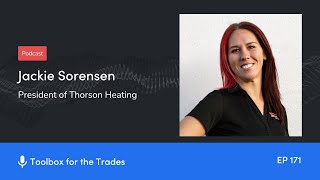
Podcast episode (Toolbox for the Trades, Ep.171) — host Jackie Aubel interviews Jackie Sorenson, an HVAC technician who bought her father’s company (Thorson/Thorsen Heating) in Sioux Falls, SD. The conversation covers Sorenson’s start in the trade working with her dad (began ~2008), trade-school training, meeting her husband Zane in tech school, and the fraught family-business transition that culminated in her purchasing the company (completed January 2023). Major themes: negotiating authority and valuation with family, using SBA resources and mediation, hiring family (husband and later her mother), motherhood as a key motivator (insufficient maternity leave spurred ownership), advocacy for recruiting women into trades (school outreach, role-modeling, TikTok demonstrations), and advice for female owners (build a mentor tribe, sometimes pay for access to groups).
Hello, contractors, and welcome to Toolbox for the Trades. My name is Jackie Aubel, and today I am chatting with Jackie Sorenson, owner of Thorsen Heating in Sioux Falls, South Dakota. Not only does Jackie have a great name, but she also has an awesome story. This H vac tech turned owner bought her father's business and made it her own. We chat about the unique challenges of working with your parents, getting more women in the trades, and so much more. I hope you enjoy this conversation as much as I did. Jackie Sorenson, you are the owner at Thorson Heating in Sioux Falls, South Dakota. Not only do you and I share the same name, we are also the same age, which is super fun and crazy. I love it. We met at AHR this year. You are a female H vac tech turned owner. I'm so excited to chat with you today. Welcome to the podcast.
Thank you for having me. Appreciate it. Very excited to be here.
I am so excited to have you here. And for anyone who's not watching the video, I'm actually not sure if it turns up, but you have to know that on the tool we're recording on Jackie put her name as Jackie H. Vachy. And I think that's the cleverest thing of all time. I won't steal it from you, but I love it.
Thank you. I put it on my business cards.
I call myself a Jackie of all trades because I have so many different skills. So feel free to take that as well because I think that would apply to you. So we're going to kick this off with an icebreake that I used to ask on every episode of this show. I retired it for a bit, but I've decided I want to take it back. I would love to know if you could choose a song to be the soundtrack of your life, what would it be and why?
Oh, boy. Seems like a loaded question. Gosh, A soundtrack. My whole life is. That's pretty broad. Let's see. Lately I would have to go with like, I like Boss Bitch by Doja Cat. Oh, that's a great song. Like Gloss.
I'm a boss. I'm a and a boss and a sound. Yeah, that is a great hype song. Actually, Spotify just started making these automated playlists for me, and one is like, Strut, Get Ready, Mix. And I always put, oh, yeah. When I am pumping myself. Yeah, yeah. I have a funny answer to this. I have this answer for me. Changes all the time. But it's the Benny Hill theme song. You know, the like, that is my soundtrack right now, so. And I'm sure a lot of listeners can relate to that. You especially, because I know that not only are you running the business, you're also still running jobs, right?
Yeah, I was out running calls yesterday. I have a couple calls I still got to go on this afternoon after I get done, so.
Okay, so after you run your business, talk about yourself and your podcast, then you get to step into the shoes of technician later this afternoon. So just some nice context switching throughout the day.
Yep. It is. Yep.
And I commend you for it. Let's get into your story. I would love to know, how did you get into the trades?
Well, I started working with my dad. I actually really never planned on going into it. I just kind of fell into it over the summer when I needed a job and I started working with him. My sister was kind of working in the office already, so I was like the grunt one that got to go out and work on the jobs with them and stuff. And I actually just really liked it. Went to school, tech school that fall and never looked back. So otherwise, yeah, it was just really like doing the service and yeah, technical stuff was totally different aspect of it. So.
Okay, so you became the grunt at your dad's business, Already had the office position, so you got exposure to the trades and you wanted to be a firefighter at one point, right?
Yeah, that was originally what I was going to school for, was firefighting, and I dropped out of two different colleges, went for a semester at USD, another semester at University center, and just didn't like either of them and just really didn't know what I was going to do. But tech school really seemed to be a good fit for me and a lot of my credits transferred over thankfully. So.
That's awesome. That's awesome. And trust me, as a guest on this podcast, you are in good company. Being with a lot of people who did not go to college or did not finish up at school, you are in good company. A lot of awesome owners have been on this show. I have enough education, honestly, for everyone who comes on as a guest on the show. And arguably everyone on this show is more successful than I am because you own your own business. So I want to kind of start about. I want to start with something a little funny and a little lighthearted because when I met you at hr, I got the pleasure of also meeting your husband, Zayn. And I'm perpetually single, so I always love hearing about how people met their spouses. And you actually met your husband Zane in trade school. So tell me how your relationship Relationship formed. And I'd love to know how you work together today.
Actually funny because when we first met, I totally disregarded him. He was kind of a loudmouth in the other class on the other side of the room and really kind of thought he was a jerk. But then as the semester rolled on and that sort of thing, we had some mutual friends. He was actually a year ahead of me in the second year when I was in first year. So we started talking a little bit and got to know each other that way. But I do tease the women that they should definitely go to tech school because it's like having your own episode of the Bachelorette because it's like you have guys, you know, lined up, I guess, waiting to today. Especially if you're single going into school too. It's gets to be kind of awkward at times.
Yeah, I mean, nothing beats a handyman, I'm going to tell you that. Okay, so little different. I'm in Los Angeles, so a little different bit of a demographic there. But what was the age range in the trade school? Was it like early 20s or is there like a 35 plus singles trade school that I can apply to?
There is actually quite a spread in trade school. So you'll have a pretty good group of like guys that are fresh out of high school, just going into trade school. You have some that are a little bit older, like dropped out of college and have come back to trade school. And then you have even older ones that are like 40s and 50s even that are just new career and, and totally life change. So.
Okay. Okay, well, that's it. So I think we're just gonna pivot this podcast and you can give me some notes on my dating profile. Just kidding, just kidding. Tell me how you and Zane work together now. Are you technically co owners of the business?
No, actually I own it solely, so he technically works for me. Yeah, Yep. I get my dad and my husband that work for me. So it's actually kind of a funny story too that when I get customers are like, oh, I'll give your old man a message or tell your old man I said hi. Oh, I talked to your old man on the phone. Like, I don't know which old man you're talking about. You're talking about my dad of her husband. Not sure I have to ask to clarify that, but yeah. Yeah.
So what's that been like?
Yeah, initially we weren't working together for the first pretty good chunk of our careers. I didn't want him to be a competitor, so he always worked either out of town or was working more on the commercial side of the industry. Because we were primarily residential about three years ago or so, we were really at a point where we needed to bring on another technician and he was really unhappy with where he was at, so he was looking to move elsewhere. And it was just the right timing that we needed to bring somebody on. And with his vast knowledge, he had done a lot of residential work before as well, too. But then with his extensive commercial knowledge, it really helped us to grow and expand in that sense too. So it's actually been really good for us to work together. We don't really have a whole lot of hiccups. I guess, surprisingly, we don't work together that much because we're out on different jobs. He's out on an install and I'm out running service calls. So we really don't even see each other much during the day. So we kind of touch base here and there. If he needs a part or needs something run out to him or, you know, shuffling a call off onto somebody else because you're not making it there in time. Things like that we'd stay in touch with. But otherwise we don't even see each other, you know, much at work. So, you know, every now and again we're on a job sites together and like installs and stuff. I usually just let him take the lead because that's what he does best anyway, is that's. That's his bread butters installs. So if I'm out on a job site, I usually just take a step back and let him boss me around in that scenario. Sure, sure. I don't have that one, you know.
I mean, I own the business, so, you know, he can have his moment. I have to tell you, Jackie, this is a first. I think this is going to be episode 170something. I have never had an instance on this show where husband and wife work together in the trades and the wife is the sole owner of the business. Owned the business beforehand, and then the husband came on to support as a technician. I've never come across that dynamic. I imagine it's probably really pretty rare for you too.
Yeah, well, he was on with us technically, before I bought it. He came on as an employee. So technically him and I were both employees for a while. And then when I bought it out for my dad, it's just because it's been in the family for so long, it was just kind of written in the contract that I was the sole purchaser of it and my husband just as an employee. And then, you know, if anything ever happens between him and I, obviously the company stays with me and that sort of thing. So it was all kind of a. You know, it gets me awkward too, having to go through that and do like a post nuptial agreement and having to cross all those T's and dot those I's going into a business deal like that too.
So it takes a tremendous amount of respect and a lot of strength in a couple's relationship to be able to go through something like that. So I need to, I need to commend you there. It sounds like you were really thoughtful in this process and how it would all play out. And I got to give props to Zane too for being super supportive with that.
Yeah, we'd already been married for like 12 or 13 years when this went down. So then you have to go through and do a post nuptial agreement for the business and things like that. Yeah, he's very, very admirable for that. He has always been very easy going with all of it. So.
Hey, honey, I know we've been together for 12 years, but I think now's the time for a post nuptial agreement. It's like, wait, what should I be? Should I be nervous about something like what's happening?
Right.
Like I'm actually buying a business and it's going to be mine and you'll still work there, but we just need to lay this all out. So that's really interesting.
Yeah.
So talked a little bit about your relationship with your husband who works in the business as a tech. Your relationship with your dad has really evolved since you started working with him in 2008, which that would have put you at what, 18, 7, 18 years old? 18, 19 years old.
19. 18, 19, something like that.
Yeah. So I would love to hear about how your relationship with him has changed since you took ownership of Thorson a year ago in January 2023.
It's evolved quite a bit. I used to be obviously just an employee training from my very first summer and not really knowing what I was doing. And he trained me in on beer can cold to check out air conditioners and then I went to tech school. You know, he's been in the industry so long that he was just grandfathered in for a lot of things for like our licensure, stuff like that. Like it's. He was just grandfathered in for a lot of that because we've been in business for so long. So when I went through tech school, it was really turning a new leaf. I actually got to kind of come back from class and teach him a lot of the new technologies that were coming out. So that really kind of changed the game too. And then, yeah, just as we grow too, and as I started taking more classes, even after tech school, I was encouraged to take some business classes and that sort of thing and really try to, to grow up the business. And you know, I'd always been told I would be able to take it over if I wanted to. And so I started kind of pursuing that avenue of trying to grow our clientele and just do better at the company and make more money. Obviously that's when I kind of realized how poorly I guess it was being managed and how much better we could be doing and trying to make those changes, implement those changes started to get harder and harder too. And I got a lot of pushback and that got really frustrating and got to where I felt like I was growing the business myself and, and at that point as it was growing, I was going to be pricing myself out of being able to afford to buy it too. And that started to scare me. So I really put my foot down with my dad and said, I want to buy in, I want to buy in early. Even if it's, you know, like a, a 10 year deal or whatever the case, I just want to have some sort of deal that's in the works. And he agreed. Yep, yep, we'll go ahead and do that. And then nothing ever came it and you know, a while later I would bring it up again and yeah, we'll go ahead and yeah, we'll go ahead and do that. I understand. And yep, we'll get some paper signed. And nothing ever came of it. I just kept getting so discouraged by that. I finally started to put the heat on my dad about it and he finally recanted his statement and said that he wasn't ready to sell and he's not ready to do that. And I got just heartbroken and beside myself and I just didn't know what to do. I felt stuck because I felt like I had been under pressure, paid for years because it was a family business. I felt like if I went and worked at other companies, I probably would have made more as a technician and then not having that sweat equity in the business that I thought that I had. So it was really hard when I had to kind of swallow that pill and figure out what I really wanted to do if I was going to stay. You know, I kind of just felt like I was being held hostage at that point that you can't get promoted, you can't make more money. You also can't buy the business. Just stay where you're at, you know, be happy with what you have. And I just wasn't. And so I kind of went around him and I decided to go seek assistance at the SBA and with some other resources and put together a business plan to start my own company at that point. And actually went through shortly after my birthday a few years ago and gave him the ultimatum that I wanted to leave the company and go start my own business. Cause I was so just unhappy with where I was at. And that was also part of the condition when my husband came on as an employee too, is that was the agreement that, that the business transaction was going to move forward and things were just going to be moving forward. And then all of a sudden it was like, halt. I changed my mind. I actually don't want to do this and that's not acceptable. And if we don't move forward, we're both going to go elsewhere, basically. My husband had actually gotten a really good job offer from another company he had used to work for. And it was, it was like such a good job offer. It was like, you can't even refuse it. So it would also greatly help out if I were to quit the job, start a business. All those things that are so certained with income. Him getting another job with a huge pay grease was like the holy grail of like the answers of, yep, this is the time to do it. And yep, we gotta go. And that was the answer. And so my dad ended up having that reality check and decided to come around. We had a business appraisal done and we went through all these things. We actually had to hire a mediator for a while too, because me and my dad just could not come to an agreement on like, what it was valued, whether I was even prepared to buy the company, whether I was ready and all these things. And I think that was a huge blow to my ego as well when he said that I wasn't ready to buy the company. And I also had to fire back with, you've been training me for the last like 12 or 13 years. And if I'm not ready yet, then whose fault is that? Because you've been training me. So it was a really hard time. It really felt like I was divorcing my dad and divorcing my family. I had, you know, side discussions with my sisters and brother about, you know, what was going to happen and just worrying about whether I'm going to Be invited to Christmas, whether my siblings are still going to talk to me. I had an aunt call me up and tell me to just drop it, forget about it, just, you know, make up with your dad. And it's like so easy to say when you're on the outside looking in, but, you know, when you're held hostage here, it's a tough place to be, so. And I feel like on the flip side, I was kind of that employee that you have in a key role in the company that all the business owners say you should never to have a person have too much control in the company because they can hold you hostage. And that's exactly what I end up doing to my dad and held him over a barrel that I'm gonna leave or you have to sell me the company. And he had to. And here I am. Yay.
Here I am.
Yay.
I mean, it's really an incredible story, Jackie.
It is. It has been incredible. So. And since then, we've also hired my mom on. She was at Wells Fargo, and they've obviously been doing a lot of decreasing and things there. So she came on with us shortly after that. And that's been amazing. She used to work in the office years ago, and so she still has a lot of that background in the industry as well, too. So she's been able to pick up a lot of that extra slack that I was stuck with, too. As we grew up, I was wearing many, many hats. Answering phones, billing, collecting, running checks to the bank paying vendors. I did it all and got to be pretty overwhelming too. So it's been nice to be able to actually grow a little bit, have the authority to be able to hire people on and make those decisions, too. And as much as I thought I was managing business before and growing it, there was always that ultimate veto power that he had over me and would be able to turn down my ideas and stuff like that. So I was always a little bit, you know, felt like I was handcuffed on what I could do and what impact I could really have on the business.
So I just want to take a moment and pause because this is what really struck me when I first met you. You took such a risk. I like that you use the terms that you used when we first spoke. You were getting ready to divorce your family because there was such a pushback from your dad and your extended family about you really pushing to do this business, but you felt it in your bones. Like, I've been, I'm a great tech. I have been taking these business classes I've been working. I've been involved in best practice organizations. I am growing this business, but the more I grow it, the more expensive it's going to be for me to buy. I. My dad has this veto power, so I really don't have control. But I'm at a place where I can do my own business, and I know I can do it well. And I just want to say, like, that just takes so much bravery to be able to stand up to your family like that and really fight for what you want and fight for what you believe in and what you know you're capable of. I mean, I was in awe when you first told me the story, and I continue to be in awe when you tell me the story now. So I just. Kudos. Kudos.
Like, it's emotional to even hear about it.
I. If you cry on the podcast, then I did my job, but it's truly, like, I just mean. I mean it in the most, you know, so we also bonded. Everyone on the show now knows I also have a degree in marriage and family therapy, which, ironically, is very helpful for me because I'm constantly having conversations about family dynamics and business on this show.
Right, dude?
Like your parents.
Right.
Like, I don't this because people could call me Freudian here, but, like, your parents are the people that, like, you want to impress and love, and, like, you want them to love you more than anything else. And so to do something that goes against that, that, like, ingrained desire. And like, your aunt said. Yep. So much easier, like, or not with your aunt, but it's like what you had said before. So much easier on the outside looking in because you're not entwined in that family dynamic. You're not feeling the hurt of doing it. So again, I just, like, got to give you so much props, Jackie. I'm so proud to share my name with you.
Thank you. So, a couple of points I could. I could go on with there, and hopefully I remember to come back to this one. One that really struck me on wanting to make that move in the first place was my son, obviously. And they say that kids change your life, and that's in more ways than one. And that, for me, was huge. When I got pregnant and I was still running service, and that was really hard for me. And then especially just summertime running calls, being pregnant in the heat of the summer, I was, like, puking next to people's air conditioners. I thought I was gonna pass out next to somebody's house in their rock garden. And it was not A great situation. And then especially when it came time for maternity leave too, and it was just a sticky situation on how soon I was going to come back. I made the mistake of even overextending myself. I didn't know what to expect because I've never had a child before and thinking that, yeah, I'll just come back to work and bring the baby to work with me. And then after I had the baby, that was totally not an option. I was not going to get anything done with him at the office with me. And so just not being able to get that time off after, I shouldn't say I didn't get it off. I did take it off. I took it off. But not being given that time off after my child was like a huge turning point for me with my family where I felt like I wasn't respected and I felt like your grandson being born and you're not going to give me the time off to spend with him. I think it was like two weeks after I had the baby that my dad, you know, asked my husband like, was Jackie coming in today? He's like, no. And so I just, I, I, it just was a huge blow for me at that time. And that's when I decided that I needed to own the company. Like, nobody's going to give me the benefits that I need. I have to give them to myself. And that's the only way to do it. And it's, it's such a double edged sword now trying to hire women too. And having to keep that in mind as I hire women, that I have to be as understanding to them as I would be to myself is super, super tough too. And the other point I wanted to go back on, which is a total like, yeah, your marriage and family therapy point too. I heard this, I think on like a Tick Tock video. It really hits home. And I don't mean to say that I had like a rough childhood or anything, but I think no parent is perfect. But I think as far as business owners go, it takes that perfect amount of like, I don't want to say abuse, but the perfect AM of like neglect as a child to really make you a successful person. If you were so abused, you'd be a drug addict, but if you were so well loved, you would, you'd just be happy as a person. It takes that perfect level of like kind of neglect and kind of just like always needing that appreciation and validation that keeps you searching and keeps you always striving for better. And it was just a really humbling thing to hear that it's like most business owners come from a certain demographic and a certain upbringing. That seems to be a thing that we all have in common and nobody really talks about it.
Oh, you just gave me an idea for a side podcast, Psychology of service entrepreneurs. Maybe in another life. But I think that's actually really interesting. I mean, we can go off about childhood trauma and child experiences till kingdom. It's like one of my favorite things to talk about such a downer. But I do agree with you. I think there's almost a spectrum and I think. I think there's. It's a combination. It's nature. Like so you're innate nature, who you are, nurture what happened to you from your family perspective, across the outside of your family. But yeah, I think there's a sense of let's keep it to the trades. Whenever I talk to owners, this like, real desire to prove themselves and I think they also get a lot of pride in. And this is my generalization, what I find is business owners get a lot of pride when they are able to provide for other people and other. And their family. Like, that is a big, big piece.
Absolutely.
That is a big piece of it too. So it's like.
Yeah, I think it's a big independence factor as well.
Like you being independent and not having to rely on anyone else.
Yeah, yeah. Being in charge of your own financial stability and.
Yeah, yeah, that really makes sense. It's like independence. I'm in charge of what happens and then want to provide opportunities for other people. So I need to prove myself. It's like kind of a trifecta almost. That's really interesting. If anyone relates to that, shoot me an email. J aubell.com I would love to hear more about it.
Yeah, I think it kind of goes hand in hand too with like they say high school kids too. You know, like straight A kids end up over here. But usually it's the season D's that end up being business owners. And I think that kind of goes hand in hand with that too. Just that the stereotype. And I go to, you know, high school job fairs and I'm all over those kids too. And they don't think they're doing well in school. And it's like you don't even realize what you're actually a candidate for more than you think. And yep, they're always worried about those A students being your boss. Yeah, they're the managers, but they're not the owners.
They're not the owners because you know what, like, okay, this is going very into pseudoscience, in my opinion. So I just want to preface that. The A students become really. Sometimes they're people that are very good test takers. Sometimes they're people that are very good at following instructions. Whereas the season.
Very good rule followers. Yes.
Whereas all these students kind of go a bit. Kind of go outside of the rules, outside of the mold. And so I think that's actually question everything. Yeah, I think that's a really astute point. A lot of people on the show come on, and I'm thinking specifically about one gentleman who came on at the beginning of January who never even. I don't even think he finished high school. And, you know, he was like, I'm telling you, telling. He had things. Had six kids of him, his own.
Which I was like, wow, six.
You got like a. You got like a band there. That's intense. But, you know, seemed to be very happy. I'm just like. And he was like, but my kids are all expected to finish high school. And I'm like, yeah, I mean, I get that. I totally get that. But performance in high school, performance in college doesn't necessarily indicate whether or not you're going to be successful in life.
Right. Also, I don't think graduating high school is as great of an achievement as it used to be. Used to be that not everybody graduated high school or finished. And so when you got a diploma, it was a big deal, and it was a thing. Now I feel like it's expected to go to high school and to graduate.
It's like the baseline requirement.
Yeah.
And I feel that sometimes with a bachelor degree, too, but I think that might be changing given how many folks are in debt and, you know, our generation especially. I don't know about you, but I've got a handful of friends that are still paying off their student loans. And we're in our. Is 34, still early 30s. Can we still say we're in our early 30s?
Yeah, I just turned 35, so I'm like, midlife crisis already.
Oh, man.
Okay. Yeah.
So I just want to rewind a little bit because you said something that I wrote down. You said that you became the boss because nobody's give me. Gonna give me the time I need as a mother. Let's just, like, marinate on that for a second. So, yeah, I come on this show all the time with people who talk about the technician hiring crisis. We talk about getting more women involved in the industry. And you just told me that after two weeks postpartum, I was my dad, who owned the business, my father, not just some guy, expected me to come back and run service calls. And so part of this inspiration for you to take charge, you create a space where you could provide what was not given to you. And I just think that's an incredible thing to say and to do because, I mean, let's be honest, a lot of people who own service businesses, not all, but a lot of people have never gotten pregnant before or have never delivered a child before. I mean, not to get too graphic, but two weeks postpartum, do you like. Don't you, like, still have stitches then?
I still had stitches. Yeah, I did. Yeah.
Yeah.
Not everybody tears, but I did. And I have stitches. Yep, I did.
Everyone. Yeah, but you still had stitches. And so I just think this is what's so important about bringing more women into the industry, because it will make the space more attractive for more women to come on, which makes me so excited about speaking to people like you. And I know you're really passionate about getting more women in the trade, specifically female techs. So I want to talk a little bit about how you sell H Vac to them.
Well, I appreciate that. Well, and another thing I wanted to tell you about, too, because this is another. It was a local Women in Business convention. It wasn't even specific for the trades, but this was just in general across business. Women in Business. I was shocked when I went to a Women in Business specific event. They had a panel of speakers on stage to ask questions to, and this was right after I had my son. And I asked a very vulnerable question, in my opinion, but it was about maternity leave and work, and none of the women that were up on stage on the panel had any children, and nobody could even answer my question. And that was heartbreaking for me, too, at that point. So that was another big turning point for me as well, too. And even a big realization that there's a problem across the board. It's everywhere. So it's. It's.
Yeah, Yeah. I have a new mom on my team right now who's juggling work and motherhood, and it's hard. It's really hard. Really hard. I don't have children myself, but I do my best to have empathy for the situation.
Right. But, yeah, I had women that pulled me aside in the bathroom and, you know, thanked me for bringing it up and thanked me for asking the question. That was a huge. Yeah, that felt really great.
Yeah, I love that. This is something else that we hear about a lot because people who listen to podcasts tend to be people who, in my opinion, want to improve their lives. They want to learn something, they want to be entertained. And there's a lot of podcasters out there that talk about improving life and improving life work, life balance, improving, just.
Like their livelihood, just overall quality of life.
Quality of life. There you go. And sometimes a great example of this, I think, is the Uberman Lab. Have you ever Andrew Huberman, he's a Stanford researcher, he talks about, like, the science of our biology and how different things affect us and optimal dopamine releasing and all this stuff. And I was listening to it the other day, and I'm like, how is any of this applicable to a mom who has to get her kids ready for school before she goes to work? So this is just to say, I'm so happy you asked that question. And I really hope that as we move forward, at least in our lifetime, we're able to see more women on those panels who have experience taking time off, raising children while also nurturing a career, if that's what they want to do. Tell me how you sell H Vac to the young women in your community or just young women that you touch through your various communities. Not necessarily Zoo Falls.
Absolutely. I get a lot of them just from going to houses. You know, I go to customers houses, and they're like, oh, my gosh, I got to go grab my daughter and introduce you to her. Because, yeah, just a lot of people would have never even considered it as a career, would have never thought it was even an option until they realize that there is another woman doing it. And I think a lot of that, too, is. And I. This goes back to a review that I received early on in my career that just stood out to me and for some reason was very impactful. But it was, you know, that not only was it a female that came to my house, but that she was also feminine. And I think that was a huge thing because I've had, I think, you know, female mechanics before, but they're, you know, it's always a tomboy or very butch and not to talk down on that. But there's. Even in women, there's a stigma where you either have to be very feminine or you have to be a tomboy. And I'm on that fence where you can be feminine but still do mechanical things. I guess you don't have to necessarily dress a certain part or be a certain way. I think early on in my career, I felt like I had to dress a certain way and be a certain way to be taken seriously. Especially in that position. And nowadays I guess I've grown more into my role and more into my self confidence so I don't feel like I have to fit that certain dynamic to be taken seriously. I don't have to wear cargo pants for people to listen to me talk about mechanics, I guess so it's better in that way. But I still, yeah, I have other things going too. Like I love when I go to service calls and I get to see little girls there. I have my tick tock where there's one local like wanted to run my drill and play with the tools. I let her, I didn't even care. And then otherwise I'm going to actually have a couple things coming up soon too where I'm doing like a volunteer event at high school through Nowic, that's Pizza Papa power tools where we expose like 8th grade girls to more trade careers and stuff like that. I think events like that are wonderful to get, you know, kids into at a younger age because they're showing that kids typically in high school already have an idea what they want to do. So you really have to get them at younger ages even now. But I think it's just kind of exposing them that it's not really that physically demanding, it's more of the technical knowledge, you know, it's just diagnosing and changing apart and you know, using the hand tools. And it's really not that physically demanding of a career. And I guess I say that with a grain of salt too because there's a lot of people that disagree with me on that. But you know, it's climbing stairs and carrying tools, changing parts. A lot of times when you're running service, you know, install can be different, but even then typically you're running on a crew and you're not typically expecting to lift heavy equipment by yourself anyway. So I think it's a great career. I think it's something that's wonderful to keep you active. That's one thing I love about this career, is that it keeps me active and keeps me, you know, physically fit and in shape. You know, I guess I don't need a gym membership on the side because I am always doing stairs at work and lifting heavy things and it just keeps me active in general. So.
Yeah, and I think one thing you told me too when we first spoke is, you know, parts are getting tinier. So tinier hands are actually more of an asset.
Yeah, like women have an advantage over men now because they have smaller hands. Absolutely. We're actually making fun of my dad the other day, our apprentice Alexandra started calling him Meat Mitts. Oh, it was the funniest thing. You had to be here. But my dad's got big hands and Meat mitts is that's gonna stick? Yeah, that one's gonna stick for a while, so.
Oh, my gosh. All right, I want to circle back. I could talk to you, Jackie. Seriously, I could talk to you for. We could do a, a 10 hour series just talking about all of this. So your dad still works for you, your mom's working for you, Zane's working for you. So despite taking over the business and telling your dad either I'm buying the company or I'm leaving, it sounds like things have worked out.
Yeah, they have. Yep. Yeah, I think so. Settled down. We still have our moments where I think there's confusion on authority and stuff like that or, you know, or they. My parents still have opinions on things, but I think that's normal and that's apparent, you know, normal thing for a parent to do anyway, regardless of whether he used to own the business or not. And I can respect his opinion whether or not I take it or not. You know, I take it with a grain of salt and I understand where he's coming from, but sometimes I'm just gonna do it anyway and, you know, realize I think I know what's best and especially when it's moving into the future and technology advances and things that, that need to happen. So. Yeah.
What advice?
We're.
We're coming. This is going to be one of my longer episodes, so I want to. If you have any advice for female owners, what would it be?
Oh, I would say to find other women, like find a tribe, get mentors as many as you can, even of both genders. You know, I say don't take advice from men, but I do have male mentors as well too. So I do still, still meet with them and do still appreciate their advice and everything too. But. And it's interesting as well with those male mentors because I can also share that perspective as being a young female business owner too, that they have never been exposed to and give them those reality checks sometimes too. So that's fun. But yeah, you know, I'm in many women in business groups here in town, like locally that I meet with monthly. I have another set of girls that we get together about monthly. Just a smaller group of three that we just kind of bounce ideas off each other and, and they're not even in the same industry, but it's just having other like minded individuals to Bounce those ideas off of. I think it's important to have women because men just don't invite you to things. You know, you can be in, you know, the referral groups and things like that, but women just don't get invited to drinks after work. You're not going to get invited to golf outings, you're not going to get invited to those things. Un you have other women there with you. You need to have other like minded individuals as in other business owners. Not just other female friends, but other successful females in your life because you can find that other women will be jealous of you and try to drag you down or try to get a piece of what you have or whatever the case. You got to have other high minded people around you that are on your side.
That's another common theme here, like surrounding yourself. When I say here, I mean the show. It's another common theme on the show is surrounding yourself with mentors and with like minded individuals that are trying to unlock the same goals you are. And I love that you're also working with other female business owners that aren't necessarily in the trades. Jonathan Brewster came on and he's a water treatment company down, ooh, I want to say Nashville, but I might be wrong. So somewhere in the south. And he was talking about the benefits of working with someone who's completely out of the industry because they may bring in workflows and processes that are unfamiliar to you but you could really benefit from. And so I'm sure you're getting that in your group.
Absolutely. Yep. That's a huge thing to get that outside looking in to get other ideas that aren't industry standards. It's huge. Yeah. It gives you so many other referrals too, when they're not in your industry. You know, that opens up the door for those. And another thing I'll add too, when you're trying to surround yourself with those like minded individuals, sometimes it may cost you. You. It's, it's not always free. Sometimes you gotta pay to get into a group, pay a membership to get in somewhere where you can meet those people. So you're not gonna just meet them at the bar, you're not gonna just meet them at a free mixer. A lot of the times you sometimes have to get yourself in, in front of people. You gotta pay to get yourself in front of people.
Oh, you mean I'm not gonna find my business mentors at happy hour on a Tuesday?
Probably not. Nope. And if they are, they're sure not there to talk to you. So all right. Cool. Cool.
Jackie, thank you so much for being so honest and. And, like, honest and, like, straight and just. Oh, my gosh. I don't even know how I want to say this. Like, you just. Thank you for being so real. This has been an awesome episode, and.
I have so much more I could have said. So call me for part two.
Oh, my gosh. Well, yeah, I definitely want to hear how Thorson Heating keeps growing under your reign, and I really hope that our paths cross again soon. Thank you for being a guest on Toolbox for the trades.
Thank you. I appreciate it.
More from Bill



ServiceTitan Virtual Agents: Simplify Before You Scale | Podcast Ep. 110 | Mastering ServiceTitan



Life After Live Events: How to Turn Post-Conference Energy into Real Profits | Podcast Ep. 297




