If It’s a Female Septic Inspector, It’s Van Delden | Podcast Ep. 77 | Toolbox for the Trades
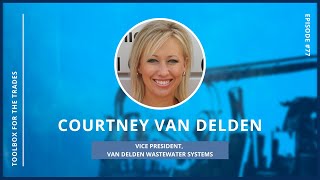
Transcript of a YouTube podcast interview (Toolbox for the Trades, Ep. 77) with Courtney Van Delden, vice president of Van Delden Wastewater Systems in Bernie, Texas. The conversation covers Courtney’s path into the family septic business (fourth-generation), family succession and roles, company structure (installation, aerobic service, pumping), adoption of tech (ServiceTitan, Slack, BambooHR, Verizon Reveal), use and history of aerobic septic systems, branding/education efforts, hiring challenges, and management philosophy.
Questions this video answers
2003
1990
1997
Fourth generation
Bernie, Texas
Courtney Van Delden, vice president of Van Delden Wastewater Systems in Bernie, Texas. Welcome to the podcast.
Thank you. Thank you so much for having me with you today.
I am so excited to chat with you. I don't know if you know this, but you are actually the first septic company that we've ever had on the podcast. And not only that, you're a fourth generation company with a stellar reputation and exceptional work ethic. I'm so psyched to talk with you today.
Thank you. I'm excited to speak with you.
Awesome. So we're going to start this podcast the way we do, every single one, which is tell me how you got into the trades.
Sure. So how I got into the trades. The year I was born, my dad and my grandfather were working together in the business. So I'm the fourth generation, so my dad is the third generation, so he was working with my grandfather. And my mom was an oral hygienist. And when I was born, my grandfather needed a new secretary, so he said, hey, Pam, we've got a, you know, open office in the back. Why don't you bring Courtney and you can start working for us and you can bring her with you. So literally, since I was born, I've been in the shop is what we call it. So grew up there in the summertimes, you know, during elementary school, growing up, summertimes, winter breaks, I think probably as early as six or seven years old. I think I was answering phones at some point. Can't tell you how that happened or why, but I know I remember having a legal pad and learning how to answer the phone and take messages. And then of course in middle school, high school, just kind of did some odd stuff around the office, here and there, wherever it was needed. But I never really thought I would be in the business full time and then went to college. I graduated in 2003 from Texas a and M. I didn't really have anything lined up that really excited me, so my mom said, how about you just come give it a try. So 19 years later, here I am with you and just kind of learned everything from the ground up in the office and working in the field as well.
Awesome. And you run the business today with your brother, correct?
Yes.
Got it. So tell me about how you got to be in the place of vice president today. You know, I talk with a lot of folks who come up in family businesses like you have, and they all have different stories as to how they got to be in the position they are as we're speaking today.
So.
So I'd love to hear how you fell into the role of vice president. Sure.
So our business was kind of split, my mom and my dad. After my grandfather retired, it was pretty much my mom and my dad running everything. And my mom had her roles, my dad had his roles, and the different crews that they ran. And so when I started in 2003, I just kind of naturally took on the roles my mom did, doing real estate inspections in the field and then all the office things that go along with that. And my dad ran the cruise, the installation side of the business. So my brother, when he came in in 2010, I think he kind of fell into my dad's role. So we just kind of each followed our parents in our roles and just kind of learned. And as things progressed and we learned more, they thought, hey, I can. I can take off more. So we just kind of naturally fell into that. And the role of vice president, or the title per se, was really because of succession planning. My parents wanted to make us both officers. And so, you know, like any family business, you want to have good succession planning going on. So they said, courtney and Chad, one's gonna be vice president, one's a new president. You guys decide. And I mean, okay, well, we're kind of. We try to make everything fair, really, in our family. My mom's really done that through our whole lives. So we're like, okay, well, how do we. How do we make this fair? So we flipped a coin. We flipped a coin, and I guess I got tails. And so I am vice president.
That's awesome. Were you. I have to ask, was that upsetting? Was that surprising, or were you like, I'm down for whatever?
No, I think we're both down for whatever, really. To us, I think it's more just a title. It doesn't really mean anything. We both own the same percentage. We both value each other's opinion. You know, there's not one that weighs more than the other. So really it's just a title, but it didn't bother me whatsoever.
Got it. And are your parents still involved in the business?
Slightly. They are still part owners. They. My mom comes in. She just kind of checks on some bills and things. She does some of her personal stuff here, too. So she comes in and out. Not all for business. My dad comes in. He may just check his email, or I tend to have him doing projects like building extra meeting rooms or building a sign or whatever we've got going on. He's kind of our jack of all trades, so it keeps him busy. And he likes to get his hands on different projects, so that's pretty much the extent of their role.
Got it. So when you and your brother Chad took over Van Delden, what kind of plans did you have for making it your own?
So I would honestly say I don't think we really had any plans of making it our own. I think we were just so focused in the beginning on not messing it.
Up.
That, you know, being the fourth generation, we didn't want to be the one that let. Let it down. And so I think for the most part, at the beginning, you know, there wasn't any big, high expectations on anything. Of course, we didn't. We didn't want to. We weren't focused on growing. I think we were just happy with the status quo and just making sure that we had a good, solid foundation. So we didn't really have any huge plans. And there was never this big. On this day, now Courtney and Chad are taking over, or, you know, now things are going to just upheaval and change because now we're president, vice president, or more involved because it's been such a gradual and slow process.
Got it. But I once you said that, I was like, oh, yeah, no pressure. Fourth generation. Geez.
Yeah. My parents never, you know, they never pressured it on us growing up. Like I said, I didn't ever think I would really be in the septic business. And because it was never like, hey, when you guys get older and you take over, they never put that on us. And my parents didn't go to college. They did send me and my brother to college, so. So I guess we thought, well, maybe we had other. Maybe that wasn't it. Maybe we were supposed to do something with our college degree. But it turns out we still are, but we're just doing it in the business. And so it's been a fun journey.
It's interesting. I talk about this all the time about taking over, for taking over as a new generation, or taking over from parents or other family members. And the theme I tend to see is people tend to take over when it's not insisted upon them, when it's not expected that they're going to take over. It's more like it's available to you if you want it, but you don't have to. You can do your own thing.
Yeah, absolutely. And my brother, actually, we kind of had to twist his arm after he graduated. He tried a couple things, and we just really felt like, hey, you really need to try it. We think you're going to be good at it. And I think because there wasn't an expectation, he. When he grew up working in the business, he was on the pump trucks. And that's not a fun job and it's a dirty job. And I think it just kind of turned him off from. From the time he was in high school. And so he never wanted to really go in the business. Now he's in it. He's glad he is. But yeah, there was definitely no pressure. I have, I have two kids, he has three. So we're. We're secretly hoping maybe there's gonna be a fourth, a fifth generation. But I don't. We don't want to put that pressure on them either.
That's awesome. I want to talk a little bit about your and your brother's working relationship, but before we do, can you tell me a little bit about the makeup of your business? I know you guys do primary residential, but what kind of divisions do you have? What kind of work do you do?
Sure. So we do everything with septic systems. We've got three main divisions plus the office staff. So my brother runs the installation crews. So we've got several install crews that we do repairs and new build construction septic systems. And then we've got an aerobic system service department and our pumping department, which I oversee those. So we've got three divisions.
Nice. Yeah, we're gonna get into the aerobic stuff because I was like googling that this is actually a great opportunity for me to learn more about septic, which is what, a sentence? Who thought I'd ever say that? But I'm excited to get into the aerobic systems. But before we even get into that, tell me about the working relationship you have with your brother.
I'm sorry. Yes. So the working relationship we have is really good. I really feel blessed to be in the business with him. We have just a mutual understanding. I think that he. I know that he's gonna do his best and run his department the way he thinks is best, and I. And I trust in that and him the same with me. So our relationship's very, very easygoing. And we just kind of let each other do our thing sometimes. Sometimes our paths cross over in the work. Maybe an installation job happens, needing a pumping at the same time or something like that. So it's more of a coordination. We do run our crews a little bit different because mine are more service oriented and I run them through service titan. His is not so customer service oriented because the crews are at one job all week long. So he runs things a Little bit different, but in the end our goal is the same. So we really work well together.
Nice. And I actually didn't realize it until just this moment, but you guys do own. You have the three divisions, you own the two service focused divisions and he owns the bigger install job divisions.
We own the same percentage of the business, but I just run different. I run those two. He runs and he oversees some of it. Like there's some crossover. For example, like with our vacuum trucks. There's a lot of maintenance and repairs that has to go on with that. I don't know anything mechanically. So when it comes to the service, they're coming to me with questions. But if something's wrong with the trucks, I'm telling them to call Chad. So there is some of that crossover.
And thank you for clarifying with the ownership versus you guys own the same amount of the business but you run different departments. And did you decide that based on just what you're personally interested in?
No, I think it was just kind of that natural progression. My dad ran the install crews and my mom ran the pump trucks. Our aerobic department, really, we didn't really have an aerobic department. We had like one guy when I started here. So now we've got four technicians and one dedicated office person to oversee them. Where when I started it was just me in the office. So it's. It's just kind of grown into that. Not really purposefully, just out of necessity, I guess.
Got it. What advice would you give to folks? Like because you know the trades is such a big family run business, what tools or any tips would you give to folks who are working with their families? Or maybe I should ask, what allows you to run your business with your family and also have family relationships outside of business? You know what I mean?
Sure, absolutely. That's a really good question. I think first and foremost our family has always had a good relationship. So I think that's been a really good foundation. And you know, if you don't get along outside of work, you're not going to get along probably inside of work or it's going to make it a lot more challenging. I don't know that we really have any tools that we use. But one piece of advice that I would suggest that has worked for our family is we do try to keep business, business and personal personal. So we're pretty task oriented. So when we come into work, we're like here to get our job done, we're at work. We're not like talking about all different kind of stuff. Typically and then when we're away from work, we're focused on family and we tend to not talk about work. It does come up sometimes. My dad's usually the wise one that will change the subject because he knows better. So typically if something does come up, like let's say we're hanging out outside of work, he's typically going to change the subject if it comes up. But we pretty much try to keep that separate and I think that does a lot of good because that way you're not carrying it over with you because it's hard to find, find that line when everything's so interwoven.
100%. Yeah. I find that that's generally how successfully how successful family run businesses operate is they try and keep everything separate. So you're in, you're in good company there. Before we go into more of the technical components, because I really want to get into the aerobic systems. When I was doing some research, I saw that you personally have a bunch of certifications for septic. And I find that when I talk to especially women who run trade businesses, they don't often have the different types of certifications that are required for their trade, which is fine if you have it and it's, and you know, fine if you do. But I would love it if you could tell me a bit about your experience getting those certifications, especially being that septic, I imagine is a primarily male dominated industry.
Yes, it is. And so, you know, when I first started and part of my mom's role that I learned and have fallen into is actually doing real estate septic inspections, she did them for 25 years. So part of me learning the business was doing inspections. So I was the main inspector probably for 15 years. We've got somebody that's doing most of them now, but I do still step in. So being out in the field and needing to learn how they actually work means you actually need to get some licensing. And see, in the state of Texas there's no licensing required for septic inspections. But obviously it's a good idea to know how they're installed and get everything that you can. So I'm a big advocate for learning and education. And so I wanted to empower myself. I didn't want to be a septic inspector that didn't have any licensing, especially being a female, a young female at that, when I started in the trades and you know, I wanted to have something that showed that I knew, I knew the regulations and I knew what I was talking about. But I will say there's no substitution for field experience. You can have licensing, but that doesn't necessarily know what it's like to be in the field or the challenges that the guys are going to face. So it started me getting the licensing, really, because I was doing work out in the field. I do have a couple licenses that really aren't necessary. My brother and I have every license that you can get in the state of Texas. Part of it is because I needed it. Part of it's because if something happens to one of us, we want the other person to be able to continue without any hiccups. So even though I may not use a license that he uses every day, it's good for me to have it as a backup just in case something were to happen. So that's pretty much why we've got them.
That's awesome. And also very smart, too. Did you have any experiences early on when you were doing those inspections where you would come in to do the septic inspections? People would be like, wait, you're here to do the septic inspections?
Yeah. They usually would think because it's real estate, usually like the home inspectors or the seller buyer would think that I was the real estate agent until I'd, like, get the shovel out of my truck. And they'd be like, wait, you don't look like a septic inspector. And I would just say thank you, because that's a compliment. Right. Especially being a female in the trade. And so I've always had fun with it. And I have found that a lot of people, although you do have some maybe older gentlemen that maybe don't look upon it or maybe think, I don't know very much, there's a lot of people that really respect it. And so it's also given us a name because my mom was the inspector for us for 25 years before I was. And so everybody pretty much knows if there's a female inspector, it's going to be the van Dalton.
That's awesome. Really good brand work, too. All right, so let's kind of go into the technical aspects, how you guys run your business. So you mentioned already that you use Service Titan, especially for the service side of things. So you told me that before going paperless, your team would manually input carbon copy invoices, which is giving me a headache just thinking about it. You are also. But then from there, you integrated software into your daily operations. So what advice would you give other leaders in septic about making such a big change? Because just from going like, okay, we're going to copy these invoices down to everything's automated, there's no paper anywhere.
Yes. So one thing that we did because I was ready to make the move, but my mom was very, she wants the paper back up on everything. And so we actually did a long transition where we, when we integrated with Service Titan and we started doing everything through there, we actually kind of kept an extra calendar on hand and would kind of double do the work until we realized this really is double doing it. We really don't need it. And it was just kind of, for us, it probably was more work than we needed to do. I probably wouldn't suggest doing it unless you need that safety net for yourself to make you feel good enough, where you can see that Servicetitan and these technology driven softwares are reliable and convenient. And then you're like, I don't wanna mess with that anymore. So that would be, that's one thing that we did that if somebody's hesitant to do to go into putting everything in technology, you might wanna baby step it that way. Something else is just having an idea of what you want the software to do for you. Every company is different and so the big change is going to be relying on. I'm sorry, you're going to start that one over.
No, no, no, it's all good. Take a note. 10:15.
Because I was like, wait, that's not what she was asking. I'm like totally going off on something else.
No, that's totally what I was asking, which was we'll take it again. So you already said, you know, taking baby steps at a time to your comfort level. And the next thing was you want to know what you want the software to do for you.
Yes. Okay, but what was your question?
Question was, what advice would you give other leaders in septic about making such a big change? So I think that's a perfect answer to it. Okay.
Okay, so just start. Okay. So I would say that knowing what you want the software to do for you is really important because every company's different in what, what your expectations are. So I may use software Service Titan a completely different way than another company might. And so having an idea of what's important to you, is it the dispatching, is it the communication, is it all those things will help you have a vision for when you import it and you start using it. What are your priorities? Because there's so many features in Servicetitan, there's no way we could probably use them all. Even though I really try, having an idea of which ones are your priorities will give you that focus to focus on so it's not so overwhelming and then you can baby step it. Once you're comfortable with this part, well then we can add this and we can start using this instead of just being so overwhelmed with all the different features. Because it is a lot but it's a good thing, 100%.
Those are both great tips and I would actually love it if you could tell us a little bit about your current tech stack. So I know you use ServiceTitan, but what are some other technologies that you use at Van Delden to streamline operations, give a great customer experience, all that stuff.
Sure. So we use Verizon Reveal connect for our GPS's on our truck. On our trucks. So we use Service Titan for like kind of tracking how they're doing through their jobs. But we also use GPS on our truck just to verify where they are. And it also helps with our pump trucks turning the PTO and PTO on and off just to make sure that we know that they're actually pumping at the jobs, for example. But using Service Titan has really made us realize technology is a good thing and we should embrace it instead of being scared of it. And so the other things that we use now are we use Slack. So we use Slack for office communication, we take our phone messages for our office there we just general office communication. We have two additional workspaces that we use use in Slack. One, we use it for our fleet so we have an on staff mechanic. So if there's any issues with vehicles, everything in the maintenance, the repairs, any updates are put into Slack so everybody can see at the same time or the guys in the field can just say hey, you know, something's wobbling or whatever it happens to be. And then the mechanic can see it and I can see it and Chad can see and we can make sure it's followed up on. So we use Slack for a lot of different things. And then we also are using bamboohr which actually is just brand new like this month. So we although we use QuickBooks, we do in house payroll, we use QuickBooks for a lot of things. It doesn't really have all the features that I really needed for benefits tracking vacation and we just kind of needed to streamline areas there. So we just signed on with bamboohr and that so far it's pretty proved to be really cool and really helpful in streamlining. I think those are our main softwares we use right now.
That's awesome. So happy to hear that you guys are using Slack. It really saves so much Time without having to go call and text and it's easy to find stuff. So I'm a big proponent of it. I'm glad you guys are using it too.
Yeah, we've enjoyed it.
Before we get into the actual aerobic septic systems which I'm really interested in because I love talking about green products within the trades. I would love to know what it was like to implement such big technological. Technological. It's not equipment because it's all cloud based. I would love to know what it was like to implement such big technology initiatives within a fourth generation company as.
Far as when we like integrated into Service Titan, for example.
Yeah, like having. I'm sure there's folks that have been with you guys for years who are used to doing it on paper. Like what was it like to get the team on board?
You know, I think that there are some that are. The ones that have been with us the longest are probably the ones that we had to pull their teeth a little bit more. I mean it was an option. It's part of. This is now part of our process. But the ones that weren't as technology savvy, it took a little bit longer to get the hang of it. Not because it was hard, but I think because of their will. But now we're on the right path because it's just part of it. It's the way that we work now. So as far as our office, for the most part it was pretty smooth. I will tell you our customers saw a huge difference. I've had customers call us that were our membership customers for years and years. And then they called and said, hey, what are you using? This is really great communication and we want to use this for our company. So it's been a really good change. But there's, there's, you know, you're always going to have some people who, who fight it at first.
Totally. All right, so let's talk about aerobic septic systems, which instead of gravity fed fed systems involves electrical opponents and reuse wastewater. I love that. I love the idea of reusing wastewater. That makes me very happy. You actually had to convince your county to let you install one in 1997, which I know was before your time, but I would love to learn a little bit about what that process was like and why you guys had to make the. Why you had to convince Bernie Texas to let you guys install this first aerobic septic system.
Sure. So in 1997 is when the regulations changed in Texas that basically says if you have a certain type of Soil on the property. Then you can't treat it with a gravity fed system. It has to go through some additional treatment process which is the aerobic system. So the aerobic system essentially is like a mini wastewater treatment plant and it treats the water with aeration and then it recycles that treated water onto the lawn through spray heads. So it's essentially recycling the wastewater, which all septic systems actually do. But I felt so smart for knowing that. So the county that we're in is called Bear County. And it was actually in 1990 that we installed our first system before the regulations in 97. So we had a, we had a customer who needed a new system and he had heard about the aerobic systems. Aerobic systems were prevalent in other states. Specifically Louisiana is the closest one to us that really utilized aerobic systems back then. But they were, they were, they were non existent in our county anyway. And because they weren't regulated in our state, pretty much nobody had them. And the county was really reluctant to let us permit the system just because it was like a little scary. Hey, we're treating the wastewater and we're recycling the clean water onto the lawn. So they were afraid of a health hazard and a lawsuit on their hands. We ended up convincing them because there was nothing in the regulations in 1990 that said you couldn't do an aerobic system. So we installed it and we still service that system still today. Then in 97 is when the regulations actually we installed some more aerobic systems until 97, but 97 is when those regulations changed that started requiring them in certain areas. So like our area is very rocky and so you can't do a conventional system or a gravity fed system in rock because it doesn't treat the wastewater as the water is filtering down. So that's where the aerobic system. So here like, I don't know, there's tens of thousands of aerobic systems now. They're just much more prevalent because of those regulation changes. But all septic systems actually are green and do recycle the wastewater because the gravity fed systems actually return it to the earth through the absorption bed in the ground. So it eventually actually all makes it down to our drinking water supply. It's just a matter of how that water is treated. That wastewater is treated, treated before that happens. So it either happens in the soil on a gravity fed system or it happens in the tanks and then sprayed onto the lawn through the aerobic systems.
Oh my gosh, Courtney, what do you have a bunch of certifications or something? Thank you. For educating me on that. I actually have never lived in a county or state that uses septic in any way. Well, I should say county because I'm not sure about like New York State. I'm from New York City and now I'm in Los Angeles now, now, which I don't believe uses septic system. So learn something new every day. I will do a quick pivot though. And the reason I felt so confident in my septic knowledge was because when I was doing some research on you, you guys have a fantastic FAQ section on your website. You have so much information that you disseminate through your social media through all these different channels. And I would love to know when you guys first started branding yourselves as kind of thought leaders in the industry.
Sure. So I think we've always wanted to, even before, you know, my parents, we've always wanted to educate our customers. The more they know about how the system works, the better it is for everybody. Because when they have problems and they understand really what the problem is, septic systems have so many misconceptions from the general public of how they work especially. So it's really important to us that knowledge is power.
Right.
As far as branding ourselves, around 2012, we were looking to do more pay per click advertising. And we found this company, this local company called Digit. We're still with them today. But they suggested revamping our website. And in doing that, they said, hey, you know, you guys really, you have a great website already, but let's build on that and let's start branding more. I mean, I didn't know what branding was at that point. They wanted me to start writing blogs. I didn't know what a blog was. And here I'm on a podcast now. So we started doing that, we took their advice, we revamped the website, made it more robust and more educational. I started writing blogs twice a month on different topics that customers would call us with those questions. So I tried to take those questions and answer them so they were readily available. And, you know, it's just been a natural progression since then. Our blogs are typically, I think they syndicate them now for us on Facebook and LinkedIn. So we've got a lot of information out there. I actually get calls sometimes from other states and I'm like, where are you? Like, they're saying stuff, it doesn't make sense because things may not be the same in Arkansas as it is in Texas. And they're like, oh yeah, I'm in, you know, such and such. And so it's interesting that people really get ahold of information. But that's good. That means people are finding it. That's what we want.
That's awesome. Well, my next question is, what kind of impact did that have on your company? It sounds like not only are you reaching the customers within your service area, but you're also reaching people in different states. But like, for your customers, do they find that information really helpful? Does that empower them to help, you know, give more information, better information when they call that kind of stuff?
Yeah, absolutely. Very often when I take a phone call, the first thing they say is, wow, I saw your website and it's really great. There's a lot of information on there. I really appreciate all the information you put. I had a lot of my questions answered before I even called you. And that's really. And that's really great because that already sets us number one as a authority, I guess. I don't know if that's the right word, but they already trust us when they call us and that just gives us a foundation to build on with our customers. It's also had an effect for our company as we already had a great reputation. But I think it's just more helped us to expand how other companies in our area, in our region view us and home inspectors, real estate agents, other septic companies, in trusting that, you know, we are a reliable source and if Van Delden does an inspection or Van Delden installed it, then they know we did it.
Right.
You know, it's not. They're not question. We don't find that they're questioning that. More that they're trusting. When we've, you know, we've provided service and they come across a problem or question.
Yeah, I can imagine that there has to be being able to showcase your knowledge online and we know what we're talking about really has to help that reputation. One thing that was really interesting I found when I was researching you guys and you sent over that awesome on site installer article that features you and Chad. You talked about how since Bernie is a growing town, you work within a lot of subdivisions. So I would love to learn how that's complemented the natural growth of Van Delden. In addition to, you know, putting your information out there and sharing that, hey, we know what we're talking about.
Sure. So where we are, we're like halfway between San Antonio and Bernie. Bernie is maybe like 15 miles outside of San Antonio. And it used to be like San Antonio was the city and Bernie was this like quaint little town that's all changed. And they're basically just an extension of the city now. You really don't know. You left San Antonio and entered, Bernie? Well, my parents, the property that they purchased out here for the. For the business, we grew up out here also. But this. This property, as you can see, is right on the highway. And so we are. We're known for this to be in this area. So most of our business is done in this area. And because of the growth that has happened here, yes, a lot of subdivisions have come in, and because the sewer system has not expanded this way with the rate of growth that the buildings have and that the home subdivisions have, they've had to put in septic systems. So, you know, we've got several builders that we could just contract out and we install all their systems for their subdivisions. And it's just, you know, this whole area has really grown, which I will tell you this, I think is really cool. On the one of the pages for Service Titan is a heat map. And it's really neat to see. Okay. For this division, yes, all of our jobs are done in this area. And for this division, we might branch out some more. But it's really neat to see, you know, that most of our business is, in fact, done out here. But I think it's because we're well known, we've been out here for a long time. We have a really nice big sign by the highway, so people see it every day as they're driving by. So that kind of all mixes in with the branding as well. But, yeah, the growth has definitely, obviously helped. Any growth for any company is good.
That's awesome. I'm so happy to hear that for you guys. So a lot of the times on this podcast, we talk about the tech shortage. Labor shortage. Right. I'm assuming it affects septic the same way it affects H Vac, plumbing, electric, and kind of the classic industries that I've been. That I've interviewed on this podcast. Am I correct in that assumption?
Absolutely.
So I would love to learn about, like, what you're looking for in tech techs now or what you're looking for in hiring now, especially considering that septic systems, as they become more advanced, they involve electrical components and that. So I would love for you to just talk to me a little bit about where you're at with hiring and what you're trying to do to solve for this labor shortage.
Sure. So it's always been challenging in our industry because, like, for example, in. In contrast with H Vac and plumbing, you know, everybody's got air conditioning. At least in Texas, everybody's got plumbing. And so there's a lot of those companies. And so you have a lot of people in that pool to choose from that might be looking for a job that's already licensed, that's already got knowledge or experience. Septic. Not everybody has a septic system. And so there's not as many septic companies, which means there's not as many people with experience or licenses. And so that's always been a challenge to begin with. Typically we're having to hire them and train them from the ground up and get them licensed and then hopefully they stay in the industry or stay with us. But that's always a challenge. Then with the aerobic systems, that adds another level because they do need to have electrical experience and knowledge in order to troubleshoot these aerobic systems. They're very heavily relying upon electrical components, timers, control panels, compressors, all kinds of things. And so that's another level. And then add on top of that the element of dealing with wastewater every day. So you may find a pump truck driver that's got a CDL license that doesn't mind doing the driving and doing the work, but they can't stomach the work. Same thing with an aerobic technician. We may find someone who's really great, but they really don't want to mess with the, with the sewage. It can be a dirty job. So that just always adds another level to it. So we are, with our efforts in obtaining and retaining employees, we are just trying some different avenues. I mean, there's always been the Craigslist and indeed we're trying another program right now called Applicant Pro that we've been with for a little bit. And it's done a really good job of getting us new applicants. But still getting guys in here for an interview or for a ride along day is a challenge. I think we've had like over 100 applications in the last month and maybe a handful of those have showed up. So it's, you know, it's a challenge. Especially right now, I think it's even harder.
Totally. Yeah. And my heart, I feel for you in that because definitely a lot of people are feeling that right now. And it's a good, I think it's, you know, the idea. What would you say this is a little off the cuff, so apologies if you don't have a question, an answer to this right off the top of your head. But what would you say to someone who's looking to get into the trades? Like, are there any qualities that you find technicians who can deal with septic. Have you like, are there any commonalities, like if you enjoyed this type of work, you may be a good fit for septic?
Okay, good question. I think that if you have, and it kind of depends, I guess if we're talking like pumper or a technician, I mean, if you're been electrical or H Vac, even plumbing, I think, I think that would be a good segue into an aerobic technician. If you've done like any trash pickup or porta potty work or anything like that, and you don't mind getting dirty and it doesn't bother you and you're not like focused on what you're looking at, you're just like doing your job. If you can, if you can get past that, then I think you'd be a good candidate for any, any of these positions. Really.
That's a good answer. All right, we're going to start wrapping up soon. I really enjoy talking with you and I want to thank you just so much for all these great answers. So I'm going to ask you a couple questions that, that I think would be really interesting. First, I would love to know if you could go back in time and give yourself one piece of advice from the early days of not necessarily your company, but your involvement in the company, what would it be?
I think it would be that you can't please everyone and it's okay to say no. My nature is I'm kind of a people pleaser and I like to say yes. And so that means that I need to say no to employees sometimes. Sometimes that means I need to say no to customers, maybe. No to a job that we know isn't really a good fit for us. No to a customer who is verbally abusive or no to a customer who doesn't pay? No to myself sometimes, because sometimes I like to take on more than maybe I should. So I think just knowing that you can't please everybody and it's okay to say no sometimes I would, I would give myself that advice.
Well, thank you for saying yes to this podcast. I so appreciate it. I struggle with the same thing, so I can totally relate to that. So what's next for Van Delden Wastewater Systems?
So, you know, I think that I just totally drew a blank. So we're have to redo that one. But let me see my notes here. Give me a second.
No worries. I already, I already asked the question so they can just cut this part out so you can just pick it up when you're Ready?
Okay. Oh, yeah. I knew I wanted to say that. Okay. It's just drawn a blank. So what's next for us is I think we would just like to continue on the trend that we're on. That we're on. I don't think we have any, like, huge, huge plans to just, like, add 10 trucks tomorrow or anything, but I would like that to be the case in ten years from now. I think for us, we have learned that slow growth is okay and it's manageable. And so I think that's kind of the path we're on. We don't want to be a company that grows too much too fast, and we don't have control over what's going on and seeing all the little different aspects. But I do think that. I do know that Service Titan has really helped us with that because we have added a service. We're looking to add a second crew to that service because we are able to see more and just pull up a report and we get our answers and we can keep a better eye on things. So we do. We do want to grow. How fast that's going to happen, I'm not sure.
Got it. No, I think that's great. And everyone. Everyone grows their business differently. Everyone has their own goals, and that is one thing that I constantly learn time and time again on this podcast. So I have a new question that I'm asking for at the end of every podcast, and it's a bit of a big one. And I know you were like, I don't know the answer to this, but I want to ask, if you had to choose a song to be the soundtrack of your life, what would it be?
Okay. It's probably going to be really odd to most people. My family is huge Jimmy Buffett fans, including myself, so grew up listening to Jimmy Buffett, like, know everything about him. So it's a song from Jimmy Buffett. It's called Cowboy in the jungle. It's from 1978. And it just talks about making the best of life and whatever comes its way. And it just reminds me of times in the past with my family. So it just brings back a lot of memories. And I think kind of is my. I think it's my song now. I didn't know I had one, but thank you for asking the question. No worries.
And when I first pitched this question to you, you said you had a motto that you like to live by, so I would love it if you. You could share that as well.
Yeah. So I think I just have to remind myself this all the time. And I think it has grown to be my personal motto that nothing, nothing good in life ever comes easy. And that's not to say that life is terrible or anything like that. It just means that if you can't just wait around for things to happen, they normally just don't happen. Good things just don't fall into place all the time. So if you want to have a good, good marriage, you got to work at it. If you want to have good finances, you got to pay attention to them. If you want to have good health, you got to pay attention to that. And I think that's the same for business. If I want to want to grow the business, I need to focus on it as well and work on it. And that's been kind of a challenge is working in it versus on it. And I'm kind of still on this, in this balance of doing both. But it just reminds me when times are hard and I feel a little overwhelmed and I keep saying yes to myself instead of no. I just keep reminding myself that, you know, nothing, nothing in life that's really good ever just falls in place. So sometimes you have to work with those things, and then it just gets me through it.
I absolutely love that motto, Courtney. I think I'm going to adopt that myself. Thank you so much for being a guest on Toolbox for the Trades. I really enjoyed chatting with you.
Thank you for having me. I appreciate it.
More from Bill



ServiceTitan Virtual Agents: Simplify Before You Scale | Podcast Ep. 110 | Mastering ServiceTitan



Life After Live Events: How to Turn Post-Conference Energy into Real Profits | Podcast Ep. 297




