Keith Mercurio at Pantheon: Net Worth of Self-Worth
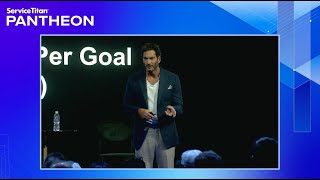
Live keynote transcript of Keith Mercurio’s Pantheon presentation ("Net Worth of Self-Worth", Sept 2025). Mercurio leads attendees through goal-selection (business, leadership, life), commits them to concrete actions and accountability partners, and runs embodiment exercises — writing 10 positive attributes, choosing three, converting them into I am statements, and a 60-second high-five installation — to shift identity toward habits that create results. He interleaves coaching feedback from volunteers, discusses time-blocking, walking, breathwork, and the physiology of trauma/identity, and closes with a personal story about his father, lessons on self-worth, and a call to write an "I am proud of you for..." note to self. The transcript includes specific dates and commitments from attendees (e.g., exercise by Oct 1, 2025; quit smoking by Nov 1, 2025).
Important note about the word mentor, by the way. You can never call yourself a mentor. All right? This is very important. You can only be called a mentor. I think that's a critical point. So thank you, Eileen. That was. That was very touching. So, folks, you have heard over the last two days from the best in the trades, from the future of the software that leads it. You've heard from, literally, the world's leaders on health, wellness, nutrition. And undoubtedly, in this moment, you have countless plans and goals and all types of enthusiasm in place. Right? And there's a famous quote. It's actually hard to figure out to whom it's attributed, but to have what you never had, you must. You have to do what you have never done. Don't mind the typo. We're just making things work here. So as you go ahead and start to move through this, it's really important that you become really intentional about what it is you're going to do next. And so it's my job to usher you through this, to make sure that as you leave, we're not trying to do 10,000 things. We're going to get very specific about what you're going to do. Okay? So I'm going to invite you to take out your notebooks, or in lieu of that, if you need to use your device, but it's actually better if you hand write. And I want you to identify, just reflect on the last few days, all that you've learned, all that you've gotten excited about, all that's inspired you. And I want to invite you to just identify three goals, three goals coming off of the work that you've done here. And I would encourage you to diversify these. One of them for your business, one of them for your leadership, and one of them for your life. Take a few minutes, reflect, and identify what are three goals you'd like to accomplish in the next three to 12 months that would have made Pantheon completely worth it. Give them a little thinking. Music. Thanks. All right, so go ahead and bring your attention back up towards me for a moment. Allow me to interrupt you. Wherever you are, is where you're at. That's perfect. So how many of you, just as you take a moment, you look at those goals, feel like already excited, enthusiastic about what it would feel like to accomplish that By a show of hands, how many of you are already attached to some of that? How many feel a little overwhelmed already? Potentially, yeah. Good. How many of you aren't going to raise your hand no matter what I ask you today? Good. Perfect. So What I want to find out now is how committed you are to this idea. Like, you know, we have to do things. The only thing that creates a result is an action. Okay? Only an action creates a result. So we focus on what we have. Now, I want to congratulate you because you're already 43% more likely to accomplish those goals by simply having written them down. 43% more likely by simply having written them. You become 68% more likely when you attribute specific actions to the goal. So what I'm going to ask you to do next is I just want you to pick one, just for now, one of the goals. And I want you to identify what are two things you're going to need to do differently than you've been doing in order to achieve this success, that you want to have this outcome, that you want to have two specific things you're going to commit to doing in order to achieve that outcome. Go ahead and take a moment, reflect and identify that plan. If you finish yours, you can move on to another one. Make a little more progress. I'm going to give you about another 60 seconds here. All right, now, once you have at least one goal with two actions attributed to it, I'm going to invite you to please stand up. Go ahead and stand on up once you have your goal listed with your actions attributed. Okay? All right. Now, how many of you are serious about these goals, truly, by a show of hands, want to achieve these? Like they're important enough to you that you're going to do something different than you've been doing. Okay, good. All right, great. So different than you've been doing is always uncomfortable? Yes, almost always. It's uncomfortable. Right, because the natural human state is towards comfort. In fact, this is such a powerful phenomenon that what we know in the world of public speaking is that when human beings walk into a room, they're more likely to sit next to somebody that they know and don't like than someone that they don't know and might like. That's our tendency towards comfort. So you can decide as you look next to your peers which one you might be in this moment. So in just a moment, I'm just going to ask you to get a little bit, just. Just a tiny bit uncomfortable. And this is the whole point of the networking anyway. I'm simply going to ask you to go find one person that you did not know before you walked in here, pair up with them, introduce yourself, and await further instruction. That's it. Okay, Remain standing. Now, hold on, hold on, hold on. Hold on. I just want to be super clear about this. This is the only way you can mess up is to not do this. Okay? And you will ruin Pantheon if you fuck this up. Okay? I'm dead serious. Okay? So this is the most important instruction I can give you. So at the end of this exercise, I will know you failed if you're wearing a matching outfit with this other person, okay? If you're wearing the same shirt, I'll know you failed. So you got to find one other person you didn't know before you walked in here, pair up, introduce yourself in a way. Further instruction. Will you do this? Say yes. Okay. Go ahead and do that. Thank you very much.
Yeah, you got.
If you can hear my voice, clap once. If you can hear my voice, clap twice. If you can hear my voice, clap three times. All right, Very good. Now, here's what I'm going to ask you to do. By the way, there's going to be a few interactions throughout. So in an effort to not interrupt you in that same way again, what I'm going to do is I'm going to simply raise my hand at the front of the room when it's time to bring your attention back from a conversation. My only ask of you would be if. When you see me raise my hand, if you raise yours quickly, it'll signal to the thousands of people in this room, and we'll move just like that. Is that fair? Yeah. Okay. Beautiful. Thank you. Okay. With this person, I'm going to ask you to simply now share your goal. Okay. Share your goal and the two action items that you've identified, and go ahead and just share that with this person and remain waiting after. Okay.
Yeah, you got. Yeah, you got.
With the guys behind me. Yeah. Yeah, that's okay. Amazing. All right. Okay. Wonderful. So here's what I would love to do. So a couple of things. I'm a leadership coach. Okay. And by nature, I'm a coach. It's like what I was meant to do. This is whatever. It's what I was meant to do. So I'm going to ask for a couple of volunteers who would be willing to share some of their goals and their actions. And in that moment, if I notice something that I think in the language, as I listen with intention or whatever might warrant a little coaching, I may ask you if you're open to some coaching. Okay? So just know that if you raise your hand, that might also be an opportunity for some coaching. Okay? So I just need a couple of volunteers. Remain standing, if you would. Who would Be willing to share. Okay, we're going to do here. I'm going to come down to you. Thank you very much. Thank you. Thank you, thank you. This is fabulous. Okay. I think I had a hand here. Yeah. Okay. Very good. Here's a mic. Hi. Introduce yourself.
I'm David Elesenich from Absolute Heating and Air out of Morgantown, Washington, or Morgantown, West Virginia.
Very good. That's okay. Yeah, Excellent. West Virginia. Yep. Beautiful. All right, so why don't you share with me? First of all, let me just ask, what's been your highlight of the last couple of days?
So this is my first pantheon, and just networking and connecting has been amazing. One of my goals was to up level my mentoring group, and I've made some awesome connections and got some cell phones, but that's not the one I picked.
Okay, great. I love that. So, by the way, this man's looking for mentors, okay. So we can help him out there. What's the one you picked, brother?
I said I'll be healthier. I'll exercise 30 minutes daily by October 1, 2025. I'll quit smoking by November 1, 2025.
Thanks, Rich.
If you're in the room, I'm sure you'll understand that one with the date and the I. Yeah.
Okay, so what. Why don't you tell us a little more what's. Why the date? That is interesting. You've given yourself a little bit of a Runway. I noticed. We're gonna rip it up next couple months or what? Yeah. Why the date? Why the date?
So I. I work with Rich Polarney, one of the titans. He's a great mentor of ours. Friend. And we're working on his goal setting session. So action items would be put.
I will.
And set a date on that so that, you know, you're intentional about it.
Okay. Really good. This is actually very special. I will is a super powerful statement. Okay. You know what's more powerful than I will?
I am.
Yes, actually. But you skipped one. You skipped one in between there. And you took my segue. So, like half my presentation you want to do together might bring you up there. I must, I must, I must. So one of the things to take a look at in life, people get whatever their standards are, whatever they make a standard, and a must becomes a standard. Okay? And so Tony Robbins talks about this, if you want to raise the quality of life, raise your standards. Okay? And so you can even think about starting to transition that will to a must. Okay. Okay. Now why must you? If I were to ask you that why must you quit smoking?
So I. I have a three year old son and he's very important to me and he helped. He was my why to get sober and he's my why to get to quit smoking.
How long you been sober?
Two and a half years.
Hell yeah, dude. And what's his name? Logan. Logan. That's a lucky kid. Thank you, brother. Thank you. You got this. Well done. Thank you. Yeah, please. Very good. If you would. Oh, I thought you were just waving.
Yeah.
Oh, oh, okay. Well, we won't do that to you, but just be careful. It's like an auction in here. You know what I mean? You can't put your hand up and. Not that you just bought some shit. Oh, you want to go now? Okay. All right, let's. Very good. What's that? What are you going to do? Very good. Do you want to share your goal and the action items and your name first?
My name is Brenda from Red Lily Plumbing.
Okay, very good. And where's that?
La la.
Oh, okay.
Well, we're down the street.
Right down the street.
So I had a business goal to slow down and take a look at how far we have come and implement everything we already have to the fullest. And don't ignore it because the task is too big and complicated.
Okay, so what's the specific action here?
No excuses, focus. Set aside time block. My calendar and begin.
Okay, time block. I like this.
And the second one is have accountability. Measure it, Measure myself out, map it and track my progress.
Okay, very good. These are excellent. So one of the strategies. Would you mind holding this for me? Thank you. So one of the strategies to keep in mind this premise of time blocking is really powerful and one of the things to think about. So are you familiar with time blocking as a concept? This is like there's different versions of it. Some of them are you literally constrain yourself to how much time you're going to spend working on something. Sometimes you can use it in a really motivational way, like if you don't like to read or write or do whatever, you set a maximum at a really low number. Like, I'm going to spend 10 minutes reading and no more. And you insist on actually shutting down at the 10 minutes. It's a very excellent technique. Duhigg talks about this for getting started on something that maybe you've been resistant to. The other thing about time blocking is what Huberman talked about with circadian rhythm. So pay attention to where you like to do things and where your energy flows throughout the day. Because what we tend to do, because the non conscious is running the show, is we say, oh, I'll write at 2 o'. Clock. And yet 2 o' clock is the time that you're most tired, your energy's down and then you start, or I'll work out in the afternoon and then you've lost your. Your energy, your motivation, which is a fleeting resource. And so making sure that you put stuff, like if you love to be, like, I love to be on coaching calls, so I can put those in the afternoon and look forward to them. Right. They don't deplete me. Right. But if I want to write, I have to do it in the morning when I have energy. So think about where you're going to time block that so that you can be most productive at the times that actually work for you.
Yeah. And not lose focus, because I lose focus a lot real fast.
Okay. I wonder if anyone can relate to that in the room. Adhd. Okay. Yeah. No, everybody in this room thinks they have adhd. All of them. By the way, there's not a single clinical diagnosis of it in this room. And there's 3,000 cases of it. I can promise you it's very real. Okay. And by the way, don't misunderstand too, as tradespeople, how many of you actually in the trades, like beat, were tradespeople, came up as plumbers, electricians, roofers, whatever. Yeah. So you have to realize that there's different learning styles and kinesthetic learners. Right. Not auditory, not visual. Kinesthetic learners like to put things together and take them apart. When their hands are on stuff, it makes more sense. And so, so many of us ended up in the trades because school, which is typically visual and auditory, didn't really connect for us. But, man, when we got our hands on something, the brain came alive. And that often gets mistaken for adhd. Okay. Because it's actually you're processing something in a different way. And so if you. If you start to incorporate that into your learning. And by the way, same thing with your technicians when you're training them. Give them something to have their hands on when they're working. That's why. And it allows their brain to process a little bit better.
Great.
Okay. Thank you, Brenda. Thank you for the involuntary volunteering. That was fabulous. Thank you. Round of applause for Brenda. Very good. Okay. All right. Now you all got very tired on me very fast. And you sat down, and I suspect you sat down back where you originally sat. And that's a problem because now I need you to go back with that learning partner and find a new seat next to that learning partner. This is critical. Need you to do this. And you only have 30 seconds to complete this task. So please move.
Yeah, you got. Yeah, you got.
Okay. All right. One last thing we got to do. Just bear with me. Go ahead and stand up and face this person. Okay. Stand up and face this person. All right, so for the remainder of this time together, this person is going to be your learning partner, which means for you to have the ultimate experience inside this room to actually take what is, I promise you, a transformational opportunity available to us in just the remaining half hour that we have. This person's going to have to be connected. They're going to have to be dialed in. They're going to have to be thoughtful. They're going to have to be brilliant. They're going to have to be insightful. Just real quick, based on that description, who feels like they need a new learning partner? Just. So look what happens. We immediately though this is true. We immediately, when we kind of move around in life, you know, sure, energy moves us and everything else, but we're kind of always thinking, like, what am I going to get from this person? Do they have something to offer me? Do they have something to offer me? So rarely do we wonder what we have to offer and think about simply that, what can I bring to this person in this moment? So I'm actually going to ask you to just take a quick moment and give your 30 second pitch as to why this person just paired up with the best learning partner they possibly could have in this room. All right, Go ahead and tell them why. 30 seconds. I just want to tell you.
Yeah, you got massive boots. Y' all got.
All right, all right. Very good. Okay, last. What's that? I was. That was too quick. Then tell everybody why you're the best learning partner in the room, sir. Go. Just go ahead and shout it out for us. Yeah, you like to listen and you like to hear. Pass the words to what somebody's really asking. You, brother, are a rare soul. That's a beautiful thing to bring to this life. Thank you. Where are you from? You're from Tennessee? Yeah. Right on. Oh, good. Yeah, yeah. Okay. Actually, this. This translates perfectly. Perfectly. Amazing. It's God. Thank you, God. So you a vols fan, then? Mm, mm, mm. Okay. Yep, yep, yep, yep. This next one's gonna hit a little close to home. Okay. All.
Right.
How do I want to do this? What I want you to do now? I just need a commitment that you all are going to Finish this thing out. Unlike Tennessee's effort against Georgia on Saturday. We did. We're going to learn from that. We're going to learn from that. Okay? And I appreciate you for really volunteering yourself here, because this is literally the next thing I was gonna ask. So go ahead and turn to this person, say, I also promise I'm gonna stay to the end of this presentation and high five them right now. Go ahead. All right. And I. And I so appreciate that. And you can high five again and say. Because I know Keith's very fragile and it hurts his feelings when people walk out before we're done. Okay? And that's the truth. That's the absolute truth. My boss just high five the shit out of that one right there. He's like. He knows that's the truth. All right, listen, you're beautiful. Thank you. Go ahead and have a seat. Have a seat. Have a seat. Have a seat. All right, now, here's what I want to share with you. How many of you have actually have I spoken with or worked with before at some point, by a show of hands? Okay? So for some of you, there's going to be some familiar content here for the next few minutes, okay? For some of you, there's going to be some familiar content for the next few minutes. I'll give you the Heraclitus quote here. No man walks into the same river twice, for he is not the same man, and it is not the same river. Okay? So if things sound familiar, be careful to not fall into the trap of thinking. I already know that. And as Socrates said, you cannot learn what you already know. So if you remain curious during this time, you may revisit concepts that you think were one thing that now appear anew for you and for everyone else. There's going to be two parts to this talk, okay? And the second part, like, a third of it, is sad. So if you leave early, you're just going to leave sad as hell. All right? So that's my other thing. So you got to wait till I bring you back out, okay? That's also going to be really important. So here's what I want to share with you. Everybody with me. Yeah. Thank you. Okay, great. So here's the thing about what we do and what we want, okay? You're going to leave here. You're going to be super, super, super motivated. Super motivated. You're like, I'm going to go do all this. I'm going to go do all of it, and you're going to do it for two weeks. And that's it. And then you're not. And then you're not going to keep doing it. And it's a natural phenomenon because new commitments last about two weeks, typically. I mean, there's literally a day that celebrates them. It's called National Quitters Day, all right? And it's the second Friday of January, all right? And it's. You get it, because it's two weeks into where everybody's renegotiating their New Year's resolutions, right? And I love that it's a Friday. Like, God forbid. It's like, you know, it's like that second weekend, it's like, yeah, okay, forget that whole not drinking thing for the new year. Like, we made it two weeks. We're good, right? And so, you know, the reality is we don't. We say we want, we want, we want, we want. But then if we don't do and do and do, then we don't get what we want. And what makes us do is not what we want. It's who we're being. I love this quote from Wayne Dyer, right? You don't attract what you want. You attract what you are. What we embody is what shows up. It's who we're being that determines what we do, and it's what we do that determines what we have. So what I want you to focus on isn't right now the wanting and the doing. You already got that. It's the being. And I want you to think about who you're going to need to be over this next time period in order to actually do the things that will result in you having the things that you want to have. And what I want to focus you on isn't some version of you that doesn't exist. It's a version of you that does exist. Right? We're just gonna learn to summon that version of you more often, okay? And so right now, what I'm gonna invite you to do, I want you to reflect upon yourself and I want you to write down 10 positive attributes about yourself, things that are true about you, that have been true about you at some point in time, okay? And I want you to write a list and get to 10. Okay? Really push yourself. Things that are about you, that are positive. Now, listen, if you're struggling on this list, like, you don't have to be this way all the time. Nobody's anyway. All the time, okay? If you were patient once, put that shit on the list, all right? That's a positive attribute. You can do it. All right? So go ahead, 10 items. Push yourself right now.
Sam. Sa.
Now, what I want you to do as you're writing this list is I want you to start to identify what are the three. The three that really make you feel something. Pay attention to how they make you feel, and start to identify. Out of this list, what are the three that if you were to describe yourself in this way, that's the best version of you, the version you love the most, the version that gets the most done, that feels the best, that, that loves life, that version. Go ahead and identify the three attributes that bring you to that place.
Sam.
Now, one more step. You're going to turn this three items into an I am statement, okay? Because as our friend said, these are the most powerful words. I am. Right. So go ahead and turn it into an I am statement.
Sam.
Raise your hand once you have your I am statement complete. Okay. Beautiful. All right. Very good. Okay, so let me bring your attention back up here and just share with you what we're about to do. So Dr. Mike Mendel, who's a famous hypnotherapist and psychologist out of Canada, mentor of mine, I was lucky enough to study under him for a little while. Mike Mendel shares this premise. See, remember I said that, like, there's no one version of us. There's no one version of us. There's many versions of us. In fact, the science would show, or at least his theory would show, that most people have what we call, like, somewhere between 5 and 15 sub modalities. So personalities, ways of being states, different states of being. Right. And if you think about it, like, I mean, you probably cycled through several of them today already, right? Okay. And I mean, you know, and I know that there are husbands and wives in here. Being, like, 15, I think, like, I think. I think my partner might have 200. Like, there's, you know, there's possibilities that. And people do have as many as 70 of them. But the point is that, like, different circumstances evoke different versions of us. You know, when we get nervous or anxious, we show up one way. That's like an old way of being that we learned along the way. And when we get more feeling really good, feeling confident, like, we show up a different way. Right? I mean, it's just different versions. But, like, the worst advice you can give somebody in the world is, oh, just be more confident. Of course, everyone wants to be more confident. That's like telling somebody to just be taller. Like, it's just bad advice. It's terrible coaching. But what we can learn to do is we can learn to summon a different version of ourselves. Because the way to think about it is that, like, inside your being, you've got this, like, boardroom table, and there's all these different versions of you sitting around the table. And, you know, you get, like, the class clown version of you. You've got, like, the, you know, the confident version of you. You got the anxious, adolescent version of you. You know, like, you've got all these different versions that had a place and a role and a something in time. But the key is only one of them can be at the head of the table at any point in time and in charge. And so the work is to learn to summon the right version of you to the head of the table more often. Right? And the more often you bring a certain mood with you, it starts to become your personality. The more often it becomes your personality becomes your character, and the more often it becomes your character becomes your identity, and eventually your identity becomes your legacy. And this is just a simple exercise to evoke your full peak state and bring forth the best version of you, which is this I am that you just wrote. And so the way we're going to do this is with a very simple physiological installation. And what that means is we're going to take and match your language with your physiology. Okay? And we're going to create an installation. Now, here's how an installation works. First of all, go ahead and stand up, please. Stand on up. Okay, who here has ever had too much to drink of a particular drink? Okay, I believe that's everybody. Well done. What was your drink? What was your drink? Tequila. Number one answer is always tequila. All right, very good. Who was my tequila girl over here? Okay, got you. Now, just the mention. Are you able to drink it to this day? Oh, you, You. Not as much. Okay, this is, by the way, this is a very resilient person here. Okay, they, they, they went ahead and worked through whatever this incident was. Did you get sick from it, though? Couple times. Okay, very good. We're learning a lot about you right now. So who's somebody that has one that they can't even touch anymore? They can't even touch it anymore. What was yours? Well, you'll get this still, don't worry. Yep, Southern Comfort. That's another good one. That's a young man's drink right there, too, isn't it? Soco and lime, was it? Yeah, yeah, yeah, yeah. All right. And now to this day, just the mention of the word soco and what happens? Yeah. Okay, so this is A physiological installation. What happened was this man, well, he poisoned himself, okay. And the body said, hey, that wasn't good for our program. And the limbic system made it a memory so that it actually creates a physiological reaction, a feeling. Just thinking about it makes sense. Okay, so this. It does this to protect you. Well, we can do the same thing, but for the better. So here's how this is going to work. In just a minute, you're going to do. We're going to create a peak state that feels great. And you're going to do it with these IM statements so that just the words bring you into a peak state. Because, okay, it's only going to take 60 seconds. And we're going to do it with the most celebratory gesture of all, which is the high five. All right? I mean, because think about it like, high five is only used in celebration. Yeah. Nobody's ever walked up to somebody at a funeral and said, man, I'm sorry for your loss. Right. So it's a celebratory gesture, so it brings with it goodwill. So here's what you're going to do. In just a minute, you and your learning partner are going to turn towards each other. Do you have your IM ready to go? Would you be a volunteer? Does someone want to volunteer? I don't want to pick on it. You're ready to go. Okay, Paul, so you got your I am ready to go. Okay. And you're going to tell me your I am. So go ahead and say it and look at it once and then look back at me. So you take on the physiology. I am loyal. I'm teachable and family oriented. Yes, you are. All right? And it was loyal, teachable, and family oriented, which is a gorgeous I am brother. All right, so that's it. So he's going to say, I am loyal, teachable, family oriented. And I go, yes, you are. And then I do mine and he says, yes, you are. Right. And we go back and forth. And you're just going to do this for 60 seconds. That's it. And you're going to create a peak state. You're going to get the good feeling chemicals going, and it's going to create a little physiological insulation. Does this make sense? Are you with me? Say I am. Are you committed to doing this for 60 seconds? Say I am. Okay, that's it. Go ahead and turn to this person. We'll get them a little bit of music and go back and forth for 60 seconds.
I'm living in that 21st century doing something Mean to it do it better than anybody you ever seen do it scream from the haters Got a nice ring to it I guess every superhero need his fame, music no one man should have all that power the clock's ticking I just count the hour Stop tripping I'm tripping off the power.
The.
System broken the school's closed, the prison's open we ain't got nothing to lose Everybody we rolling Everybody we rolling with some light game girls and some heavy rollings and it's white man world we the ones chosen so good night, cool world I see you in the mountain.
Oh, my goodness. All right, now hold on just for a second and look around the room. Just see how many smiles are on your faces right now. That was actually Tennessee. Let me check in with you. Was that 60? Did you take out your paw paws, stopwatch and make sure we were good on 60 seconds or what? Were we good? All right. Very good. Thank you, brother. So listen, 60 seconds and look how good that feels. All right? And imagine if you brought this version of you more often day in and day out. More often, more often, more often. Okay? It is available to you. It is available to you. It's magic, all right? And science. And it's right there for you. And it's always from this day forward, right there. That simple. You have that tool to take with you forever. Very good. All right. So, yeah, beautiful. All right, go ahead and high five each other one more time. Say, yes, you are. Have a seat. Okay. How you feeling? You feel good? Okay, well, that shit's about to come to an end. It's gonna get real saddened here for a minute. Okay? All right? Because I've been going around and teaching these lessons all over the world. It's been an absolute privilege to do this work. And in that, you know, like, when I think about who has embodied leadership more my life, there's nobody more than my dad. Many of you have probably heard about my dad, if you've heard me speak. And I introduced him, actually, on this stage three years ago on the Pantheon stage. See, my dad was a English teacher in the Arlington public school system for 35 years, okay? And my dad, he had some magic to him. In 35 years, this man never complained about a single student. Okay? Now, let me just make sure I break that down for you seventh and eighth grade public school students. Not a single complaint, folks. These are the worst fucking people on earth, okay? Not a single complaint. See, my dad had this little magic formula. And it's funny, because he never actually told us about it. In fact, he's the greatest teacher of leadership I've ever known. And I don't even think I ever heard him use the word leadership. He just was. He just was. And see, his little secret was that he always saw the best in people. So as a result, all he ever got was the best from people. And I would meet kids that got C's and D's in his class, and they were like, dude, your dad was my favorite teacher. See, my dad had high standards. He didn't drop his standards for anyone. But he had a deep belief in people, so he held them to high standards. And as a result, people felt big in his presence. All right? And over a couple years, my dad lost his wife, my mom. He lost his house, he lost his dog, he lost his freedom, and he lost his mind as Alzheimer's came in, took him over, and this man who had mastered the English language, could no longer even express his simplest thoughts. It was heartbreaking. Of course, now, typically, I share this story and I talk about that piece of it, but today, for the first time, I'm going to share two new pieces. And it's not about the way that he lived. In fact, this one's about the way that he died. So he had gotten to a point where we could very rarely have any sort of coherent conversation with him anymore. And then November of 2023, he, for one hour reappeared, and he said to my brother, he said, andy, I need to tell you something. He said, I've lived a good life. I made good kids, but it's time for me to go. I want to be with my wife, so I need you to let me go so I can let myself go. This man proceeded from that moment forward to start refusing food and drink, even as he dipped back into his fully incomprehensible state. Now, at that point, he should have lived another five to six years by standard diagnosis. He passed away in January of 24 by his own damn will. All right, and this is what I'm going to say. My dad used to say to me when we would talk about Alzheimer's, you say, I'm going to beat this disease. And it would break my heart because I knew there was no cure. See, I was thinking too small. My dad managed to will himself into his next life before any of his children ever had to know a day that he didn't recognize us. Make no mistake, my dad beat that fucking disease. All right? Now, up until now, I've told that story or the portions of that story prior to the ovation of. My dad has received the ovation of tens of thousands of people. And let me tell you, he'd be delighted by that. He is. I know he is. But up until today, I've never told you my version of that story. And today I'm going to share that with you. For those of you keeping track at home, you know, 18 months after I eulogized my mom in that church, I eulogized my dad, he went home to see his wife. No need for a DNA test there, I don't think. But while that man was peacefully bringing this life to an end, my life was falling to pieces. Because on the day of his funeral, I also said goodbye to my wife and my dog as we started down the road of what I'll call an unwanted but well earned divorce. I got in a truck in Boston, Massachusetts, from my dad's funeral and started to drive across the country to Texas to move to Austin to try to pick up whatever the fragments of my life were. And the contrast and juxtaposition of watching a man die so peacefully, so sure of the life he'd led compared to this life that felt like an absolute shambles over here was enough to wake me up. And so what I'm going to share with you here in the final bit are 4ish lessons that I'm learning. Okay. And I suspect that these will. They'll elevate you in whatever way. It's my hope, it's my deepest hope that they elevate you in ways of life and leadership, and then you get to take from them and maybe, maybe, maybe, maybe not have to learn them as hard as I did. So the first I want to share with you is this. The issues are in the tissues. Bessel van der Kolk wrote the book the Body Keeps the Score. Very important book. He's also the person who made sure that veterans were recognized that PTSD was not a mental disorder, but actually a physiological disorder. See, what he discovered in his groundbreaking work was that trauma, memory, emotion isn't a matter of the mind. It's actually a matter of the body. It lives in our physiology. And so what ends up happening in the body is that we start to forget what it is that makes us feel what we feel. I was in a really difficult space, and I was trying to think my way out of it, but I was thinking my way out of it without doing any of the things that I needed to to shift my way out of it. We just learned how good moving can make you feel. A minute of high Fives. But see, if we don't do the actual work to release this stuff from the body, then there's no way to think your way out of it. And I'll share this with you. Einstein said that no problem can be solved at the same level of consciousness at which it's being experienced. And I've heard it said differently. It's like trying to break. Trying to fix a piece of glass with the hammer that broke it. So we have to shift. And these are the three things that I did and learned to do that have completely changed my life. One, I started walking. This sounds so simple and stupid. And frankly, I've tried to figure out a way to make it sound more masculine. And I am at a loss for words. So, in fact, I refer to them as my hot girl walks. I go on a hot girl walk every day, all right? And I just accept that this is what it is for me, okay? There's nothing cool about it. There's nothing studly about it, but damn it, it changes everything. And the science is extraordinary on it, okay? As far as what it starts to do is release in the brain, you hit 30 minutes, endorphins start to kick in. By the way, it also has a significant effect on improving prefrontal cortex functioning, cognitive functioning. Problem solving becomes better when you move. And I'll share this secret with you. I actually started doing it on all of my coaching calls. And I bring my coaching clients who call me on a walk with me, and we walk together, okay? And if you want to forever change the culture in your business and in one on ones and in any of your relationships, start going for walks with people, talking with people, you're moving with them. You're creating actual rapport. You're creating some sort of psychological momentum as you're moving in the same direction. And you are, in fact improving the cognitive function of both of your minds. Walking is the most mystical, magical, all things, gift for body, soul, mind, all of it that I've ever experienced. And so I swear by them, and I go and I get my walks almost every single day. Very rarely will I miss one. But it'd be a lie to say I don't ever. But 10,000 plus steps, five miles every day, every day. And I talk and I started calling people, and especially to the guys in this room, I want to share this with you. A long time ago, I was the guy in my 30s that thought I had everything figured out, okay? And I would always, when I would talk to my friends, tell them all the good news of what was going on in my life. And one of my good buddies finally said to me, when I called him one day, we were talking, he was like, yeah, yeah, Keith, I know. Everything's perfect. It's always perfect. Everything's beautiful. You're so blessed. And I was like, well, what the hell, man? And he was like, dude, I think I'm just tired of hearing how good everything is all the time. All right? Now, this might sound a little rough, but, you know, I'm from Boston. This is how we talk to each other, all right? And, you know, but what he shared with me and what I didn't realize in that moment was I was always showing up to be everyone else's coach, everyone's conciliary, everyone's mentor, for God's sakes. And I was never allowing anyone to help me. And everyone wants to help. No one wants to be helped. And so I started calling my friends and asking them for help. And my friendships, my best friend and I actually have three. Three I would consider from different areas of my life. We talk every single day. Every day. All right, so one, I go on a hot girl walk, and two, I gossip with my girls. That's what we do. Okay? And that's. And that's. But I'm telling you, it was life changing. And the third thing is to learn to breathe. Walk, talk, breathe. These are the three things that we should have been taught that we weren't taught, but especially the breath. I've never known anything that I've felt more dumb that I didn't know when I was younger than to breathe. The mind is translating the story. The body is telling it. And when we slow our breath down, everything follows. Huberman showed you that breath before. I do it 10, 15 times a day. Instant nervous system regulation. Breath is your access to life, but it's also your access to your reality. Every breath, every minute to minute, moment to moment. It's not about going on big breath work things. That's great, do that. But literally, moment to moment, remembering to breathe. All right, Next thing. Whoops. Relationships are a mirror. All right, I'm just going to hit this one real quick. Whenever you are absolutely 100% certain that it is the other person, that is the moment, you can be sure it's you. Okay? The question is, do you have the courage to look in that mirror and find out what wound, what part of you, what unresolved thing is hurting by this other person's behavior? Because no one's doing shit to you. You people do what they do. How it affects you is you. That's your business. And so that is the signal to you to look inside. As I say, you. I think me beauty coaching is. It's a constant reminder of all the shit that I'm not doing. It's my favorite phrase in coaching. I love telling people, that's good advice. You should take that. I'm not going to use it anyway. All right, so that's. That's the other part of this. So go ahead and accept it's you. All right, now. Oh. If you want, that's a way to connect with me. That's got my contact. But I'm going to go ahead and pull this chair forward because if, with your permission, I'd like to share one last story with you, would that be okay? Okay. Anybody? Would one of you say yes? Okay. Great. All right. I think you're going to like this story. Okay. So when I was at my absolute sickest, my darkest, I was hurt. So I had been years trying to manage everything. And I was in a dark, dark place. Okay. Most nights I would wake up as huberman talked about 3 o' clock in the morning, ruminating to the point where the only thought that made any sense to me was how, despite the fact that I'd compiled everything that I thought was supposed to create for a perfect life, I was ready to leave this life night after night. And I would fall to sleep to the terror of knowing I was gonna wake up like that. So for years, I went through this for months at a time. And then I ended up, you know, I'm living in my friend's house, some sad Uncle Keith in the guest bedroom. I said, I gotta get out of here. And I had heard about some miracles being performed in the jungles of the Amazon. And so I decided that I was going to try one last thing, to go see if I could find some healing. And so I made a few calls and I made some connections and I found out about this place in Costa Rica, in this case, and I booked myself a flight to Costa Rica. I remember I barely breathed on that flight. I remember it was like. I don't. I was like. I don't even know how to breathe anymore. I was so scared and so lonely and fighting all types of addiction and withdrawal and everything else. And I flew down to Costa Rica and I rented a car, and I'm driving this old Toyota Hilux down through the dirt roads and potholes into the jungle. And I go into the jungle and I've decided that I'm going to Seek out the ancient wisdom of the shaman. All right. In the hopes of a healing miracle. So I pull into this beautiful campus and palm trees and parakeets, and I head into my first ceremony. Hopeful sky falls, dark howler monkeys are barking off in the distance. We're in the Maloka. That's when I get introduced to my shaman, Chris. Chris from Pittsburgh. So I was seeking a shaman. I ended up with a yinzer. I mean, I'm looking for the ancient wisdom of the. Of the Amazon. Pittsburgh's not even the oldest city in Pennsylvania, for God's sakes. I. I can't even tell you. I just walked around the whole day just murmuring myself. I'm like, how the hell am I supposed to tell my friends that my shama was Chris from Pittsburgh? You know, just. Of course, Chris had been brought down there himself seeking a miracle years ago, and he found one, and he decided to dedicate his life to that work. And he brought me into that ceremony. It was the most extraordinary night of my life. And the way that this stuff works is that, remember, the issues are in the tissues, right? So, you know, as you go through this spiritual work, like, and you partake in the medicines, they. They'll. They'll create a physiological. A psychosomatic effect, meaning that you kind of start to see things that maybe you've been hiding from, didn't want to see. And then you start to have an actual physical reaction where you purge. And you might purge by crying, you might purge by sweating, you might purge by laughing. But most people purge by, okay, by vomiting. So this particular night, I'm. I suddenly start to see all of these things of truth in my life, about how I've been chasing validation at every turn as long as I could, that I had set up an entire life based on extrinsic validation, on trying to impress people. And particularly I started to see it. My ex wife, how I've been chasing her validation. And I saw how exhausting that had been for her and me. And then I saw, you know, people in my life, and especially the women before her. And then it went all the way back. And of course I see that the original from 1982, my mom, right? Just chasing my mom's validated. I'm seeing all these visions. Can anyone relate to this, by the way? Can anyone relate to this? Okay, So I suddenly, I'm having this incredible moment and I start just purging, okay? And I am having this moment and I am out on the lawn and I am, like, losing my stuff and I'm like laughing, I'm crying, I'm having this whole thing. And I realized, you know, I'd always had this joke that, like, you know, they give you this bucket. I always had this joke that I had a bottomless bucket of the need for approval. And in this moment, I'm filling this bucket, I go, wow, I finally found the bucket that I can fill with my need for approval. And I remember I turned to the house and I said, you know, mom, I'm telling you, I'm done with my need for your approval. I love you, but I'm done. And I kind of turned back and then I turned back up and I was like. And by the way, I'd make me so happy if you could tell me that you're proud of me for that. So, you know, I came back in and I shared that story with Chris afterwards. And he said, ah, yes, Keith, that's good humility, he said, because it's important to realize, like, we remember. We remember and then we forget. We remember who we are and then we forget. We remember what's important and then we forget. We have a feeling. We say, I'm going to hold on to this forever, and then we forget. He says, this is life. We remember and we forget. I thought, that's brilliant. And so I decided I had a great idea. So I decided to bring home an empty clean bucket with me. And I was going to set up, I was going to use it as a metaphor and I'm going to write myself little love notes. I'm going to learn to fill my own bucket. So I started this practice, I wrote myself little love notes and I started filling my bucket and I was like, and if I need validation, because there's no one left to give it to me, if I need validation, I'm gonna go reach in there and read my own note. Pretty good idea, right? Yeah. So I came back from a trip one day and I was feeling pretty down. I was going through a really tough time with the divorce and everything else. And I went to reach in that bucket and that shit was empty. And it occurred to me my cleaning people had been there and as a cleaning person would be want to do, they threw out a bucket full of scraps. And I thought to myself, God, if that isn't hilarious, no sooner did I just start finding some self worth that it got thrown in the trash. I think that's about as perfect as you can do it. But that's a good metaphor too, because it's nobody else's job. And we got to keep doing it every day. Fill in that bucket. So look, I'm going to ask you to do one more thing and then I'm going to get you out of here right now. I love your goals. I want you to go do that, okay? I want you to go do all the stuff on there. I want you to go have all the money, have all the success, right? Have the perfect marriage, have all the wives. I don't care. Do whatever you want that's gonna make you feel good, okay? And that feels right to you. But please, please, please, please do not make this mistake of possibly thinking that once you have all of that, then you'll be enough. Enough is now and it's every day. And it's minute to minute. It's moment to moment. So I want you to take out your notebook one last time and instead of writing something about the future or a goal, I want you to take a moment right now and reflect on who you are. Not what you've done, who you've become. And I want you to write this note, put your name and then I want you to say I am proud of you for and write that sentence to yourself. To that little boy, that little girl that still lives in you. Write that sentence to them.
Sa.
Alright. And I hope you continue to write yourself notes daily. I put a reminder in my phone every day at 7pm to take a moment and acknowledge myself. And a little bit at a time. Things are starting to shift. 3 weeks ago Folks, I gave half of my net worth to my ex wife without an ounce of resentment. Because that's the price that this lesson cost to learn that the only account that I needed to focus on building worth in was the one of myself. It was a lack of self worth that drove me to that divorce. It was nothing in her. It was what was missing in me that I was trying to find in that woman and in something else in the next topic and the next success and the next level of bank account and the next achievement in all of it. And it's not there. It can only be found here. And I sure hope that my chance to share this story with you is a reminder to you to be fucking proud of yourselves and to be gentle with yourselves and go get your net worth. But please, not at the belief that something else or someone else is ever going to make you feel like enough. I'll close with this. Most people believe that once they have all their circumstances in place, then they'll do all the things that they dreamt of doing and they'll be the person that they imagined they'd become. But I can promise you, it's not there. The winners in this life are the ones who start being the person that they always dreamt of being now doing the things that person would do, and then they have the results that they will have. You're gonna leave here. You're gonna remember now who you are, and you're gonna forget. This is my reminder. If you have a mom or a dad, call them. Tell them you love them. Hug up on the people in your life. Make sure you pay attention to the stuff that really matters. And remember. And remember. And take care of yourself. And fill your own bucket. And when you forget, be gentle with yourself. My hope for you is that you take a little longer to forget and you're a little quicker to remember. And in the words my dad always sent us off with, take good care. And in case nobody told you today, I love you. Thank you. Thank you. Thank you very much. Hold on one second. We have Arid Bahe here. Hold on, hold on.
If you leave, Keith is gonna get fragile and vulnerable. All that stuff. A few closing words real quick. Thank you, Keith.
Thank you. So, first of all, I want to thank all of you guys for being here. There's a deep sense of gratitude not only for taking the time to be with us here, but also for the incredible trust and partnership. So thank you. We are looking forward to seeing you again next year. So mark the date October 5th to the 7th in Orlando. And, yeah, thank you.
Thank you. Real quick. So first and foremost, as you all know, we often speak about our dads, but the truth is, our journey, like many of yours, would never have been possible without our moms. And they're, of course, the ones that are often really running the business while also raising us and teaching us and thankfully spoiling us. But most importantly, I think what Vahe and I have learned from our moms is that strength and success come from kindness and community. And that is what we see in all of you. Thank you, by the way, for the applause. That is what makes this community so very special. And we have done all we can to try and curate an experience for you guys and events.
Team.
Incredible job. Incredible job. But the truth is, what has made this experience a magical experience is your engagement, your presence, you guys connecting with one another, you guys sharing your ideas and your challenges, and in many cases, lending a helpful ear. You have made this experience magical. And Logan's dad, a lot of us are parents. That roaring applause that you heard, we are all rooting for you. So I hope we've all come away as better operators, better leaders, and hopefully as well, better people. I know I have. I know Vahe has. And Vahe shared the dates for the next Pantheon. I want to share with you one final thing that I learned. And this was late last night. I was having a conversation with Tommy Mello and he was sharing me. He said, ara, do you know why I bring 40 people to Pantheon? And he shared. He's like, look, before I used to come to Pantheon alone, I would come here, I would learn, I would meet a lot of people, I would get great ideas from, and then I would get really motivated and pumped up and want to go work on my business. And then I'd get back to Phoenix and I'd be in the office saying, we got to do this and we got to do that and Joey do that and Adam do that and this guy do that. And all the guys would look at me and be like, dude, Tommy, what's wrong with you? Calm down. Why do we need to make so many changes? And he would run into that resistance of inertia. And he's like, so now, the past few years, I bring 40 people here. They get to learn, they get to be inspired, they get to be motivated. They want to make all the improvements in the business. And now when we go back, I don't have to do anything. I got 40 people now that are running around, let's go fix this. Let's improve the service process, the sales process, how we call book, how we do inventory. We gotta fix our margins in seconds. So I get way more improvement in my business. And that's when it made sense. Because I've been wondering why. So some of you guys bring 20, 30, 40 people if. If you are a very big company, and others who might be smaller still bring 5, 10, 15 people. And so that is the one thing, as Keith talked about, you got a lot of great ideas here. You want to go back and implement them. The challenge is we always run into the resistance of inertia. And so I invite you, next time, consider if possible. I know it's a big time away from business and family, and I know it's a very meaningful expense. But it might be really good for your business if you bring more folks to get inspired and help you make all the changes when you get back. This has been incredible journey for all of us. I'm very grateful for the road ahead. Thank you all. We love you and we'll see you next year.
Thank you.
More from Bill



ServiceTitan Virtual Agents: Simplify Before You Scale | Podcast Ep. 110 | Mastering ServiceTitan



Life After Live Events: How to Turn Post-Conference Energy into Real Profits | Podcast Ep. 297




