Landscaping Mergers and Acquisitions: What Buyers Really Look For | Podcast Ep. 248
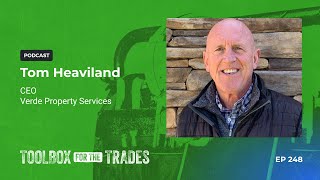
Conversation between host Amanda Salvatore and Tom Haviland (CEO of Verde Property Services; former owner of Haviland Landscape Management) about landscaping industry M&A and what buyers look for. Haviland recounts his path from buying a small commercial maintenance firm in March 1985 (≈15 accounts, ~$150,000 revenue) to selling Haviland Landscape to BrightView in November 2019 and joining M&A work. He describes buyer priorities: customers and employees (strong leadership, employee retention, diverse customer mix), good reporting/ops systems, technology adoption (time-tracking, bidding/estimating systems, electric equipment, AI), and clear financials. He outlines seller preparation and emotional considerations (use advisors—M&A attorney, CPA, wealth advisor), explains deal mechanics (working capital left in business, indemnity/retention/EBITDA holdbacks, the importance of transparency and trust), and contrasts public (BrightView) vs private equity approaches (creative structures, earn-outs, rollovers).
Questions this video answers
March 1985.
About $150,000 in annual revenue and ~15 accounts.
November 2019.
Hello, and welcome to Toolbox for the Trades. I'm Amanda Salvatore, and today I spoke with Tom Haviland, CEO of Verde Property Services. Tom takes us on a deep dive into the M and A space. He covers what companies should consider before selling, the biggest surprises in the process, and how the right support and new technology can help you become a more attractive prospect for potential buyers. I hope you enjoy this conversation as much as I did. Tom Haviland, you are the CEO at Verde Property Services, and today we are discussing how to maximize value and readiness through the M and A process. Welcome to Toolbox for the Trades.
Thank you, Amanda. It's a privilege to be here. Appreciate it.
I'm so excited to talk to you today. You have so much experience in landscaping and now in the M and A space. So there's a lot to learn and a lot to cover today. But, of course, we always like to start with an icebreaker here. I know that you played hockey as well as baseball, but I don't know as much about hockey, so I always like to learn as well. If you could add one rule or change one rule in hockey, what would it be?
That's a great question. I do have a change I'd like to see in not only college hockey, but college sports in general. I don't know if you're familiar with the NIL name, image, likeness. So, you know, college players get paid now to play college sports, and especially on the football side of things, they get big money, millions and millions of dollars. Recently, Penn State signed a Kid. He was first round pick in the NHL Draft, but he's getting 700,000 in nil money this year. And I look at the big programs like a Penn State or Notre Dame, Michigan, Ohio State, those that can afford, you know, to pay prospective recruits to come and play for their teams. It really just kind of throws off the balance of college athletics, especially for, you know, smaller schools like mine that compete at the Division 1 level. So that's the one thing I would change, is really trying to find a way, because I'm not dis in favor of, you know, paying athletes because we do use their name, image, likeness to generate money for the university. So. But finding a way that makes it equal amongst all schools, big and small.
I like it. I like some fairness and an even playing field. I dig it. I dig it. So we're here to talk about landscape. We're here to talk about the M and A space, but I would love to find out how you found yourself in this industry.
Yeah, it's an interesting story and I'll keep it brief. I came out to visit my dad and his family, my stepmother and their kids to Southern California back in 1984. And my dad was looking at a small landscape company to purchase and I said, well hey, I would look at that with you as well. Fast forward to March of 1985. We ended up acquiring a small commercial maintenance company in North County, San Diego. We had maybe 15 accounts, 150,000 a year in annual revenue. So it was a small one truck company with a handful employees. But you know, we were in business. I didn't have a degree in horticulture, my degree's in business. We could have bought know a small electrical contracting or H VAC business. Just happened to be landscape. Proceeded to learn and, and get educated and grow. It was, you know, I was fortunate that it was Southern California. So it was a year round. Business was commercial, which was a good space and we had all industrial, commercial industrial properties. So we had the company Haviland Landscape Management here for approximately 35 years. My dad passed away about 13 years in and I became the sole owner. We were equal shareholders in the company. Bought his shares out and ran the company for the next 22 to 23 years as a family owned business.
And now you have entered the M and A space. How did you find yourself there?
Our company got acquired by Brightview Landscape back in November of 2019. Brightview was very active in the M and A space back then and it was a good experience for me. I will tell you and your listeners that Brightview treated me very well. They're certainly, as everybody knows, the biggest in our space. Close to 3 billion in in revenues here to date. But it was a good experience. And afterwards I continued to run Haviland Landscape for a year through the transition and then I joined their merger and acquisition team, worked with brightview, identifying, you know, commercial maintenance contractors similar to myself that were looking for an exit to a lot of travel and really enjoyed it though. It's like I said, it was a great experience and just it was fun meeting other contractors like myself and you know, seeing their operations, seeing if it was a good fit and helping brightview execute on, you know, part of their strategic plan of growth through acquisition.
So you have experience working with both a large company like Brightview and now a boutique private equity fund. Can you compare and contrast the M and A process from both of those perspectives?
Brightview of course is publicly traded. Private equity is private, you know, private capital, private funds. Both are regulated by the SEC though, so there's regulation there. So there are some similarities. I mean, you know, some other similarities are Brightview was after grade companies, primarily commercial maintenance. And that's what we're after in our, in our private equity world, you know, looking for commercial maintenance, really well run companies. With a publicly traded company like Brightview, there are some, you know, non negotiables, some restrictions, things like that that they have to adhere to that may differ from the private equity world. Pullbacks can differ from, you know, company to company or from a publicly traded to a private equity group with deal structure. You know, typically I think private equity has a little more flexibility and can get a little more creative. Whereas with publicly traded, you know, you're looking at primarily all cash deals for the most part. Most of us want to look at an asset deal. You do, you do have stock versus asset purchases. I won't go into that. But most of the purchases we do with BrightViewer asset purchases similar to what we're doing with Verde equity partners in our fund. But there are stock purchases out there as well. I think with private equity we can get a little more creative. I mean with both sides, we used some of our capital, our own cash, we use debt, we'll leverage the deals. In private equity we look to have owners roll a portion of of that equity our way. And with Brightview or publicly traded companies, they may look at something like stock options as a part of a deal. So yeah, there are some differences, but again, I see a lot of similarities too.
So a big part of your role now is working with owners who are considering selling their business. What are some green flags that they should see within their own company that really indicate it's a good time for them to sell?
You go to any conference, read Landscape Management, Lawn and Landscape, all the national trade publications and you're going to see there are lots of deals being done, tons of activity in our space right now. There's just a tremendous amount of interest and it's kind of cool whether, you know, it's strategic buyers, public private equity, family offices, there are a lot of different players in our space. So owners today have a lot of options. They really do, which is nice. If they're larger companies, platform size companies, north of 20 million in annual revenues and high EBITDA margins, then most likely they'll have an investment bank that they work with and that they will get marketed to all areas and all players looking to acquire a landscape company. So there's a lot of capital that still needs to be deployed and just sitting on the Sidelines and it's not doing any good, just sitting dormant. That has to be put to work. That's a good indication that hey, there's still a lot of money out there and still a lot of opportunity. And the other thing is, you know, it used to be just commercial maintenance companies, the recurring revenue and that kind of companies that, that we were after that we're after Brightviews after. But now you'll see the residential design build and Mariani Premier Group has kind of put that vertical on the map with acquisition, you know, happening with really strong high end residential design build groups. So it's not just the maintenance anymore, it's across all spectrums, you know, lawn care and tree service. I mean it's just every, you know, every vertical in the green space is very active right now. And then the other thing lastly is the multiples continue to just hedge up. That's a good sign if you're a seller. For US buyers, we're looking to pay a fair competitive price for companies. But again I think it favors the seller in today's market.
When you're looking at a business holistically, what are some things that you're looking for as a buyer?
We're buying customers and employees basically. So we want to see really strong employee base. So strong leadership team, high retention in the employees, people that have had training, certifications, so looking for teams that can execute on the strategy post close. That's one. Number two are strong customer base. So again high retention, not one customer that represents more than 10 or 15% of your overall revenues. We like to see that spread out. We like to see a mix of customers, whether it's hoa, multifamily, commercial, industrial, retail, you know, those types. It's nice to see a nice mix. Although some people focus solely on multi family, some focus solely on hoa and that's okay. Know what you do and stick with that niche and do it really well. You know, good reporting systems. Because when we, when we're looking at a company and we sign a letter of intent, you know, then follows the due diligence and that's a large upload of information. So the more information that you have readily available, good reporting, whether it's financials, you know, vehicle and asset list, customer lists, those types of things, it's very beneficial. So having the reporting to back that up.
Yeah, and I know we're going to be talking about that a little later on in the interview. Before we move on, I have to ask, and you've experienced this as well, when you have a family business and you are looking to sell. You go through this acquisition process. I'm sure there's a lot of emotional aspects that people have to navigate that may be little overwhelming for them. How do you suggest an owner who is selling, how do you suggest they navigate those big feelings while also having to manage all of these facets?
It is emotional because, you know, in a lot of cases, you know, you've started this company and it's almost like your child, right. And you've raised it through adolescence and now, now, you know, this little baby of yours, you're going to hand it over to somebody else. And that can be emotional. It really can. I know for me it was, you know, I ran this company, have a landscape for 35 years and, you know, the closing call, it was like, wow, this does not belong to me anymore. And it can be kind of a heady experience. So, you know, I'd recommend owners looking to sell is talk to those that have gone before you. I'm available, available to have those conversations. There's others in the industry that will as well. I mean, it's good to get as much information as you can because for most, it's the biggest decision they will ever make and you want to make sure you get it right. So really doing your homework, number two is surround yourself with good advisors. You need to have a strong M and A attorney. Not, not a real estate or a divorce attorney, but a good M and A attorney, a good cpa. You're going to come into some money and you need to have a wealth advisor. So you need to plan in advance of what that looks like and how to manage that flow of funds once those get wired, minimizing tax consequences and things like that. So surrounding yourself with a good team. And last, I'd say don't try to do it yourself. It is a huge lift of. I mean, it is a lot of work from signing an loi, which can take some time, going through due diligence and getting a deal across the finish line to close. That's a lot of work. And I, you know, I've seen and talked to owners that have tried to do it because they don't want to share that they're selling. It can really be a draining. You still have to run the company. Right. You can't allow the company to lose any traction during this process. You've got to keep it going. Can't afford to lose a large account, can't afford to lose a key employee. Right. So those are all critical pieces but make sure you've got some good support as well to get through the process.
What are the most common misconceptions or surprises that people experience during an acquisition?
The amount of work certainly would be. Would. Would be at the top of the list. You know, number two is things will change, you know, so get used to that. You know, when it's a new company, we're not going to come in day one, say here we've got, you know, a new operating software, we've got, you know, a new benefits package, we've got boom, boom, boom. But there are things that will change, you know, week one, week two, week three that are critical from a buyer's perspective that we want to get in place. But we want it to be, you know, we want it to be a transparent, in a process that we communicate. So there are no surprises. But, you know, be prepared that you've got to be flexible in the fact that, hey, I'm not calling the shots. When I sold now, I had to report to somebody, right? You know, the senior VP of the Southwest for Brightview. I wasn't used to having a boss. I had a hard time calling him my boss, you know, so that can be a hard adjustment for people. But I think, you know, if you've done your diligence on the buyer and you're comfortable with the buyer, there shouldn't be a whole lot of surprises, as you know, from the day from close, as you transition and move forward. But again, you know, be prepared that, you know, the way you did things and you making the decisions, those are over. That doesn't mean you won't be involved in decision making and, and helping foreign policy. But, you know, there's a new sheriff in town, I guess so. So that's one, you know, another one is, you know, for, for sellers, a working capital adjustment that, you know, as part of the deal structure, you know, as when. When we buy a company, you know, the expectation is that, you know, working capital is left in the business. A lot of sellers have a hard time kind of wrapping their head around that. Wait a minute, isn't that my money? You know, so having a good CPA that can explain that and the reasons behind it. It's like when you buy a car, you've got gas in the tank, right? You know, you're going to be able to drive it off the dealership lot. It's the same thing. You know, there's money that's left in the business to keep it running the first 30, 60, 90 days. So the working Capital piece is when you need to, as a seller, be able to understand, you know, the reasons and the why behind it. Pullbacks differ between, you know, different, you know, like a bright view or different PE or strategic buyer groups. You can have indemnity holdbacks, which means typically for 12 to 24 months, anything that comes up that's a surprise, the buyer is protected from that. Well, I didn't know you had a 60 foot yacht off the coast of, you know, the Bahamas that wasn't disclosed. Things like, things that maybe weren't discovered during due diligence. You know, you can have retention, customer retention holdbacks and EBITDA holdbacks. So there are different types of holdbacks that can be part of a deal structure. But just being transparent, again, is important for the seller. Hey, if you've got anything that the buyer needs to know, share it up front and share it quickly. You know, don't wait till 20 or three days before you're supposed to close because that can derail deals. And trust is very important both on the seller and the buyer side. You need to establish that trust right out of the gate so you know that the information you're receiving is accurate and true. And you know, what you're sharing is going to not come back and be, you know, a problem or an obstacle once you get close to that close date. So, yeah, trust is really a critical piece of the whole deal.
I want to move on to technology. I know that in landscaping technology, we're gaining some ground there. Not everyone has adopted technology just yet. But how does technology and investing in your equipment make you a desirable candidate for acquisition?
It shows the acquirer, the buyer, that you're staying current with the industry. Like I said, having good reporting. Have an operating system. You have systems for bidding and estimating. You have systems for tracking sales, you're tracking KPIs. So it just shows the buyer, hey, there's a level of sophistication here. It's not, you know, going out to bid a property and giving it, you know, which way is the wind blowing here. There's some science behind it and there's a little more confidence on the buyer side. When you see a company that is investing in technology to help run their business tracking time your employees time, it's not paper time sheets, you know, where you're doing it via the phones or whatever systems that are out there now. I mean, there's so much, Amanda, that is available in our space today. It's just, it's crazy. And if you're not leveraging technology to run your operations and improve your business, well, you're going to get left behind and you're going to lose value on your company. So. And you're going to get that by going to the, you know, to the nalp, elevate conferences or the leadership conferences or you know, loan and landscape puts on some great conferences as well. So, you know, getting involved in the industry and seeing what's out there is important because then you can stay current. We didn't even talk about equipment, but you know, equipment's a whole nother piece of it. You know, with electric equipment, autonomous mowers. But when we see companies, we bought a company that was fully electric except for their fleet, all their equipment, you know, that says to me that this company is a leader in their space. They're forward thinking, they understand where our industry is going with gas and two cycle equipment. So they're getting out in front of it. That says a lot about a company when owners are embracing technology and really using that to improve their overall company and operations.
Yeah, it's a great indicator. I have to ask, there is so much new technology coming down the pipeline. Truly, truly. What's getting you excited right now?
It's exciting and it's scary all in one, right? Can you guess?
Sure, sure, sure.
I have a feeling, yeah, and that's AI. You've got to just embrace it with open arms because if you give it the Heisman Trophy stiff arm, you're going to get left behind. And there is a lot of information out there today which can be overwhelming. Heck, I'm overwhelmed. But using AI to improve your operations, to reduce the time, to make you more efficient, you know, whether it's time or, or economics. And I'll give you an example. You know, we've, you know, a company we were acquiring, they had a big portfolio, a lot of properties with one customer and their contract was pretty thick and lengthy and complex. I threw it into Chad GPT and I asked it some questions like, you know, how does the indemnity language read? Is there anything from the vendor or the, you know, the contractor standpoint that I should be aware of or I should be concerned with it spits it out and breaks it down. And I could have read through, I don't know, 60, 70 page of this contract. Instead I had an answer in a matter of, you know, seconds. And again, you don't fully, you know, you don't fully rely on that 100%, but it can speed up the process. So I mean, for bidding and estimating for Proposal writing, reviewing contracts. It's going to cover every facet of our business. So the sooner you embrace it. And one other thing I'll say too is companies, you know, that are hiring out of, you know, the horticultural schools or people like that, which is important. I think now we've got to look at those technology students in having somebody who can be your chief technology officer and can help you navigate because a lot of owners, they just, one, they wear too, too many hats. But two is they just, they're not comfortable with it. You know, it's like, what's Instagram? So having somebody that's, that can be fluid and help you navigate that I think is you're going to see more hiring that's going to come from other areas other than horticulture programs, which is, I think, really cool.
Technology is here and it is here to stay. It's great to have somebody who already has a pretty great grasp on that so you can sit back and focus on your business.
Right? Right. Yeah.
Excellent. Tom, this has been an amazing conversation. But before we go, is there anything else that you wish we covered today?
I would say for, for any owner, focus on your people and culture first. If you do that, everything else will fall into place. I mean, there's no question that a strong culture leads to strong profit. And if you just focus on your people, you focus on building that culture, you are going to have a very successful business. So, you know, mind that first and pay attention to that. It is such an exciting time right now in our industry. I Wish I was 40 years younger. I wish I was just starting because with everything that's available, I think of all the mistakes I've made and all the time I've wasted and that doesn't mean, you know, I didn't learn and had a great journey along the way and I'm still on that journey, but it just seems like there's so much fun stuff going on and it's just a great time for people to be in this industry. And I love seeing companies, family owned businesses that are staying the course and aren't ready to sell or have kids that are in the wings or already, you know, I know a lot of companies that, you know, son or daughter are taking the reins now from mom and dad and it's really cool to see these generational companies continue to grow and thrive. I just remember when, you know, my son joined our company, you know, in his early to mid-20s and he had a really young executive team. I mean, just the ideas and the energy and everything that goes with that. It really makes it fun. It really makes it exciting. So last I'll just say, if you know, to your millions of listeners out there, if anybody's interested in having a conversation, whether you know how to build a company and prep it for sale or how to stay the course or how to buy and what to look for, I'm happy to have that conversation with, with anybody at any time. So want to put that out there?
Tom Haviland, what a great conversation. What great advice. Thank you for coming on Toolbox for the trades.
Thank you for having me. Amanda yeah, this was a lot of fun. I really appreciate it. Time well spent. Thank you.
More from Bill



ServiceTitan Virtual Agents: Simplify Before You Scale | Podcast Ep. 110 | Mastering ServiceTitan



Life After Live Events: How to Turn Post-Conference Energy into Real Profits | Podcast Ep. 297




