Leadership Strategies - Operational & Marketing Excellence | Podcast Ep 205 | Toolbox for the Trades
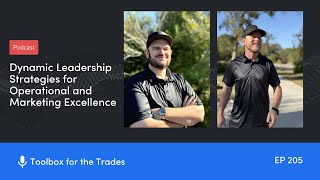
Podcast interview (Toolbox for the Trades Ep. 205) with Jackie Aubel, featuring Kyle Sattler (COO) and Paul Olson (CEO) of Koala Cooling and Plumbing (Round Rock, TX). They describe the company origin and ownership transition (joined/partnered with founders in 2023), operational improvements (truck stocking, carry sewer cameras/locators, seven-point HVAC and plumbing checklists, blower-wheel cleanings, pressure regulator checks) that raised efficiency and capture additional revenue, and a low-cost marketing approach focused on Google Maps/local SEO (map-pack ranking) that helped drive growth. Company snapshot given in the episode: ~21 employees, roughly $3.2–$3.3M projected revenue this year, ~35% year-over-year growth while spending ~3% of revenue on marketing. They also discuss partnership dynamics, decision-making practices, and cautious views on private equity.
Questions this video answers
21
Approximately $3.2–$3.3 million
2018
May 1, 2023 (founder retired six months later)
23 years
Hello, contractors, and welcome to Toolbox for the Trades. My name is Jackie Aubel and today I spoke with the leadership team at Koala Cooling and Plumbing, Kyle Sattler and Paul Olson. Kyle, Paul and I spoke about how their Texas based service company is streamlining operations and implementing unique Google Maps strategies to grow their company in a down market. I hope you enjoy our conversation as much as I did. Kyle Sattler and Paul Olson, you are the COO and the CEO of COR Koala Cooling and Plumbing in Round Rock, Texas. Today, the three of us are going to be talking about how great marketing coupled with streamlined mechanical operations equals growth. I'm so excited to have you on Kyle. Why don't you say hi to the audience so folks know what you sound like?
Sure. So, hi, I'm Kyle coo, Koala Cooling.
And Paul, why don't you say hi so the folks know what you sound like.
Hey, Paul Olson, CEO, Koala Cooling, Round Rock, Texas.
Awesome. Well, I'm so excited to have you guys here. We're going to kick this off with an icebreaker. My favorite icebreaker of all time. What song? And I'll have Kyle have you answer this first. What song, if any, would be the soundtrack of your life?
Yeah. So I've had this song since I was in high school, and it is Take it to the Limit by the Eagles. I went to a really small high school and we actually played that song. We had our own little slideshow and everything. That was my song for my slideshow since high school, and I flipped it. It's what I try to do is always go to the next level.
You had that answer locked and loaded, Kyle. You knew exactly how you were gonna answer that. I don't think anyone has ever been so confident while answering that icebreaker. Let's see if Paul is also as confident when answering that question. Question, Paul, what's the soundtrack of your life?
Definitely not as confident at all, for sure. Kyle and I chatted about this very briefly before we got started, and I was like, you know, honestly, it might sound a little cheesy, but Green Day time of your life would definitely be up there. I love that song. And it's always been something I've always kind of gone back to, but I'm going to throw one out here just for Kyle. I'm shocked he didn't go with the Imperial March. That really would be my song for Kyle.
Okay.
It is my doorbell. At my home, when you push the doorbell, it's my doorbell. My house is all decorated in Star Wars. It's a thing.
Okay, so Imperial March. Imperial March. Isn't that the dark side? That's the dark side.
The Dark Vader. Yeah.
The Empire.
Yeah. If I'm wearing my Darth Vader socks, people know that someone's in trouble.
Oh my goodness. I've just unlocked this whole level of lore here at Koala Culane. I don't know if you guys know this, but I have a mental health background. Paul, why do you associate the imperial theme with Kyle?
Because I work with him.
Is that fair?
We're going to have fun today, guys. We're going to have fun today. Paul, I want to hear how you got into the trades.
Well, this is a. It's a fairly long story, but I'll try to cut it as short as I can here. I grew up grandfather who's a general contractor on both sides. And then my dad went into the plumbing trade. And so when I was about to get married for the first time, I needed a career and I decided to go into plumbing. So initially I started young, young go for in jobs about 8, 9 years old with my dad. I cut and thread black iron when I was 11. I soldered by the time I was 12. So I really grew up in the trades. And then I got my first job outside of my dad when I moved to Texas in 04. But again, I did it for a career. Started in 2001 and then I moved through the ranks from an apprentice, actually a pump truck driver pumping septics to an apprentice to a plumber to a field supervisor, service manager, division manager, ops manager, GM and now CEO. There was a salesman role in there also that I left out, but that was a couple of years as well. So I've been in the trades for 23 years now.
I guess.
I mean basically your whole life. It sounds like it, yeah.
And just about every role possible, from the lowest now to the CEO role. There have been great times and not so great times in every role.
Sure. If you had to rank your roles, would you be willing to share that? You do not have to answer this though, if you do not want to.
No, I definitely would. I will tell you that my favorite role actually is the CEO role. Although it can be extremely stressful at times. What I really drove for in my career, the reason I wanted to move up and the reason I enjoyed the trades was the ability to impact people in a positive way. As a tech, I could influence my apprentices or even my customers in a positive way. But that really didn't fulfill me. And then when I became a Field supervisor. I had a staff and I really got fulfilled fulfillment out of seeing those team members grow. And so actually being at the CEO role, running the company with Kyle, what I have here is the ability to impact thousands and thousands of people in a positive way. First with our staff and then how they treat our customers. That is my why every day. And so I would tell you my favorite role has been CEO. It's also been the most stressful role that I've ever had. But I would tell you it's been great and I do love it.
That's awesome. Kyle, same question. How did you get into the trades? Because I know it was not the same way that Paul did.
Not at all. My. My family is school teachers, people who work in offices, things like that. So still living that for me. But I got into the trades. I won't go through my entire story, but I started marketing when I was 19 and I was doing it for construction companies, a few other companies, did some for Home Depot and things like that. But ultimately I ended up. Long story, very, very short is I ended up working for a roofing company when I had my own company, my own marketing company. I was doing marketing for them and I adopted my kids and I needed to spend more time with my kids. And so I was looking for a 9 to 5, closing down my company. And ultimately it was a match of one of my clients. Actually brought me on as their full time marketing person. Paul found me there and convinced me after a few years of being there to come join him over at a H Vac and plumbing company. We did that and then now we're here at Koala together as shared ownership with our founder as well. And we get to run that. So a little bit shorter story, but definitely something that I've enjoyed being part of.
Love that.
Love that.
All right, so tell me a bit about Koala cooling and plumbing. What type of services do you provide, how many employees, annual revenue, whatever it is you want to share. Kyle, maybe you can take this one.
Sure. We've been an H Vac company since 2018 is when it was started. Our founders got a little small 2 man h vac company and they 10x it in about 3 to 4 years. Still wanted to grow, kind of hit a little bit of a stall there. And they ended up bringing Paul and I in. Paul being a master plumber, brought in his plumbing license and we started developing plumbing. Ultimately that. So we offer H Vac, we offer plumbing, and that's kind of like a very brief history of that. And then how many employees we have? Roughly 20 to 25 now, I think is where we're at. I could be wrong, but somewhere in.
That ballpark, 21 right now.
21. There we go. Thanks, Paul. Appreciate it. And as revenue goes, we'll top 3.2, 3.3 this year for the first time. So we have had some substantial growth this year from where we were.
Amazing. Congratulations.
So thank you very much.
That's awesome work. And Paul, I want to know what is it about Kyle that made you go like, hey, let's leave this company that the two of us are both at and let's go find something else where we can make more of an impact. Tell me about. What was it about Kyle that made you want to work with him and why you guys made that leap to the other company.
My wife, who was his promotional marketing person, was doing promotional items for Kyle. I met Kyle through her. Kyle and I, we became best friends pretty quickly, got along really well. Same kind of drive and mindset. I would say was. Was key there. Kyle was looking to grow past where he was, and he had moved up to about as high level as he could at the roofing company that he was at. I don't want to act like there wasn't success. He had a massive amount of success there, just that at where they were. That company was very happy where they were at. Kangaroo Boston's, it's an amazing company. Actually. The same owners that owned Koala at the same time. And we actually partnered in with them. Amazing people, Scott and Stacy Feller, I'll name drop there. He just needed something more. And I thought there was an opportunity at the company that I was currently at for that. And so that was kind of an easy sell, saying, hey, I can get you in here. We can eventually run this together. And the change happened more because of that partnership with that owner. There was more of a. They thought they were going to retire and then they kind of decided that they weren't retired ready and we were ready to take over. So it just was more like, hey, we probably needed to find something that would be better fit for us, which is where Koala came in. Scott Feller was ready to retire. We partnered with them. Kyle and I bought a piece of Koala. Each our own percentage. Scott had a two year plan for retirement. Jackie, when we started on May 1st of 2023, he officially retired six months later. He was like, you guys have this. I don't know why I'm here. I'm gonna get out of the way. Kyle and I Do everything pretty fast. And that's the other side. He keeps up or drives or pushes, which is amazing.
That's awesome. Kyle, anything you want to add there?
I will say that Paul is someone that I saw a lot of leadership and strategic mindset in. And he's a pure visionary, meaning that he can hit thought processes so far in the future. And then that coupled with my ability to go, okay, this is where you want to be. I can break that down and kind of reverse engineer that into how we can be more successful, how we can push forward. It just made a good pairing when it came to that. And that's one of the reasons that I chose to leave Kangaroo was that I saw someone I could kind of pair with and we could be partners together. And then when Paul and I were going to go off and do our own, Scott and Stacy came to us and said, hey, Quality Cooling really would benefit from having H Vac and plumbing. We know you guys, we love you guys. We want to kind of partner together and we work through that really, really quickly. And Paul and I came here and we've been running the show almost since the day we walked in the door with a little bit of oversight. And then we got a very nice letter From Scott at 6:30 in the morning meeting that he called, which was fun for us, that said, I've worked with you guys for six months. I was a little nervous you guys were going to come in and change everything. You haven't changed the right stuff. Not everything. And I'm ready to kind of step away. And Paul, you're going to be CEO. Kyle, you're going to be coo. It was a really nice moment. And then announced that at our 7:30 meeting less than an hour later. So it was very, very interesting transition and very, very quick as well.
Yeah, I mean, that's such an interesting. I don't think I've ever talked to people on the show who have gone to the ownership level that in the route that you both have taken. So it sounds like the original owner still has ownership shares in the company, but you two also have your own. So he's kind of in the background. This is what he started. And now you guys are taking the helm and you're going to build it moving forward.
We have a picture of them in our call center. They come by every now and again for ownership meetings and things like that. But they're remembered, they're loved. You know, we want them to still be part of the family, but they are happy to let us kind of Run with the torch, if that's the right way to say that.
A very cool origin story about how you guys came into this. So you guys are essentially a dynamic duo here. Paul, you head up all of the mechanical operations. Kyle, you are doing your marketing thing. So I want to kind of talk about how this marriage of your skill sets is really setting up Koala for growth. So talk to me a bit about how when you first came in, you worked to lower costs on the service, the technical part of the company.
It's a slow road, Jackie. I mean, obviously we. When we walked in the door, it was really about what efficiencies, what we carry on the trucks, how the guys present those, and how they execute that sale and get that job done. That's the lowest hanging fruit is making sure we have the proper tools and materials to get the jobs done. The trucks were pretty well stocked, but we were missing a few key things that that was the first thing to bring in, was, hey, we need to bring these parts in. I know it seems like it's an expense to carry extra stuff on the van, but when you're able to carry a few extra things on the van, the guys can execute on site and not have to drive and get materials. And starting a plumbing company, we're one of the few companies around that all of our plumbers carry around a sewer camera and a locator, because having to go meet somebody to get that equipment definitely messes up the efficiencies. We instituted some things that the technicians have to look at. We call them never misses. There's seven key points on every home that we have to check. H Vac. They have seven key points in plumbing, their seven key points, and those points are the most likely failures on any home in the contracting world. Never misses Equal easy wins. Customers see that there's value in that. They want to get it fixed. Tech is there. Let's go ahead and get it done. So those things drove. Drove revenue up immediately and efficiency up immediately. Those are probably the biggest differences.
Okay, so auditing your trucks, seeing, hey, what are we actually carrying in these trucks? How can we equip our guys in such a way that they're maybe carrying a little bit more? Not too much, but it will allow them to do more work when they're in the home. And then the second component of. Okay, let's develop this checklist. So if an H vac tech goes in, a plumbing tech goes in, they're checking these seven pain points, and then are trained on how to communicate with the Customer about how to educate the customer on how these, you know, oh hey, in my checklist I found this. And this is going to be an issue for you down the line?
Yeah, 100%. I mean I'll give one away here for probably for each. But like in the H VAC world, we pull the blower assembly on every house. So when we go to an AC furnace, you know, in Texas, a lot of air conditioning, whether it's a, you know, furnace or an air handler, we pull the blower wheel, check it for cleanliness. And that is going to lead to IAQ sales. Right. So filtration, UV light, that kind of thing, blower wheel cleanings, those are all revenue generators at your home. Most contractors don't see that as a benefit. They think, oh, if I have that, my guy's going to be at that call an extra 30 minutes to an hour just pulling that blower wheel. And they don't see that that's going to generate an additional, you know, average of about 4 to $500 a ticket on average because of all the extra IAQ sales or the additional blower clean wheel cleaning sales. And then on the plumbing side, we check pressure regulators for pressure and for volume. In the standard home for the H VAC unit, the pressure regulators in our area, about 65% of the homes, they're bad. Those are thirteen hundred dollar tickets each and every time that's bad. And so a lot of plumbers skip right over that. It's buried in the ground, there's like whatever, it's the water comes out the faucet, it's fine. And we have specific trainings on how to test it and how to explain it to the customer so they understand what's going on and then therefore can make it a sound decision on what they should do for their home. And those things, they drive revenue.
That's awesome. And I'm assuming is this stuff that you learned from your dad, your grandpa, is this stuff you've learned from other companies that you've worked for, just training over the years kind of thing.
So some of it was stuff that I definitely learned from my old man on the plumbing side and some of it I've picked up here and there through the trades, through the different companies or different technicians I've worked with. Some of it's just been self taught. Working in the downturn, 2009, 2010, as a technician, I learned very quickly that you might get three calls in a week and if you don't have a way to present options to a customer that they can one afford and see the value in. You're not working that week. And so companies were laying off technicians, plumbers were going without jobs. And I managed to maintain a very steady income that would have been on par with the year before. I mean, I worked about 50 hours a week on based on just selling. That's where I actually really cut my teeth on what these items needed to be in order for me to survive as a technician in a really down world. And so in a down economy this year, we have continued to execute those things here at Koala and pushed our numbers up.
That's awesome. That's great. And thanks for giving that context too, about cutting your teeth during that time, which must have been rough. So I've got empathy for you there, Kyle. Pivoting to bits, Marketing. Now, when you and I first spoke, you mentioned that koala grew 35% this last year, and that was only with a 3% marketing spend. So I want to hear about the strategies you're implementing to reach customers when you're not really spending all that much money.
It's quite interesting. So far, we're 35% over last year, so we've still got about a month and a half to go, so we might get a little bit further up. We're excited to see what that number actually lands at. But the 3% marketing spend is based off of what we projected for this year's revenue. We're pretty happy with that. And ultimately we spend on a few things. All of them are brand building, though, so they're not really ROI driving elements. We have lunchboxes.
Can I cut you off real quick?
Yeah, yeah, yeah, absolutely.
Brand building initiatives. And you guys are going to close out the year at like 3.3 million. A lot of the times on the show I've heard people say, well, yeah, once you kind of get to. I've. I haven't heard of many companies at your size who are investing in brand building strategies, so I just wanted to make that call out. So. Sorry to interrupt.
No, that's. That's very, very clear most of the time. And this is how it's been traditionally in a traditional marketing setting for smaller companies is you focus ROI purely and that's what you focus on. For us, that's one of the differences is our 3% for the most part has gone towards actually brand building because we're trying to build for what we land in in the future. So there's a few things to equate. One, our brand building, we have lunchbox from the Bobby Bones show as one of our spokespersons. He blasts across the radio. He's funny, he's a card. He's a little bit like Paul and I, who's just a little goofy. We have a local AAA baseball team, the Round Rock Express, that we do what's called the Koala Cam with them. It's like a Snapchat filter. They'll do a screen, they'll change everybody's face to our Koalas from our brand, which is kind of fun. Outside of that, we don't do ppc. We don't focus on website SEO or anything like that. What we focused on is something that I've been trying to build over the past few years and that is how to reach people where they're actually at. I don't want to go too crazy into the marketing speech and go into super, super detailed, but what I will tell you is 90% of people who are looking for you, whether they go through Google or Google Maps, are actually still funneling through Google Maps. And that's a number that most people don't realize is when they search, the map pack is what they call it is usually at the very top. Now, there will be some LSA up there sometime from time to time and 50% of the time there may be a PPC ad because they don't actually show PPC ads more than 50% of the time on like a mobile phone, which is where everybody searches. As I've been working through with local services going, how can we address this? This is where people actually want to be and this is where it's easier for them to call you, find your location, any of that information, read reviews about you, all within one platform. They don't really need to hear or see your website. Websites are great and I'm not bashing those in any way. I think that if you can focus on SEO, that's a great thing. It's not a thing that a $3 million company really has a lot of time or effort to focus on because that's a very, very long term strategy. A lot of people call what I've kind of been working on with local SEO and that's how do you build your map rank for the majority out there? The Internet says the only way you really do it is through your location and through reviews. And I just found that as I've worked in marketing forever, that that just doesn't sound right. Google doesn't just have two elements that control everything. It's just not really how they function. They function on a bunch of other stuff. So I've been working on building and testing these different things. And so in April we kind of launched this project, if you will, or this test with, if you will, of what we're going to do for Koala for marketing. And we turned off all ppc, pretty much everything except for just basic lsa, which we don't put a lot in. It's just, it's there. It kind of took off. Just from this alone, we've had roughly 800 to a thousand customers come in this year to a $3 million company. We were able to raise our map ranking and we have a tool that actually measures like where do we rank and how high are we ranking? How large of a group are we ranking in? And it took off for us and we focused on H Vac first because that was the season we were in during that time. And then we've now focused on plumbing. And for the most part we've continued to rank higher and higher in this map Pac to where right now our average for just water heater repair, which we're going, we're in that season now. We're in the top six in a 13 mile radius. And so what that means is in some of the areas we're in 1, 2 and 3 and then some of the areas we're 4, 5 and 6, we're trying to get in that 1, 2, 3, all the way across. But that's for something that did not exist even a year ago. That's really good. We were originally ranked in the 14s across the whole map and in our own building for H vac in our building, if you came in our building to search, we would be number three. So thank you for stepping in the door. Now you can look for us and actually find us somewhere. And we are in the top three across the entire 13 mile grid for H vac. So it's something that I was like, this is amazing. This, this is working even to the point where Paul and I go, hey, let's actually make this its own thing and package it up and actually are now selling it to other people as well if they're interested in purchasing this service. It's like, we can sell this. It's low cost and it's faster than SEO, it's much cheaper than ppc. I would say it's super cheap. It's something that I believe a $3 million afford and it allows us to reach people where they are because 88% of people, when they find you on Google Maps or through the map pack are going to call you within the first 24 hours of finding you. 77% of people are going to call you immediately. Those are numbers that if you're not addressing those, you're missing. You know, people who play in PPC, again, it's 50% of those are showing up there on phones. That means you're only playing in half the pool that I'm playing in. And I'm playing in the whole pool. And I'm also making sure that 77% of people are calling me right then and there.
Yeah, let me. So this is something like totally new to me. And when you first brought this up to me, I was like, oh, I would love to talk to you about this because I haven't heard this before. So map packs is that basically when I go to Google Maps and I search like say laundromats near me, the map pack is like the 10 results that come up in when I search that. Is that correct?
That's correct. But the map pack as it's labeled is the first three that are actually put on the search page as well. So you're not just in the maps. You actually can just do it from Google Search. They'll have the three, they'll have their ratings and things like that.
Got it. So how do you actually improve your likelihood that you're in that map pack?
Yeah.
So without selling your secrets, obviously.
Yeah, yeah, no, there's a lot to it. But ultimately I'll give you some basics that I actually wrote an ebook on this on, like some. Some basic stuff that you can do to really raise your Prof. Reviews is huge. Your location is a big thing, but it's not the biggest thing. And that's where I think most people get locked up, is they think reviews and location. And that's all I can do. Optimizing and filling out the profile completely, adding the proper services, adding products in there, making sure that it's completely filled out. So Google.
My business profile.
Yeah, the Google. Google Business Profile?
Yeah.
Google Business Profile.
Yeah. Making sure that's completely filled out is a big one. But then outside of that, the next thing is people don't realize that it was actually built back in the same time as pictures were really big on Facebook and it was built as a social media platform. Google Places is what it was called.
Well, wasn't it Google Plus?
Wasn't that Google Places plus? Yeah. And so that's Google Maps. That's the structure Google Maps is actually built on. So ultimately it still lives in the world of it wants content, it wants you to create posts and it wants you to upload stuff. Ultimately, that's what it wants. So again, that's that I have a whole book on it that if somebody wants it, I'll be happy to send it to them. They can reach me. Is it okay if I get my email?
Oh yeah, please. And actually link the ebook to the show notes in this description if you'd like that.
Yeah, that'd be cool. My email is kyleacooling.com if anyone wants to reach out to me for that. But it gives a whole list of things and these are best practices. We have stuff like I said that I've kind of packaged up that we sell that will still quote, unquote, beat those things, if you will. But if you've got someone who's not working on it, someone who is working on it, the person who is working on it's going to rank and going to grow quite significantly.
That's awesome. What I'm hearing the two of you doing right now at Koala is like, you're literally okay. We're a small operation right now. We're going to look at every way we can optimize our service arms, our H vac and plumbing service arms, and then at the same time we're going to look at what marketing initiatives are going to give us the most impact. And you know, I love that you called out SEO. SEO is fantastic. But like you said, Kyle, it's like a long term strategy and you're not necessarily going to see those gains right away. So I love how you're thinking strategically about this. So Paul, anything you want to say to what Kyle just shared about marketing?
I'm going to kind of hit the same points, just maybe a little bit different. But yeah, the real quick hitter. 90% of people use their smartphone when searching for local services. Right. And then just over 80% are going to select from the map, from that map three pack. And so basically if I've got 90% in this box and then 80% here of that are going to select somebody that's in here and I don't have to pay to play there. Like I'm not paying for adwords and keywords and I mean this isn't a PPC campaign and I can generate that organically. It's a different game. Now I'm going to tell you guys that for Koala Cooling, I mean we're a small company, it's not been a great market, wasn't a super hot year in Austin. The economy was a bit down. Our approval ratings for, like, people getting financed were way down from last year. We're a little over 15 points less on an approval rating. So you need a new air conditioner. You don't have the cash in the bank. You don't have 15 grand, whatever it is, and you need to finance it. But then you don't get approved. You don't buy a new system. Right. So when you're in that kind of a market, it's hard to win. And this has given us its own leg up where we haven't had to spend as much money to make the phone ring in a down market. So we haven't had to bring in as much to maintain profitability. So these are the key elements here. Kyle and I are fully aware that as time goes on, we will be adding more SEO, adding more ppc, more LSA in to go from three and a half to five, six, and then from six to ten. Those arms. But as a small company, it's a competitive market. In Austin, it's the PE capital of the country. Here, everything is private equity. They bought up every mom and pop known demand. We get called regularly. It's just a really great market. Typically. This year was just a little down. Next year will be a recovery year. That happens. It es and flows. No, you can't stay in a bull market forever. That kind of thing.
I mean, that's the benefit of being a smaller operation at the moment, is that you can be really nimble and pivot quickly when it comes to these types of strategies. So once you guys, you know, as the company grows, you can start incorporating more of these traditional digital marketing components into your strategy. But I think it's wonderful what you guys are doing now and super, super cool. We are definitely going to be linking that ebook. I want to know one more thing. I want to talk about it because I think we'll have some funny answers here. I want to know how you two resolve disagreements in your partnership and what tips, if any, you have for any other operating duos out there right now.
Kyle took the last one. I'll jump on this one before he gets a chance. And he could just go with my answer. You don't really need to answer yourself. Kyle is fine.
It's like a typical argument between us right there already.
I will tell you that it takes a certain amount of trust, humility to have somebody that you treat 100% as an equal. I don't want to sound like it's cheesy, like, oh, it's like A marriage, but it kind of is, even when you don't like what the other person's saying. When Kyle has something to add, and I'm like, man, I think that's. That's just completely wrong. Right? And I'm right. I have to take it, listen to it. And sometimes we literally do have to go our separate ways. Like, hey, he goes to his office, I go to mine. We might not talk about something for two days and then go back and say, okay, we've got to make a decision on this. I've heard what you had to say, and either I do like it or I don't. But at the end of the day, I think we do really take everything that the other one says, and we really listen, work on it on our own, and determine if it's right or wrong. I mean, the reality is if, you know, I could always listen to Kyle, but then we'd both be wrong. So, I mean, I'm joking. We do work it out. And I will tell you, it's a professional way, but we joke, we laugh, we do get mad at each other. There are times we have to leave the shop to have a conversation because it's a heated one. We don't need to have that in front of the team. But the reality is, don't fight in front of you. Find a way.
Well, it sounds like there's a ton of self awareness there and a lot of emotional regulation skills at work in terms of just stepping away and like, okay, this is getting heated. Let's, like, take a break from this and then resume it at a later date. Which I think is wonderful lessons, not just for a working relationship, but just for relationships in general. So, Kyle, anything you would like to add here?
Yeah, I would love to add a lot. No, Paul's right. I will say it's now easier than it used to be when at once upon a time, it was just the two of us. Now we have a management team of four. We have a phenomenal office manager that was. Has been here forever and just needed the. The proper push and the proper guidance to get to where she was ready to be the office manager. Her name is Renee. She's phenomenal. And then Paul brought in someone named Michelle, who is just a killer. She's over plumbing and installs, and really her job just starts encapsulating a bunch of other things whenever she needs to get it done because she's really skilled and talented in getting stuff done. So we have a meeting every Wednesday where we meet together, and the four of Us kind of make decisions, so it's a little bit easier now. We have other voices, but before that, it could get volcanic in nature sometimes of where we both had ideas of things we wanted to do and ways we needed to go. And we would have to take breaks and we would have to call timeouts. What's funny is it's at least twice a month we are at each other's house on a Saturday, so we could never fight on Fridays. We weren't allowed because we played board games and hang out a lot too. So we'd have to try to make sure we didn't tackle any topics that were too crazy on a Friday. And we would work through them. And ultimately we live in a relationship. And our duo is. Is from the book Traction, where a lot of the process building, a lot of decisions are supposed to be made by the actual number two, which is the seat that I live in. And they're supposed to be the guy who sees all these different things and stuff like that. The visionary is supposed to concede, can overrule, but should almost never do it. And I will say a less funny answer. Paul was given sincere answers. This will be my sincere answers. Paul has been really great at conceding, at least in the moment, and giving those things to me, for me to kind of work through. And there will be oftentimes he's recognized in our relationship that he can give me an idea or give me something to process. And it takes me a few days to get there and get my mind around it, but eventually I'll come to the right conclusion. I try to specifically on the mechanical side, not always the business side, but specifically on the mechanical side, processes, things like that. I almost always try to immediately give those things to him because he's done it, he's been in the field, he's made it work, and he's been successful at it. I may be the one who trains it because I do most of the training here at the office. I may be the one who trains it, but it's all Paul's idea. And there are things that he does and or has done in the past that I trust and, and believe that he's got the right vision for the company where we're going. So we don't think kumbay all that much. We also don't yell at each other that much. We're somewhere in the middle. But ultimately we just try to be self aware. We try to go, hey, where's my spot? That I don't have the expertise in this area to let the other person kind of win that because we're going to be better together.
That's super, super cool. All right, I got one more question for you guys, and then I think we're good to wrap it up. You mentioned you're in PE Central right now, and you don't have to answer this if you don't want to, but do you guys have any aspirations to join the PE team?
Kyle, do you want to jump on that or you want me to take it?
I'm usually known as Mr. Anti Pe. We do have people call us, and one of the reasons we have and we haven't talked about this is we do have a lot of reviews. We have a good process for getting reviews. We have a lot of reviews for more than companies that have been around 10, 15, 20 years because we have a good process for that. So people think we have a bigger company. And so when they, you know, when they find out what our actual revenue is, they're like, oh, you're not as big as I thought you were. Ultimately, I don't know that we have a great answer for that. It would be more of an ownership conversation than it would be just a Paul and Kyle conversation. Right. We have other partners in this. We probably appreciate the resources because that would take us to a different level. But it's not something that I think we absolutely have to have or that we absolutely need. I have no problem being the little guy who will go fight Goliath over and over. I think that's kind of where we're at, is we're finding stones here and there, and we're going to fight the big guys where we can. I think we're doing a pretty good, pretty decent job, if I'm being honest.
That sounds like it.
Yeah.
And, I mean, I'll double down on what Kyle said there for me. We run like a P firm in a way. We do level 10 meetings. That's our traction IDs, items. We train three days a week here at our shop. We work through strong processes. We do strong brand awareness. Most people from the outside looking in, they look at our. Our branding, they look at the way our techs operate, the way they dress, and they look at our social media, they look at our reviews, and they see a bigger company than we actually are. Most people are shocked when they're like, you guys, only 20 employees or less. Like, half of this year, we were less than 20 employees. And your guys, they do all these things. You guys have processes. And that comes from Kyle being a process guy, me working for some of the biggest players in Austin. I met my not my last stop, but stop before that. You know, we were 120 million when I left in Home services. We both really understand the process. Like Kyle said, there could be something really good about being a part of a PE firm. We're building a company that runs kind of like that already. It just at this point, I would tell you that would be a shift that would take a lot of big changes for the ownership team. Couldn't tell you it would never happen. I just don't think it's something that's going to happen anytime in the near future.
Jackie I appreciate you guys answering it. You know, I've had Private equity on this podcast. I've had folks who've sold to private equity who, you know, moved on to other things. We're still working within the company, so I think it's just so important to share different perspectives and how different people are looking at this. So I appreciate you guys answering. I think it was a great answer. This has been a great show, guys. Kyle, Paul, love your guys's energy. I could see how you work so well together. I can't wait to see what's next for Koala Cooling and Plumbing. Thank you so much for donating your time today on Bucks for the Trades. I know the folks listening got a ton out of it.
More from Bill



ServiceTitan Virtual Agents: Simplify Before You Scale | Podcast Ep. 110 | Mastering ServiceTitan



Life After Live Events: How to Turn Post-Conference Energy into Real Profits | Podcast Ep. 297




